In the 1960s, running arguments were often tackled mid-field with the rebuttal, “Oh, that’s just semantics.” The argument was dismissed as being about words rather than ideas. For example:
A says, “It’s not a just war.”
B replies, “There’s no such thing as a just war.”
A says, “Now you’re just getting into semantics.”
In his second comment, A claims B is not addressing the war with moral evaluation, that B is changing the subject. A might sound right, but he’s using rhetoric as avoidance, while B’s claim is definitively not just semantics; it’s a rejection of A’s moral premise.
The other day, I mentioned S. I. Hayakawa’s “The Use and Misuse of Language.” It’s a collection of essays selected and edited by Hayakawa, originally published in “ETC.: A Review of General Semantics,” from 1943 to 1962.
“The Use and Misuse of Language” is still relevant today, and as we are so distanced from most of its content, is less likely to cause friction where it otherwise might – no one has an interest in the Edsel anymore, yet certain cars are certainly still laying eggs. In his Foreword, Hayakawa quickly clarifies what he means by semantics:
“In general semantics, when we concern ourselves with how people talk, we are not worrying about the elegance of their pronunciation or the correctness of their grammar. Basically we are concerned with the adequacy of their language as a ‘map’ of the ‘territory’ of experience being talked about” (vii).
What words we choose and how we choose them (by hook or by crook) are important considerations for the semanticist. But we may not feel we’re making word by word decisions. So what’s to look for? Still in his introduction, Hayakawa says:
“What general semanticists mean by ‘language habits’ is the entire complex of (1) how we talk – whether our language is specific or general, descriptive or inferential or judgmental; and (2) our attitudes toward our own remarks – whether dogmatic or open-minded, rigid or flexible….Words, then, are more than descriptions of the territory of human experience; they are evaluations. How we think and evaluate is inextricably bound up with how we talk” (vii-viii).
Hayakawa was interested in how language affects thought and action. But for the common reader today semantics might still be considered just semantics, an ironic and circular argument that points to but doesn’t explain the gap between technical meaning and a shout in the street. Does the word semantics suggest a method of study or dismissal of one’s statement? Does it call out perceived errors in pronunciation or attempt to explain what’s really being said? Does semantics “call the whole thing off” or try to mediate?
But let’s take a look at Hayakawa’s book for an overview, one we might glimpse from just the titles of a few selected pieces, which might come as a surprise and entertainment, not what we might expect if we thought it was a tome of academic exercises:
“Popular Songs vs. the Facts of Life”
“Sexual Fantasy and the 1957 Car”
“Why the Edsel Laid an Egg: Motivational Research vs. the Reality Principle”
Above, we see popular subjects then as now: songs, cars. And below, arguments, how to write, and while psychologists have taken pains to craft what they do as a science, the art of something most of us don’t get to use:
“Why Discussions Go Astray”
“You Can’t Write Writing”
“The Art of Psychoanalysis”
There are 18 essays, not including the Foreword and Introduction, so I’ve just picked a sampling. Now I’ll select a single sentence from each of the above essays, that, out of context, might cause laughter or argument, but hopefully at least some reader curiosity.
Matching Game
Pick the essay (from the six above) to which the extracted sentence (below) belongs (answers are at the bottom of the post, or click on the footnote number):
“American males, according to a point of view widely held among Freudian critics of our culture, are afraid of sex.”1
“Very often it is by the expression of differences of opinion and interest that ideas are clarified and solutions worked out.”2
“Students of general semantics are familiar enough with psychiatric concepts to know that when the world of reality proves unmanageable, a common practice is to retreat into a symbolic world, since symbols are more manageable and predictable than the existential realities for which they stand.”3
“Perhaps the most powerful weapon in the analyst’s arsenal is the use of silence.”4
“Different people have different needs, with respect both to transportation and self-expression.”5
“Only to the extent that the various readers of a statement agree as to the specific conditions or observations required for ascertaining its validity can the question of its validity have meaning.”6
In creating the game, where you match the excerpt with the essay it came from, I had in mind a recent article in The New Yorker online, which says the new Pope, Pope Leo, plays The New York Times game called “Wordle.” And at the same time I noticed The New Yorker has created its own similar game, called “Shuffalo.” The Pope article (a Profile by Paul Elie) is behind the paywall, but I’ll give you the part I’m referring to:
“Made famous overnight, he stuck to a Midwestern matter-of-factness: he addressed the cardinals who’d elected him in flat-vowelled English, phoned his family daily, kept up his morning habit of doing the Times’ Wordle puzzle, and sent e-mails and texts from his personal accounts.”
These online games, though they may cause some readers headaches, are obviously very popular. And I was thinking a game’s the thing to make the blog more enjoyable for my intended common reader audience (though any reader is of course welcome).
But “Let’s Call the Whole Thing Off”?
“You say tomato, I say tomahto.”
It’s not how we speak but how we listen that’s most important, including how we listen to ourselves. Listening to oneself is not easy; one might consider calling the whole thing off. “If they understand that their utterances are about the state of their own minds,” Hayakawa said, “that is something else again” (vii). Maybe that’s why silence is sometimes so effective. Once experience has been folded into a particular verbal shape, like a paper map out of the glovebox, it resists being refolded along the same creases.
~~~
Here are the answers to which sentences go with which essay, the matching game:
- “Sexual Fantasy and the 1957 Car” p. 164 ↩︎
- “Why Discussions Go Astray” p.29 ↩︎
- “Popular Songs vs the Facts of Life” p. 155 ↩︎
- “The Art of Psychoanalysis” p. 210 ↩︎
- “Why the Edsel Laid an Egg” p. 169 ↩︎
- “You Can’t Write Writing” p. 107 ↩︎
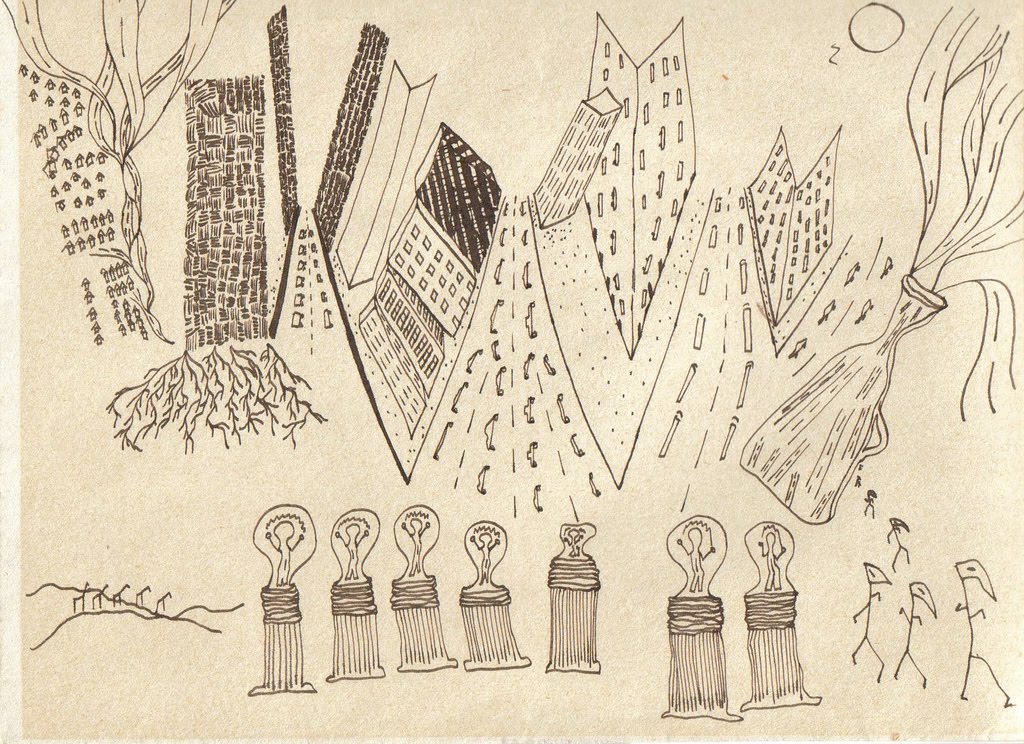
 The Coming of the Toads