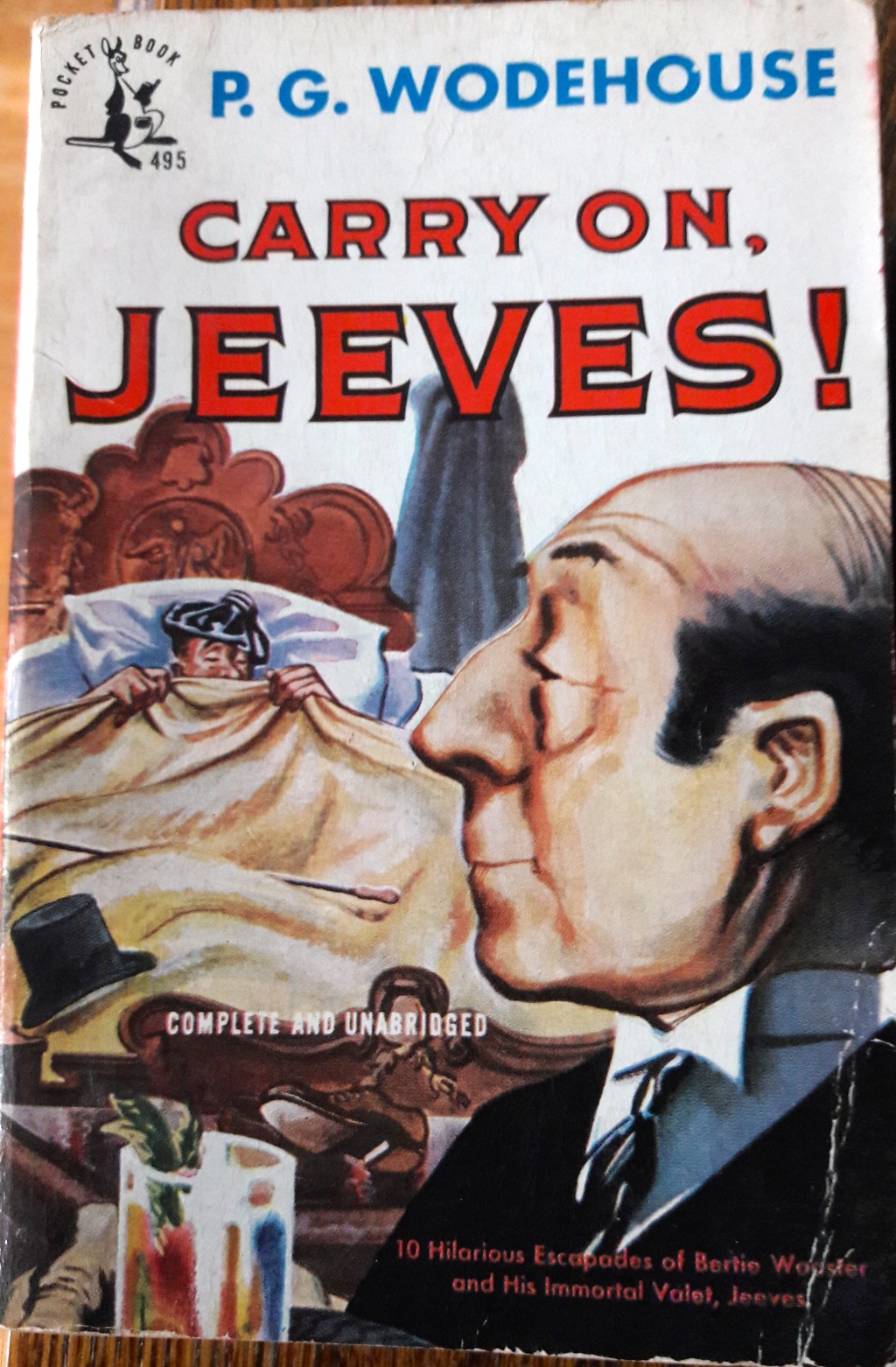
Bertie Wooster is a man without an immediate family but with a score of relatives and friends and a live-in butler or valet, a gentleman’s gentleman who goes by Jeeves. Bertie’s parents are conveniently dead, and he’s no siblings to shackle his adventures, which consist mainly of wasting time drinking and dining at the Drones, his men’s club, or at the racetrack, or getting into and out of engagements with young women whose mission in life would be to prop him up properly so that he might not be considered the actual wastrel he is, or getting into minor scrapes and follies with his comrades in trouble. Jeeves is the antagonist that prevents Bertie from serious injury his rich risk taking might seem headed toward.
Today, Bertie might be considered a trust fund baby, another wastrel who might someday grow up to be a president, but the Wodehouse story settings are generally around the Edwardian Era, and specifically the elite well-to-do whose fortunes have derived from conquest and capital growth. No one seems to have actually earned anything, but birthed into predicaments that are at once absurd, dastardly, and hilarious. Bertie and his buddies are royalty without the trappings of any kind of responsibility. They are moochers par excellence.
For the reader able to hold a sense of social justice in suspension for an hour or two of laugh-out-loud reading, Bertie and Jeeves provide an ideal escape. Often, the plots are thickened considerably with concerns over clothing, where Jeeves eventually outwits Bertie, stripping him of his leading edge fashion ideas. Minor characters from all walks of life enter the frays and provide a bit of economic diversity and compare and contrast action, or, at least, situation.
But the stories belong to Jeeves, whose constant background lobbying for reasonable justice in the Wooster household levels the mooching. He turns the lamp onto the mirror.
 The Coming of the Toads