Author: Joe Linker
-
Deconstruction & Design
 In the process of deconstruction we discover new ideas. We need not start with a design in hand. We don’t necessarily need a plan. Unless, of course, there is some destination we are particularly interested in, we need to get to. If that’s the case, we’ll usually find ourselves on the wrong path, wrong way on a one way street, people barking directions at us, flipping us off. But if we begin with deconstructing that destination, we often find we discover interesting things along the route we end up taking we would have otherwise missed. There will be constraints. Fences and gates. Do Not Enter signs. No Solicitors. Beware the Dangerous Critic!
At the same time, we shouldn’t be afraid to ask for directions, listen to our critics, gather advice, ask for consent, patience, forgiveness of our trespasses. That the severe critic may be lurking behind the next corner, hiding in a recessed alcove doorway, spitting sunflower seed shells from an open second story window, pulling us over to ask for license and registration – that the severe critic lurks in the shadows of our path is a good thing. The critic keeps us awake when we might otherwise fall asleep, and reminds us of our responsibilities to audience, sense, time, and place, direction, design, and deconstructions.
Coming Soon!
Common keyboard signs and punctuation marks become characters in this experimental children’s book for readers of all ages. Scamble and Cramble are two cats observing, interpreting, and commenting on daily events. Other animals come and go, too, changing with text and form and story. “Scamble and Cramble” may work best for independent middle grade readers. Younger children may enjoy perusing the book with an older guide. The book’s Concrete Poetry techniques use standard keyboard symbols and readily accessible font types and sizes. Readers may be encouraged to explore more the world of concrete poetry.
- Paperback: 108 pages
- Publisher: CreateSpace Independent Publishing Platform; 1 edition (June 24, 2016)
- Language: English
- ISBN-10: 1533501084
- ISBN-13: 978-1533501080
- Product Dimensions: 5.2 x 0.3 x 8 inches
Scamble and Cramble
Two Hep Cats
and Other Tall Tales -
Division Alt Guitar & Junior Brown
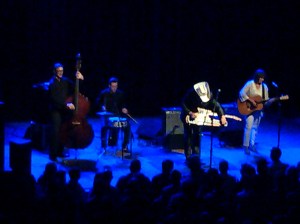
Junior Brown at Aladdin Theater Pic from Balcony Junior Brown plays an inventive, alternative guitar: method, form, and style. Brown is a rockabilly virtuoso, as in jazz guitar, Joe Pass was expert, where skill matures into virtue.
Junior plays a custom designed and built two-neck guitar that he plays behind a stand rather than hanging from a strap around his shoulder. The setup looks like a piece of railway wheelhouse. The top of the instrument is a six string, Fender style neck that’s affixed to a body that melds below into an encased eight string lap steel slide guitar. He doesn’t exactly play both necks at once, though there may be some looping going on, but the two neck setup allows him to quickly switch back and forth from one neck to the other – seamlessly, is the word.
And he switches necks while singing a couple of octaves below Hank Williams and half hidden under a Tom Mix style ten gallon cowboy hat. If Brown simply sat in a chair and played, he’d be something like classical masters Segovia or Julian Bream, but Junior Brown is a showman.
Saturday night, at the aged Aladdin Theater in Portland, Junior was backed by a stand up bass, a drummer playing only a snare and a single cymbal, and an acoustic rhythm guitar. The instruments were miked through large vintage Fender amps and mixed through the Aladdin’s speaker system. The instruments were clear and not too loud, but Junior’s voice sometimes had that muffled loudness button on sound from a mike set too loud, but that could have been where we were sitting in the small hall, about six rows back eye to eye up from the stage left big speakers.
I’m working on a reverse bucket list. That’s a list of things I’ve done but don’t ever want to do again. High on the list is attending an arena big concert. And small venues should play like, well, small venues, which means turn off the loud button. Other things on my reverse bucket list include working a jackhammer, climbing up on the roof to scrape off the moss, and worrying about how my academic colleagues might judge my writing.
We arrived at the Aladdin as the doors were opening, double lines divided north and south of the alcove entrance beneath the marquee. We had just disembarked from Line 4, the SE Division St bus, having walked a mile or so south to pick it up and another 1/3 of a mile across the old train tracks and the new Orange Line Max tracks, past the dozen or so level grade crossing bars, along the new custom walkway through safety gates and fencing, following the pedestrian pavement guides, where SE 11th and SE 12th merge into Milwaukee Avenue, and crossing big Powell Boulevard, where traffic gears up or down for the Ross Island Bridge across the Willamette River. A kind of new dividing line now emerges in one’s understanding of the changing cityscape, signaled as the difference between old bridges like the Ross Island Bridge and new bridges like Tilicum Crossing, the 135 million dollar “Bridge of the People.” There’s no less friendly pedestrian crossing than the Ross Island (indeed, it’s not that friendly to cars and trucks crossing), while the Tilicum accommodates only pedestrians, bicycles, buses, trolleys, and light rail – no cars, no trucks. The Tilicum is like a giant sailboat compared to a tugboat Ross Island.
Division Street’s Line 4 is much slower than Belmont’s Line 15, people on and off at nearly every stop, the traffic on Division as slow as a mournful church pipe organ. If you want to see a neighborhood in transition, from vintage and standard to gentrified and cantilevered apartment-ed, from dive bar drinking dens to posh diva dressed restaurants where mayonnaise is called aioli, and where even the food carts serve amuse-bouche appetizers, and all a kid needs to feel amused is an outside bench and a tall-boy PBA, check out SE Division between 52nd and 11th.
Kory Quinn with full band opened the show ahead of Junior Brown. We were somewhat divided on our first hearing of Quinn, his songs, banter with crowd, and sound. I thought the band was tight, listening to one another, the songs well written and orchestrated, but the overall system sound mix did seem a little full at times, the lyrics difficult to catch hold of in the loud medley of sound, some subtleties overwhelmed. That may say more about my old ears than about the young band. But if you like standing on the rails, a train of country hill delta musicians coming down the track all rattling away at once at full speed and volume, this is your band. Sorry I didn’t get nor can I find all the musicians’ names, but we heard an excellent harmonica player, good harmonized vocals, great lead guitar work from Michael Howard, solid bass and drum foundation, plus pedal steel. Kory Quinn’s band was mulit-task-talent party on.
But speaking of party on, back on the bus back on Division Street, the last weekend of 2016 spring was in full bloom. Folks hopping on and off the bus, standing in line to get a beer, an ice cream, a meal, hang out, listen to some local live music. There were possibly more people in line for the new Salt & Straw ice cream scoop shop as we found waiting to get in to see Junior Brown at the Aladdin. LA Larchmont district here in Portland via SE Division Street. Not quite, of course, but hyperbole is close friends with curiosity. And what’s curious about SE Division Street these days is where it might be going, and what it might continue to divide.
Junior Brown puts on a show, and while he might mimic sounds and styles, he does not lampoon, though he is open to satire. Late in his show, he played a haunting and halting blues piece after which he named Albert King as his inspiration. And he played the surf medley and some “Apache,” though Junior’s version of “Apache” sounded not so much like the Joe Pass versions. Junior finger and flat picks at once, slides with a metal tube, winds his strings up and down for effect, coming back in tune every time. He fidgeted with one of the amps a bit, not sure why, gave the vocals over to rhythm guitarist Tanya Rae Brown, highlighted his snare-drummer and bassist, came back to a standing ovation for a lengthy encore of songs.
There was no encore on SE Division as we headed back east on Line 4 after the concert. Everything seemed closed, places all shut down, the sidewalks clear. We had thought of jumping off somewhere to get a late bite to eat. We walked into the Woodsman Tavern, but were turned away by a benevolent waitress who explained the kitchen was closed but suggested we try the Landmark Saloon up the road a piece. We walked into the Saloon to a full tilt bluegrass band. But what’s remarkable about Landmark Saloon is the open patio space with food cart, where folks were just hanging out at the picnic tables, in front of a tall-boy PBR, a sweet smelling outdoor fire keeping a group around a small pit warm and friendly. But alas, we were still a bit late for food from the cart. He was still open, but the list of things he was out of was longer than what he had left to still serve up. We enjoyed the patio for a few more indecisive moments, then continued walking east to North Bar.
I’m not sure why North Bar is named North Bar since it’s in South Tabor in Southeast Portland. Well, it’s north of Larchmont, anyway. And a good place for a brew, but probably not a late bite, so we headed north up 50th to Hawthorne, rounded the corner, and ducked into the Sapphire Hotel, where we feasted on late night salmon cakes and beer and talked about Junior Brown and Kory Quinn and SE Division and Line 4 and wished one another a happy father’s day as we realized we’d crossed the night divide.
We left the Sapphire and continued north thinking we’d get a lift on Line 15 up the hill. Didn’t happen. Walked all the way, crashing well after midnight, thinking of what an epic post the evening gig down and up Division to the Aladdin and Junior Brown might make.
-
Things to Do in the Twenty-First Century
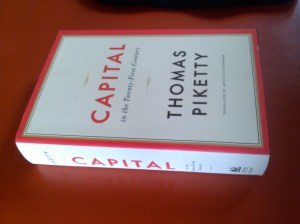 I had thought Thomas Piketty’s “Capital in the Twenty-First Century” would be one of those books I would continue to read about but would probably not read first-hand. At 685 pages, its great strength data, its cost new $39.95 (speaking of wealth and distribution), the French economist’s thick tome was not on my list of books to keep an eye out for, let alone add to one of the several stacks of books to read already piled about the house. Piketty’s book is a stack of its own.
In an Isaac Chotiner interview with Piketty at the New Republic , Piketty himself speaks to to the difficulty of reading such books:
IC: Can you talk a little bit about the effect of Marx on your thinking and how you came to start reading him?
TP: Marx?
IC: Yeah.
TP: I never managed really to read it. I mean I don’t know if you’ve tried to read it. Have you tried?
IC: Some of his essays, but not the economics work.
TP:The Communist Manifesto of 1848 is a short and strong piece. Das Kapital, I think, is very difficult to read and for me it was not very influential.
IC: Because your book, obviously with the title, it seemed like you were tipping your hat to him in some ways.
TP: No not at all, not at all! The big difference is that my book is a book about the history of capital. In the books of Marx there’s no data.
But I was wrong. First, fortune brought “Capital” my way. I was walking down to a distant mailbox (like newspapers disappearing, so too are the neighborhood mailboxes). On my way, I looked into our local library box. Only about five or six books. The Believer magazines I’d dropped off the other night were gone. But there at the end of the top shelf in the library box was Piketty’s “Capital.” I picked it up. Looked unread, brand new. Weighed about five pounds. Would it still be there in the box when I got back from dropping off my mail? I glanced through it. Couldn’t take that chance. Not with this kind of fortune. So I walked away with it, feeling a bit guilty though because I knew I might not actually read it, those stacks of unread books about the house already weighing upon me like a seven course meal when you’re not really all that hungry to begin with.
But I was wrong. Second, the book is not all that hard a read. While it probably won’t make anyone’s top ten common reader list, Piketty’s book is clearly written, concise, with well-wrought sentences, and full of remarkable insights and surprises. Consider this paragraph, the subject of which (experiential, anecdotal, or empirical data) revitalizes the current humanities in crisis folderol. Piketty says,
Intellectual and political debate about the distribution of wealth has long been based on an abundance of prejudice and a paucity of fact.
To be sure, it would be a mistake to underestimate the importance of the intuitive knowledge that everyone acquires about contemporary wealth and income levels, even in the absence of any theoretical framework or statistical analysis. Film and literature, nineteenth-century novels especially, are full of detailed information about the relative wealth and living standards of different social groups, and especially about the deep structure of inequality, the way it is justified, and its impact on individual lives. Indeed, the novels of Jane Austen and Honore de Balzac paint striking portraits of the distribution of wealth in Britain and France between 1790 and 1830. Both novelists were intimately acquainted with the hierarchy of wealth in their respective societies. They grasped the hidden contours of wealth and its inevitable implications for the lives of men and women, including their marital strategies and personal hopes and disappointments. These and other novelists depicted the effects of inequality with a verisimilitude and evocative power that no statistical or theoretical analysis can match.
Indeed, the distribution of wealth is too important an issue to be left to economists, sociologists, historians, and philosophers. It is of interest to everyone, and that is a good thing (p. 2, Introduction, A Debate without Data?).
And we learn on page 24 of Piketty’s book (Figure I.I) that income inequality in the United States (1919-2010) was at its lowest between the years 1950 to 1980. From 1980 to today, income inequality in the US has grown steadily, and is now higher than it was during the Great Depression years. Those 30 years of comparative stability (1950-1980) allowed for a sharing of accumulation of capital and knowledge unprecedented and not seen since. The US working class achieved a remarkable degree of middle class provisions, its children went to college in unprecedented numbers, without incurring today’s debt for education, but today nearing or in retirement may be returning to its roots.


Today’s library box held only three books, none of which I picked up: “A Nun on the Bus”; “Jesus for President”; and “Bernie Sanders: an Outsider in the White House.”
-
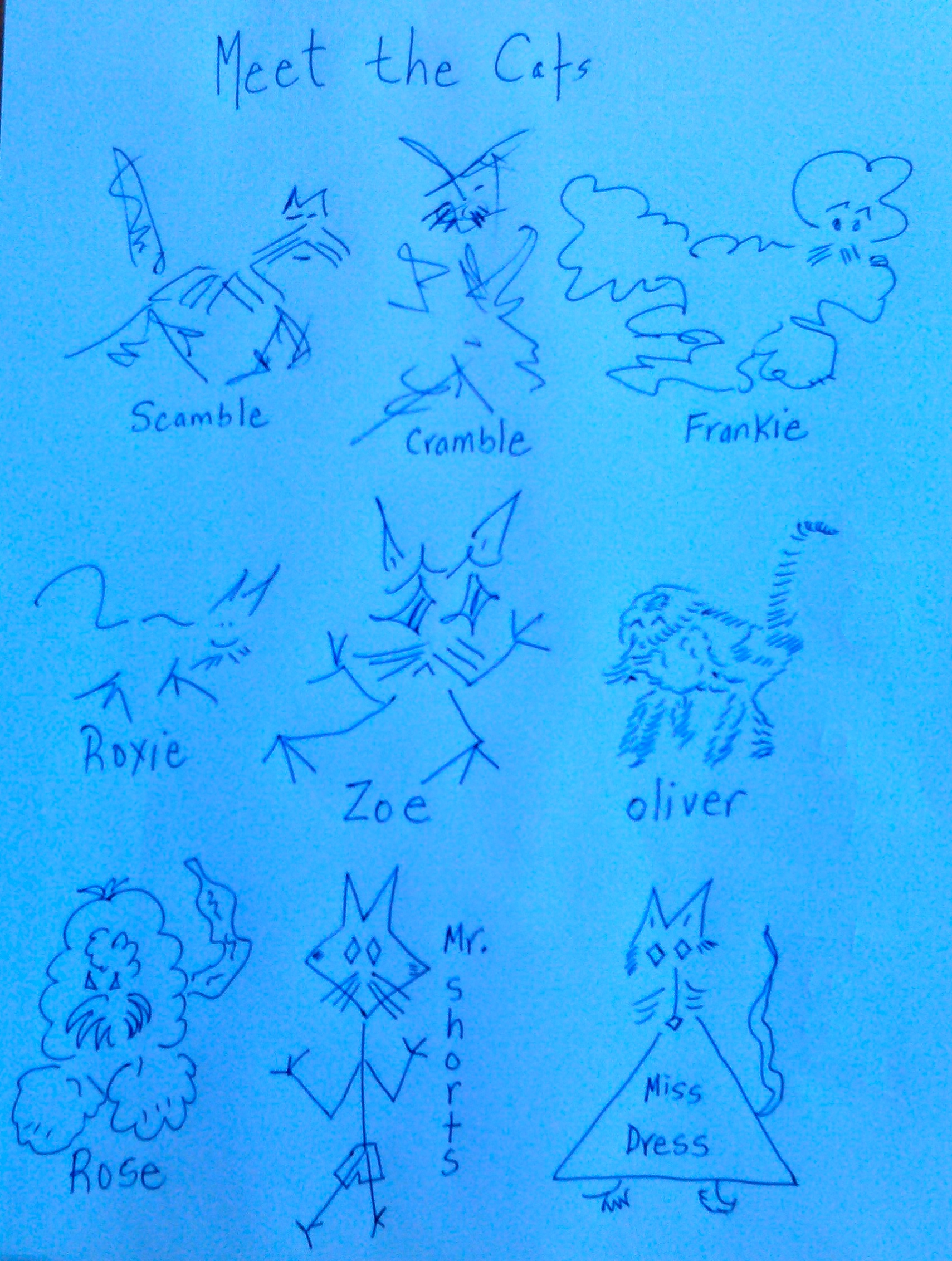
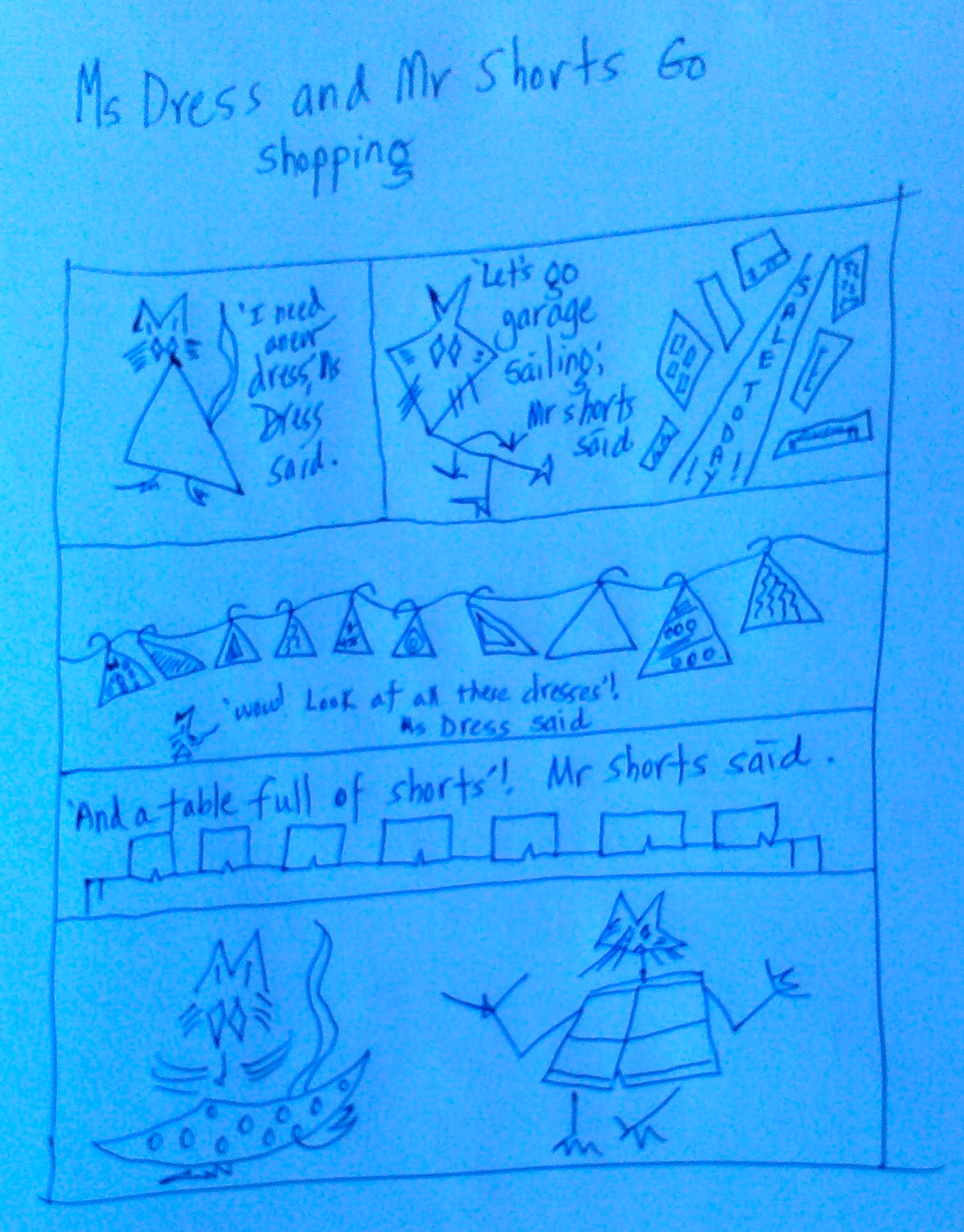
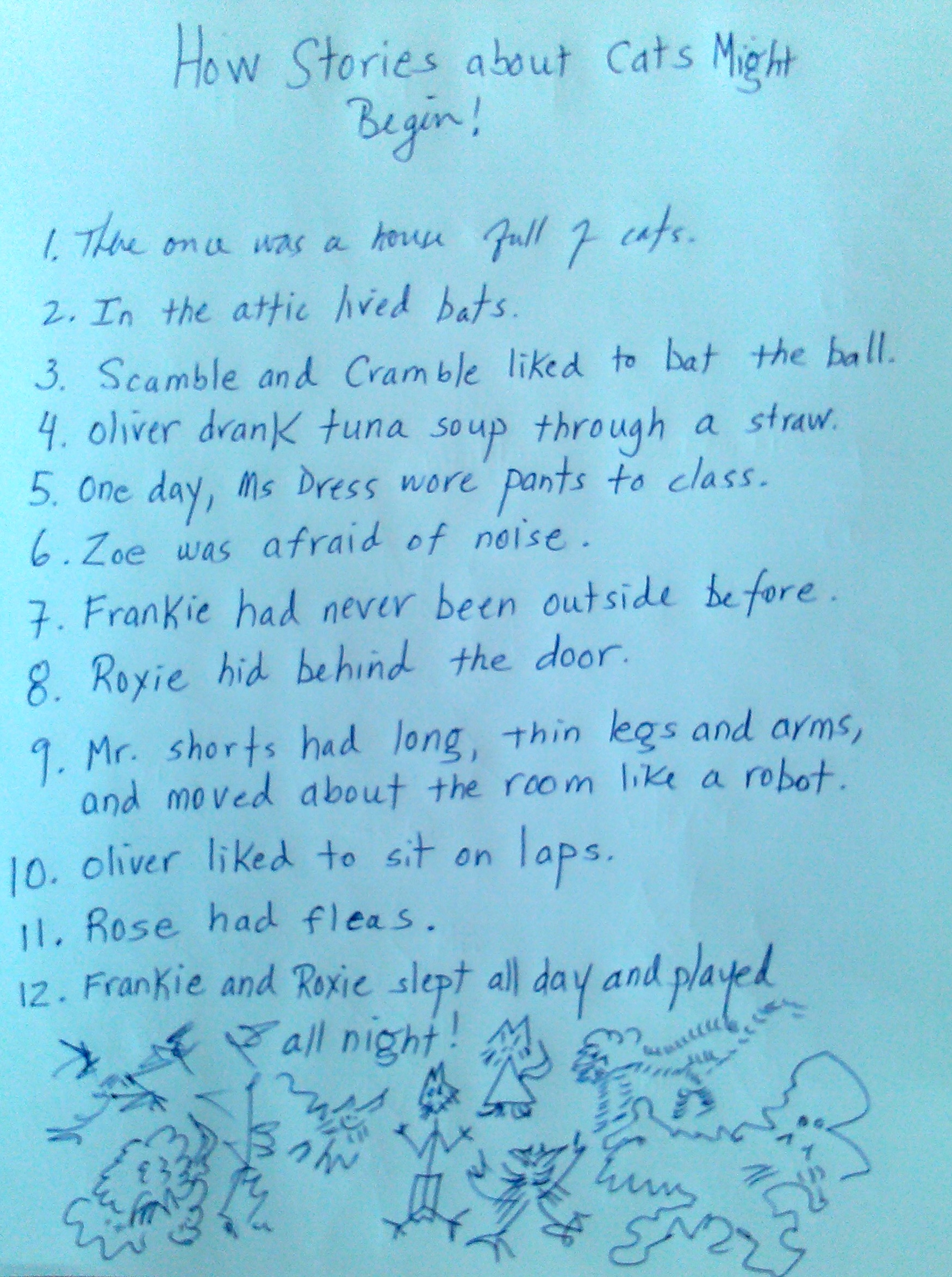
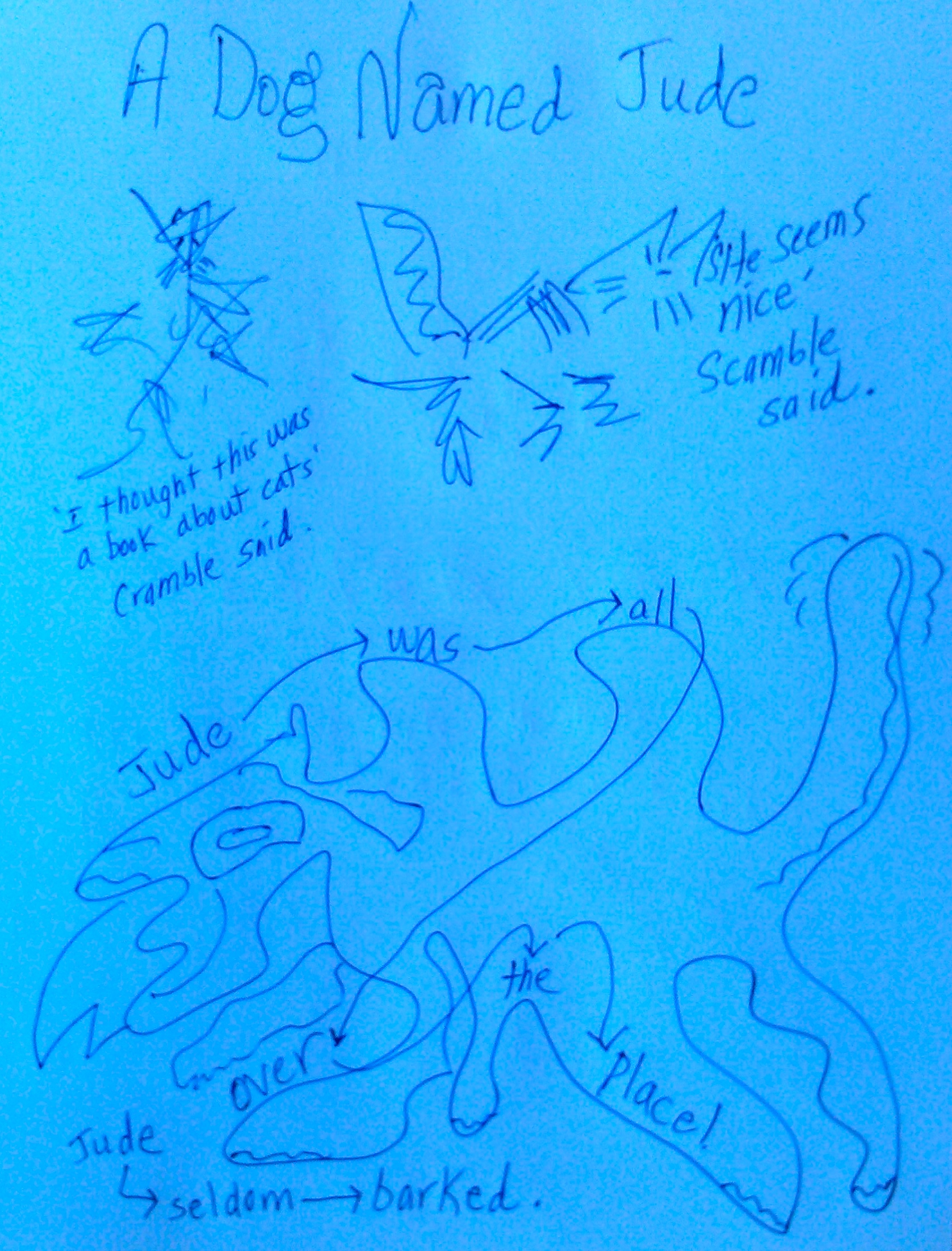
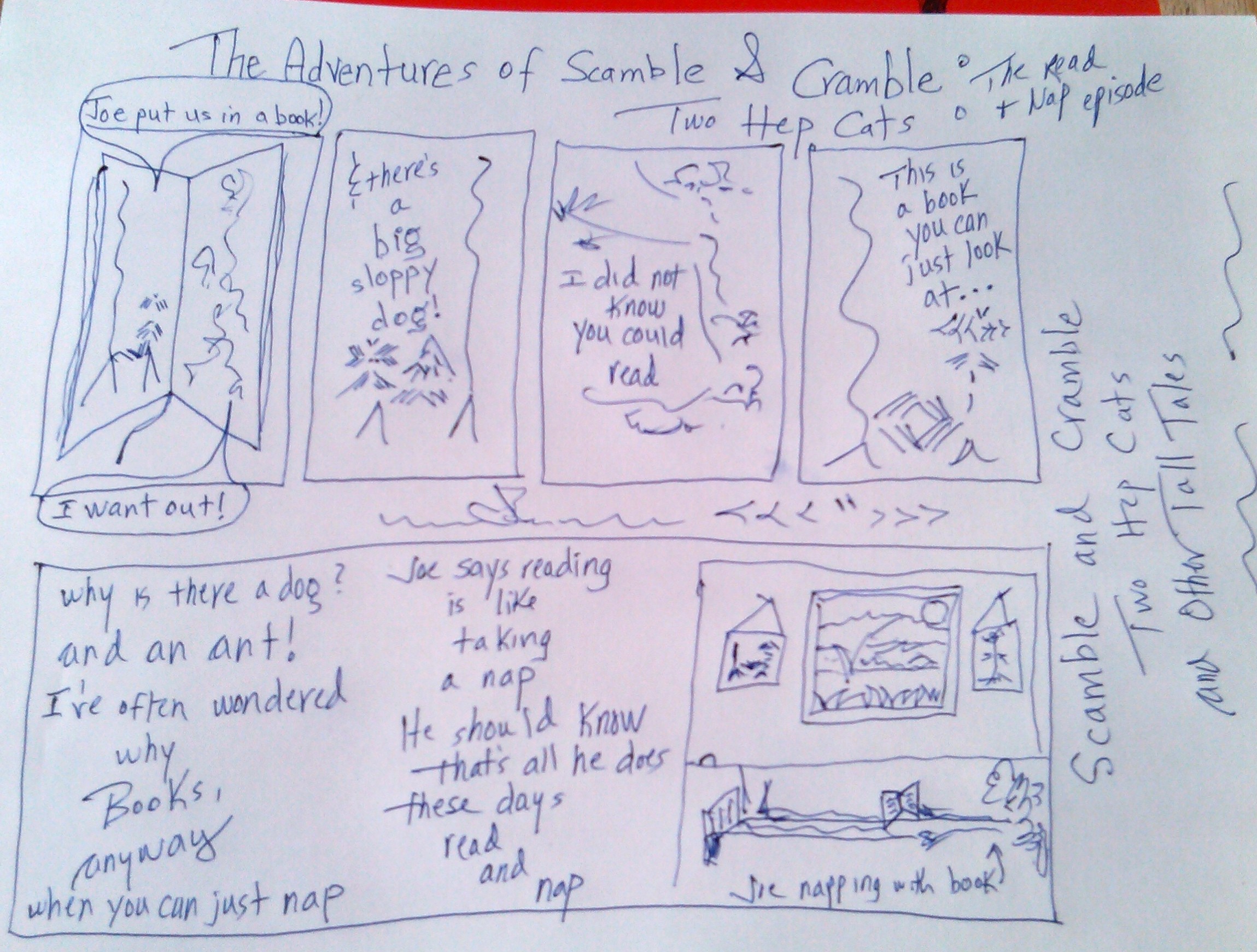
Sunday Morning Comics with Scamble and Cramble: Two Hep Cats
Sunday Morning Comics, featuring:
The Further Adventures of Scamble and Cramble, Two Hep Cats:
-
SE Portland Triathlon Photo Essay
For the first leg of my triathlon event yesterday, I boarded Line 15 and rode down to the river, disembarking at the east end of the Hawthorne Bridge. I sat in the last seat of the bus, in the left corner, with this week’s New Yorker fiction issue. I had read on the bus stop the Langston Hughes story, written around 1960 but only recently discovered. More about that in a subsequent post.
On the bus, an ad caught my attention, a woman in a red dress, orange hair, the copy: “Be More Brilliant.” The ad was up front, behind the driver’s seat, and I was too far away to read the smaller print. Note though that the imperative doesn’t suggest you are not brilliant. If you are not brilliant at all, you can’t be more brilliant. But why be “more brilliant”? Don’t I attract enough moths already? I thought of the two books I recently put out. Maybe my writing should be more brilliant. I took some pics from the bus of the south side of Belmont.
The afternoon was still overcast, and I felt a few drops of rain as I began the second leg of my triathlon, walking down the ramp from the bridge to the Eastbank Esplanade, a more brilliant name for the shared sidewalk with bike path that runs along the industrial, east side of the Willamette River.
I walked south along the river, a little under a mile, to Susan’s work, where I started the third leg of my triathlon, a short drive to Em’s place to visit the girls.
I didn’t get any pics while driving, driving a car these days multi-tasking enough as it is. The few pics I’d taken of the south side of Belmont, from the bus, came out blurry, not too brilliant. I tried to get a few murals, and a couple of the old buildings, the ones the developers, none too brilliantly some have been arguing, are in a hurry to tear down. We passed a typical east side tavern. I realized I have my shutter delay set too long. I had to anticipate where the bus would be when the shutter finally clicked. At the river I saw the lean-to boat setup again, and tried to get a contrast pic of the east side boat in the foreground with the west side yachts in the background. I paused at the OMSI sign to repeat Oṃ maṇi padme hūṃ a few times, feeling even less brilliant as I moved on. I never tire of the sign of Theory, and took yet another pic of it. The blue building was brilliant in the soft afternoon overcast light.
At Em’s, I snapped a pic of her copies of “Penina’s Letters” and “Coconut Oil,” sitting on the shelf next to her cookbooks, and I wondered if my covers were brilliant enough, or brilliant at all. I think so. But to some, brilliant might suggest shiny, and I went with a matte finish.
In Em’s yard, I took some pics of a flowering tree and a tricycle rained in rose petals. It’s almost dragonfly season here, and I thought how nature always seems sufficiently brilliant, yet also always seems to be becoming more brilliant. Nature is superlative, while we can only ever be comparative, until we remember that we are also part of nature, where we are most brilliant.


 at Em’s


-
Look Inside “Coconut Oil”
“Coconut Oil” is ready, the “look inside” feature enabled, paperback and e-version.
Forty years have passed since the close of “Penina’s Letters,” and Penina and Salty return to Refugio, a fictional beach town on Santa Monica Bay, in “Coconut Oil,” a sequel to “Penina’s Letters.”
Salty is again our first person narrator, and “Coconut Oil” continues an experimental narrative form – as Sal hands the mic off to several other characters and we are brought up to date on Refugio.
The themes of “Coconut Oil” include aging, housing and homelessness, gentrification, and how we occupy ourselves over time.
The style is experimental in a way a common reader might enjoy. And there is music! Songs, dancing, and some funky text features!
The back cover photo for “Coconut Oil” was taken from the northbound Coast Starlight train as it passed by the point at Refugio Beach, California, a campground 26 miles north of Santa Barbara, in the late 70’s. The front cover photo, more recent, shows the author’s shadow over a tree hollow holding mushrooms that look like bird eggs (where his heart should be).
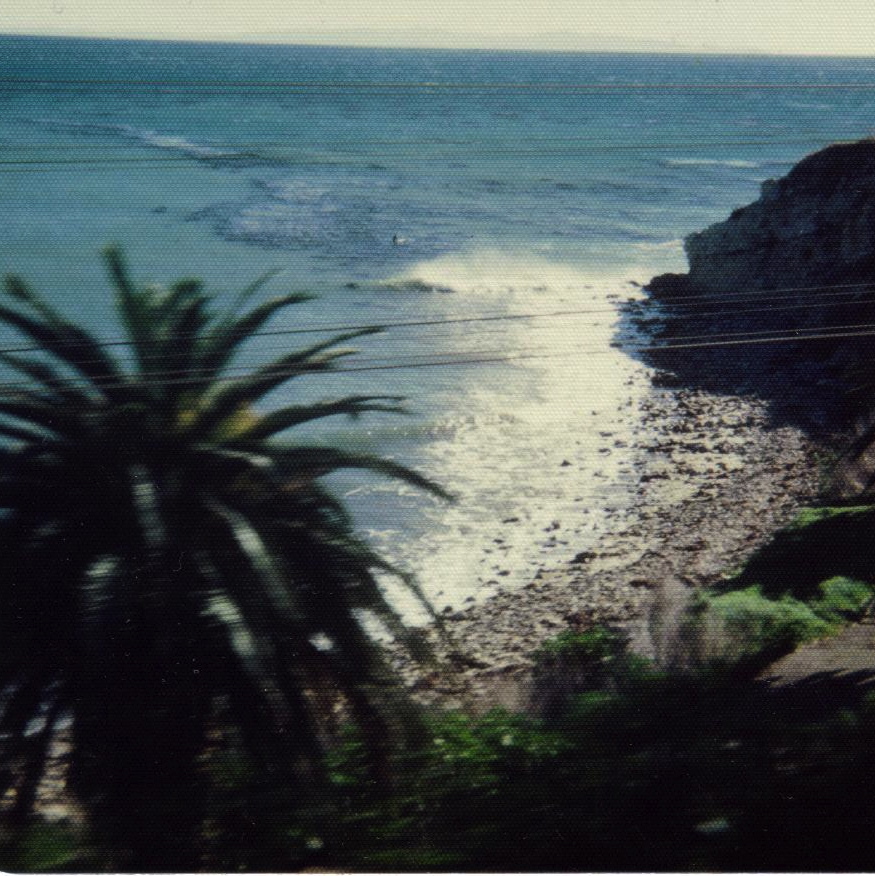
Refugio Beach from Coast Starlight Special


 The Coming of the Toads