Lettuce make someone happy souperfied. Greens and reds raised and cooked in summer sun. Old gourd melon face turn round and around. Squash straighten out cute little zucchinis. Carrot tops fuzzy green pointing poking. Turnip cold heart don’t be rutabaga. Radish reaction thistle never do. Wilt silly salty pinch potato eyes. Watching. Asparagus more of this stuff. Spears dollups thin slices of pink water. Peas take your jackets off and stay awhile. Ouch cucumber splinter onion oils mix. Tear drops sea salt keeping with tradition. Corn fits in hand like a hammer handle. Colorful beans leggy for you and me. Chives purple heads and slippery mushrooms. Tomato baseball radio garlic. Bread olive oil hot green jalapeno. Pepper corn and squeeze curve of lemony raspberry wild balsamic vinegar. Tossen flip thistle make summerone happy.
-
The Pine Jay the Scree of the Mock Orange
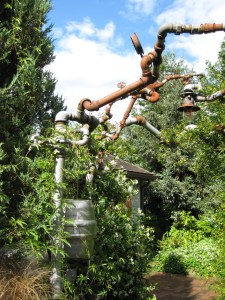 The cryptic cat her cautious criticism
of the green salsa garden plot proffers:“Are you a nested poet, then?”
the hoity-toity cat simply asks.“I have my cri cri critics,”
the Pine Jay stutters,pouring herself another glass
of mock orange soda syrah.“Are you going to mix
silver with orange, then?” asks the cat.“I would rather arrange the orange
against this blue windswept evening.”“That would encourage a paraorange
gown,” cynically suggests the cat.“Scr scr scree!” the Pine Jay screes,
her voice trailing off like a jet’s vapor.“Mock, mock!” the cat converses,
though alone now. “I never did like orange peel.” -
In the Yakima Valley
On the road again, and on the car radio, another Country Music song: I’m 44 now, soon 45 The way I been livin’ Lucky alive So much has been given And taken away Who knows what will happen Today Late summer, almost fall Red rust brushed peaches Dark dust green grape leaves Swelling purples under blue blouse sky: Woke up this mornin’ Didn’t know where I was Wrote a letter to Heaven, Reachin' out for you But you weren’t there And Heaven didn’t answer either Signs along the road, wood weathered grey, in the Yakima Valley: Antiques Fresh Cherries Walla Walla Sweets Later at the Grey Inn Motel Eating maroon cherries from a bottle Drinking brown beer Thinking one thing is clear and sure: Nighttime falls Lento, Largo, Larghissimo Yes, darkness comes Slow like snows, Like muted yeses, Like mouth harp nos, Like in Country Music songs, Driving through the Yakima Valley. Note (in response to one reader's question): The Country Music song lyrics in the poem are taken from an original song I wrote in 2004. So, no, I didn't hear the song on the radio, though I did often find myself driving through the Yakima valley, and I wrote the song on one my Yakima trips. I've explained the age range used in the song in a comment below. -
Ray, 1956
He feared drowning. He fell asleep on the bus,
sleeping past his stop, and on down to Redondo Beach,
the waves breaking, hard on hearing.He slept past the beach break at El Porto,
his head bouncing against the beach-side window,
his tools jiggling in his toolbox at his feet,
past the Manhattan Beach Pier,
the Hermosa Biltmore Hotel,
the Hermosa pier, on down to Redondo.The bus driver would have to speak up.
The evening water was glassing off,
the Strand bars filling with surfers,
their cream yellow and orange and blue surfboards standing
against cars, walls, wet, dirty sand waxed.He dreamed of fish, bottled beer, oysters.
He dreamed of broiled eel,
of yellowtail garnished with scallops,
dreams he did not understand.A giant squid rose from a thick gelled water
and reached up for him, and he quick stroked
in his sleep on the bus to dog paddle away,
back to Shively, the house near the railroad tracks,
where he’d built out the basement room in knotty pine.He awoke on the bus in Redondo Beach,
at the end of the line, foggy out now,
the sound of the surf muffled
in his ears. Flying fish eggs
surrounded his tired and dozed head,
his hair closely cropped,
his clothes dirty from the day’s work.
He’d returned the car, a ’56 Plymouth,
and salt filled his ears. -
Selections from Foulings Phonebook
Selections from Phonebook for Foulings Neighborhood of SE Portland:

     1: Foulings Tavern: 33 Foulings Street, Eastgate-3218.
     2: Jack Foulings, 33 Foulings Street, Eastgate-3218.
     3: Foulings Car Repair Shop: 20 Third Ave. No phone.
     4: Foulings Music: LP Specialists. Fourth and Foulings.
     5: Foulings Grocery: Corner of Foulings and Third.
     6: Flowers by Joyce: Sidewalk outside Foulings Grocery.
     7: Joy Number, 19 Foulings Street, Apt. F. Eastgate-3550.
     8: Foulings Cafe. Breakfast Daily, 5-11. 27 Foulings St.
     9: Foulings Books. Call for Appointment. Eastgate-1022.
     10: Foulings Plumbing, Repair and New: 9 Foulings Street.
-
Fantasia Fragmental
 If the color from today's flowers
weeped with sound,
this quiet evening on the avenue
would crash like some big bang gig.
The colors condensed the winter over,
distilled and drenched and dumped
into cavernous, smelly whiskey barrels
swarming with bees.
A yellow jacket searches
for a place to pitch her tent,
for the long hot busy summer ahead.
The spring rain fills every bowl,
brews and broods.
The yellow jacket screws her mud
to a camellia branch.
The water slows to vinyl,
the beach wood logs tattooed.
Waves like empty wine bottles fall
breaking into the fitful trash truck.
If the color from today's flowers
weeped with sound,
this quiet evening on the avenue
would crash like some big bang gig.

The colors condensed the winter over,
distilled and drenched and dumped
into cavernous, smelly whiskey barrels
swarming with bees.

A yellow jacket searches
for a place to pitch her tent,
for the long hot busy summer ahead.
The spring rain fills every bowl,
brews and broods.
The yellow jacket screws her mud
to a camellia branch.

The water slows to vinyl,
the beach wood logs tattooed.
Waves like empty wine bottles fall
breaking into the fitful trash truck. -
“Bury My Heart in the Muddy Mississippi”

“Bury My Heart in the Muddy Mississippi”
A Country Music song
Guitar Chords: GAD(Slow intro with a little lilt)
G A
I took my girl to the Friday night dance,
D G
But she said, “I really don’t like to dance.”(Lively now)
(G) Then some handsome fella
with the (A) swagger of Godzilla,
(D) asked her do you wanna (G) dance,
(G) and the next thing I knew
(A) away they flew.
(D) He’s got her in a (G) trance.Chorus
G A
Hey, Baby, don’t drive me crazy,
D G
I thought you said you didn’t like to dance.
G A
Well, bury my heart in the muddy Mississippi,
D G
I thought she said she didn’t like to dance.So I walked on down and I put my money down
On the counter of the mausoleum,
And I asked the mortician how much it cost to die
But he said I was a buck too short.Repeat Chorus
Late one night I was stopped at a light,
Revvin’ up my hot rod Ford.
Along comes a Chevy, at the wheel’s my Baby,
Askin’ do I wanna dance.
I took her off the line, pink slips on a dime,
And the rest I’m happy to tell.
The moral of this story,
The letter of this tale (D – G…)Repeat Chorus
-
Tales of X & Y: 1 – Teeter-totter
X thinks Y imperfect.
Y thinks X exaggerates.
X tells Y, “Why can’t you be more like me?”
Y replies, “You have no balance. You don’t know how to share. Life is a teeter-totter.”
“I’m walking down to the tavern for a beer and some darts. Want to come?” X asks.
“I think I’ll stay here and practice yodeling and yoga,” Y says.
Y                                   Y = Light
  _
     _
        _
           _                        /\ = Teeter-Totter
           /\ _
                 _
                    _
                       _
                          X         X = Heavy
-
Yes and No
 Yes yes yo yes yah yes yep yoahza youp
Yo yo yes no nope never over my
Yes no yes no yes no yes no yes noup
Not nape nip empty nix obnoxiously
You not yes no not no yes but don’t say
Buttresses yeses yeses yeses but
No nepe no nupe no nipe no no no yea
Yes yepe yes yupe yes yipe yes yes yes what
Butting do note chairs yes accidental
Dominoes goldeneyes moonglow eyes no
This will never do we are losing ball
Ants ants ants ants ants ants ants ants solo
So long stays yes and yes gives no to this
So long goes no and no takes yes amiss
-
Word Pics
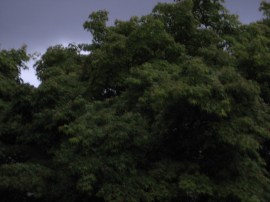 Turtle butterfly rock
Petunia seashell ceramic
pot candle wire stand
Gas meter downspout blue
slate red bricks green
hose
Blue wall with painted white
wood door with window
of six small glass panes
framed
Electric meter "Nutone"
metal stove exhaust fan
duct
double spotlight wall
fixture no bulbs wires
grub green fern
blue green blue fescue
grass.
Turtle butterfly rock
Petunia seashell ceramic
pot candle wire stand
Gas meter downspout blue
slate red bricks green
hose
Blue wall with painted white
wood door with window
of six small glass panes
framed
Electric meter "Nutone"
metal stove exhaust fan
duct
double spotlight wall
fixture no bulbs wires
grub green fern
blue green blue fescue
grass.
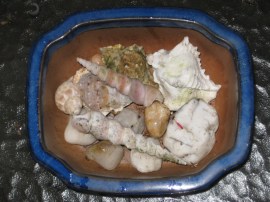 Chain link cedar planks
Redwood boards bamboo
Flower trash cans green
yellow and grey
Sheets glossy green laurel
hedge golden chain bench
Grapevine clothesline
Wire pool cues hall chalk
Ivy baseball bats raspberry
Green wine bottles
in yellow bin.
Azalea if you've read
this far.
Canvas sails to you gentle
reader and happy
Fish nets.
And may your day be free
of commas and other fences.
Chain link cedar planks
Redwood boards bamboo
Flower trash cans green
yellow and grey
Sheets glossy green laurel
hedge golden chain bench
Grapevine clothesline
Wire pool cues hall chalk
Ivy baseball bats raspberry
Green wine bottles
in yellow bin.
Azalea if you've read
this far.
Canvas sails to you gentle
reader and happy
Fish nets.
And may your day be free
of commas and other fences. -
Online # 2: Laptop Notes From Underground
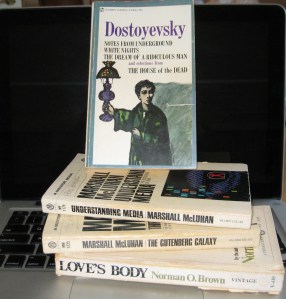 Imagine Dostoyevsky’s Underground Man with a laptop…
“‘Why you’re . . . just like a book,’ she said, and I thought I caught a sarcastic note in her voice again.” Dostoyevsky’s Underground Man is with Liza, a prostitute, but what he wants is to talk to her. He finds her ellipsis revealing. She pauses, and she’s caught the mouse in a trap, even if she didn’t mean to. He mistakes her uncertainty for sarcasm: “I didn’t understand that sarcasm is a screen – the last refuge of shy, pure persons against those who rudely and insistently try to break into their hearts” (174), he says. Four pages of rant follow, and he makes her cry. But she’s his perfect audience. Had he a laptop, he would have pulled something up to show her. But was she being sarcastic, or was she reading him literally? What she says is accurate; he is just like a book.
“It goes without saying that both these Notes and their author are fictitious,” Dostoyevsky says in a footnote to the first page of “Notes from Underground,” which begins with “Part One, The Mousehole” (90). If it goes without saying, why does he say it? Another paradox. The typographical man develops a voice, even if he has nothing to say. Online, we feel a part of something, but of what? It’s enough to feel connected. In any case, these men do exist, in spite of this one being fiction, Dostoyevsky wants to make clear, and he wants to mark the difference between narrator and author. But in trying to distance himself from his narrator, Dostoyevsky adds another note to the pile.
I’m online again, going with the flow, superslow though, gliding, electri-gliding in the cerulean world of blues. “I’m so lonesome I could cry,” Hank Williams sang. But does he cry? He doesn’t tell us that he cries, just that he feels like crying. If only Hank had a laptop. How high the moon? He could look it up.
“Suffering is the sole origin of consciousness” (118)*, the Underground Man says. Later, Jung takes up this theme, that consciousness is born in regret, in memory. But how does man express his regret, which is his suffering? “The fall is into language,” Norman O. Brown said (257). What do we think about if we can’t remember anything? After reason, the Underground Man explains, “All that’ll be left for us will be to block off our five senses and plunge into contemplation” (118).
We were talking about the possibility that online culture diminishes memory because the “onliner” (i.e. someone online, not necessarily a reader, since one can go online without reading – but what is reading?) is constantly looking things up, one thing leading to the next, seemingly random. Nothing is memorized; the bookmarks are endless. If the fall is into language, browsing is free falling. But why all the notetaking in book culture? Can’t the readers remember anything? Non-literate people, McLuhan explains in “The Gutenberg Galaxy,” have much better memories than those born to books. Is there suffering being online? “The most obvious character of print is repetition, just as the obvious effect of repetition is hypnosis or obsession,” McLuhan says (47).
“I was so used to imagining everything happening the way it does in books and visualizing things falling somehow into the shape of my old daydreams that at first I didn’t understand what was going on. What actually happened was that Liza, whom I had humiliated and crushed, understood much more than I had thought. Out of all I had said, she had understood what a sincerely loving woman would understand first – that I myself was unhappy” (197). The Underground Man is stuck in a literate view. McLuhan: “The new collective unconscious Pope saw as the accumulating backwash of private self-expression” (308). The Underground Man’s literacy has turned him into an individual, and he’s nowhere to go. This is another reason he appears when he does; his point of view is his own beacon.
The sufferer comments. This is why the Underground Man “has appeared, and could not help but appear” (90), to explain why he has appeared. The browser joins the Internet commute, changing lanes compulsively but leisurely. Summer is near, and in the distance one can hear the Internet Highway and superfast modems melting across asphalt desks backlit with electric candles. A commenter interrupts the flow, but for the Underground Man with a laptop, comments are closed. Go start your own blog. I’m in the slow lane here. Go around me, he signals out his laptop window. Go around.
“I knew that what I was saying was contrived, even ‘literary’ stuff, but then, that was the only way I knew how to speak – ‘like a book,’ as she had put it” (179). The Underground Man is literate; Liza is not. But Liza intuits what the Underground Man must read. McLuhan explains the difference: “The visual makes for the explicit, the uniform, and the sequential in painting, in poetry, in logic, history. The non-literate modes are implicit, simultaneous, and discontinuous, whether in the primitive past or the electronic present, which Joyce called ‘eins within a space’” (GG 73).
“Enough,” the Underground Man says, but the closing footnote says there are more notes. “But we are of the opinion that one might just as well stop here” (203), Dostoyevsky says.
* My text (Signet Classic CT300, 1961, Seventh Printing, translation by Andrew R. MacAndrew), reads, “Why, suffering is the only cause of consciousness.” But I exchanged just this line for the Constance Garnett version of the line, which I prefer for its sole (solo) and soul homonymy (not to mention the suggestion of the sole of a shoe).


 The Coming of the Toads