Category: Writing

  • Out on a Limb, and Text Mess Age

    Out on a Limb

    Out, out
    reach,
    be

    Wary
    stool
    legged three,

    Eye on
    far off
    complacency.

    All that fall must
    spring from this
    stretch sketch.

    Text Mess Age

    1. time u off?
      W?
      eta u gt hm?
      IDK
      Udu 2
      LEAF ME BEE!
      yr so techy
      U WATY?
    1. dry clothes pinned
      drift aloft couple
      leaning from window
      two squirrels wrestle
      in grass & chase
      after one another
      across clothesline,
      hopping over
      upside down
      stick figures,
      cell phone lost below
      in rampant weeds.
      VERY NICE. U WASH DISHES? VACUUM?
      FIRE UP BBQ?
  • Throwback Thursday: The ER and the Stroke

    When I quit the day job, nine years ago now, I inquired to volunteer at a local hospital, and was processed through a formal application and selection drill: application with references and background check; tuberculosis test and booster shots; orientation that included a grand tour of the byzantine hospital bowels; attend specialty departmental training; get a branded work shirt and a photo badge, a job post, and a schedule. I was assigned to the Emergency Room.

    There were two main entrances to the emergency room, out back, where the emergency vehicles (ambulances, fire engines, police cars) enjoyed a red carpet treatment, and out front, which was open to the general public, patients arriving alone, with a partner, in small groups, by car, cab, city bus, bicycle, or on foot, in all manner of conditions, inside and out, physical and mental and emotional, in every kind of weather. I worked the out front entrance.

    At first, I was given three main duties or responsibilities: I maintained a fresh supply of wheelchairs at the entrance and greeted patients who needed one at the sidewalk or curb, wheeling them inside and up to the reception desk; I walked around the waiting room tidying up and cleaning as necessary; and I handed out bottled water, blankets and pillows, and ice packs. Occasionally, I ran errands out of the ER, collecting wheelchairs that had wandered off like shopping carts from a grocery, or picking up something special for someone from the gift shop or cafeteria, or showing some lost visitor the way to the elevator that would get them to the floor they wanted. On my way back to the ER, I might slip into the chapel to ensure there was at least one candle still burning.

    Usually, I was the only volunteer on a given shift, or a couple of shifts might overlap, and another volunteer and I might bond and compare impressions. I had agreed to work any day or time, which meant I got some evening and weekend shifts, when the main hospital felt sort of like a ballpark when there isn’t a game going on, but the ER concession was busier than ever.

    One of the shift supervisors was keen on keeping everyone looking busy. Usually, everyone was busy, but Big Nurse, I’ll call her, though she was a tiny lead wire, frowned on any posture that might suggest idleness or shiftlessness. At orientation, the topic of blood was introduced. Not for the squeamish was the ER. If you had a problem with blood, they could find you a job in an office somewhere, safe from the oozes and crusts. Still, volunteers should all avoid blood contact, and in any case, would not be required to touch anything, well, bloody. One evening, I wheeled a patient holding a large rag under her arm into the waiting room. She was quickly admitted, but we had stopped a few moments outside the ER. On my way back with the wheelchair, I noticed some blood pooled on the tile floor. I told Big Nurse about it. Well, she said, clean it up, and she handed me a pair of gloves, a spray bottle of cleaning solvent, and some towels. Throw the towels and gloves into the toxic bin when you’re through, she said.

    I sprayed and scrubbed the floor clean of the blood and properly disposed of the tainted tools of the trade. Returning to my station, I looked back at my work, and there gleaming in the unfriendly light of the lobby was a spot in the tile floor that looked as clean as the holy grail. I had either washed clean through the floor finish, or the rest of the floor had not been cleaned in some time.

    You might think a visit to the ER a rare occurrence for most individuals, but there were a few regulars everyone seemed to know by name, and one, in particular, was adept at making a scene. The night I met him, he was being treated like the boy who cried wolf one too many times, and he was not being admitted. I was asked to help him out of the lobby. I asked him if he’d like a wheelchair. No, he said, grabbing and wrapping my arm in his, spreading an amazing swath of sweat across my bare arm. Just hold me up and help me walk, he said, assuming now the most stoic of attitudes. After helping him out, I went to the restroom and scrubbed my arms as if I was heading in to surgery, unsure if the ER was my calling.

    The reception desk work station separated the waiting room from the general emergency room complex. After I’d been a few times on her shift, and possibly after seeing I could handle a bit of blood and sweat, Big Nurse began to give me jobs inside the ER. You entered the actual ER through a large set of automatic doors, the opening big enough to wheel a chair or bed through. Immediately inside the ER were smaller, private hospital-like rooms where nurses and doctors completed patient triage, fixed small complaints, prescribed, or ordered x-rays or other tests, admitted patients or sent them home. Down the wide hall and around the corner from the private rooms, a large, well-lit theatre-like area was rigged with gurneys, nurse stations, and assorted medical equipment. It might have been some back stage of a movie studio lot. This is where the patients who arrived in ambulances were admitted and worked on by shapes in green scrubs wearing masks and plastic gloves.

    My new jobs inside the ER proper included remaking beds, tossing used pillow cases into the laundry and fitting on new ones, tidying the exam rooms, emptying trash cans, replenishing supplies, including gloves and towels and tissues. I came and went purposefully, mostly ignored, everyone busy. Back in the waiting room, a couple of children were playing a game of running around in circles. Big Nurse told me to gather them up, take them to the back where there was a kid’s play area, and read them a story or something. She said this with such optimism and confidence you might have thought I had included a stint with Mr. Rogers in his wonderful neighborhood on my resume.

    As a volunteer, I had a prepared, approved script should I get any questions from people in the waiting room. I am a volunteer, but I know you have not been forgotten. Sometimes, I would walk to the work station and look at the check-in chart, returning confidently to the waiting patient, assuring them they were still in line. Still, there would be questions I could not have answered if I wanted to: why am I here; why is this happening to me; what’s taking so long; I was here before them; how much longer? I’m going outside for a cigarette – will you come and get me if they call my name? They don’t call it a waiting room for nothing. I started bringing some supplies from home: crayons and coloring books for the children; old New Yorker and Rolling Stone magazines; a couple of used Louis Untermeyer poetry anthologies; a couple of decks of playing cards. The supply had a way of getting used up; things disappeared.

    Big Nurse handed me a clip board and told me to call the patient’s name and escort them into an exam room in the ER. I walked out into the waiting room a few steps and called a name, ending it with a hopeful question mark: Joe?

    Occasionally, I was invited by a patient to sit and talk, which meant to listen to what had happened. Sometimes, things slowed down, and I walked around the waiting room collecting magazines, picking up empty bottles, tossing used ice packs. The emergency room is open 24 hours a day, seven days a week, all year long. At home, I got busy doing some other things. I missed a week in the ER, then another. And at some point, I realized I probably wasn’t going back. I wasn’t going to be one of those volunteers who had logged in a record number of hours for the year and had their name recognized on a display board in the lobby.

    Instead, as these things happen, one Saturday afternoon, I found myself waiting in the waiting room of the ER. Susan had driven me down. Apparently, I was having a stroke. I don’t remember any volunteers. We waited a long time. I felt better. I told Susan I was going to tell them I was going home. They checked their log. Why are you here, again? I tried to explain again what had happened. But I seemed ok now. Well, you’re here. You should talk to someone. We’ll get you right in. And they did. And I was admitted and stayed a week. About a year later, I wrote a little piece about the experience the Oregonian published, which you can read here.

    For those who might think of the world as a waiting room, find someone who appears to be waiting, and offer them something to help with the wait.

  • Songs Without and With Words

    “Music as discourse (jazz) doesn’t work,” John Cage said. “If you’re going to have a discussion, have it, and use words.”[i]

    Cage’s claim might have met with some disagreement last Wednesday evening, when around 100 jazz and book festive fans filled Classic Piano’s small recital room for the launch of Lynn Darroch’s new book, “Rhythm in the Rain: Jazz in the Pacific Northwest.”[ii]

    The recital room filled with folding chairs sloped downward, a small theatre, to a raised stage. In the back of the room, a table laden with cheeses and crackers and wine and such was bookended with a chair on which sat a stack of Lynn’s book, fresh from Ooligan Press, ready for selling, signing, and reading.

    On the stage, Lynn stood behind a podium and read aloud in his distinctive forte-piano voice passages from his book, accompanied by jazz pianist Tom Grant, improvising in a range from pp to ff , in focused conversation with Lynn. (Visions of Rexroth and Ferlinghetti and “Jazz in the Cellar,” but missing Kerouac and company buzzing around existentially obnoxious.)

    The discourse worked. “The musicians seem to trade remarks, and sometimes talk along with one another, as if each were reciting a text – a poem or a scripture – which they then consider” (28). “Iyer said: ‘It’s not that we just hear sounds. We hear the sources of the sound, and we’ve evolved to identify them’” (28).[iii]

    But do we hear the sources of the sound when we listen to music through electronic speakers? Or when we listen in retrospect? Is the source of the sound the speaker, and not the instrument, the source of sound the instrument makes having been converted from wood and string, brass and breath, hand and beat, and which substitutes or confuses audio signals with true source sound?

    Lynn backed away from the podium, and Tom Grant segued into an intricate rendition of Thelonius Monk’s “Blue Monk.” Grant sat at a grand piano, his feet never tiring on the pedals, his focus on Lynn’s discussion.

    There came a break during which Lynn sold and signed copies of his book. He gave away a free CD containing some his readings, accompanied by jazz, to fans buying the book at the launch. Tom sat on the edge of the stage chatting with the vocalist Shirley Nanette, who had been sitting in the front row in the audience. In the back of the room, several students associated with PSU’s Ooligan Press chatted about book design, jazz, blogs and other forces of the moment, contributing to a new chapter of jazz in the northwest.

    Outside, the evening was dark and wet and not many people were out and about. A few smokers occupied the tables and chairs on the sidewalk next door at the Aladdin Theatre.

    In “The Elvic Oracle: Did anyone invent rock and roll?,” in an aside on Sam Phillips’s Sun Studio experience, Louis Menand relates an anecdote on the studio sound as follows: “The band had damaged an amplifier on the way to the studio, so it buzzed when music was played. Phillips considered this a delicious imperfection, and he kept it. That is the sound that makes the record, and many people have called ‘Rocket 88’ the first rock-and-roll song.”[iv]

    Many of today’s music listeners value the most expensive and exotic, delicate and accurate sound systems, in order to reproduce the sound of a broken amplifier. The recording and reproduction of music and sound typically, if not always, can only cover the original. “All history is retrospective,” Menand concludes: “…a legend is just one of the forms that history takes” (87).

    [i] “Music as discourse (jazz) doesn’t work,” John Cage said, in his “DIARY: HOW TO IMPROVE THE WORLD (YOU WILL ONLY MAKE MATTERS WORSE) 1965,” the first text in his collection “A Year From Monday.” “If you’re going to have a discussion, have it and use words” (p. 12).

    [ii] Rhythm in the Rain: Jazz in the Pacific Northwest, by Lynn Darroch (Foreword by George Colligan), Ooligan Press, Portland State University, 2016. 235 pages.

    [iii] “Time is a Ghost,” by Alec Wilkinson, Feb. 1, 2016, The New Yorker, on the physicist turned jazz musician Vijay Iyer.

    [iv] “The Elvic Oracle: Did anyone invent rock and roll?,” by Louis Menand, November 16, 2015, The New Yorker, on the random, fortuitous, indifferent forces that have helped influence what listeners hear and who they hear it by, and how those forces get encoded in legend in retrospect.

  • Old Blue

    An instrumental guitar version of the old folk song, “Old Blue,” recorded impromptu using Garage Band on the laptop, two tracks, each recorded using Telephone Vocal, then copied and pasted twice, for a total of six tracks, the pasted tracks each using a different Garage Band library voice (including Deeper Vocal, Dublin Delay, Surfin’ in Stereo, and Mystery Chorus). Check it out!

  • Flashing Lights and Random Noise in the City of the Brain

    The ophthalmologist asked if I was still seeing the flashing lights. Rarely, but hard to predict. So the brain has gotten used to them, and is ignoring them, she said, and I immediately wondered why that same brain couldn’t ignore the tinnitus sounds also.

    Sophisticated sound systems increase chances of distraction from random noise. If you must cough, wait until the crescendo is about to peak. Clarity of sound is valued. Increase pixels, dots, from cartoon to photograph. Whatever might muddy the waters is considered distraction. Clarity is a value that dithers. We must learn to connect the dots.

    But what is distraction? And when might distraction be desirable? Rocks viewed through water look different after the creek dries out. The transistor radio is the perfect transmitter of the three minute basement tape composition recorded on a single track hand held device. Form may distort or obscure content so that we might hear, see, feel, smell, or taste what we might otherwise have missed, though the effort often fails.

    Kindness, sense of humor, forgiving, joy of life.

    Culture provides for cloistered clarity, photographs viewed through filters, the eye a sieve. The ear a strainer. We may not wince quite as much from scenes in a film when intoxicated from the smell of buttered popcorn.

    “How do you know but every bird
    that cuts the airy way
    Is an immense world of delight,
    closed by your senses five?”

    Just so, but in any case,

    “A fool sees not the same tree that a
    wise man sees.”

    (Two quotes above from William Blake’s The Marriage of Heaven and Hell).

    I first heard of random noise working with some actuaries on multivariate analyses. In the context, noise is unpredictable and therefore unreliable. Random noise does not appear to correlate, nor can its causes or effects be accurately tracked or explained. Probability becomes problematic. The treatment is the same as for tinnitus, where smoothing or dithering renders the unwanted noise invisible. Random noise is asymmetrical, or anti-symmetrical, and expressed by numbers, sounds, colors, or any other output, a given sequence of random noise probably cannot be duplicated.

    Things are rarely right on, but approximate; why then the need for clarity, for perfection, for proper grammar, pronunciation, spelling, punctuation? Prescription is an attempt to clarify, but description is far more accurate.

    “Bright lights, big city, gone to my baby’s head” (Jimmy Reed, 1961).

    Here is a four stanza composition, each stanza four lines long, expressing random noise in hexadecimal format. The piece can be played musically if each letter is expressed as a note and each number expressed as a duration (the absence of g might be noted, because the base is 16). There are no more instructions. The fewer instructions, the more random the results. Randomness may be the prefect solution for writers with copyright issues. Interested readers may reproduce the exercise below at the ANU Quantum Random Numbers Server, but no matter how many times you try, you will probably never come up with the same sequence shown below. Plus, each line below has been truncated from its original. Other arbitrary changes made to the original output from the server include all zeros removed, and spacing and line breaks added.

    Dither # 1

    1ee 9f 9f7454 cd2 a a77114 da a4
    6f2 8eab 4fc1 bad b9a13 c8 d23
    19f e3 5a 27bd 4c361 e8 dec c211
    b3 6a f5 4645407 d85 9 fa 35 efcbbacb

    86c c3 681 d5 f5 74bc c3a 8ee8 6 f2 92 c5
    91 c5 1 b3 4 b7 f68793753 dd 38ba 34f1e2d
    814 eff c6884 aa 30d4 e1 a8 dc5 6c 4b
    182986 bfd 982 d5 805854 c7

    fc6 6e2172 eab fb 2b5
    74 4afef c8 40 c57 c9 4 bab 1
    b86fa 8c 4 9a 39 ffba 99ac 89 bd5 be
    97 b8 8c f79 477 a c5 7d 9d d 13b 2

    53 79 53 d3 61d3b178c68882aa 6 cefbbf77
    d8b449 efaf 73fa8917 bfb 473774ffc1 d7 d9dfe8
    1d3c c8 99761685 c21cd9 2569935ca2de6b7 ebb
    23513e76b828b a5 ac

    And the lines below were copied from “The matrix” streamed live from the AUS Lab and pasted without changes, except to color – the original contains the matrix green flavor, but it wouldn’t copy, so I’ve approximated the color with a font change. As I read through the composition, I could find no distractions, but upon preview of the post, it appears that WordPress coding has been added, probably because of the change I made to the font color. I find the result distracting.

    È[Õ‚‚ω9(C∫}¾„õ°v¸JËBؾ{ΨÉŠq®ψξ
    .Ó½ïpÚ±/zò→‹πɲ˼ΦÏ‚óæ;MIÅ<9Ð9š֑±ªGæ↔Ñ
    ïΧ8β)hDœa1tR˜Χε¯Š4∫ÈQ”R/Ì),¦êí‰f9õÚ¯Xîé:
    #¿7{‘‡ÆÙ™κë‹g¡ÖÀoªyÖ‡ƒPiDë»öÝ√üÄΩ¹+∪ÊDγÌ
    xKòÁNπ:∂t-Eh픉#.=φðρ—yœ9UR—λY¤ω→ÂZãé}:σ
    öÝ=±¨Íθ*Ší%τ~νËÍ[&αζF7ÏòUœκ_λωW#θ‡ûqº•Ëã
    ú‡LêμÞÑÖ2:λ∂F↓°ψÌ¡pΤ›e–à.N!ÎûƒûˆhqÔÏa?ƒ</span>
    <span style="color:#00ff00;"> ↔ζÆ~8ΤºÇ!#∄8ÃLLØθ¡&amp;∪ß|cZk±xÁúο@∪ÏDÜþè'¡{</span>
    <span style="color:#00ff00;"> ù’;θfÑÆÏ7ψμE„&lt;ºÙ∃’a√ÖΧŠΣσÕ¢¥æÆ5Æρ
    ÄO“jJω

    Readers often ask what a poem means. Usually, if nothing else, what poetry means, in spite of repetition in form and sound and sense, is that you can’t guess what comes next:

    What is correct in quantum indeterminacy?

    One year, we went to hear the jazz trumpeter Donald Byrd at the Ash Grove in Los Angeles. But he was too loud, and we had to leave. I’d already had some hearing damage, forgetting my ear plugs at the Fort Bliss rifle range, working the jack hammer from the compressor truck without plugs, thinking I guess that I was born with immortal hearing. Should have known better; my father suffered from ear damage. The high school I attended, Saint Bernard, in Playa del Rey, sat next to the runways of LAX, the planes taking off often a welcome break to a hard-boiled lecture.

    My father often heard what was said, but muffled, without clarity. He taught himself to read lips. He was a good listener, and an avid talker, in spite of a stutter. I suspect he stuttered because he was unsure of pronunciations, the result of his hearing difficulties. Or maybe because he could not hear himself talk. One year, hearing aid technology having improved, he had surgery on both ears, to clear out rotted bone and crud, and was fitted with new hearing aids. In no time, his stutter disappeared. My mother was sure this was a miracle.

    We went back to the Ash Grove to hear the guitarist John Fahey. We were seated in front. John came out with his guitar and a giant Bubble Up bottle. He sat down and drank the entire bottle of Bubble Up in one long swig, its neck stuck deep under his duck-like protruding upper lip. He put the bottle down on the floor and began to play guitar. I thought maybe he might use the Bubble Up bottle for some bottleneck guitar, but he did not. He said not one word the entire evening, nor do I recall a single burp. In short, he was not too loud. I still have his “The Yellow Princess” in vinyl album format, the one where you can hear the door close and footsteps.

    The ophthalmologist asked me if my eyes felt like sandpaper. She said one of my optic nerves was larger than the other. I told her I also had asymmetrical hearing, which she apparently considered a distraction. She suggested artificial tears for the dry grit in the eyes feeling.

    The brain is a megacity of flashing lights and random noise, a conurbation of neighborhoods in various stages of going to seed.

  • Migrations

    Migrations“Not far from seedy Sandy Boulevard,” a local newspaper article read, some time ago, attempting to describe a seeming paradox of a nice neighborhood limited by the desolation of the average urban street, where Easter bonnet parades have given way to noir glassed evenings, streets that help distinguish the right from the wrong side of the tracks, spring from winter, beauty from irony.

    The planet Earth seems a benevolent seedy place, and how from this abundance of fruit and flowers moved easily about by breeze and bees come the ideas of poor taste, of good form, of appropriate policy and procedure, of social mores?

    History is an argument whose occasion has lapsed, the audience mesmerized, hypnotized, and a quick exit of pathos, the persuasion a torn curtain. For Joyce’s Stephen, in “Ulysses,” history was “a nightmare from which I am trying to awake.”

    Part of that nightmare might include migrations: caused by drought or famine; escape from prejudice and persecution; exile from war; fallout from economic, climate, or technological calamity; eviction notice from landlord; or perceived opportunity, where the grass simply looked greener on the other side of the street. There is an ongoing, small but worldwide, migration of corporate workers essentially homeless from forced relocation every few years, happily scattered about though, rare seeds, often heirlooms.

    The nightmare is humanity’s pollinator, its vector, its wind and breeze, river and sea, bee and fly.

    Gentrification causes migrations. Local news recently broke of a 127 year old building to be torn down on Belmont, where the century old trolley rail lines occasionally reappear, rising through the wear and tear in the asphalt street. By local standards, a 127 year old building is old, but not so old, maybe, by Parisian standards. Some might see the old Belmont building as having gone to seed, seedy, associated with sleazy; others might see history, a story that cannot be razed or covered. Whether it’s torn down or fixed up, the building’s current occupants will have to find new digs.

    But what is seediness? Why is the seedy scorned? Who creates the seedy? And how does seediness move? Who moves toward the seedy rather than away from it? How is life different for those gone to seed from the well bloomed and harvested? Behind the façades, however rich or seedy they might appear, is life in the back of the five star hotel the same as life behind the one star motel? Is five star bitterness five times more bitter than one star bitterness?

    One year, in Los Angeles on a boondoggle, we met up with some of the old gang for a couple of days adventuring in the façade capital of the world, Disneyland. We got rooms at a local hotel. The lobby looked friendly, the lounge ready for a beer, the courtyard intimate, the rooms dark but plush. Not five star, but not one star, somewhere in between, we imagined. We settled in for a nap with plans to reconvene later in the lobby and head out for some gumbo at the Blue Bayou.

    And then we saw the rats scurrying up and down and all around the courtyard palm trees, arms length from the balcony, plump, healthy looking rats, but did we want to share the night with them? We rustled up the energy to confront the front desk clerk concierge, and checked out free and clear for a clean well lighted place without rats. It did not take long to relocate and we were happily ensconced in a new place apparently fortified against rats. I did not disturb the group’s peace of mind, but I wondered where management might have kept the rats in this new place. In an urban landscape, one is never more that fifty feet or so from a rat. Something is always going to seed, never mind the season.

    The classy squirm away from the seedy, the swank from the stink. But they often meet in the noir. The cancer of cynicism does not distinguish the posh from the pinched. Textbook history often sounds like it was written from an airplane circling over a city cleansed of its seeds, and we see nothing of the city’s underground, where we might come face to face with its rats.

    “To become imbued with shades of grey, to blend into the drab obscurity of blind spots, to join the clammy crowd that emerges, or seeps, at certain times of day from the metros, railway stations, cinemas or churches, to feel a silent and distant brotherhood with the lonely wanderer, the dreamer in his shy solitude, the crank, the beggar, even the drunk – all this entails a long and difficult apprenticeship, a knowledge of people and places that only years of patient observation can confer.”

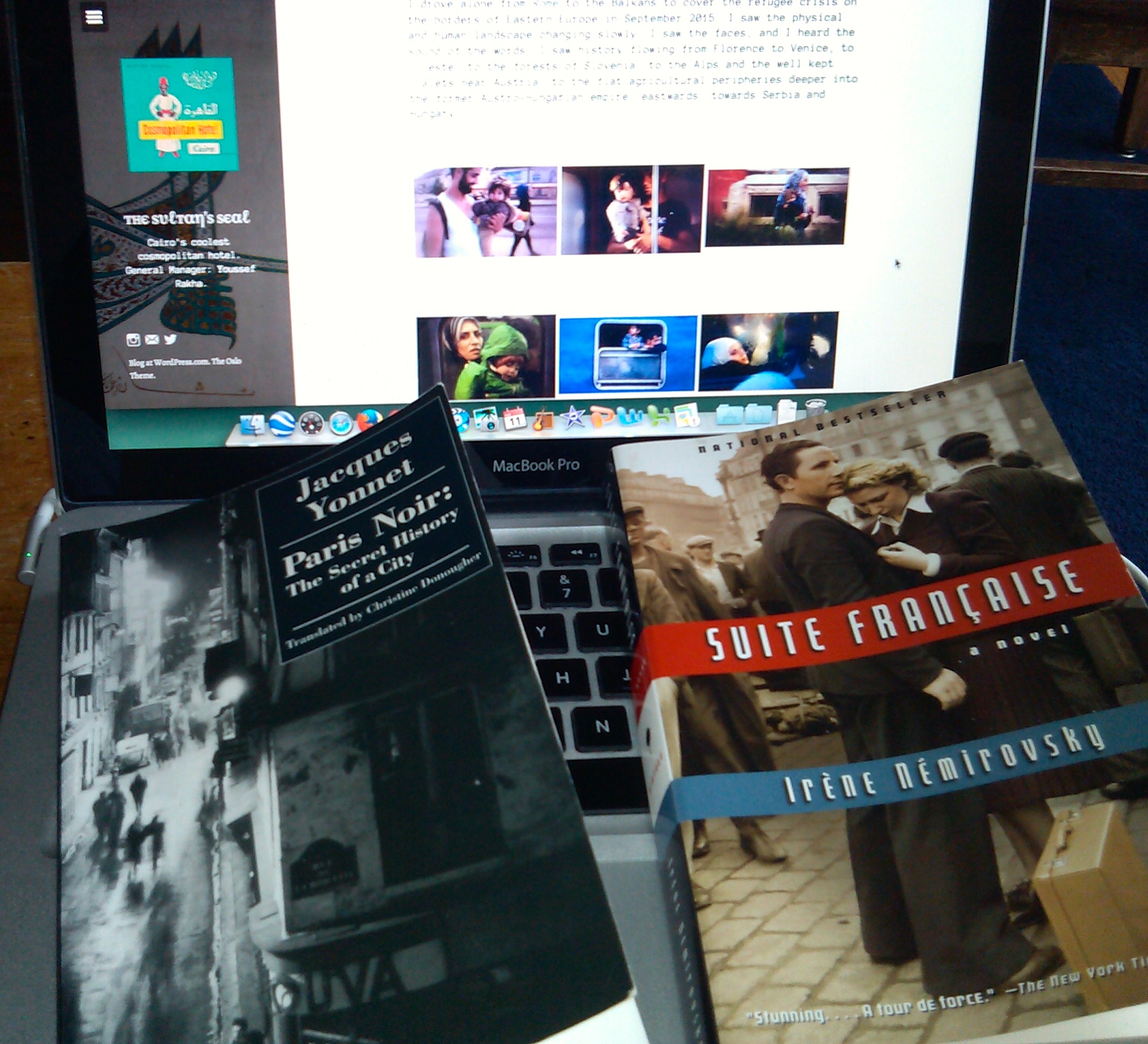
    We are in Nazi occupied Paris, in Jacques Yonnet’s “Paris Noir: The Secret History of a City.”[i] Most able Parisians have escaped and are on the run, many at the last minute, by train or car, bicycle or walking, long crowded lines moving generally south to southwest, ahead of the advancing Nazi army about to reach Paris. This migration is of course history: dates, names, and numbers dutifully recorded, but for a bird’s eye view of the ordinary trauma, conversations, blunders, hopes, and fears of the average Parisian fleeing the city, many packing as if for a vacation to the Midi, turn to “Suite Francaise,” a recently uncovered account in the form of a novel by Irene Nemirovsky, who died in Auschwitz.[ii]

    Yonnet’s book takes place in Paris during the occupation and after. The narrator works for the Resistance, running several missions and establishing connections and communications, always an eye on the patrolling Nazis, living in squalid conditions, associating with all kinds of gone to seed characters with names like “Keep on Dancin’.” The narration reads like a journal or diary.

    For the characters in Nemirovsky’s book, the trip out of Paris is a nightmare. Food is quickly scarce, as is petrol, cars are abandoned, train schedules uncertain, everywhere long lines of refugees on the move, unable to carry much, villages and towns empty of provisions, families sleeping out, feeling lucky it’s June and the nights warm, but then again it’s too hot. There’s nothing to drink, nothing to eat. A few enemy planes buzz overhead, explosions heard in the distance, and a few bombs drop near, the strategy uncertain, apparently to take out train stations, rail lines, fuel depots, but there are civilian casualties and injuries. And throughout the telling of it, Nemirovsky focuses close in, describing ordinary people caught unprepared in extraordinary circumstances.

    Samuel Beckett and his life long partner Suzanne would have been on the road out of Paris, walking, sleeping out, hiding by day, moving at night. Later, it would be said the roadside scenes in “Waiting for Godot” might have been first suggested to Beckett on his way out of Paris. And James Joyce and his family would have been on their way out of Paris, for Switzerland, Joyce concerned that the war would distract people from reading his latest book, “Finnegans Wake.”

    Some of Nemirovsky’s characters describe their predicament as horrible, nothing like it ever seen before, but they are reminded by others they are not the first, nor likely to be the last.

    New ethical environments quickly evolve, wrongs are met with a patient retribution, if not justice, both in Yonnet’s occupied Paris among the down and out, the deadbeat and seedy, the sick and infested, the fallen, and in Nemirovsky’s trail of humanity moving away from Paris, away from the city, away from an old life toward something new and unknown.

    Back in mid-January, the Egyptian writer Youssef Rakha posted to this blog, “The Sultan’s Seal,” a photo essay by the Reuters cameraman Antonio Denti (@antclick on Instagram). Titled “Upstream,” Denti’s essay begins:

    “I drove alone from Rome to the Balkans to cover the refugee crisis on the borders of Eastern Europe in September 2015. I saw the physical and human landscape changing slowly. I saw the faces, and I heard the sound of the words. I saw history flowing from Florence to Venice, to Trieste, to the forests of Slovenia, to the Alps and the well kept chalets near Austria, to the flat agricultural peripheries deeper into the former Austro-Hungarian empire, eastwards, towards Serbia and Hungary…”

    Denti’s photo essay focuses on the parents and children of the recent migration and refugee crisis. He calls his project a photo diary. It is “terrifying and beautiful.”

    [i] Jacques Yonnet, Paris Noir: The Secret History of a City, translated and with an introduction and notes by Christine Donougher. First published in France in 1954, first Dedalus edition in 2006, reprinted in 2009. 280 pages, paperback.

    [ii] Irene Nemirovsky, Suite Francaise, a novel, translated by Sandra Smith. Originally published in France in 2004, first Vintage International Edition, May 2007, 431 pages, paperback.
  • Ruminations

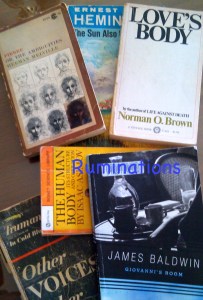
    RuminationsHamlet, talking to Rosencrantz and Guildenstern: “I could be bounded in a nut shell and count myself a king of infinite space, were it not that I have bad dreams” (Act I, Scene II). Hamlet’s body does not seem to be the problem. Uploading Hamlet’s mind into a supercomputer and dispensing with his body would only make matters worse.
    Raffi Khatchadourian, in “The Doomsday Invention,” mentions the scientist and sci-fi writer Isaac Asimov, “who envisioned advanced civilizations inhabited by intelligent robots (each encoded with simple, ethical Laws of Robotics, to prevent it from doing harm)” (New Yorker, 23 Nov 2015, 71). In other words, the robots would be eunuchs.

    “Extropianism,” Raffi says, “is a libertarian strain of transhumanism that seeks ‘to direct human evolution,’ hoping to eliminate disease, suffering, even death; the means might be genetic modification, or as yet un­invented nanotechnology, or perhaps dispensing with the body entirely and uploading minds into supercomputers. (As one member noted, ‘Immortality is mathematical, not mystical.’)” (67). So much for immortality. But isn’t eternal youth the goal, a never ending Spring dawn, not to grow old indefinitely, like a wintry universe?

    In the conclusion to his study “The Human Body” (1963), Asimov, trying to explain the primary difference and advantage of the human relative to other animals (and other life forms), focused on the number of cells in the human brain (a part of the body he devoted an entire other study to). “The human brain is nothing short of monstrous in size,” Asimov said (309). Monstrous in relative size to the human body, and the human body is no small thing, and, Asimov points out, “a large animal is less the sport of the universe, in many ways, than a small animal is” (308). These are interesting perspectives, to say the least. Will we be able to upload the brain but leave the “bad dreams” behind, in the vacated body? Is the body simply a room for the brain, a room the brain might move out of some day, for new digs? I don’t know if it was Asimov’s idea or his publishers, but the “The Human Body” was kept separate from “The Human Brain.”

    Monstrous, too, the harm a brain might bring to its own body, in some attempt to escape, or bring to another, in some attempt to enter, particularly when disguised as a heart. To inhabit another’s brain for purposes of manipulating and exploiting its body, but only for a time, the body a motel room, a rental, a sentence fragment.

    Orville Prescott’s January 21, 1948 review of Truman Capote’s first novel, “Other Voices, Other Rooms,” (New York Times) criticizes Capote’s writing for its lack of “narrative clarity”: “Reality for Mr. Capote is not material and specific; it is emotional, poetic, symbolical, filled with sibilant whispering and enigmatic verbal mysteries.” But how else was Capote to tell his story and get it published in the United States in 1948? Capote was not a beatnik.

    “Should I get married? Should I be Good?” the Beat poet Gregory Corso ruminates in “Marriage,” his poem that ironically considers the choice between the mores of his time and the impossibility of pretending to be someone he is not. There is only one room he can live in, and it must have poetry written all over its walls.

    Or, as Whitman put it in “Song of Myself”:

    “Houses and rooms are full of perfumes, the shelves are crowded with perfumes, I breathe the fragrance myself and know it and like it, The distillation would intoxicate me also, but I shall not let it. The atmosphere is not a perfume, it has no taste of the distillation, it is odorless, It is for my mouth forever, I am in love with it, I will go to the bank by the wood and become undisguised and naked, I am mad for it to be in contact with me.”

    Another room book is James Baldwin’s “Giovanni’s Room” (1956). The first person narrative concerns David, an American in 1950’s Paris who tries to satisfy a growing disparity between what he thinks he might want and be reasonably satisfied with, unopposed to society’s equivocal mores and arguments, and what he increasingly, as he crosses the existential divide of honest self-knowledge and acceptance, knows he needs.

    Where Capote might have deliberately disguised his themes, Baldwin’s style is clear and realistic. Neither the brain nor the body are shrouded in the mystical, but the action is full of compromise, deceit, and betrayal. “Giovanni’s Room” is a rumination on love and unrequited love. How hard is it to love another as yourself if you not only don’t love yourself but grow to abhor yourself? Many men and women have tried it, usually to great disappointment. Baldwin’s David is honest some might say to a fault. He looks for expiation in all the wrong places.

    Some of the scenes with dialog in “Giovanni’s Room” emulate Hemingway’s style where what is said best is what is left unsaid, as indeed Baldwin’s characters move in and out of cafes and bars like Le Select, a Jake Barnes of “The Sun Also Rises” old haunt, where Jake might have met them with a smile, and Lady Brett Ashley might have danced with them, the various merry but unhappy groups drinking and carousing through the well-lit but ambiguous Parisian night. Baldwin’s style is generous, almost absurdly gentle in places, beautiful in the way that unabashed beauty might cause pain. Love involves sacrifice. The body is a lamb, the brain a beast. Will machines ever be capable of human love and sacrifice? Wouldn’t the human brain, uploaded into a machine, simply crave a body?

    Dog eared persons, categorized and shelved, used books. Ruminations. Room and ate shuns.

  • Writing About Music

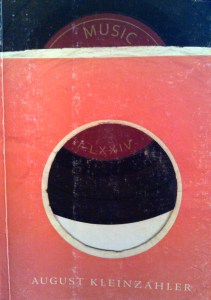
    IMG_20151230_160555August Kleinzahler’s “Music: I-LXXIV” (Pressed Wafer, 2009) contains 77 arguments musically themed beginning with Liberace and ending with J. S. Bach (a coda adds a desert island list). If you’re up to speed on your Roman numerals, LXXIV is 74, not 77, but August is a poet, here moonlighting as a music critic, and poetic license is not commerce. The difference between opinion and argument is this: of course you are entitled to your own opinion; it’s when you try to persuade someone else to share your opinion that you become the frog in the pan of slowly boiling water.

    I found August’s book collection of short essays about music in our neighborhood free library box, the kind of random cool find that makes you a believer in random cool finds. You just have to check the box every now and then. I’ve put a few items in the box. I’ve been putting our Rolling Stone issues in the box. The box is near the bus stop, and I’ve noticed the Rolling Stone copies don’t last long in the box, so they must be popular, and I imagine them being read on Line 15 by commuters with head phones on the way downtown. We’d keep the Rolling Stone issues around the pad longer after we’ve read them, but we don’t like having to look at most of the covers these days. An interesting film a la Andy Warhol might be made from a week long video camera aimed at the neighborhood library box, watching items appear and disappear, identifying lending and reading trends – of a sort.

    August’s essays about music are mainly about sounds and movements he likes, so the book is a very positive view of music, and his enthusiasms are catchy. Some idea of what he doesn’t like might emerge from what he doesn’t talk much about, or what he dismisses in an offhand opinion here and there. For example, he mentions James Taylor once, in a single sentence, but the comment is so dismissive it’s one I quickly internalized and can’t forget, but I didn’t bother with marginalia in this read. To give some idea of Kleinzahler’s eclectic selections about music and ideas about music, here are the topics of the first few chapters. Reading the book is like visiting some sort of music museum. I’ve added my own reflective comments about the chapters following what I’ve identified as the topic of that chapter:

    I. Liberace: Music is not a person.
    II. August’s massive C.D. Collection: Music is not an object.
    III. Austin: Music is not a place.
    IV. Airplane Music: Music is not a straight line.
    V. Cartoon Music: after which chapter I spent an hour or so watching and listening to old Mickey Mouse cartoons on YouTube.
    VI. Novelty Music: This was one of my favorite chapters, having never paid much attention to Louis Prima.
    VII. Jukebox Music: Distribution is a controlling theme throughout.

    And so on, into jazz and classical, pop and rock, blues, instruments and personalities, anecdote and history and cultural comment and artifact; ambient music and comedy albums; harpsichord making; Muddy Waters; Rolling Stones to Howlin’ Wolf, digging for roots.

    Yet August calls himself an “abject amateur listener” (164). We also get “shenaigans” and persona; Weil, Brecht, and cabaret; opera, Joel Grey, Cage, Kerouac, kitsch and Rexroth; Chess Records, Sun, Stax, FAME, Muscle Shoals; Jackie Wilson, Elliot Carter, Monk, Hawkins, and Bud Powell; Erik Satie; the influence of radio, technology (tape, digital, vinyl), Ike and Tina, 1957, Tom Waits, Frank Zappa; inventors (Les Paul, Raymond Scott); Roy Fisher (who gets three chapters titled “Roy Fisher,” thus throwing off the Roman numeral strategy); Dylan, Dinah Washington; mouth organ – aka harmonica or mouth harp; John Lee Hooker; bottle neck guitar, prepared piano, organ, sax, and the reputed sex of lyrics.

    August’s writing about music is in contrast to Nick Hornby’s, who compiled his “Songbook” also collecting his reviews, his written for magazines, and most of which discuss indie rock music. Hornby doesn’t appear to like jazz, nor, like Kleinzahler, does he go in for self-indulgent riffs, instrumental or otherwise. “Music: I-LXXIV” is eclectic and encyclopedic. It’s a mosaic – a reader might begin and end with any chapter in any order. There are a few perplexing typos throughout, and while the writing is obviously well-referenced, there are few what might be called in-text citations. The chapters might have been blog posts written by a music aficionado that cares more about his topic (music) than about addressing scholastic or academic prescriptivism. But for these reasons it’s a very engaging and entertaining reflective study. Kleinzahler is not afraid to speculate, to surmise, in the midst of his effectively supported arguments, sometimes expressing ideas as claims encouraging further reading or listening. His writing is jazzy, personal, conversational.

    Kleinzahler touches on culture and subculture, text and subtext, in a way, speaking of music, we have become familiar with through the writings of Greil Marcus, who, like Hornby, also had a monthly column in The Believer. My Believer subscription lapsed, so I’m not sure if they still appear there or not, but they were usually the first articles I’d read. Hornby’s music reviews seemed to give way to his monthly reading reflections. In any case, Marcus’s writings about music and culture are significant. He’s a kind of deconstructionist who in the end gives you more than a cat’s cradle (where, as Vonnegut pointed out, no cat, no cradle, just string theory).

    Two other writers writing about music come to mind, thinking about Kleinzahler’s book: Alex Ross, and Amiri Baraka in “Blues People.” I like Alex Ross writing about music. He’s produced two informative and entertaining books on classical music – he’s a music critic at The New Yorker. But while that all might sound a bit elite, he maintains a cool blog that has become an immense resource, called The Rest is Noise. I very much appreciate that Ross has kept his blog going at a time when so many like him have abandoned their blogs because “no one blogs anymore.”

    IMG_20151219_135100.jpg

    My fortuitous find of August Kleinzahler’s idiosyncratic series of essays about music changes a few things. If what you are reading doesn’t somehow promote change, you might chance upon something else to read. I knew Kleinzahler first as a poet. His preference is for music where the roots lift out of the ground, where antecedents are clear, to gospel, blues, maybe seedy and weedy, music that’s original in its hunger and feeding without losing its bearings, music that might be popular without being particularly commercial, watered down, adulterated with make up and deodorant, the kind of music many listeners may have become consciously aware of reading Leroi Jones (Amiri Baraka) in “Blues People” (1963).

    What’s mainly important about writing about music is this: when the writer motivates the reader to follow up and hear some new music, or to re-experience some old music with new ears. And the writers writing about music I mention in the above paragraphs encourage and inspire new listening. Meantime, I’ve passed Kleinzahler’s book on to a neighbor who is another music aficionado, and I’m still following up listening to Kleinzahler’s references and suggestions. This is not a resolution, but I might be at it throughout the new year.