- Entering the sentence, one feels caught in a trap, a cage, punctuation the catches and latches of entrance and exit that clamps down on our heads and tails, our arms or legs, fingers – when we let out an exclamation point, holding swelling finger up.
- Returning to the three persons (me, you, and the other: navigator, driver, and passenger), in a race to the finish, around pylons of periods.
- Periods around and around we go, how to begin and how to end, and where to dot the nose, punctuation choices a kind of Mr. Potato Head game.
- Returning to the sentence, the idea of the sentence as a measure of composition. “Where Are We Going? and What Are We Doing?” John Cage asked in “Silence.” And not sure of the answer, we feel the tension of certain sentences, we feel the intensity of the sentence, like a taut wire, fish on, pencil bent like a deep-sea fishing rod.
-
Four Short Statements on the Sentence
-
Ticker Tape Sentence
A new sentence, ahoy, begins to move along the horizon, words crossing on the horizon like ticker tape, words like ships at sea, ship-sat sea, a sentence a fleet of words, but quiet, so far out, out to sea, but futile, our following them, their passage, so why not just limit the sentence to one word, a single word, stop, for example, stop these ships before it's too late, before we cross the point of no return, but no, I'm not worried about running on, I'm more concerned with running aground, so I'm running with the wind while the wind's in my sails, running with this new sentence, running with the wind, for a spell, a run-on sentence, tilting and lilting with comma splices, funny term, comma splice, like tacks, like sailing tacks, the comma splice, to cut off, pause, we learned in grade grammar elementary school while the period was a full stop pull over go to sleep, compared to the comma, where you had to leave the car running, riding the clutch (but wait, we didn't drive cars in grade school, can't use that comparison - too late), quick breath, come around, though, we got that, just enough time to glance up, look at the teacher, visage, what was she thinking, and did she have hair under her habit, she had thick bushy black eyebrows, like punctuation marks underscoring the white cardboard starched forehead, big black dashes, but that's to digress, to veer from course, deviation from planned course, stay on tack, on tact, too, and on track, for the railroad is like a run-on sentence, too, too, too, but the run-on sentence is like a chase scene, like a chase at the end of a Keystone Cops adventure, a chase that runs on and runs on, like a run-on sentence, sometimes called a comma splice run-on sentence I should caution good reader there is no end in sight to this run-on sentence, so if there's somewhere you need to be, you might want to mark where you are, just grab a piece of tape, or something, a felt marker, and make a mark on your screen, not a period though, a comma, mark your place, where you are in the sentence, mark the word just above where the little blue bubble marker is now located below this run-on sentence, mark it with a caret, like this ^ or with an upside down y or keep going no reason to stop unless you need to be somewhere but still give them a call, call in, and tell them you are in the middle of a run-on sentence you can see that we are in the middle of this run-on sentence by checking the blue bubble, if the blue bubble is in the middle of the ticker line, then we are midway through this run-on sentence you don't need to mark your screen when you get back just slide the blue bubble over to the middle of the ticker tape-like rectangular oval below the sentence nice feature that blue bubble where I got the idea actually for this run-on sentence thinking why bother having to tab down read down always down the page why not just keep moving sideways this is how new things are invented by questioning the status quo and a book could be written like this why not run the sentence to the end of the page, turn the page, continue sentence on the back side, reach the end again, continue the sentence onto the next page, not down, straight across, until you reach the end of the book, then go back to page one before you tab down to the next row, the next line, and off you go again, until the book is full what would each page read like then a complete surprise futile though the perspicacious reader will note the influence of John Cage here, here on this run-on sentence, so maybe this idea of the ticker tape run-on sentence is somewhat Cagean, but then again, maybe not, maybe Cage has nothing to do with this, but Cage embraced the futile and in doing so crossed the horizon of doubt and I keep coming back to Cage even after all these years and new things to look at and read and listen to, and reading Cage's books, "Silence," for example, or "A Year From Monday," might suggest more ideas for new forms of composition of posts, though Cage preferred the mosaic to the linear the ticker tape sentence (I think the name might stick) is certainly an exercise in linearity if nothing else for it resembles a line, a line sliding, a line of words, sliding horizontally, like ships on a horizon, words like a fleet of ships, ships though that never come any closer, and whose purpose remains, at best, ambiguous, or worse, simply silly, but it takes a long time to stop a ship, and still, there they are, out to sea, floating above the blue bubble in the long oval, and they stay on the horizon, sliding across the horizon until they are out of view and we are left to go our own way.
-
Rows sans end
A sentence, this one, for example (though another might do), the one you are now reading, backlit, for some purpose, presumably (your body like a house in disrepair, suit fraying, limbs sagging, glasses missing one temple, pads bent, joints crooked, hair crinkled dry moss, green going grey, a bird’s nest), late summer as the sentence gets started, lolling, dozing, without antecedent, no foreshadowing, no shadows at all, no dashes, noon, then, the beach clear, the water shipless and shapeless, but shiftless still, then suddenly awakening and rising, like a quick second wind, and just as quickly a third wind, the afternoon slop now upon the coast, the water rougher than it looked from the beach, sudden, swell upon swell following the sleepy noon lull, and you are not ready for this, each new wave an and, followed by another and, and another and, until, caught now in a riptide, a rebuttal that has the stylish lifeguards proofreading for drowning readers, and when they find one, they click on the swimmer and go, click and go, click and go, sweeping the sentence down to the water clear of this sort of thing, fragments, wave fragments, ripples from where they sit high in their towerA row is a row is a row is a row, a row a row a row a row. A paddle is a paddle is a paddle is a paddle, and we are out past the break, out to sea, so to speak is to speak is to speak is to speak. No matter what we do (rules) where we go (directions) there are margins, edgeswe come up against. The world is flat after all, the flat earth squaring us in, switchbacks, zigzags away from intuition. For the world wants style: 8 & ½ x 11, 3 hole punched, the thin red vertical line creating a margin, a double edge.
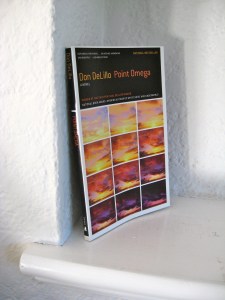
“Sometimes a thing is hard because you are doing it wrong” (Don DeLillo, “Point Omega, p. 27).
-
Bad Writing
“Bad Writing,” a full length documentary on the writing process, on becoming a writer, on the bad and the good, in turns funny, encouraging, real, is streaming free on Vimeo through the month of January, 2013. Check it out!
-
Don DeLillo’s “Point Omega”: alt novel
Don DeLillo’s “Point Omega” is an alternative novel. At 117 pages, it’s the idea of a novel. We are not in Dickensland. The book’s structure, or frame, is divided into a story of four chapters, with a kind of foreword that tells a different story not completed until the afterword – so six parts. We are told it’s summer falling in 2006, on a separate title page, as if a sub-title – thanks for the clue. Then comes the foreword. That’s my term, to be clear. The text titles this section “Anonymity,” with a date, as if it’s a letter, “September 3.” The afterword is titled “Anonymity 2,” and is dated “September 4.”The Anonymity sections are written in the third person, and describe a person watching an art museum exhibit that is a modified movie from the film canon (no spoiling here). One of the themes of the book is watching, watching and waiting. The narrator of “Anonymity” describes those watching, but says the watcher is unwatched, but this is not true. The narrator is watching the watcher, and the reader is watching the narrator. And, if the reader happens to be reading “Point Omega” on the bus, in the library, at a coffee shop, yet another character might presumably be watching the reader. In any case, this idea, or theme, of one watching another is part of the idea of the novel, if not the novel. Another theme is film. We are told, still in “Anonymity,” that “film…is solitary” (9). But this is not true, either. Film is audience. Books are solitary (the Internet is audience without seats, no fixed position, the screen everywhere, no front or rear of the theatre, no theatre).
The next sections of “Point Omega,” beginning on page 17, are numbered 1 though 4. These sections are told in the first person, and take place in the desert, inland from San Diego, where the narrator has travelled to visit an older man with Iraq War planning and consulting experience. The narrator wants to film the expert talking about his thoughts on the war. One of the themes of DeLillo’s book is how to tell a story, an idea that might begin with Poe, but once a story is told, it is subject to retelling. One version of retelling is the elongated film that is the exhibit in the “Anonymity” sections. The middle four sections take place over a month, so the connection in time to the two days of the “Anonymity” sections is ambiguous. How long a story should be is another theme of “Point Omega,” and when I got to the fly scene in the desert toward the end of the fourth section, I felt a tinge of relief that I had not long to go. Yet the fly in the desert appears to have been a foil detail.
There is a counter view built-in that appears in “Anonymity 2.” Maybe the tale is not a detective story in the Poe tradition but a comedy, a comedy in the way that “The Rocky Horror Picture Show” can’t be taken seriously, yet some sublimation is surely going on in its audience. In any case, there is a bit of comic relief toward the end of “Point Omega,” in the dialog, but it’s soon dismissed.
The writing in “Point Omega” creates a Poe-like atmosphere, particularly in the desert scenes, that is portentous. What might prevent the portentousness from becoming pretentious is the dejection of the characters, a dying man unable to reconcile his complicity in an irresolute war, a frustrated want-to-be film director, a type, and a possibly demented character about whom we know almost nothing. There are three men and three women who appear with significant speaking roles. The themes include appearance and disappearance, as in film, and one of the disappearances is into film, into character, and the uneasy experience of things slowing to a crawl, a distortion of real time that is not quite the call for suspension of belief or judgment we are asked for in the traditional novel. “Point Omega” might also be likened to a kind of film script, the novel ready-made to be made into a film, stripped of its thick traditions and conventions, ready for the camera. One can see it as a Hitchcockian exercise, reading as loss, as lost time, as we try to lose ourselves in the story of another.
-
Anything Read: 4 by Peter Mayle
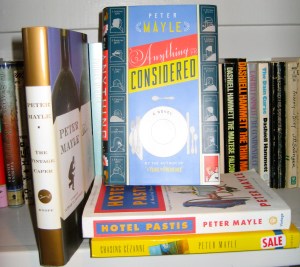
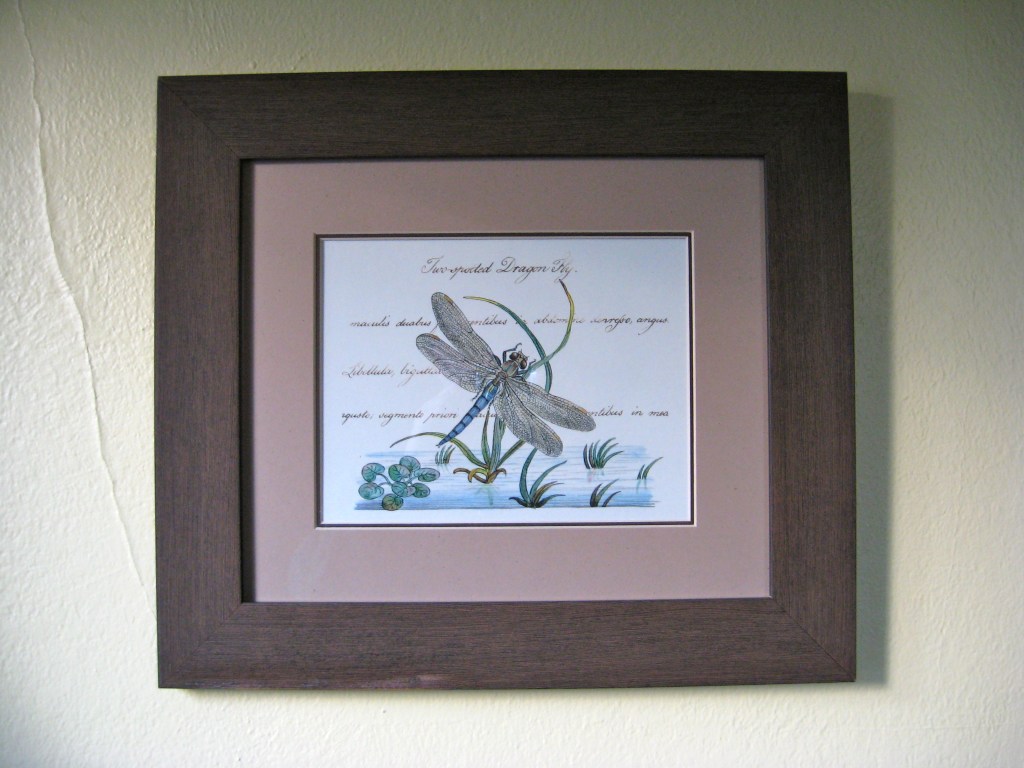
“Anything Considered” (1996) was purchased at an estate sale toward the end of last summer, along with a framed print of a dragonfly. I promptly found a place on the wall over the back room piano for the dragonfly, but I didn’t get around to reading my first Peter Mayle book (the author of, as the book covers repeat, “A Year in Provence,” which I’ve not read) until the holidays. I liked “Anything Considered,” and on a Powell’s run before Christmas found three more Mayle books in good used condition. The four read are what might be loosely described as mystery books, crime fiction, though the plots are not hard-boiled, not even soft-boiled, but over easy, poached, or sunny side up.Indeed, the sun is a character in the southern French settings where Mayle’s mysteries are cooked, the plots as convoluted as French cuisine. Typically, the main character is a self-imposed outsider, disaffected with bourgeois standards, but not hostile to its spoils, inveigling his way in and out of capers involving an array of likable and despicable characters, though these labels don’t always identify the good and bad guys. Femmes arrive, though not of the fatale type, after a spell, and the plots are continually interrupted by structured meals with plenty of cheeses and wines. The writing is full of atmosphere created by descriptions of weather and water, food and drink, furniture and clothes, structures and landscapes. Much of the action takes place outdoors. The tone is often sarcastic, in places ribald. The plots move the characters out of Provence, to London or Paris, and the contrast has everyone, reader included, wanting to get back into the sun.
Of the four read, “Anything Considered” is the longest and most detailed, and contains the most sinister villain. I then read “Hotel Pastis” (1993), the funniest of the four, slapstick, even, with a primary dual running plot that weaves around and up and down like a bicycle ride through the countryside – actually, that is part of the plot. “Chasing Cezanne” (1997) adds art to the cheeses and wines, and “The Vintage Caper” (2009) adds a Hollywood flair to the mix.
But if I’ve not interested readers in the Mayle books, perhaps the dragonfly will satisfy:
-
A Cat’s New Year’s Celebration

“Are you napping through the New Year again?”
“Have you a better suggestion?”
“Par-tay!”
“Surely you jest.”
“We’ve been invited to a New Year’s celebration. All the cool cats will be there.”
“The gentrified cats, you mean?”
“These are hep cats, the kind you should get along with.”
“Get along is for doggies.”
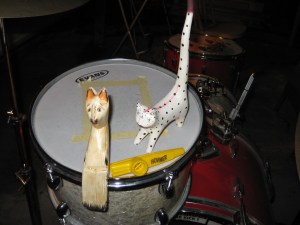
“We’re supposed to bring noise makers. I got this kazoo out for you.”
“A kazoo? What are you bringing?”
“Ever hear of rock-n-roll? Hee, hee!” 
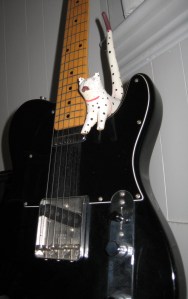
“Move on over and let Jimi Cat ring in the New Year with some rockin’ hallelujah cheer!” 
“I think I’ll stay home and reread ‘A Cat’s Christmas in Wails’. I love the part where the cats attack that little punk with the snowballs.
After that, I’ll get out some old Sing Along with Mitch records.
Maybe I’ll ask Archy and Mehitabel over.”
“You going to the cat’s New Year’s party?
“I’m way too pooped. I’ve been blogging all day.” “Sounds like you’ve got a case of the Blogger’s Blues.”
“OK. I’ll go to the party on one condition.”
“What’s that?”
“I don’t have to wear one of those silly hats. And I don’t have to go outside in the cold at midnight and blow that silly kazoo. And I don’t have to have fun.”
“Yes to all that. And no silly New Year’s Kiss for you, either.”
“OK, OK, maybe the kazoo. The kazoo for a kiss.”
“Happy New Year!” -
Tierra
I found the Tierra poster in the “free stuff” at a yard sale last summer. It had a glass cover and a thick backing but no frame. The glass was ragged along the edges and dangerous. It’s been sitting in the basement where I was going to reframe it. I cut my thumb on the glass. I ended up tossing the glass and hanging the poster with stick pins.
What is folk art? As opposed to fine art, I guess – no training, naive, which of course is seldom true. What is perspective? To behold. There seems to be an impulse for art, an instinct, a need. What do we do with our art, our symbols and images? Where do we find it? How do we integrate our art into our lives, art we pass down to our children that they can pass down too, something we don’t have to go to a museum or church to peruse and requires no special training beyond apprenticeship, something that is part of our daily lives. Symbols break, topple, and images fade away. Behold Tierra in 2013.
-
Plumbing & Writing: A Review of the Literature (at the Toads)

Plumbing in the Sky One of these days, I’ll craft a post equal to one of my Dad’s plumbing jobs. Meantime, here are a few past posts that mention the improbable connection between writing and plumbing:
Annie Dillard’s The Writing Life
The Elite and the Effete: From Access to Egress
-
A-caroling we will not go…
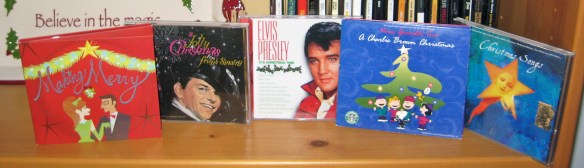
Does anyone go caroling anymore? Apparently they still go caroling in Australia (see Carols by Candlelight). But I’ve heard no carolers in these parts for some time now. I fear it’s a gone tradition here. I wouldn’t mind hearing some carolers outside our place. Susan would have some wassail brewing. I grab my guitar and tell her I’m going out to do some solo-a-caroling. Give me that guitar, she says. You’ve had enough wassail for one night.So, no caroling. Meantime, we get the Christmas music out. This year we keep coming back to one of those Starbucks compilations, Making Merry. Willie Nelson opens with Norah Jones on “Baby, It’s Cold Outside,” featuring a steely guitar and a briefly haunting harmonica break, just enough to bring the chill in, the reminder that Christmases, for all their warmth, all become a Christmas past. Another standout on this CD is Herb Alpert and the Tijuana Brass on “My Favorite Things,” which ends, oddly enough, with some sort of James Bond theme riffing. But it is cold outside, and I was in Fort Huachuca one winter, and can tell you it gets cold down south too. Anyway, baby, it’s cold outside here now, so to dispel the chill, I put some Elvis on and the place starts to warm. A couple of good ones on this It’s Christmas Time CD, like “Santa Bring My Baby Back (To Me),” and “Blue Christmas.”
What am I going to sing with my guitar if I go out a-caroling, Susan asks. Come on, baby, I say. I’ll be Barenaked Ladies & you can be Sarah McLachlan and we’ll do a cover of their uptempo “God Rest Ye Merry Gentlemen.” We’ll both be arrested, Susan says, and not by God. Oh, well, I say, and put on the classic Vince Guaraldi Trio doing the jazz inspired A Charlie Brown Christmas.
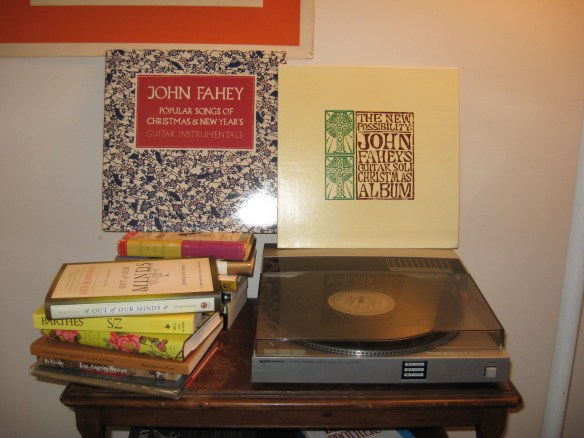
We saw the great, original, finger-style guitarist John Fahey at the Ash Grove in Los Angeles many Christmases ago. The New Possibility came out in 1974 (Takoma Records), and includes the far-out pieces “Christ’s Saints of God Fantasy” (Hopkins-Fahey), and “Lo How a Rose E’er Blooming” (Praetorius). Popular Songs of Christmas & New Year’s, with Portland’s renowned guitarist Terry Robb, came out in 1983. Some very cool medleys, and “The Skater’s Waltz,” and “The Waltz You Saved for Me.” Maybe I can talk Susan into a New Year’s waltz, if I can’t go a-caroling.