Tag: Self-Publishing

  • The Long Sea

    Not hunter nor hunted be
    but swimmer in this long sea
    the fishes your community
    though of course fish eat 
    each to each but rarely
    one’s own the point
    eat what’s available
    then go a fish out of the sea
    not the long or short of it
    but lost in the long run of the sea
    pages uncut
    written while working
    in a customs house
    dabbler dabbled in dawns of coffee
    and commutes and cubbied desks
    no time for more than doodles
    while the prof makes a living
    off an ever changing starting line
    the long market
    to market to market
    with a self-published book
    now out of print on demand
    there being no press
    and came to fancy Penelope
    the late bloomer
    and Barbara an excellent one
    and the two Elizabeths
    and Henry
    and Patty and Ray
    but of any poems composed
    in an alcove suffice to say
    what a waste
    yet this, and this is why
    one longs for the long sea:

    “No, she thought, putting together some of the pictures he had cut out – a refrigerator, a mowing machine, a gentleman in evening dress – children never forget. For this reason, it was so important what one said, and what one did, and it was a relief when they went to bed. For now she need not think about anybody. She could be herself, by herself. And that was why now she often felt the need of – to think; well not even to think. To be silent; to be alone. All the being and the doing, expansive, glittering, vocal, evaporated; and one shrunk, with a sense of solemnity, to being oneself, a wedge-shaped core of darkness, something invisible to others. Although she continued to knit, and sat upright, it was thus that she felt herself; and this self having shed its attachments was free for the strangest adventures. When life sank down for a moment, the range of experiences seemed limitless. And to everybody there was always this sense of unlimited resources, she supposed; one after another, she, Lily, Augustus Carmichael, must feel, our apparitions, the things you know us by, are simply childish. Beneath it is all dark, it is all spreading, it is unfathomably deep; but now and again we rise to the surface and that is what you see us by. Her horizon seemed to her limitless….There was freedom, there was peace, there was, most welcome of all, a summoning together, a resting platform of stability” (54).

    From “To the Lighthouse” (1927) by Virginia Woolf, Penguin Books edition 2023.

  • Maugham on Marketing

    From a different time, W. Somerset Maugham recently appeared in the neighborhood free library box on the Belmont and 68th Avenue corner, near the Line 15 stop, in an old Penguin paperback of Cakes and Ale (1930). Here, he’s speaking of one’s own marketing of one’s own writing:

    “When he stood on the platform, in evening dress admirably worn, or in a loose, much used, but perfectly cut lounge suit if better fitted for the occasion, and faced his audience seriously, frankly, but with an engaging diffidence, you could not but realize that he was giving himself up to his task with complete earnestness. Though now and then he pretended to be at a loss for a word, it was only to make it more effective when he uttered it.

    18, Cakes and Ale, W. Somerset Maugham, Doubleday 1930. My found Library Box edition published in Penguin Books (U.S.A) 1993.

    Maugham’s narrator is talking about the antagonist Alroy Kear, who “could use a man very shabbily without afterward bearing him the slightest ill-will,” and about which one critic actually said, “he [Kear] was a snob…he was a humbug.” (17).

    Yet for Kear, we quickly learn:

    “No club was so small, no society for the self-improvement of its members so insignificant, that Roy disdained to give it an hour of his time.”

    19.

    Indeed, so magnanimous does Roy appear to be, that for the continued benefit of the younger writers he often mentions, he

    “Now and then revised his lectures and issued them in neat little books. Most people who are interested in these things have at least looked through the works entitled Modern Novelists, Russian Fiction, and Some Writers; and few can deny that they exhibit a real feeling for literature and a charming personality.”

    19.

    The problem, of course, is that there are far far too few “people who are interested in these things.” Thus the need to self-market, even if one has managed to appear in print by a gatekeeping trad publisher. Revisiting his book for a preface for a later edition, Maugham writes:

    “When I wanted to draw the portrait of a writer who used every means of advertisement possible to assist the diffusion of his works I had no need to fix my attention on any particular person. The practice is too common for that. Nor can one help feeling sympathy for it. Every year hundreds of books, many of considerable merit, pass unnoticed.”

    7.

    One wonders what Maugham might have thought or said of today’s social media outlets, the blogs and author’s pages, readings, panels, yesterday’s cheers and tomorrow’s cancellations, not to mention today’s rises and falls that occur indeed between any given sunrise and sunset:

    “He must make himself a public figure. He must keep in the public eye. He must give interviews and get his photograph in the papers. He must write letters to The Times, address meetings, and occupy himself with social questions; he must make after-dinner speeches; he must recommend books in the publishers’ advertisements; and he must be seen without fail at the proper times. He must never let himself to be forgotten.

    8. Bold font added.

    And Maugham concludes his preface lamenting that at the time he wrote Cakes and Ale, the “cocktail party that is given to launch a book…did not flourish at the time.” Too bad, he suggests, “It would have given me the material for a lively chapter” (8). Could such a chapter be written today following an on-line Twitter or Zoom or blog book launch?

    Meantime, we interrupt this post for a commercial break.

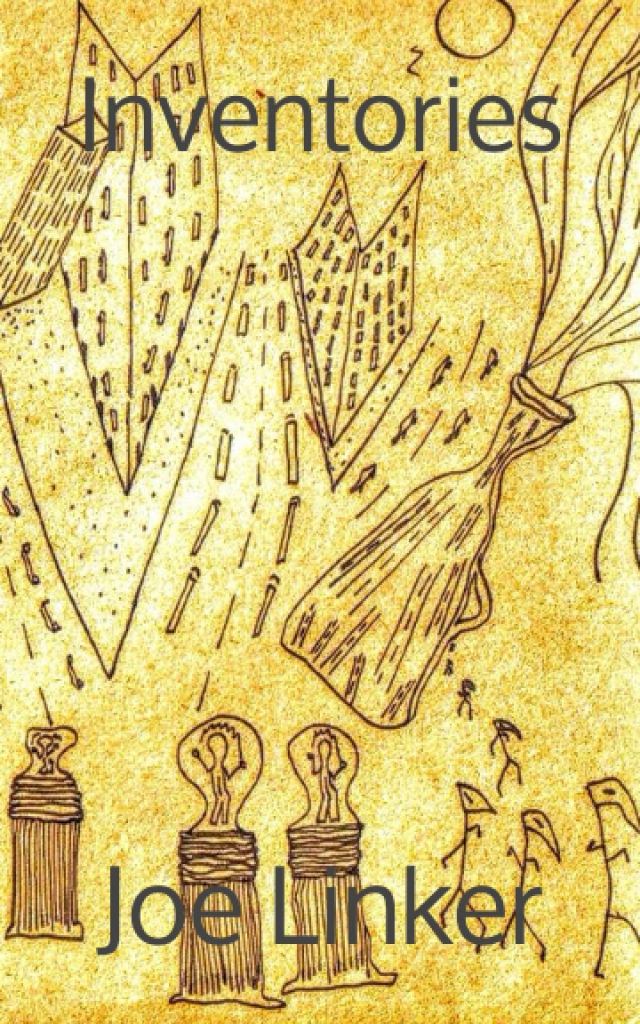
  • Inventories

    Part human, part deity, these working gods are restless. What happens when one wants out? Episodes of a god on the run, “Inventories” is now available in paperback book format. “Inventories” first appeared here, at The Coming of the Toads, near daily installments over several months in 2020, a quarantine exercise. The text was revised for this book publication first edition.

    ASIN : B08VM82YRK
    Publisher : Independently published (February 2, 2021)
    Language : English
    Paperback : 190 pages
    ISBN-13 : 979-8702891125
    Item Weight : 9.4 ounces
    Dimensions : 5 x 0.48 x 8 inches

  • Where Everyone is a Writer and a Reader

    Writing in the New Yorker in December of 1928, E. B. White recounts an encounter with a paid for hire writer. The writer is getting paid “fifty cents a word,” and is grimly disappointed when White advises that “willy-nilly” gets a hyphen, “at a cost of half a dollar.” Laura Miller, writing in Salon, must be getting paid per word, for her June 22 article, bemoaning the recent rise of self-publishing, is about twice as long as it needs to be. Ostensibly about her concern for readers deluged in the self-published detritus of a slush pile tidal wave, the piece laments the loss of the professional slush pile reader, the entry-level editor who combs through trash piles of unsolicited material like an astronomer searching the night sky for life on another planet. Several assumptions support Laura’s claim that the adulteration of traditional publishing by self-publishing is ultimately to the detriment of the general interest reader: professional writers are better than amateur writers; all self-published works result from slush pile rejections; traditionally published material guarantees quality, and this stamp of official approval saves readers from having to make that decision for themselves. But at risk is an old character, a kind of modern-day Bartleby, the professional reader, the slush pile expert who is now out of work, who has been laboring at the risk of blindness and insanity all these years on behalf of the general interest reader to ensure only works of the highest quality reach their book of the month club selection options.

    We discovered Laura’s article in a post at HTML Giant, a relatively recent addition to our blog feeds, but yet another example of the kind of self-published material Laura bemoans. Roxane Gay presents a kind of opposing viewpoint to Laura’s piece, at least where the slush pile going public motif is concerned.

    So what do we have to add to the already too long and boring discussion? Well, we were thinking of self-published music. Most of what we hear on the radio, in spite of its imprimatur, sanctioned by the traditional music publishing system, in other words, professional work, we find hackneyed, superfluous, and platitudinous. Or consider television – also full of terrible work sanctioned by professional license. And against these works place the street corner crooner, the independent label, the throwaway zine, the twice visited blog, the indie film. We don’t see self-publishing as the problem in the same way that Laura views it as the problem.

    Writing again in the New Yorker, in December of 1948, E. B. White, under the title “Accredited Writers?” remarks: “Perhaps, as democracy assumes, every man is a writer, every man wholly needy, every man capable of unimaginable deeds.” As for us, we don’t mind taking the time to try to read what everyman, or everywoman, has to say, for every person has a story to tell. How well they tell it, how persuasive their argument, how lovely their prose or poetry, how surprising their style – these are our values, too, but, like Roxane, we also value the opportunity to compare and contrast, the better to evaluate for ourselves whose story for its honesty and originality bears repeating, for if every man or woman is a writer, they must also be a reader.