A photograph isn’t thinking in motion, as writing is. A photograph is a stop sign, a red light. Our automatic pilot, built for continuous movement, starts to hallucinate. We are at the intersection of natural and unnatural.
Of the three foundational arguments framing photography, its effects on the hopeful snapper and unwitting object, the one viewfinders might agree most persuasive is Roland Barthes “Camera Lucida,” for he preserves the physicality of perception. The other two arguments are contained in the books “On Photography,” Susan Sontag’s theoretical warning that photography is political in its power to capture, and Marshall McLuhan’s “Understanding Media,” showing photography emerging from woodcuts. If you’d like to add a fourth chair to the discussion table, we might include the newbie Nathan Jurgenson, whose book “The Social Photo” argues photos are now pics like burps in a ballpark, adding to the communal noise that both applauds and boos.
What is a photograph? McLuhan called it “The Brothel Without Walls” (169). In a few sentences, he opens corridors leading to distant galleries:
“It is one of the peculiar characteristics of the photo that it isolates single moments in time. The TV camera does not. The continuous scanning action of the TV camera provides, not the isolated moment or aspect, but the contour, the iconic profile and the transparency. Egyptian art, like primitive sculpture today [1964], provided the significant outline that had nothing to do with a moment in time. Sculpture tends toward the timeless.” 169
What does the photograph change?
“Awareness of the transforming power of the photo is often embodied in popular stories like the one about the admiring friend who said, ‘My, that’s a fine child you have there!’ Mother: ‘Oh, that’s nothing. You should see his photograph.’” 169
McLuhan distinguishes between what he calls hot and cool media. Users of hot media can do other things while engaged with it, for example, dust the furniture while listening to the radio. Users of cool media are stuck, unable to do anything else while watching TV. Hot media doesn’t require full participation. Cool media does. The importance of the distinction comes from the different effects each has on the user.
“There is a basic principle that distinguishes a hot medium like radio from a cool one like the telephone, or a hot medium like the movie from a cool one like TV. A hot medium is one that extends one single sense in ‘high definition.’ High definition is the state of being well filled with data. A photograph is, visually, ‘high definition.’ A cartoon is ‘low definition,’ simply because very little visual information is provided. Telephone is a cool medium, or one of low definition, because the ear is given a meager amount of information. And speech is a cool medium of low definition, because so little is given and so much has to be filled in by the listener. On the other hand, hot media do not leave so much to be filled in or completed by the audience. Hot media are, therefore, low in participation, and cool media are high in participation or completion by the audience. Naturally, therefore, a hot medium like radio has very different effects on the user from a cool medium like the telephone.” 36
In McLuhan’s analysis, the photograph is complete; we don’t have to finish it as we do a cartoon. We don’t have to participate in a photo because it is visually “high definition” – not in terms of megapixels, but in communication density. It’s “hot” – so packed with detail – we don’t so much work to finish the picture as simply consume it – we photograph the photograph. The viewer is a passive participant.
What do we mean when we say someone is “photogenic”? Why isn’t everyone photogenic?
“The vested interests of acquired knowledge and conventional wisdom have always been by-passed and engulfed by new media.” 175
Images can do a lot of damage.
A problem might stem from thinking of photography as something more than a disappearing act, of wanting to think about pics as a creation that exceeds film, paper, or pixels, of something that must be learned to look at. Is every photo an argument? In a selfie, what is the subject and what the object? Why do snappers take so many pics of their food – an act seemingly like cats who bury their business? Is taking a photo compulsive, ritual, disposable? What is the source of that urge to take yet another sunset pic, to join a doom stream of falling flowers, of posting not simply one photo of our trip to the market, but a gallery down each aisle, the veggies, the dry goods, the deli, the dairy, the meat and fish, and even that’s not enough, but we must add a selfie at the self-service check out, the shopping cart navigating the parking lot, the loaded brown bags in the trunk.
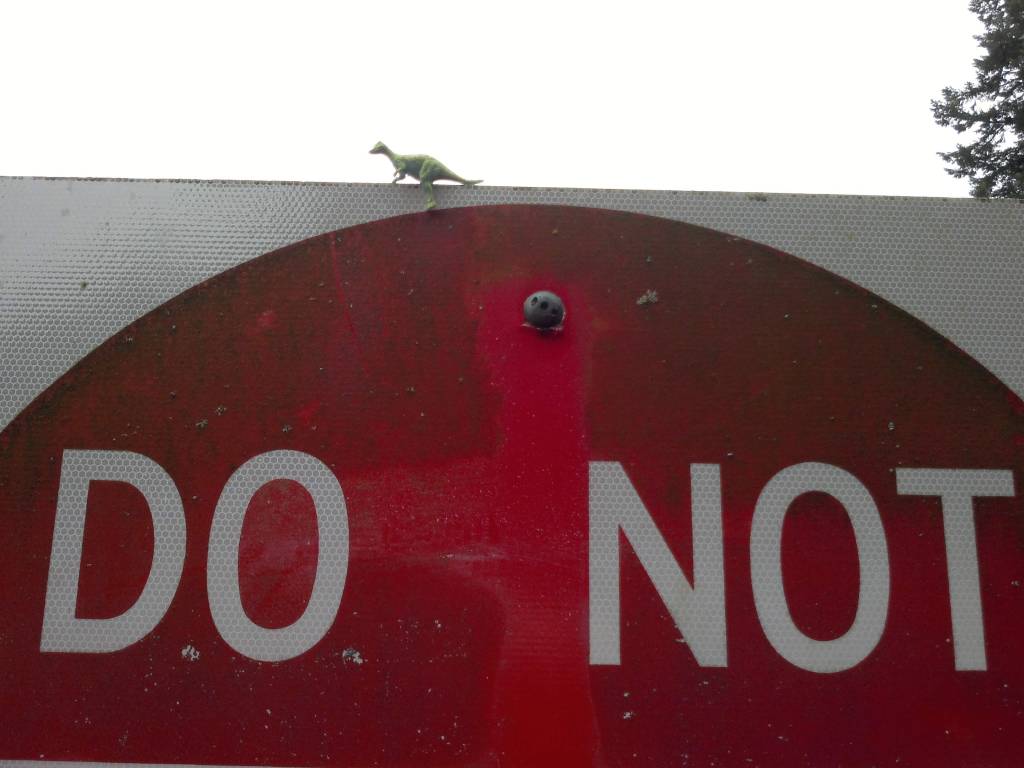
On the way home we catch the same stop signs, the same red lights. Someone standing on a corner waiting to cross pulls out their cell phone and appears to snap a pic of the light. The light changes. We move on.

 The Coming of the Toads