Tag: Discuss

  • Notes on n+1’s “MFA VS NYC: The Two Cultures of American Fiction”

    "I'm going to New York City to become a famous writer!" "New York can be really tough on a cat."
    “I’m going to New York City to become a famous writer!”
    “New York can be really tough on a cat.”

    The blogger is the busker of the writing world, sidewalk setup with pre-production to distribution in a snap, with or without an MFA or ever having set foot in Brooklyn, where it’s easy to mistake an NYC for a hipster, the new hepcat, but the character with a sign on a street corner, selling short stories, has got to be an MFA. Of course I bought one. It’s titled, “Sixteen short stories, and what do you get? Another day older and money in debt.” That’s it, the whole story, a study in minimalism.

    n+1’sMFA VS NYC: The Two Cultures of American Fiction” sounds more highfalutin that it is. The eclectic collection of analytic and reflective pieces is very engaging: personal, down-to-earth, and sincere; witty, informative, and cantankerous. The stories of the aspiring writers though are often wrapped in disappointment, and don’t amount to good news for the latest whiz kids on their way to the big time.

    The big time here is the coveted publishing contract and the freedom to write it suggests. But if the big time is part of the great American novel, the form is protean: movie stardom, big league baseball star, corporate head-honcho, founder of the next mega-church, on the cover of Rolling Stone. How does a relentless pursuit of excellence turn rancorous and begin to have a negative effect on the game, or the business, or the art? Subcultures are constantly being subsumed by the dominant, overarching culture, the umbrella over the barrel. The writers and scholars that appear in “MFA VS NYC” have big time stories to tell, and readers interested in the making of literature will find intriguing stuff on the ways the writing of fiction is taught or learned and the resulting fiction influenced and modified by the many players in the process: teachers, programs, agents, publishers, editors, publicists, booksellers, critics, readers.

    People write for all kinds of reasons and purposes, usually to someone, and if the writing is sent off – the memo, the email, the love letter, the white paper, the blog post, the letter to the editor, the book proposal, the sign in a window, the graffiti on a train car, the busker’s song sang on the sidewalk – the writing is published. Just as often, no doubt, and just as well, probably, the writing is trashed or deleted, but whether the writing is read or heard or not, by whom or how, or how long it lives, is all another matter. Some writers write to themselves, diarists. Their work is published when it’s found. Writers often hold up a mirror to the culture, and if the mirror is cracked, the culture turns away. Writers, like the rest of us, all seem to have a particular picture of themselves, hardly ever the same picture others have of them. It’s the picture of ourselves we don’t recognize that might make for the best writing and reading. The pictures of writers and writing, of literature, that unfold in “MFA VS NYC” merge the ones the writers have with the ones their readers might have, bringing the whole affair into better focus.

  • A Shuck of Stone

    When the lemon yellow of a doubtful flower tells lies
    And the hush pink plum blossoms first fail to surmise
    A touch and a kiss turn to stone.

    When the steep turn toward the dark cherry dyes
    And find winkle’s wake still seeping under the sash
    A drink and a dress turn to stone.

    To turn to stone is not to die and worm away
    A stone never slept nor arose
    A stone is a stone is a stone is a stone.

    When knickknacks walk and talk and wingding
    The livelong night no wonder
    A flower turns to stone.

    Hearths are made of stone, and wheels, and paths,
    And walls, and dwellings, and churches, and busts.
    A stone thrown skiffles across water and plops.

    When a shuck of stone falls from the sky
    Not a soft place on the land to nest
    A tempest has turned to stone.

    When in spring one feels petrified
    Curl and pit and weigh and hurl
    Slink and creep and push and pull.

    When the angels of spring go stone
    Old stones erupt in new waves
    And lyrical flowers woe no bloom.

  • An Imperfect Imposition

    An Imperfect Imposition   Gloss
           
    He goat a haircute,   “Beware enterprises
    molted a shive,   that require
    and emptoed the moot.   new clothes.”
           
    He out cast the let   Ruined good tune,
    down at sup-a-dup   raised to put
    and unvaled a crune,   bread on table.
           
    frumpted and follying,   Commuters fly
    and clutched the rolled,   in wingtips aspire
    acrested the abridged am-this   cross closed bridges.
           
    Daddy-Oh! Pater-pitter-patter Ah, familiar
    potairy, roong froom the Gin-is-is in joy of brewcrew
    hisses Ink Pour Age.   song of a pint.
           
    He rit the hoad alt coomed,   [Readers
    sweeat urned his id,   may reply
    and snoozled wths sapoozed.   below.]
           
    Hairfigged fitted, compred wronged, All quiet
    he wroted, a temptwitted,   on the worsted
    but ownlie slylents twas loosening, font.
           
    ands the suns downsed and moons Only a real fool
    arowsis a crewised shell fellowing ignores the full
    pips sillied byburds.   loon.
           
    Sorry to impose like this is the poet Where should it go:
    speaking, but have you a place for thes Recycling, Compost,
    amythidst your these is?   or Garbage?
           
    Supposing posing, oh, posing:   Climbing
    “I am positioned,” the imposing the corpus
    poet posited, “I am composed.” ladder.
           
    Nonesuchofwhich off course   Maybe end
    was teachno techno blareney,   with the “byburds”?
    steel eye as I am I am postplus. Too late now?
           
    Owl duedew uandeye goal   Reading kicker
    quickwick of it?   position player
    Illklicked ear, wellclick thr.   diversion.
  • Badges

    Hanging from their necks,
    belts, or ties, with photo,
    they come from somewhere,
    and have some place to go.

    She sees them bouncing up and down
    the streets, swagging vigor to and fro.
    Sometimes they meet and talk,
    badge to badge, boar to sow.

    She doesn’t get what they say.
    Normally, they just proceed,
    prancing days, romping nights,
    round and round they gambol

    through tunnels of sun
    sounding golden horns,
    steeds indeed, lit up
    in glorious gowns a glut.

    She had one once, but let go,
    repeating the hollow phrase,
    preferring not to be badgered,
    “And that has made all the difference.”

    Badge

  • On Boredom

    Today we gaze into the Abyss of Ennui. What is boredom?

    “Excess of sorrow laughs, excess of joy weeps”: In “The Marriage of Heaven and Hell,” Blake understood the Abyss, and sought to correct our assumptions and expectations. “The busy bee has no time for sorrow,” Blake said. But commuting home through an hour of plodding, plowing traffic, loaded down with work we’ve taken home for the weekend, we feel not the lightness nor the fickle flightiness of the bee. “The cut worm forgives the plough,” Blake said. Maybe, come Saturday night and he just got paid.

    Some tasks seem intrinsically boring. But we often confuse boredom with irritation, frustration, or addiction. Is boredom addictive? We say we are bored with what we don’t want. Tasks too bureaucratically procedural or repetitive lend themselves to boredom, not to mention carpal tunnel syndrome. What we don’t want to do, we put off, some of us; others, we jump in and get it done, so we can get on to something we find more interesting, those things we are passionate about. The former are the procrastinators, we are told, the latter the achievers. Both, though, we suspect, are susceptible to boredom.

    We often gravitate voluntarily to intrinsically boring tasks. What could be more repetitive than typing out another post? Physically repetitive: mentally, spiritually, and emotionally, the blogger flies with the bees of the cosmos! Really? I should try blogging.

    When we open the laptop or cell phone, we are not met with the organic breath of the compostable paper page of the book or newspaper. Someone should invent an app for smells, so that when we open the laptop, we are met with roses or the must of an old book. Maude had a similar idea in the film “Harold and Maude.” Harold is a bored rich boy, until he meets and falls in love with Maude. The protagonist is age; Harold is young, and Maude is old. Still, love alleviates Harold’s boredom, and after Maude, and after Harold sends his old life in a makeshift hearse over a cliff, the banjo.

    We hear of solutions that would alleviate boredom, suggesting boredom is a heavy and dark load that might be lifted from the bearer. Boredom begins to resemble depression. And boredom blends easily with guilt, for in a world saturated with pain and suffering at one end and glitz and shazam at the other end, who dare the chutzpah to turn the cheek of boredom outward? Quit your bitching and get back to your widgets.

    Does Superman ever get bored? Batman, bored? Spiderman? The specialist, it would seem, would be the first to suffer from boredom.

    In “Only Disconnect: Two cheers for boredom” (New Yorker, 28 Oct 2013, 33-37), about the relationship between boredom and distraction, Evgeny Morozov maintains that “to recognize oneself as bored, one must know how to differentiate between moments – if only to see that they are essentially the same” (34). When we’re bored, we want to be distracted, to take our minds off the monotony. We look down the assembly line of our lives and see nothing but more of the same, the same terrain, and unless we’ve been able to sustain an endless summer of surfing, we start to crave a fifth season, and we understand the winter and every other season of our discontent. The ability to click off one app and on to another is ongoing, but the solution creates another problem – call it the William Blake challenge: Excess of distraction bores, and we crave more and more distraction.

    On Boredom
    “What are you doing?”
    “Nothing.”
    “I’m bored! Let’s do something!”
    “I am doing something.”
    “You just said you are not doing anything.”
    “I did not say I am not doing anything. I said I am doing nothing.”
    “Oh, wow! You’re not going on another John Cage binge, are you?”

    What is boredom? John Cage provided what we might call a working definition: “It is not irritating to be where one is. It is only irritating to think one would like to be somewhere else” (Silence, 1961, “Lecture on Nothing”).

    If the specialist is the least equipped to stave off boredom, the artist is the best equipped. Because artists are generalists, they are able to turn their attention in different directions, outward or inward (whether at will or forced change does not matter) without the quality of disinterest or distraction. A true artist cannot know boredom in the act of art. Artists don’t require passion; passion is for amateurs. This is true for the painter or poet, gardener or dancer, musician or chef, surfer or clown, sailor or walker, potter or plumber.

    Got boredom? Get art. At the bottom of the Abyss sits art, doing nothing.

  • On Jury Duty, Poetry Gaze, and Yu Xiang’s “I Can Almost See the Clouds of Dust”

    In the Jury Assembly RoomAre you wearing metallic hairspray, metal flake rouge, wire under bra?

    A beep enlivens the line. Boots is told to back up and come through again, but again the beep, and she’s told to take the boots off, the line alert to its slowness, more prospective jurors wanting into the foyer and out of the fog, the enormous oak door squeaking and letting in whisks of cold announcing a newcomer.

    Are you wearing a hidden watch, steel mesh underpants?

    No, no, but again the beep.

    Boots takes off a vest and sends it through the scanner and walks silently though the screener.

    Impolite beeps like embarrassing burps, almost everyone is caught surprised.

    In orientation we learn a body of ennui weeps from the citizen soul, exudes from the body politic’s pores, but so far, the only claim supporting boredom comes from the introductory video. Still, one of the jury assembly room supervisors wittingly promises us boredom. But isn’t that what poetry is for, I wonder, a theory I soon begin to test.

    The jury assembly room is now nearly full, around 150 prospective jurors; what are we doing? No one is chatting. Sleep impossible under the surgical lights. The long, narrow room is like the sundeck of an ocean liner sitting in port.

    On the south wall of the room, facing the audience, is a large mural, bookended by flat-screen televisions, small and effete by comparison, the mural a colorful painting of a two-horse drawn chariot, one horse brown, the other blue, whip driven by a jester wearing a mask, and riding in the carriage, a kid playing violin, women looking up at trapeze artists swinging in the sky, a trumpet player, on the tailgate another jester – a tuba player in striped motley. An American flag blows from the rear bumper. Above and left of the chariot, a merry-go-round spins, to the right, a lighthouse stands at the end of a long, winding jetty, candy-cane red and white striped. On the horizon, white clouds whip along a deep blue, chatoyant, turning turquoise where the sea comes close to shore, the chariot hurling along a beach road, a border of green grass at bottom.

    At break I take a closer look at the mural, signed “Arvie”: a panel painting, a pentaptych, three large middle sections and two smaller end sections. An information label reads, Arvie Smith, Youth in Detention, “There Are No Impossible Dreams,” 2010.

    On the two television sets, almost no one seems to be watching, plays a morning cooking show, muted but with captions. What are we prospective jurors doing? Laptop computing, earphones plugged into cell phones, listening devices, reading, writing, trying to sleep, drinking coffee, eating snacks. No one is knitting (needles are disallowed).

    I get up and take a little walk. We are five rows deep times 30 or so seats to a section, about five sections, a few couches and tables at the far west end, then the bathrooms, a row of laptop stations at the east end, a small kitchen area with a microwave, filtered water, a pop machine, a candy machine, a bulletin board. Outside the kitchen are four, wall-size bookshelves courtesy the County Library.

    I reach in my bag and pull out Yu Xiang’s book of poems titled “I Can Almost See the Clouds of Dust” (Zephyr Press, 2013, 151 pages). There are ten sections, 44 poems, most confined to one page, with several longer poems, five notes, with an introduction by the translator, Fiona Sze-Lorrain, “Paris, France – July 2011.”

    I look at the first poem, titled “My House,” and enjoy the Chinese original on the facing page. Unable to read the Chinese, I look for characters that repeat, a stranger in a strange land. The English version is also 25 lines, a single, narrow, column-like stanza. The lines don’t rhyme. Words bounce down the page like an oblong stone kicked down a sidewalk. The images are clear. There’s a reference to “Pedro Paramo,” and the last line, in French, repeats the title of the poem. So that’s how it is, a you and an I. Who is you, and who is I, and who is Pedro Paramo? And whose house is this, yours or mine? Yet this poem does not ask questions; it gives answers, as a home speaks, even to a stranger.

    The next poem is titled “Street.” So we move from the house to the street. There are three stanzas: 5 lines, 6 lines, 3 lines, one that sings:

    “we drink beer, peel edamame”

    “Street” ends on a note of love.

    Most cases settle before juries are called. Court is expensive.

    It’s a wonderful mural, full of color moving across the wall like a screen in a movie theatre, the jury assembly audience as still as popcorn in a cardboard box. Suddenly, though not entirely unexpectedly, we are dismissed for the day.

    Jury Duty, Day Two. The mental note I made yesterday to bring a pair of sunglasses today failed. The library-bright lighting hums from the courthouse-high ceiling. I read an essay in the Philip Lopate book, discussing the rhetorical basis of the personal essay. Every text is an argument, Trilling argued. I’m ready for a break already; arguments about argument have lost their allure. I look around at my jury peers. One of my neighbors, Ursula, is eating a banana. Another, Penelope, appears asleep behind sunglasses. I don’t really know their names, nor have I spoken to them. I give them names suggested by the books they are reading. I think of getting up and walking about, but I don’t. I’m sleepy. At break, I go into the hall and buy a cup of coffee from the busy kiosk.

    I’m sitting in the back row again, mural right. None of these chairs is anchored to the deck. Hopefully the seas will stay calm. The television plays a piece on the Portland Bridal Show, a silent movie. I put the Lopate back in my bag and take out the Yu Xiang, which I’m now reading for the third time in a week. A young woman a few seats away is reading sheet music, a musician, it seems fair to conclude, as I warm up for a case. I return to my Yu Xiang book of poems. But somehow seeing the girl with the sheet music has made Yu Xiang seem so distant, and China and poetry so complicated. I text Susan, no answer. The jury room supervisors call a break. Good, I’m exhausted from the Lopate. I get up and move about. No one is talking in the jury waiting room, no conversations, more quiet than a library, an odd silence, given the size of the waiting crowd. I remember another jury duty I served, some years ago, when the room bustled with games and conversations. Citizens today are electronically put to sleep.

    My name is called and suddenly I’m on a case. I finish the orange I brought from home. The adrenalin kicks in, from the orange or from being called, I’m not sure, but I feel awake, alert, refreshed, and healthy.

    I make it through the selection process with 14 of my peers (12 + three alternates). The case begins. Judge Franklin Mahon Coughca provides an overview and instructions. The prosecutor explains the dispute: a poet is accused of writing wrong poems.

    The defense doesn’t take long, in essence, “so what?” I’m inclined to agree, but I remember my duty and try to be impartial and unbiased and all that. I want to hear what the jury of my peers thinks.

    The jury deliberates:

    The twelve jurors: a Waitress; a Plumber; a Bassoonist; a Car Wash Attendant; Penelope; a Receptionist; a Care Giver; a Hairdresser and Masseuse; an Architect’s Assistant; a Bank Teller; a Computer Programmer; a Street Sweeper – plus three alternate jurors, a gas station attendant, a financial analyst, and a blogger.

    As it turned out, I’m only an alternate juror, but on the strength of my being a blogger, I’m asked to volunteer to take notes.

    from my Notes:

    Yu: Are there any dogs in his poems, apartments and balconies, flies? These things are all elements of an engaging poem.

    Ursula: Some of these words appear to be spelled backwards. What’s that called?

    Care Giver: Is there a woman converging the real with the imagined?

    Penelope: Is there a water closet?

    Computer Programer: Is there a business side?

    Bassoonist: Is there music?

    Receptionist: I hate poetry, always have. What’s the point? If you have something to say, say it, in as few words as possible, and clear, so everyone can understand exactly what you mean, and then shut the hell up.

    Hairdresser and Masseuse: Well, but poetry is like art, I mean, isn’t it? Isn’t there always like some secret message, some code, like a moral to the story?

    Car Wash Attendant: This one looks like a sign of some kind, like telling people which way to go, you know?

    Computer Programmer: If you think about it, there’s only letters and spaces. That’s it, that’s all there is to it. Case closed.

    Waitress: But they’re not all the same size.

    Architect: I think all of these poems are wrong. I say he’s guilty and let’s go home.

    Plumber: Maybe we should read some of these poems out loud.

    Computer Programmer: I always thought poems were supposed to rhyme until I met my wife.

    Architect: Poems can rhyme or not rhyme. That’s what I don’t get. How do you know if it’s even a poem? Could be some sort of laundry list or grocery list or something. You know what the problem with poets is? They don’t make anything.

    Yu: We must look for keys and keyholes, and personal pronouns strewn in shredded syntax.

    Street Sweeper: Did the poetry police not violate his rights?

    Yu: This is my body.

    Penelope: These appear to be poems of procedural polity.

    Ursula: There’s a bit of rhyme, punctuality, is that what it’s called? The words have sound.

    Bassoonist: They look ritually safe to me.

    Penelope: A poet should be culturally accountable.

    Waitress: I knew a poet once. He was one of these guys always taking pictures of his food with his cell phone. I guess he published the pictures online or something like that. And the poems were like captions or something, you know? Like subtitles. To the photos. I don’t know. He seemed like a nice guy.

    Yu: Do you take this wolf to be your wife?

    Plumber: I do. I mean, I would, if I could.

    Ursula: One might as well ask about law and order on a different planet. I don’t understand how they could not have resolved this dispute out of court.

    Bassoonist: But that’s neither a question nor an answer, not much of an argument.

    Yu: That’s an interesting sentence.

    The Verdict: The jury finds the poet innocent, but nevertheless he’s sentenced by Judge Coughca to 1,000 years of community service, to be served as an adjunct instructor of the research paper, with no hope for tenure.

    The judge thanks the jury for its service, and we walk back down to the silence and security of the jury assembly room.

    I take the Yu Xiang from my bag. I’m thinking of poetry gaze. In a land where poetry has been devalued beyond zero, isn’t every poem a sigh of dissentire? What is poetry gaze? I feel like Yu Xiang is watching me reading her poems. But she does not care what I think, nor even what I might be feeling. Then again, her poems are like

    …a door that says:
    Be careful! You might lose your way”

    (Yu Xiang, from “I Have, 2002,” p. 67)

    +++

    Eleanor Goodman interviews Yu Xiang.

    Yu Xiang talks about her writing in a dialog (In Search of a Transient Eternity: Chinese Poet Yu Xiang BY Fiona Sze-Lorrain & Yu Xiang) at Cerise Press.

  • The Feng Shui of Car Chit Chat

    I say I’m thinking of a book She tells me where to turn.
    on lost practices to places. There’s a space, she says,
    She offers or a poem about expecting me to pull into it
    true and correct directions, and park, and when I don’t,
    and tells me to hang a right she hums a bit vexatiously
    at the light that turns green. at our dual needs to control.
    The real question is how to We’re in the car a long time
    enter a poem without hurt, to and from, back and forth.
    and once in, to sweep clean She prefers driving modus,
    the wrecked words of glass handling the stick so softly,
    littering from here to there not to foreshadow distance
    the streets of conversation. the clutch to engage slowly.
    We unload the grocery bags. The winds tipped over a pot.
    She holds the milk and wine. A couple of chairs blew over.
    There are flowers for a vase. The clocks tell the electrical.
    The car off cackles and cools. I map a plan from the guitar
    The house is an ancient map to the kitchen, avoiding trills,
    in a bottle tossed must ocean. my socks stilled in tambour.
  • A Cat’s New Year’s Resolutions

    A Cat's New Year“Happy New Year!”

    “Thanks, but what’s that ringing?”

    “You’re supposed to ring in the New Year and cheer!”

    “I don’t know where you get your ideas.”

    “From blogs!”

    “I might have guessed.”

    “Do you have any New Year resolutions?”

    “Yes, as a point of fact, I do, to wit, but one.”

    “And?”

    “To increase both the frequency and severity of naps.”

    “Ah, that’s the same as you had last year. Want to hear mine for 2014?”

    “No.”

    “This year, I’m going to avoid the near occasion of sin, cut out candy, shorten my tweets to be more clear and concise, listen more attentively, love. I want to love more. I want to bring back the Summer of Love, 1967! I want to live in harmony with the birds and squirrels, raccoons and possums, slugs and toads, bees and wasps, all that is electric and all that is acoustic. I’m going to give more and take less. I’m going to give kisses away, free, on every street corner I round. I’m going to sing more. Joe said it’s never too late to start singing. I’m going to learn to play a musical instrument, something with strings. I want to play soft and mellow and moist. I want to draw a bow across a string that creates a whine like a train. I’m going to watch more movies, Doris Day and Danny Kaye. I’m going to walk more, go for mysterious walks, step out, step it up, wander at will through this urban landscape we call home.”

    “The odds weigh heavily against any of it.”

    “If life is a gamble, I’m all in.”

    “And I fold.”

    Related Post: A Cat’s New Year’s Celebration

  • More On Trees

    Are trees intelligent? We are how we define. In this week’s New Yorker (23 Dec), Michael Pollan takes a fresh look at the compare and contrast conversation over animal versus plant kingdoms: “The Intelligent Plant: Scientists debate a new way of understanding flora.”

    At what cost do we hold the brain primary in a hierarchical view of consciousness, problem solving – in short, life? Picture two planets. On one, life forms with a torso and five appendages have evolved to invent marvelous technological tools, but the essential nature of the life form does not appear to have improved. Persuasion remains the name of the game. On the other planet, a similar life form appears to live in symmetry with the planet’s plants and animals (and, by extension, with one another), in a positive symbiotic relationship made possible by the nurturing of life sustaining partnerships and the recognition that all life contains the same kernel of consciousness, a kernel that may or may not be located in a central control system called a brain. But the artificial technology remains rudimentary. Is one planet smarter than the other?

    In perhaps the most persuasive part of Pollan’s discussion, he asks, in response to the criticism that plants can’t think because they don’t have brains, no command center, where in the brain is the brain, where in the brain is this command center? It appears that the brain may function in much the same way as a plant’s root system.

    In other news, the Toads Dec. 6 piece, titled “Trees of Christmases Past,” has been posted at the Berfrois site. Have a happy holiday diversion at Berfrois!

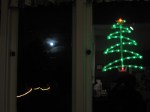
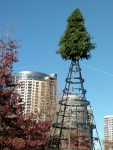
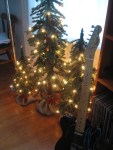
    Meantime, we celebrate Christmas with this more on trees photo gallery. Click on any pic to view the gallery.

  • Hamlet’s Status (A Play in Six Posts)

    Hamlet, at his computer. Enter Polonius:Hamlet's Status

    Polonius: What friends thou hast, add them fast, Lord Hamlet.

    Hamlet: Polonius advises us to link our souls with hoopla,
    When twice this same moon updates us,
    But still to me she hath not chatted.

    Polonius: Light lord, thy status in disconnect must be,
    Causing you this dark and dour distress.

    Hamlet: Fish not, sir; I fear she hath deleted me.
    What post supports this knotted matter?
    False light quickly fades, casting us in dark shadows.
    Let the clouds betide, let the rains come
    So thick and dark not the bark of the ark stays dry.

    Polonius: Despair not, care not, Lord, care less than not.
    Some new compeer will soon light your night
    With comely links and notes bright.
    Light be your aim, Lord, light your audience,
    And this will give light to thee.

    Hamlet: Nay, sir. In this book of faces there is but one for me,
    And I am trapped in this light box like a wench in a nunnery.

    End

  • Of the Quest of Sir Petersilie of Pestlebrawl of the Order of the Snail; or, The Slug that Slew the Knight Errant

    “There has been much scholarly debate about the significance of these depictions of snail combat,” (“Knight v Snail,” Medieval manuscripts blog, British Library).

    Sir Petersilie of Foolsbrawl in a Field of SnailsOn the sticky tricky trail of the obliviously slow sung snail
    In abstruse night hauled from mused sleep our noble knight
    Loyally hassled by Bona Fide his gallant gabbling vassal squire
    Sheathed and studded leaves amid the rustle of first light
    Abysmal metaphorical lack-a-back his lazy credo
    Squaring his mail nailing his welds into steel mental spikes
    For Bona Fide dressing Petersilie was indeed a close battle.

    Busy poets to the court replace rusting escutcheons
    This historical tourney near the end of futile modernity
    Before joust was just jest and chivalry a corporation
    Stood tall Sir Petersilie of Pestlebrawl upon staid steed
    Auguring from the Order of the Snail mortal welcome
    This his last Quest for the Wholly Exulted Wooly Grail
    To hold the sacred secret of the sweat and dour secretion.

    In satirical slime he spent his time a woed scholar of the decoy
    Stout by hearty ales microbrewed behind the berfrois
    Ate merry and many a fatty but delicate foie gras
    And escargot whilst knights jousting with snails roiled
    Scrolls of marginalia snails dressed in natural snail mail
    Pacing against mace married his demise bored sweet and torus
    The fused self-complacent snail did fain cant and tilt.

    4120159349_b798c17b54Thus domesticated rusticating finished his failure ne’er-do-well fall
    In the finals tourney he slipped tumbled and sprawled
    In a nest of snails and Bona Fide let go and abandoned all
    For a seaside rest fishing pole and white winter flounder
    And all around whelks of waves swelled and bulged
    The salt tide rising on Petersilie couched in a conch
    Dreaming of collations and juxtapositions.