Tag: Ants

  • Bugging Out

    In “Through the Looking Glass,” Alice converses with a gnat:

    “I know you are a friend,” the little voice went on; a dear friend and an old friend. And you won’t hurt me, though I am an insect.”
    “What kind of insect?” Alice inquired a little anxiously. What she really wanted to know was, whether it could sting or not, but she thought this wouldn’t be quite a civil question to ask.

    A gnat is a small fly, but this one seems huge, as gnats go:

    She found herself sitting quietly under a tree — while the Gnat (for that was the insect she had been talking to) was balancing itself on a twig just over her head, and fanning her with its wings. It certainly was a very large Gnat: “about the size of a chicken,” Alice thought. Still, she couldn’t feel nervous with it, after they had been talking together so long.

    Alice tells the gnat she’s not overjoyed when she sees an insect, because she’s afraid of them, particularly the larger ones.

    I’m not fearful of bugs, spiders and such. It’s the season here though when I’ll run into an orb-weaver spider web spread across the walkway between tree branches, face level, too, but invisible unless backlit with the rising sun, and I feel the sticky web as it envelops my face. I shake my shirt and comb through my hair with my fingers and watch a little reddish bug falling to the ground.

    Then came another of those melancholy little sighs, and this time the poor Gnat really seemed to have sighed itself away, for, when Alice looked up, there was nothing whatever to be seen on the twig, and, as she was getting quite chilly with sitting still so long, she got up and walked on.

    A problem with bugs is not that they are gigantic, but that they are small, and they are quick, and usually invisible to us. If you allow yourself, you might get all obsessive about bugs hiding behind baseboards, in the yard, or in your hair. But most bugs we never see, and they don’t bother us, in spite of the fact that about 10 quintillion bugs are living on Earth at any given moment.

    I enjoy reading blogs foreign to me, made possible by Google Translate. I recently read a blog post by a Japanese woman about centipedes. I was curious, having myself come across a couple of centipedes in our humble abode this summer. But this woman was nonrationally fearful and sprayed her unfortunate centipedes with excessive amounts of insecticide. She even posted a word of caution to potential readers at the top of her post, concerned some might be scared out of their wits reading about bugs, and she posted a deliciously horrible photo of a centipede slightly curled. Maybe something was lost in translation.

    Not too long ago I posted a piece on ants in our coffee maker. The infestation was so severe we had to abandon the electric coffee maker, and I went back to using a manual French press. I was reminded of E. O. Wilson, who changed his mind about how evolution works, as he found group altruism at work in ant colonies. He said that cooperative workers were more successful than competitive ones. Thus he favored altruism as a collective trait. His reversal of his prior position on the matter greatly upset his scientific community; many stuck in the web of their old position.

    As if real bugs aren’t enough, we find in Kafka’s story “The Metamorphosis” a metaphorical bug. A human awakens one perfectly normal morning to find himself turned into a true liking of his image, for he’s already living the life of a bug, a small bug-like creature working a menial job for the hive. Not all bugs are insects, but for our purposes here, I’m calling them all bugs. Bugs may seem a far fetched idea for an anthropomorphic story, but E. B. White wrote a very successful book with “Charlotte’s Web,” about a pig, a spider, and a little girl living on a farm. When walking outdoors this time of year, and watchful of walking into a web, always be sure to check for web messages.

    Science Lesson: I once knew a bug who for a short time kept a blog. Bugs don’t leave likes or comments; they leave bites and itches. Why are there so many insects living here on Mother Earth? Bugs have had a long time to adapt. Nature tends to overseed tiny organisms. Elsewhere no doubt there are planets full of bugs, oceans where none have yet decided to leave their salty paradise, tiny and invisible even to our new space telescopes. They don’t send messages and have no need for technology other than their own three part harmonies. Bugs are not picky eaters. Bugs are good pollinators and some, centipedes, for example, feed on other bugs perhaps dangerous to humans. Centipedes are not particularly harmful to humans. They are masters of the 100 yard dash.

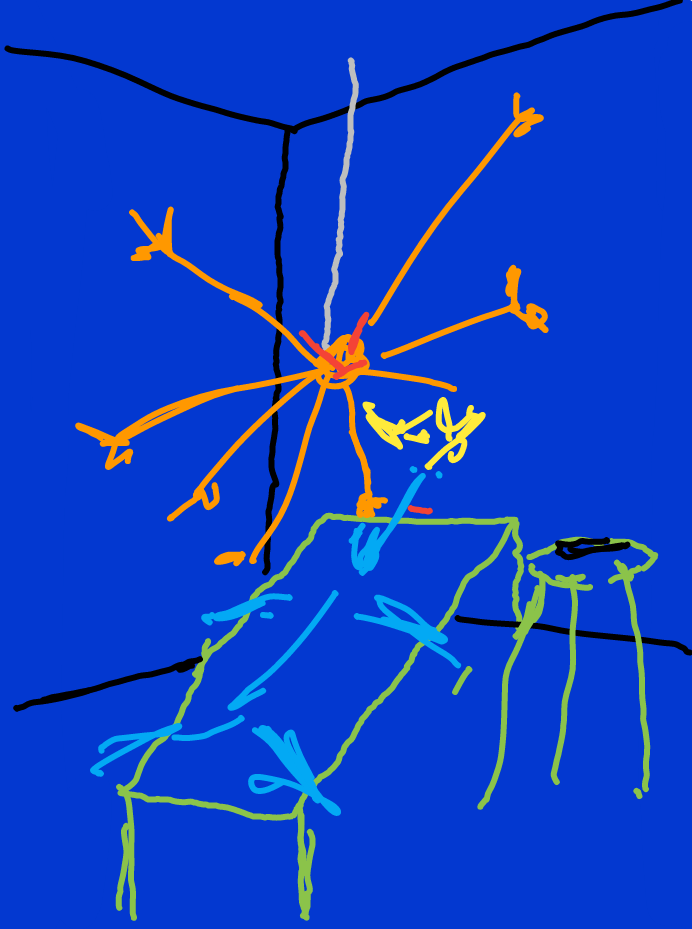
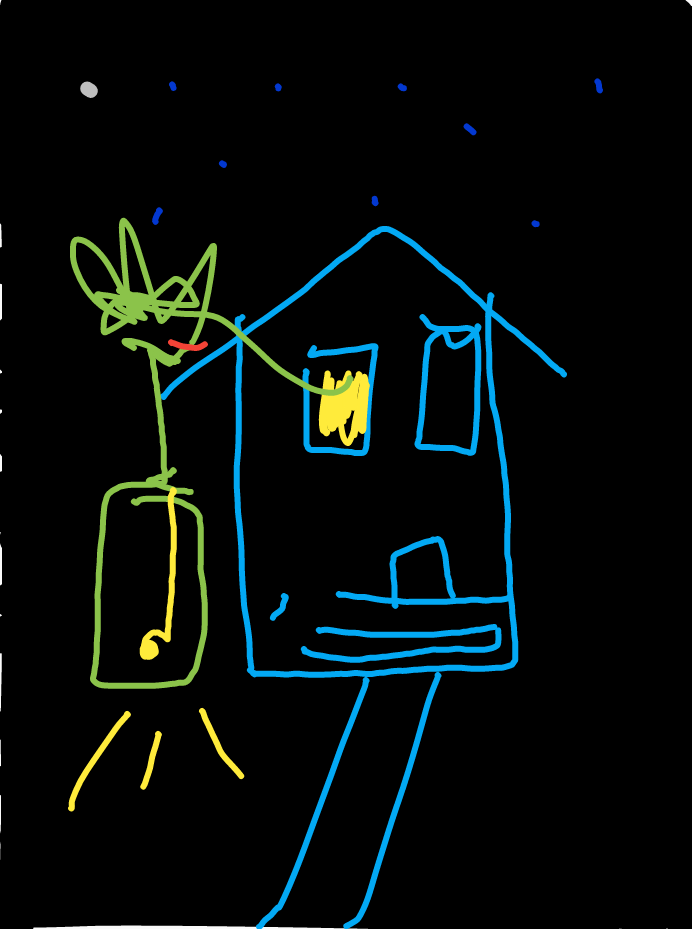
    Theory: I had a friend in high school I admired for he was fearless and loved snakes. Then I discovered he was afraid of spiders. Whenever a spider was at hand, he called me in to deal with it. Over time, I developed a theory: people afraid of spiders are not afraid of snakes, while people afraid of snakes are not afraid of spiders. Occasionally, as the topic may arise, I’ll ask the question in conversation – below I’ve created a “poll” to test my theory (and to test the format of a poll, which for this blogger is a first). Please feel free to answer the poll, or leave a comment below to the post, or simply enjoy the cartoons I’ve added at the end. Time now to bug out.

    Update: I’ve already been advised my poll block didn’t work, so I’ve removed it. Not sure what I did wrong. But please feel free to answer the question (Snakes or Spiders) in a comment to the post below. And enjoy the cartoons!
  • Signs of Spring and All

    A few mornings ago, I walked into the kitchen, set about making coffee, and noticed a line of tiny ants climbing up and down a corner edge, starting from a small gap behind a molding where the wall meets the floor, and when the ants reached the countertop, they went meandering to and fro, around the toaster and coffee maker and compost bucket. And two nights ago, out walking, we came across a nest of what appeared to be the same ant species emerging from a crack in the sidewalk, a line of scouts working their way into a neighboring yard. And early yesterday, the weather still clement, in spite of thunderstorms and tornadoes forecasted for the later afternoon hours, I had taken a morning break with my coffee outside in the fine Spring morning, and when I swung the door open to come back in, a fly the size of Rodan nearly knocked me over as she flew into the house and proceeded to spin around and around near the ceilings, cavorting from room to room.

    Spring begins with a pile of chores, and one recalls T. S. Eliot’s seemingly anti-intuitive start to his disillusionist poem titled “The Waste Land”:

    “April is the cruellest month, breeding
    Lilacs out of the dead land, mixing
    Memory and desire, stirring
    Dull roots with spring rain.”

    Not to mention the appearance of ants awaking from their winter diapause.

    “Winter kept us warm, covering
    Earth in forgetful snow, feeding
    A little life with dried tubers.”

    Soon April, and signs of spring are breeding and mixing in the kitchen and in the air, inside and out. Across the grass, dandelions are sprouting and even flowering already, and the turf at the edge of the sidewalk needs edging. The list goes on, but never mind – I discovered this week Ruth Stout, whose practice of gardening is summed up in the titles to her mid-century books, notably: “Gardening Without Work: For the Aging, the Busy & the Indolent” (1963); and “The Ruth Stout No-Work Garden Book: Secrets of the year-round mulch method” (1971); and her first, “How to have a Green Thumb without an Aching Back: A New Method of Mulch Gardening” (1955).

    It was in a New Yorker article of March 17 that I discovered Ruth Stout, sister, as I learned, of the famous detective fiction writer Rex Stout, best known for his protagonist Nero Wolfe. The subtitle to Jill Lepore’s article tells all: “Ruth Stout didn’t plow, dig, water, or weed.” Suddenly, Spring seemed a happier time than how T. S. Eliot described it.

    Still, I had ants in the kitchen to deal with, for I learned to my dismay they had nested inside the coffee maker. I surrounded the coffee maker with a moat of vinegar, and when the ants appeared between the moat and the coffee maker, I knew they had to be coming from within the coffee maker, where they must have set up a new nest. Never one to rush for the can of spray that “kills bugs dead” (ad line attributed to Beat poet Lew Welch, by the way), after a bit of research, I decided to try Dr. Bronner’s peppermint soap, having read that ants don’t like peppermint oil. The soap certainly stops ants on contact, and it seems to slow new scouts from returning to the scene.

    Meantime, our kitchen counter is cleaner than ever before. I had to retire the electronic coffee maker. I read ants like water and warmth (who doesn’t?), and they can also detect electric currents, including vibes from computers and cell phones and such – so we won’t be able to charge our devices on the kitchen counter anymore, for fear of ants. Imagine ants in your Chromebook, crawling in and out of the keyboard. And we’ve returned to a French press coffee maker, and while it takes a bit longer with more steps to brew, the coffee is robust. And immediately employing the Ruth Stout method, the yard work is quickly done, leaving more time for writing pieces, well, like this one.

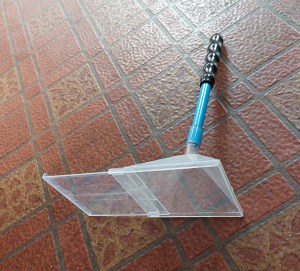
    But what of the fly the size of Rodan, the deep reader will be wondering? Advocating a catch and release policy toward all living but unwelcome things, I grabbed the fly catcher and went dancing around the house with the fly. I trapped it in the bathroom, where it had landed on the window screen. To catch a fly with the fly catcher, you have to wait until it lands, approach quickly but stealthily, cover it with the catch door open, then slide the catch door closed with the fly inside the trap. Might sound easy, but it’s often a cat and mouse game as the fly inevitably flickers away at the last second. After several attempts banging around the small bathroom, I caught the fly, then released it into Spring and all wilderness where all Earth life mingles half awake and half asleep.

    Catch and Release Fly Catcher
  • Immigrants from Earth

    The astrophysicists are in the ascendancy again. That’s our takeaway from a 03.2019 National Geographic article. The key is light. The scientific industry is working to build something that will travel close to the speed of light. Laser beams, solar winds, and microscopic kites. Another key is funding. They’re working on a go fund me tsunami. Government dough is drying up, but there appears to be enough interest in the private sector to fuel ever more comic book fantasy.

    Surprisingly, for all our technological advancements and discoveries, not much is known about the universe. Part of what’s driving the current science buzz is a new generation of telescopes that will provide pics of the light reflecting directly off of exoplanets. That light will contain information about what’s happening on the planet. Information like who lives there, their address, what they do for a living, and other census like questions.

    Meantime, back on earth, in that same 03.2019 National Geographic issue, an article on El Salvador violence, titled “No Way Out,” helps explain the immigration crisis on the US southwest border. A map of El Salvador, titled “State of Fear,” using dots to show “Homicides by municipality, 2017,” could from a distance be confused with the Milky Way pic used on the cover of the issue.

    One wonders what makes scientists think there might be intelligent life elsewhere in the Universe when evidence of intelligent life here on Earth seems close to non-existent. And why would other life forms, presumably far more technologically advanced or in other ways superior to ours, be interested in us? One scientist interviewed remarks the question is similar to asking why would humans be interested in reaching out to a colony of ants.

    Ah, but there’s the rub. Maybe the ants are the aliens.

  • Scrap start with a comma

    , and the Doodles on the radio
    just before the power grids out
    sing of the last rhino ringed.
    The past is not enough to live on
    to make ends meet.

    The colony runs consistent lanes
    running in opposite directions
    like lines of ancient text
    the queen home her future
    near but never quite here.

    20180628_083449

  • Thoreau’s Meanly Men and Manly Ants

    “We live meanly, like ants,” Thoreau tells us in the “Where I Lived, and What I Lived For” chapter of Walden, just after he’s divulged his reason for being in the woods: to distill life, then distill it some more, until he has more than 100 proof. And if life prove mean, then he will “publish its meanness to the world.” What does he mean by meanness? The opposite of simplicity, for one thing, letting the railroad ride over us, for getting off track is devalued; today Thoreau would use the automobile as the vehicle and mean man the asphalt. His discussion of living meanly anticipates the later episode of the war of the ants in the “Brute Neighbors” chapter. But there, the ants are anthropomorphized as warriors from antiquity. In the ants he sees meanness because in the ants he sees men. But what could be meaner than the mother who “had charged him to return with his shield or upon it”? Thoreau even imagines the ant armies with military bands blowing on the sidelines just as fiercely as the combatants. Yet Thoreau anticipates E. O. Wilson, whose newest work explains altruism, communication, and cooperation as fundamental to advanced social behavior successes, both in ants and men, as opposed to competition and meanness. The fittest may turn out to be the one who can best cooperate, sacrifice, and share. Wilson considers self-understanding as vital to survival of the species. Thoreau agreed. Thoreau leaves the pond when he does because he’s called by Mrs. Emerson to come care for her family while her husband will be away on a lecture tour. Thoreau leaves Walden quickly, with an attenuated conclusion.

    The E. O. Wilson reference is to a Smithsonian.com interview with Wilson, “What Does E.O. Wilson Mean By a ‘Social Conquest of the Earth’,” by Carl Zimmer, March 22, 2012.

    Related Posts:

    Mapping a Reading of Thoreau’s Walden

    Now is the Science of our Discontent

    …ant, ant, ant, ant, and ant

  • 81 Snazzy Ants

    1. ant  ant  ant  ant  ant  ant  ant  ant  ant 
    2.   ant  ant  ant  ant  ant  ant  ant  ant  ant
    3.    ant  ant  ant  ant  ant  ant  ant  ant  ant
    4. ant  ant  ant  ant  ant  ant  ant  ant  ant
    5.     ant  ant  ant  ant  ant  ant  ant  ant  ant
    6.     ant  ant  ant  ant  ant  ant  ant  ant  ant
    7. ant  ant  ant  tan  ant  ant  ant  ant  ant
    8.   ant  ant  ant  ant  ant  ant  ant  ant  ant
    9.    ant  nat  ant  ant  ant  ant  ant  ant  ant
  • 45 Embedded Ants

    canto Dante phantom fantod chanteuse
    
    slanted ranting banter gauntlet infantry
    
    pantsuit gigantic Atlantis cilantro plantation
    
    shanty brigantine semantic dismantling gallivanting
    
    gallantry wanton canteen quarantine guarantee
    
    romantic chrysanthemum fantasy haunted dilettante
    
    pedantic consubstantiation incantation misanthropically quantified
    
    truantry meantime cantus cantilevering bacchante
    
    aspirants applicants aberrantly yantrill vibrantly
  • 153 ants

    ant ant ant ant ant ant ant ant ant ant ant ant ant ant ant ant ant
    
    ant ant ant ant ant ant ant ant ant ant ant ant ant ant ant ant ant
    
    ant ant ant ant ant ant ant ant ant ant ant ant ant ant ant ant ant
    
    ant ant ant ant ant ant ant ant ant ant ant ant ant ant ant ant ant
    
    ant ant ant ant ant ant ant ant ant ant ant ant ant ant ant ant ant
    
    ant ant ant ant ant ant ant ant ant ant ant ant ant ant ant ant ant
    
    ant ant ant ant ant ant ant ant ant ant ant ant ant ant ant ant ant
    
    ant ant ant ant ant ant ant ant ant ant ant ant ant ant ant ant ant
    
    ant ant ant ant ant ant ant ant ant ant ant ant ant ant ant ant ant