Recently, I’ve been writing on WordPress using the Jetpack application installed on my cell phone and tablet, deprived of a real keyboard and downsized to essentials, but able to pull out the tool and continue playing around with a post throughout the day, adding, subtracting, dividing, etc., on the go (to the extent I ever am on the go these days, where go might look very much like stop). Writing is a disappearing act.
The laptop, my usual tool for developing and publishing posts, as get up and go as the laptop is, is not as flexible and doesn’t travel as easily as the phone or tablet (for one thing, the laptop batteries are down to a trickle, and it must be left plugged in to work). I thought the recent posts from the cell and tablet were displaying wysiwyg (what you see is what you get), but a couple of faithful readers let me know not so. Yesterday’s post, for example, a short poem titled “A Bout,” apparently appeared on their reading devices in a pale white font on a fog colored background, difficult, but not quite impossible, to read. By Jove, I thought, that format (if that’s what it’s called) accurately describes the theme of the poem, but it was unintentional. And the pale white font on fog colored paper was an improvement – posts previous to that one had not appeared at all, those same readers had informed me; under the title, on their devices, the post was blank.
I assumed the problem was user error, and set out to discover how I’d messed things up so, and in the process found (under a three dot dropdown menu at the far top right of the WordPress screen) “Options,” one of which is labeled “Distraction free: write with calmness.” In other words, we have a choice: write, and consider yourself a writer, or fall down the convoluted rabbit hole of blocks, styles, editor this and that, and things Jetpack related – a dichotomy that is of course distorted, unfair, and entirely inaccurate. Well, maybe not entirely. Like the guitarist who trades in the acoustic classical guitar for an electric guitar and a panel of guitar pedals, the writer who incorporates a full spectrum of technological gimmicks or tools, as opposed, say, to simply using pencil on paper – um, one senses a loss of calmness. And yes, I know I just split an infinitive, but I do so in perfect calmness. It’s impossible to split an infinitive in Latin, which is where the absurd rule comes from, but this isn’t Latin class. Well, maybe that last bit is not so calm, after all.
And the point of writing is to becalm. If you find writing does not invite calmness, you may not be actually writing, but are engaged in some other method of spending time – not to say any one way has more value than another. Writing usually has some purpose, which is to say occasion, argument, intended audience, none of which would seem to invite calmness. Still, the act of writing, if one is to find the sweet spot, is a path toward calmness, invites calmness – because once under way, all else falls off. One becomes, indeed, free from distraction.
Swā, this post is being written on the laptop, as an experiment to see if the problems don’t correct themselves on the readers’ devices, thus isolating the cause to Jetpack on the cell and tablet. Let me know in comments below, if you’d like, what you see, or don’t see. But remain clam. I mean, calm.
From boutique of night
blooming flowers
warm vase water becalm
deep dank well
emerges the princess
of night pale white
speechless as the moon
rose petal full

Not alone her soul
attached to a host
epiphytic life dangling
from an oblong root
where the frog appears.
Several lines form,
one circles
round the roasted chickens,
always seems faster,
the line and the fowl.
A young woman juggles
a basket full:
apples, milk, Cheerios,
snacks, beer;
her kid giggles jiggling
the magazine rack:
Harry and Charles, UFO's,
AI, and Elvis alive
up in a penthouse in Las Vegas.
The unharried clerk
tells of his night
at the opera,
in no particular hurry.
It seems some nut
upstaged Rodolpho,
running down an aisle
reciting some politico
manifesto about
what who knew? I mean, I'm like,
the clerk says in a sing-song
falsetto,
Mimi, she's vulnerable,
augmenting
this last with musicality
with a grimace,
and this crazy cat wants
all the attention.
You know what I mean?
I mean, we're all wounded,
impuissant,
but this is Mimi's moment.
Know what I mean?
And all in his line nod yes.
occasionally counting daughters
before work in the basin,
new construction, often the sun
splinters boulevards - ocean
calming down

wave objects chess dadas
moving to and fro across
the orange continental divide

oakum cold drink drizzle
obloquy causes distress
a drooping doubt befalls
and he turns around-the-clock
to return repeatedly again
and also a loss alas against
all odds closed doors

outside claustrophobia dwells
went looking for him doodle
circled the divine deforestation
of the three carob trees

what opportunity California
5th Degree Knight
in his off hour dandy dress
origin of the ritual lost
on his sons

obviously the office cabana
dude suffered outrageous
cactus disconnect.

But it was Mother's Day
oasis came dear
angels sisters and mermaids
all paused as out comes Dad
bestowing flowers fruit
and yum tum hugs and kisses.
I suppose most thought I wasn’t worth attacking or eating, little did I advertise my wares, my curly hair neither surfer nor hodad coifed, but you found my blue eyes and scarlet climbing blaze secret, and up you came, up the bridle path of my ways and means, touching lightly the joys of my trips, the sorrows of my passes and losses.
My father was a shipbuilder beetle, my mother a washerwoman. They met on a seaside wharf, watching a parade of schooners pass. He was an expert stone skipper. She was as quiet as a sail in a doldrum. Any more about them is but weakly supported, but they both loved aphids.
We came of age in a time of flowers, and we learned to imitate the tactics of fight and flight, neither voracious nor temperate, rode tides and winds, and though we grew hungry, we did not eat one another, but signaled warnings and hopes, lights and loves, reasons of being.
You came up my legs crawling, spreading your wings, tickling, the crops ripe, the weather warm, the music in the distance peaceful, the guitar strings silk wound. And you taught me the rhyme can be changed, and anyway most ladybirds went unpublished, the more sweet this one I saved for you.
Dr. Vivek H. Murthy, the United States Surgeon General, has declared loneliness a national health crisis. It’s as if the Pope questioned the doctrine of transubstantiation. The pioneer spirit feels a needle puncturing its balloon. It reads like a headline in the Onion, a bad joke.
Loneliness is epidemic, Murthy says, crosses and affects all sociodemographic boundaries and classes. There are no distinctions. The loneliness virus can infect anyone. Murthy recently traveled around the country, and everywhere he went, he talked to folks who questioned their self-worth, their connections to family and friends, the value of their very existence.
We might jump to an explanation, our personal predispositions and assumptions slipping into gear. Apparently, a trip to Walmart to stock up on beer and chips for the big game on TV is not enough to fill the void, but then neither is driving to Rodeo Drive in your Rolls Royce for a new dress. In church, one feels pewed-in, and the kiss of peace lacks true touch. And the more Mega, Meta, or MAGA one gets, the worse the symptoms of loneliness.
Loneliness looks and feels much like depression and anxiety, a lost in the world feeling, made worse by the vast numbers of people surrounding, none of whom one might talk to. One’s old drinking buddy is on the wagon. One’s ex (spouse, friend, religion, school, job) is full of the need for schadenfreude gotchas. One’s pronoun choices come up short. One feels a need to be a verb, as Buckminster Fuller said, only to have one’s grammar or usage corrected. And in one’s own home, one might feel like a direct object, put upon by a subject, or a noun without a verb.
I’m sorry I don’t have a cure, but Murthy has proposed a plan. Might be worth Googling (or see link below). Meantime, I’m reminded of the old Roy Orbison song:
Only the lonely Know the way I feel tonight Only the lonely Know this feeling ain’t right
“When I wrote this song I was nothing but a kid, trying to work out right and wrong through all the things I did. I was kind of practising with my life. I was kind of taking chances in a marriage with my wife. I took some stuff and I drank some booze. There was almost nothing that I didn’t try to use. And somehow I’m alright.”
Rock and roll has no doubt saved many a kid from an unjust boredom or dysfunctional unrest, just as it has probably toppled many more into an excess of abuse and waste or early use of hearing aids. But that’s an argument of causality, which is to say we need to determine what causes can be clearly traced in an unbroken chain of events from proximate cause to results and effects and distinguish those causes from correlations – connections that are more associate than causal – associated with the cause but not primary producer, if at all, of an effect. If we don’t clearly isolate the cause, we run the risk of treating a cause that doesn’t affect the negative effects we’re trying to cure. But The Kids Are Alright is also a moral argument: how should youth be spent?
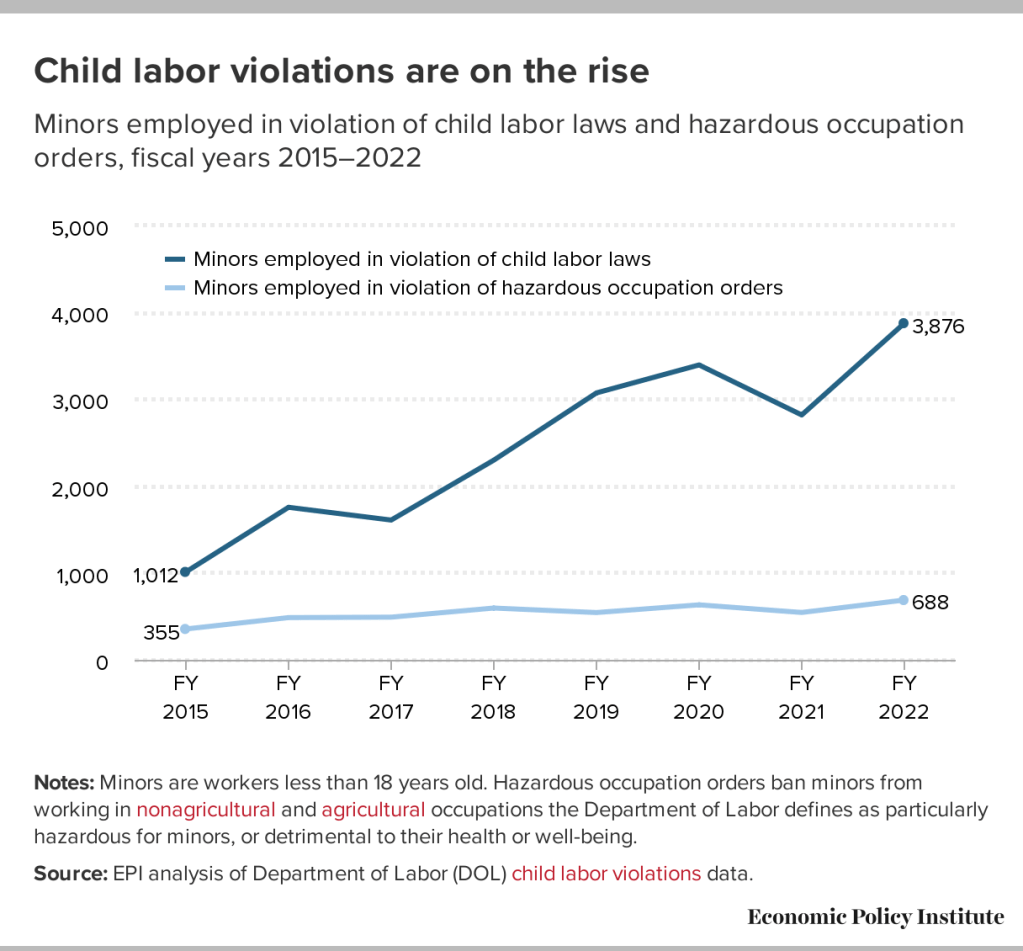
Consider, for example, the current rise in legislative efforts to weaken or repeal child labor laws. What’s provoking these new but seemingly archaic and draconian measures? Child labor laws have been implemented over the years to protect children from low wage and excessive work-hour exploitation; workplace injury; and stunted emotional, intellectual, and physical growth. Who would want to repeal such protections for children, and why?
First, we note that violations of the laws have been increasing in recent years. If you’re a business found in violation of a law, one solution might be to try to get the law changed:
According to Pew, the root cause driving attempts to repeal child labor laws is workforce shortage. Business and industry can’t find enough workers. Workers that have historically filled the jobs in question (restaurant and hospitality; unskilled manual labor; assembly line work; industrial laundering, sanitation services) are staying in school longer. But that doesn’t account for the historically large number of missing workers. Where have all the workers gone?
According to the US Chamber of Commerce, there are several reasons for the current workforce shrinkage: increase in family savings fueled by the pandemic; early retirements; lack of access to childcare; and new business starts. And, we might add, the so-called gig economy – which has allowed greater freedoms, flexibility, and opportunity for entrepreneurs. In short, there are currently more jobs than workers, and the reasons are several and varied.
And some see the solution as allowing younger children to work more jobs. But take a look at the industries most affected by the workforce shortages (again, according to the US Chamber of Commerce). Food Service and Hospitality jobs have been hard hit. These are jobs that can’t be worked from home. But not all must-report-for-work jobs have seen high quit ratios.
Not all jobs are created equal, even if the pay might be equal. Who are the industry and business leaders and their pandering legislators trying to repeal child protections? According to Pew (citing EPI), supporters of repealing child labor laws include: “national and state branches of the National Federation of Independent Business, the Chamber of Commerce and the National Restaurant Association, as well as lodging and tourism associations, homebuilders and Americans for Prosperity, a conservative political advocacy group.”
These are not necessarily guys and gals all wearing MAGA hats. If we oppose repealing child labor laws, and we find ourselves wanting to criticize the businesses mentioned above, we might ask ourselves how often we support these businesses by buying or using their products or services. As an example that illustrates the problem, consider this, from the same Pew study cited above:
“Arkansas and Tennessee enacted changes last month. A new Arkansas law removes a requirement that children under 16 provide proof of parental consent to work, while the Tennessee law scraps the prohibition on 16- and 17-year-olds working in restaurants that derive more than a quarter of their revenue from alcohol.
“We’re desperately needing some extra workers between the ages of 16 and 17 to work at some of these restaurants,” Tennessee Republican state Rep. Dale Carr said during a February hearing on the legislation, which he sponsored. Carr represents Sevierville, a tourist destination in east Tennessee.
“With Workers Scarce, Some States Seek to Loosen Child Labor Laws,” Pew, 17 April 2023.
Pour your own drinks. Tour your own backyard. Camp out instead of holding up in a hotel. Meantime, where there are labor shortages, businesses should consider how they can attract and retain workers. They need to offer adequate and equitable pay, benefits, job security, safety and protection, and flexibilities they have not previously considered. Business owners and managers need to treat their employees as persons, as humans, with dignity and respect, regardless of their age, yet according to their age. And users of their products and services should recognize their complicity in the economic interconnectedness and responsibilities throughout our consumer society. Then, just maybe, we’ll all be alright.
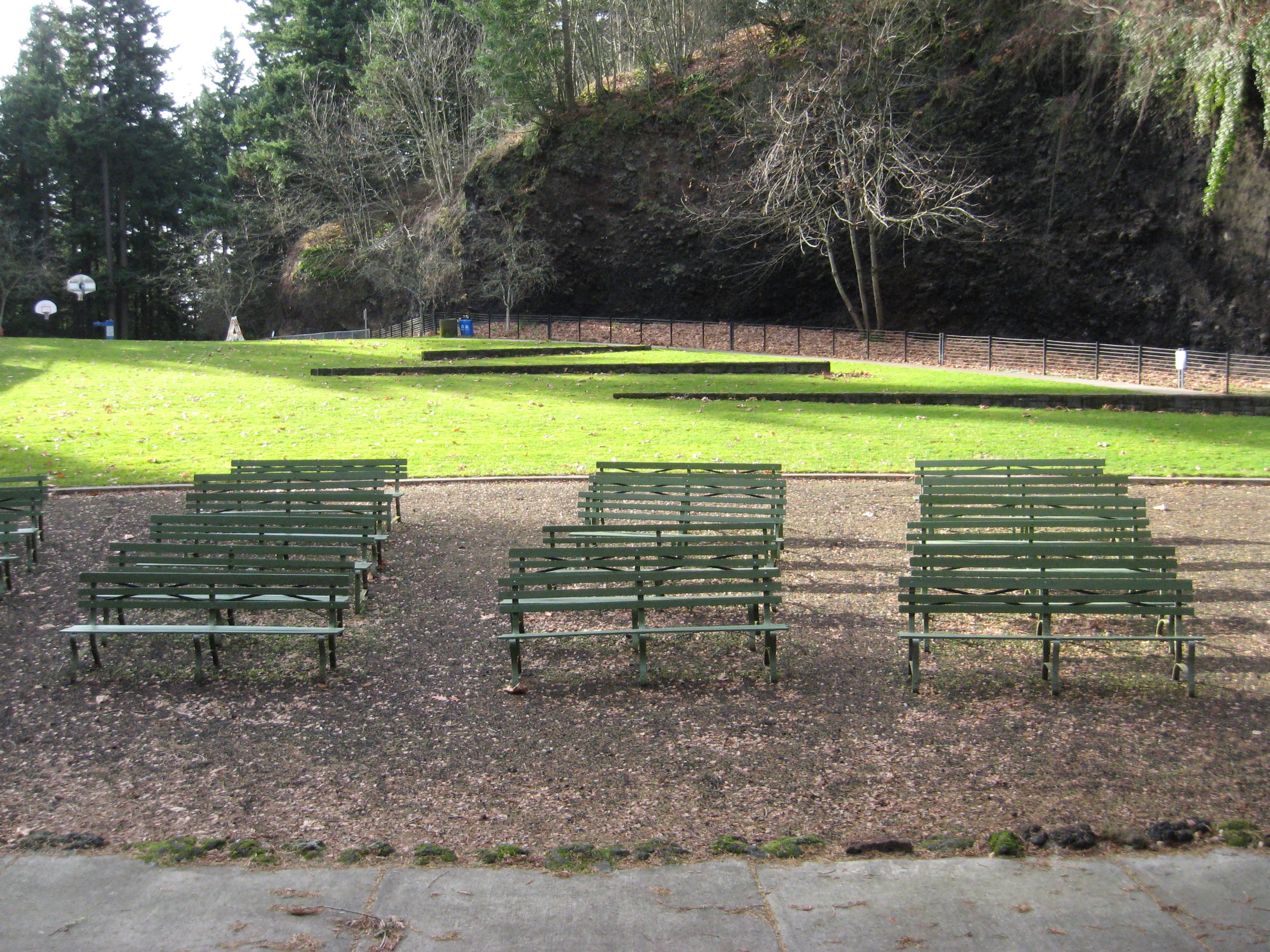
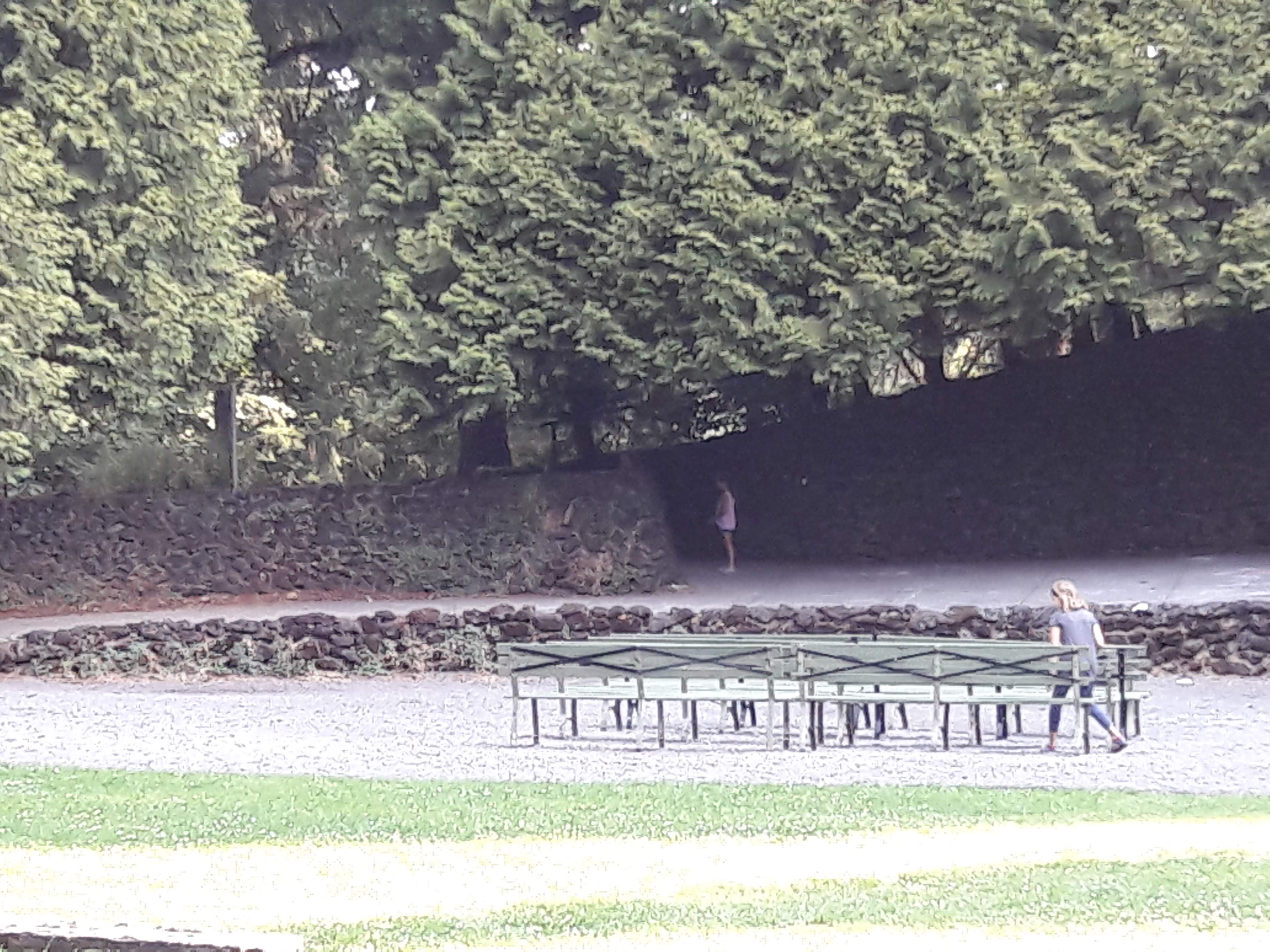
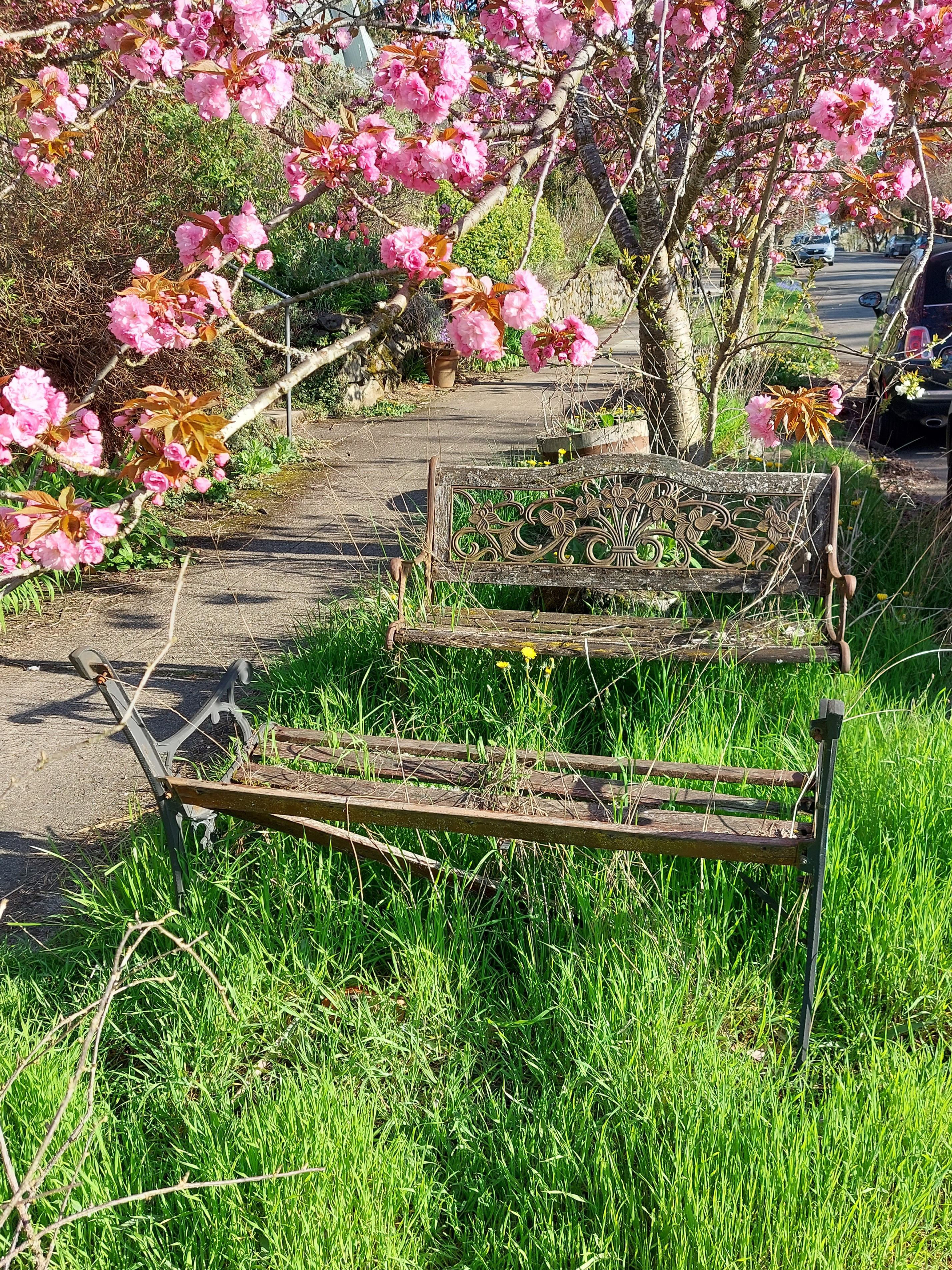
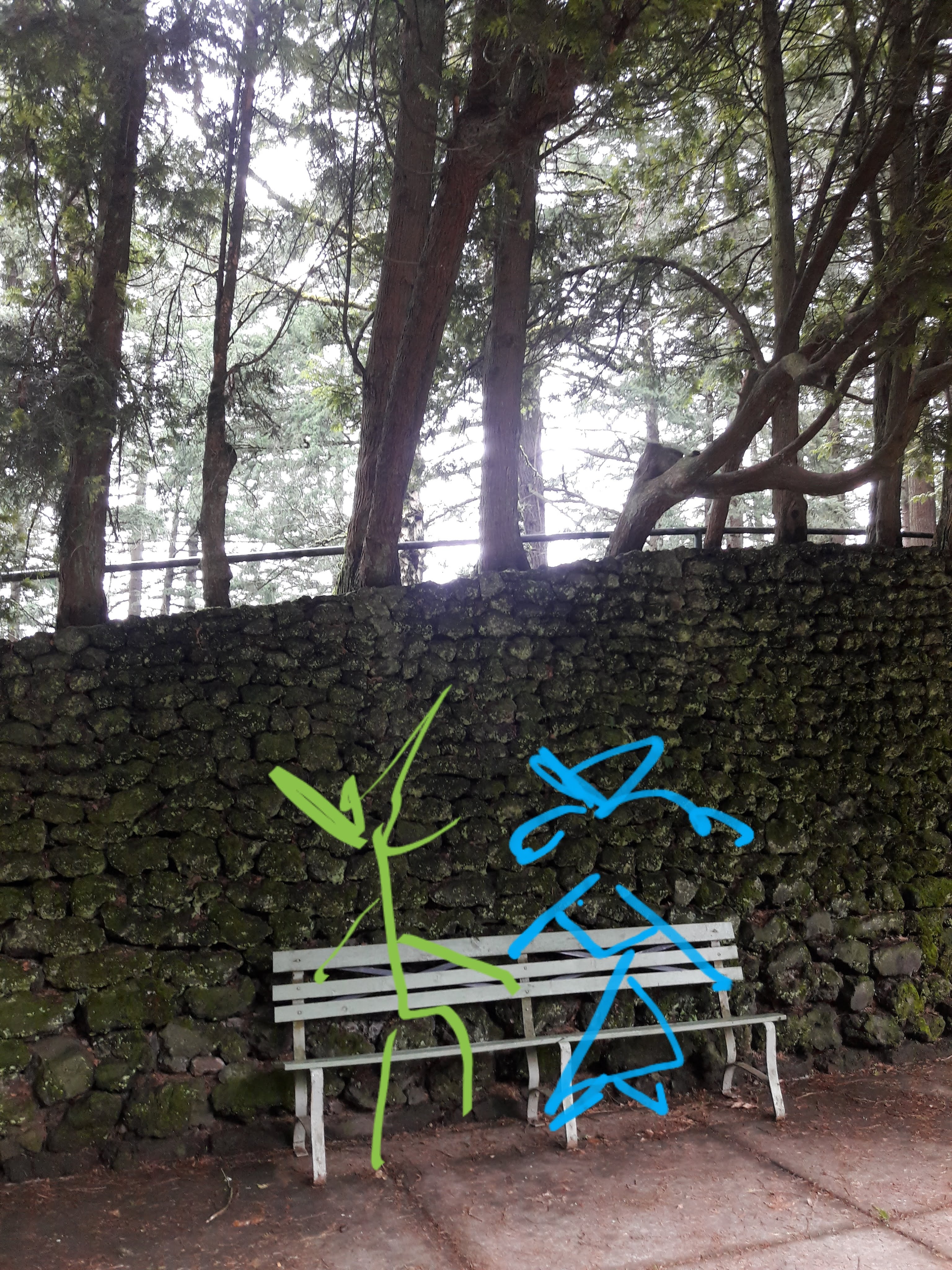
On benches in parks I’ve sat for a time to study under trees that filled the air space and clock count of season and reason circled by children dancing and being where we get away from Earth for awhile flying benches to the moon through branches.
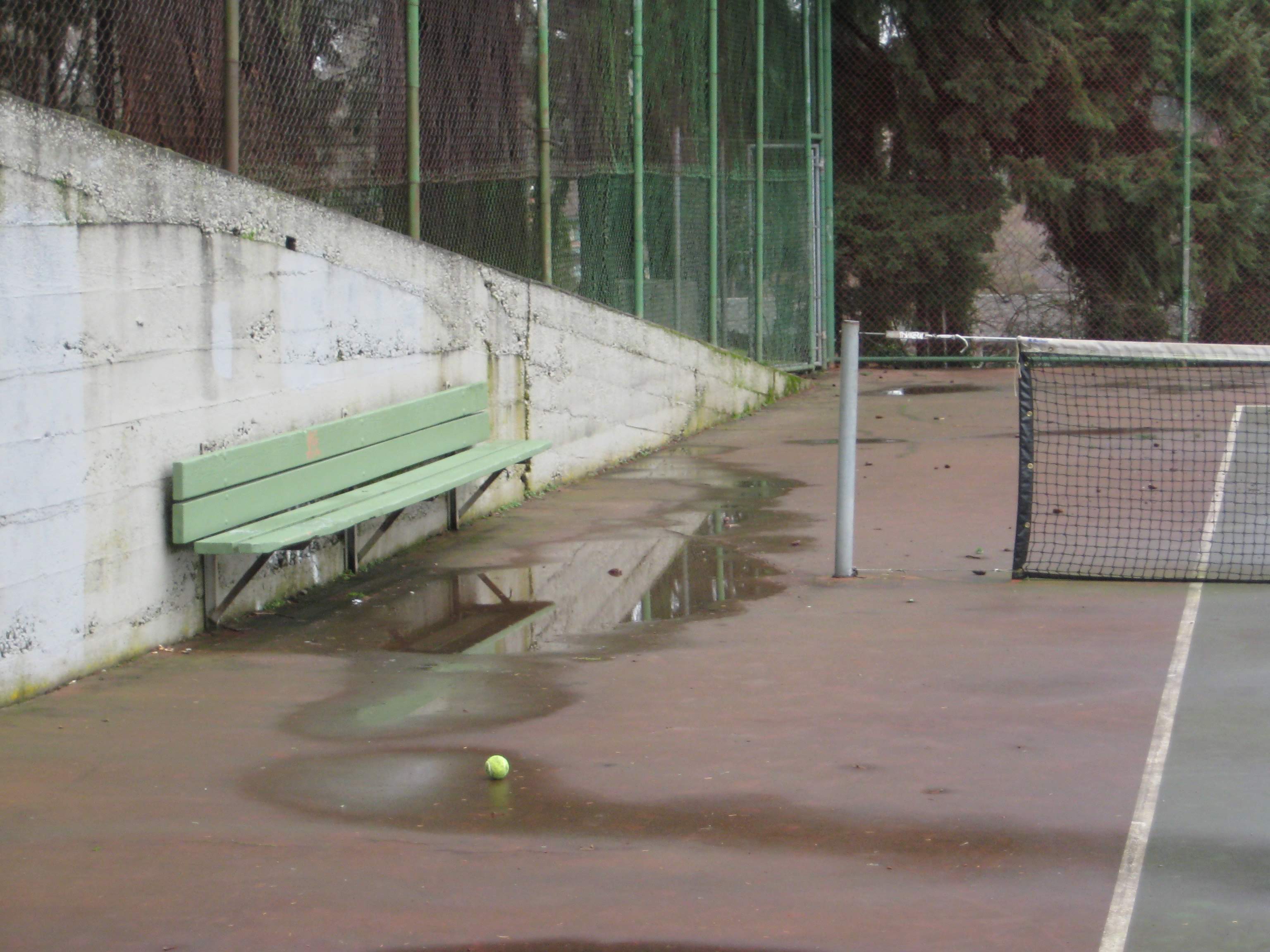
But kids don’t sit on benches for too long and after a snow the park is stone cold if you go out you’ll hear the benches groan see paint peel the wood cracking like branches the distant winter sun cool as heaven.
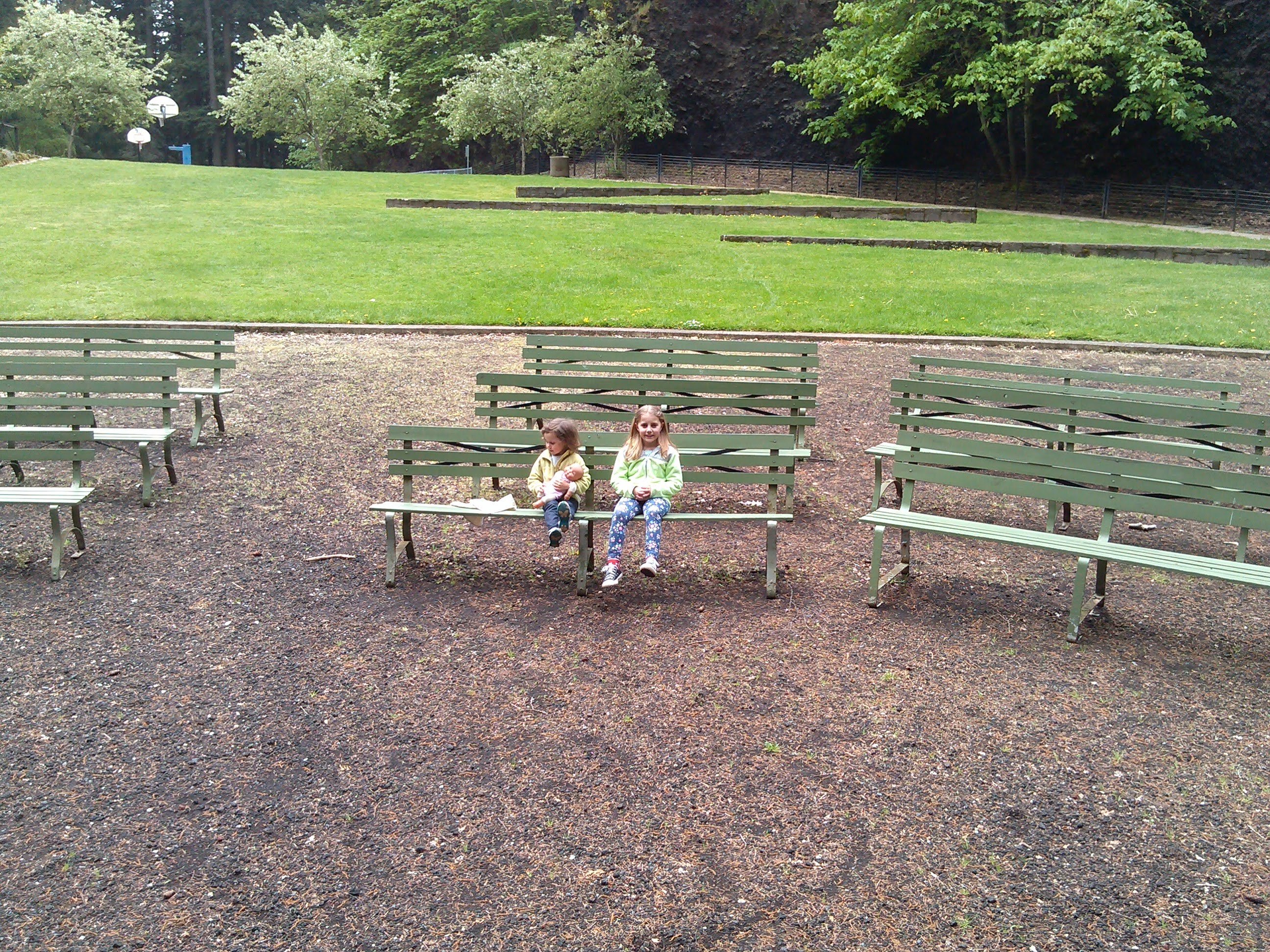
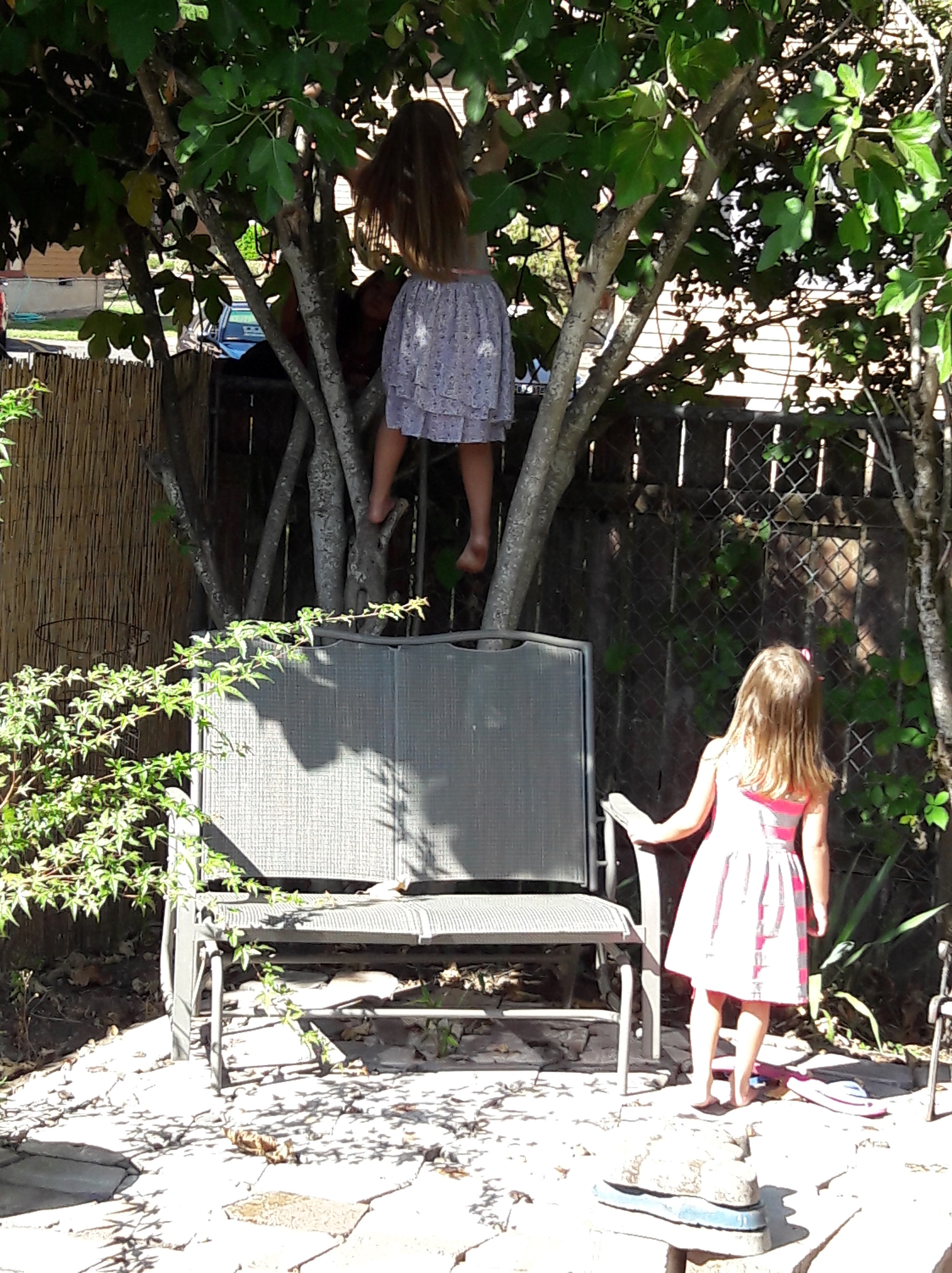
Here is one a bench branch elephant’s trunk bent low for the girls to climb up and sit bouncing to tunes in the key of summer.
I will find a bench to sit and pull out pen and notebook the devil to scribble in a park street sidewalk outside a pub wherever placed with angels of quiet grace and return to Earth in time for dinner.
“High time to get to sea,” Melville’s Ishmael says, feeling weary and wornout, petulant and putout. I’m with Ishy these days, but like Camus, find myself far from the sea – too, too far, not close by at all.
So it came to me, unable to put in with my surfboard at 42nd in El Porto as I might have were it somehow still 1969, to start a bookclub. Talk about absurd! Where’s Camus when you need him?
In any case, I find myself these days growing closer to music, away with words, music without words, instrumentals I guess their called in popular lingo. So I’m already ditching the idea for a bookclub, and thinking of a garage band. We’d do train songs (with a few words), maybe in homage to my grandfather who was an engineer on the Louisville Nashville Line, though I never met him.
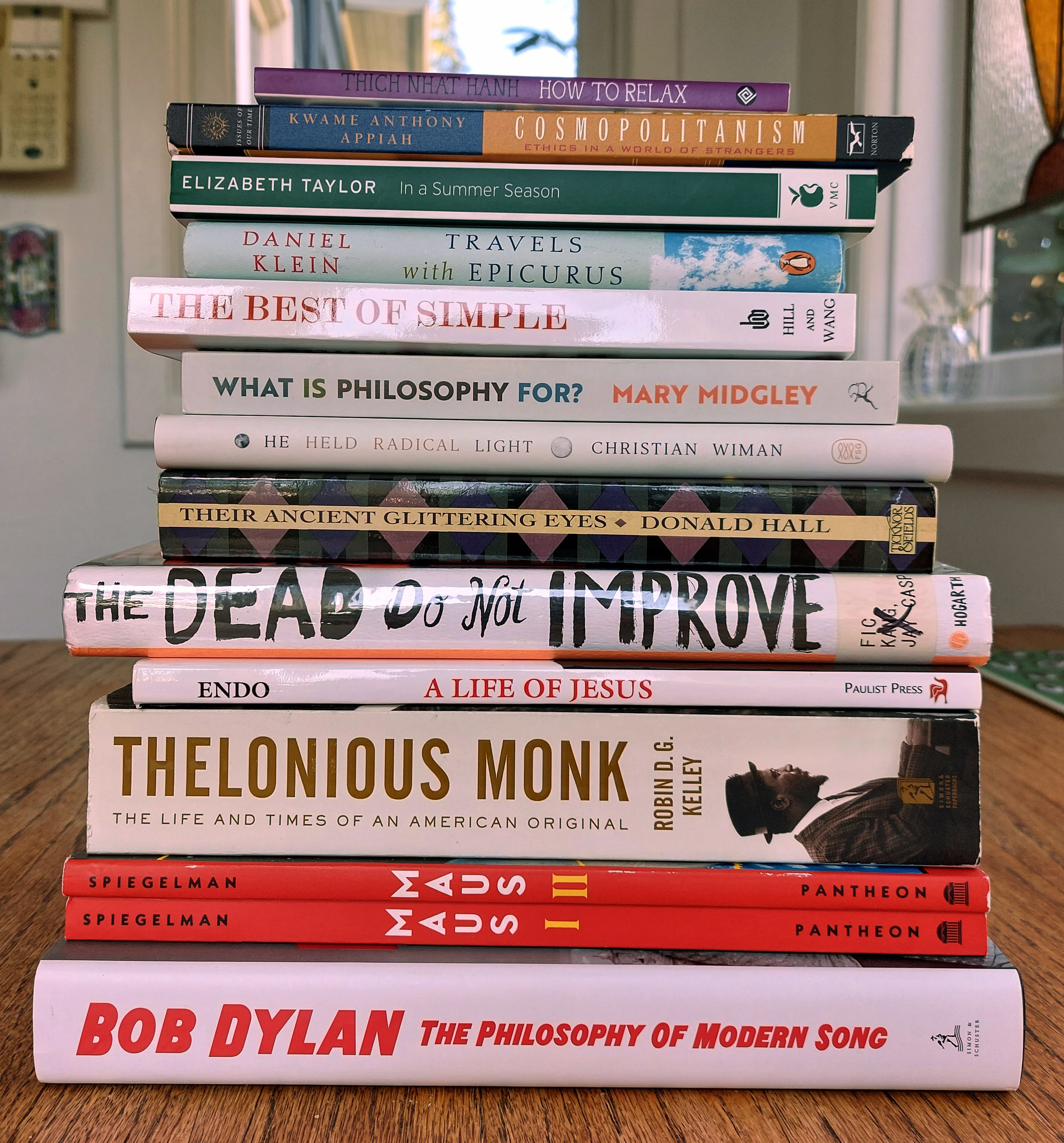
Where did the idea for a bookclub come from? My stack of recently read books is about to topple over. This set began with Art Spiegelman’s “Maus: A Survivor’s Tale,” which he worked on through the 1980’s and won a Pulitzer in 1992. It’s a graphic novel in two parts about his father’s life in Germany during World War II and later living postwar in New York. Its ghostly and maniacal scenes are not quiet surreal, but leave a similar feeling – for it is, after all, predicated on the cartoon. It’s a comic book. The irony of that is so penetrating. It’s told in first person that shifts between his father’s recounting and Art’s narrative coming of age the son of survivors. It’s a masterpiece. And I don’t know how anyone could read it without wanting to share it. But who wants to relive it? The secret sharer puts it in a blog few read. Never mind the book club.
But speaking of music, I also recently read Robin G. Kelley’s biography “Thelonious Monk, The Life and Times of an American Original” (Free Press, 2010). Monk’s mistreatments (self-inflicted or at the hands of others) are legendary; for example, the noted jazz critic Leonard Feather did more than criticize Monk – he attacked him for not being what Feather wanted him to be: “He has written a few attractive tunes, but his lack of technique and continuity prevented him from accomplishing much as a pianist,” Feather said (150). To be an original (in technique, continuity, or otherwise) is not necessarily to be accepted; on the contrary. Kelley’s book includes a good amount of history, Monk’s 20th Century environments: the causes and outcomes of the race riots of New York neighborhoods; the difficulties of surviving in the music industry; the difficulties for families of musicians who must travel to make a living; the prevalence of drugs in American cities, and the changes over time of police response; war, economic collapse, building and rebuilding, travel. Kelley gives us 600 pages, any one of which we might turn down a different street for readings to learn more about those subjects – again, the idea of a bookclub. But repeatedly we find Monk’s music dismissed by many of his contemporaries for its difficulties – difficulties which entertain rather than perplex today’s ears. Interestingly, the Beats and their poets found partnership in clubs that helped Monk finally flourish.
Bob Dylan’s “The Philosophy of Modern Song” (2022) would make a good bookclub paring with Kelley’s Monk book. Dylan is another American Original, and his writing might strike many ears with difficulties similar to Monk’s piano. I’m almost never disappointed with Dylan, and this latest warrants reading and re-reading and listening. I put together a YouTube playlist of the 66 songs Dylan explicates in his book. Many of them have been recorded by more than one artist, so the trick is to get the version that most coveys the feeling of its mystery – that being how something so simple as a popular song can both create and evoke an entire era or single day in the life of an American coming of age in the age of “modern song.” And for those readers turned off by philosophy, not to worry, there’s not much philosophy to sing about here – the philosophy, like music theory, remains in the background.
Speaking of philosophy, somewhere recently I noticed a new Mary Midgley book out, and quickly got a copy and read it. And, as it turns out, it’s her last one (Bloomsbury, 2018). Imagine living to 99 and the title of your last book? “What is Philosophy For?” Indefatigable, indomitable, Mary (look her up on YouTube and tune in to one of her conversations) defeats Dawkins and his ilk with real philosophy – that is to say, thought without propaganda.
Shusaku Endo’s “A Life of Jesus” (Paulist Press, 1973) is a strange book. I like strange books. It’s about the Gospels, how they came to be first talked then written. The environments and people described are different from what we might come away with from the Bible versions. Here, for example, we get a fuller picture of John the Baptist, where he came from and what he wore, what he ate, what he said and did. Life can be strange in the desert. Essentially, we get closer to Jesus in the sense that the time itself comes alive. There is no question but that Jesus was a real person; he lived, in a real place, in a real time. The question of his divinity and why it has to remain such a mystery, almost a game, Endo does not quite answer, though it’s clear that he is a believer. It’s strange even to try to put this into words. I really like Endo’s book, and will read it again. It reminded me in some ways of Pasolini’s “The Gospel According to Saint Matthew” (film, 1964).
A couple of books recently read did produce some disappointment: Christian Wiman’s “He Held Radical Light” (FSG, 2018) and Donald Hall’s “Their Ancient Glittering Eyes” (Ticknor and Fields, 1992). Don’t get me wrong; I liked both books. I even sent the Wiman to one of my sisters, thinking it would be to her liking also. These are both books about poetry, about poets, about poems and how and when they might be read and their purpose and import, their meanings, and the poetry and surrounding discussion I did enjoy. What I found disappointing was the emergence of an ego, a manic wanting on the part of both Wiman and Hall to write the poem to end all poems. Silly, that. It’s easy to see why and how poetry fails to live up to any kind of popular status in the marketplace – except for what we might find in popular song, in the philosophy of popular song, a philosophy that is lived but rarely talked about.
I also read and enjoyed Jay Caspian Kang’s “The Dead Do Not Improve” (Hogarth, 2012). I had read that it was about surfers in San Francisco, so of course was interested. It’s not too much about surfing though. It’s a mystery, and accomplishes what it sets out to do. It’s entertaining, provoking, somewhat in the classic noir tradition, its characters representative of types of a kind, also of that noir setup. The dialog is fresh and accurate, the scenes clearly drawn, you get the smell and the feel of the place. The plot is convoluted, a bit like a shuffled deck of cards, and then reshuffled.
That pretty much concludes my daytime recent book readings. To bed (to read) I’ve been taking Elizabeth Taylor lately (not the movie star). Reading now her “In A Summer Season.”
In the end, writing about writing is rarely as interesting as the writing one is writing about, but there are exceptions, and those exceptions I’m always on the lookout for. Meantime, I’m still working on the guitar. I’ve been playing guitar almost as long as I’ve been reading. Have no intention of giving up either, but talking about reading, like talking about music, is a different pastime than writing or playing original pieces.







 The Coming of the Toads