Category: Reading

  • SE Portland Triathlon Photo Essay

    For the first leg of my triathlon event yesterday, I boarded Line 15 and rode down to the river, disembarking at the east end of the Hawthorne Bridge. I sat in the last seat of the bus, in the left corner, with this week’s New Yorker fiction issue. I had read on the bus stop the Langston Hughes story, written around 1960 but only recently discovered. More about that in a subsequent post.

    On the bus, an ad caught my attention, a woman in a red dress, orange hair, the copy: “Be More Brilliant.” The ad was up front, behind the driver’s seat, and I was too far away to read the smaller print. Note though that the imperative doesn’t suggest you are not brilliant. If you are not brilliant at all, you can’t be more brilliant. But why be “more brilliant”? Don’t I attract enough moths already? I thought of the two books I recently put out. Maybe my writing should be more brilliant. I took some pics from the bus of the south side of Belmont.

    The afternoon was still overcast, and I felt a few drops of rain as I began the second leg of my triathlon, walking down the ramp from the bridge to the Eastbank Esplanade, a more brilliant name for the shared sidewalk with bike path that runs along the industrial, east side of the Willamette River.

    I walked south along the river, a little under a mile, to Susan’s work, where I started the third leg of my triathlon, a short drive to Em’s place to visit the girls.

    I didn’t get any pics while driving, driving a car these days multi-tasking enough as it is. The few pics I’d taken of the south side of Belmont, from the bus, came out blurry, not too brilliant. I tried to get a few murals, and a couple of the old buildings, the ones the developers, none too brilliantly some have been arguing, are in a hurry to tear down. We passed a typical east side tavern. I realized I have my shutter delay set too long. I had to anticipate where the bus would be when the shutter finally clicked. At the river I saw the lean-to boat setup again, and tried to get a contrast pic of the east side boat in the foreground with the west side yachts in the background. I paused at the OMSI sign to repeat Oṃ maṇi padme hūṃ a few times, feeling even less brilliant as I moved on. I never tire of the sign of Theory, and took yet another pic of it. The blue building was brilliant in the soft afternoon overcast light.

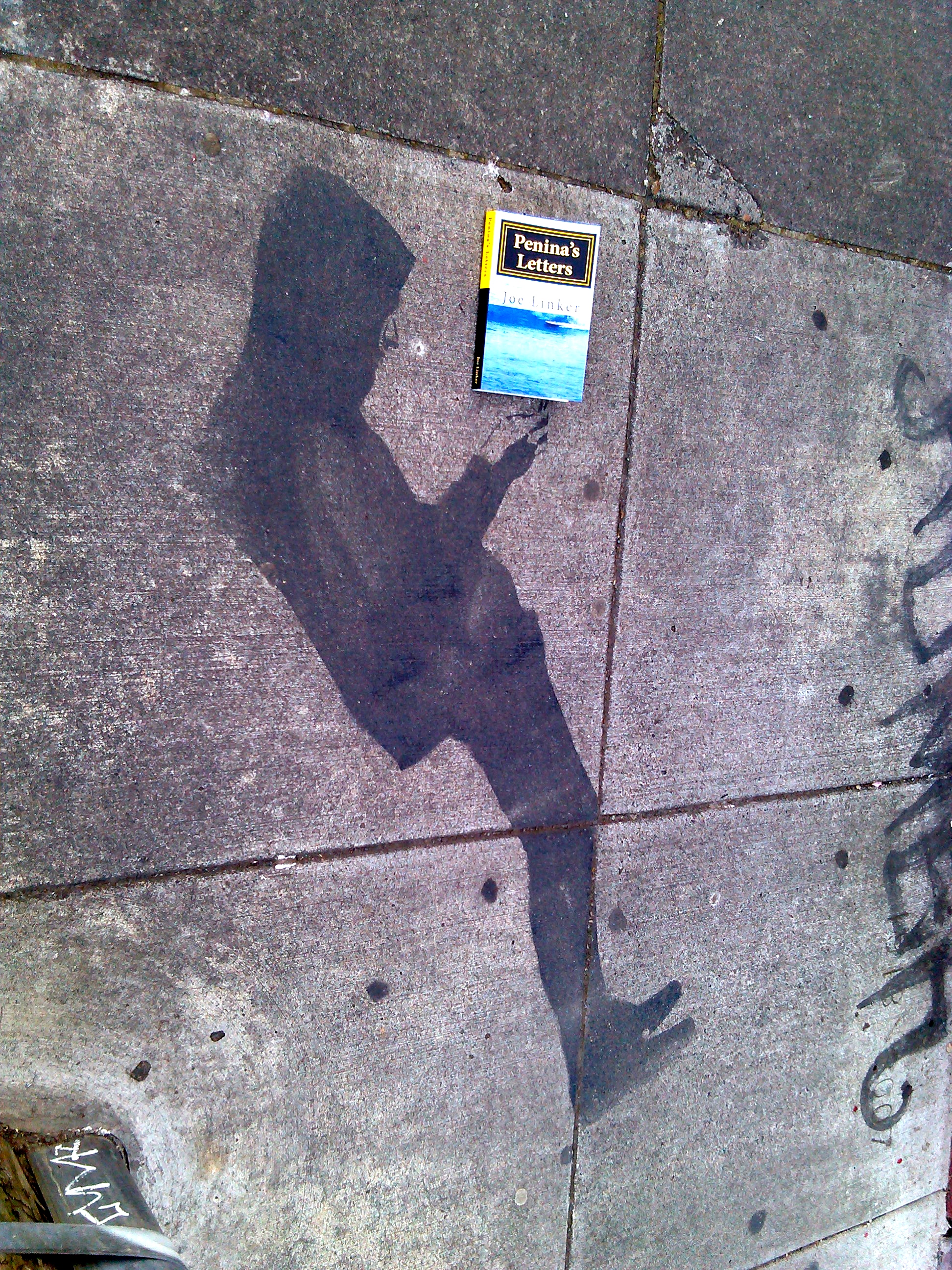
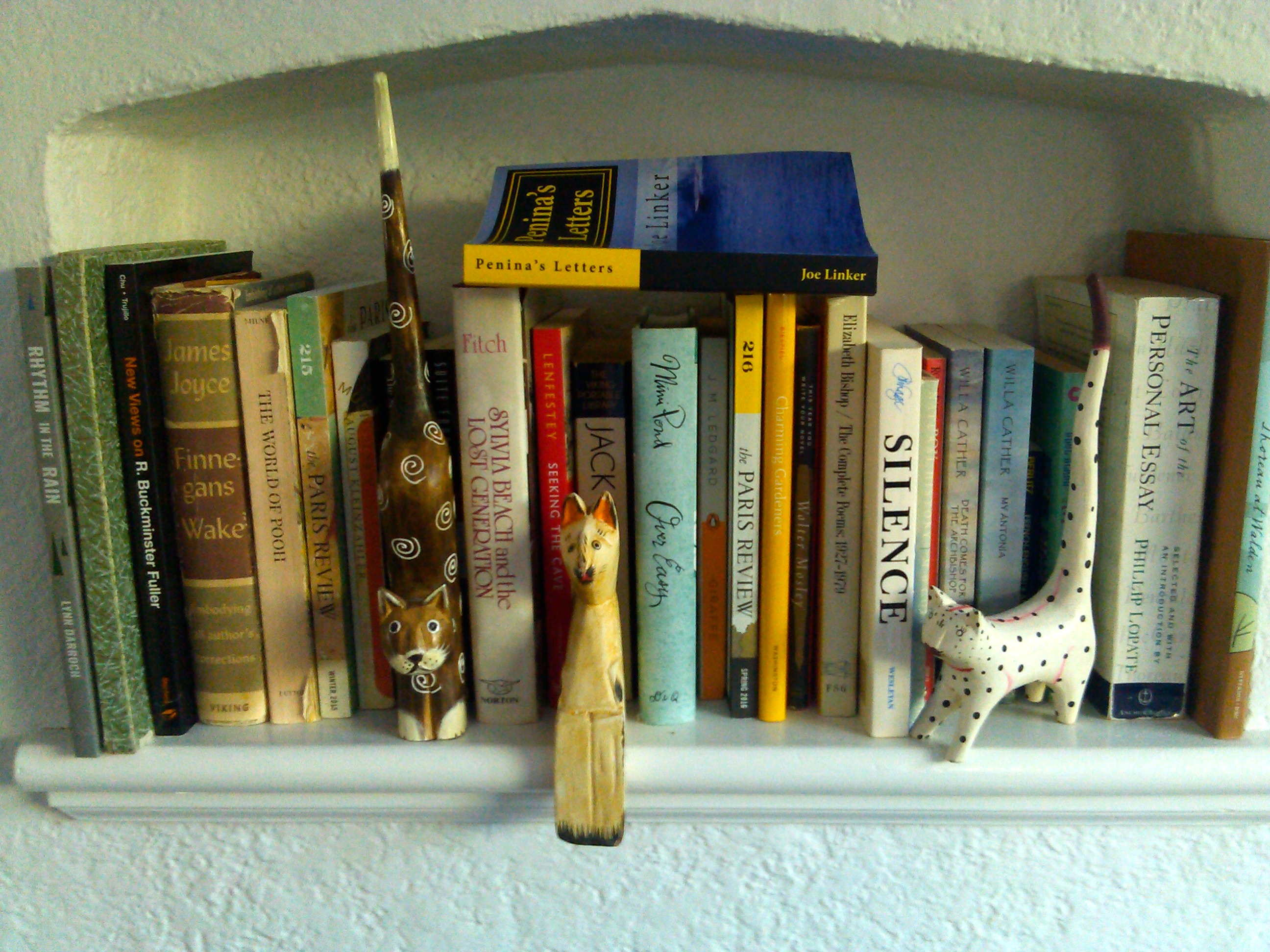
    At Em’s, I snapped a pic of her copies of “Penina’s Letters” and “Coconut Oil,” sitting on the shelf next to her cookbooks, and I wondered if my covers were brilliant enough, or brilliant at all. I think so. But to some, brilliant might suggest shiny, and I went with a matte finish.

    In Em’s yard, I took some pics of a flowering tree and a tricycle rained in rose petals. It’s almost dragonfly season here, and I thought how nature always seems sufficiently brilliant, yet also always seems to be becoming more brilliant. Nature is superlative, while we can only ever be comparative, until we remember that we are also part of nature, where we are most brilliant.

  • Look Inside “Coconut Oil”

    “Coconut Oil” is ready, the “look inside” feature enabled, paperback and e-version.

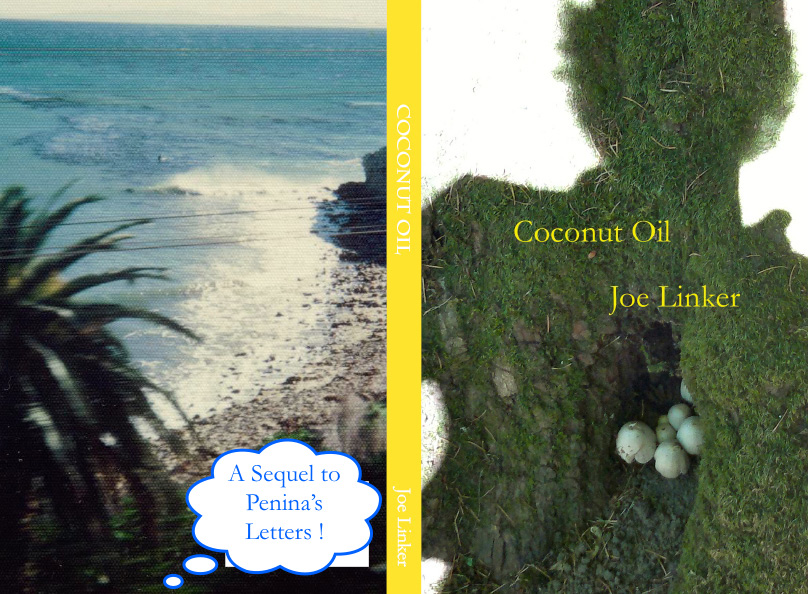
    Forty years have passed since the close of “Penina’s Letters,” and Penina and Salty return to Refugio, a fictional beach town on Santa Monica Bay, in “Coconut Oil,” a sequel to “Penina’s Letters.” 

    Salty is again our first person narrator, and “Coconut Oil” continues an experimental narrative form – as Sal hands the mic off to several other characters and we are brought up to date on Refugio.

    The themes of “Coconut Oil” include aging, housing and homelessness, gentrification, and how we occupy ourselves over time.

    The style is experimental in a way a common reader might enjoy. And there is music! Songs, dancing, and some funky text features!

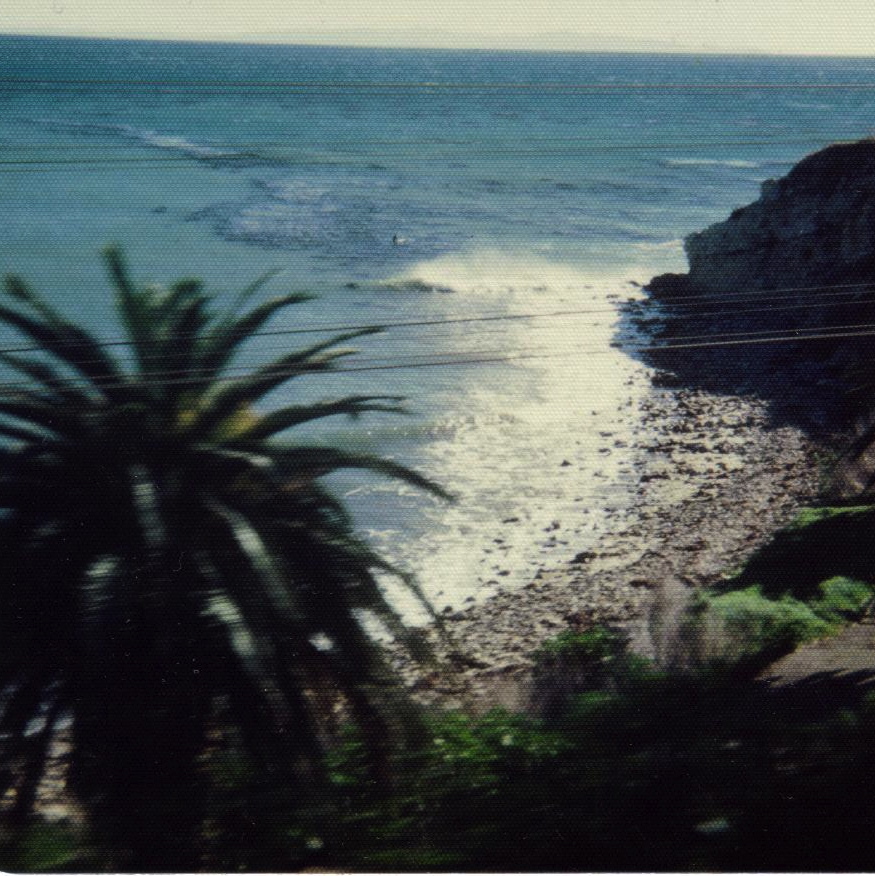
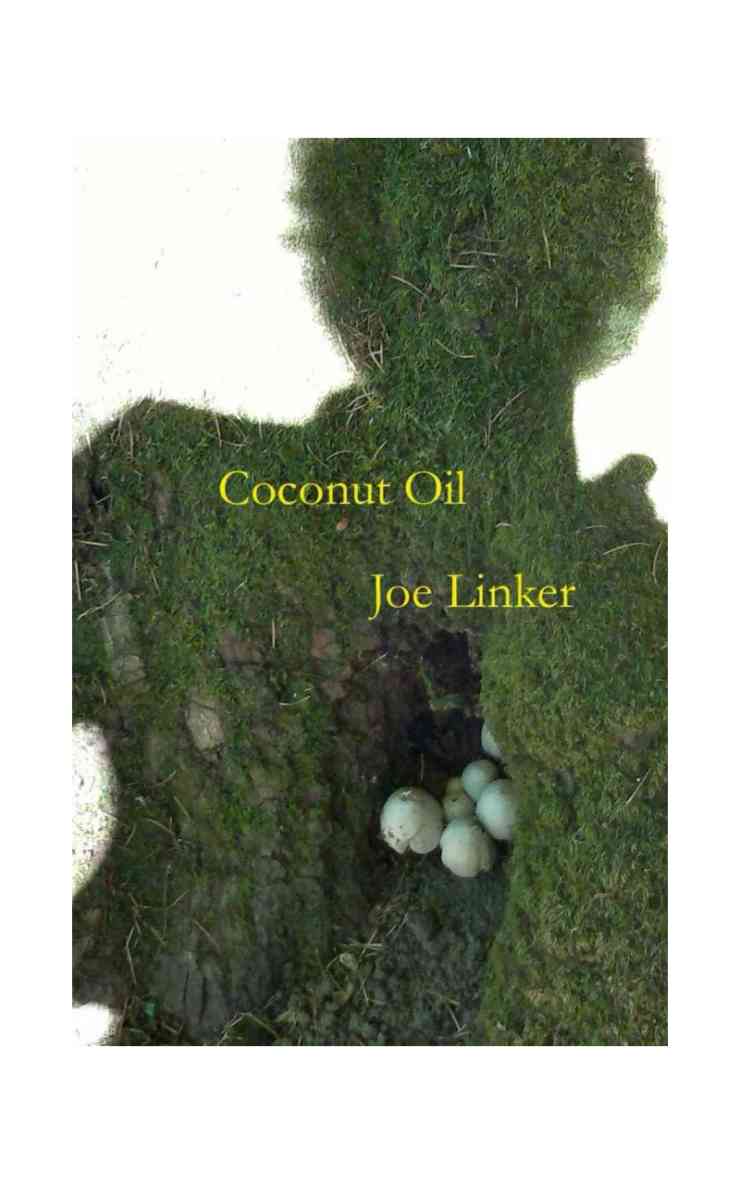
    The back cover photo for “Coconut Oil” was taken from the northbound Coast Starlight train as it passed by the point at Refugio Beach, California, a campground 26 miles north of Santa Barbara, in the late 70’s. The front cover photo, more recent, shows the author’s shadow over a tree hollow holding mushrooms that look like bird eggs (where his heart should be).

    Refugio from Coast Starlight
    Refugio Beach from Coast Starlight Special
  • Memorial Day Excerpt from Penina’s Letters

    The following excerpt is from the “On Television” chapter of Penina’s Letters.

    I drove my truck with Malone down Vista del Mar and up Grand Avenue into El Segundo. The Chippys lived in one of the old refinery-worker houses just over the sand dunes. We turned off Grand and drove slowly down their street. Through the side yards we could see where the sand had been sliding down the dunes and spilling through twisted, wood slat fences into the back yards. We stopped at Tom’s house and climbed out and walked to the front door and knocked.

    Mary Chippy, Tom’s mother, answered the door, looking distracted, but when she saw who it was, she gasped and threw open the screen door, coming out and grabbing me into her arms, and Tom’s dad came to the door to see what all the commotion was about. Mary held my face in her hands and stared into my eyes.

    “Look, look who’s here, Ray,” Mary said, “home from the war.”

    They invited us in, and Malone and I filled their living room couch. The little couch smelled of lavender, the pillows covered with fresh, ironed linen. The room was clean, and barely looked lived in, not a speck of dust or sand on the hardwood floor, as if they had been expecting guests. Mary sat awkwardly down in her rocker, across from us, pulling her short housedress down over her thighs. She was a narrow, small woman, all elbows and knees and ankles, but with the face of an overripe peach. Her fingers and hands were wrinkled and twisted with arthritis. Her long hair was tied up in a tight, grey bun. Next to her, Tom’s dad, Ray Chippy, fell heavily with a sigh into his overstuffed easy chair. He sat with his big hands cupped over the arms of the chair. He wore a buzzcut, and his big, tanned head looked like a bronze sculpture.

    Tom’s mother said how good I looked, and his dad agreed, and said it looked like the war had done me no harm, but said of course he knew that was probably not true. I started off calling them Mr. and Mrs. Chippy, but they said no. They would feel more comfortable now if we called them by their first names. They asked how Puck was doing, and said they had not seen him since the funeral, but had read an article in a local shopping guide about how his surf shop was getting popular, but it was soon clear they wanted to talk about Tom.

    “One night, we was watching the war on the television,” Mary said, “and that’s how we come to know he’d been hurt.”

    “I used to watch the war on television every night, every night,” Ray said, shaking his head slowly back and forth.

    “And then, one night, Suzie yells, ‘There’s Tom’! In the war, on the television.”

    “I was sitting right here, and I saw him,” Ray said, pounding the arms of his chair, “camera right on his face. You wonder if something like that’s gonna happen, if you’ll see somebody you know, but you never do, but all of a sudden, wham, there’s our Tom.”

    “They was carrying him on a stretcher, running to a helicopter,” Mary said.

    “Stooped over, stumbling, weighted down with equipment.”

    “One of them was holding up the bottle with the tube coming out of it,” Mary said, holding her hand over her head to show us.

    “You could see the high grass,” Ray said, “blowing in the wind under the chopper blades and hear the blades spinning and all kinds a noise, guys yelling.”

    “Then the camera went back to the news desk. And what could we do but just sit here, like we was knocked out, not knowing what had happened, how bad Tom was hurt.”

    “We waited for something more,” Ray said, “but it was just another night of the war on TV, and as soon as we heard Cronkite saying, ‘And that’s the way it is,’ we turned the TV off and tried to make some phone calls. We got a hold of the Red Cross, and they called us back the next day.”

    “They tried to save him, but it was too late,” Mary said, “too late for Tom.” She reached over and touched Ray’s hand, but he pulled it away.

    “Poor Suzie,” Mary said, “she like to faint dead away, all that waiting around for Tom to come home, storing things up for when he got back, playing around in her hope chest, making all kinds of plans, and suddenly see it all come to nothing like that. She used to come over near every night and watch the war on the TV with us.”

    “Hell, she’s already found herself somebody new,” Ray said. “But that’s the way things should be. I don’t fault her none, needing to get on with her life. You know what I mean. What the hell’s she gonna do hanging round here, spend all day unfolding and folding his letters?”

    “I’ve saved his letters and his pictures and his flag, but we don’t like to display them out,” Mary said.

    “But I do miss Suzie, too” Ray said. “Don’t get me wrong, now.”

    “I miss them both,” Mary said, rubbing her hands together in her lap, rocking quietly back and forth for a few moments.

    “I’m sorry Tom didn’t make it back,” I said, looking first at Mary then at Ray.

    “Grab us some beers, why don’t you, Mary?” Ray said, and Mary got up and went into the kitchen.

    “The hell of it is, Sal,” Ray said, leaning forward and whispering, “is that Tom got hit by what you call that friendly fire, you see. That’s the truth of things. That’s what got him. Not that it matters, but did you know that, Sal?”

    “I don’t know. Things did get confused sometimes. But it’s hard to say.”

    “Don’t say nothing about that to Mary. It would just open up her bleeding heart all over again.” He leaned back in his chair again.

    Mary came back into the living room, her arms full with three beers and a Tupperware bowl full of potato chips.

    We drank our beers and snacked on the chips.

    “Tom, now, he’d of liked some of the jobs I been working lately, up in the canyons. You know what I mean,” Ray said.

    “Yeah?” I said. “Have you been up in the canyons?”

    “Oh, yeah,” Ray said. “Up Topanga, I been. Up Malibu. I’m just now on a job, we can see the ocean. I climb up to the roof and eat my lunch and take my shirt off to work off this farmer’s tan, you know. Tom used to always kid me about my farmer tan.”

    “I don’t want you climbing up on no more roofs no more,” Mary said.

    “Ah, hell.” Ray took a long drink of his beer. “And you can smell the licorice bushes up there, you know what I mean, the air full of the hot canyon smells. And the air so fresh and wet in the morning but by the afternoon all hot and dry. We work until the sun starts to go down, and we drive down to the highway and get us a beer at one of the bars on the water. Yes, Tom would have loved these jobs up in the canyons with me.”

    We were quiet again, and the room felt smaller. Mary dropped her hand down into a basket of yarn next to her chair and squeezed one of the balls of yarn. Then Ray got up to go into the kitchen, and we knew he was crying. Mary stayed a moment then got up to go into the kitchen.

    “Jesus,” Malone said.

    “Yeah,” I said.

    An onshore, late afternoon breeze was now coming through the house, drifting down the dune behind the house and coming through the kitchen window, curling through the living room, and passing out the front screen door. We could hear the Chippys whispering in the kitchen. We finished our beers, sitting on the couch in the living room in silence.

    Tom’s parents came back into the living room. I did not want to look into their eyes, red and watery, their faces worn and worried looking.

    I stood up before they could sit back down and said, “Well, we just wanted to come over and say hi.”

    “Thank you, boys,” Ray said. “Thank you.”

    Malone got up and said, “Thanks for the beer.”

    “You boys are welcome here anytime,” Mary said, “anytime.”

    “Tom was a hell of a carpenter,” Ray said. “Know that?”

    “Yes, sir,” I said. “I do know that.”

    “Why, he could drive 16 penny nails, sinking the heads flat in three swings, leaving no hammer mark, all day long,” Ray said.

    He reached out and shook my hand, and his hand felt like an open-end wrench, hard but worn smooth. He did not fully open his hand.

    We stepped to the front door and went out. We turned to say goodbye to them. They were standing in the open door. Ray went back inside, but Mary walked out to the truck with us.

    “Sal,” she said, touching my arm. She stopped and looked back at the house.

    “I just want to tell you.” She paused again, looking into my eyes. “There are no jobs.”

    “I don’t understand,” I said. “What jobs?”

    “Ray has not been working any jobs in any canyons. Ray has not worked since the day we met Tom’s body in his bag coming off the plane from the war.”

    I looked at Malone. We looked at Mary.

    “I just think you boys should know the truth of things,” she said.

    She stood at the edge of the yard and watched us get into the truck. She took a short step forward and waved and brought her hand to her mouth and covered her lips with her fingers as we drove away.

    …excerpt taken from Penina’s Letters.

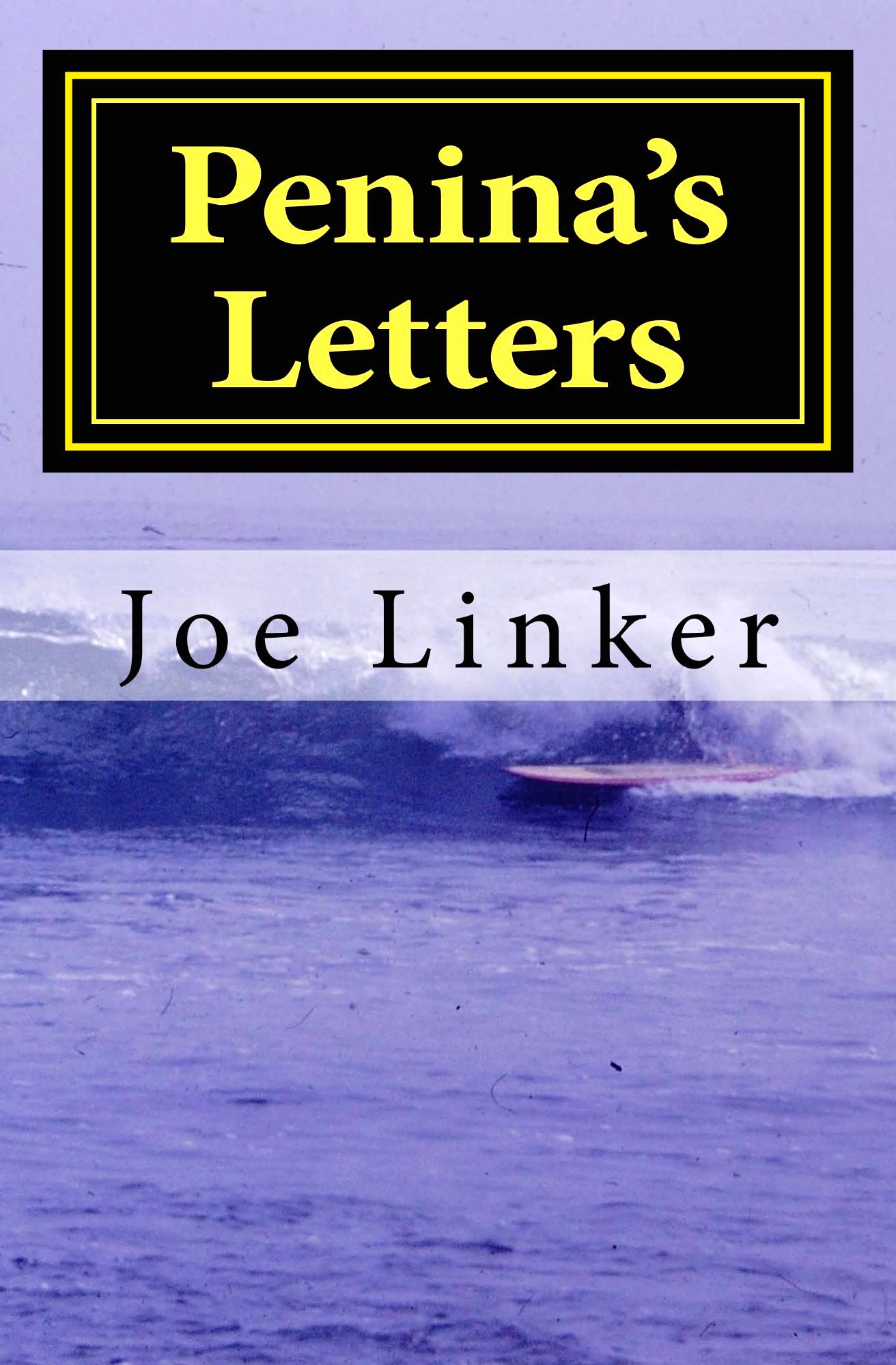
    Peninas Letters Front Cover
    Front Cover
  • A Short Excerpt from Coconut Oil

    Here is a very short excerpt from the “Wintertide” chapter of “Coconut Oil.”

    Oh, and the jouissance of the creamy oil’s single flavor savors of favor, in the bath, kitchen, by the four-poster or berth, for dry skin, diaper rash, or when the dark knells for thee. No need to refrigerate. Oil squeaky hinges, refurbish dull wood finishes, fry Copper River salmon in cast iron skillet, remove warts (rub under duct tape), fly cats to the moon or snorkel under ocean kelp beds, race around the ceiling, the coconut salesman is at your door!

    Be the first on your block to order a copy of “Coconut Oil”!

    Paperback $8 … e-Copy $2.99


    • Paperback: 194 pages
    • Publisher: CreateSpace Independent Publishing Platform; 1 edition (May 24, 2016)
    • Language: English
    • ISBN-10: 1530995264
    • ISBN-13: 978-1530995264
    • Product Dimensions: 5.2 x 0.5 x 8 inches

    Coconut Oil eCover


  • Coconut Oil – A Novel Book Launch

    Salty and Penina, the war torn, young couple from “Penina’s Letters,” return to Refugio in “Coconut Oil,” a sequel.

    They come home to Refugio (the fictional beach town located north of El Porto and south of Grand on Santa Monica Bay) in an attempt to retire a bit early. So forty or so years have passed since the close of “Penina’s Letters.”

    Salty is again our first person narrator. But “Coconut Oil” continues an experimental narrative form, and Sal hands the mic off to several other characters as we are brought up to date on Refugio.

    The themes of “Coconut Oil” include aging, housing and homelessness, gentrification, and how we occupy ourselves over time. The form is experimental in a way a common reader might enjoy.

    The paperback version of “Coconut Oil” is available now, and the electronic version should be up next week.

    The back cover photo for “Coconut Oil” was taken from the northbound Coast Starlight train as it passed by the point at Refugio Beach, California, a campground about 26 miles north of Santa Barbara. The photo was taken sometime in the late 70’s.

    Refugio from Coast Starlight
    Refugio from Coast Starlight Special


  • Coming Soon! Coconut Oil, a New Novel by Joe Linker

    Jonathan Swift’s 1729 essay, “A Modest Proposal,” argues a single solution to homelessness that Swift proudly suggests would provide a host of beneficial side effects. Satire is sometimes hard to get, or hard to take, the difference between satire and farce being that satire aims at a target. One might today imagine a certain presidential candidate coming up with a proposal like Swift’s that many might take seriously, missing the satirical target – and that would be farcical.

    Of the critical reviews appearing for “Penina’s Letters,” several stand out for their clear and concise but right-on insight into the book. Lisa, a family friend from the Vatican Hill days, posted a picture of “Penina’s Letters” being read in a swimming pool in Cabo with the comment:

    “So this was a great read – hit on some serious issues – but I enjoyed the ride – and still can’t figure out where 48th Street is located.”

    Lisa’s comment hits on significant aspects of the book – how do we treat serious issues in fiction that is also intended to entertain? And she joins in the fun by wandering around looking for a fictional street she knows doesn’t exist.

    My friend Dan posted a longer review to his blog, and when I thanked him in an email, he wrote back,

    “It’s a very good novel.”

    Dan’s a reader, suffers no delusions about stuff, and is thrifty with his complements.

    Meanwhile, over at Youssef Rakha’s Cosmopolitan Hotel site, Philippa Rees has this to say in a comment:

    “Hugely atmospheric, and sharply conveys the sightly abrasive affection, the wind and the sand papering the uncertainty. Enjoyed the drive to the ocean.”

    And under the “Penina’s Letters” excerpt published by Berfrois, Philippa wrote:

    “An underpinning of real harrowing tension in this. Could hardly bear the savage exposure of the truly private in a ribald public arena. There are some crimes of insensitivity that merit the return of the stocks!”

    Also meanwhile, my Facebook friends had a bit of fun posting pictures of their copy of the book, being read or held or posed at various locations, including Mexico, France (on a Kindle in Paris), Montana, airplane to Los Angeles, dashboard of car in Sellwood, Studio City, Minneapolis airport bookstore, in the woods above Los Angeles, on an office desk near the Willamette, a deck in Bend, Voodoo Doughnuts, a pool room in Portland’s Hawthorne neighborhood, a bike repair apartment in Seattle, outside the Mojave Cancer Center, a very cool San Francisco pad, a neighbor’s house on 69th, a laptop with Instagram photo in Aloha, another sitting out in the yard on a warm day on the west side, on a table with the rest of the mail in Ione, on a shelf at Em’s with her cookbooks, Warren’s place in North Portland, a desktop in El Segundo, on a quilt in Barstow, and please let me know if I missed one, because what a great marketing idea!

    Anyway, I was encouraged by the reader response to “Penina’s Letters.” The novel may not be what many expected it to be. And most readers seem to intuit that we probably should not criticize something for not being what it was not intended to be. It’s also hard to finish everything we pick up. I get that. I’ve nearly always got a dozen or so books and magazine articles in disarray around the house in the process of being read, but then there’s always something that pulls you to it, and you wind up finishing it before anything else. That’s maybe a good definition of a good read.

    And I was so encouraged by the reader response that I’m now announcing the sequel to “Penina’s Letters,” called “Coconut Oil.” Please don’t think I wrote “Coconut Oil” in a couple of months. Like “Penina’s Letters,” “Coconut Oil” is a final (Beckett said abandoned) draft of years of writing and reading work. As Cornel West said in “Examined Life,” “Time is real.” So I finally decided to “light out for the Territory,” though unlike Huckleberry, ahead of hardly anyone else.

    I’ll let you know when “Coconut Oil” is ready to launch!

    Oh, yeah, that bit above about Swift’s “A Modest Proposal.” That has to do with “Coconut Oil.” You’ll see.

    Meantime, thanks to the readers of “Penina’s Letters”!

    IMG_20160417_143645
    on Hawthorne Blvd


  • A Concrete Poem at VERStype

    The concrete poem, “A Visual Depiction of the Chapter ‘On a Surfboard in Santa Monica Bay,’” published yesterday by VERStype, is an illustration that might appear somewhere in the sixth chapter of “Penina’s Letters,” were the novel a comic book. There are no words in the poem. The poem is composed primarily of tildes.

    “A Visual Depiction of the Chapter ‘On a Surfboard in Santa Monica Bay’ [from the novel “Penina’s Letters”], VERStype, 20 May 2016.

  • “Coconut Oil,” Sequel to Penina’s Letters

    Coming soon, just in time

    for summer reading!

    Coconut Oil Preview Cover
    Cover Preview of “Coconut Oil,” New Novel by Joe Linker, Sequel to “Penina’s Letters


  • Penina’s Letters for $2.99!

    The electronic version of “Penina’s Letters” is now available at the discount price of $2.99 (and free to Kindle Unlimited Subscribers).

    The e-version can be read on any device – with the Kindle app, which can be downloaded for free (click link above).

    We don’t recommend reading the electronic version in water, though that might be the best place to read this dynamic novel, but at the low, low price of $2.99, you can certainly read it with your device up on the beach, near the water.

    e-Version Details

    • File Size: 2077 KB
    • Print Length: 291 pages
    • Page Numbers Source ISBN: 1530686881
    • Publisher: Joe Linker; 1 edition (March 28, 2016)
    • Publication Date: March 28, 2016
    • Sold by: Amazon Digital Services LLC
    • Language: English
    • ASIN: B01DJWPLUY
    • Text-to-Speech: Enabled
    • Word Wise: Enabled
    • Lending: Enabled
    • Enhanced Typesetting: Enabled

    Paperback Details

    • Paperback: 290 pages
    • Publisher: CreateSpace Independent Publishing Platform; 1 edition (March 25, 2016)
    • Language: English
    • ISBN-10: 1530686881
    • ISBN-13: 978-1530686889
    • Product Dimensions: 5.2 x 0.7 x 8 inches
  • The Hep Cat Book Club

    IMG_20160513_072133What are we reading?
    Joe wrote a book.
    Really? What’s it called?
    Penina’s Letters.
    Who’s Penina?
    Are there any cats in Joe’s book?
    One, Castus.
    Hmm.
    I hear Joe’s working on a sequel.
    Tell him to put more cats in it.

    “Penina’s Letters,” get yr copy!

  • Penina’s Letters: Excerpt at Berfrois

    A short excerpt from the “Separation” chapter of “Penina’s Letters” appeared on Berfrois this morning. Swim on over and have a look.

    Below, some pics from the period and locale of the book’s setting: