• Where Pascal metaphorically wagering meets Borges bird-watching

    Imagine that as a young person you once had a conversation with a close friend in which you made a wager on God’s existence. One of you argued for God’s existence, the other against. The wager went like this: one of you is to live his life as if God exists; the other is to live his life as if God does not exist. The two of you would meet regularly over the course of time to compare notes, but the wager could only be decided if you both lived into old age, at which point the winner of the wager, you both agreed, would be obvious.

    This is the sort of proposition that sometimes informs novels. Pascal handles the matter more briefly, in one of his thoughts (Pensees, #233), in the form of a dialog. It is an either or proposition, one that we are existentially bound to, and it may very well be our freedom that is being wagered; yet Pascal says we have nothing to lose.

    Borges, in his essay “The Fearful Sphere of Pascal,” suggests that for Pascal, uncertainty produced anxiety, and that he found no solace in his thought that “Nature is an infinite sphere, whose center is everywhere and whose circumference is nowhere.” Borges brings to our attention an alternative translation based on Pascal’s notes. Apparently, Pascal had started to write “Nature is a fearful sphere….” Borges points out that Pascal’s sphere is a metaphor, and that “It may be that universal history is the history of the different intonations given a handful of metaphors.”

    In Borges’s “Argumentum Ornithologicum,” he argues for the existence of God. Closing his eyes, he envisions a small flock of birds, around ten birds in number, but they quickly disappear, and he’s uncertain exactly how many birds he saw in his vision. To him, the exact number “is inconceivable; ergo, God exists.” The exact number of birds that Borges saw is known to God.

    Pascal was a mathematician, a logician, clearly interested in the existential predicament of man; Borges was a poet. They both tested the existence of God by living their lives as if He existed. It may matter not God’s existence if His existence is not evident to us; it does matter how we live our lives, for which there is existential evidence, if none other, and who is able to prove this, wins the wager.
  • This Is Your Brain On Books

    Over at the Frontal Cortex, Jonah Lehrer has posted his review of a new book about the effects of the brain on reading: Stanislas Dehaene’s Reading in the Brain. Lehrer says that the “moral of Dehaene’s book is that our cultural forms reflect the biological form of the brain; the details of language are largely a biological accident.” We’ve not read Dehaene’s book yet, but Lehrer’s summary seems to suggest a symbiotic relationship between the brain and the brain’s environment.

    To understand the effects of reading on the brain, one must go to non-literate cultures, and study, as Marshall McLuhan researched, the changes that occur in both the brain and the culture as reading is learned. “The most obvious character of print is repetition,” McLuhan said, “just as the obvious effect of repetition is hypnosis or obsession” (p. 47). It’s impossible to be illiterate in a non-literate culture, and non-literacy has its advantages.

    When we read, we are hypnotized, the eye becomes master of the sensorium, the remaining four senses impressed into eye-service. The hypnosis blinks when the eye sees an unfamiliar word, and the tongue and ear have to help out: “we’re forced to decipher the sound of the word before we can make a guess about its definition, which requires a second or two of conscious effort” (Lehrer). This means that the new reader must mouth his words as he reads (since all the words are unfamiliar to the new reader); he must hear them first. This is why, according to McLuhan, “the medieval monks’ reading carrel was indeed a singing booth” (p. 115). They had not yet learned to read silently. They had to say the word and hear it; the words entered the brain through their ears, not through their eyes. (This supports using a phonics method to teach reading.)

    Lehrer says that Dehaene “also speculates that, while ‘learning to read induces massive cognitive gains,’ it also comes with a hidden mental cost: because so much of our visual cortex is now devoted to literacy, we’re less able to ‘read’ the details of natural world.” Again, this ground was covered by McLuhan in The Guttenberg Galaxy: The Making of Typographic Man.

    “Literacy,” McLuhan argued, “affects the physiology as well as the psychic life” (p. 45). McLuhan said that “every technology contrived and ‘outered’ by man has the power to numb human awareness during the period of its first interiorization” (p. 187). And this is the ground that Nicholas Carr has been sifting though with regard to the effects of the internet on reading and on the brain.

    It’s curious to hear Lehrer, not quite a neuroscientist (which is one reason we like him; he’s a non-specialist), say that “the brain is much more than the seat of the soul…,” curious in that he resorts to both metaphor and the metaphysical in a single phrase. “The seat of the soul”: surely that’s your brain on books.

    June 6, 2010 Update: Jonah Lehrer takes some of the wind out of Nicholas Carr’s neuro-sails in a Times review of Carr’s book The Shallows and in a follow up post on his blog.

  • Eric Sevareid, Italo Calvino, and NASA’s Watery Disappointment

    We’re not in a hurry to get to the moon; there doesn’t appear to be a lot to do there – great view of Earth, of course, and the air is clean. Up close, though, the moon looks like an ancient Egyptian golf course. The moon was probably once covered with lush greens and lovely azaleas surrounding freshwater hazards, but the groundsmen disappeared long ago, around the time the gamekeepers were laid off.

    Now, NASA tells us there is water on the moon, lots of it, but not enough to get the surfboard out.

    Italo Calvino, in “The Distance of the Moon,” tells us of a time when the moon was much closer to the Earth, and could be reached by climbing a ladder: “…from the top of the ladder, standing erect on the last rung, you could just touch the Moon if you held your arms up.”

    William S. Marshall, a staff scientist and dowser at the NASA Ames Research Center, recently contributed a woeful Op-Ed piece to the Times describing NASA’s disappointment in the public’s waned response to its recent divining-wand blast: “Almost as surprising as NASA’s announcement [of water in the moon] is the lack of attention it has received. Thirty years ago, a development like this would have been heralded as one of humanity’s greatest discoveries.”

    But what was the response decades ago to NASA’s climbing the ladder to the moon? To find out, we looked up our old friend Eric Sevareid, who, in a short opinion piece titled “The Dark of the Moon” (1958), a radio piece written when NASA was created to erect a lunar ladder, said, “It is exciting talk, indeed, the talk of man’s advance toward space. But one little step in man’s advance toward man – that, we think, would be truly exciting.”

    Alas, they may have found water on the moon, but here on Earth, we are still thirsty.

  • Becker-Posner: fodder for rhetoric foragers

    The shallow depth of the unstated warrants at the Becker-Posner blog makes for good fodder for rhetoric foragers. Consider this, from Posner’s half of their 15 Nov 09 post: “Should the U.S. economy grow more rapidly than the public debt, we’ll be okay. But the government’s focus appears to be not on economic growth, but on redistribution (the major goal of health reform) and on creating at least an aura of prosperity, at whatever cost in deficit spending and future inflation, in time for the November 2010 congressional elections.”

    Redistribution may be an effect of health care reform, but there’s no evidence that it’s a goal; at the same time, distribution, and redistribution, is always a goal or effect or both of most legislative programs, so why mention it? Because redistribution is always viewed as a negative value (something one doesn’t want), particularly for those who do value the current distribution.

    Posner’s claim is that the “major goal of health [care] reform” is “redistribution.” In Posner’s view, wealth should not be redistributed to achieve health care reform (redistribution by definition is a wrong).

    Yet it’s impossible to have meaningful health care reform without some form of redistribution, so Posner’s unstated warrants here include that we should not have health care reform, that redistribution is a wrong, an economic wrong, and that he values this wrong over the health care uninsured – and over the inflated costs being paid by those who do have health insurance. Posner values the wealth of a minority over the physical and economic health of the majority, and the support for this is found in his cynical reference to yet another assumption – that any legislation that involves redistribution has as its root cause an upcoming election. It’s no wonder we never get anything accomplished.

    Posner’s claim is that the government should not take something from someone who has and give it to someone who has not. Redistribution is a trigger word intended to attract those that have with its click. It’s quick draw rhetoric. Posner’s use of “government’s focus” also serves as a trigger, for the word government in this context is meaningless, or can only mean one thing – that entity constantly at work to take something from one and give it to someone else – it’s the government of Huck Finn’s father.

    There are many entities at work on health care reform, including doctors and hospitals. For a thorough discussion of health care costs and what’s at stake in trying to lower those costs while insuring everyone, see Atul Gawande’s article “The Cost Conundrum,” in the June 1, 2009 issue of the New Yorker.

  • APA Caution: Metaphor Crossing

    We don’t find E. B. White adhering to APA guidelines. It’s more palatable monkeying with rats if one denies them human characteristics.

    One rule that hasn’t changed in the new 6th edition APA manual concerns a warning against the use of metaphor, specifically anthropomorphic connotations (p. 69). One may not use metaphor; the question is, can one not.

    Camus avoided metaphor in The Stranger, creating an anti-man. For McLuhan, technology is metaphor, extensions of the senses. For Norman O. Brown, in Love’s Body, language is metaphor; to avoid metaphor is to avoid language: “Metaphor is mistake or impropriety; a faux pas, or slip of the tongue; a little madness; petit mal; a little seizure or inspiration” (p. 244). It’s easy to see why the APA wants to avoid it. On the other hand, “Freedom is poetry, taking liberties with words, breaking the rules of normal speech, violating common sense” (p. 244), in short, jazz. But metaphor is ambiguous, and that’s what we must avoid: “Psychoanalysis, symbolic consciousness, leads from disguised to patent nonsense – Wittgenstein, surrealism, Finnegans Wake” (p. 245). In “VII” of Love’s Body, titled “Head,” Brown lights out for the territory, ahead of all the rest: “Psychoanalysis shows the sexual organization of the body physical to be a political organization; the body is a body politic…a political arrangement arrived at after stormy upheavals in the house of Oedipus…a well-organized tyranny” (pp. 126-127). And if one wants to avoid sex, of course, one may go in for the corporate body, where the head sits at the top, and gets dibs on the first parking space.

    Metaphor begins with sound, and poetry begins with being tricked by sound: “…cuckoo(‘s)fool, maid(en, mate, the Wryneck, which arrives at or about the same time as the cuckoo” (OED, mate).

    So, in the 6th edition of the APA manual, we find this: “Correct: Pairs of rats (cage mates) were allowed to forage together. Incorrect: Rat couples (cage mates) were allowed to forage together” (p. 69). But, first, pair is no better than couple. Since the 13th Century, at least, the OED gives us, pair has been used to describe a married couple; indeed, the denotative meaning of pair is couple. Second, the offensive word in the passage (taking the APA view of metaphor as something to be avoided), is not pairs or couples, but mates, for a mate is one of a pair, a partner in marriage, a lover. The denotative meaning of mate, from the OED, is “A companion, fellow, comrade, friend; a fellow worker or business partner,” and only an E. B. White can handle a rat as all of these.

    The poor rats, coupled in their cage, denied by the APA their very coupling, for, again, as the OED gives us, couple means “That which unites two. 1. a. A brace or leash for holding two hounds together.” Alone, together; together, but separate: like humans, a condition that can only exist in some cage, in cagey logic.

    And what of cage? From the OED: “I. Generally and non-technically. 1. A box or place of confinement for birds and other animals (or, in barbarous times, for human beings), made wholly or partly of wire, or with bars of metal or wood, so as to admit air and light, while preventing the creature’s escape.”

    Note “in barbarous times” suggests time past, but no longer: we wish, for language is our cage, a pair of gloves with a missing mate, a decoupling of experience.

    If we want to avoid metaphor in the APA example given on page 69, we suggest: Rats were allowed to forage together, in cages, separated two by two. Lovely, isn’t it? Then again, were the rats allowed out of their cages to forage? Can one forage in a cage? Perhaps rats can, but still, an even greater problem than pair, couple, or cage is found with the word forage, for a forager is a messenger, though one may forage for oneself. Do rats “plunder, pillage, ravage” (OED, for forage)? No, only humans forage, as we have done here, within the cage of our blog.

  • Good night, my some-corpus one

    We’ve been enjoying a discussion over at Language Log on the difference between the words someone and somebody.

    Maybe Meredith Willson’s Marian the librarian’s song “Good Night, My Someone,” from the musical The Music Man, illustrates a point that might be made for the ear making the distinctive decision, a vote for tone:

    “Good night, my someone, good night, my love…”

    Of course, you have to hear the song, not merely read it, but “good night, my somebody” somehow doesn’t sound the same, carries a different tone, and suits the romantic intent far less, introducing as it does, indeed, the corpus, which, from a grammar of romance, should not come into play too early in someone’s love song.

  • Caleb Crain and Becker-Posner Print Their Blogs

    As we watch the coming of the end of books and the disappearance of newspapers, we note an increase in electronic self-publishing, blogs the obvious pedestrian example, but then, in an interesting twist, we see blogs subsequently published in more traditional print copy format. Two recent and noteworthy examples illustrate: Caleb Crain’s The Wreck of the Henry Clay (Lulu, 438 pages, $14.95), selections from his blog Steamboats are Ruining Everything, covering blog years 2003-2009, and Uncommon Sense: Economic Insights, from Marriage to Terrorism, a “best of” The Becker-Posner Blog (University of Chicago Press, 384 pages, $29.00).

    Caleb Crain is a 19th century scholar and freelance writer with degrees from Columbia and Harvard who has written scholarly papers, a book, American Sympathy, and a novella, Sweet Grafton, as well as general interest articles and book reviews for the New Yorker and other prestigious publications. Richard Posner is a federal judge, Becker a Nobel Prize winning economist at the University of Chicago. The ethos that Crain and Becker-Posner bring to their blogs adds validity to what some consider to be an environment rife with charlatanism and chicanery – the world of the blog. But their blogs improve the potential of the art of blogging by setting a high standard of quality and quantity, by elevating and advancing the long-term potential of self-publishing, and by engaging readers in the possibility for a democratic, egalitarian, and interactive conversation that is not available elsewhere to general readers, students, or others whose interest in the discussion of ideas may go beyond skimming the mosaic of the daily newspaper or the weekly magazine.

    Crain and Becker-Posner have long lists of traditional publication credits. They don’t have to blog, nor do they have to self-publish. Crain’s blog performs a service to the reading community, so call it pro bono publico. Of particular interest are those posts that follow the print publication of his longer articles and that discuss his research; these posts have value for both the general reader and students. The links he provides are purposeful and meaningful, interesting and useful. Crain’s blog often generates civil comments and discussion, unlike some blogs that seem to foister the awry warrant. The Becker-Posner blog no longer accepts comments. Readers may miss the discussion, but the more popular a blog becomes, the less likely its founding readers will be able to follow the discussion – the traffic and the drive-by comments may become too distracting, the volley of retorts from the obsessive commenter tiresome.

    Blogs like Crain’s and Becker-Posner’s are not without criticism from within their professional writing communities (it took the n+1 blog six months to finally review Crain’s blogbook). Why would a professional writer blog, thereby giving away content, setting a bad precedent? But no writer’s every word is going to see print, and the ones that come closest, the syndicated, the featured, the columnists, frequently suffer from a paucity of ideas, quality, and freshness (consider George Will and Stanley Fish). Bloggers are under no compunction to blog daily or weekly, but blog regularly enough to maintain a loyal readership, blog when they actually have something to say and the energy to say it.

    Becker-Posner introduced their blog in December of 2004. In their first post, they said “Blogging is a major new social, political, and economic phenomenon. It is a fresh and striking exemplification of Friedrich Hayek’s thesis that knowledge is widely distributed among people and that the challenge to society is to create mechanisms for pooling that knowledge…The internet enables the instantaneous pooling (and hence correction, refinement, and amplification) of the ideas and opinions, facts and images, reportage and scholarship, generated by bloggers.” Five years later, the Becker-Posner blog posted a notice announcing their blog’s print publication.

    Crain, on his blog, explains that his blogbook comes with “six years of essays, which many of you will already have read, about dogs, torture, etymology, American history, gay marriage, political rhetoric, movies, tree climbing, indie rock, Mars, peak oil, anarchism, and literary criticism.” Crain’s blog is more personal and eclectic than the Becker-Posner blog, and the general interest reader may prefer it.

    While some writers may wonder why some bloggers give away content, readers may wonder, now that the blogs are available in print form, why they would purchase a blogbook when the content is available free on-line. The answer is simple: because the general interest readers who follow blogs like Crain’s and Becker-Posner’s for any length of time value books. Books are what they want. But it’s that book interest that sparks the interest in the blog – following such a blog allows a reader to watch a professional writer writing a book, and more, to participate in that writing by interactively watching the work develop. The last time this happened was when magazines still serialized books in progress (Dickens, for example; or the New Yorker’s serialization of Capote or John McPhee, or its publication of Hersey’s Hiroshima – these were all followed by books). The difference is the initial self-publishing aspect of the blog. While the Becker-Posner blog is an example of self-publishing, their blogbook is not, while Crain’s blog and book are both self-published. Either way, the loyal reader will look forward to sitting down with a hard copy, like spending time with an old friend, reminiscing.

    12-19-09 update: The  Becker Posner site has moved to Typepad and updated their site, citing technical problems with the old location. Comments are turned back on at the new site.

  • Kierkegaard: A Good Self is Hard to Find

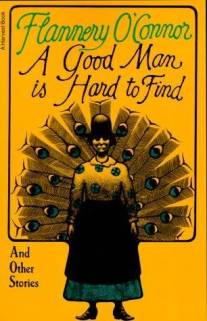
    A Good Man is Hard to FindWe enjoyed Gordon Marino’s recent piece in the Times, “Kierkegaard on the Couch,” about a distinction between despair and depression, the former, according to Marino, a kind of disrespect for one’s self, not accepting who one is, the latter a disease; the former our existential condition (for which Kafka said there is no cure), the latter treatable with medication and counseling.
    We were reminded of John Cage: “It is not irritating to be where one is. It is only irritating to think one would like to be somewhere else” (“Lecture on Nothing,” Silence, p. 119).

    Perhaps the opposite of Marino’s despair and depression distinction is found in joy and happiness. A certain kind of acceptance allows for joy, which is not quite the same as happiness. Joy, like grace, lives only in the moment; occurs regardless of where we are located; and appears like the epiphany, satori, the kick in the eye. Happiness is a kind of candy that wears off, leaving us depressed. Despair is the corollary of joy, depression the corollary of happiness.

    Joy Hopewell comes to mind, a Flannery O’Connor character (“Good Country People”) who changes her name from Joy to Hulga, such is her despair. A good self is hard to find.

  • Free Parking at the Library of Congress

    ParkingWe try to imagine a world without cars. Given our experience, it’s difficult: our MOS was wheeled and track vehicle mechanic; we parked cars at the old LA International while working our way through college; we underwrote autos for a time. Our first car was a 1956 Chevy, purchased for $75 from our friend Gary leaving for Vietnam – he never returned. Our second car was a 1949 Ford pickup truck, called the “Peace Truck” for a small peace sign decal we put in the center of the rear window – we used the truck for surf trips. Then we went through a series of old Volkswagens, mostly bugs, but we did have a VW van for a time – it blew a rod one night on way home from a Jimmy Hendrix concert. We try to imagine Kerouac’s On the Road without cars: impossible.

    We try to imagine a parking space at the very spot and time we need one. We’ve always talked to our cars, but parking spaces don’t listen. We remember our first time parking in the Columbia Tower in Seattle: the entrance to the underground parking garage is a concrete circle that descends quickly around and around and around for seven stories below the building, the massive concrete beams just inches overhead – not a place for the claustrophobic, almost as bad as the MRI machine, another circle of hell. Dante would love it, were he in Seattle with a car to park. After parking, one must take four separate elevators to get to even the 33rd floor.

    John Grisham’s A Painted House contains a theme related to cars: it’s 1952 and the characters are struggling to survive on small cotton farms in rural Arkansas; some leave for the north, where they find jobs in the automobile industry, in Flint, and they travel back in their big new automobiles to visit and show off. The irony in the end of the story, underdeveloped, is that as the main characters finally give up the dream of making the farm work and follow the exodus to Flint, today’s reader knows they’ll be back – imagine cities full of hollow parking garages, empty parking lots.

    What in the world brought on this reverie of the car? A road trip? A particularly gruesome commute? No. This, a post at the Inside Adams blog at the Library of Congress site: “Long Live the Parking Garage.” There will be free parking as soon as we get rid of the cars; meantime, we should caution you that if you are susceptible to following links you may never find your way out of the parking garage post.

  • The Retiring and Re-tiering Posner

    The claim Posner seems to be making (a claim of value) is that federal taxes should not be used to support economically non-productive groups – the retired elderly is his example. If we accept his claim of value as something we should all want, then we should include all non-productive groups, which would include the disabled (including veterans), the imprisoned, children, the mentally ill, and the unemployed. It would also follow logically that federal aid should be distributed in proportion to the level of economic productivity of groups. Thus those in the service industry, for example, should receive the least benefit (if any) from federal taxes. A stratified hierarchy is thus created.

    We encourage Becker and Posner to tune in to Professor Wolff’s (UCL Philosophy) discussion here. From his summary: “…those who leave school early are more likely to end up in physically demanding work, and may well develop physical health problems during the course of his or her working life. Accordingly, retirement, when it eventually comes, may be lived in poor health and for a much shorter period than those who start later in less physically demanding jobs. It may also be, then, that our current retirement policies contribute to the social gradient in health and life expectancy.”

    Note: The Becker-Posner Blog comment function appears to be disabled.

  • AIG, APA and the Crashing of Institutions

    300px-Brueghel-tower-of-babel[1]The frequency and severity of institutional crashes lately keep ringing in our ears. What becomes of credibility and reliability when the actuarial body politic, responsible for making the rules, tracking the results, and revising accordingly, errors in judgment, planning, execution, and follow-up? First AIG, now APA. 

    A few weeks ago, we dripped a bit of our mild satire on APA’s capricious decision to switch back to the double space following a period at the end of a sentence. At the same time, we made note of a one-off blog tracking the changes and mild hysteria following the publication of the APA 6th edition, back in July. The APA style site has now posted an apology, an eight page list of corrections, and corrected APA sample papers; the first printing of the APA 6th edition, it’s now fully disclosed, is rife with errors. It’s an OCD disaster.

    The APA note of apology reads like a Wall Street firm lobbying for a bail out. From that note:

    “The aggregate of these noted pages may look significant, but in the majority of cases, the noted change is relatively minor…Corrections to the first printing of the manual have been organized into four categories in an effort to group like changes together: Errors in APA Style Rules, Errors in Examples, Clarifications, and Nonsignificant [sic] Typos.”

    When does a number of minor problems reach a level equal to a major problem? What is needed is a repeal of the McCarran-Ferguson Act as it relates to the federal regulation of style manuals – to centralize control, avoid styled obsolescence, and bail out confused students. The silliness of the obsessive distinctions is made manifest by the unnecessary and arbitrary revisions, the Tower of Babel like edifice that has crashed into a Confusion of Tongues, and the failure of even the experts to remember or to follow the rules.

    Scratch that last paragraph. Terrible idea. A confusion of tongues is exactly what’s needed. Specialization leads to extinction. And we do intend to invoke the opt-out provision on the double space following the period.