We don’t find E. B. White adhering to APA guidelines. It’s more palatable monkeying with rats if one denies them human characteristics.
One rule that hasn’t changed in the new 6th edition APA manual concerns a warning against the use of metaphor, specifically anthropomorphic connotations (p. 69). One may not use metaphor; the question is, can one not.
Camus avoided metaphor in The Stranger, creating an anti-man. For McLuhan, technology is metaphor, extensions of the senses. For Norman O. Brown, in Love’s Body, language is metaphor; to avoid metaphor is to avoid language: “Metaphor is mistake or impropriety; a faux pas, or slip of the tongue; a little madness; petit mal; a little seizure or inspiration” (p. 244). It’s easy to see why the APA wants to avoid it. On the other hand, “Freedom is poetry, taking liberties with words, breaking the rules of normal speech, violating common sense” (p. 244), in short, jazz. But metaphor is ambiguous, and that’s what we must avoid: “Psychoanalysis, symbolic consciousness, leads from disguised to patent nonsense – Wittgenstein, surrealism, Finnegans Wake” (p. 245). In “VII” of Love’s Body, titled “Head,” Brown lights out for the territory, ahead of all the rest: “Psychoanalysis shows the sexual organization of the body physical to be a political organization; the body is a body politic…a political arrangement arrived at after stormy upheavals in the house of Oedipus…a well-organized tyranny” (pp. 126-127). And if one wants to avoid sex, of course, one may go in for the corporate body, where the head sits at the top, and gets dibs on the first parking space.
Metaphor begins with sound, and poetry begins with being tricked by sound: “…cuckoo(‘s)fool, maid(en, mate, the Wryneck, which arrives at or about the same time as the cuckoo” (OED, mate).
So, in the 6th edition of the APA manual, we find this: “Correct: Pairs of rats (cage mates) were allowed to forage together. Incorrect: Rat couples (cage mates) were allowed to forage together” (p. 69). But, first, pair is no better than couple. Since the 13th Century, at least, the OED gives us, pair has been used to describe a married couple; indeed, the denotative meaning of pair is couple. Second, the offensive word in the passage (taking the APA view of metaphor as something to be avoided), is not pairs or couples, but mates, for a mate is one of a pair, a partner in marriage, a lover. The denotative meaning of mate, from the OED, is “A companion, fellow, comrade, friend; a fellow worker or business partner,” and only an E. B. White can handle a rat as all of these.
The poor rats, coupled in their cage, denied by the APA their very coupling, for, again, as the OED gives us, couple means “That which unites two. 1. a. A brace or leash for holding two hounds together.” Alone, together; together, but separate: like humans, a condition that can only exist in some cage, in cagey logic.
And what of cage? From the OED: “I. Generally and non-technically. 1. A box or place of confinement for birds and other animals (or, in barbarous times, for human beings), made wholly or partly of wire, or with bars of metal or wood, so as to admit air and light, while preventing the creature’s escape.”
Note “in barbarous times” suggests time past, but no longer: we wish, for language is our cage, a pair of gloves with a missing mate, a decoupling of experience.
If we want to avoid metaphor in the APA example given on page 69, we suggest: Rats were allowed to forage together, in cages, separated two by two. Lovely, isn’t it? Then again, were the rats allowed out of their cages to forage? Can one forage in a cage? Perhaps rats can, but still, an even greater problem than pair, couple, or cage is found with the word forage, for a forager is a messenger, though one may forage for oneself. Do rats “plunder, pillage, ravage” (OED, for forage)? No, only humans forage, as we have done here, within the cage of our blog.
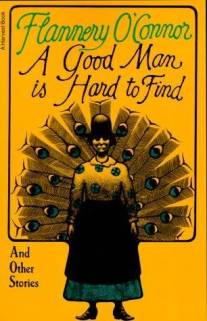 We enjoyed Gordon Marino’s recent piece in the Times,
 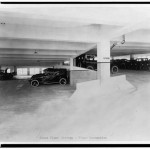 We try to imagine a world without cars. Given our experience, it’s difficult: our MOS was wheeled and track vehicle mechanic; we parked cars at the old LA International while working our way through college; we underwrote autos for a time. Our first car was a 1956 Chevy, purchased for $75 from our friend Gary leaving for Vietnam – he never returned. Our second car was a 1949 Ford pickup truck, called the “Peace Truck” for a small peace sign decal we put in the center of the rear window – we used the truck for surf trips. Then we went through a series of old Volkswagens, mostly bugs, but we did have a VW van for a time – it blew a rod one night on way home from a Jimmy Hendrix concert. We try to imagine Kerouac’s On the Road without cars: impossible.
![300px-Brueghel-tower-of-babel[1]](https://joelinker.com/wp-content/uploads/2009/10/300px-brueghel-tower-of-babel1.jpg?w=300&h=226 "300px-Brueghel-tower-of-babel[1]") The frequency and severity of institutional crashes lately keep ringing in our ears. What becomes of credibility and reliability when the actuarial body politic, responsible for making the rules, tracking the results, and revising accordingly, errors in judgment, planning, execution, and follow-up? First AIG, now APA.
The frequency and severity of institutional crashes lately keep ringing in our ears. What becomes of credibility and reliability when the actuarial body politic, responsible for making the rules, tracking the results, and revising accordingly, errors in judgment, planning, execution, and follow-up? First AIG, now APA. 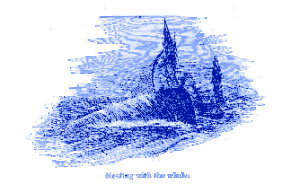 There’s nothing better than being on the water. Another blog we’ve been following recently,
 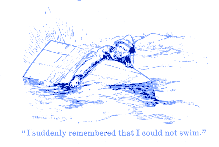 We are reminded of Joshua Slocum’s classic,
 The Coming of the Toads