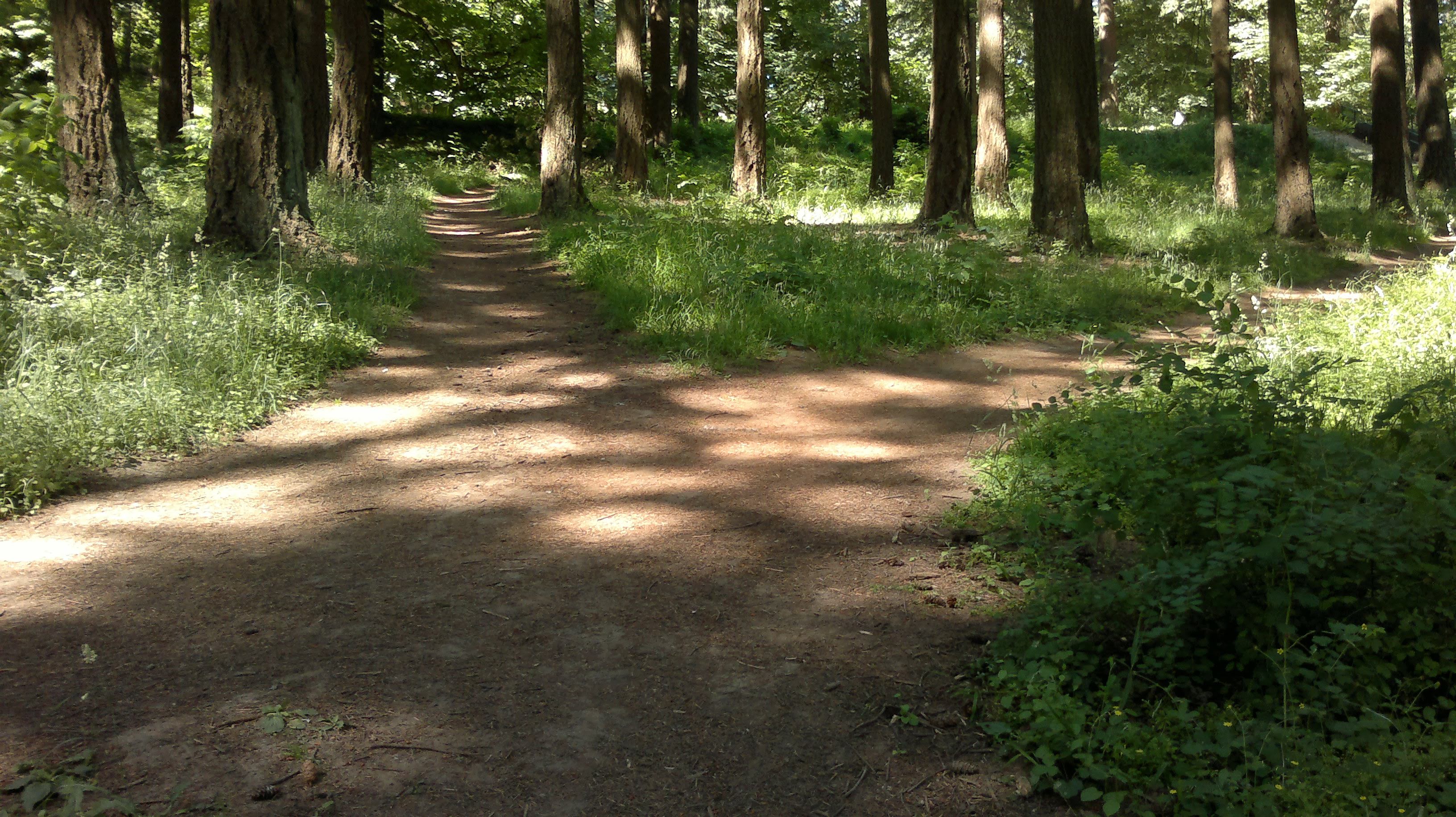
Two paths, and you probably know the rest. But un-sorry, we took a photo at the point of divergence, and did not find the light puzzling at all:
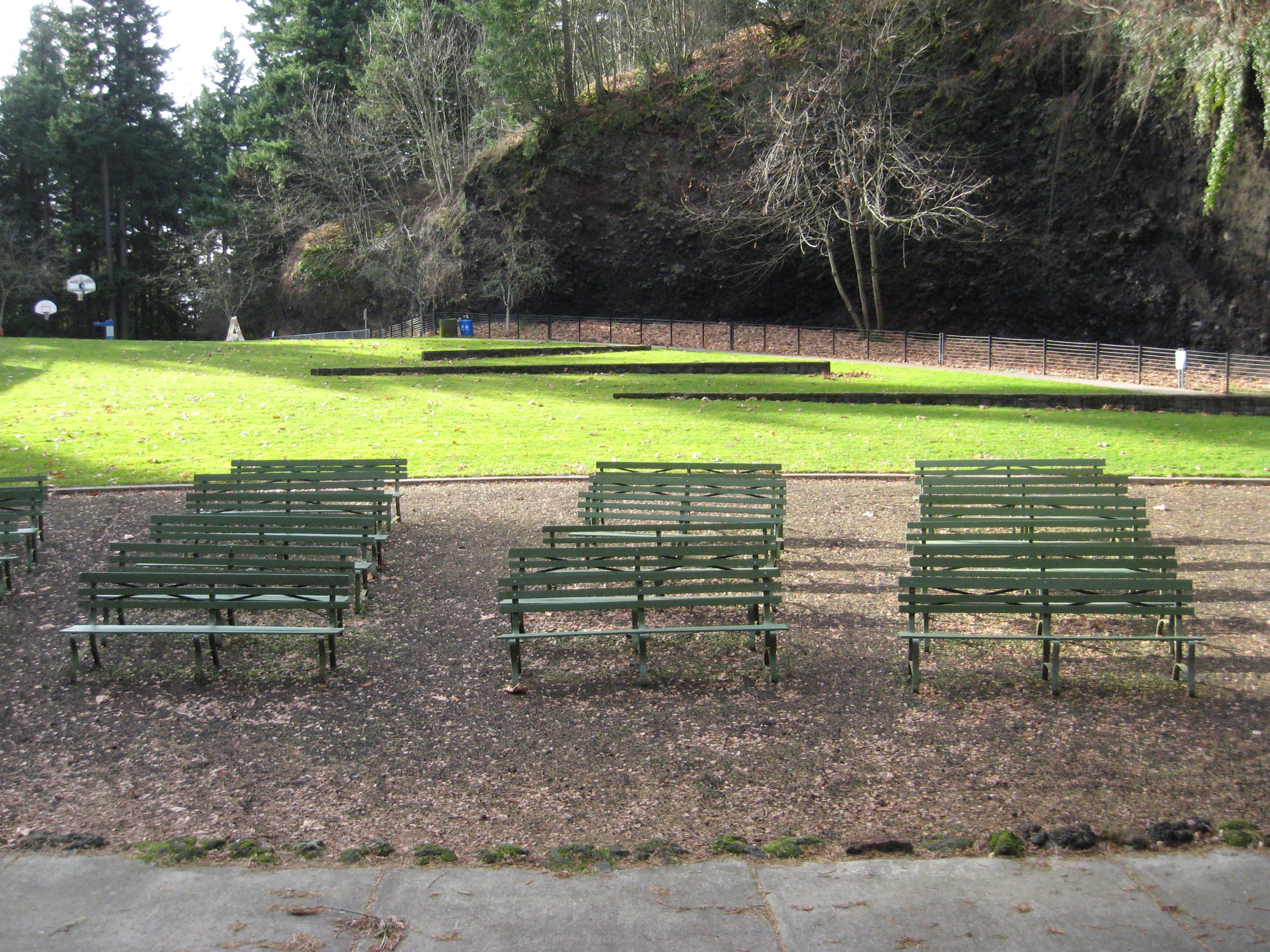
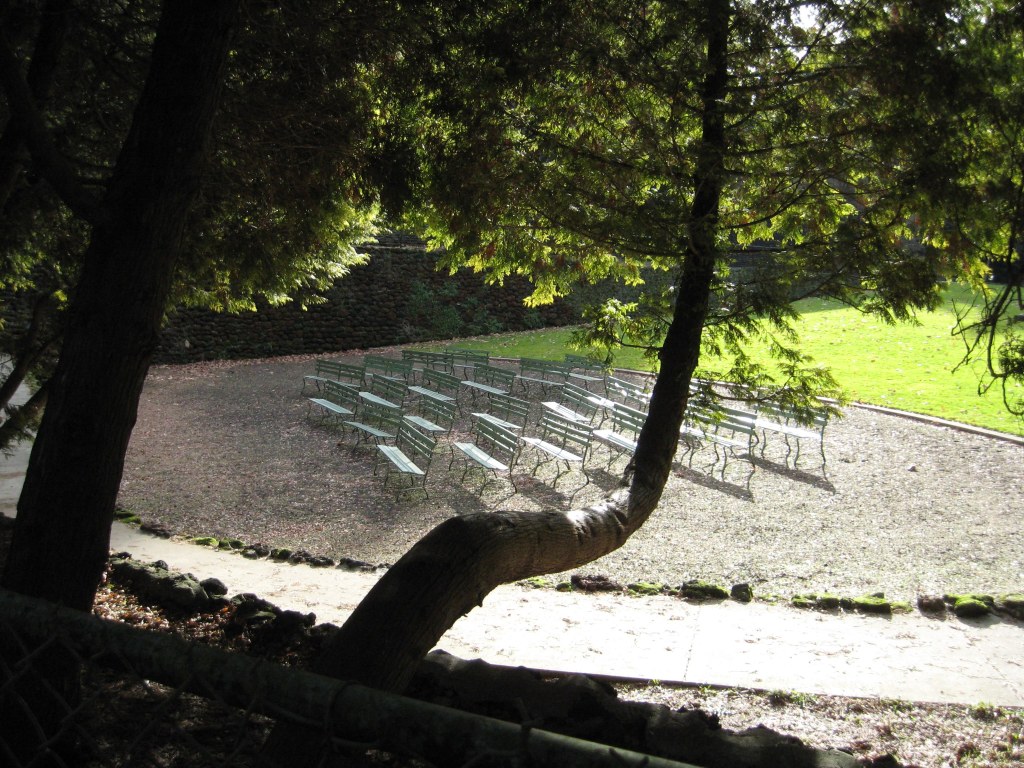
Empty green benches aligned in columns below the concrete concert stage in the small caldera, and three stone wall benches, none very comfortable for very long, and a basketball court over the hill in the distance:
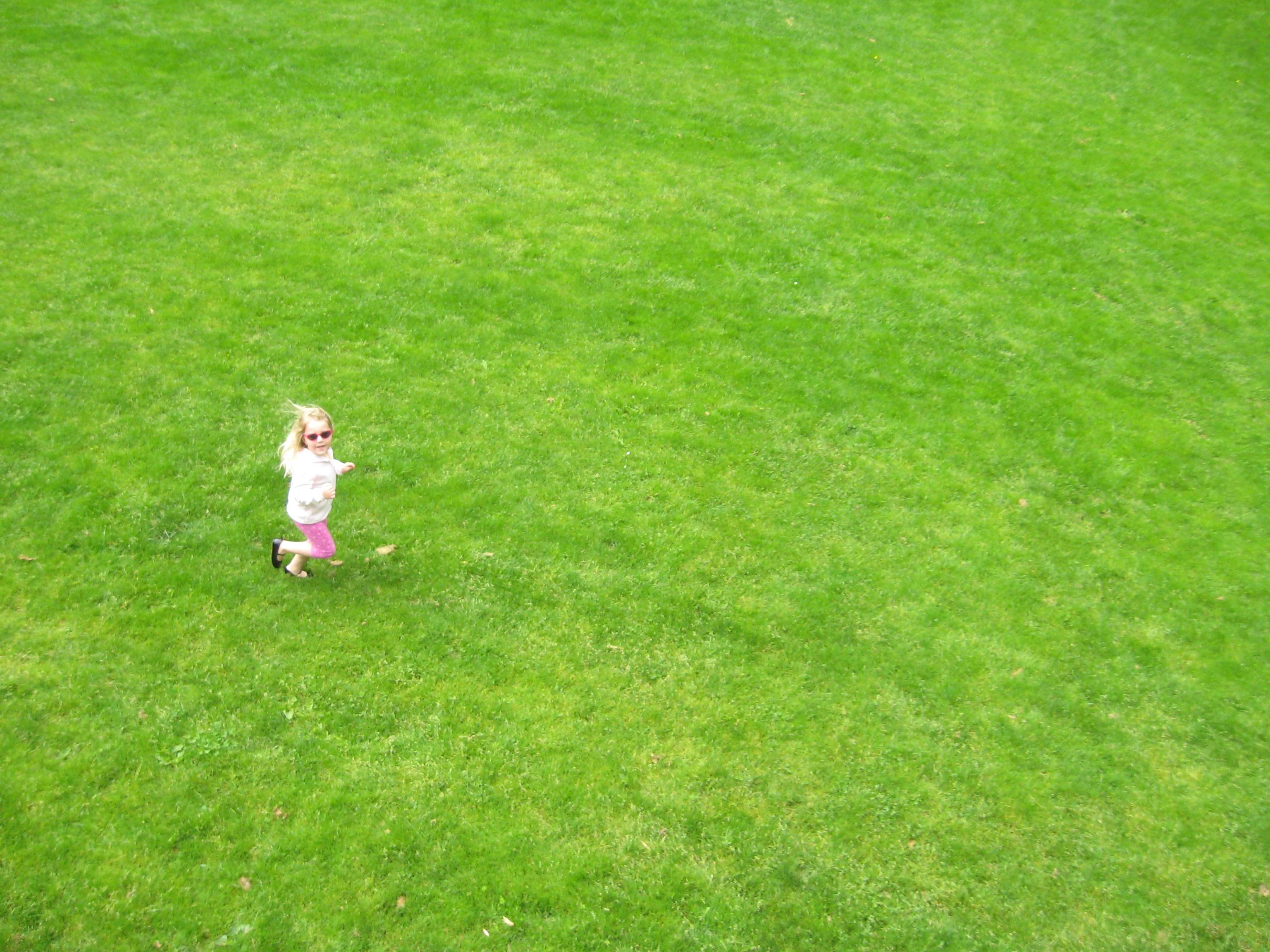
Running in the caldera on the green-yellow grass below the east wall:
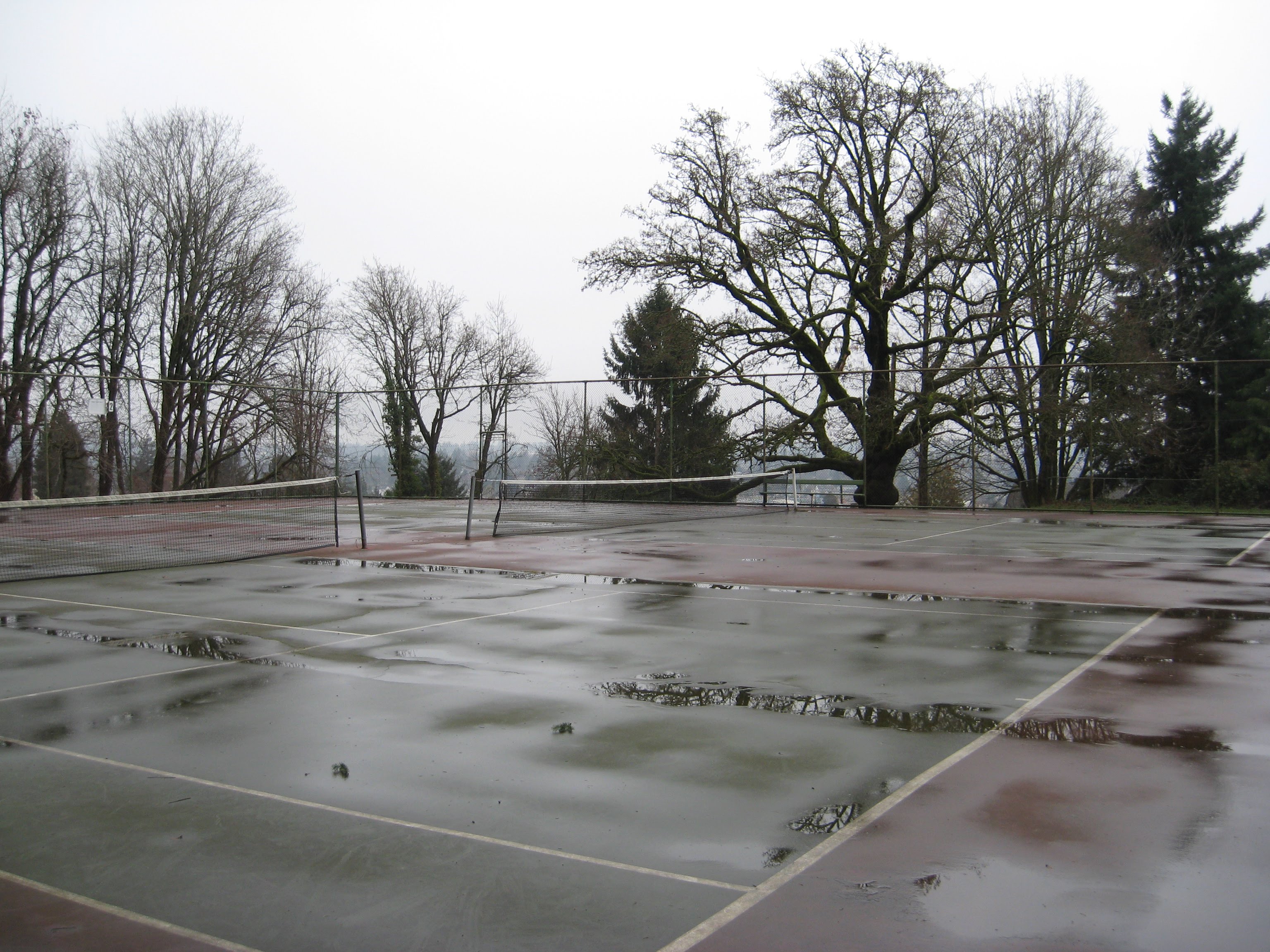
Tennis courts with puddles fresh from a winter rain, shadows of trees against a grey sky, leaning nets, no oaths:
Bent trees reaching for light over stage right above the benches:
“To meet as far this morning From the world as agreeing With it, you and I Are suddenly what the trees try…”
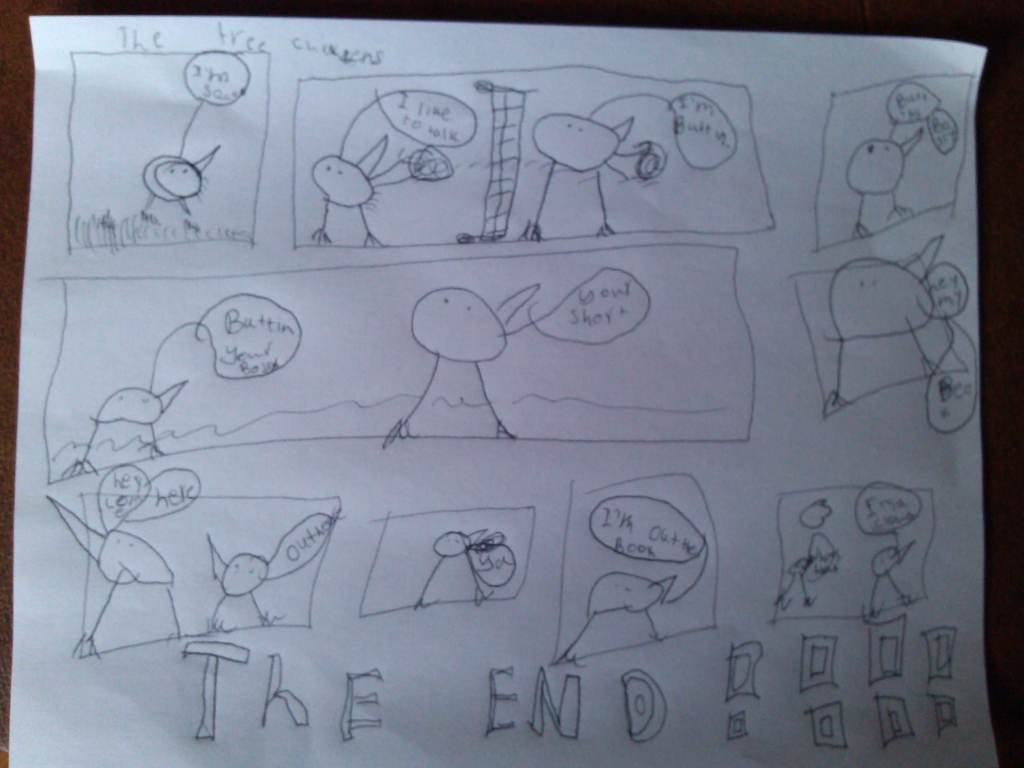
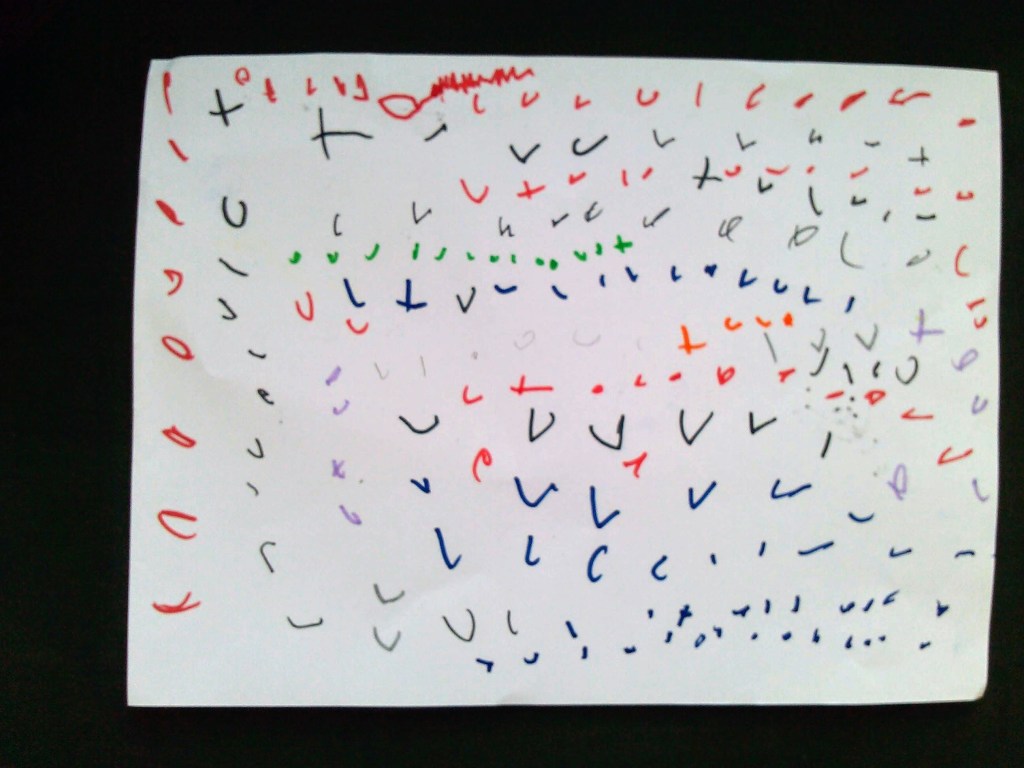
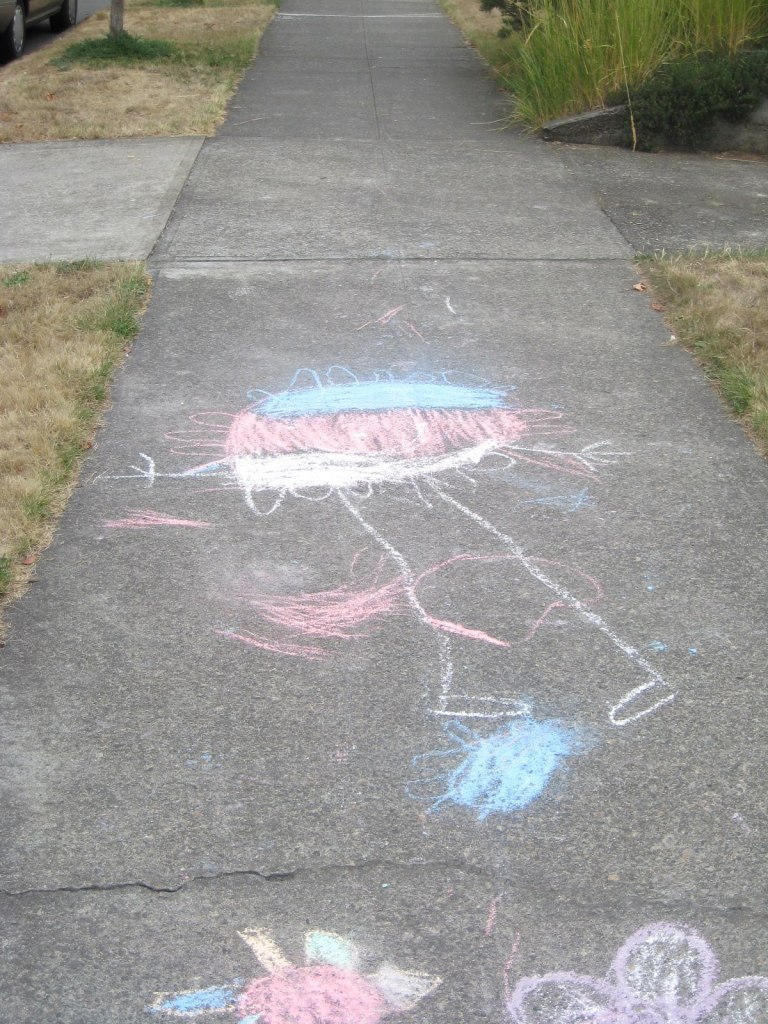
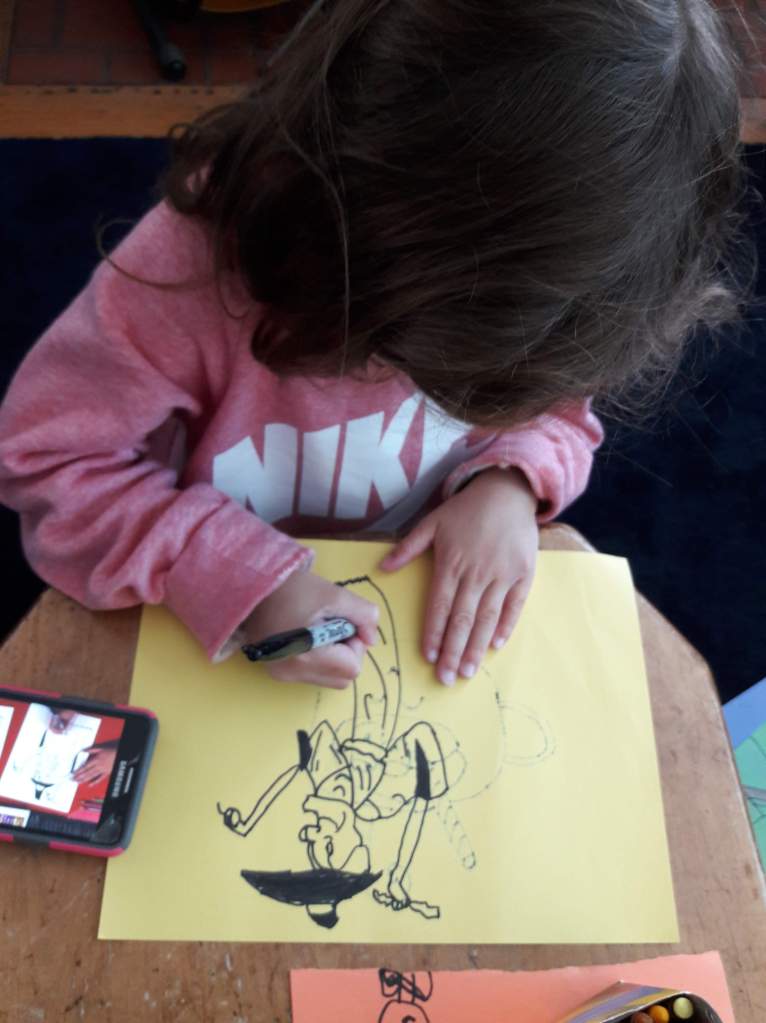
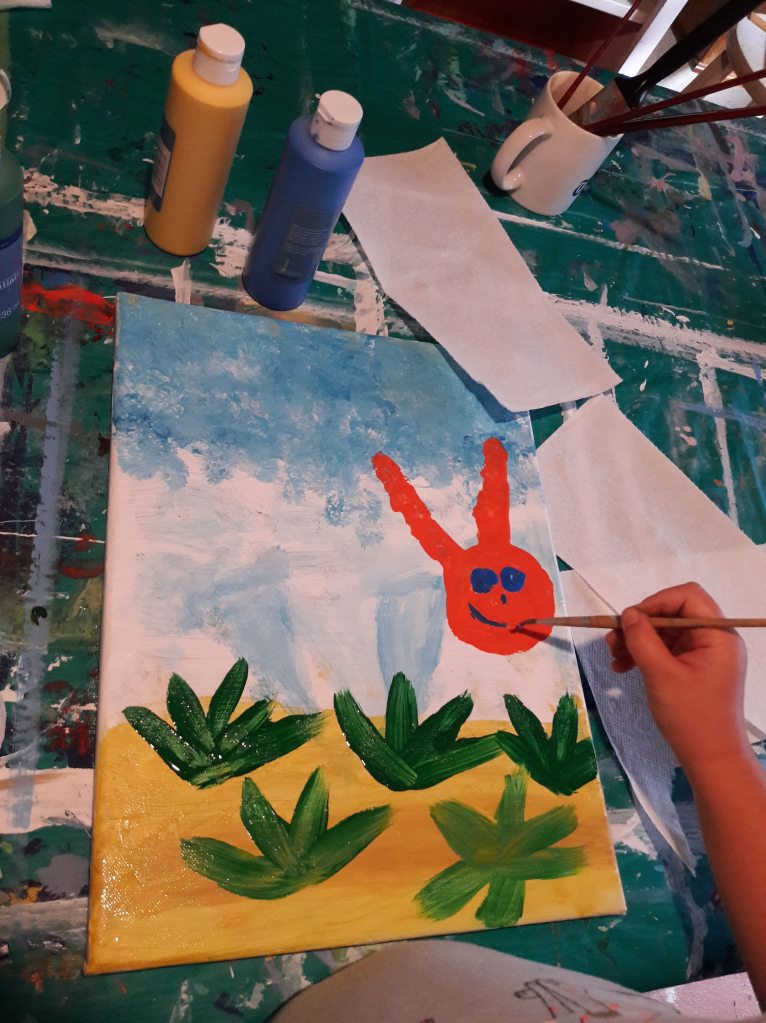
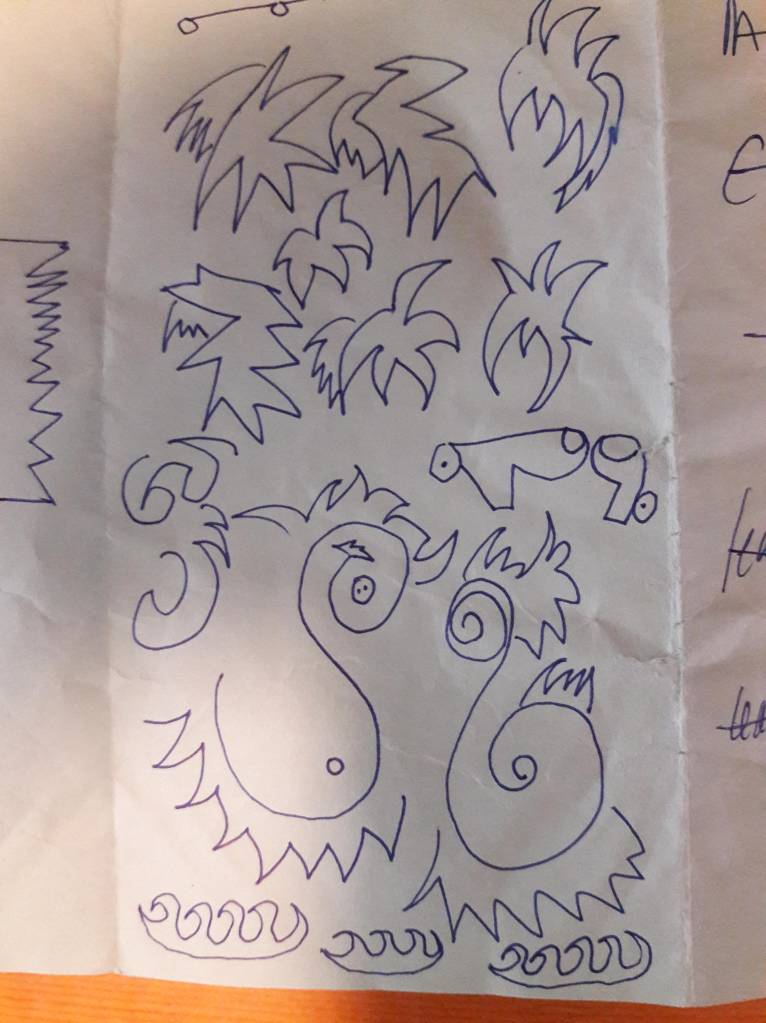
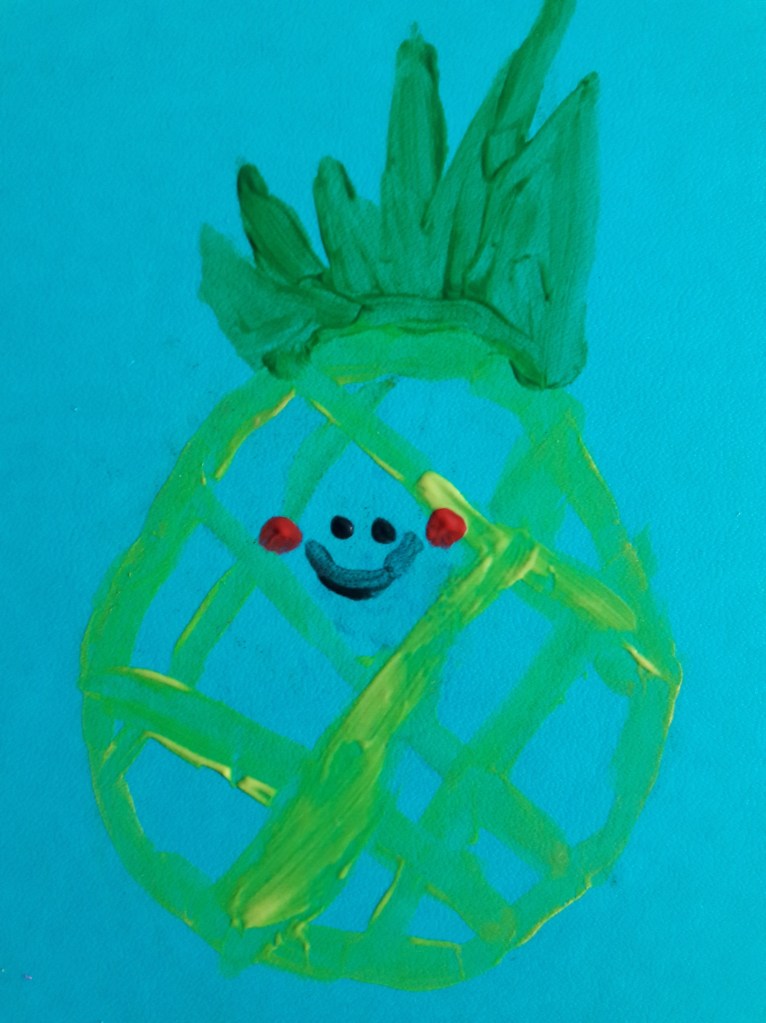
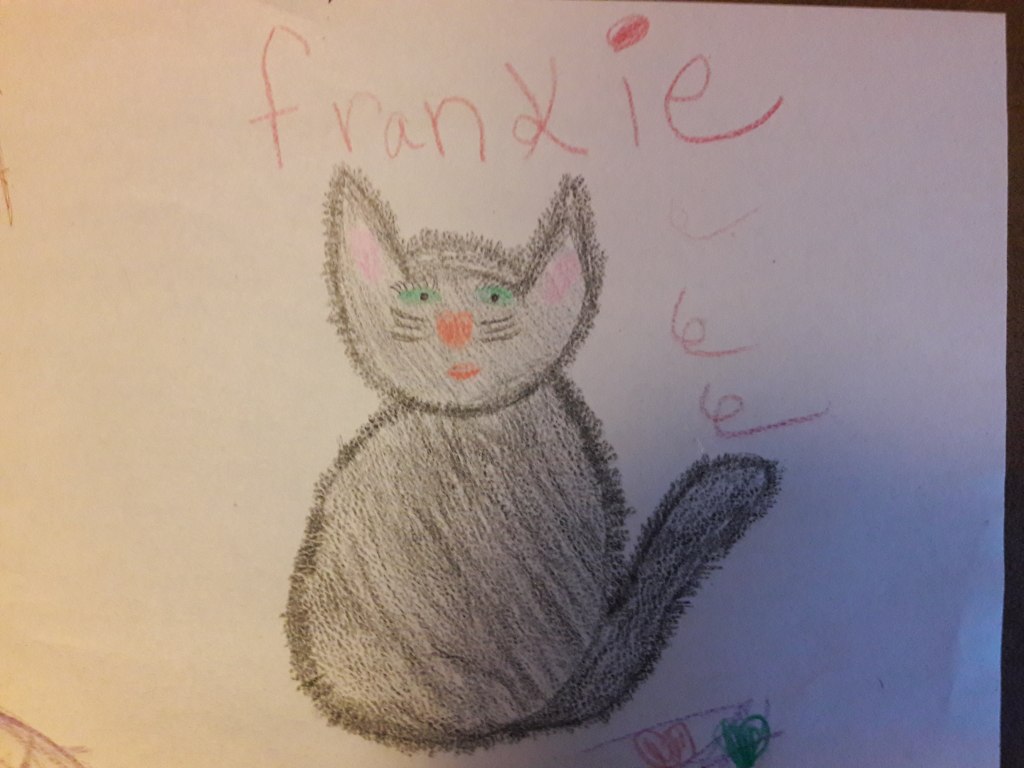
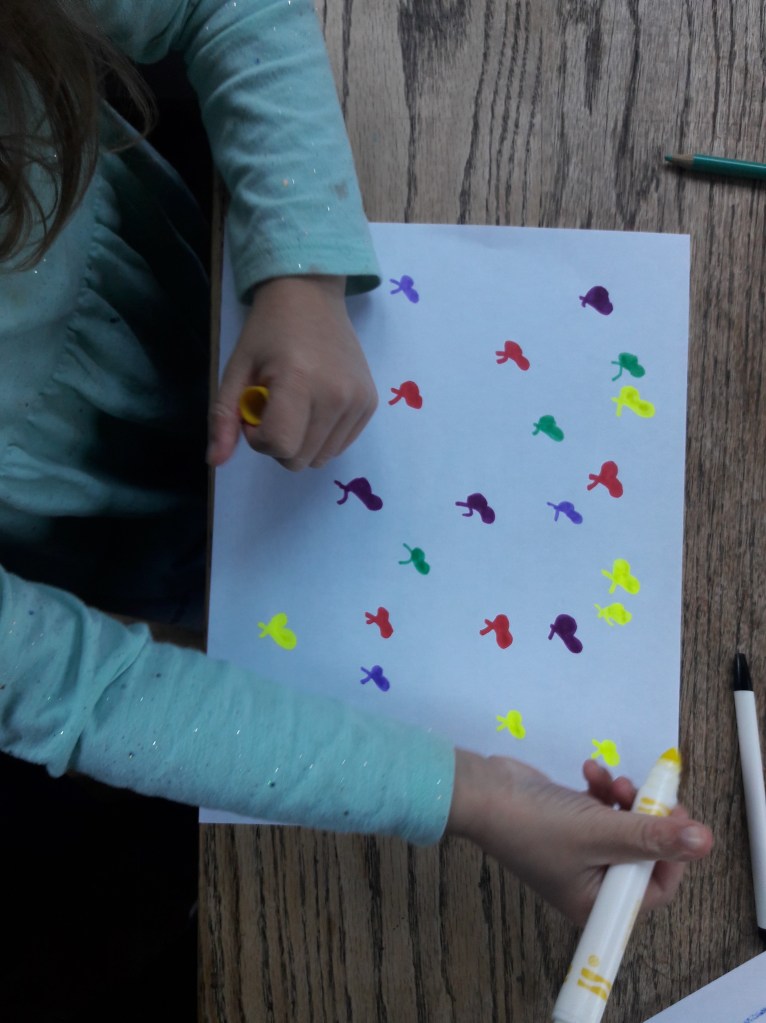
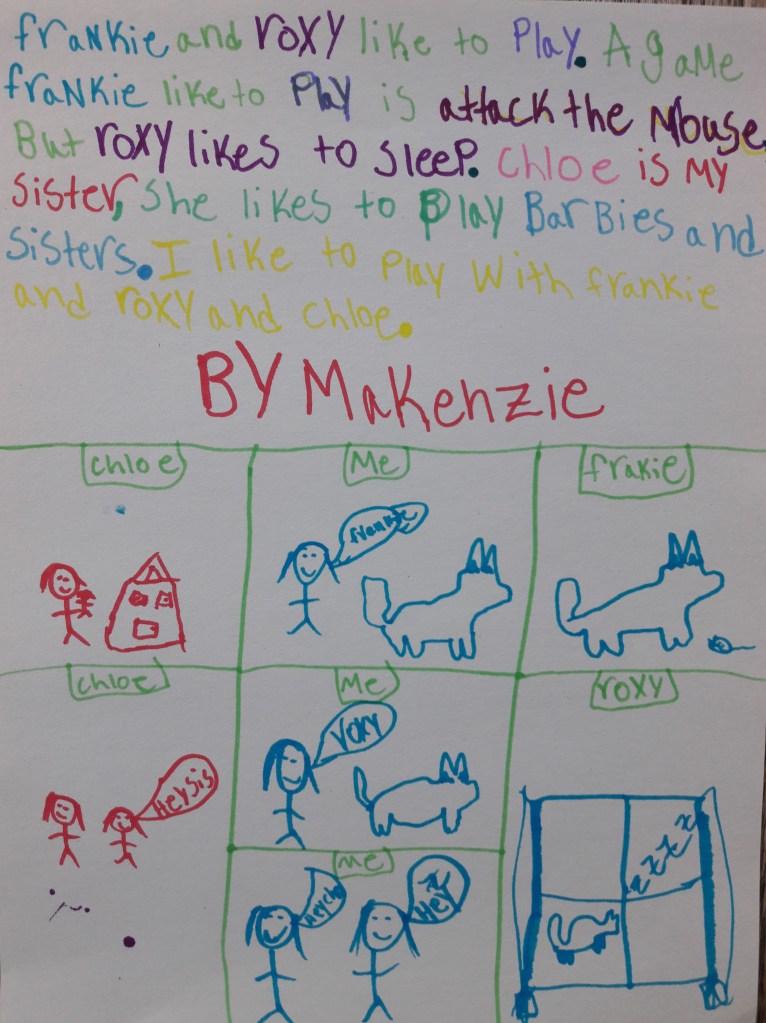
What is style and where does it come from? In his book “Q & A,” Adrian Tomine says, “If you create a page of blank panels and give that to a kid, they will immediately start creating a comic. And you will be surprised and delighted by what they create” (141).
Then again, when you were a kid, you might have been told to stay within the lines when coloring. And the panels were not blank, but pre-filled with assumptions and presuppositions.
Adrian says: “I understand that feeling of self-consciousness all too well, and I think the only reason I’m able to publish the work I do is that I started on this path before I knew any better….I’ve found it helpful to try to trick myself back into that earliest creative mindset, where I’m just creating the work for its own sake” (136-137).
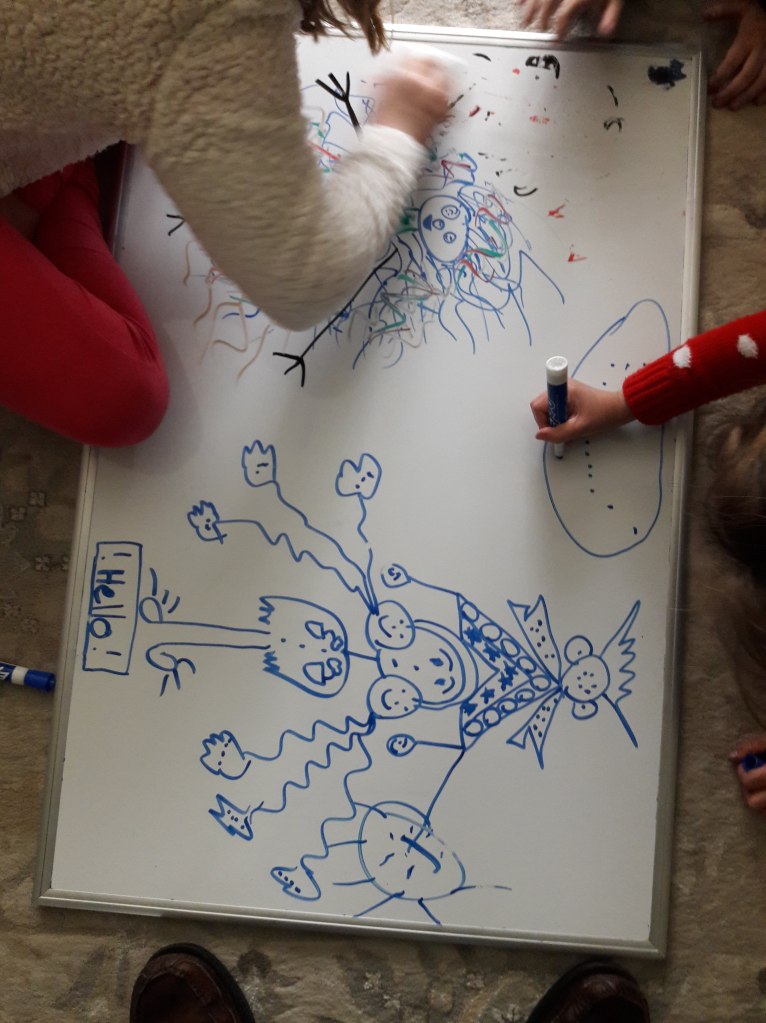
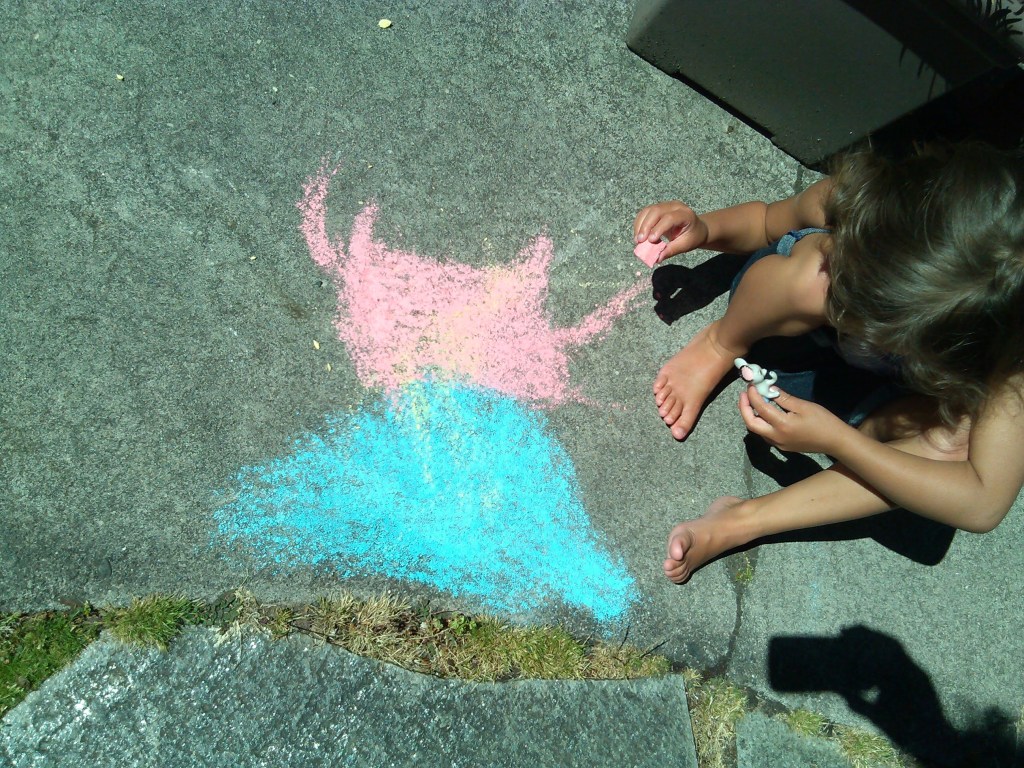
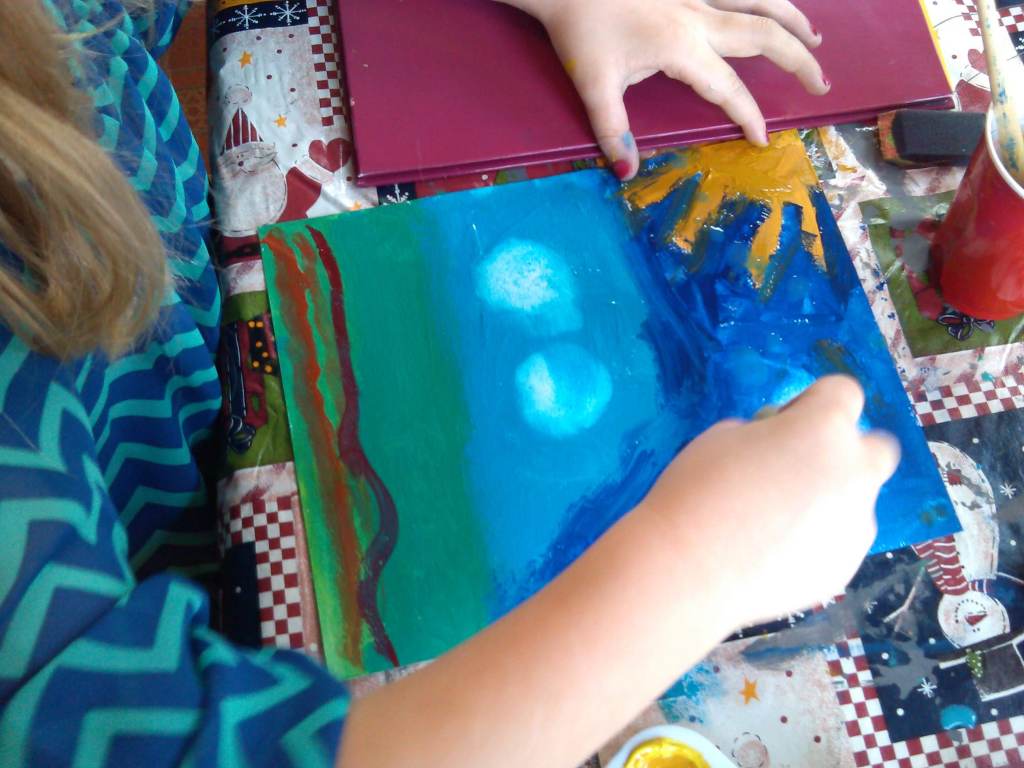
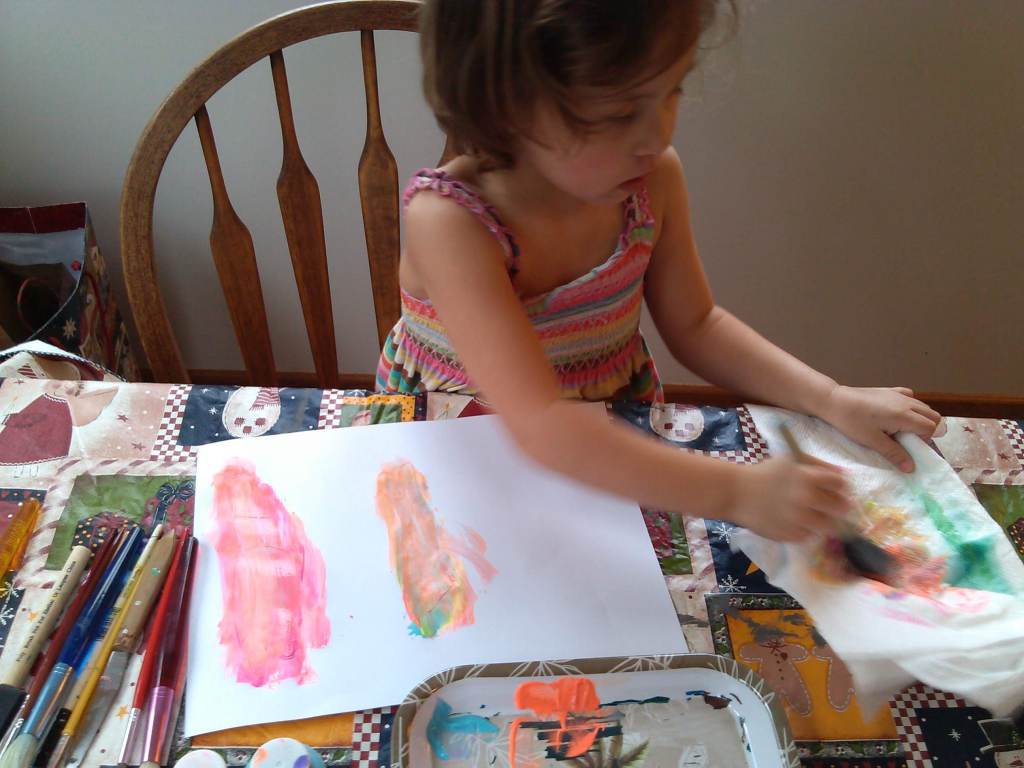
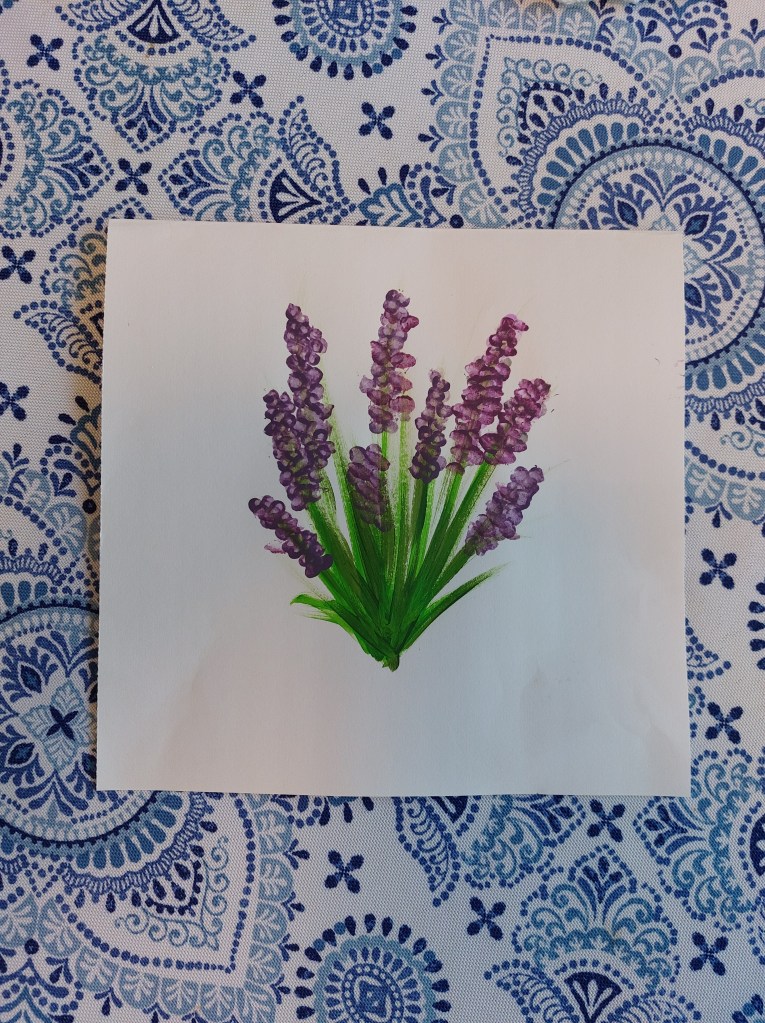
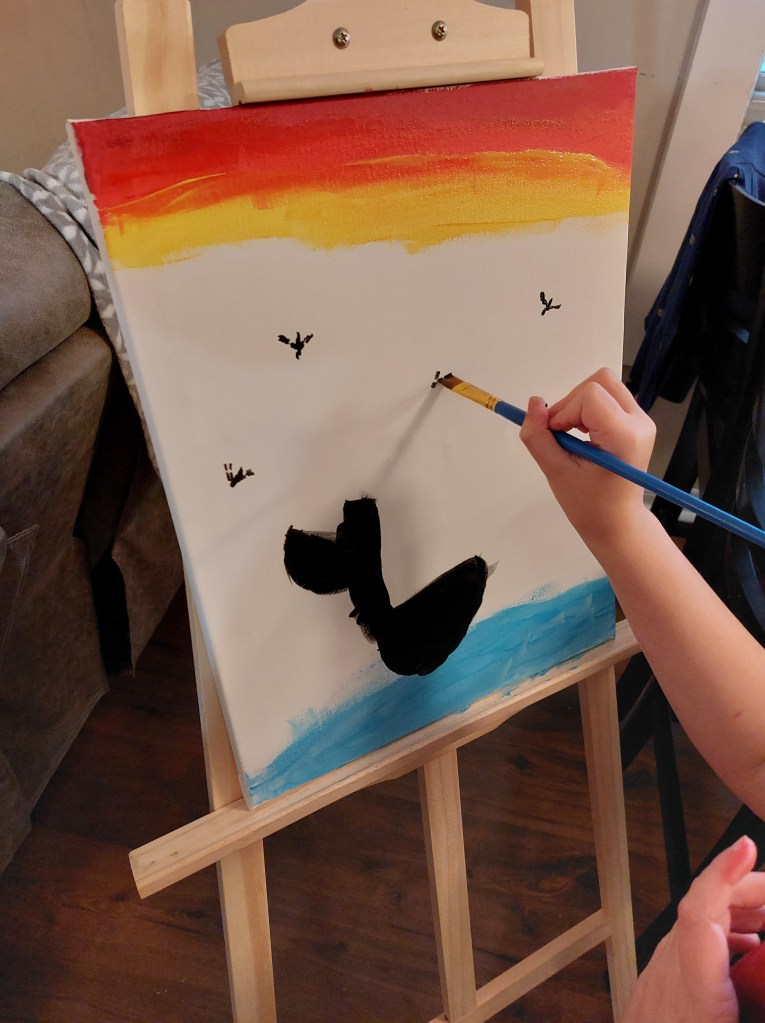
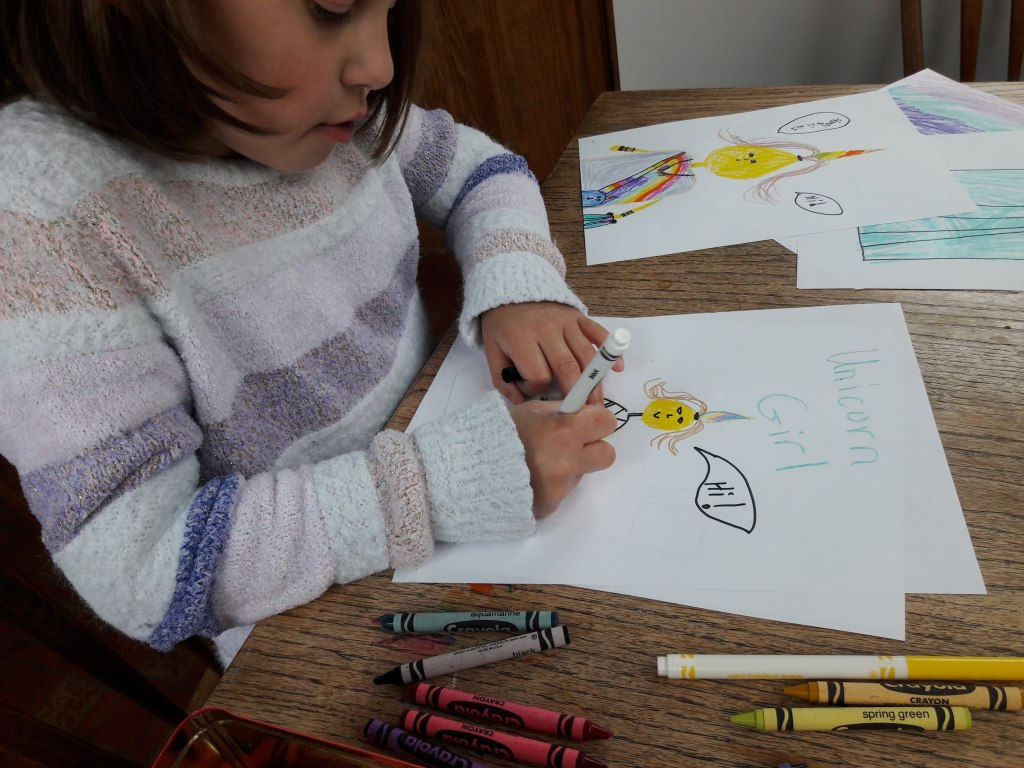
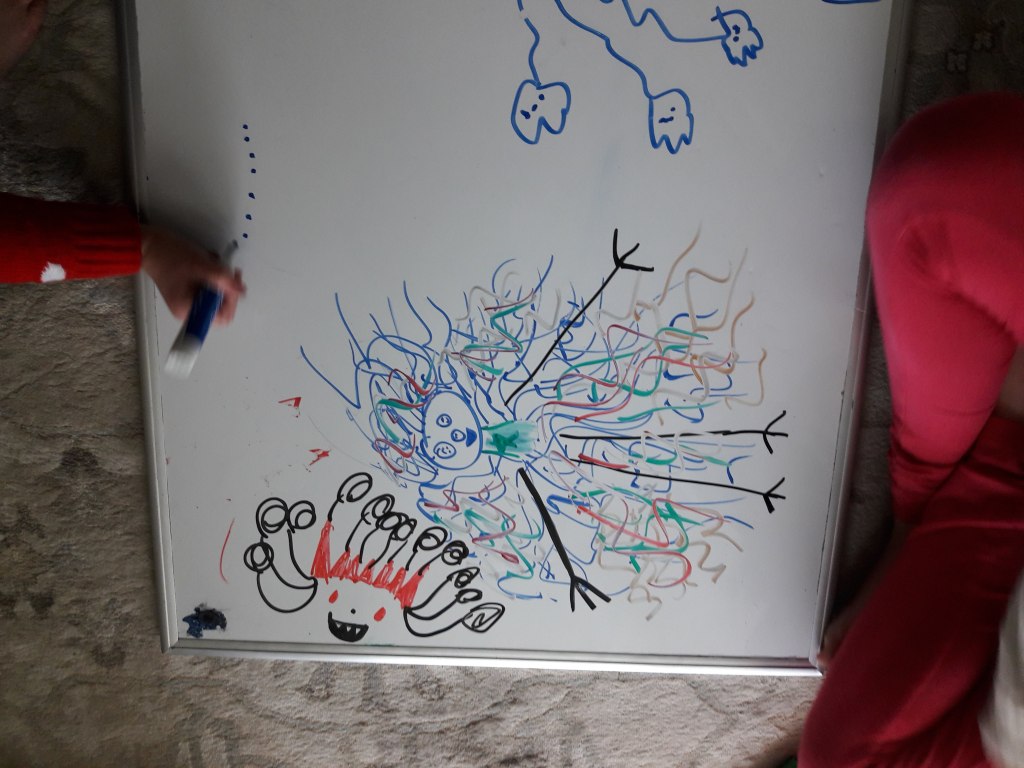
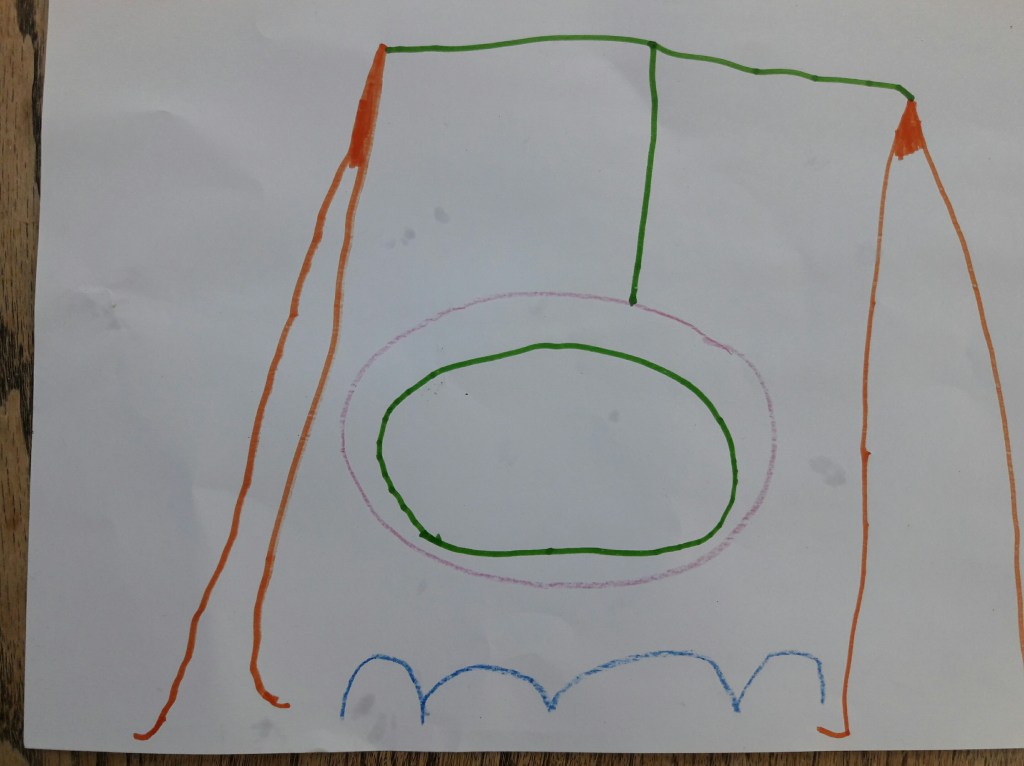
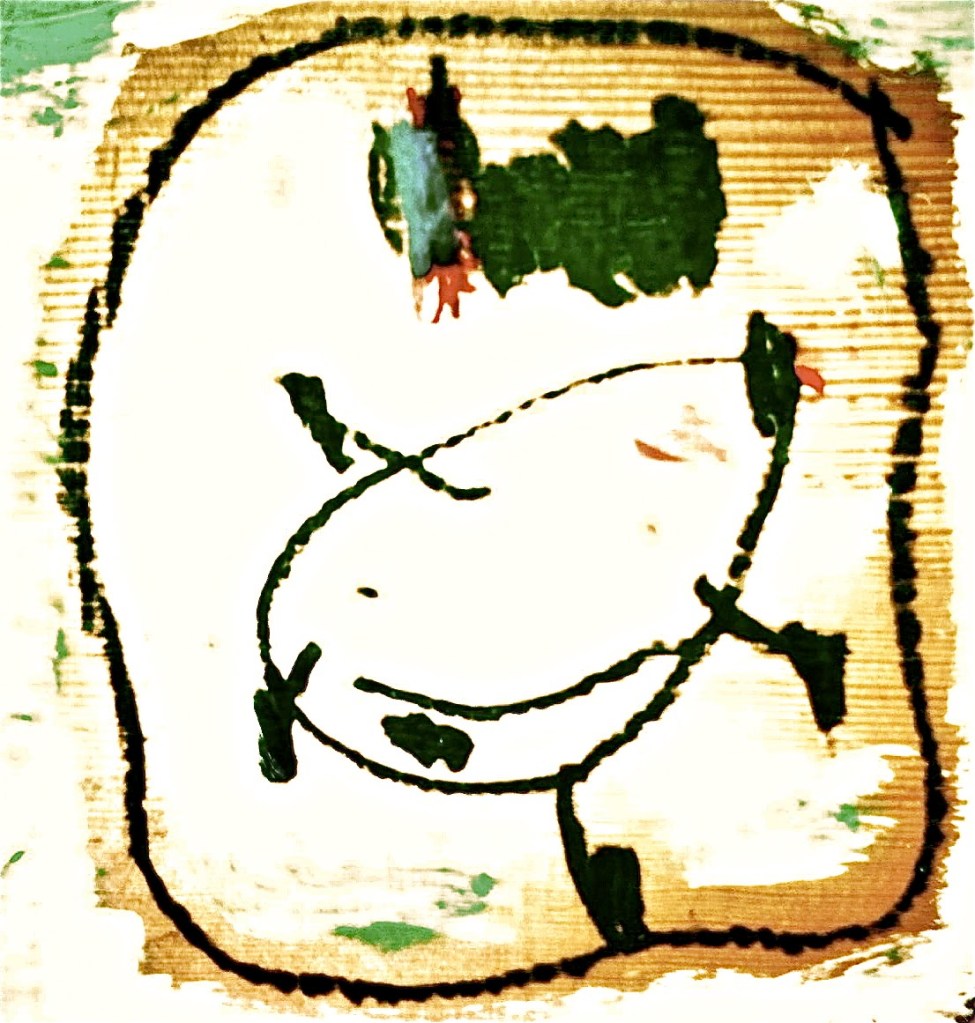
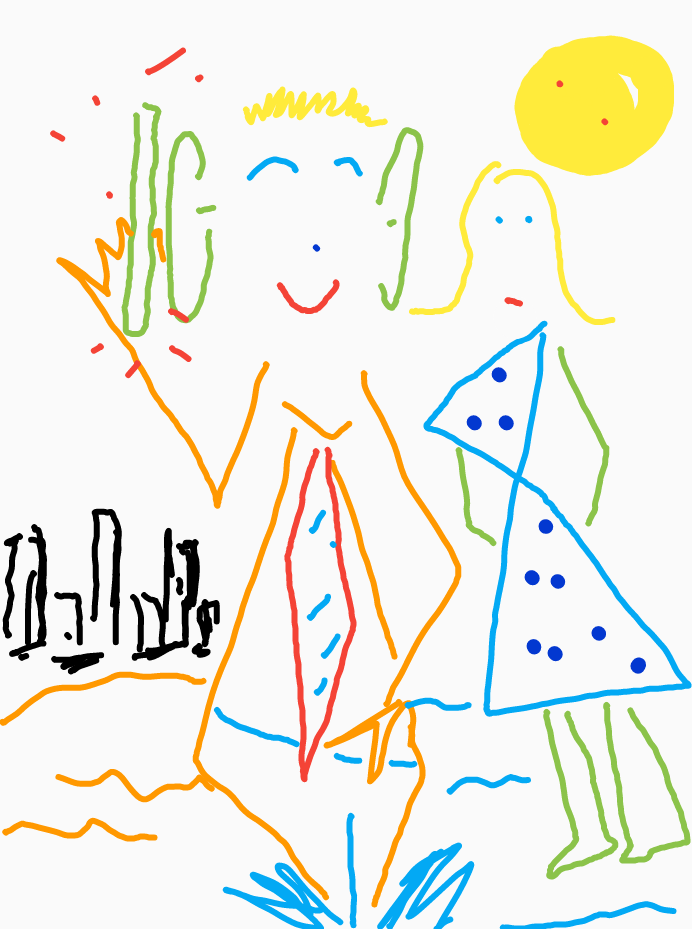
When my granddaughters were younger, we used to draw and paint using all kinds of materials. It wasn’t work for the sake of the piece, but work for the sake of work, which was play. As evidence of what doing work for its own sake might look like, here is a photo of the kids drawing on a whiteboard. Everyone knew that at some point it would all be erased. They might have saved it for a day or two, until the next exercise opportunity arose. I may have cheated the system by taking a few photos of some of the drawings, thus turning the play into work for its own sake. But that’s my problem, not theirs:
That original work has now disappeared, and I doubt we could bring it back without, as Adrian says, somehow putting ourselves “back into that earliest creative mindset.” If you can do that, then you might find a style.
Another example of style is found in Raymond Queneau’s book “Exercises in Style.” The same short description of the brief interaction of two characters on a morning bus is repeated 99 times, each time using a different “style.” In other words, the same story is told in different ways. But if a story is told in a different style, is it the same story? Cartoon drawings provide the first letter of each word of each chapter’s short title. Some examples of the one-word titles: “Precision”; “Anagrams”; “Blurb”; “Passive”; “Speaking personally”; “Comedy”; “Biased”; “Tactile.”
Can a style be created using rules? Yes, and that has created much confusion over what’s right and acceptable in given contexts or venues but that might not be right or acceptable in others. Style is often confused with etiquette. It might even be confused with intelligence.
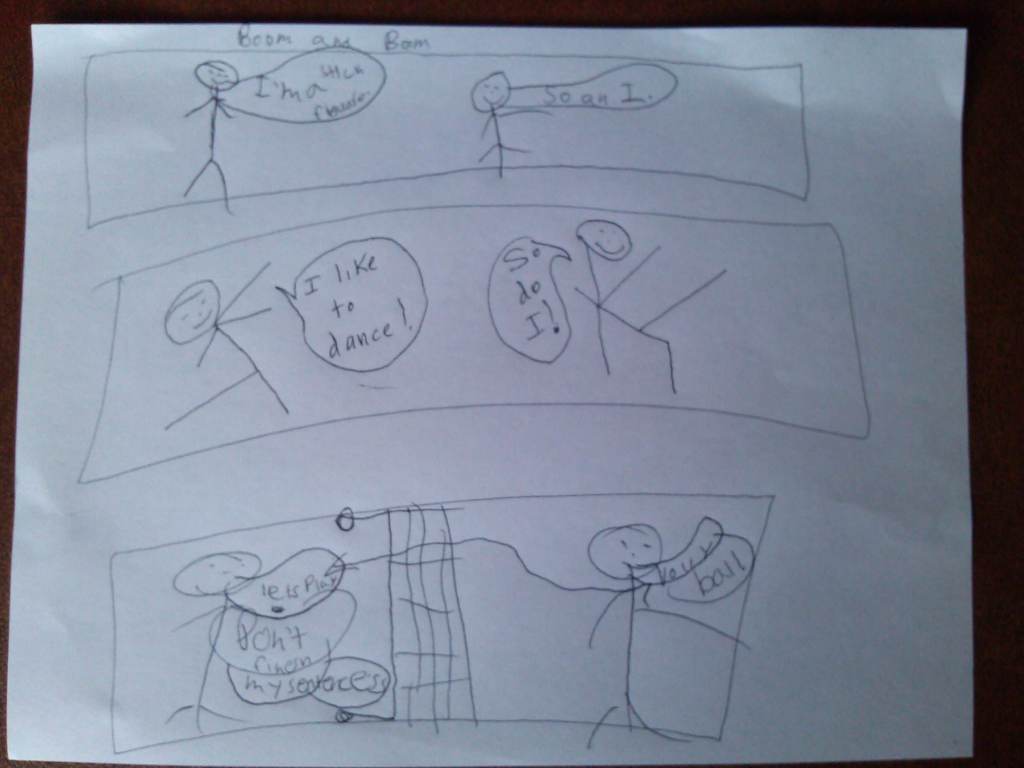
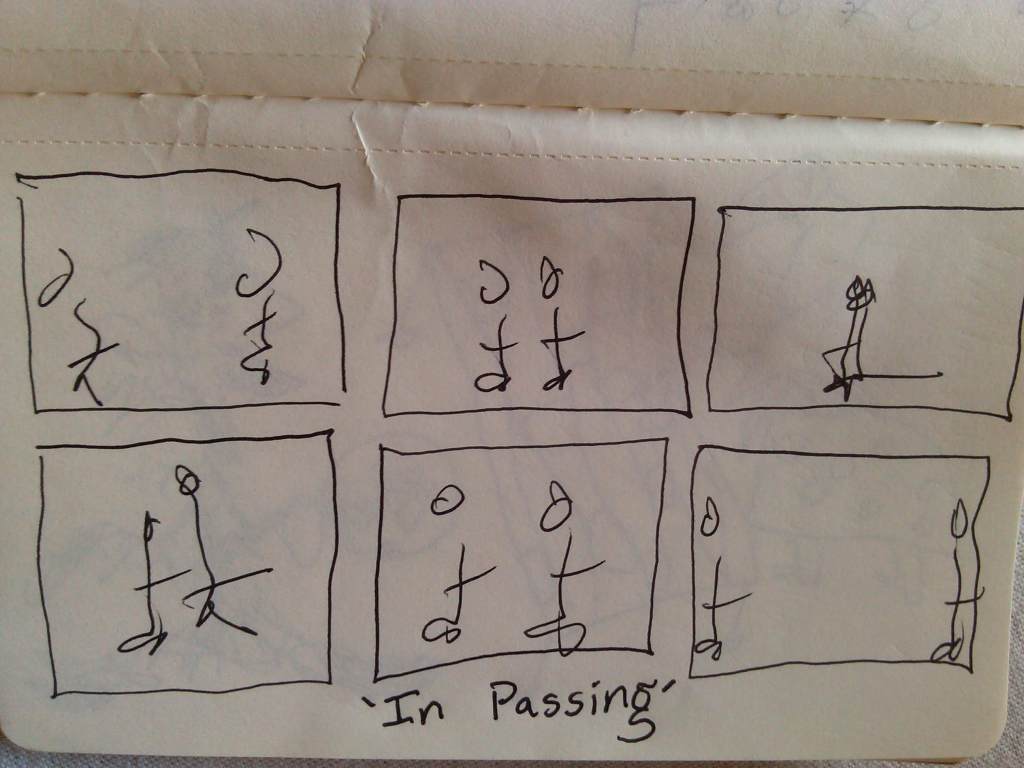
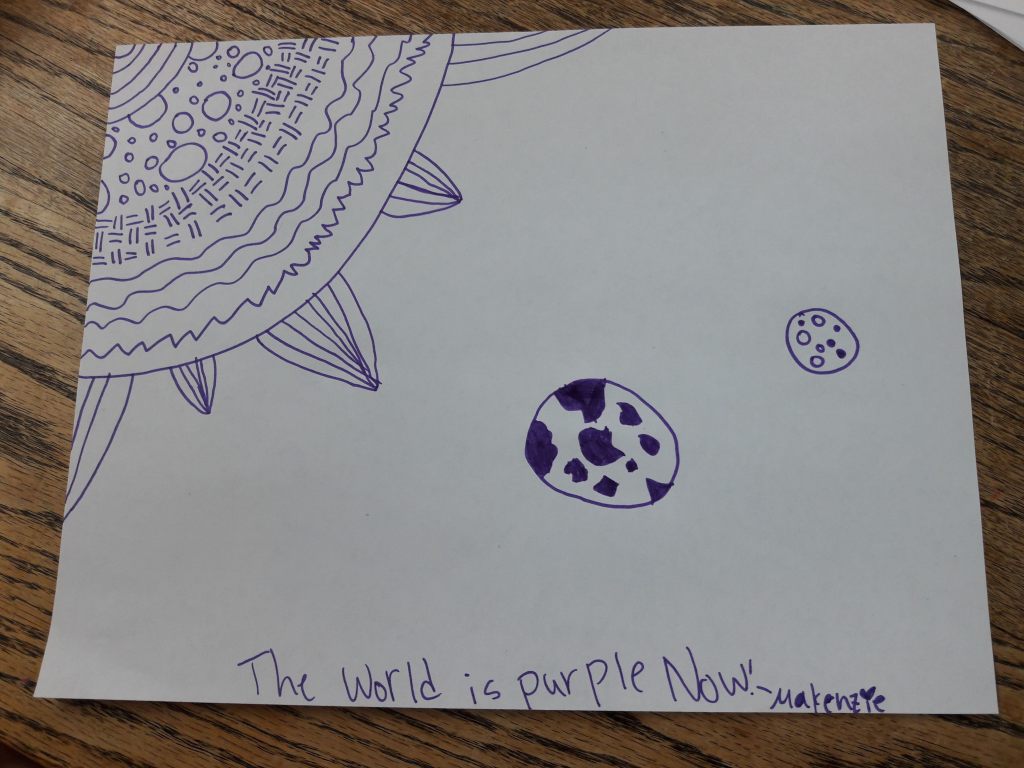
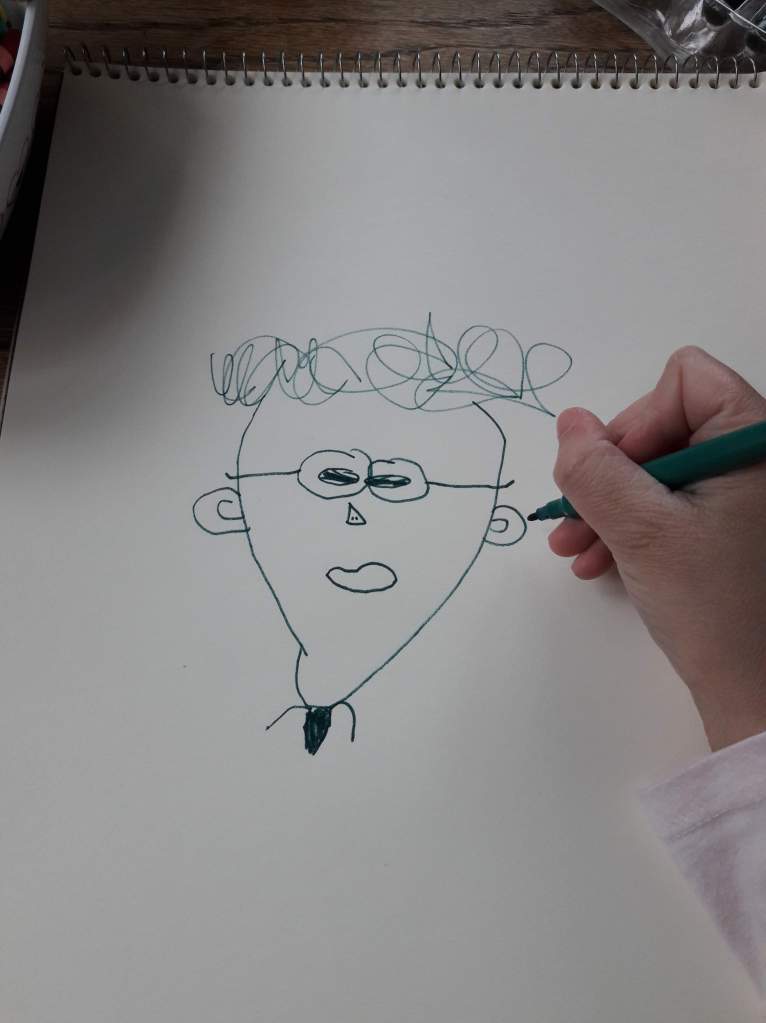
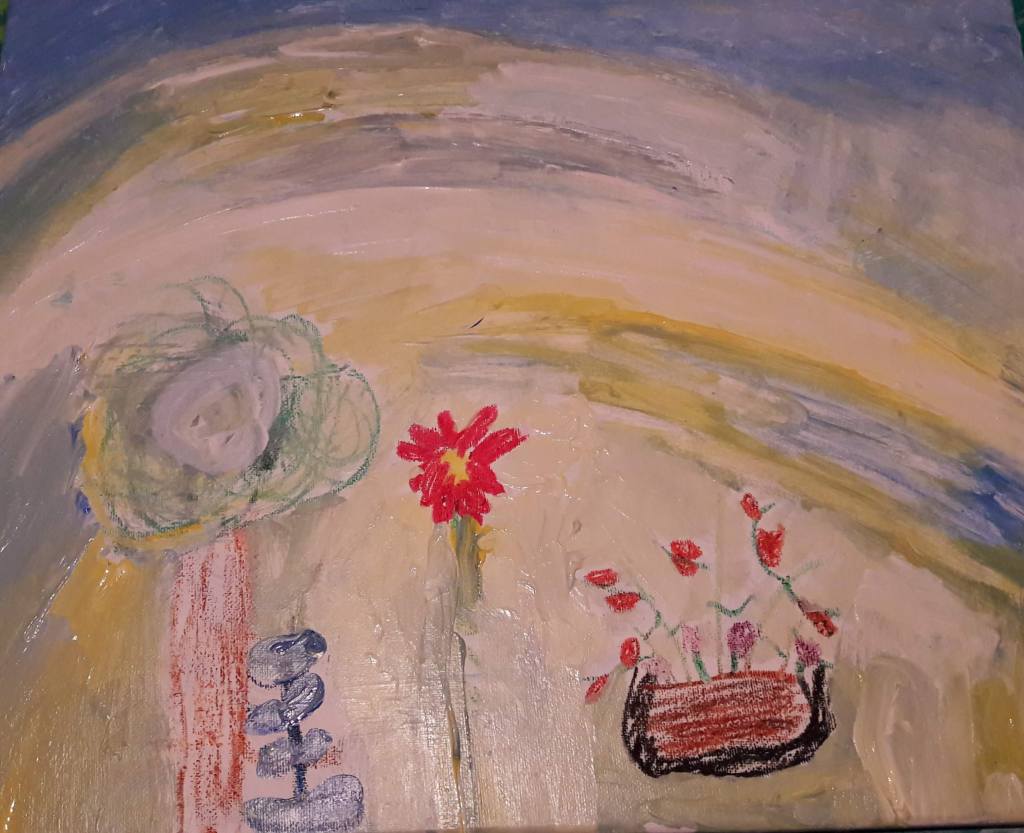
Here is a slideshow of photos, cartoons, and comics in styles we used to use:
~ ~ ~
“Q & A” was published by Drawn & Quarterly in October 2024. I wrote about it here.
“Exercises in Style” was first published in French in 1947. New Directions published a translation in 1981 (NDP513), and a new version in 2012 (NDP1240), which includes additional exercises.
If the point of a cartoon is not to make you laugh, then what is the point? If you have to ask, you may not have the makings of a cartoon aficionado. A few days ago, celebrating The New Yorker magazine’s 100th anniversary, I suggested their cartoons, a big part of their brand, if you like to name things, are not funny. I said, “And if you think the point of a cartoon is to make you laugh, you’re in for a disappointment.” But what I should have said is, “…you’re in for a surprise.” That’s the point of a cartoon – to surprise. If you must have a point.
My Brit friend who previously sent me the artificial intelligence poem written in the style of Joe Linker read my 100th anniversary post and responded via email with a link to the Seinfeld segment where Elaine meets with the cartoon editor at The New Yorker to ask him to explain why one of their cartoons appearing in a recent issue is funny. She doesn’t get it. She pushes him into admitting he doesn’t get it either, and when she asks him why he published it, he says he enjoyed the kitty. It’s Series 9 (their last), Episode 13, titled “The Cartoon” (1998). You could look it up. Susan and I watched the whole episode the night before last on TV. Susan didn’t find it too funny, but I did. Well, actually, she didn’t say it wasn’t funny; she said it wasn’t a good one. If cartoons are not funny, how could a show about cartoons be funny?
Do we choose our magazines based on their cartoons? I remember in my parents’ house there appearing copies of Redbook, Ladies’ Home Journal, The Saturday Evening Post, Seventeen, and Glamour, but just occasionally, not necessarily the result of subscriptions, but of random, neighbor exchanges. Did my mother and sisters read Joan Didion in the Post? I’m sure my father did not. He read the newspaper. I don’t recall paying much attention to those magazines, but I don’t think they were known for their cartoons. Susan’s aunt, who introduced me to The New Yorker, was a commercial artist, an illustrator. She said illustrators were not artists. That there never developed for Los Angeles a magazine equivalent to The New Yorker may help explain the difference between the two cities.
One year, in the midst of my career in the red dust of commerce, I cut out a New Yorker cartoon and taped it to the side of my computer monitor, in those days the size of a television box, on the aisle where passers-by could stop, check out the cartoon, and say hi. The cartoon was two panels, on one side, a middle-aged man dressed in a loose fitting business suit with tie, holding a briefcase, wearing a fedora hat, on his face a zero expression, neither awake nor asleep. He might have been waiting to cross a street, for a sign to say, “WALK.” The caption read: “The thrill of victory.” In the other panel, the same guy, exactly the same drawing, the same facial expression. The caption read: “The agony of defeat.”
My boss at the time stopped to check out the cartoon of the businessman. I could tell he didn’t get it. He walked on to his office. Some days later, he stopped again, and said he didn’t think the cartoon was funny. Several weeks passed. The cartoon didn’t get that much attention. I guess its surprise wore off. What attention it did get might have been due to the fact that it was the only piece of non-work material I had stuck up anywhere on or around my desk. It may have become a tiny landmark, reminding sleepwalking or overexcited workers to turn right here. I don’t remember exactly how long it remained up before my boss called me into his office to tell me he wanted me to take the cartoon down. I took it home and taped it to our icebox door.
I drew a cartoon a few years back of a man holding a cellphone to his ear, the phone giving off wah wah sounds indicated by red dashes, a big smile on the listener’s face, a woman to the side a step behind him looking disappointed. The caption read: “They were supposed to be on vacation, but he was on his cellphone.”
The New Yorker is celebrating this month its 100th anniversary. I discovered the magazine in its mid-40’s, visiting Susan’s aunt Joan at her beach studio-pad a door from the boardwalk in Venice in 1969. She gave me her discards. I started with the cartoons, of course, then read the short stories, always one or two, which back then followed the Talk of the Town section. I read all the small print stuff about the goings-on in New York, where I’d never been, never wanted to go. I thought short stories more interesting writing, but I soon grew to enjoy the short pieces in the Talk of the Town section. And I started reading the non-fiction pieces, the articles in those days on average longer than today’s, sometimes much longer, spanning two or three issues.
The February 1, 1969 issue included a story by Linda Grace Hoyer, the mother of the prolific writer frequently found in The New Yorker over the years, John Updike. The February 21, 1970 anniversary issue included a short story in epistolary form by the editor and baseball writer Roger Angell, and a poem by Roger’s stepfather, E. B. White, titled “In Charlie’s Bar,” about a woman who was refused service at a bar in England because what she was wearing that visit happened to reveal her belly button. There’s also a story by Donald Barthelme, tilted “Brain Damage.” That I can’t really say that I now remember any of those pieces precisely probably says more about my brain than the keeping power of the writing.
This year I came close to letting my subscription lapse. Maybe it’s my lapsing attitude, another sign of too many winters in a row of discontent, living away from the ocean. I’ve always liked The New Yorker because it is a general interest magazine, witty but sincere and without specialty or academic brouhaha. But as Jill Lepore puts it in her article titled “War of Words” in the 100th anniversary issue:
“The stock criticism of Brown [Tina Brown, former editor from 1992 who shortened articles, among other at the time some thought controversial changes. David Remnick took over as editor in 1998] is that she made everything about celebrity; the stock criticism of Remnick is that he made everything about politics. The same could be said of America itself, across those years.”
That everything is about any one thing brings an emphasis that goes against the grain of general interest. And what will happen to the editorial stance now that celebrity and politics have merged into one? That’s what I’m not sure I want to see. But while there have been a few ownership and editorial changes over the years, changes in form and content have not been deep. What’s changed is out on the street. But maybe that’s not so new either. Let’s take a look.
From the Notes and Comment section of the February 28, 1970 issue (and if I hadn’t just told you it’s from 1970, you might have thought this was today):
“The government’s campaign against the press, which has proceeded swiftly from threats of action to action, in the form of subpoenas of reporters’ notes and tapes and films, has already heavily damaged the press’s access to the news.”
Surely someone would say something. After all, it was still almost the 60’s. But in the same piece we get this:
“The Democrats complete silence on those issues throughout the program [a Democrat television special titled State of the Union: a Democratic view – a response to Nixon’s State of the Union address] struck us as an extreme instance of the more general avoidance of controversial issues which has been noticeable among politicians and on the networks and in the press.”
Certainly not much seems to have changed from Andy Logan’s comment in the Around City Hall section of the same issue. Writing about the state’s budget hearings, he says:
“According to one theory of public life, the winning politician is not the man who spends his time gathering civic credits to himself but the operator who can most often persuade the public that whatever went wrong was somebody else’s fault.”
A valuable benefit of subscription is access to The New Yorker archive. I found myself, in solo celebration of its 100th Anniversary, browsing through past issues from the years I first started reading the magazine. In that February 28, 1970 issue, for example, I perused the Nightlife section, wondering where I might have gone had I been in New York at the time. I could have sat in at The Bitter End, where “Folks, both long- and short-haired, sit on wooden benches and sip coffee.” I could have eaten, copiously, no less, at Bradley’s, “a wood-paneled bar and rest where people come, and frequently return, to sit and talk and copiously dine.” Not only that, but I could have listened to Bobby Timmons play electric piano until three in the morning. And if that wasn’t enough music, I could have at three headed over to the Red Onion and heard “Two banjos and a piano until four.” And that went on every night. Did people never sleep in New York? There was a lot to choose from: “music, bar, dinner, dancing, discos, cabarets.” At the movies (still called Motion Pictures in one section of the magazine), I could have seen, drawing now from the alphabetical listing: Belle de Jour, The Bible, Bob and Carol and Ted and Alice, or Butch Cassidy and the Sundance Kid.
I seldom read The New Yorker fiction anymore, and some of the poems I don’t make it out of the first stanza or two. I’ve grown prosaic maybe in my dotage. And if you think the point of a cartoon is to make you laugh, you might be in for a disappointment.
One measure of good writing is whether or not it can be read comfortably and naturally aloud. This week, I’ve been reading aloud to Susan from J. D. Salinger’s Nine Stories. In Salinger’s story titled For Esme – with Love and Squalor (from the April 8, 1950 issue, not April 9 as Wiki has it) about a US soldier in WWII, the narrator meets a young English girl in a Devon tearoom:
“May I inquire how you were employed before entering the Army?” Esme asked me. I said I hadn’t been employed at all, that I’d only been out of college a year but that I liked to think of myself as a professional short-story writer. She nodded politely. “Published?” she asked. It was a familiar but always touchy question, and one that I didn’t answer just one, two, three. I started to explain how most editors in America were a bunch – “My father wrote beautifully,” Esme interrupted. “I’m saving a number of his letters for posterity.”
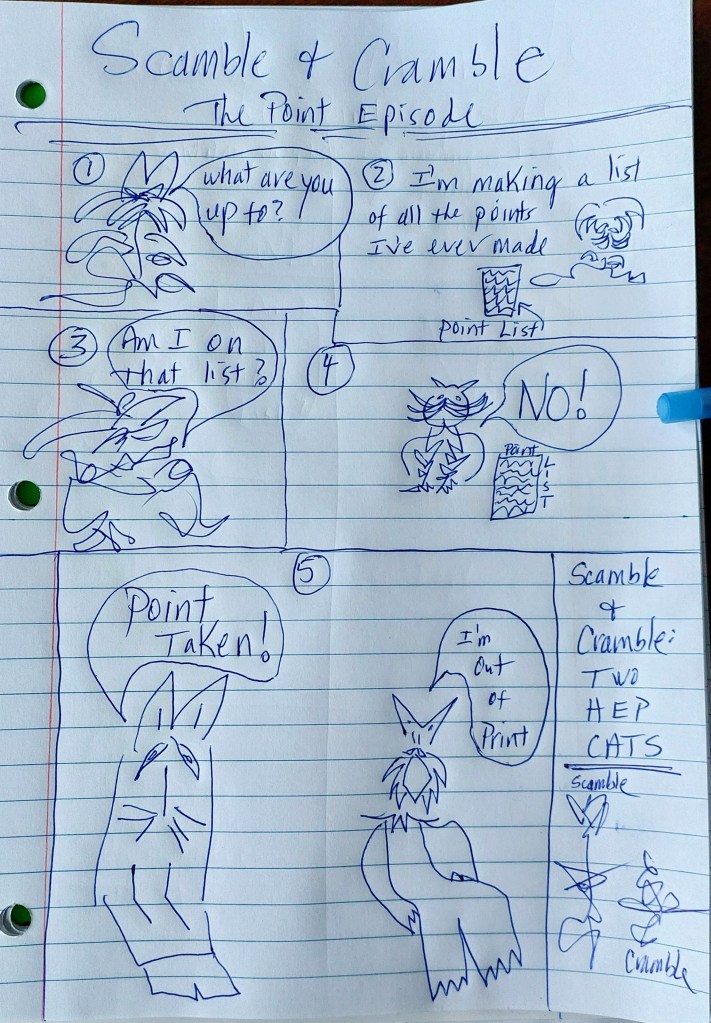
This post being about The New Yorker, and The New Yorker being known for its cartoons, I thought I’d end with a cartoon:
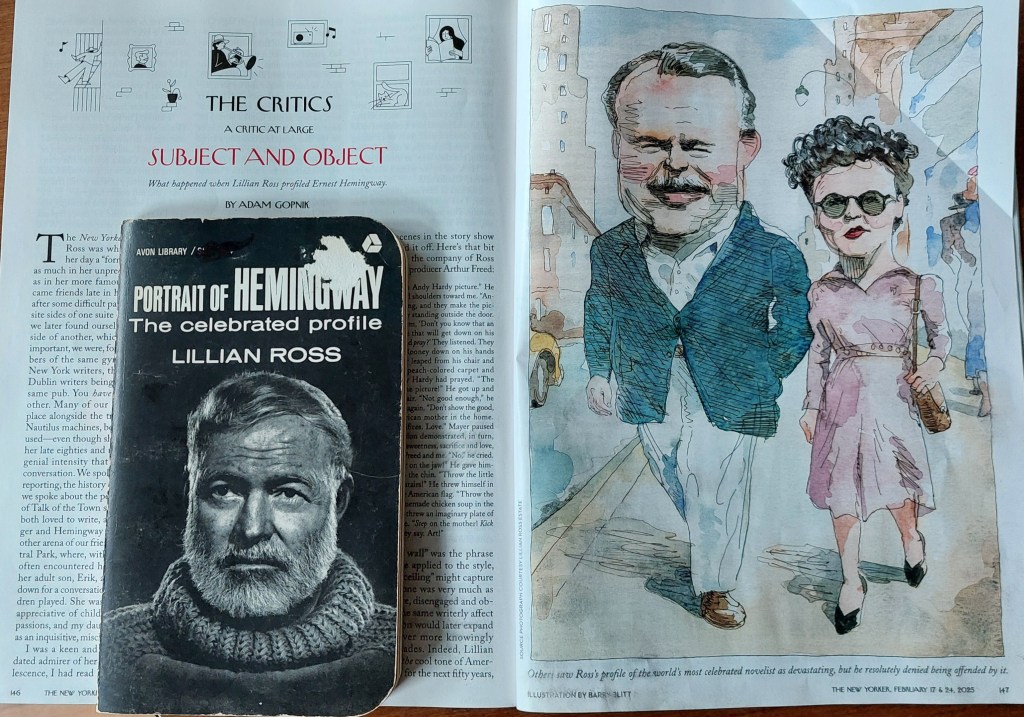
In the 100th anniversary issue of The New Yorker (February 17 & 24, 2025), we find Adam Gopnik’s Profile of a Portrait, titled “Subject and Object: What happened when Lillian Ross profiled Ernest Hemingway.” The subtitle is not a question, but maybe it should be. Gopnik holds that Hemingway’s reputation was devastated by the Lillian Ross 1950 Profile article, but that he insisted on not being bothered by it, but maybe Hemingway’s response to the article, and more to the reaction to it, was in character of his own value which he described in a different context as “grace under pressure.” In any case, while Gopnik does mention that the Profile was later published in book form (Portrait of Hemingway: The Celebrated Profile, 1961*), he ignores Lillian Ross’s preface to that book, written a decade after the brouhaha had unfolded:
“Hemingway said that he had found the Profile funny and good, and that he had suggested only one deletion. Then a strange and mysterious thing happened. Nothing like it had ever happened before in my writing experience, or has happened since. To the complete surprise of Hemingway and the editors of The New Yorker and myself, it turned out, when the Profile appeared, that what I had written was extremely controversial. Most readers took the piece for just what it was, and I trust that they enjoyed it in an uncomplicated fashion. However, a certain number of readers reacted violently, and in a very complicated fashion. Among these were people who objected strongly to Hemingway’s personality, assumed I did the same, and admired the piece for the wrong reasons; that is, they thought that in describing that personality accurately I was ridiculing or attacking it. Other people simply didn’t like the way Hemingway talked (they even objected to the playful way he sometimes dropped his articles and spoke a kind of joke Indian language); they didn’t like his freedom; they didn’t like his not taking himself seriously; they didn’t like his wasting his time on going to boxing matches, going to the zoo, talking to friends, going fishing, enjoying people, celebrating his approach to the finish of a book by splurging on caviar and champagne; they didn’t like this and they didn’t like that. In fact, they didn’t like Hemingway to be Hemingway. They wanted him to be somebody else – probably themselves. So they came to the conclusion that either Hemingway had not been portrayed as he was or, if he was that way, I shouldn’t have written about him at all. Either they had dreary, small-minded preconceptions about how a great writer should behave and preferred their preconceptions to the facts or they attributed to me their own pious disapproval of Hemingway and then berated me for it. Some of the more devastation-minded among them called the Profile ‘devastating’” (17-18).
Adam Gopnik appears in his critical article about the Ross Profile to be one of those people. He does reference as support for his argument (that the Ross Profile is devastating) the back and forth letters between Hemingway and Ross that followed the publication of the original Profile, but I didn’t find enough in those letters (what Gopnik shares of them) to offset what Ross says above or to prove that she was dissembling in some way.
A Profile, as Gopnik points out, is more than a Q & A, particularly more than those interviews of today that are carefully controlled by agents and protectors of reputations and public reactions, damage control specialists. There’s also more to Gopnik’s profile of a Profile that gives insight to the writing and reading of one, the editorial process, and what informs intents and results. But why do we expect would-be heroes to have good character, or not to enjoy the simple and ordinary? Gopnik points out that the Profile as written by Ross was a new form, in which the reporter follows and observes and records just about everything, including the mundane and ordinary or trivial and everyday. Going to a store and buying a new coat for example. Is there some special way a famous novelist should behave in a coat store? Gopnik says:
“The Hemingway in the piece is a comic figure – self-dramatizing, repetitive, marooned within his own monologues, and sometimes ridiculously affected.”
Why? Because “The novelist, now fifty, complains of a sore throat,” but won’t see a doctor? Or because “His wife had suggested that he look for a coat at Abercrombie & Fitch, and after he buys one there he decides he’d like to look at a belt,” and while picking out the belt he jokes with the belt clerk about his belt size, and affects happiness when the clerk suggests he must work out to be so fit. But he doesn’t appear to be cross.
*Portrait of Hemingway: The Celebrated Profile. Avon Books, 1961. 94 pages, paperback.
I was just a few months blogging when back in April 2008 I wrote a post titled “Where weather and writing merge,” about the Santa Ana winds, referencing Joan Didion’s “Los Angeles Notebook,” the first section of which was originally published in 1965 in The Saturday Evening Post under the title “The Santa Ana.” Didion claimed the winds influenced behaviors; she’s read up on it:
“‘On nights like that,’ Raymond Chandler once wrote about the Santa Ana, ‘every booze party ends in a fight. Meek little wives feel the edge of the carving knife and study their husband’s necks. Anything can happen.’ That was the kind of wind it was. I did not know then that there was any basis for the effect it had on all of us, but it turns out to be another of those cases in which science bears out the folk wisdom” (218).
Didion references a physicist who studied the physical characteristics of winds and people’s reactions that suggest cause and effect reflex at play, and her anecdotal evidence, though bizarre and outlier, of the winds affecting one’s psyche is persuasive.
“Whenever and wherever a foehn blows, doctors hear about headaches and nausea and allergies, about ‘nervousness,’ about ‘depression.’ In Los Angeles some teachers do not attempt to conduct formal classes during a Santa Ana, because the children become unmanageable” (218).
Didion also mentions the Los Angeles area fires that occurred in the 3rd quarter of the 20th Century, the scope of which at least in part she attributes to the Santa Ana winds.
“The Santa Ana caused Malibu to burn the way it did in 1956, and Bel Air in 1961, and Santa Barbara in 1964. In the winter of 1966-67 eleven men were killed fighting a Santa Ana fire that spread through the San Gabriel Mountains” (219).
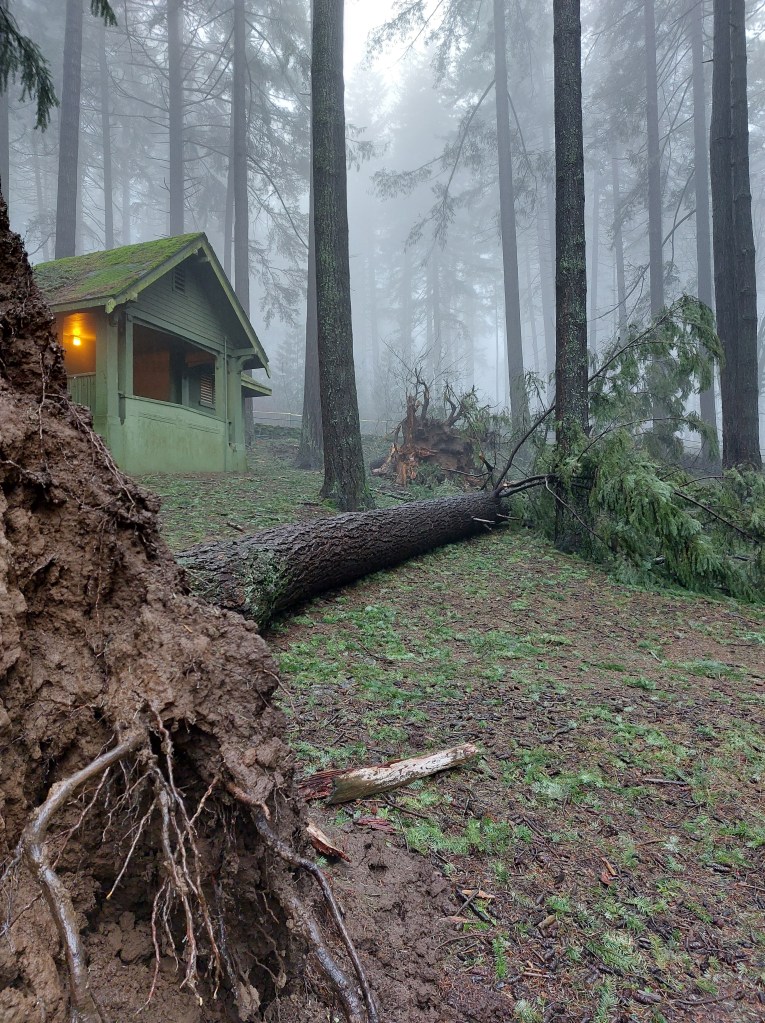
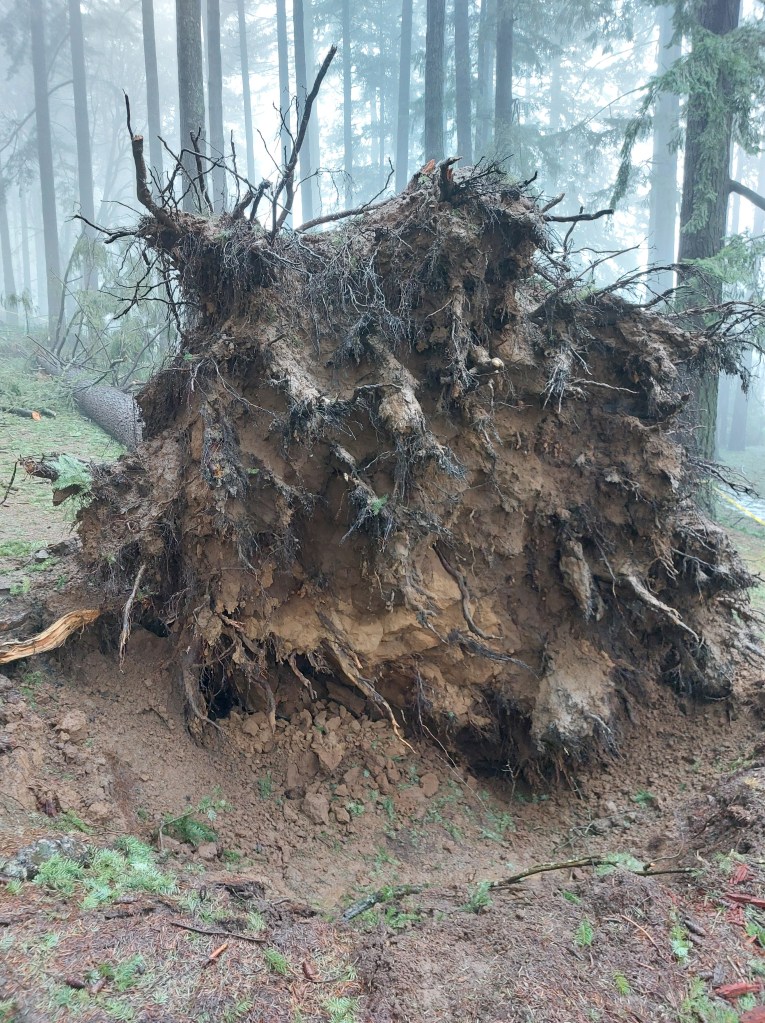
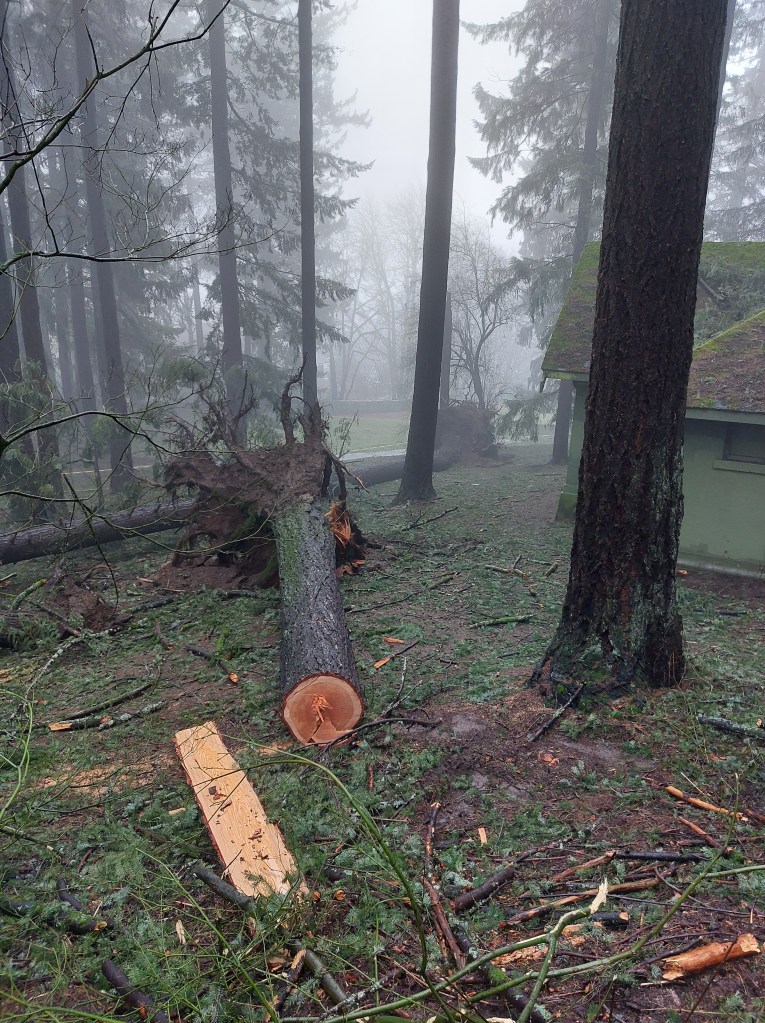
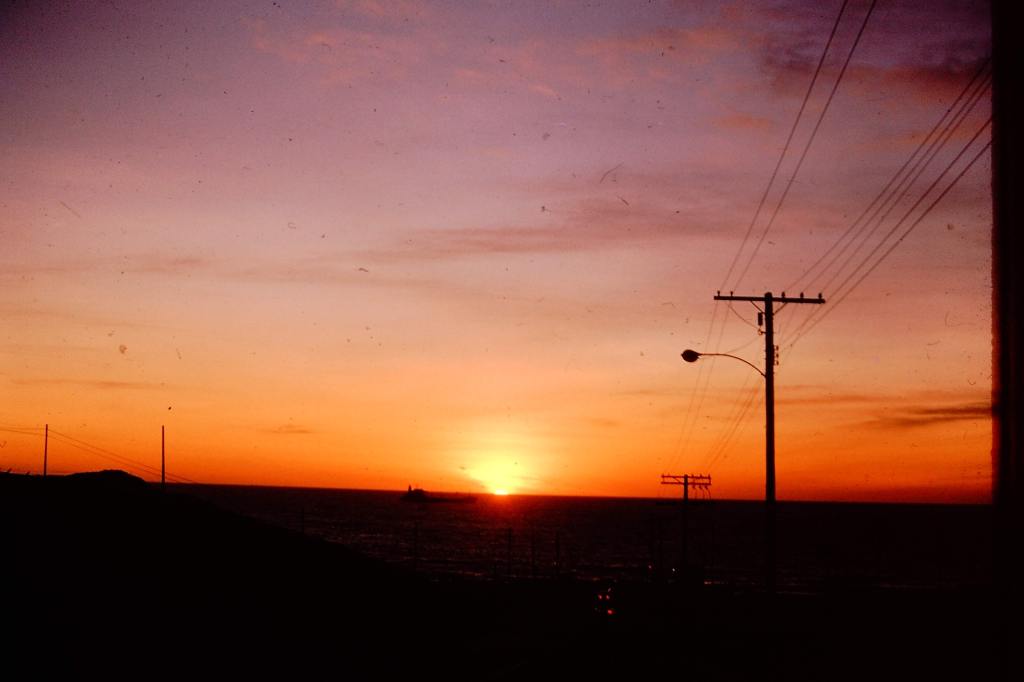
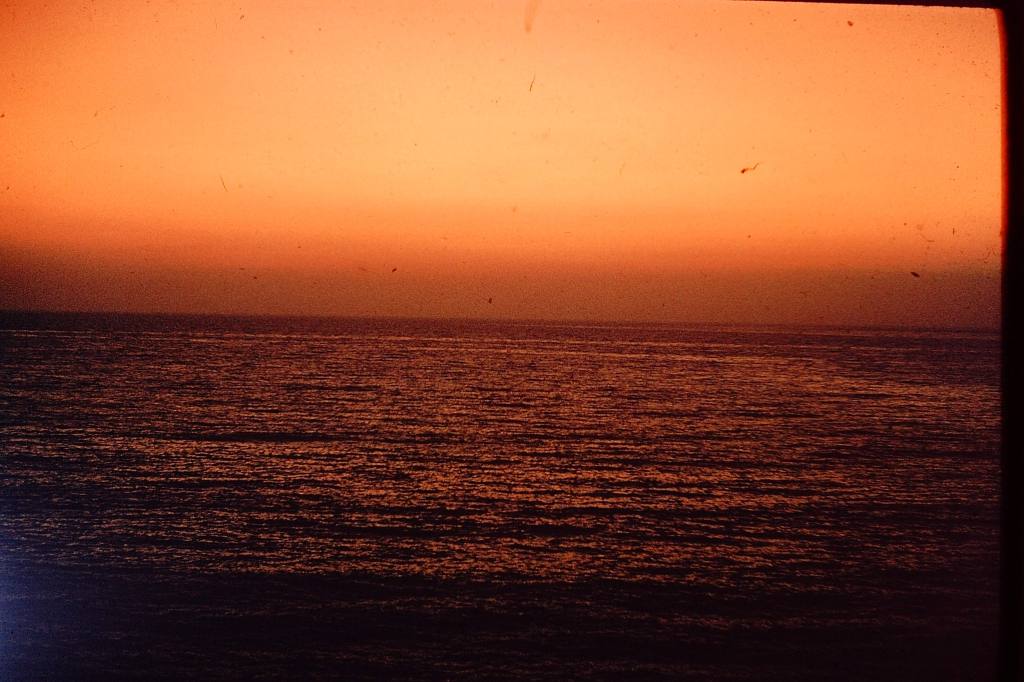
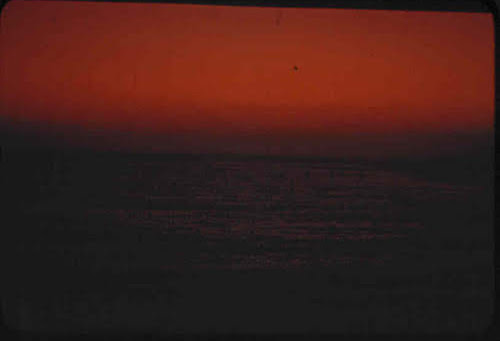
We lived in Los Angeles in those years, in one of the beach towns, and I remember the long clouds of smoke that drifted out with the winds over the ocean. Evenings at the beach we took sunset-and-smoke Kodachrome slide photos (see examples at bottom). Now in Portland, which also sports a foehn wind, called the East Wind, which does most of its damage in the winter, falling trees, knocking out power lines, freezing pipes. Last January (2024), a severe East Wind that lasted several days and nights and brought down hundreds of trees and power lines, the temperature dropping to 12 degrees (F), incapacitated the city. A few days after the storm I went up into Mt Tabor Park and took some photos:
Back in LA, in “Penina’s Letters” (2016 – now out of print), which takes place a couple of years after the time period Didion wrote “Los Angeles Notebook” (1965-1967), Penina picks up Salty at the airport and drives him out Imperial toward the beach. The Santa Ana winds are blowing for his homecoming:
“At the end of Imperial, Penina turned the truck south onto Vista del Mar for the drive along the beach to Refugio. To the west, flattened by the winds, hunkered an ebbing Santa Monica Bay. Two red and black oil freighters were anchored off shore, one deep in the water, the other high, and three blue and white yachts appeared to be scurrying back to Marina del Rey. Above the horizon, the setting sun spread orange spears through the tar slick winds, and the smeared sky above with the windswept water below looked like an oil painting by Rothko. The Santa Ana winds had been blowing for a couple of days, and all the silt from the basin bowl had blown out over the water. It was Holy Saturday, and I thought I picked out the moon waning pale, high up, out over the water, but the Santa Ana winds were blowing, and I might have been seeing things. Close in, the beaches were buffed clean and empty, the waves flat, and no surfers were out in the water. The wind was now to port, blowing tumbleweeds across Vista del Mar, and Penina gripped the steering wheel with both hands” (21-22).
~ ~ ~
I couldn’t find my old copy, and I wanted to read it again, so I recently got a new paperback edition (FSG Classics, 2008) of Didion’s Slouching Towards Bethlehem (originally published in 1968), which includes “Los Angeles Notebook” (pp. 217-224). Alibris has multiple copies of different editions, new and used.
I published “Penina’s Letters” in 2016. It’s currently out of print.
Not hunter nor hunted be but swimmer in this long sea the fishes your community though of course fish eat each to each but rarely one’s own the point eat what’s available then go a fish out of the sea not the long or short of it but lost in the long run of the sea pages uncut written while working in a customs house dabbler dabbled in dawns of coffee and commutes and cubbied desks no time for more than doodles while the prof makes a living off an ever changing starting line the long market to market to market with a self-published book now out of print on demand there being no press and came to fancy Penelope the late bloomer and Barbara an excellent one and the two Elizabeths and Henry and Patty and Ray but of any poems composed in an alcove suffice to say what a waste yet this, and this is why one longs for the long sea:
“No, she thought, putting together some of the pictures he had cut out – a refrigerator, a mowing machine, a gentleman in evening dress – children never forget. For this reason, it was so important what one said, and what one did, and it was a relief when they went to bed. For now she need not think about anybody. She could be herself, by herself. And that was why now she often felt the need of – to think; well not even to think. To be silent; to be alone. All the being and the doing, expansive, glittering, vocal, evaporated; and one shrunk, with a sense of solemnity, to being oneself, a wedge-shaped core of darkness, something invisible to others. Although she continued to knit, and sat upright, it was thus that she felt herself; and this self having shed its attachments was free for the strangest adventures. When life sank down for a moment, the range of experiences seemed limitless. And to everybody there was always this sense of unlimited resources, she supposed; one after another, she, Lily, Augustus Carmichael, must feel, our apparitions, the things you know us by, are simply childish. Beneath it is all dark, it is all spreading, it is unfathomably deep; but now and again we rise to the surface and that is what you see us by. Her horizon seemed to her limitless….There was freedom, there was peace, there was, most welcome of all, a summoning together, a resting platform of stability” (54).
From “To the Lighthouse” (1927) by Virginia Woolf, Penguin Books edition 2023.
Words are sounds, but are sounds words? Some are, the onomatopoeia ones – word making. Sitting this morning, laptop at the ready, still wondering mid January what to do new with the blog this year, thinking of letting it go, go silent, from minimalist to nothing at all. John Cage can be an inspiration at such moments:
                    There is no
such thing as silence. Something is al-
ways happening that makes a sound.
No one can have an idea
once he really starts listening.

John Cage, 45' For A Speaker, Silence, 191
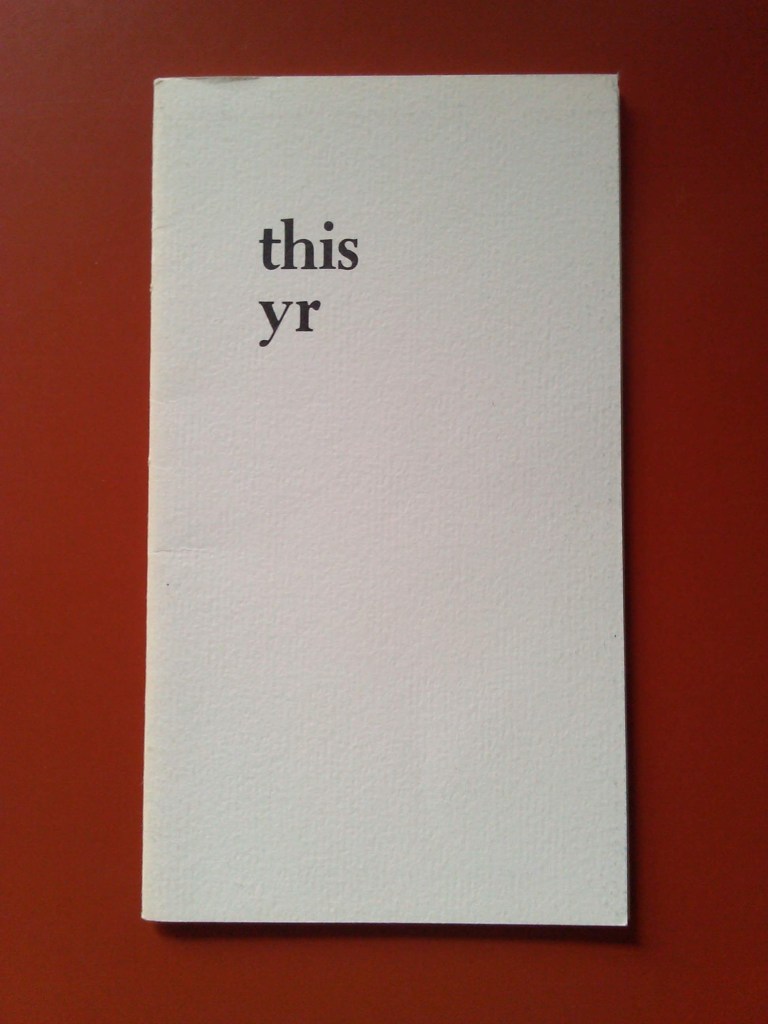
“this yr” is a poem published in chapbook format in December, 1976, by Stephen Jama. 100 copies were printed. The chapbook consists of three sheets, 6&3/4” by 6”, folded and hand-sewn with red thread. The cover is slightly thicker than the inside pages, the inside paper a bit heavier than standard typing paper.
Wondering too what John Cage might have made of a blog. Surely he would have created and maintained one. Others have taken up the call, of putting or imitating Cage online, , for example, his app utilizing Cage’s “Indeterminacy“.
While a mosaic can take disparate parts that from a distance can be appreciated for a new whole, the parts might at the same time be in conflict, interests that compete for one’s attention, time, one distracting from another, broken links. Post no posts on this post.
Here at the Toads our primary interests remain the essay (literature), music (guitar), painting (including cartoons hand drawn on paper or screen), yet the blogs we often enjoy most have to do with original photography, gardening and cooking, ocean and landscape, construction of all kinds but particularly those focused on the trades (carpentry, plumbing) and arts and crafts.
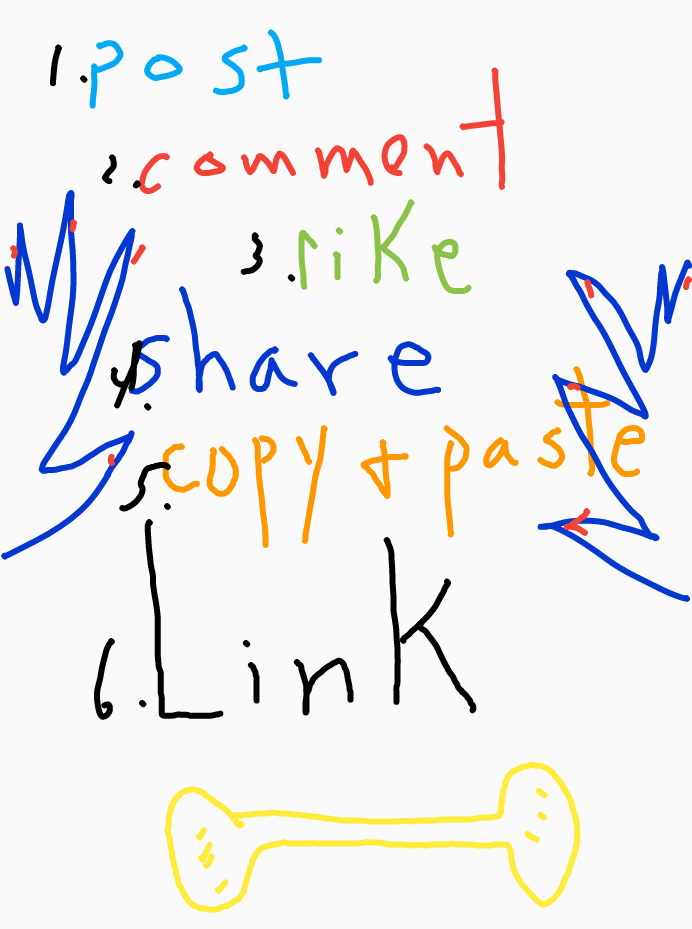
WordPress works well as a blogging platform. Their idea of the paragraph being “the basic building block of all narrative” and the “Block” developed from that idea facilitates relatively easy start up and go. But there’s also a cage created by the block form, or format, the screen, that one needs coding expertise to escape from, and one may not want to spend the time understanding or mastering the writing of computer code. One wants to write, not program.
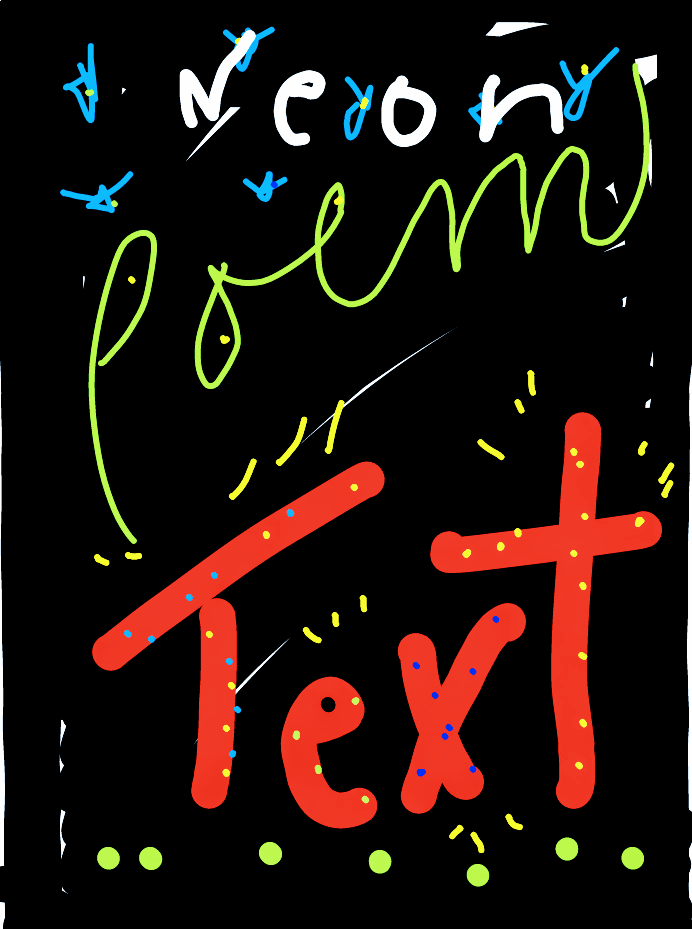
And isn’t the basic building block actually the syllable? A sound. A note. In any case, what you see is not necessarily what you get, what you see being dependent on the type of device being used: phone, tablet, laptop, desktop, television cast. So that for the blogger who spends time formatting columns and rows, grids, tables, a matrix – formats can change unexpectedly and automatically. So what?
Indeterminacy.
Cage orchestrated and choreographed his writings for “Silence.” The formatting in part approximates performance. The written text is like the written text for music, sheet music, a musical score. A representation. “Silence” is a mosaic. Whatever Cage you’re in, as Cage said, get out of it.
should these times seem like old times old vinyl player tunes spinning warmly can’t recall an old acquaintance’s name for the sake of old times comes to mind
a face full of kindness and smiles awhile for the days gone by spent in odd places when in our pint cups yours and mine picture between us and a bowl of nuts
on the radio windows down seawrack night out on the town and we run about up and around the steep butterfly hills wandering waves of sun bleached hair
lol we post these pics of ours and send for tags with names from old contacts up into the cloud we’ll see how many hearts we’ll catch nevertheless now
take my hand we’ll cross the stream I can’t hear the ocean’s roar anymore we’ve been up all night old forgotten the moon also falls down the tracks
Finishing Barbara Pym’s “Excellent Women,” read aloud evenings recently with Susan, wondering in an aside what we’ll read next, as Pym’s first person narrator, Mildred Lathbury, says this:
“I had finished my library book, and thought how odd it was that although I had the great novelists and poets well represented on my shelves, none of their works seemed to attract me” (195).
Reading, at the time, just after World War II, in London, where food and shelter shortages continued, was a main source of resourcefulness for solving the difficulties of one’s free but empty time. But why Mildred’s pause in interest in the classics? What is she wanting to read?
“It would be a good opportunity to read some of the things I was always meaning to read, like In Memoriam or The Brothers Karamazov, but in the end I was reduced to reading the serial in the parish magazine” (195).
What follows is Mildred’s summary of that serial entry, which sounds very much like something from the book we have in hand by Barbara Pym, “Excellent Women.” Saying she was “reduced” is characteristically Mildred, too hard on herself, always questioning her own motives and chastising herself whenever she feels she’s been impolite, unkind, or unfair, or otherwise failing some obscure or fancied expectation that no one else would give a first thought to, let alone a second.
“The caption under the picture said, ‘I’m sure Mrs. Goodrich didn’t mean to hurt your feelings about the jumble sale.’ I finished the episode with a feeling of dissatisfaction. There was some just cause or impediment which prevented the clergyman from marrying the girl, some mysterious reason why Mrs. Goodrich should have snubbed her at the jumble sale, but we should have to wait until next month before we could know any more about it” (195).
The whole passage quoted in parts above can be read as Barbara Pym’s explanation or description of the type of writing she herself is attempting, or to include, but without setting the reader up for, in the end, a “dissatisfaction,” even if we have to wait for subsequent chapters to discover some “mysterious reason” behind things said or acted out. In as much as she might be seen to turn away from “the great novelists” (whoever they might have included, apart from Dostoevsky, in post war Europe, or in Mildred’s entering her 30s in late 1940s estimation), Barbara Pym actually engages many of their lofty themes, which turn out to be easily accessible to what the lowest of characters is capable of transmitting. The passage is a literary critical comment of her own writing, which is not “classic,” but an extension to the church newsletter, weekly bulletin, full of jumble sales and bazaar conversations about relationships, motivations, disassembling.
Humor and grace, alongside satire and wit and subtlety, abound in Pym’s work. So too in Penelope Fitzgerald’s, and I think our next book for reading aloud will be Penelope’s great “Offshore” (1979), which takes place around 1961, also in London, a decade after the setting of “Excellent Women.” Though Penelope was much older when she wrote “Offshore” (or any of her other novels) than Barbara Pym was when she wrote “Excellent Women,” she might well have been a character in a Barbara Pym novel. These are domestic novels, but unsentimental, and to qualify as such, the writing must be suited to being read aloud, and not overly dense. “Excellent Women” was some kind of fun reading aloud. We’ll see how “Offshore” goes.
I’ve been reading aloud evenings to Susan, “Excellent Women,” by Penelope Pym. First published in 1952, the setting is London after the war. Soldiers are coming home, rentals are hard to find, some foods are still being rationed. The narrator is the understated, astute Mildred Lathbury, a bit over 30, who has a flat of her own, but must share a bathroom with the lodgers downstairs. She attends church regularly, helps with the jumble sales and flowers for the altar, and is drawn into relationships involving a cast of characters requiring her free and easy to come by assistance. Every character’s name seems effectively thought out. Not my favorite character, but certainly my favorite name, is Everard Bone, an anthropologist:
“I crept quietly up to my flat and began to prepare supper. The house seemed to be empty. Saturday night . . . perhaps it was right that it should be and I sitting alone eating a very small chop. After I had washed up I would listen to Saturday Night Theatre and do my knitting. I wondered where the Napiers were, if they were out together, or if Helena was with Everard Bone” (57).
It’s my third time reading “Excellent Women,” but just the first time reading it aloud. A few nights ago, a chapter began with this:
“A list of furniture is not a good beginning to a letter, though I dare say a clever person with a fantastic turn of mind could transform even a laundry list into a poem.
I sat for a long time at my desk, unable to put pen to paper, idly turning the pages of a notebook in which I kept accounts and made shopping lists. How fascinating they would have been, had they been mediaeval shopping lists! I thought. But perhaps there was matter for poetry in them, with their many uncertainties and question marks” (164).
And I have been sitting this morning at my writing table wondering if I have time for some writing that might make for a good post for this here Hear ye blog. The electric folks are on the block this week replacing utility poles, and we’ve been told they will shut our power off for most of the day today, likely around 8 to 3, though it’s now 9 and the coffee is still hot and the temperature inside stable. The big inconvenience, once the power goes off, comes from it being only around 40 degrees out, and our old place does not hold heat any longer than a tee shirt and swim trunks in a dunk at Refugio.
A few weeks ago, I bought a digital subscription to the New York Times for $4.00 a month. Little did I know at the time that I would spend as much time on their Games page as on their news. Like most things pocket phone related, the games are addictive. My favorite is Spelling Bee. Every day, a new circle of 7 letters is posted for you to type as many words over 3 letters long as you can find – all using the center letter. Today’s letters amount to a difficult episode: b c d y t e o. So far, I’ve found only 8 words: Body, Booty, Byte, Dotty, Eddy, Teddy, Toddy, and Toyed. My score at this point is “Nice,” the rankings ranging from Beginner to Good Start, Moving Up, Good, Solid, Nice, Great, Amazing, and Genius. A four letter word is worth only 1 point, longer words worth more, a pangram scores high. The longest word I’ve logged so far is Ineffective. Statistics are maintained in the game file. I’ve worked 35 puzzles, finding 755 words, including 16 pangrams, but only 4 times have I scored Genius.
I doubt Barbara Pym succumbing to digital games, but maybe Mildred Lathbury would play along. Here’s a short poem I made using the words from the Spelling Bee mentioned above:
Waiting for a Cold Spell Teddy swimming in the spilling morning waves Dotty over having this morning scored Amazing In the New York Times oft ToyedToddy in hand Testing word Bytes but Eddy and Bill stay away For the Booty is holy Body alone and cold here Unlike marbles in a warm dust of green Spring.
“Excellent Women,” by Barbara Pym, was first published in Great Britain by Jonathan Cape in 1952, in the US by E. P. Dutton in 1978, and my edition by Penguin Books in 2006.



 , for example, his app utilizing Cage’s “
 WordPress works well as a blogging platform. Their idea of the paragraph being “the basic building block of all narrative” and the “Block” developed from that idea facilitates relatively easy start up and go. But there’s also a cage created by the block form, or format, the screen, that one needs coding expertise to escape from, and one may not want to spend the time understanding or mastering the writing of computer code. One wants to write, not program.
 what you see is not necessarily what you get, what you see being dependent on the type of device being used: phone, tablet, laptop, desktop, television cast. So that for the blogger who spends time formatting columns and rows, grids, tables, a matrix – formats can change unexpectedly and automatically. So what?
  “Silence” is a mosaic.

 The Coming of the Toads