Tag: Rainer Maria Rilke

  • On the Wings of the Dove

    Caleb Crain has posted an interesting Leaflet devoted to questions of consciousness and an afterlife. If there is an afterlife, why (Caleb tells us Henry James in particular wondered) has no human soul ever come back to haunt or cheer its former digs? James might have been conflating consciousness with brain. (Calling consciousness “mind,” Buckminster Fuller radically distinguished between the two.) Caleb wonders about the infinite possibilities inherent in a consciousness that thinks about itself.

    Reading Caleb’s post, and thinking about his aloof Henry, I began to wonder for myself. If consciousness is infinite (as James and Caleb both seem to suggest possible), it must be round, with no beginning and no end, and not linear, so we might also wonder not only about a possible afterlife, but about a prior life, and why has no one ever visited there, or have any memory of it. If we fear or wonder about death and an afterlife, we might recall that we’ve experienced it before, for where were we before we were born, if not dead, which we seem to have survived, for here we are.

    An electrician I once had over to the house to work on some wiring told me, apparently working under some severe predispositions and assumptions that I was the Christian of his definitions, that he didn’t believe in anything he couldn’t see or measure. Thus he brought his rudimentary science into my darkened basement.

    William Blake held “the following Contraries to be True:

    – Man has no Body distinct from his Soul, for that call’d Body is a portion of Soul discern’d by the five Senses, the chief inlets of Soul in this age.
    – Energy is the only life and is from the Body, and Reason is the bound or outward circumference of Energy.
    – Energy is Eternal Delight.”

    William Blake, The Marriage of Heaven and Hell, 1793

    The five senses then, work not so much to let reality (consciousness thereof) in, but to keep it out, for to take it all in at once would drown us, suffocate us, consume us, like Rilke’s angel (a kind of interpretive translation of the opening of Rilke’s First Elegy follows):

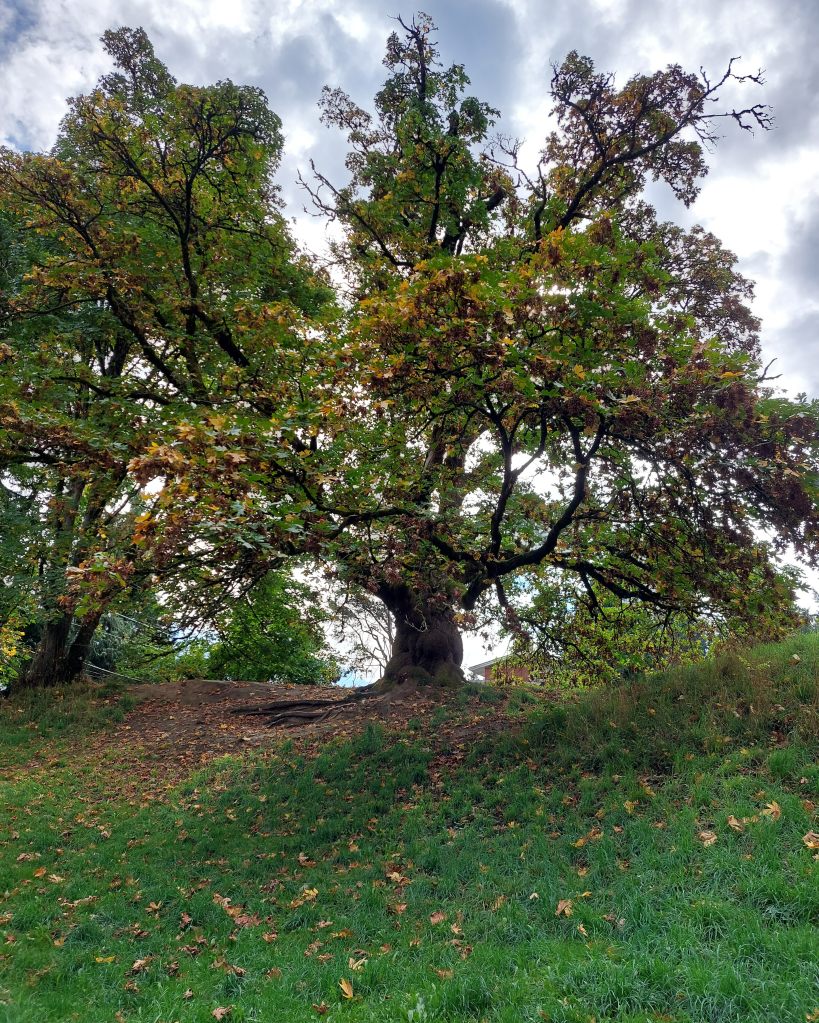
    “Who, if I yelled out in my street, would hear me among the Angels’ Orders? And even if an angel hugged me quickly to her heart, I’d be consumed like a candle in her powerful embrasure. For beauty is the terrible beginning, that we hardly and barely (since so recently from the womb) endure, but here we still are, and while we wow in wonder the angel cools us, scores us, and her disdain destroys us even as she sustains us. Every angel is terrifying. And so I hold myself and hear my own and sole note of dark sob. God! Who can we reach out to with our need? Not angels, not one another, and the Disney animals see at once we are not at home in Oz, where all must be an interpreted world. That leaves us some tree on a hill, our eyes return to morning after morning, leaves us our child’s street and our parents and friends of old habits that drank and smoked there, loitered, and never left home. Only the angel can wear those magic slippers, hear those perfect notes. Oh! And the night, the night, well here it comes! When the wind full of space blows on our face, the night exists, is here, we want the night, but as soft as she is, she wounds, lists hard chores to be done the morrow, and we only the single of heart. It is not easy to be a lover. Lovers use each other to explore their only fates. You still won’t see? Throw the emptiness in your heart into the space of breath. Maybe the birds will feel the sudden burst of air with a passioned flight.”

    from the first Duino Elegies, modified for this post
  • A Modest Halloween Proposal

    A Modest Halloween Proposal

    It sometimes seems clear if there is an afterlife it does not interfere with present life. But what is present? The light from our sun is already a little over eight seconds old. We sunbathe in the past, confident in a present we never quite seem to fully inhabit (physics explains it’s perfectly possible to split infinitives). Where then do we go? Maybe time is a question of physics, maybe of metaphysics – the things that may come after the physics.

    The dead seem an extremely polite bunch. They do not intrude. Looking for them is like searching for aliens. We may feel their presence, approach them with the telescope of faith, but if they exist, somewhere-somehow, that life lies far far beyond the present five senses. To prove an afterlife, if we want to believe in ghosts and such, we must create a sense beyond our given five.

    William Blake noticed angels out and about. Rilke claimed to have seen one. What is it about poets that make them easy prey for such notions? Wouldn’t it be a bit frightful if the first aliens the astronomers discover turn out to be previous earthlings? The problem with communicating with the dead may simply be the length of time their message takes to reach us. By the time the first message from the first dead reaches Earth, we may all be gone. What would the message say? Trick or Treat?

    I take no issue with the dead. Nor am I looking forward to meeting any aliens. Let them keep their distance. My problem seems to be sugar: to wit, candy – the Halloween tradition (in these parts).

    This year, instead of passing out candy, I propose to hand out poems. Short poems printed on three by five cards, maybe with a cartoon or drawing on one side of the card. I’ll drop a poem card into every little critter’s Halloween basket. No candy. No sugar.

    But when I mentioned the idea to Susan, she said, “We’ll get our house egged for sure.”

    “You think? With the cost of dairy these days?”

    “And the parents will accuse you of poisoning their kids with poetry. Besides, Halloween cards are nothing new. And poetry, while sugar free, is still very high in carbs and calories, not to mention saturated and trans fats.”

    So much for my proposal. I guess we’re sticking with candy.

  • Sestina’s Angel

    Sestina falls prey to the sound silence of the Angel
    sitting in her lap playing with a ball of wireless
    a wireless webbed feline bureaucracy
    where pleas receive no reply
    and the sole sound is a silent catty wind
    and long days pass with nothing said of the terrible

    Rilke ranted something about beauty being terrible
    while in Sestina’s lap sat the lapping catting Angel
    who cannot hear in the stringless whine
    no place for the bird to come to rest on any wire
    wireless carriages of desire race to a place where all replies
    are lost in the terrible beauty of the host’s hidden bureaucracy

    At Sestina’s night bureau sits a bird clicking crazily
    a loon poet on the bum singing terribly
    rolling out with rigor a robust reply
    to the Angel
    who threatens to wire
    up the wireless wind

    To tone down this tuneless wordwind
    while sleeps the will-less bureaucracy
    wireless
    and terrible
    but for now the Angel
    sends no reply

    Any ranting request certainly receives no reply
    as Rilke races the ramparts terribly winded
    and shaking her head the windless wireless Angel
    disappears into the flow chart of blissful bureaucracy
    to that place so terrible
    wireworms crawl the tripwires of the hardwired

    Waving to the boldest bidder of weird wire
    waiting for the beauty of the instantaneous reply
    that memo from the waiting Angel so terrible
    dark wings unfold and the winds unwind
    the galaxies of celestial bureaucracy
    bang and bend in time to the tune of the supreme Angel

    The terrible embrace of the wireless
    Angel orders no reply
    For wellness dwindles so deep in such a bureaucracy


    See more Sestinas.

  • On Angels

    A post this past week over at Course of Mirrors prompted me to brush up on Angels. I have not read the book mentioned in the post, “The Wonderful Visit,” by H. G. Wells, but according to Ashen, it’s about an angel shot from the sky by a hunter all atwitter after a strange bird has been sighted in the area. Imagine shooting an angel. I’m going to have to read Wells’s “The Wonderful Visit.” Ashen says it followed “The Time Machine,” yet I don’t even recall ever hearing of it, let alone reading it. Well, Wells was a super-prolific writer, an angel of a higher order. Part of Ashen’s theme, I think, is that we have come to think of angels as cute, cuddly Cupids, innocuous Hallmark Card versions of a much more potent and potentially dangerous entity.

    Was Rainer Maria Rilke a blogger? In “The First Elegy,” he wonders if any angel might hear him, “wenn ich schriee,” (“if I cried”). But various translators (perusing the Web) have given, “if I cried out” (but not William Gass, whose version I want to read). My copy of the “Duino Elegies” (The Norton Library, N155, 1963) shows the German next to the English, and was translated by J. B. Leishman and Stephen Spender. They give, “Who, if I cried, would hear me among the angelic orders,” and in their introduction they explain that Rilke was visiting a friend, a Princess Marie, at “Schloss Duino,” a castle near Trieste. He’d received a disturbing letter, a “business letter,” and went out onto a castle “bastion,” for a walk, and “a voice had called to him” with what became the first line of the Duino Elegies. According to the introduction, there was a “roaring wind” blowing around the castle. No one would hear him if he cried, or if he cried out. Yet surely an angel can hear through the noise.

    Still, to “cry out” suggests some danger or risk at hand, some fear escaping in a scream of alarm. To simply “cry” does not necessarily suggest a yell, and might not mean a sound at all, but to cry tears, which can be done quietly. The German word Rilke used is “schriee,” which seems in German a form of yell, scream, and cry. Yet, it may not matter, for Rilke decides, in “The First Elegy,” to “keep down my heart.” He does not cry or cry out. For if he did, and an angel did hear him, and suddenly embraced him, he would disappear into the Angel’s super human existence. Yet, the angel “disdains to destroy us.” The angels ignore us, our cries, our crying, our predicament. Yet the “Elegies” might be Rilke’s cry, or his crying.

    Here’s the opening of “The First Elegy,” by Rainer Maria Rilke, translated by Leishman and Spender:

    “Who, if I cried, would hear me among the angelic
    orders? And even if one of them suddenly
    pressed me against his heart, I should fade in the strength of his
    stronger existence. For Beauty’s nothing
    but beginning of Terror we’re still just able to bear,
    and why we adore it so is because it serenely
    disdains to destroy us. Each single angel is terrible.”

    I posted my own version in a comment to Ashen’s post, thinking of updating the Rilke to a contemporary setting, keeping the irony. I’ve added to it just a bit here:

    I rant in a memo to an Angel
    perched high on a wire
    of flow chart bureaucracy,
    but her beauty ignores me;
    it’s just as well,
    for the beauty of her instant reply
    would replace me.
    Every memo from the angel is terrible.

    Rilke seems to be suggesting that an angel, compared to the human, is like a light bulb to the moth. The moth is drawn to the heat and light by some desire to fly out of the shadows of its nightly existence, but is consumed by the giant bulb. And Rilke calls this being consumed by the object of one’s desire, “beauty,” which is why he says “terrible beauty,” which is why the angel is terrifying. Yet Rilke also says the angel “disdains to destroy us.” Apparently, we can only just bounce off the light bulb. We can’t penetrate it, and its light does not embrace or consume us. We cannot fully embrace beauty, which is a terrible predicament.

    Joseph Campbell has an interesting discussion of angels, and of Satan. Satan was thrown into hell, Campbell reminds us in “The Power of Myth,” but why? What did he do wrong? Campbell suggests that God wanted the angels to serve his new creation, man, but that Satan so loved God that he refused to bow to any other. He was thrown into hell for not bowing to man. Thus man had bagged his first angel.

    “The Second Elegy” begins with a line from the first. Rilke’s not giving up on his angels:

    “Every Angel is terrible. Still, though, alas!
    I invoke you, almost deadly birds of the soul,
    knowing what you are.”