Tag: Music

  • The Old Busker

    He stood beneath a bank of trees
    near the beach of a green spring
    the wily busker taking deposits
    of fruit in his cowpoke hat basket
    a few choice purple cherries
    a couple of greenbacks
    and a nugget of fool’s gold.

    He sang of broken hearts
    paper torn into many pieces
    litter along the roadway
    how love collects like dust
    up against the bent guardrails
    that’s my heart in pennies
    he sang out on the highway.

    He worries the strings of his guitar
    with his bent wire fingers
    flap slaps the hook smacks the box
    shapes his fretful music
    the earth wants a cover
    creeping vines and grasses
    if any have many piled carpets.

  • Auditorium

    Shaped like a church
    where to hear is prayer
    the pews sawn apart
    into separate seats save
    the balcony benches.

    Quiet like a church
    and cold in accordance
    with the carpenter’s
    measure for harmony
    and economical noise.

    The sound rolls in waves
    through the vast archipelago
    of ears tuned to assumptions
    and predispositions
    of critics of the church.

  • An Approach to Stylelessness

    Language, the dress of thought,
    words its buttons.
    What are we trying to cover?
    Nothing.

    The dress interprets
    the body,
    its own reveal, skin and hair,
    apparently lacking

    something necessary
    to complete the ensemble,
    where sound means
    stylelessly.

    Dress, the body licensed
    for use, the slow decay
    its words describe,
    its missing buttons.

  • Jazz on a Summer’s Day

    Jazz on a summer’s day
    sleepy jazz on a rainy evening
    jazz on the night of a full blue moon.
    Jazz on a transistor radio in the next room.

    Jazz in a whiteout blizzard
    jazz on a foggy morning in the surf
    jazz on a summer’s day
    jazz when the falling leaves fall.

    Jazz in a coffee house with wifi
    jazz in a clean well-lighted place
    jazz high up in the trees
    jazz on a yacht in the tranquil bay.

    Jazz trio at the wine bar
    jazz aboard a tugboat
    on the Mississippi jazz live at five
    jazz out a picture window.

    Jazz on a crosstown bus
    jazz at a sock hop
    jazz in the cold grotto
    jazz in an empty church.

    Jazz from a food cart
    jazz in a classroom
    jazz in Healdsburg
    jazz in Drytown.

    Jazz in a confessional
    jazz working on the railroad
    jazz in a sweatshirt
    jazz in jail.

    Jazz it kind of got away from you
    jazz on steamboats fixing everything
    jazz at The Coming of the Toads
    jazz in and jazz out of a blue collar.

    Jazz on a jukebox
    jazz at Terre Rouge
    jazz in a red convertible
    jazz on a Martian moon.

    Jazz in the slow lane
    jazzy walk around the block
    jazz down on Stark Street
    jazz at low tide.

    Jazz rumbles across the trestle
    jazz if you go out in the woods today
    jazz between Scylla and Charybdis
    jazz on the air.

    Jazz in Seattle in a coal car
    jazz at a concert in the park caldera
    jazz in the near light like a candle
    jazz in the faraway dark quiet.

    Jazz alone and jazz together
    jazz out there and jazz in here
    just jazz at a rent party cleaning
    up after they’ve all gone home.

    Jazz about this and jazz about that
    jazz when flat and jazz while sharp
    streaming jazz in a steamy heat
    jazz on a fine summer’s day.

  • Universe as a Looper

    Having recently acquired a Roland Boss RC-1 Loop Station Looper Pedal, and after several faulty attempts to quickly master the electronic musical gadget, and with the Mars Rover Perseverance and related NASA coverage in the news, and having just come off a few posts with the theme of home, I’ve begun thinking of the universe as a looper.

    To begin in the middle of this current loop of thought – I read with interest an opinion piece from The Atlantic, “Mars is a Hellhole: Colonizing the red planet is a ridiculous way to help humanity” (Shannon Stirone, 26 Feb 2021). It’s a guns versus butter model argument. Says Stirone, taking the Earthbound wealthy would be Mars colonizer Elon Musk to task: “Musk has used the medium of dreaming and exploration to wrap up a package of entitlement, greed, and ego. He has no longing for scientific discovery, no desire to understand what makes Earth so different from Mars, how we all fit together and relate. Musk is no explorer; he is a flag planter.”

    A counter argument might suggest that Musk’s enterprise is not quite the United Fruit Company, nor is he spending money on Mars, but here at homebase Earth, creating at least some jobs, presumably, and advancing knowledge in the general and random way that can lead to discoveries that tangentially do help Earth, however speculative or foolhardy they may seem at the outset. At the same time, at least part of the wealth created goes toward philanthropic efforts.

    In any case, surely the universe will continue its looping design with or without Musk, with or without Earth, for that matter.

    The looper pedal is used to lay down a series of recorded notes or chords (or electronic noises or sounds) that then play back while being added to, overdubbed, with additional series of notes or chords which in turn loop back around – in the RC-1, for up to 12 minutes before relooping. The key is the overdubbing and the circular motion. There is a beginning and an end to the loop, but no end, theoretically, to the looping phase, each one of which has a bearing on all the rest, and no end, again theoretically, to the overdubbing, each dub contributing to a new whole.

    I’m now in the process of creating a musical composition using the looper. It will be a fugue that begins with a big bang and expands with overdubbing and recapitulations for the entire 12 minutes available to approximate a musical cosmological model of the universe. I’ll use 12 loops within the loop, ending by then recording the finished now finite whole loop using the Garage Band app on my laptop, and erasing the original from the looper station to free it up for more creations.

    I do wonder how this fugue I’ve planned will help humanity, or will aid in space exploration or the colonization of Mars. It seems certain it won’t. But the universe will not be able to ignore it. My fugue will be part of the big looper and its seemingly even greater indifference.

  • Nothing but the Oldies

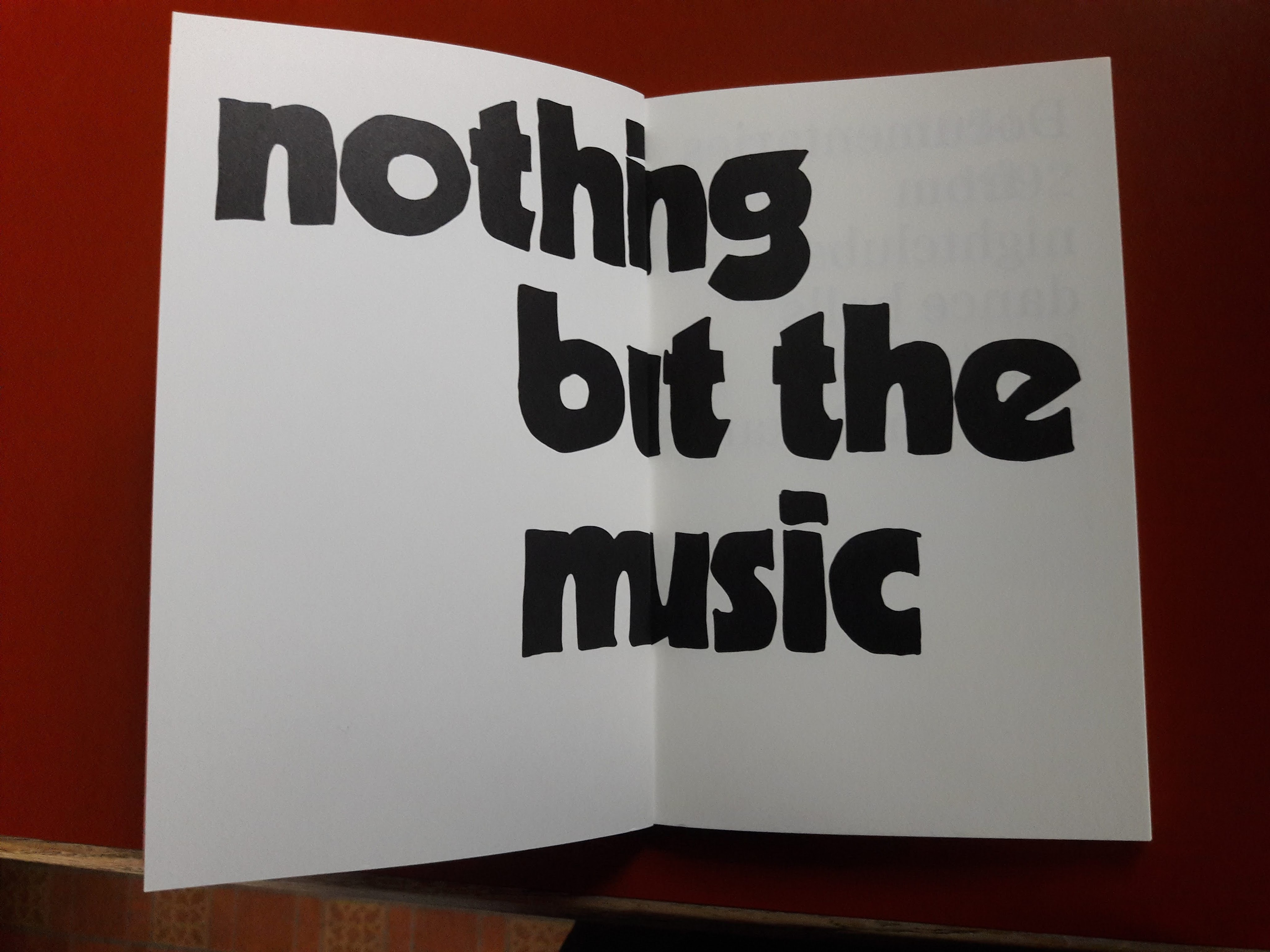
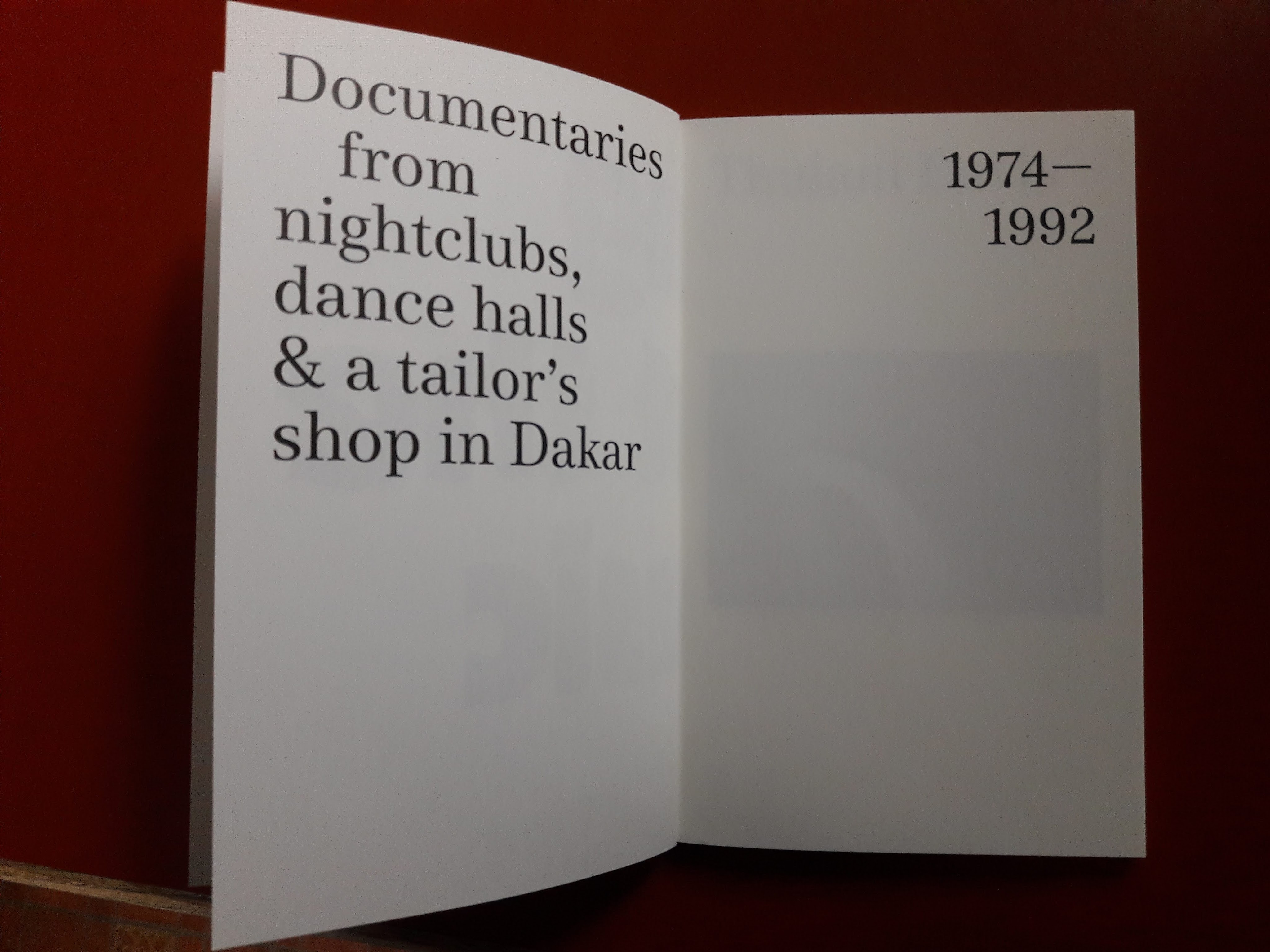
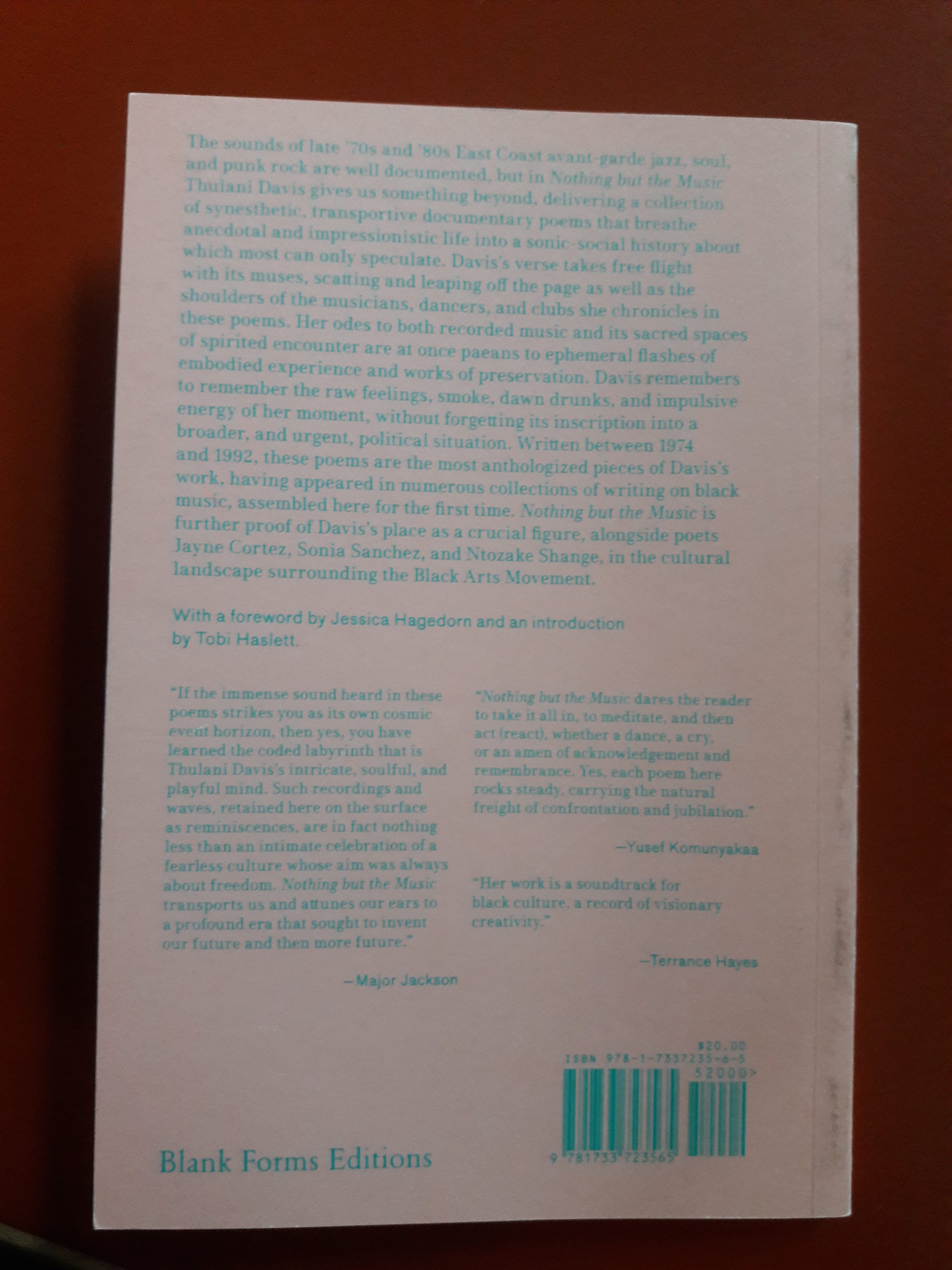
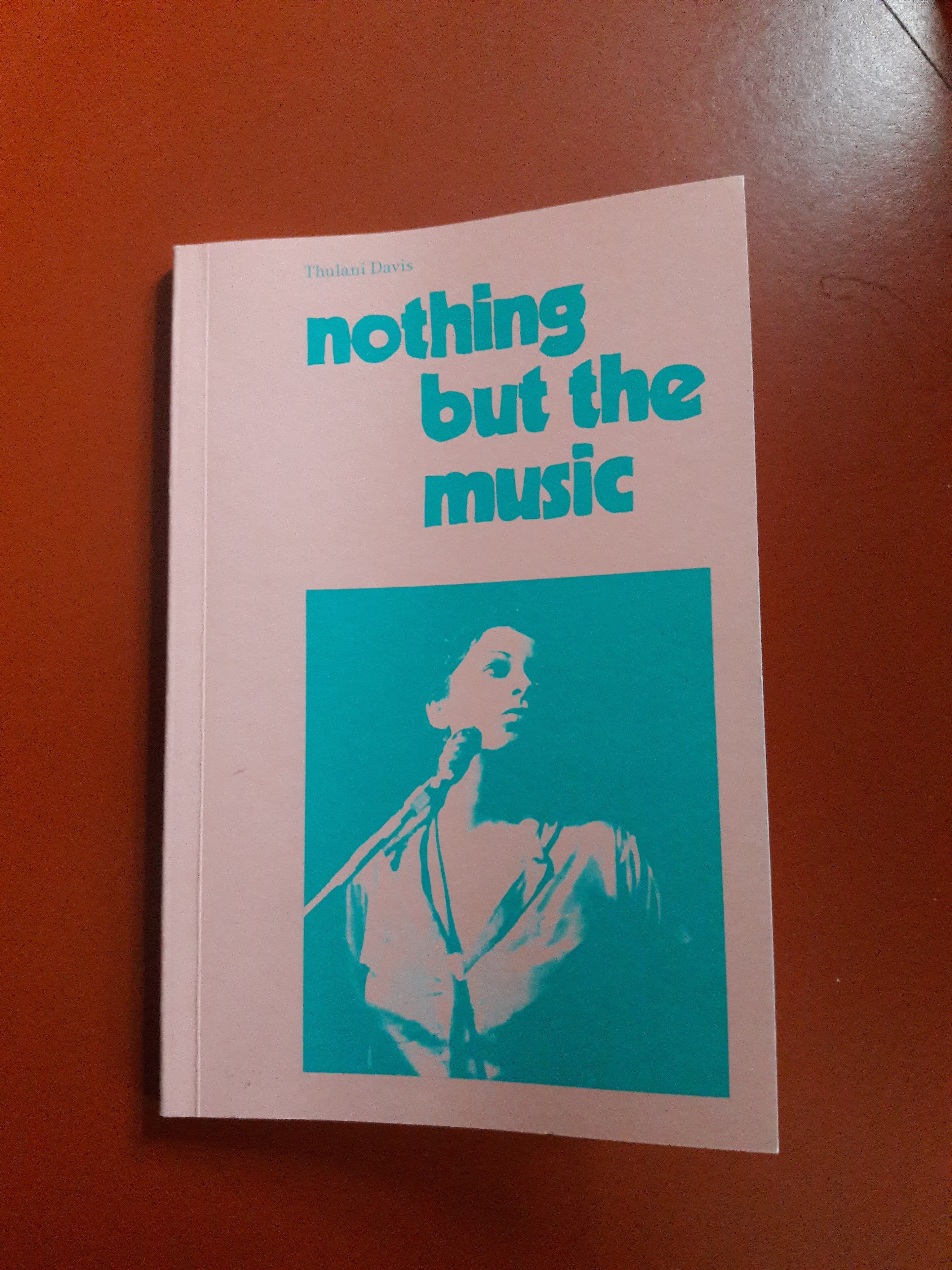
    “nothing but the music” (2020, Blank Forms Editions, Brooklyn) is a kind of compilation, a box set, of pieces composed by Thulani Davis over the years 1974 to 1992, lines written while listening to live music or reflecting on the experience of an avant garde art form as it’s happening, and before it might be neutered by mainstream commercialization too influenced by those with control of the means of production. Most of the Davis pieces appeared in poetic form in alternative press issues over the years and some were set to music. The scores are informed, and may be read with reference to, performance and theatre, jazz and punk, R&B, and mixed forms or art form synesthesia, the courage and risks found in the places music is born, but the rewards too of achievement, however much that success may appear to some as failure. The music’s codification (its reliability, approvals, its aesthetic argument) might be seen in the cost for a ticket to get in: $20 – for a 63 page paperback, made possible in part by support from the Robert Rauschenberg Foundation and the Andy Warhol Foundation for the Visual Arts.

    Is the music now artifact? The oral argument, written or recorded, becomes a document. What the music feels like, in words, what it stands for, and stands against. The importance of the work, these pieces, these entries, is found in the subtitle: “Documentaries from nightclubs, dance halls & a tailor’s shop in Dakar.” Or, in the words of the book’s epigraph:

    “to the artists
    & dharma guides
    who coax us
    minute by minute
    from retold pasts
    & possible futures
    ever
    to the present
    moment”

    Each piece is sourced at its end with a date and location and often the names of the musicians. For example: “1982, CBGB, New York”; “April 27, 1977, The Rogue & Jar, Washington, DC. The players: David Murray, Hamiet Bluiett, Charles “Bobo” Shaw, Fred Hopkins. The poet: Ntozake Shange”; “April 15, 1975. Five Spot, New York. The Cecil Taylor Unit: Cecil Taylor, Jimmy Lyons, Andrew Cyrille.” That last piece just cited, “C. T. At The Five Spot,” begins:

    “this is not about romance & dream
    it’s about a terrible command performance of the facts
    of time & space & air”

    …and moves on:

    “ripple stamp & beat/ripple peddlin’
    stomps taps of feet slick poundin’ out
    tonal distinctions between/keys & sticks”

    …and ends:

    “I have heard this music
    ever since I can remember/I have heard this music”

    (22-23)

    If music is a cultural argument, an aesthetic fight, it must come complete with a thesis statement about which some will disagree, backed with claims with examples, illustrations, supported with evidence and sources. It’s not enough to dress the part and go punk for an evening; one must want to be hardcore punk, and harder still. The wall does not give way so easily. It’s not enough to listen to the radio or buy the recording; one must enter the mosh pit. Who can survive it?

    “the punks jumped on the stage
    and dove into their friends
    let their chains beat their thighs
    the crowd thought death
    in two-minute intervals
    heavy metal duos and creaming murder

    the band of twelve year-old rockers
    wished they could do it
    come like that on the refuse
    of somebody else’s youth”

    from “Bad Brains: A Band”: 1982, CBGB, New York

    We find, in “nothing but the music,” in addition to the music itself, criticism, analysis, reaction, conclusions, as well as questions for further research. What happens when the avant garde becomes tradition?

    “Not just history not just Trane
    No not what we heard about
    What we heard
    Just what we hear
    It always being night
    We’ll still be there
    Dancing the dissonant logic
    The loneness
    Just playing music
    He speaking to himself
    Really paying us no rabbitass mind
    Digging what himself was doing
    T-monius and ‘al-reet’”

    from “T-Monius”: February 17, 1982, 122nd Street, New York (50-51).

    In a life of disenfranchisement, art may be the only place to find certain freedoms: of expression and voice, enjoyment and creativity, play and work coming together in a spirit of desire and interests, not of servitude or boredom, and where one may object to a status quo in a statement with examples of new possibilities. And beauty, where beauty may come to rest, looking tired and worn out, where she can mix with the crowd and feel at home and dig the music. And truth hangs out in the rhythm section. Some hep young cat might ask, “What was it like?” And the answer is important, how we answer, what we say, what we hold back. We are old now, and passing, older than we ever imagined. You can’t breakdance at 70 like you could at 17, Cornel West said in his ten minute section of Astra Taylor’s Examined Life: “Time is real.” Yes, and you can find it in the music:

    “giving a spring to the dance
    of who we are/unexpected beauty
    beauty we have known ourselves to be
    like reaching old age & infancy in a breath
    of this is the music
    knowing we can’t be us
    & be afraid of who we are”

    X-75-Vol. 1, Henry Threadgill “Side B (Air Song/Fe Fi Fo Fum)” (31-32).
  • Dolce & Metallico

    To sand a page of flat board, one abrades first metallico then brushes dolce, as the piece turns to canvas. That is a music lesson learned in the woodshop. On the guitar, metallico is played near the bridge, where the strings are tight and unbending and sound like the steel wheels of a train or fingernails on edge across a chalkboard – both sounds rarely heard these days as trains recede farther into the industrial inner city or disappear through the countryside, and chalkboards fill landfills. In the middle of nowhere one learns to listen. Dolce on guitar is sounded where the strings loosen, up the neck from the soundhole. Sweet is dolce, but the hard, long ē of sweet sounds more metallico, so soft is dolce, not sour, but balmy. Metallico, that steel rail sound, harsh and disagreeable, straightens the spine and tingles the neck hairs. For some listeners, dolce raises goosebumps; for others, metallico does the trick. Dolce is the sound of the short, soft vowel, metallico the sound of the long, hard vowel. Thus the meaning of a musical note changes with its vowel length. A bent line over the vowel illustrates the soft sound (ă, ĕ, ĭ, ŏ, and ŭ), a straight line the hard (ā, ē, ī, ō, ū). Often, the meaning of a poem rests within its sounds, not seen in its definitions. One must listen to a poem like one listens to a piece of music. The reading question is often not what a poem means but how it feels when read or heard, what its sounds suggest. Some poems sand wood; others cut stone.

  • Salsa Party on the Moon

    In the news, water discovered on Earth’s moon: Not so much water apparently though that NASA will start shaping surfboards for its astronauts; nor is discovered quite right – confirmed or proven more precise. Meantime, of course, what with someone always turning up the global warming thermostat in the house, we’ll soon be wanting to bring some of that moon water down to Earth. And where there’s water, there could be also be tomatoes. And where there’s tomatoes, there could also be salsa. Now, a salsa party on the moon – countdown! And where there’s water, there’s sound, so the previously assumed to be silent moon, if you put your ear to the crater, just might produce some good vibes after all; and what’s a salsa party without music?

  • You Can’t Go Home Again

    You Can’t Go Home Again

    Sylvie. 30 Day Letter. Termination. Goodbye, Seattle. Country Blues Song.

    You can’t go home again. Neither should I have stayed on another week at Hotel Julian. The subdued rhythm of my pastoral turned boisterous with the arrival of the fleet, and my absence in Seattle and now my prolonged and somewhat mysterious trip south caught up with me, testing Walter’s patience, and as he was wont to do at any sign of disloyalty among those with a seat at his table, he terminated me. There was of course more to it than that. The Walter Team was disestablished. It would be near impossible to disambiguate the transactions. In any case, I was no longer Risk Manager to the gods. Sylvie said Walter had sent me a 30 day letter. I could transfer to a desk in Morocco or take my leave, but the 30 days had already expired, and I had been cut loose with a modest severance bonus. Sylvie was on her way to spring training with her Single A team in Costa Rica. She had leased the Queen Anne house to some moonshiners out of the hills somewhere in east Skagit who planned to set up a microbrew. She had taken the liberty of putting my severance into a fund of fund of funds with no guaranteed rate of return but with a reputable track record. While I would not yet have to give up my weekly room status for a berth in the bunkroom, I would have to scout around for some part time work. I would not go back to Seattle though. I would take my risks elsewhere and in due time. Come Thursday night of my second week on board I climbed the Hotel Julian fire escape up to the rooftop bar and grill where I drank a slow beer and listened to Jack Tar and the Flower Girl with the Weathered Weary Blues Band messing around with some country blues with players on guitar, banjo, harmonica, a snare drum with a single cymbal, a Flatiron mandolin, and a stand up bass. Flower Girl nearly keeled me over with this song:

    “Back Home Again”

    What I know about love, I wrote on a postage stamp,
    and mailed myself half way up to the moon.
    I’m in stardust singing – I do, I do, adieu.
    I’m out on the road, and I can’t go home again.

    I was born in the back of a beach bum shack,
    again and again, then I sailed the seven seas.
    I never made it back home again.
    Adieu, adieu. You can’t go home again.

    She was born in a coral of a rodeo,
    off a road they call Route 66.
    Between the cowboy and the clown she broke free.
    Goodbye, goodbye. She won’t be back again.

    The moral of this story, the point of this tale,
    if you ever leave home, you can’t go back again,
    because you won’t be there when you arrive.
    Goodbye, my love, goodbye my love, goodbye.

    And it’s home again, I want to come back to you,
    see all my family and all my old friends too,
    but it’s true what they say, you can’t go home again.
    Goodbye, my love, goodbye my love, adieu.

    Note: Hear “Back Home Again” played on the guitar
    here: https://www.instagram.com/tv/CEAoxkhIXgq/

    “You Can’t Go Home Again”
    is episode 23 of
    Ball Lightning
    a Novel in Progress
    in Serial Format at The Coming of the Toads.
    (Click link for continuous, one page view of all episodes.)

  • Pretty, vacant, and we don’t care

    Pretty, vacant, and we don’t care

    Watch the stars as they collide
    Erase the dots in your eyes

    What do the lyrics say we can’t hear
    The singer and the song disappear

    Pretty vacant and we don’t care
    Pretty vacant and we don’t care

    What’s your name the color of your hair
    Saw you down at the LA fair

    Have so much no need to share
    Look at us oh what a pair

    Pretty vacant and we don’t care
    Pretty vacant and we don’t care

    “Pretty, vacant, and we don’t care”
    was part of an originals set played on
    Live at 5 from the Portland Joe Zone last night,
    and included:
    Bury My Heart in the Muddy Mississippi
    If You’ll Be My Love
    Two Riders Were Approaching
    Goodbye, Joe
    She Shakes Me Out

  • Virtually Nowhere

    Virtually Nowhere

    Writing for the New York Times Sunday edition for June 28, California veteran-reporter Shawn Hubler, reporting from Davis, California, on the ghost town effect Covid-19 is bringing to college towns across the country, and wandering around the abandoned town UC Davis keeps flush, notes, apparently sans irony: “Outside the closed theater, a lone busker stood on a corner playing ‘Swan Lake’ on a violin to virtually no one.” I know the feeling.

    Meanwhile, musicians across the globe are turning to virtual possibilities to keep their chops up in front of a live audience. Amateurs too are getting into the act, as evidenced by the creation of the “Live at 5 from the Joe Zone” shows, nearly nightly live broadcasts (5 pm PST) via Instagram “stories” and “IGTV” posts, featuring myself, a nephew, and three brothers, to wit: “The Joe Zone nightly Live at 5 with Joe@ketch3m@johnlinker@charleslinker@kevin_linker: Portland, Salem, Healdsburg, Ione, Drytown.” Listeners tune in to hear music and stories while watching the player, and comment live, often talking, virtually, to one another, via their online comments.

    The shows last anywhere from 10 minutes to an hour. These are not group performances. If we could figure out how to do that virtually, we might give it a go, but for now, each of us takes a night in our respective hometown pandemic quarantine digs and creates a solo show for the live entertainment of our loyal followers. The other night, I had 5 listeners in my audience (go ahead: irony, satire, and sarcastic comments all accepted with good grace). There were, at one point, 6 listeners, but one apparently came and went. It happens. But that was also a slow night. I’ve had as many as 14 live listeners, at once. Ok, ok, still not exactly Arena Rock. And, but, in any case, that’s not the point.

    If one saves the live show via IGTV, most followers eventually find it, but at which point it’s a kind of rerun. The key is to catch it live. But of course 5 in the evening is not necessarily the best time-fit for any given listener. I’ve not saved my shows beyond a few hours, if at all. I caught grief last week for an immediate delete, since Susan thought it was my best show yet, but the rerun dilutes the live effects. And the show is intended as a real quarantine activity, a virtual get-together, a virtual hoedown or hootenanny.

    Of course, all towns are potential ghost towns (there appears to be a gene for it they are born with), and all performances are played potentially “for virtually no one.” Still, Davis is but a rock’s throw from the much larger Sacramento (about a 20 minute drive) and just over an hour to the Bay. Not to mention it’s a major Amtrak stop for the north-south Starlight Special. In many other small college towns across the country you can already hear the whistle’s last blow and watch the tumbleweeds filling the streets.