Tag: Mechanics

  • An Old Rig and a Passenger

    Wormy had a girlfriend, was in a relationship, he wanted to get rid of, to get out of. He had a plan. He wanted to do some time travelling on the scooter. I tried to tell him that was a bad idea. All times are the same, same rotten humans unhappy with their lot. The only road to true happiness was to live like a gypsy in a caravan putting down only shallow roots if any, keeping with your family. Nonsense, he said. The girlfriend was called Tilde, a nickname ascribed to her from the way her eyebrows grew: ~ ~ . The plan was I would give Tilde a ride up the coast with me to San Francisco, where she had a sister Wormy was in touch with who would take her in and help her find a job waitressing. Tilde had been tending bar at the Orange Orchid Tiki Bar and sleeping with Wormy and had grown accustomed and comfortable with the arrangement, but Wormy was beginning to feel cramped and closed out and wanted to kick out before wiping out, as he put it, and did something really stupid like get married. He would tell Tilde it was all over between them, but that I would give her a ride up the coast to her sister’s place. Tilda’s sister was some sort of professor at one of the Frisco colleges. Her beau was a veteran right fielder for the Kyoto Kinks who owned a fancy Japanese restaurant in Frisco. Long ways to go two on a Vespa, I said. Impossible. You’re not taking the scooter, Wormy said. You’ll take the Chevy. The Chevy was his restored 1956 two-ten with a rebuilt 265 cubic inch engine, 3 speed synchromesh manual transmission. Cream white with turquoise roof and lower side panels. Not as classic as the Bel-Air, but a nice ride for a coast cruise. Go ahead, Wormy said, who had backed the car out of the garage and was beckoning me to take the wheel and we’d go for a test drive around town. It was a different kind of time travel, the ’56 Chevy, and maybe I’d had enough of the scooter for a time, and I agreed to Wormy’s plan.

    “An Old Rig and a Passenger” is episode 51 of Inventories, a Novel in Progress in Serial Format at The Coming of the Toads.
  • Don’t Try This at Home

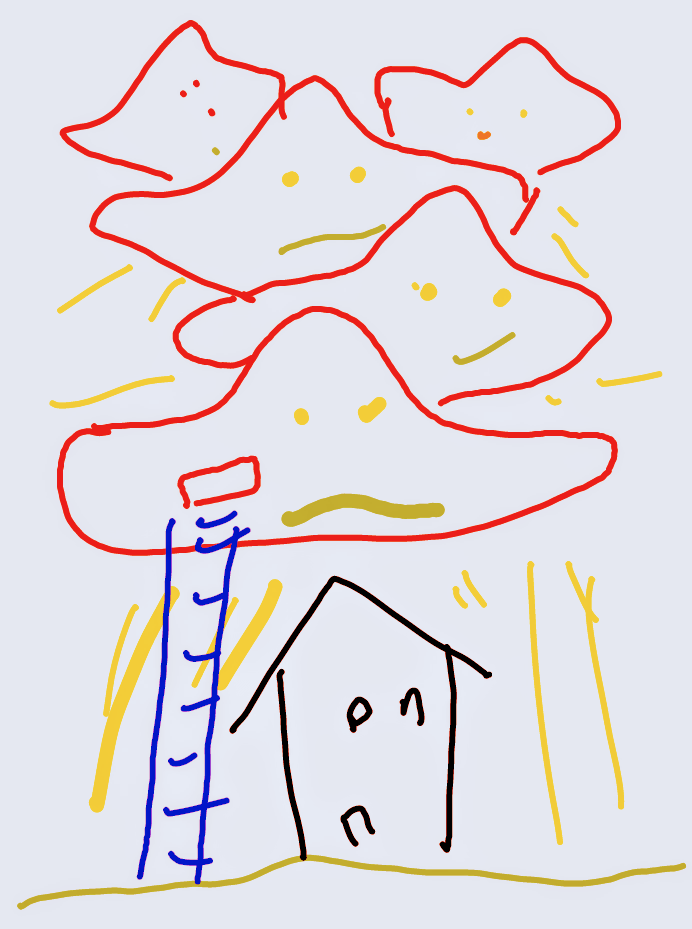
    One should not time travel, nor play or work with the gods, unless fully qualified and experienced. One should live in one’s own moment, in one’s ongoing present, which is fully developed and capable of satisfying all one’s present needs. The reason we are unable to travel forward, into the future (with the exception of being able to travel forward to the future present we were in when we exited to travel into the past), is that the future consists of too many variables, too many possibilities, too many uncertainties – and no way of managing the risk. There’s only one door into one’s past. There is an infinite number of doors into one’s future, and picking the wrong one is almost certain, and will lead to couch surf zero. Two exceptions to one should not time travel: 1, we can still prepare for any uncertain future; and 2, we can visit the past to learn from our errors, as long as we don’t try to rewrite the past (while at the same time being mindful that we may not have understood at all what was happening when our past was present). Still, it’s also useful to remember that time is always under construction, and deconstruction, at the same time. In addition to travelling backward or forward in time, one might be inclined to want to stop time. I can often hear the click of time slow to a rest while time travelling on my 1972 Piaggio Vespa Super 150. One wants to travel through time in the slow lane of life. It should come as no surprise that by the time I made it down to San Diego to meet up with Cagetan, as we had planned, I had missed him. Apparently, Sot showed up, and he and Cagetan are presumably somewhere now travelling south through Baja. I’m not sure where that leaves me at this point in time.

    “Don’t Try This at Home” is episode 45 of Inventories, a Novel in Progress in Serial Format at The Coming of the Toads.
  • Love with the Proper Structure

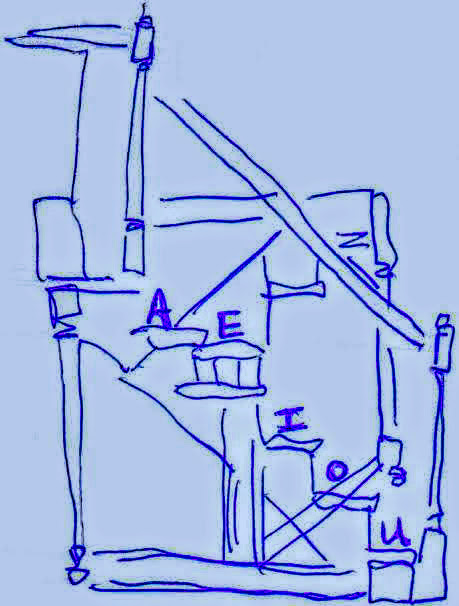
    Zeroing in on the yawing wound of her loss, Minerva had said she had loved Hotel Julian. There are lots of other buildings in Los Angeles, I offered, to assuage her pain – penalty, I thought to myself, for not taking better care of what she claimed to love. But it wasn’t the building she loved, the structure, all those parts lovingly dismantled and carried out by the scroungers, scavengers, salvagers. To love a plate of hot salty fries cooled with catsup, the same love as for a Coney Island hot dog and a cold beer at the ballpark on a summer afternoon as the crowd settles in to a quiet fourth inning, is not the same love one might feel for a fearless fox terrier, or an alley cat rescued from a winter rain, or a baby of necessity given up by its teen mother, or the love for an abusive father or mother whose needs can never be satisfied by the child. Jesus said to love the Father with all your heart, soul, and mind; he didn’t say you had to be happy about it. Likewise, he said to love others as you love yourself; but he didn’t say what to do if you don’t love yourself, if you suffer from anhedonia, if your self esteem has been lowered to the level of a creeping worm. But a worm will turn, as the saying goes, and pressed to love, will. Love is desire that never dies. We often want something that may not be good for us, and the satisfactions those loves might provide quickly peter out, but true love (to coin a phrase) is a want for something that is always good for us, even if that good does not produce the same kinds of satisfactions or gratifications we’ve come to enjoy and want again and again, and which we eventually might come to realize are actually insatiable, and we can only want more. To love is to want less, not more, to be fulfilled, not emptied. To structure is to build, compose, make up.

    “Love with the Proper Structure” is episode 43 of Inventories, a Novel in Progress in Serial Format at The Coming of the Toads.
  • Deconstruction

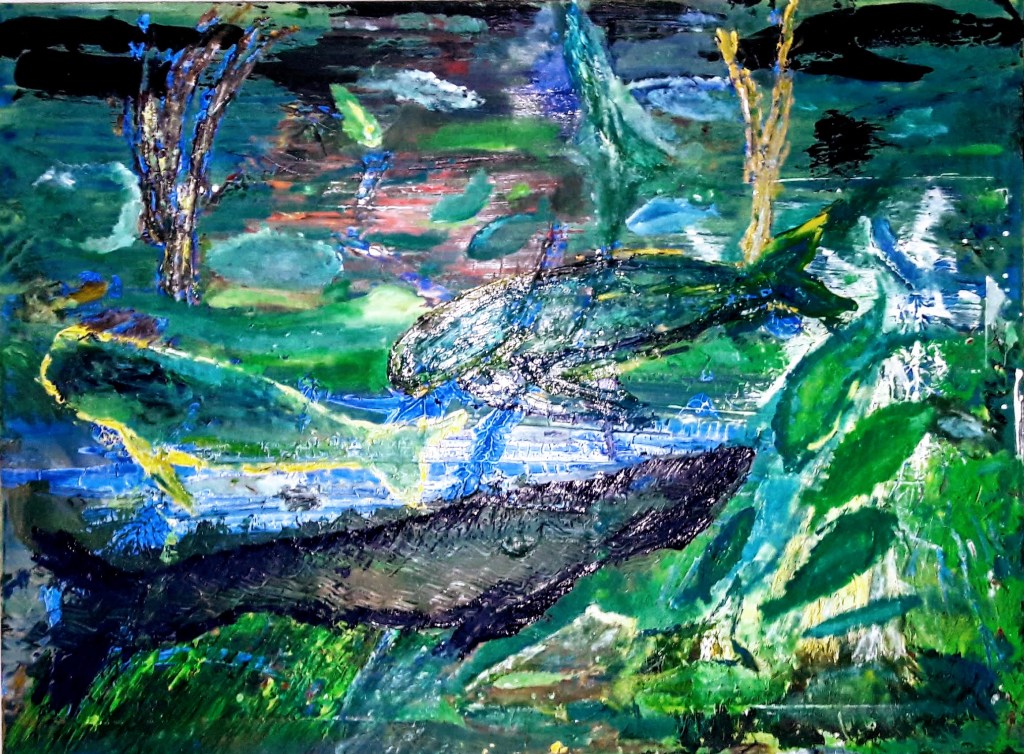
    Vulnerable was the word Minerva used to describe her building. To keep Hotel Julian afloat, keep up with increases in taxes, licenses, and fees, increases in costs of goods and services, including even a bare bones health care plan for her full time employees, would require new investment, resources, growth, but how would this tired, effete old woman grow an old hotel, expand its business? There was some discussion of building an aggressive, improved business plan, and buying used properties in affordable areas and copying the Hotel Julian model, creating a chain, a brand. That was a pipe dream. The building was wounded, noncompliance its Achilles Heel. We had 30 days to get out, before This Building Condemned notices were issued and displayed, the building then boarded up, sold, and handed over to a commercial developer. But as word of Minerva’s terms of surrender got out, and even before all the current residents could vacate, any number of contractors, recyclers, restoration businesses, carpenters, dismantlers, collectors and antiques dealers, inquired about purchase then invaded to carry the building off in parts. Clearly the hotel was not a sum of its parts. A kind of emergentism became evident. The value of the parts, extracted and made independent of the whole, could not be predicted by appraisal of the whole. A careful, observant, respectful deconstruction started, workers carrying off solid panel doors, and separate from the doors their hardware, glass door knobs, brass hinges. And clear fir sills, window casements, iron weights, leaded glass windows, double hung windows with sagging glass. Radiators, moldings, paneling, chandeliers, bathroom fixtures, porcelain tubs, tongue and groove hardwood flooring. Copper and galvanized pipe. The entire fire escape apparatus. Wall hangings, pictures, rugs, tile, railings, steps. Furniture: walnut bed frames, roll top desks, tables and chairs. The lending library of books from the fallout shelter with the bookcase – purchased and hauled off by Father Juan for Xavier’s school. Full dimensional lumber: 2 by 4’s, 4 by 4’s, 2 by 12’s. Huge basement beams and solid wood headers, the building by then hurriedly vacated. Another staff meeting was called, this one held across the street from the hotel in Minerva’s backyard. She handed each employee an envelope containing a severance bonus made possible by the sales of the individual parts of Hotel Julian, sweetening just a bit the bitter goodbyes.

    “Deconstruction” is episode 42 of Inventories, a Novel in Progress in Serial Format at The Coming of the Toads.
  • An Air of Bad Ease

    An Air of Bad Ease

    An air of bad ease descended upon the rooftop gathering as employees of Hotel Julian listened to Minerva explain her predicament, and, by process of detrimental reliance, their own. Commercial buildings, particularly those housing paying guests, were subject to strict codes designed to protect the public against construction dangers inherent in aging and disrepair of physical systems that might result in unforeseen and unexpected loss to property or life. The purpose of updated codes was to minimize the uncertainty of loss. While Minerva tried to focus on the cost of updating, including the interruption to business, which would probably put the employees out of work long enough they would have to find work elsewhere, Julian argued the building should qualify for state and national historical interest and preservation. Either way, Minerva countered, the costs would be a show stopper. But there might be preservation funds or grants available for which they could apply. But the project would require neighborhood support, and that was certainly uncertain. Besides, current guests could ill afford future rates required to sustain a renovated project. Would there come a new clientele? In this neighborhood? Did Julian want to participate in a gentrification project? Dour looks and quiet space filled the conversation, which was, for the most part, between Minerva and her son. Hotel Julian was, after all, a family owned business. And there was the problem of the tunnel, built under the public road without permit or any kind of engineering approval. The tunnel coming to light had afforded the inspectors no end of curiosity and enjoyment. At that, faces with frowns glowered in my direction. Prior renovations to the building, particularly the one of the late 1940s, adulterated its original character to a degree it would be difficult to argue its historical nature or value. And now an elevator would need to be installed. The fire escape ladders could no longer be used to access the rooftop for public tavern use. There wasn’t anything about the rooftop bar that met any kind of code, license, or fee requirement. Seamen had been berthing in the hotel since the late 1800s; surely that provided some proof of historical interest. There was no business plan. They had, in a sense, been stealing from the business, letting the building deteriorate from improper maintenance. They had let it go, much as a person aging might be prone to let their own body go, ignoring exercise, diet, health care. Not that they didn’t care for their body, or their mind, but that the maintenance and upkeep became too much to bear. The old building contained a history of stories few today cared about. Neighborhoods change, and they had simply gone with the flow, in part, though, responsible for the direction that flow had taken. They were not slumlords, but a low rent district had evolved over time in their surrounds. They had adapted. Minerva asked for suggestions and questions. What about turning the building into a maritime museum? Find a new owner, one willing to invest in the old. The air on the rooftop, rarely used during the day, the sun rising, warming, then heating the tar roof, became too hot without umbrellas, and Minerva adjourned the meeting without ceremony or decision. I stayed on the roof, still nursing my morning coffee, walking the perimeter, watching the yachts come and go down in the harbor, and saw a few sailors dressed in white pulling detail on a distant Navy Destroyer deck. I was thinking about what might come next, while the others climbed down to go to work. I felt at ease, even as I felt somewhat bad about that easy feeling that comes from an ability to both care and not to care when presented with a prospect designed for either.

    “An Air of Bad Ease” is episode 41 of Inventories, a Novel in Progress in Serial Format at The Coming of the Toads.
  • Blueprints

    Blueprints

    Down in the basement storage room of Hotel Julian, rummaging through some old boxes, having been instructed by Dawn and Eve to conduct an inventory, I discovered a set of blueprints. I unrolled them on a dust covered desk. The old paper crinkled and popped and cracked a bit. The blueprints appeared to be remodeling plans from the late 1940’s, when to the building was added first floor retail space and large apartments leased long term were converted to smaller rooms for hotel use. The war years produced housing shortages around the port, quonset huts sprouted on empty parcels of land, and existing structures in the area were leveraged where possible for additional living space. The blueprints I stumbled across showed that the current Hotel Julian had not changed much since that late 1940’s renovation. The building occupied a small square block, and consisted of six floors (including the basement and rooftop). In the basement were three separate living space rooms with beds. One of these Dawn lived in, and Eve lived in another. The third was used as a day room for work breaks and lunches and housed a sickbed space for employees that fell ill or got hurt on the job. The basement also included a boiler and maintenance room (the upstairs rooms were heated by steam through a plumbing system using cast iron radiators), a laundry room, and the storage room. The first floor was used for retail space (current occupants as described in Episode 20 of this document). The other floors seemed today consistent with what I saw in the blueprints from the 1940’s: office, the bunkroom, and 4 day or hourly rooms on the 2nd floor (totalling 17 beds – 12 cots in the bunkroom, one single bed in each of the day or hour rooms, and one queen bed in the bedroom adjacent the office, where Julian lived); 12 size double bed rooms let weekly on the third floor (where I was still living week to week); and 8 monthly let rooms on the 4th floor, each with a queen size bed. There were no beds on the rooftop. Thus Hotel Julian contained 40 beds requiring daily housekeeping attention.

    “Blueprints ”
    is episode 29 of
    Ball Lightning
    a Novel in Progress
    in Serial Format at The Coming of the Toads.
    (Click link for continuous, one page view of all episodes.)

  • Sylvie’s Dream of Counterpoise

    Sylvie’s Dream of Counterpoise

    Desultory. Defunct. Deconstruction. Debunk. Defunct. Deride. Decide. Depot Bay. 

    Sylvie dreamt an invisible wave of counterpoise forced all mortals to wear masks covering nose and mouth. Thus individual identity, what Freud called the id, was lost, and people would have to look into one another’s eyes when speaking and could only speak truth. Those refusing to wear a mask would be called liars and deniers and would be subject to debunking. Society would be detoxed of retail. Skilled jobs would return, though no one would be forced to work, and those who chose to work would not commute but work from home in building and making useful tools and items and providing useful services for daily life. One person might make beer, another shoes, another tiny houses. Another would keep the books. A livable wage would be guaranteed for every citizen of every country. The wave of counterpoise would cause disruption through widespread removals and reversals, humans moving down and away from commercialized statuses. Some would move literally underground. Already people were reinhabiting the Seattle Underground. Others were moving onto beaches or into the woods or turning abandoned malls into suburban campgrounds. Society would be deconstructed. Education would be deschooled. Police systems would be demilitarized and decentralized. Mortals would lose interest in their personal DNA and the social status of individual ancestry. It wouldn’t signify where one came from. The elderly would not be forced into retirement, but would assist with the care and teaching of the young, in growing community gardens, in making music, in writing and reading. Health care would be available to all and its underlying purpose would be health and not medicine. Cities would grow quieter, people moving around less, walking and biking, riding open air busses, trams, and light rail. Many things people had long taken for granted would disappear. Simplicity, simplicity, simplicity would return. As would civil disobedience. People would be responsible for their own entertainment. When I asked Sylvie how this counterpose, as she called it, was to come about, she said she did not know, but had awakened too soon. At the end of her dream, she was swimming with the whales off Depot Bay.

    “Sylvie’s Dream of Counterpoise”
    is episode 12 of
    Ball Lightning
    a Novel in Progress
    in Serial Format at The Coming of the Toads.
    (Click link for continuous, one page view of all episodes.)

  • The Dream of Baseball

    The Dream of Baseball

    “And the phantom crowd’s horrific boo
    dispersed the gargoyles from Notre Dame.”

    “Dream of a Baseball Star,” Gregory Corso, from The Happy Birthday of Death, 1960

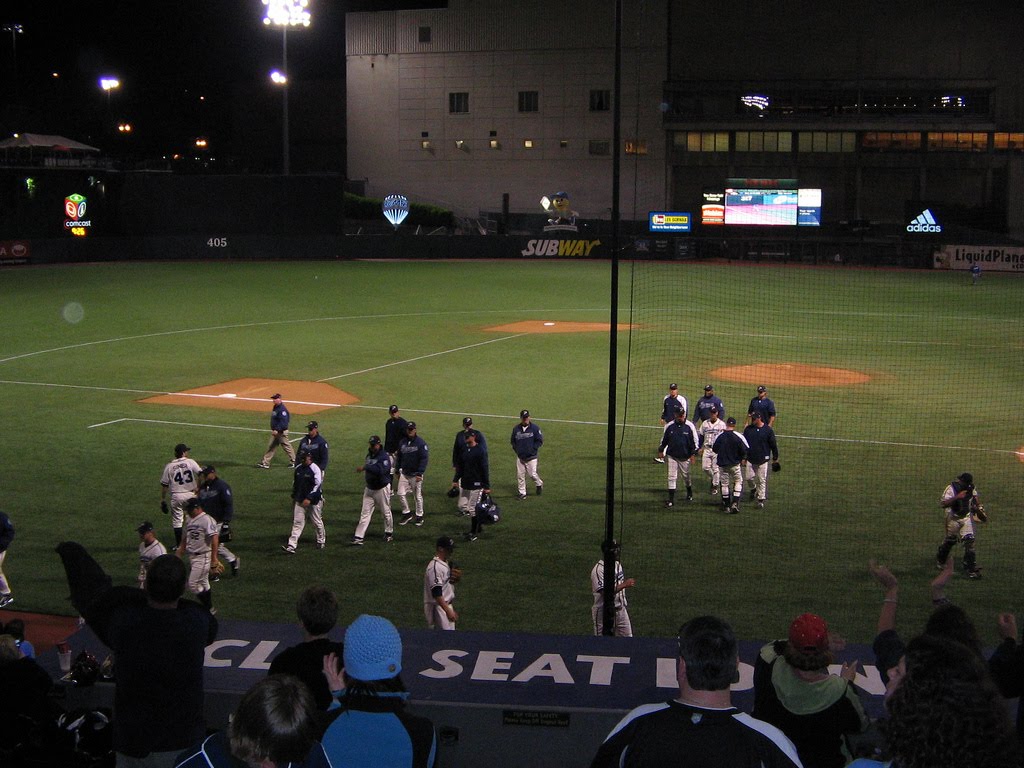
    Yesterday, July 23, was opening day of the pandemic delayed Major League Baseball season. That’s about four months later than normal. The abnormal, short 60 game season is underway. Welcome to the virtual ballpark. I missed the first game, the Yankees vs Washington Nationals in New York, which already tested one of the new, shortened season rules: the Nationals lost in only 5 and half innings, timing out due to rain delay. One of the new short season rules eliminates any chance to play the game out to 9 innings.

    But I caught the second game, the Dodger game, against the visiting Giants, played in a fanless Dodger Stadium on what appeared to be a typical sunny late July LA evening, but quiet, still, the air clear. What is the opposite of standing room only? Empty seats.

    But not exactly empty. Cardboard cutouts of fans filled the seats behind home plate. There was Tommy Lasorda, former Dodger player and manager, leading the cheers to the Dodger late innings 8 to 1 win. Fans can buy a selfie cutout. Maybe Paul and Ringo will spring for a whole pavilion section devoted to cutouts from the Sgt. Pepper’s Lonely Hearts Club Band album cover.

    Baseball has never been a good example of an effectively televised sport (McLuhan explained why). But the season opener last night underscored the importance of a fan filled stadium, smelly beer and greasy hotdogs, peanuts, and Cracker Jack, also the importance of ceremonial hoopla to major league sports. The fans are part of the game, as William Carlos Williams suggested in his poem, “The crowd at the ball game“:

    “It is summer, it is the solstice
    the crowd is

    cheering, the crowd is laughing
    in detail

    permanently, seriously
    without thought”

    Aging, and working on mindfulness, one may find one’s lackadaisical waking mindset similar to one’s sleeping condition. Normally (not necessarily as a rule but on the whole and customarily), the logical links connecting thoughts create continuity and coherence and one feels in control, though who or where that one is, where one feels it, or to what extent any feeling of control is fantastical, gets instant replay once the lights go out – replay in slow-motion, surreal angles, calls reversed. That helps explain why poets have always had an affinity for baseball.

    Photo: Portland Beavers, by Joe Linker

  • Loaner

    Loaner

    My Dad was never on very friendly terms with cars.
    “It feels like it ain’t gettin’ no gas,” he explained
    to Jack, the mechanic on duty in greasy overalls.

    The loaner, a loner, sat in the backlot behind
    the filling station, unfulfilled, a rusty old dog,
    for days, sometimes weeks, until an overnight
    repair required its use. We had to jump start it
    again and again.

    We were driving up Mariposa when I opened
    the glove box, a curious cat, and pulled out
    the little box about the size of a matchbox.
    “You know what that is?” Dad said.
    “No, what?” I had already opened it
    and found it was empty.
    “Nevermind,” Dad said.

    But what was it doing in the glove box
    of the loaner? And we went to Jack’s
    in the first place because of Church.
    It was a little mystery, and still is.

    The thing about our car under repair,
    it was a 1956 Ford Station Wagon,
    a baby blue and white twotone,
    it needed a narrative to hold together.

    Random, disconnected parts littered
    the shop floor, tools hanging from nails
    of the bare studs, a transistor radio
    playing what would come to be called
    oldies, but not for another decade or two.

    What you want in a car is a
    coherent whole, a story
    that makes sense, with reason
    and use and value,
    even if it is not true.
    It’s nuance to suggest it, but
    the truth often rings of nonsense.

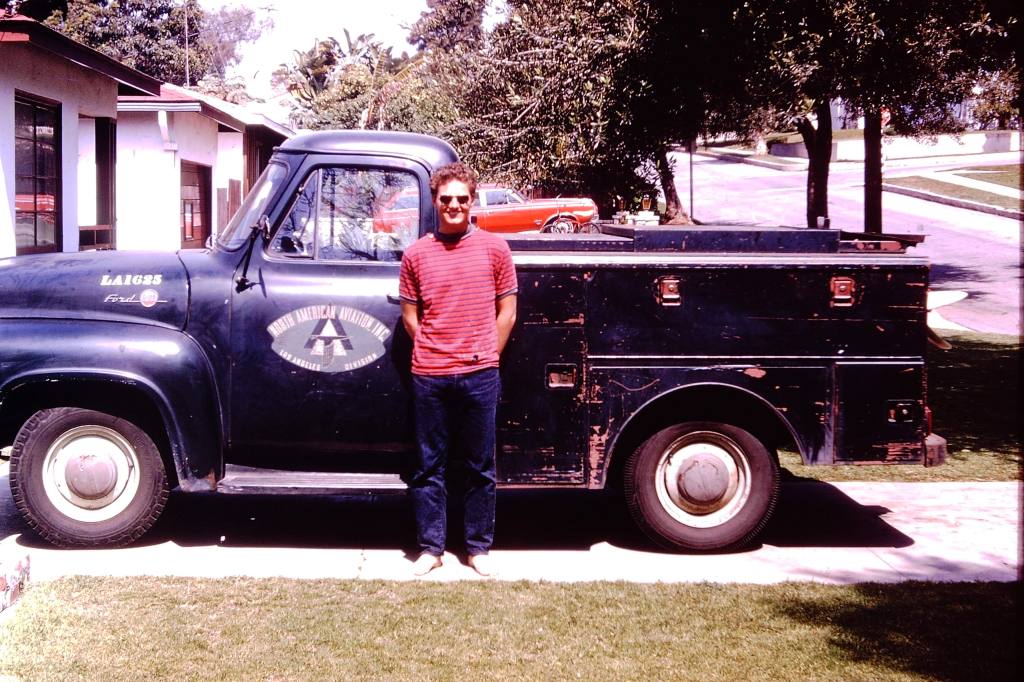
    Photo: Joe Linker with ’49 Ford, a gift from his father,
    3 speed on the column, no A/C, no heat, no radio:
    The Peace Truck, around 1969, on Loma Vista.
    Just visible, tail and fin of Jacobs Surfboard.
    After Joe bought his ’64 VW bus, he gifted
    the truck to brother-in-law Raymond.
  • Signs

    Signs

    No Vacancy Next Exit Yield Yellow
    Curves Ahead Jesus Saves 20 is Plenty
    Men Working Wrong Way Slow Down
    Beach Turnout R R Trucks Surf’s Up
    No U-Turn Warning Coming Merge
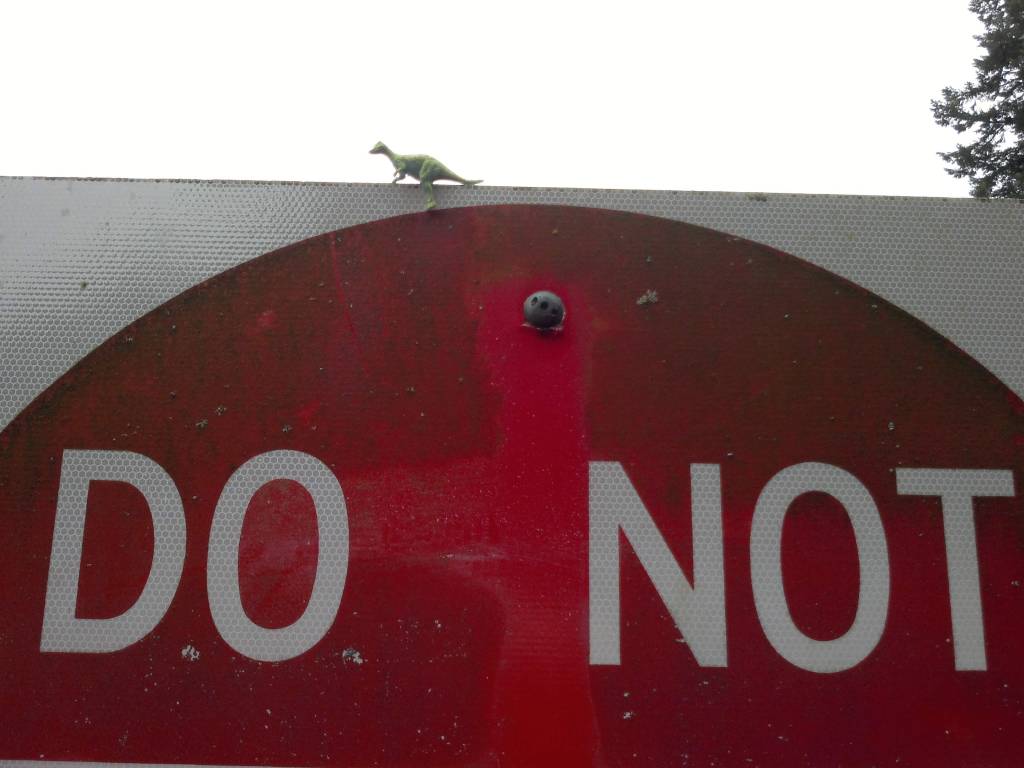
    Living Together Dinosaur Crossing
    Strong Odor Theatre No Syntax
    Call Mother Footnotes Wait Here
    Boiler Room Home Economics Pool
    Skid Row Lemonade Hardware
    Look Concrete Buy Sell Trade
    Cash for Cool Clothes Shoes Hats
    Only the Lonely Steel Plate Cars
    Dance Tonight Bingo Poker
    Yoga Beer Book Rack Comics
    Yes Short Story Masterpieces
    Happenings Falls Rounding
    Not an Exit Lemon Drops
    People Sleeping in Roadway
    Birds Icy Spots Leery Reckless
    Backstage Backstory Face Front
    1000 Ugly Christmas Sweaters
    Noises Off Flying Goat Coffee
    Trees of Mystery No Roller Skates
    Route 66 Las Vegas Barstow
    Fabulous No Standing Anytime
    Lands End Dip Advertise Here
    Mudslide Homes of Happiness
    End of the Trail No Lifeguard

  • What is Essential?

    What is Essential?

    In John Cage’s “Lecture on Nothing,” we find the following comment: “It is not irritating to be where one is. It is only irritating to think one would like to be somewhere else.” Likewise, we may find that when we are alone, we find ourselves wanting company, but when we are in company, we may find ourselves wanting to be alone.

    As we find ourselves now, confined to quarters, advised to advance toward others (nor permit them to advance toward us) no closer that 6 feet, and even then advised it might be a good idea to wear a face mask and gloves and carry a sanitizer, we are reminded of Maslow’s Hierarchy of Needs. Once a lower but more essential need is met, we may climb a rung higher on the pyramid until we reach the nirvana of self-actualization.

    We must now assume that top rung to have a base of 6 feet, so that there is only room for one person, that one being, of course, one’s self. And to be fully self-actualized means being able to stay home perfectly content with staying home.

    But then we find Maslow adding on yet another rung to the top of his hierarchy of needs (even if, in practice, this would mean expanding the original base and subsequently the base of all the other rungs leading up to the top). The new top of the pyramid, reached after self-actualization is achieved, might be described as staying home without staying home, otherwise known as self-transcendence.

    All that work on meeting one’s needs only to discover at the top of the climb one leaves one’s self behind. It might be that only by staying home can we come to grips with the differences between our needs and our wants such that we may find our essentials.