Tag: Discuss

  • Happiness and the Humanities

    Chris Beha’s investigative report (Harpers, Oct. 2011) on the for-profit higher education experiment is an impressionistic view of the inequities of degree access and funding. Not quite Maigret goes to [night] school, but this is US culture, the land of opportunity, and of second opportunity. Is the for-profit model hopeless? Cut to England, where the LRB Blog reports equity firms are about to seize a market opportunity: the purchasing of Universities by private hands. The degree is the product by which we’ll catch the conscience of the customer. Yet Beha suggests an important question: Is college making us happy?

    Maybe college isn’t necessary or desirable for everyone. But has innovation and reform in higher education been hampered by the same self-serving forces that Joel Klein has argued explain the failure of American high schools?

    It’s been a rough month for the Humanities. In Florida, there’s talk of limiting degrees offered to those that are “practical.” One wonders what those might be in the current job market. We need a new word: merittechocracy. But isn’t the market already moving in Florida’s direction? Humanities enrollment and attrition rate at UCLA suggest Westwood is no longer the bohemian capital of LA. The UCLA 2010 annual report offers more insight: “At the same time, we conducted a thorough review of our academic programs with the goal of streamlining majors, reducing unnecessary units and courses, and helping students graduate in a timely manner. We also pursued initiatives that will produce new revenue streams, including an enhanced emphasis on translational research, which will deliver more of our faculty’s inventions into the marketplace and potentially lead to licensing and royalty revenues for UCLA.” The product is big business.

    But there’s a reading crisis spreading perniciously throughout the land. And reading is important. In a November, 2007, report from the National Endowment for the Arts, “To Read or Not to Read,” Chairman Dana Gioia had this to say about reading: “All of the data suggest how powerfully reading transforms the lives of individuals—whatever their social circumstances. Regular reading not only boosts the likelihood of an individual’s academic and economic success—facts that are not especially surprising—but it also seems to awaken a person’s social and civic sense. Reading correlates with almost every measurement of positive personal and social behavior surveyed. It is reassuring, though hardly amazing, that readers attend more concerts and theater than non-readers, but it is surprising that they exercise more and play more sports—no matter what their educational level. The cold statistics confirm something that most readers know but have mostly been reluctant to declare as fact— books change lives for the better.”

    The first front on which to begin combating poverty and inequality is reading. And who’s got the books, if not the Humanities? But if the Humanities, now on the Endangered Animals list, become extinct, who will ask the question, “Are you happy now”?

  • Hypercorrect

    Category: Linguistic Etiquette. Answer: Hypercorrect. Question: What is so right, it’s wrong?

    On Jeopardy last night, Alex Trebek, the natty host of the popular game show in which three contestants vie for cash by buzzing first then questioning correctly to a given answer, pronounced Don Juan, “Don Joo-on,” quickly clarifying (no doubt so the phone didn’t ring off the hook) that the Joo-on pronunciation was correct in the context of the answer, which referred to the poem “Don Juan” by the English poet Lord Byron. Wikipedia provides the following detailed support for Alex’s argument: “In Castilian Spanish, Don Juan is pronounced [doŋˈxwan]. The usual English pronunciation is /ˌdɒnˈwɑːn/, with two syllables and a silent ‘J’. However, in Byron’s epic poem it rhymes with ruin and true one, indicating that it was intended to have the trisyllabic spelling pronunciation /ˌdɒnˈdʒuːən/. This would have been characteristic of his English literary predecessors who often deliberately imposed partisan English pronunciations on Spanish names, such as Don Quixote /ˌdɒnˈkwɪksət/.”

    Wikipedia defines hypercorrection: “In linguistics or usage, hypercorrection is a non-standard usage that results from the over-application of a perceived rule of grammar or a usage prescription. A speaker or writer who produces a hypercorrection generally believes that the form is correct through misunderstanding of these rules, often combined with a desire to seem formal or educated.”

    Byron also rhymed “want” with “cant,” and “tounge” with “wrong” and “song.” Anyway, must rhyme always be perfect? Jeopardy, the game show, which I do enjoy, is often mistaken for a game of education, of smartness, but it’s not, at least not in the sense that smart involves critical thinking skills. In any case, my ear, hyperwrong as it often is, doesn’t hear “ruin” and “true one” as a perfect rhyme. And even if we accept Alex’s pronunciation, I don’t hear “Joo-on” as rhyming perfectly with “true one.” But rhyme need not be perfect to be musical. Then again, from Canto XVII, Verse V, of Byron’s “Don Juan”:

    There is a common-place book argument,
    Which glibly glides from every tongue;
    When any dare a new light to present,
    “If you are right, then everybody’s wrong”!
    Suppose the converse of this precedent
    So often urged, so loudly and so long;
    “If you are wrong, then everybody’s right”!
    Was ever everybody yet so quite?

  • On Downgrades and Grades; or, Dude, Score Thyself

    Yesterday, in a post on her New Yorker blog, Close Read, titled “Rioting Markets,” Amy Davidson, commenting on a surreal week in our markets and cities, a week when one wondered, like Yeats wondered, if the center can hold, said, “We lost our credit rating, after all, in large part because of a riot by ostensible grownups in Congress.” What Amy is saying is that the reason for the downgrade was S&P’s feeling that Congress was unable to lower debt by increasing revenue (i.e. raising taxes), and based on what S&P’s David Beers said following, that the Bush tax-cuts should be repealed, we agree with Amy’s comment, but, and while Yeats could not afford to quibble, the gyre widening as he wrote, quibble we must with Amy’s saying “we lost our credit rating,” for we did not lose our credit rating. We were “downgraded” from AAA to AA+. And even to call this change a downgrade, while accurate, misses an opportunity to talk about the incredible and arcane chicanery of the rating system. It’s like school grades, only worse.

    Here are the possible ratings that Standard & Poor’s might assign to an organization: AAA, AA+, AA, AA-, A+, AA-, BBB+, BBB, BBB-, BB+, BB, BB-, B+, B, B-, CCC to C. Was there ever a school report card this complicated?

    In the recent S&P downgrade, the US was rescored from a grade of AAA to a grade of AA+. For comparison, think of student grades, think A-. Still a good score, excellent, in fact, right? But the general reaction to the S&P downgrade bears some similarity to the grade inflation in US schools, for an A-, as Louis Menand has pointed out, means failure where “American colleges notoriously inflate grades, but they can never inflate them enough, because education in the United States has become hypercompetitive and every little difference matters.” Thus, students who receive a grade of A- may react as if they’ve just been given an F.

    But what does AA+ mean in S&P’s widening gyre? Basically, the score is a stress test. The scores indicate what economic stress level an organization ought to be able to bear and still withstand default. So what is economic stress, and how is that measured? S&P’s explanation for a score of AA includes the ability to withstand a 70% decline in the stock market. That’s like saying you ought to be able to chugalug a 5th of Southern Comfort and still sing the alphabet song backwards.

    Switch to an imagined conversation between Bill and Ted. “What’d you get on the big math test, Dude?” “BB, Dude.” “Most excellent, Dude! Rock on!” An S&P score of BB indicates the ability to withstand a 25% drop in the stock market. Dude, score thyself.

  • Back to “The One to One Future”: Permission Marketing and the 2011 S&P Market Coup

    Peppers and Rogers (1993), in The One to One Future: Building Relationships One Customer at a Time, argued that some customers were more valuable than others, and that all customers should be individually marketed to, and that share of wallet was more important than market share. This meant differentiating customers, not products, and selling multiple products to the same customer over the customer’s life. Their argument was based, in part, on media-tech changes that would alter the work and advertising consumption habits of customers. Seth Godin (1999), in Permission Marketing: Turning Strangers into Friends, and Friends into Customers, followed suit, recognizing that the old ad platform, television, had now multiplied like mosquitoes on a humid summer night in Minnesota, for the Web had created “[millions of] TV networks instead of ten” (p. 145). It might seem counter-intuitive at first, marketing to the new hatch 1:1, but getting their attention, Godin argued, means first getting their permission, and permissions are only granted one at a time.

    One of the changes Peppers and Rogers imagined was a work-from-home, flex-hour (over a 7×24 work-week), consumer whose purchasing habits would be revealed and predicted over time via Web host systems. This is why the individual information Facebook most covets is a real name and a real date of birth. What Peppers and Rogers did not predict in the heady start to the Roaring 90’s was a stay-at-home work force at home because it was unemployed (see September, 2011 The Atlantic magazine’s “Can The Middle Class Be Saved?”, taken from Don Peck’s new book PINCHED: How the Great Recession Has Narrowed Our Futures and What We Can Do About It, to be published tomorrow).

    Peck sees what Congress apparently cannot, that control of the future is about getting permission today, and that permission requires a one to one lifetime marketing commitment. This is why S&P’s David Beers in a video interview this morning with Reuters strongly suggests that a necessary step toward solving the US debt crisis is ending the Bush tax-cuts for upper income citizens. And to accomplish that task, Congress should start contacting their most valuable customers one to one and getting their permission (and we might point out what should be obvious but apparently is not to Congress, that their most important customers are not members of the so-called Tea Party, whose behavior mimes characters in Alice’s Wonderland).

    The coup d’état is not a military coup, but a market coup. The market, led by S&P’s downgrade, has usurped Congress in taking action to solve the debt crisis and save the middle class. As Beers says in his interview “…get some buy in” to spending and revenue decisions. In spite of the anti-S&P sentiment, largely the result of misunderstanding of the rating agency’s scoring system, the S&P decision (and in spite of their lack of credibility resulting from their pre-crash decisions), should lead to repeal of the Bush tax-cuts, and that’s good news for the middle class, which in turn should be good news for the market.

  • Is the Internet Making Journalism Better?

    The polls have closed over at The Economist debate. At issue was the following motion: “This house believes that the internet is making journalism better, not worse.” And Nicholas Carr, of “Is Google Making Us Stupid?” fame, instead of a concession speech, provides readers with a post on his Rough Notes blog containing a list of links to sources he used to help prepare his strategy. I’ve not finished perusing all of Carr’s references yet, but his post is obviously a valuable resource for students of the “stupid” and beyond debate. Read Carr’s “Is Google Making Us Stupid?” article in The Atlantic. Follow the debate at The Economist. Sift through Carr’s sources. Carr supports his claim that the effects of externalizing our central nervous system (as McLuhan put it) include negative neurological changes with what is considered by some (Jonah Lehrer) to be soft evidence.

  • Ending Net Asset Value; or, Hook up, hat up, and let go: “Calling Dr. Bartleby!”

    Atul Gawande is a Harvard trained surgeon who writes eloquent prose on health and illness. His New Yorker pieces “Letting Go” and “The Way We Age Now” are full of pathos, ethos, and logos on how and when to die decisions and the bedpan reality of growing old. If he continues his work combining writing, doctoring, and educating, he may some day be up for a Nobel Prize. Gary Becker is a Nobel Prize winning economist and professor at the University of Chicago who writes in his blog, The Becker-Posner Blog, pedestrian prose sometimes infected with either-or fallacies. He shares weekly blog posts with Federal Judge and University of Chicago Law School Professor Richard Posner.

    What usually passes for health care in our current reasoning is health care insurance. Those with insurance believe they have health care; those without may think they have neither. And the health care debate is derailed with decisions before legislators that have to do not so much with health care but with health care insurance.

    Last Sunday, Becker included in his post what appears to be an economist based claim that includes a formula for calculating the value of a year of life: “Presumably, frail elderly people tend to receive less utility from a year of their current life since their lack of health prevents them from greatly enjoying their leisure time and consumption of different goods. However, the utility cost of any time and money they might spend on prolonging their lives is also lower for them. The fundamental measure of the value of a life year is the ratio of the utility gained to this marginal utility spent on prolonging life. This ratio could even be higher for the old and frail than for healthy younger persons.”

    We are becoming increasingly Spartan by the moment, for the reductio ad absurdum of Becker’s argument would have us carrying individuals of any age whose disabilities or frailties preclude utility or whose cost to live outweighs their ability to “enjoy their leisure time and consumption of different goods” out to the rocks to die, as did the Spartans.

    “Welcome to the 23rd Century: The Perfect World of Total Pleasure,” heads the poster for the sci-fi film “Logan’s Run,” which depicts a dome-covered society that eliminates growing old problems by zapping all citizens when they turn the age of 30. The police, called Sandmen, hunt down and kill those who would run from their forced to die moment. Yet there’s a myth, an old story, of life beyond the dome, where people are allowed to grow old. The place where people are allowed to grow old is called Sanctuary.

    But there appears to be no Sanctuary for our elderly these days, at least not provided for by Medicare, for there’s simply not enough money to go around, the Becker-Posner argument seems to go, and we should spend what money there is to go around on those able to enjoy life and consume goods. Perhaps enjoying life, in the worldview of the economist, is consuming goods. In any case, the argument has been boiled down to an either-or moment: either we let old people grow old and die sooner than they would with life prolonging health care (including the R&D necessary to develop that care), or we go broke.

    But there are other solutions. Yet there is another problem with Becker’s formula: the value of an old person’s life is not necessarily limited to what that person can enjoy or consume; the lives of the elderly may have intrinsic value to others. But not, apparently, to young doctors, for Gawande points out the current dearth of young doctors going into gerontology. There’s a shortage, and there’s no short-term remedy to what will be an ongoing need for specialists to treat the elderly. Gawande’s solution is for every health care practitioner to be versed in basic elderly care issues.

    But to be fair to Becker and Posner this week, they do focus on quality of life versus quantity of life and the avoidable invasions of quality by a system not guided by health care concerns but by health care insurance. And Atul Gawande does also question quality versus quantity. What separates Gawande’s argument from Becker-Posner’s is his value of human life expressed in human versus econometric terms. It’s one thing to force someone to die at the age of 30; but is it something else again to force, or even to encourage, that same person to live beyond what most of us, including our ancestors, would recognize as living? Ah, Bartleby! Ah, Doctor!

    Related: An Object Lesson in Health and Happiness

  • The Elite and the Effete: From Access to Egress

    When did literature become an elitist game? When we started writing? Literature both reflects and influences culture, society, and the individual, but there are many things that reflect our values (what we want; not to be confused with what’s good for us) and influence our thought and action (the automobile; lawns; college), but not everything that reflects and influences our lives is literature. There appears to be an argument afoot, to wit: “I should state up front that I am not a fan of programme fiction. Basically, I feel about it as towards new fiction from a developing nation with no literary tradition: I recognise that it has anthropological interest, and is compelling to those whose experience it describes, but I probably wouldn’t read it for fun.” This from Elif Batuman’s review of Mark McGurl’s The Programme Era, “Get a Real Degree.”

    All cultures experience literature, but only an elitist can afford to read purely for fun. What Elif is talking about when she says “literary tradition” is the tradition of literary criticism, which is a kind of self-consciousness about one’s literature. Part of Elif’s complaint is that the programs (code for the MFA writing programs) lack literary tradition and subscribe to an artificial fabrication called creative writing. But as Eliot said in “Tradition and the Individual Talent,” “It [tradition] cannot be inherited, and if you want it you must obtain it by great labour.” One gets the feeling that Elif does not consider “creative writing” to be literature, and it may not be, in the same sense that painting by numbers is not art. D. G. Myers seems to agree. Myers values writers not on but in location. Using this rubric, Bukowski, who filled the Los Angeles Basin with alcohol, makes the grade, as would Flannery O’Connor, who filled the South with grace, and Joyce, who filled Dublin with Dubliners, giving them a chance to talk to one another unencumbered by the Church’s program. Roddy Doyle’s Barrytown Trilogy is another example rooted in place. But people move, and move on.

    If, as Buckminster Fuller explained, specialization leads to extinction, where does literary elitism lead? Literature from the “programmes” sounds a little like the physicists’ string theories, which Robert B. Laughlin unraveled for us some time ago: criticizing string theory in his book A Different Universe, Laughlin says “A measurement that cannot be done accurately, or that cannot be reproduced even if it is accurate, can never be divorced from politics and must therefore generate mythologies” (p. 215). One problem, as described by Batuman, has to do with the program reverence for what it calls craft. Plumbing is a craft; writing is something else.

    Again we find funding the antagonist: “…people on the West Coast work,” Kenneth Rexroth said. “Ginsberg when he came out here, as he said in interviews, was working as a market researcher, which is just a shit job. It’s like being a floorwalker in a dime store. I said, ‘Why don’t you work? How much are you making? Forty-five dollars? You can’t live on forty-five dollars in San Francisco. That’s not money. Why don’t you go to work, get a job?’ Ginsberg said, ‘What do you mean?’ And I said, ‘Ship out…’ You come back with more bread than you know what to do with!’ In the East people don’t think like that” (Meltzer, 1971, p. 12*).

    Elif’s London Review of Books review would still be going out with the tide were it not for McGurl’s tardy response in the May 11th Los Angeles Review of Books, “The MFA Octopus: Four Questions About Creative Writing.” But what is elite? The truly elite do not go in for literature; they go where the money is, finance, or health care, or both, which is insurance, and surely if we can agree on anything it’s that there’s no money in literature. The elite that do go in for literature we might call the mal-elite, the black sheep of the elite, for as Jerzy Kosinski said, “Reading novels—serious novels, anyhow—is an experience limited to a very small percentage of the so-called enlightened public. Increasingly, it’s going to be a pursuit for those who seek unusual experiences, moral fetishists perhaps, people of heightened imagination, the troubled pursuers of the ambiguous self” (Kosinski, Paris Review Interview, 1972).

    Kosinski was no elitist, nor is Elif’s example of a writer she values, Dave Eggers. His prose is characterized by practical matters; his publication efforts (The Believer, which does not publish fiction, but which has been publishing poetry of late; 826 Valencia) take the word to the street, Samizdat-style. William T. Vollman might be an even better example of the non-elitist, non-programmed writer, engaged in some cross-fertilization of fiction and non-fiction, a new prose for a new time. For the University cannot grant access to literature; it can only grant access to degrees. And the egress of disappearing readers from literature suggests that we must start to look for our literature in unexpected places.

    Follow-up:

    Apr 29, 2013: Seth Abramson at HuffPost: “Contemporary Poetry Reviews.” Intro. continues “Program” discussion.

    May 18: Laura Miller simplifies and suggests much ado about nothing. August 22: Daniel Green reviews The Program Era, including an interesting aside: “…another book considering those writers who resisted the migration of literature and the literary vocation into the academy would be an interesting project.” Yes.

    15 Nov 2012: Fredric Jameson reviews The Programme Era: Postwar Fiction and the Rise of Creative Writing by Mark McGurl (Harvard, 466 pp, £14.95, November [2012], ISBN 978 0 674 06209 2) in LRB (subscribe).

  • Now is the Science of our Discontent: E. O. Wilson and the Sacrifice of Science

    Why do humans sacrifice for one another, sometimes even giving their lives so that others may go on living? We are an exceptionally selfish species, if measured by our propensity to hoard, to covet power and control, to manipulate and coerce. Scientists appear to be part of the species. Nature published last August a new paper by E. O. Wilson, with Marin Nowak and Corina Tarnita, all of Harvard (Wilson, now 81), but we wonder what’s become of the peer review process when after publication 137 scientists see fit to call Wilson a heretic, signing a letter chastising Nature for publishing his argument. Of course there’s disagreement – no disagreement, no argument; no argument, no need to publish results. One would think the scientist would be the first to understand this. So what’s going on here?

    Borrowing from the medical peer review scandal, about which we posted last October: In the Atlantic’s “Lies, Damned Lies, and Medical Science,” David H. Freedman (November, 2010) said, “Though scientists and science journalists are constantly talking up the value of the peer-review process, researchers admit among themselves that biased, erroneous, and even blatantly fraudulent studies easily slip through it.” The motive appears to be funding. If you are a scholar at work on research on kin selection, it’s possible that Wilson’s breakaway article renders your work null and void. Yet most disturbing is the suggestion that many of the scientists signing the letter of discontent have not even read Wilson’s paper, or, if they have, have not studied the mathematics addendum, or if they have, have not understood the math. A Boston Globe interview (April 17, 2011) with Wilson, interestingly titled “Where does good come from?,” discusses the letter of discontent and his revised theory. According to the Globe, Richard Dawkins said, “It’s almost universally regarded as a disgrace that Nature published it.” That’s not a rebuttal; it’s an insult. Wired Science’s Brandon Keim summarized the support that does exist as well as opposing viewpoints: See “E. O. Wilson Proposes New Theory of Social Evolution.”

    The crux of the matter was usefully stated by Robert B. Laughlin in A Different Universe (2005): “The pig-headed response of the science establishment to the emergent principles potentially present in life is, of course, a glaring symptom of its addiction to reductionist beliefs – happily abetted by the pharmaceutical industry, which greatly appreciates having minutiae relevant to its business worked out at taxpayer expense” (173). Laughlin defines emergence this way: “Emergence means complex organizational structure growing out of simple rules. Emergence means stable inevitability in the way certain things are. Emergence means unpredictability, in the sense of small events causing great and qualitative changes in larger ones. Emergence means the fundamental impossibility of control. Emergence is a law of nature to which humans are subservient” (200-201). Further, Laughlin explains, perhaps, both the medical research scandal and the dissing by so many scientists of Wilson’s paper: “A measurement that cannot be done accurately, or that cannot be reproduced even if it is accurate, can never be divorced from politics and must therefore generate mythologies” (215). What Laughlin is talking about is science that shifts in focus from explaining things based on “the behavior of parts to the behavior of the collective” (208). And that is precisely the direction taken by Wilson’s new paper.

    The threat of Wilson’s change in focus is to the dominance of the individual, the single gene as well as the single person. When humans come together, the resulting behavior of the group is something different from the behavior of each individual within the group. The same may be true of genes. This is what Dawkins can’t tolerate, for the focus changes from competition, which his work is bound to, to cooperation, which is probably an emergent phenomenon. If we are to have the truth, it appears that someone in the scientific community is going to have to make a sacrifice. Perhaps E. O. Wilson already has.

  • Plato was a Neuroscientist, too; or, Plato’s Purple Haze

    A new Oliver Sacks book is out, The Mind’s Eye. We are kicked in the eye with metaphor, philosophy, and dichotomy, and we have not even opened the book yet: metaphor because Sacks is talking about the brain, for the mind, as Jonah Lehrer put it, “is really just a piece of meat” (Buckminster Fuller defined the mind as the capability to leverage ideas from single case experiences – see Operating Manual for Spaceship Earth); philosophy and dichotomy because to speak of the mind as an idea distinct from the brain is to cross into Plato territory (a very large country of philosopher states).

    We came across Sacks’s new book in the April Harper’s Magazine, in a review by Israel Rosenfield, “Oliver Sacks and the plasticity of perception.” The brain is on the move again.

    We ordered The Mind’s Eye; meantime, what does Rosenfield have to say about it? Rosenfield makes this claim: “There is a simple fact about evolution that, although rarely mentioned, is very revealing: plants don’t have brains.” (Of course, why mention the obvious, a claim about which there is no disagreement?) Yet here’s his explanation for why plants don’t have brains: “Plants don’t have brains because they don’t need them; they don’t move from place to place.” In grade school we called this moving from place to place “locomotion.” The classic example is the amoeba, but do amoebas have brains? We understand that plants don’t have the same locomotion that animals do, but we question Rosenfield’s claim that plants don’t move from place to place, because plants do move from place to place. They travel underground and in the wind, float down rivers and out to sea, appear in the most unlikely places, out of cracks in the hot summer asphalt. In fact, as Michael Pollan has suggested (The Botany of Desire, 2002), plants manipulate animals: we taxi them around, ferry them, fly them to the moon. Plants may not have brains, or locomotion, but they do get around.

    Rosenfield says that brains “create something that is not there; and in doing so they help us to make sense of our environments.” To illustrate, he uses the phenomenon of color. According to Rosenfield, there is no color outside of the brain: “There are no colors in nature,” he says. (Tell that to Van Gogh, whose paintings reveal the brush of a butterfly and the heart of a hummingbird.) Nature, without a brain to perceive it, is like Jimi Hendrix’s “Purple Haze”: “If we were aware of our ‘real’ visual worlds,” Rosenfield says, “we would see constantly changing images of dirty gray, making it difficult for us to recognize forms.” But Zoe, our cat, has no problem recognizing forms. Then again, she does act like she’s on Purple Haze most of the time. In any case, the mention of separate realities brings to mind Plato as well as Purple Haze. Any mention of forms brings us back to Plato. We might also work in Carlos Castaneda’s A Separate Reality. Is there something outside the brain? Is there something inside the brain? What does it look like when the brain is asleep, or astroke?

    But it’s a sunny morning in Portland, the first in some time, the sky a solid blue, fronting the promise of a solid gold weekend. Both our brain and mind seem to agree that we should get out and into this sun. Zoe’s already out there, chasing the forms around the Salsa Garden. Ah, Bartleby; Ah, locomotion!

  • “Examined Life”: Socrates on Ice; or, Engaged Life: Riding the Clutch with Today’s Philosophers

    In Astra Taylor’s film “Examined Life” (2008, DVD 2011), the camera captures contemporary thinkers walking through everyday environments that reflect and frame their dialogue. But there’s not much dialogue, more monologue, which is what I assume is Martha Nussbaum’s complaint in her upset and defecting review in The Point Magazine, “Inheriting Socrates” (Winter, 2010).

    I can only assume, since part of the point of The Point Magazine seems to be open conflict with open access. In any case, Nussbaum’s point in what we do have is clear: “…I found Examined Life upsetting…a betrayal of the tradition of philosophizing that began, in Europe, with the life of Socrates….” The film is upsetting to Nussbaum because the cast features “figures in cultural studies or religious studies or some other related discipline (I’d call Cornel West a political theorist), but what they do is not exactly philosophy as I understand it.”

    Philosophy as Nussbaum understands it is no doubt Socratic dialogue that admits “no special claim, no authority.” Socrates “doesn’t like authority,” and certainly “doesn’t like long speeches.” But the segments in “Examined Life” run only ten minutes; the real problem for Nussbaum, and, perhaps, for the film, is the lack of dialogue and what Nussbaum considers the lack of “rigorous argument, or with the respectful treatment of opposing positions.”

    We may find, however, the opposing positions in the filmed environments, for philosophers live in the world, the same world the rest of us live in, and why we should saddle the film with any kind of philosophical expectation is unclear. Why would we criticize a film for not being what it was not intended to be? Wouldn’t we all agree that “Jaws” is a terrible romantic comedy? “One might quarrel, first, with the choice of participants,” Nussbaum argues. “Peter Singer, Anthony Appiah and I are all solidly within philosophy, as that discipline is usually understood.” Understood by whom?

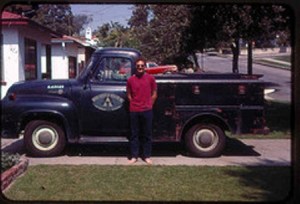
    One day, my Dad came home with a used 1949 Ford pickup truck, a six cylinder, three speed on the column, no air, no heat, no seatbelts, no radio, no-nonsense truck. He handed me the keys, and I backed the truck out of the driveway, my first stick shift experience. Hardly anyone drives sticks anymore – most of our transmissions are automatics; so too are our philosophies, automatic shift transmissions that allow for smooth acceleration through the busy vicissitudes of our popular culture. Automatic too, it seems, is Nussbaum’s insistence on the so-called rigor of an automatic philosophical tradition transmission. In other words, I think Socrates would have enjoyed Astra Taylor’s film “Examined Life.”

    Nussbaum also gets ten minutes in the film, so it’s a bit surprising she winds up finding the film “upsetting.” Indeed, her segment is one of the most speech-like presentations, as she appears raw-nosed and cold walking along Chicago’s Lake Shore Drive. Still, her point in her ten minute segment is clear: she wants all of us to be able to live rich and capable lives. But that seems consistent with what the other philosophers in the film want for us also.

    According to Cornel West, the lover of wisdom must have courage: “Courage is the enabling virtue to think, love, hope.” West, if not a philosopher in Nussbaum’s understanding of the tradition, is certainly a character, and characters make better film subjects than philosophers. West is the star of the film. His ten minutes are spread across three segments, and his reappearances create a happy motif, for his love of life is apparent and contagious – and his syntax moves in curious, unexpected directions.

    Meanwhile, Slavoj Žižek strolls through a London dump, where he advises don’t idealize, accept, learn to love the world in all its imperfections. “We should become more artificial,” Zizek says, and give up the romantic notion of becoming one with nature. He’s a realist, as is Cornel West, who seems to agree with Zizek when he says give up on the idea of having the whole, a romantic notion, he says, that inevitably ends in disappointment. As it turns out, Nussbaum comes across as the romanticist philosopher. She can’t love Zizek’s garbage. And it’s ironic, in the end, that the most romantic philosopher seems least comfortable out in the cold and trash of everyday existence. Still, she has a point: we shouldn’t go to philosophers for how to live our lives, and most of the philosophers in the film seem bent on just that, telling us what we should do, what we need to do, how we should live – well, that’s a bit of an exaggeration, but it allows for a closer examination of Nussbaum’s point, which is that the true philosopher (as I understand how she understands it, and I could certainly be wrong here) doesn’t tell others how to live, but tries to help them become capable of making and living their own “human dignity.” But exactly to that end, “Examined Life,” if not a great film, if an imperfect film, is a necessary film.

    And what about riding the clutch? Saves on the brakes, my Dad told me. Your brakes will always last longer with a stick shift, he said.

    Note: Scott McLemee reviewed the film for Inside Higher Ed before Nussbaum’s defection was published, and he used the word “transformative” to describe the segment with Astra’s sister, Sunuara. I agree; Sunara’s segment transcends all the other arguments.

    Update, Nov. 12, 2011: The Point Magazine, since I wrote the above post, has improved its website. The full text of an article from Issue 2 (the same issue as the Nussbaum article) discussing the film “Examined Life,” by Jonny Thakkar, “Examined Life: What is Popular Philosophy” views the film with Nussbaum’s concerns but leaves the theatre with different conclusions. Thakkar’s discussion of philosophy in the streets versus in the academy is definitely on point: for what is philosophy, who does philosophy best, where should philosophy be done, and what happens when philosophy gets into the wrong hands? Thakkar’s quote of Bernard Williams is more than mere touching: “…his [Williams’s] last essays reveal a man disillusioned with his academic career, which had ‘consisted largely of reminding moral philosophers of truths about human life which are very well known to virtually all adult human beings except moral philosophers.’ It was, he owned, ‘less than clear that this was the most useful way in which to spend one’s life, as a kind of flying mission to a small group isolated from humanity in the intellectual Himalaya.’”

  • Excerpt from a Conversation with Jean-Paul Sartre and B. F. Skinner

    BFS: “Man is perhaps unique in being a moral animal, but not in the sense that he possesses morality; he has constructed a social environment in which he behaves with respect to himself and others in moral ways.”

    JPS: “I can bring moral judgment to bear.”

    BFS: “The essential issue is autonomy. Is man in control of his own destiny or is he not?”

    JPS: “Man makes himself. He isn’t ready made at the start. Before you come alive, life is nothing; it’s up to you to give it a meaning, and value is nothing else but the meaning that you choose. In that way, you see, there is a possibility of creating a human community.”

    BFS: “Behaviorism does not reduce morality to certain features of the social environment; it simply insists that those features have always been responsible for moral behavior. Man continues to build machines which dehumanize him. He can remedy these mistakes and build a world in which he will feel freer than ever before and achieve greater things.”

    JPS: “We do not believe in progress. Man is always the same. I am responsible for myself and for everyone else.”

    BFS: “Why do people behave as they do? It became a matter of understanding and explaining behavior. It could always be reduced to a question about causes.”

    JPS: “It’s all quite simple. He can’t start making excuses for himself. There is no determinism, man is free, man is freedom. We have no excuse behind us, nor justification before us. We are alone, with no excuses. Man is condemned to be free. There are no omens in the world. No general ethics can show you what is to be done. This theory is the only one which gives man dignity.”

    BFS: “Control is another matter. Refusing to look at causes exacts its price. The behaviorist has a simpler answer. What has evolved is an organism, part of the behavior of which has been tentatively explained by the invention of the concept of mind. No special evolutionary process is needed when the facts are considered in their own right.”

    JPS: “There is no human nature. Man is nothing else but what he makes of himself. Man is responsible for what he is. And when we say that a man is responsible for himself, we do not only mean that he is responsible for his own individuality, but that he is responsible for all men. It is impossible for man to transcend human subjectivity.”

    BFS: “A scientific analysis of behavior must assume that a person’s behavior is controlled by his genetic and environmental histories rather than by the person himself as an initiating, creative agent.”

    JPS: “In order to get any truth about myself, I must have contact with another person. There does exist a universal human condition.”

    BFS: “We often overlook the fact that human behavior is also a form of control. No mystic or ascetic has ever ceased to control the world around him; he controls it in order to control himself. We cannot choose a way of life in which there is no control.”

    JPS: “Existentialism isn’t so atheistic that it wears itself out showing that God doesn’t exist. Rather, it declares that even if God did exist, that would change nothing. What complicates matters is that there are two kinds of existentialist; first, those who are Christian, and on the other hand the atheistic existentialists, and then the French existentialists and myself. What they have in common is that they think that existence precedes essence, or, if you prefer, that subjectivity must be the starting point.”

    BFS: “The major difficulties are practical. In any case we seem to be no worse off for ignoring philosophical problems.”

    (This invented converstation was created with quotes blended from Sartre’s “Existentialism is a Humanism” with Skinner’s “About Behaviorism.”)