Tag: Discuss

  • Casual Theory of Causality

    Why pink asks blue whenGarlic at Gilroy
    roused whose wheeze
    where past just falls
    fails new any to augur

    When rash throws think
    unfolds, unwraps, uncoils
    relax what jeers
    who held and

    Wooden Clappers

    Don’t let go of drop
    though darkness rooms
    and voices blink three
    coins in a phone booth

    At gas stop stuffed
    outside Gilroy near
    garlic beer and clown
    juggling artichokes

    Carriage trails from Castroville.

  • Hep Cats in Love: Valentine’s Day Comics

  • Anti-anti-anti: The Deviancy of Poetry

    Pocket Poet BooksThe most deviant of poets stops writing poetry, like Rimbaud, or tries to change the game, like Nicanor Parra, whose “Anti-poems” must contain the seeds of their own destruction. If poetry is already anti-language, what is an anti-poem? Deviant < Latin: “a turning out of the way.” To turn away from, as great musicians may turn away from their instruments once they feel the deviancy they introduced has been assimilated. What is assimilated is no longer anti-anything, doesn’t sound new anymore, or has become such a part of the din it has lost its resonance.

    Another David Biespiel argument afoot, stirring up a postmodern poetry desert storm, right around Dylan’s 30 minute MusiCares Person of the Year acceptance speech, in which Bob explains to his critics how some do it and others may not. “But you’d better hurry up and choose which of those links you want before they all disappear.”

    Poets see something the rest of us may see but call it something else. This is deviant behavior, the web of a spider on hallucinogens, but why must it also be someone’s head aflame in the fall?

    We might look forward to an anti-essay, an anti-novel, an anti-comics. The ultimate anti-work can’t be read by anyone, including its author. It’s born a mystery.

    Intro. to Fragments: Journals claiming they are open to all forms of poetry, but follow with, but make sure you read us to see that you fit. Fit what? Can’t deviate from deviancy, what use is it? Well, but as a group, deviating from all this other stuff. What other stuff? Other forms? Other voices, other rooms. What room? You know, the one “where the women come and go, Talking of Michelangelo.”

    In grammar school, the Sisters of Mercy taught us to syllabicate antidisestablishmentarianism. At the time, we thought it the longest word in English, and we learned to say it, touch it, feel it, but no one knew what it meant. There was no Wiki where we could look it up. On a dare, Laurel Hurst stole a glance at Sister Maryquill’s desktop dictionary. He returned, his knuckles raw from a ruler, and rumored it all came down to the Father, Son, and Holy Ghost. By high school, Laurel would become an anti-disestablishmentprotestpoet, haunted by the postmodern “supercalifragilisticexpialidocious.” Deluxe words. I’ll take a chocolate malt, fries in a basket, and a cheesepoem deluxe.

    Since a reasonable reader’s expectation or assumption is that any given poem may confound, confuse, or obfuscate, referencing some arcane or esoteric or privileged knowledge or experience about how words or ideas work, any given poem that does not do these things might look like anti-fit to a poetry critic, but will it be an anti-poem? What would an anti-poem look like? A poem that aspires to middle class respectability will like water seek its own level. Poetry needs the middle class, but the middle class does not need poetry. If it did, we’d see Poetry next to People at the drugstore checkout stand. But we get our poetry where we find it: Fishwrap.

    What would an anti-essay read like? What would an anti-photograph look like? Or an anti-speech sound like? Is the anti-form always mistaken for satire or cartoon? Aesthetic standards of the neighborhood. The propaganda of advertising. Deceitful come-ons. Pathos. What’s the point of saying something virtually everyone will agree with? Those churches are empty most of the time. Who moved my assumption?

    Consider Queen Mob’s TeaHouse, where you can read movie reviews by reviewers who have not seen the movie; this is theory uncrated from the academy, both feet off the ground. Alt, alt, mea maxima alt. Eliot: “…like a patient etherized….” Toto, I don’t think we’re in the Victorian Age anymore. Irony, satire, and sarcasm tools of the modernist trade. What’s the difference between an idea and ideology?

    Biespiel in his post-rant and Dylan in his address are saying something similar when it comes to a moral evaluation of the use of language as art. Dylan sums it up with the quote he references from Sam Cooke:

    “Sam Cooke [Dylan said] said this when told he had a beautiful voice: He said, ‘Well that’s very kind of you, but voices ought not to be measured by how pretty they are. Instead they matter only if they convince you that they are telling the truth.’ Think about that the next time you [inaudible].”

  • Penelope Fitzgerald

    Susan, post El Porto
    Susan, post El Porto

    Hermione Lee’s recent Penelope Fitzgerald: A Life occasioned a number of reviews in the usual places. Most touched on the questions of how did Penelope do it (the uncanny way she cleans up the mess by throwing out the novelistic clutter extraneous to her enriched needs, leaving almost every sentient sentence embering in its own mystery), and when did Penelope do it (she did not write and publish her first novel until around age 60). Writing and publishing a novel are two different activities. Writing one at any age seems unremarkable; publishing one, at any age, may be. Readers often gawk and might wonder if Penelope was a so-called “late bloomer.” But the flower seduced into blooming too early may come to regret a late frost. In any case, there is little evidence that Penelope was a late bloomer. Her writing seems set in her past. The novels are reflections, reconsiderations of experience, of a life rooted in the mutation and gestation of failure. Failure, like slapstick, can be funny in a way success can never be, but only a writer bloomed wise (rather than, say, embittered) from omission will get this. Slapstick, too, is found where the waves of success (swells that break in a timely manner) dissipate on the strand of a listless audience.

    The narrator of a Penelope novel, always in third person, tells only what she wants to when she’s good and ready, often slipping very close to first person in what James Wood calls “free indirect style,” but might pull back and mention a year, not all that useful a piece of information, actually, considering 1960 aboard a barge on the Thames hardly suggests an environment the same as 1960 up from the Strand at El Porto, except that later it might help explain a question of whether or not television was invented yet or were the characters too poor or too bohemian to own one, and one begins to see the ship of one’s own home going down in a domestic storm just as easily on 44th in El Porto as on the Thames in London. Domestic themes are at once both universal and local; what matters is both what is said and how it is said. One doesn’t navigate one’s way through domestic turmoil following some staid rubric or outline; one lives through the hullabaloo and just maybe survives alone to tell the tale. And you must tell it as it happened, full of confusion and doubt about what might come next, wind always full in the sails, or might have happened, if someone, anyone, had their hand, even once in a while, on the tiller.

    Of the reviews of Lee’s Life I reviewed, I’ll only mention a few: Caleb Crain in Harpers, “Her Struggle: The reticence of Penelope Fitzgerald” (which I saw note of on his blog but had to renew my lapsed subscription to Harpers to see, only to be thwarted by a six week delay before my first issue arrived, which by then was the next month’s; no matter, by then, impatient, I was able to read Caleb’s review on-line, having gained re-admittance via subscription to go behind the Harper’s pay wall – you need a hand stamp); James Wood in The New Yorker, “Late Bloom”; Alexander Chee in Slate, “The Lady Vanished”; and Levi Stahl, on I’ve Been Reading Lately, “Penelope Fitzgerald’s notebooks.” I mention Caleb’s review because he waited until 46 to write and publish his first novel (following a novella published in n+1 and a number of non-fiction works, including articles, book, and blog); is Caleb a late bloomer? Of course not, but it’s interesting that the setting of Caleb’s Necessary Errors, like most of Penelope’s, occurs decades ahead of its writing and publication. Doesn’t wine aged twenty years taste different from the day it was bottled? Some writers are everblooming. Alexander Chee mentions not just the idea of the late bloomer but recounts the actual critical reaction to Penelope’s success that at the time combined skepticism with derision, as if to have arrived late and wearing a housedress provided adequate support for the claim unprolific oldster can’t write or she would have by now. And Levi Stahl’s review is interesting because it references an earlier review he wrote of Penelope’s The Afterlife, a collection of her non-fiction articles, and on the strength of his review, I picked up a copy and quickly saw that this whole late blooming explanation of anything is a dodge. The clue to understanding Penelope might have something to do with knowledge of patience, as this comment, from Bridget Read’s Paris Review “How She Knows,” explains:

    “It is vital to emphasize that Fitzgerald’s novels were not achieved in spite of her domestic life; they were borne directly out of it. Her work is radical in that it suggests that, in fact, a feminine experience, a liminal experience, might be better equipped than a male one to address the contradictions of human existence taken up by the greatest literature.”

    Levi Stahl’s review was of Penelope’s notebooks, and he quotes Penelope saying:

    “I am drawn to people who seem to have been born defeated or, even, profoundly lost.”

    It’s possible that Penelope’s testimony, expressed in her novels, belies even her most perceptive reviewers: did she not feel herself, during all those years of veritable single motherhood and low rung jobs thanks in large part to the miscreant missing husband – did she never feel neither beat nor no direction home?

    I am reminded here of Daisy from Penelope’s The Gate of Angels. Maybe Daisy wasn’t born defeated, but loss came nevertheless, which perhaps makes things even worse, for if one is not born defeated, one may not have the skills necessary for sane survival (wit and sense of humor, irony, empathy, honesty, ability to pack quickly and travel light) yet Daisy, in so many ways, never seems either defeated or lost. Even when she is actually lost, as in without a map, she manages to find a way out of that lostness. And of course the lone woman going astray into the for-males-only cloistered arena of Fred’s college is hilarious with irony. Daisy, for her obvious suffering, is existentially happy, the most telling characteristic of her personality, upon her like a birthmark, that she finds it easier to give than to take, to provide for than to ask from.

    This sense of being born lost, though, surely is gender neutral, but to find oneself lost with children in tow is a condition most often reserved for women. Reading Penelope, I am reminded of both Stevie Smith and Clarice Lispector, Stevie for humor, Clarice for a style of omission, and both for a hold on the occult. While I was reading The Bookshop, which employs a poltergeist, coincidentally Susan informed me a squirrel had taken up residence in an eve recently slightly opened by ice damage to a fascia board of our old house. I argued, since we had not actually seen the squirrel, that it could be a poltergeist. But Susan said, no, because the squirrel only made noise in the early morning, just before dawn, whereas a poltergeist prefers the hour just after you’ve fallen asleep.

    What else characterizes the style of Penelope’s short novels? The narrator often comments on the behavior of characters as if there are three parties at play at once: the character, the narrator, and the author. While to some readers, this may seem like a loose grip on point of view, it’s actually a way of condensing and rotating observation, like with a kaleidoscope. The action is close in, the distant details of world news obviously irrelevant. The focus is on detail – if things seem vague, it’s not for lack of detail, description, or dialog that reveals character. Character as Chaplinesque cog, subject to naturalistic randomness. Free indirect style, with the narrator making evaluative, reflective, and analytical comments, as if claims made may indeed be challenged, though of course there will be no reply. Still, almost everything continually on the go, or on the move, coming, as it were, as surprise. But isn’t that the nature of the domestic, which cannot be domesticated?

    So, I’ve read so far, of Penelope novels, in this order, as they came up in library queue: Offshore, my favorite I suppose for its setting of water and boats and mix of characters major and minor as well as the unexpected turns; At Freddie’s, again, a mix of young and old characters, age sometimes having little to do with maturity, and Freddie’s is how all schools should work; The Bookshop, atmosphere so strong you can smell the water and the books and hear the poltergeist and the cash machine; The Golden Child, bit of a mystery this one, though they all contain something of that genre; The Gate of Angels, again, while the plot is dated in a specific time zone, it hardly seems relevant in the sense the characters and their predicaments could be playing out even as we read. And I’m opened now to Human Voices. Now, in the interest of full disclosure, I started Innocence, but did not finish it. I had read about a third of it when I nonetheless had to admit that I couldn’t get my ear around it. I think something of the “historical novel” angle and too much of the fairy tale got in my way. Maybe I’ll go back to it some day. It’s often I pick up an old favorite book and wonder, how did I ever find this enjoyable? Likewise, I might pick up a book I long ago was unable to get into, and wonder, how could I not have appreciated this? Maybe I’ll have to wait until I turn 60, a late blooming reader. Meantime, I’ve also put Hermione Lee’s biography of Penelope Fitzgerald in the queue.

  • Punctuation Theory

    012320152047
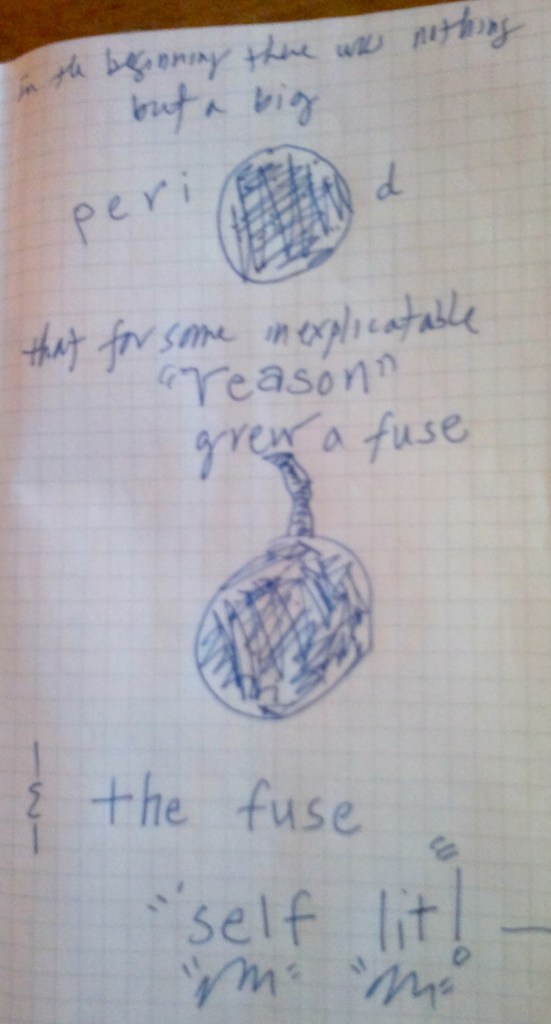
    “inexplicatable” = cat purr theory

    012320152048

    012320152049

    012320152050

    FOOTNOTES & OTHER EVIDENCE

    012220152038
    Punctuator Robot
    012220152040
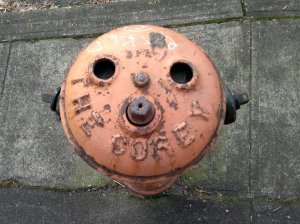
    Footnote
    012220152043
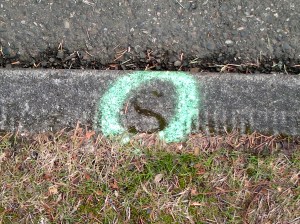
    S circled in aquamarine
    012220152045
    Archaeological dig
  • A Few Salient Notes on the Point of Punctuation

    Nail Punches and HammersWhat is the point of punctuation? When can we be sure our marks are correctly selected and placed, knowing our readers will often think otherwise! Or worse, won’t care :( `

    No. Shouldn’t punctuation be like a trip to a good dentist who pulls your tooth but you don’t feel a thing? Later, you feel for the point of that missing tooth with your proofreading tongue. Say goodbye to sunflower seeds, those single quote marks that helped along slow reads at the center of summer late inning baseball games. (Who is you, by the way? – but we should save that issue for a later post, because it has nothing to do with punctuation, but with person.)

    The narrator of J. D. Salinger’s Seymour – An Introduction [when do we place titles in italics or “surround them with quote marks” and omit italics?], Buddy Glass, one of Seymour’s brothers, offers his reader a punctuation gift:

    “…this unpretentious bouquet of early-blooming parentheses (((( )))).”

    But he then suggests the “bouquet” more accurately portrays his “bowlegged…state of mind and body….” Buddy speaks to you as if the general reader is a good old buddy, one who does not pack a red-pen mentality correcting as he goes like a noisy street sweeper the debris of punctuation through streets littered with pot holes and broken gutters with missing horse rings.

    Salinger’s narrator’s bouquet has always suggested to me an Army sergeant at rest, as indeed J. D. was.

    Is placing letters or words in italics a form of punctuation?

    What is ` used for?

    What are {/} {/} but no worries this is not a test but a post on punctuation.

    From Adverbial Beach (by Joe Linker):

    Gently the blousy wordiness finally quiet down not but up again and continually.

    Usually superlatively long only this hour lately awake before four too early darkly to call this morning while lately too late to hope for a verbly sleep.

    The apostrophe is a comma that evolved from the sea and learned to fly away. Bring an apostrophe down to earth and you’ve got a nice crowbar.

    The best punctuation works like the nailing in a tongue and groove hardwood floor; you don’t see the nails. For side edged, top nailed floors, keep a nail punch and hammer close at hand for countersinking punctuation marks that will otherwise trip up readers dancing and sliding by in socks.

    Punctuation is such a trip, hipsters in the 60’s used to say, but members of that particular generation of hipsters, pockets full of commas, are beginning to reach their final ellipses.

  • A Cat’s Argument

    A Cat's Argument

    “Aren’t you hot sitting on that heater vent?”

    “Alas, summer so fast has passed.”

    “Yawn. Fall curls my tail and bristles my fur. Just yesterday you were complaining of the heat and wondering if summer would never end.”

    “Shelley was right: ‘We look before and after and pine for what is not.’”

    “I once lived in a basement room paneled in knotty pine.”

    “I’ll bet it was not when you finished with it.”

    “I rebut that. The finish was sprayed shellac. I used to rub against it a good polish.”

    “Why can’t cats live without argument?”

    “Who says they can’t? Cite your sources if you’re going to talk to me like that.”

    “An old cat’s empirical knowledge.”

    “Remember that imperialist cat came into our yard?”

    “Can facts suffice? Or must cats argue?”

    “Argument is a fact of life, a must.”

    “How does meaning behave in an argument?”

    “Meaning is an alley cat on the prowl and up to no good.”

    “Is every text an argument, every argument a trick, every text a test?”

    “You ask a lot of hollow questions.”

    “I once lived in a hollow.”

    “Have you ever been back?”

    “Does Theory eschew the behavior of meaning?”

    “Go ask a theorist.”

    “Do theorists like cats?”

    “I suppose some might, but they all want to know how and why we purr.”

    “Where do assumptions come from?”

    “Assume I don’t know, and wake me up when winter has passed.”

    “What a flock of lucky theorists who can fly south for the winter.”

    “Have they anything to say to us?”

    “I don’t know. Anyway, it’s too hot in the south.”

    “It’s going to be too hot in here, too, if you don’t move off that heater vent.”

  • The Assumption: A Graphic Post

    We’re in primary school art class, where the students have been told to draw a picture of a house.

    Francine draws this:

    Sun Over House by Francine

    “What’s this?” Missus Portmanteau, Francine’s art teacher, asks, pointing to the big red circle in the sky. “It looks like a big rock is about to fall on your house.”

    Francine is nonplussed in the face of a teacher who doesn’t recognize the sun.

    “The sun,” Francine explains.

    “The sun isn’t that big,” Missus Portmanteau says, and enters a note in her red book.

    The following week in art class, Francine draws this:

    110820141928“What’s that?” Missus Portmanteau asks Francine, pointing at the orange and red circles over Francine’s house.

    “Mister Sapidot [science teacher] said the sun spins,” Francine answers.

    “Your sun is too big, your house too small.”

    Francine feels like the rock has fallen on her house.

    110820141929

    “Now what?” Missus Portmanteau asks.

    “Someone is taking a nap,” Francine says.

    Missus Portmanteau doesn’t say anything, but she makes a firm mark in her red book with a red pen.

    It’s the final art class before summer vacation. Francine’s father has promised a special surprise if her report card looks good. This week, she nails the art project.

    110820141930

    Francine has learned that to do good in school and please her father she must conform to her teacher’s view of reality.

  • “Therapy”: A Kierkegaardian Sitcom

    Tubby is into therapy. On any given day, he might drop by his aroma therapist and get a concoction of essential oils rubdown while inhaling infusions of lavender and such to improve, for example, his virility. Or Tubby will go in for a bit of acupuncture. One of his problems is with a knee.[1] Or Tubby will pay a visit to his behavioral therapist. Or he’ll meet his friend Amy for another installment of pretend paramour therapy. Amy is into psychotherapy, so she sees only one therapist, but goes every day.

    Tubby’s behavioral therapist has suggested he keep a journal, writing therapy, and he does, and the result is David Lodge’s therapy, a novel titled “Therapy.”[2] Reading is another kind of therapy.

    Tubby discovers Kierkegaard, and is struck, somewhat fancifully, by what he sees to be the resemblance of Soren’s issues to his own. Judging from his symptoms, Tubby appears to suffer from depression.

    This is the sort of thing that catches his eye in Kierkegaard, from “Either/Or”:

    “What is a poet? An unhappy man who conceals profound anguish in his heart, but whose lips are so fashioned that when sighs and groans pass over them they sound like beautiful music.”

    What does Tubby relate to here? He’s not a poet. He’s a television sitcom writer, a very successful one. He has a lovely wife, Sally, and two grown children successfully out on their own. He lives in a nice country house with nearby club, and also has a flat in the city, and owns a custom car his daughter has nicknamed “The Richmobile.”

    Tubby is free to come and go as he pleases – etcetera. But he has no rest.

    It’s not even that he’s not happy. He’s able to enjoy the fine things his money can buy, but enjoyment seems something different from happiness. He contributes to charities. He’s a nice guy. He sticks up to the cops for a street urchin camped out on the stoop of his urban flat.

    Tubby appears to be depressed, though depression’s close friend, anxiety, does not come along for the ride. Tubby finds in Kierkegaard someone who understands his problem, a soulmate. Again from “Either/Or”:

    “In addition to my numerous other acquaintances I have still one more intimate friend — my melancholy. In the midst of pleasure, in the midst of work, he beckons to me, calls me aside, even though I remain present bodily. My melancholy is the most faithful sweetheart I have had — no wonder that I return the love!”

    Tubby loves Sally, but he’s no longer able to listen to her, and when she tells him she’s leaving, he doesn’t hear that either.

    The themes of “Therapy” are Kierkegaardian: angst and dread, though both wear a smile in the novel; the seducer, hapless but caring; repetition, particularly the attempt to recover first experiences and to reclaim; commitment, the idea of the aesthetic interest, competitive interest (which may include ethics), and religious interest illustrating three layers of involvement, an analysis that might be applied to just about any pursuit; the absurd (and what better way to illustrate the absurd in contemporary life than the sitcom?), and the pilgrimage.

    Lodge has adapted Kierkegaard to the situation comedy, blending references to Soren and his writings into Tubby’s story in unobtrusive ways, but both implicitly and explicitly. “Therapy,” Lodge’s novel, is a situation comedy. It doesn’t matter if you don’t get or don’t appreciate Kierkegaard; the casual reader may still find Lodge’s book an engaging and entertaining reading experience, in spite of its existential crossings. There is within it a playful sense of form and voice. Plus you learn about the making of sitcoms, from an insider’s view.

    But about that engagement analysis. The book ends, wildly enough, with a pilgrimage, and Tubby uses a Kierkegaardian commitment analysis to explain the various types of pilgrims he encounters. He glosses “the three stages in personal development according to Kierkegaard – the aesthetic, the ethical and the religious,” applying them to the pilgrims making their way toward Santiago via the Camino de Santiago (The Way of St. James).

    The first pilgrim, “the aesthetic type,” is on the road for enjoyment, to appreciate the views, the air, the exercise. The second pilgrim, the “ethical type,” is concerned with propriety, the rules of the way, procedures, and may be critical of those pilgrims who don’t see the way his way. The third pilgrim, “the true pilgrim,” like Kierkegaard’s true Christian, embraces the absurdity of the non-rational – indeed, that is what calls her to it; passion supersedes commandment. There is no reason to do this, and that becomes the reason for doing it.

    “The aesthetic pilgrim didn’t pretend to be a true pilgrim. The ethical pilgrim was always worrying whether he was a true pilgrim. The true pilgrim just did it” (“Therapy” 304-305).

    Taking philosophical propositions and turning them into templates is probably a philistine idea, but one that might possibly result in effective therapeutical analysis. To use the three stages as a template, substitute any aim, belief, or disposition you’d like for the word pilgrim in the quote above: hipster, poet, professor, or politician, for example. Or try your own selfie identifying word in place of pilgrim.


    [1] I’ve never been to an acupuncturist, enculturated as I am to believe health care is synonymous with medicine; but this week, walking in town, we happened to pass a sidewalk sign advertising group acupuncture. How does that work, I asked Susan – they skewer you like on a kebab?

    [2] “Therapy,” by David Lodge. Penguin Books, 1996. I had picked up Lodge’s “The Art of Fiction” for a project I was working on. I liked his appeal to the casual reader, and looking at his other books, decided to try “Therapy.” Ethical type Kierkgegaardians may find it merely quaint, but true Kierkgegaardians might enjoy the humor. As for me, I’m not a Kierkegaardian at all, but thanks to “Therapy,” I do know now how to pronounce his name. Maybe that makes me an aesthetic Kierkgegaardian?

    Sitcom

  • The Syllabication of Desire

    You are here.In “The Stylization of Desire,” William H. Gass[1] complains philosophers have ignored the body. I guess if you live a life of the mind, you don’t dwell on the accoutrements. You save your energy for argument. Gass argues an evolution in the development of human desire, from a direct recognition and fulfillment to more sophisticated, abstracted satisfactions. A fly fisherman ties his own handmade, artificial flies onto barbless hooks, intending to catch and release fish not to be eaten. That’s my example, not Gass’s, and the fish dances, which is already style, but does the fish find or hunt the fly? While the fly fisherman is hooked on a style, not the object of his desire?

    Gass says his subject is, indirectly, style, not desire. The hungry man finding food employs a different style from the hungry man hunting for food. The man who is not hungry, but who knows at some point he must eat, develops rituals when repeated over time create their own needs and wants, which may or may not have all that much to do with food anymore: on which side of the plate should the barbless hook be placed?

    Style is need become recreation. Substitutions are impurities, and style is anything but a distillery. Style is additives, an acting out: a method, a process, a procedure, elliptical, indirect, never subtle. And style is a tool, a way of reaching for something just beyond immediate grasp or sight. In 1971, when Gass was writing his essay, the goal of music may have been lost in the style of sound systems, in stereo equipment, components, each creating its own desirabilities. The sound system is a stylization of music, as music is a stylization of sound. The war was sixteen years old, also a style, because there was no end in sight. It was the long reach of promise, the promise of style. You could master MLA, even if you had nothing to say. You could still read for style, before theory stylized the wrecking ball. Theory is a means to no end, all style.

    By desire, Gass means basic human needs. By style, he means the infrastructures erected culturally and socially that achieve goals to reach those needs. To create the infrastructure, people have to agree about what they want. Things they want are then called values. Values are the styles of desire. You wanted a fish, to eat. You may have seen a bear or a bird snagging a fish from a river. You watched the bear eating the fish with her hands, cold, river to mouth, maybe a rock for a table. You could learn to do that too. But now you can grab a can of tuna off the shelf at the supermarket. You get a job so you can pay for the tuna. The job probably has nothing to do with fishing. It takes a whole lot of infrastructure so you can make a tuna salad sandwich, and all kinds of new needs are created along the way which have nothing to do with fishing for fish.

    The object of desire is mystified by egress, the tool, the way. The path becomes the object of desire, as in Zen. Gass visited Plato country, maybe, but he seems to have been looking for a way out. Today’s gentrifications imply style, new rituals in old neighborhoods, where you can no longer belly up to the bar and drink beer from a bucket, which was also a style, but one now no longer valued. Styles change as values change. Gentrification is a means-end inversion, where desire for the object is lost to desire for the tool, and tool instruction becomes ritualized: indentured servant, laborer, apprentice, master, homemaker. This is the abstraction away from the body, from hammers and nails to blueprints and picking out your wall and rug colors and appliances. Houses, once homes, are now investments. Houses are the shells of families. The oldest ones have ceilings and walls and floors layered with sediment, basements full of dregs, the debris of style. An investment is not a body. But investments, like bodies, can get run down. Style is a value. Values are mutable.

    But while the philosophers may have avoided the body, the poets embraced it as well as all of its functions. First comes the body, then the mind. That’s not to say the body is always taken seriously. From Chaucer’s “The Miller’s Tale,” a situation comedy:

    “Speak, sweete bird, I know not where thou art.”
    This Nicholas anon let fly a fart,
    As great as it had been a thunder dent*;                     *peal, clap
    That with the stroke he was well nigh y-blent*;                 *blinded
    But he was ready with his iron hot,
    And Nicholas amid the erse he smote.
    Off went the skin an handbreadth all about.
    The hote culter burned so his tout*,                             *breech
    That for the smart he weened* he would die;                  *thought
    As he were wood*,  for woe he gan to cry,                           *mad
    “Help! water, water, help for Godde’s heart!”

    From Joyce’s “Ulysses,” Episode Three, Stephen on a meditation walk:

    Cocklepickers. They waded a little way in the water and, stooping, soused their bags and, lifting them again, waded out. The dog yelped running to them, reared up and pawed them, dropping on all fours, again reared up at them with mute bearish fawning. Unheeded he kept by them as they came towards the drier sand, a rag of wolf’s tongue red panting from his jaws. His speckled body ambled ahead of them and then loped off at a calf’s gallop. The carcass lay on his path. He stopped, sniffed, stalked round it, brother, nosing closer, went round it, sniffling rapidly like a dog all over the dead dog’s bedraggled fell. Dogskull, dogsniff, eyes on the ground, moves to one great goal. Ah, poor dogsbody! Here lies poor dogsbody’s body.

    From Whitman’s “Leaves of Grass,” 21:

    I am the poet of the Body and I am the poet of the Soul,
    The pleasures of heaven are with me and the pains of hell are with me,
    The first I graft and increase upon myself, the latter I translate into new tongue.

    and from 50:

    Wrench’d and sweaty – calm and cool then my body becomes,
    I sleep – I sleep long.

    The body is energy, energy heat; how to cool the mind? Sprinkle some water on it.

    In “Being Peace,”[2] by Thich Nhat Hanh, we find a tool that might be used to solve Gass’s algorithm, that style (means) usurps ends (desire), a game Gass calls civilization, the realization of values. Civilization is a clock, the stylization of time. It’s hard to live in the moment when the clock is ticking and clicking away. Tests are timed. Clock in, clock out. Days are geared for what comes next. Hanh’s solution, simply put, is to be in the moment, which requires body and mind to come together, stop arguing, come to some agreement. Hanh offers a three-fold mantra that blends breath (an amalgamation of body and soul) with mind. Breathe in calmly; be calm. Breathe out and smile. It’s not easy to smile under rigid conditions, but it’s even harder to feel anger, frustration, envy, or any of the other so-called deadly sins when smiling. Bringing the present moment into focus cuts style short because there’s no reliance on a past or future moment. There is no time for playing games, for acting out, for conceits and deceits. And there is no need for revisions.

    In “Being Peace,” Hanh identifies three energies: sexual, breath, and spiritual, a trichotomy, but peace requires oneness:

    Breath energy is the kind of energy you spend when you talk too much and breathe too little [many examples of breath energy can be found on The Coming of the Toads blog, including this post]. Spirit energy is energy that you spend when you worry too much and do not sleep well.

    The Zen practitioner works on conserving energies, though if describing an expert at it, work might be the wrong word.

    For some reason, we have language. What is language? Do all animals have it? Do plants have languages? Writing is the stylization of language. Metaphor is style. To live in the moment as Hanh suggests, to meditate, sitting or walking, may require thinking anew and reevaluating the primacy of words as a means to cut away from the hankering that looks before and after and pines for what is not.[3] To live in the moment may mean to abandon metaphor. To liken this moment to some other moment we must leave, momentarily, this moment.

    Hanh’s mantra can be shortened to four words: Calm, Smile, Present Moment. Present can be substituted with wonderful. This is the syllabication of desire, but can it be done without words? Below is a table I created containing variations on the mantra, simple syllables, monosyllabic, mostly. Read vertically top to bottom or horizontally left to right or right to left. Note the mantras are presented with their counter or anti-moment-mantras, the desired calm moment placed near its opposite, acknowledging tension and conflict and the difficulty of doing this, of being calm, of smiling (Hanh is talking about smiling in the face of suffering), while some attempt has been made to create a cycle using the four seasons:

    Calm Storm Smoke Motion Drizzle Quiet
    Smile Frown Swell Blow Open Spring
    Present Absent Green Tube Empty Mouth
    Moment Nowhere Dwell Past Scene Space
               
    Thorn Palm Face Prayer Smooth Light
    Snarl Wave Play Tick Listen Place
    Reach Hand Wall Honey Summer Reel
    Mist Balm Way Brim Water Well
               
    Naked Red Still Rough Sweet Noise
    Laugh Close Rest Remit Toss Circle
    Full Scar Walk Future Soft Moon
    Ocean Door Rhythm Evening Fall Flat
               
    Snow Freeze Silver Bleary Cold Cool
    Spur Scowl Thaw Abstract Breathe Call
    Hither Fix Winter Weary Slow Bird
    Rapt Incessant Drip Notion Motif Bell
               
    Calm          
      Smile       Wave
        Present Current  
          Moment  
    Eat Drink Enjoy Labor[4]  

    [1] “The Stylization of Desire” appeared in The New York Review of Books, February 25, 1971. It’s paywalled, but the first few paragraphs can be viewed. I have it in an old copy of “Fiction: The Figures of Life,” a collection of Gass essays from late ‘50s to early ‘70’s.

    [2] “Being Peace” by Thich Nhat Hanh. 1987, 2005. Parallax Press, 118 pages.

    [3] from Percy Bysshe Shelley’s, “To a Skylark,” stanza 18:

    We look before and after,
    And pine for what is not:
    Our sincerest laughter
    With some pain is fraught;
    Our sweetest songs are those that tell of saddest thought.

    [4] “And also that every man should eat and drink, and enjoy the good of all his labour, it is the gift of God.” Ecclesiastes 3:13 (KJV).