As we begin our trip with Ana, leaving her teens and moving from a self-renounced medieval privilege to her own renaissance, we get the feeling she has no interest in becoming the subject of some troubadour’s love song or any knight’s lady waiting in a fortified manor house for her man to come home with the meat and mead. She’s interested in neither shame nor honor. The holy grail of “Course of Mirrors: An Odyssey” is a story of one’s own. This is not your mom’s fairy tale.
A medieval mystery play, a miracle play, directed by an evil Preacher, brings Ana a quick and unwanted celebrity. But the Preacher is a vaudevillian, the sacrifice, like the Catholic mass, intended to be bloodless. Fine, Ana wonders, but what was his plan for her if she was not to die? And something about the Preacher, his looks, his bearing, his power to pander, attracts Ana. We don’t always want what’s good for us.
We are on a rogue adventure in a picaresque tale where disguise and subterfuge are necessary and ordinary. Ana dresses as a boy, learns to live off herbs and small animals from her mentor Rheine, and, in the course of their travels and travails, embraces a realism rooted in the fairy tale. For example, now hiding from her mother now searching for her girl disguised as a boy, in the hold of a boat where,
“Far too many horses, mules, sheep, goats, fowl and pets were cramped together with hardly any ventilation. The sickening stench of urine and droppings eventually defeated me. At daybreak I retched and escaped onto the first deck. Bent with pain, I was violently sick over the railing, onto the oars below.” Also realistic is the humor; Rheine says, “I’d an inkling your night would be disagreeable.”
The miracle play motif is picked up by a traveling theater troupe: “Rheine had squeezed my hand on occasions. The irreverence brought to the miracle made us simultaneously cry and laugh with the audience. Humour softened my bitter memory. I told myself that the saint business was a mob dream.”
But we are as quickly brought from a saving humor to a murderous reality: “People and animals thrashed in the water or floated lifeless in the wake of the burning…The men pulled three bodies into their boat and attacked the rest with oars. They pushed the living underwater to their deaths.”
In the space of a few episodes, then, we are caught in our runaway’s fallopian fall from innocence to experience, pushed by a stubborn insistence on an existential rebirthing, from parental expectations to a daughter’s commitment to freedom. The contemporary allegory may have its roots in the counter culture movement of the 1960’s, when costume and disguise, stage renaissance fair updated with hallucinogenic lighting, pretend sacrifice, and children on the run from the neurotic, war damaged psyches of their parents figured out new ways to live and tell the old stories.
In any case, the future is never far behind, where our decisions have consequences. This is time travel, in the form of foil character Cara’s journal: “A handful of us are perched on the flat roof of a skyscraper; I can’t see the faces of the people with me, they are strangers. The tower sways like a ship tossed about in an ocean, climbing a rising wave, only to plummet. The tower tilts. I slide and cling to the leaded rim of the flat roof. There is a sudden lurch.” Cara’s time altered mirrored narrative within a narrative both clarifies and complicates Ana’s predicament as the plot unfolds like a house of falling playing cards. The story’s movement is metallic, its setting competing communes, its joy food and drink, its darkness plague and plundering and penury, beggary and politics. Its themes include independence, movement and flow, archetypal psychological imprints: the quest, journey, river, the map; loveless marriage and surrogate parental forces and mystery births; instinct and intuition, magic, alternates – including love and sex and the confusions one brings to the other.
The writing style moves with the themes. Some of the descriptions are like Hieronymus Bosch paintings, people burning in fires, drowning, children screaming, animals too, faces hiding in the brush. As our heroine prepares for her first kiss, though, the writing changes to the lavender prose of a teen romance novel. An entire chapter is given to what becomes the disappointing epiphany, where the “peeling” of one’s clothes reveals a plush orange that screams when split. She gets used to it, but then the prose turns to the stark realism of relationships: “Naivety is a curse. Crushed like a rose and tossed into the pale remains of a fire, I was of no use, not even as fuel for kindling. I should have asked the river to take me when it offered to.”
There is an economy to the writing that is expedient, efficient. A history of a people and a land must be told, but so must a personal diary be explained. The narration moves from first person to third person without any introduction or worry. The switch is simply necessary to keep the story moving. And our first person has other ways of knowing, of omniscience. Sentience appears as a kind of hallucinogen usually hidden within things. Perception pulls life force from stone, going forth as well as taking in.
How serious is all this? First, it’s great fun. And shouldn’t writing, particularly the writing of a novel, bring pleasure to both the writer and the reader? The risk is a flatness, two dimensional characterizations, an animated film, the artistry of which undercuts its own reality. Myth when expanded usually fills with irony. Second, there are borrowings of form from myth and fairy tale that legitimize the atmosphere of magic and fantasy. But it takes a great leap of imagination to enter an invented world open eyed, to pretend even after all pretense has been lost. But this is the writer’s explanation of things, of life, of a life, anyway, this book. In some purviews, every thing must be explained. So the mechanical pencil might come to explain safe sex.
Of course sex is not to be mistaken for love, or the prostitute would be out of business, but does the withholding of sex from one’s willing marriage partner signify un-love? Ana is consumed by the adults in her life, ignored or suffocated, and suffers from the only child curse, which requires the fantasy playmate so she’s somebody to talk to. From the pretend playmate the child learns mimicry. The playmate passes on the talisman. There is a kind of shorthand to the method that results, again, in a two dimensional telling, even though the attempt is a mimesis of the whole. When does the whole break into parts of sentimentalism, and from there to irony? “My poetry, he [Lionel] said, is devoted to the feminine spirit.” Ana responds, a severe critic: “They were bad poems, overly sentimental.” And this only a few pages from sharing Cara’s poem the reader may find sentimental in its longing to find some meaning in the “void.” Later, Professor Ruskin will fill in the blanks. We must remind ourselves the sacrifice was staged. But even a staged sacrifice has consequences. That’s where the repetition comes from. “It breaks my heart that the feud of brothers should repeat itself into another generation. It’s like a curse.” No, it’s not “like a curse”; it is a curse. The curse is metaphor, allegory – but even the language of the physicists can’t adequately explain what we either see or don’t see. All of creation is just that – an artist’s rendition, a depiction, a deduction.
But the epiphany does come, or comes down, and “she will compose her own song.” A song of one’s own. A myth of one’s own. “I could no longer strangle my voice.” She composes her own poem:
“I’ll kick your ghost
out of here – I’ll make no more
bargains with your fear…”
But have we instead cut a deal with our therapy? The troupe now performs a parody of the miracle, as if we need reminding it wasn’t a real miracle to begin with. “In the shadow of each mask lies desire.” Desire for what? Power? Or to be used by some mad man’s “mad ambitions?” And what’s the ambition, the obsession, all about? We’re back to teen romance, now darkened with a certain amount of experience: “Unsure whether to laugh or cry, I cancelled my response, flattening my lover’s pleasure.” As if he cares, which might be part of the attraction. By the time we get to Batin’s place, we’re ready for the details of the dark side. We come across “Cults of Ecstasy” and the “pit” of “correction.” Are these bridges to the real world?
We continue to meet new characters, travel, encounter new adventures. The book is divided into 29 numbered chapters, each divided into smaller, titled sections. There is a prologue and a short epilogue, and useful lists of characters, and a map and a list of places. The lists contain short descriptions of character and place. Time moves back and forth, like eddies in a river. We fall deeper into the encyclopedic epic. We are not out of trouble yet, as the short section “Cockroaches in the hellhole” makes clear. Ana is saved from a “sickening concoction of smells – rancid fat, stale urine, sweat and rum,” and “broken teeth.” Little Snake is a welcomed if late well-developed character. Cassia appears. We discover what “dissolves a curse,” and what it’s like to make love “truly naked.”
What gives shape to a life drifts off with words. We close the book, glance up, and there we are, again, leaving, looking for something new. Myth is individual experience repeated, over and over again, until it becomes universal and a story everyone understands. Myth is not false news. It’s a way of telling a story.
Course of Mirrors: An Odyssey, by Ashen Venema; 2017, Matador, 377 pages.
 lowly sprung the environs plush with dawdle walks and doodle weeds, tweets and posts poking up in the usual spaces, out of concrete poetry cracks, but in the midst of this year’s annual rush for life we were learning to breathe. Spring is just such the perfect answer to winter, one wonders shouldn’t one’s writing change, from Irony back to Romance? Never mind; summer will remind us there is no keener irony, no sharper disappointment, than romance.
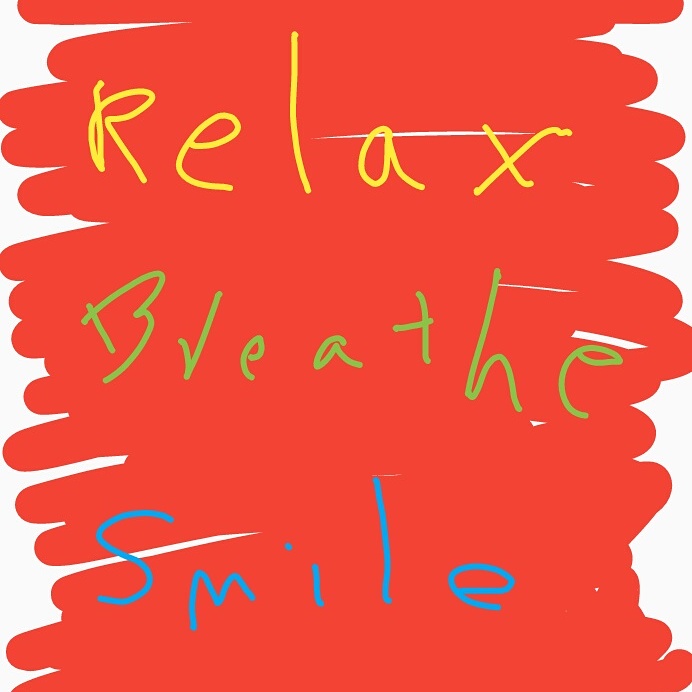
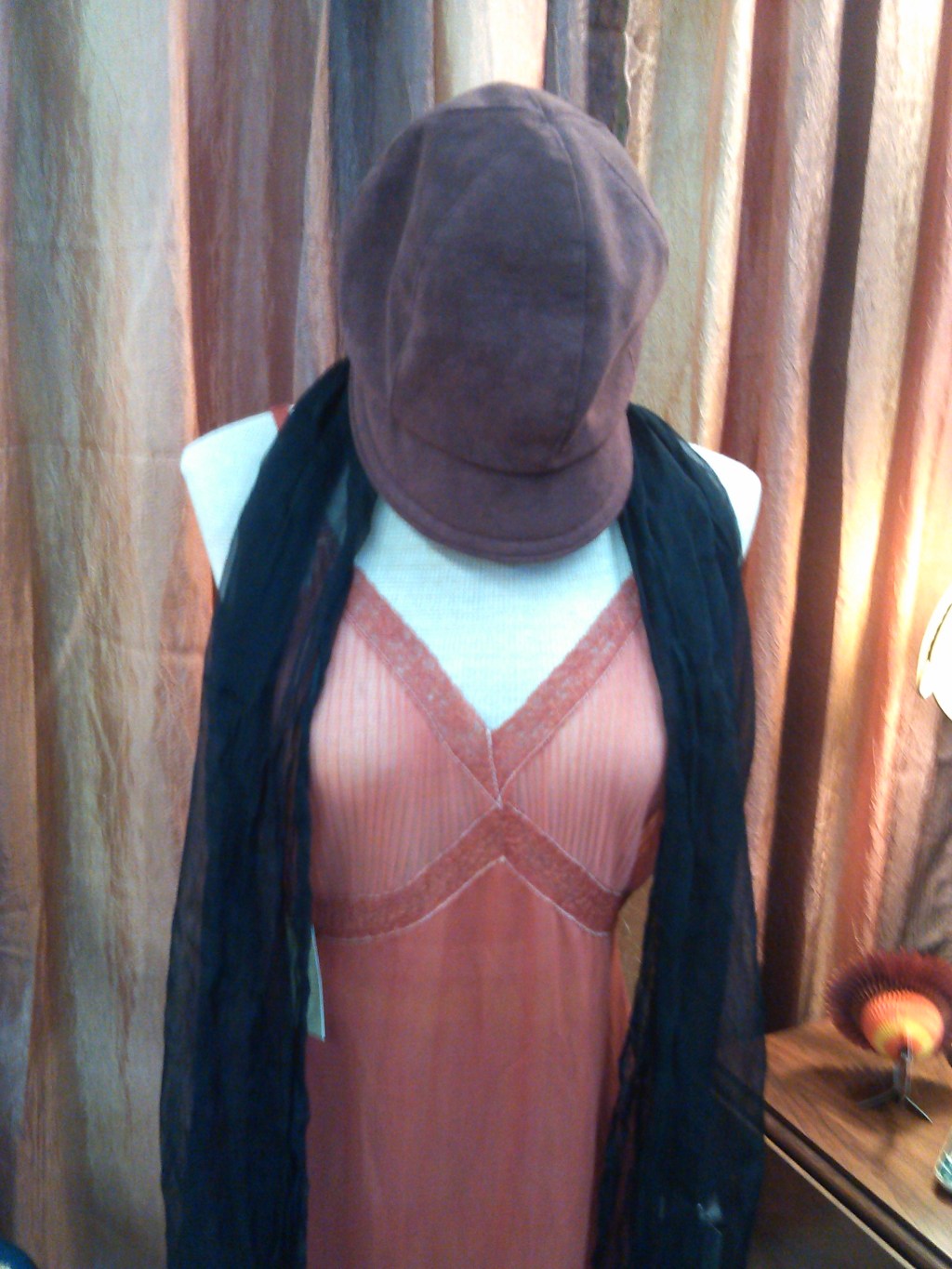
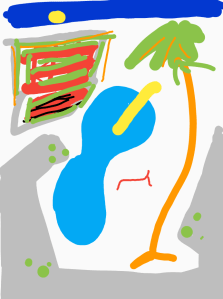
 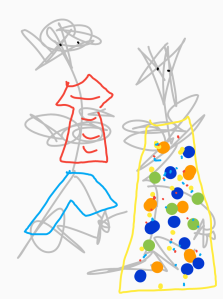 Spring is the enterprise the clothing ads have been predicting since the Christmas ornaments were boxed for the basement. In the liturgical calendar, Lent accentuates the anticipation, slowing the heartbeat to the rhythm of nature. Pope Francis this year clarified that giving things up for Lent misses the point, unless what we give up we give to another. I was thinking of giving up clothes for Lent, but alas, the approaching Spring was simply too wet and cool. To the right we see the doodle remnant of an unseasonably hot spring day, when I broke out the shorts and Susan the muumuu.
 inside is stuffy with recirculated dust. You go outside for a breath of fresh air, and there is Cassini taking pics of the ice rings around your heart. The winter cold constricts. The spring cold giggles. Summer laughs. Fall chokes and coughs. One might hold a romantic view of winter, the emptiness, the sleeping squirrels in the sleeping tree hollows, the squirrels quiet for the night in the roof eves. Snow falls from the fir limbs like the down from the mattress when your body is easily the hottest object in the house. Come spring you’ll be dancing in the rain, you sing. But all you do is slip and fall on the mossy deck, the bruise on your leg like a storm on Jupiter.




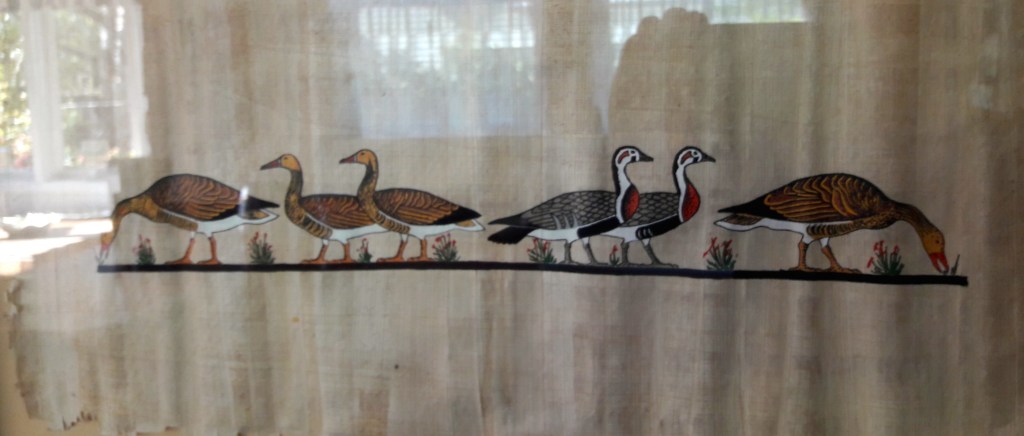


 A duck hears a quack that sounds a bit out of whack and decides to hide in the reeds. The duck call recedes. Later, a duck decoy floats by, and our duck hears that queer cracker again, now from the far side of the pond. The prattle, it skiffs across the smooth water, sounds not propelled by a voice – and that’s the art of the duck call.
 A friend who is a close reader, noting correctly my sudden obsession with my text-drawings done with the phone app, asked, “Having fun yet?” Once upon a time, art was fun, which is to say the making of art was fun. Writing was fun. The two together a blast!
 The Coming of the Toads