Over at the Frontal Cortex, Jonah Lehrer has posted his review of a new book about the effects of the brain on reading: Stanislas Dehaene’s Reading in the Brain. Lehrer says that the “moral of Dehaene’s book is that our cultural forms reflect the biological form of the brain; the details of language are largely a biological accident.” We’ve not read Dehaene’s book yet, but Lehrer’s summary seems to suggest a symbiotic relationship between the brain and the brain’s environment.
To understand the effects of reading on the brain, one must go to non-literate cultures, and study, as Marshall McLuhan researched, the changes that occur in both the brain and the culture as reading is learned. “The most obvious character of print is repetition,” McLuhan said, “just as the obvious effect of repetition is hypnosis or obsession” (p. 47). It’s impossible to be illiterate in a non-literate culture, and non-literacy has its advantages.
When we read, we are hypnotized, the eye becomes master of the sensorium, the remaining four senses impressed into eye-service. The hypnosis blinks when the eye sees an unfamiliar word, and the tongue and ear have to help out: “we’re forced to decipher the sound of the word before we can make a guess about its definition, which requires a second or two of conscious effort” (Lehrer). This means that the new reader must mouth his words as he reads (since all the words are unfamiliar to the new reader); he must hear them first. This is why, according to McLuhan, “the medieval monks’ reading carrel was indeed a singing booth” (p. 115). They had not yet learned to read silently. They had to say the word and hear it; the words entered the brain through their ears, not through their eyes. (This supports using a phonics method to teach reading.)
Lehrer says that Dehaene “also speculates that, while ‘learning to read induces massive cognitive gains,’ it also comes with a hidden mental cost: because so much of our visual cortex is now devoted to literacy, we’re less able to ‘read’ the details of natural world.” Again, this ground was covered by McLuhan in The Guttenberg Galaxy: The Making of Typographic Man.
“Literacy,” McLuhan argued, “affects the physiology as well as the psychic life” (p. 45). McLuhan said that “every technology contrived and ‘outered’ by man has the power to numb human awareness during the period of its first interiorization” (p. 187). And this is the ground that Nicholas Carr has been sifting though with regard to the effects of the internet on reading and on the brain.
It’s curious to hear Lehrer, not quite a neuroscientist (which is one reason we like him; he’s a non-specialist), say that “the brain is much more than the seat of the soul…,” curious in that he resorts to both metaphor and the metaphysical in a single phrase. “The seat of the soul”: surely that’s your brain on books.
June 6, 2010 Update: Jonah Lehrer takes some of the wind out of Nicholas Carr’s neuro-sails in a Times review of Carr’s book The Shallows and in a follow up post on his blog.
 We enjoyed Gordon Marino’s recent piece in the Times,
 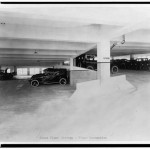 We try to imagine a world without cars. Given our experience, it’s difficult: our MOS was wheeled and track vehicle mechanic; we parked cars at the old LA International while working our way through college; we underwrote autos for a time. Our first car was a 1956 Chevy, purchased for $75 from our friend Gary leaving for Vietnam – he never returned. Our second car was a 1949 Ford pickup truck, called the “Peace Truck” for a small peace sign decal we put in the center of the rear window – we used the truck for surf trips. Then we went through a series of old Volkswagens, mostly bugs, but we did have a VW van for a time – it blew a rod one night on way home from a Jimmy Hendrix concert. We try to imagine Kerouac’s On the Road without cars: impossible.
![300px-Brueghel-tower-of-babel[1]](https://joelinker.com/wp-content/uploads/2009/10/300px-brueghel-tower-of-babel1.jpg?w=300&h=226 "300px-Brueghel-tower-of-babel[1]") The frequency and severity of institutional crashes lately keep ringing in our ears. What becomes of credibility and reliability when the actuarial body politic, responsible for making the rules, tracking the results, and revising accordingly, errors in judgment, planning, execution, and follow-up? First AIG, now APA.
The frequency and severity of institutional crashes lately keep ringing in our ears. What becomes of credibility and reliability when the actuarial body politic, responsible for making the rules, tracking the results, and revising accordingly, errors in judgment, planning, execution, and follow-up? First AIG, now APA. 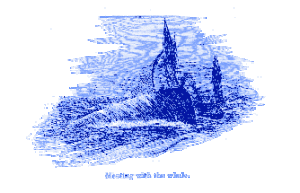 There’s nothing better than being on the water. Another blog we’ve been following recently,
 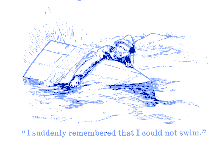 We are reminded of Joshua Slocum’s classic,
  The Coming of the Toads