Eve: I’m bored.
Adam: Let’s do something.
Eve: There’s nothing to do.
Adam: We could name some more animals.
Eve: Oh, please.
Adam: We could ask God what to do.
Eve: I don’t think he likes me.
Adam: You don’t know that.
Eve: Do you want to go shopping?
Adam: For what? We already have everything we need.
Eve: Let’s go play with the animals.
Adam: They make poor partners.
Eve: Did you clean the kitty litter box this morning?
Adam: Yes, and I have tilled the garden.
Eve: Have you thought of a good name for me yet?
Adam: We are innocent.
Eve: How boring is that.
Adam: We could pretend.
Eve: Pretend what?
Adam: Pretend that we are not innocent.
Eve: Has God not forbidden pretension?
Adam: God is full of flatulence.
Eve: That big bang was sure something.
Adam: We could dress up and go out.
Eve: La-de-da.
Category: Writing
-
Dialog in the Garden of Eden
-
On the Value of Art
We should think of art as an activity and not a product. The value of art to a culture comes from its work in illustrating and communicating symbolically the meaning and importance of a culture’s way of life. Art should be considered both literally and symbolically, as it works simultaneously by substantive representation and by implication and suggestion. What is suggested and therefore inferred is not comprehended literally but unconsciously, both in the individual and in the collective consciousness of the culture. Art provides thoughtful but also inconsiderate access to the unconscious and subconscious mind. It does this through pretending or pretention. All art is pretentious. Art begins with the childlike acting of let’s pretend.
The monetary value of a work of art, hundreds of millions now paid for a painting, does not speak to the value of art as it works in a culture. Anyone can engage in art, and everyone does. If we think of art as an activity (and not a product), we see the audience engaged in the work, not just watching or listening, but as part of its ongoing creation, and we see the work as a work in progress: vibrant, aging, deteriorating, fading. That is beauty.
To say that all art is pretentious works as follows. One year, I went to a local barber to get my hair cut. As Ring Lardner explained in his short story “Haircut” (1925), the participation in the activity of art makes the audience part of the work’s creation. (Sometimes, a visit to a barber can be as bad as having to go to a dentist.) In the barbershop at the time of my haircut, there happened to be three of us: the barber, myself, and an apparent friend of the barber. On the wall opposite the barber’s chair I sat in, hung a small, representational painting of a snow capped mountain. The barber proceeded to explain the painting’s merits. He said, “Put a photograph of that mountain next to that painting and I defy you to tell me which is which.” Of course, neither the painting nor the photograph was the mountain, but a pretension of the mountain. What the barber as art critic appeared to value in art was literalism. But in spite of his efforts, no mountain filled his barbershop.
Also implicit in my barber’s criticism is a theory of value and values. What we value, as individuals and as a culture, is simply what we want, what we desire, both consciously and unconsciously. But what we want is not always good for us. And by good here we mean healthy, life affirming, balanced, unpolluted, not harmful to ourselves, others, or to our environment. Cars, for example, in that context, are not good for us, yet most of us want one and can hardly imagine getting around without one. We might even say that all means of transportation are bad for us, even walking. Transportation is fraught with risk. We should sit at home and do nothing. But when the asteroid hits, it will hardly matter where we are or what we are doing. And what we value is transportation, and we work, ostensibly, to make the modes safer.
When we engage in activities that are not good for us we experience the irrational or nonrational. What the barber valued in art was more than simply representationalism, but rationality. He apparently felt that art that expressed or provided access to an irrational or nonrational experience was bad art. By the way, throughout the entire haircut, the barber enjoyed a cigarette that in between puffs sat in a green ceramic ashtray and emitted a wavering column of smoke that from my vantage point produced in the mountain a volcano effect.
We value looking inside of things. We want to see inside a mind. Thus we undergo psychoanalysis or some sort of therapy. We want to see inside our body. Thus we undergo a colonoscopy or get an MRI or an X-ray. We want to see inside our psyche – thus we read and write poetry. But notice the metaphor may not work there. The psyche is not inside, but outside. It’s all around us. And is it good to see inside of things? Are not these things closed up for good reasons? What happens when we intrude? Is that the purpose or effect of art – to look inside of things, to see what has been covered, hidden, kept secret?
There is no hierarchy of values. When we speak of family values, we point to what a unit of culture wants, and, again, that want is not necessarily synonymous with good. We value high school sports, football. Football is, at least arguably, not good for us – it’s not a healthful, balanced sport. It’s not a good investment. But football is a family value, of much importance economically and emotionally, of current US American experience. But we might think of football as an art form. As an art form, uncovering the irrational, we might find in football some of the hidden expressions and meanings of our culture.
When we speak of the value of art, we want to avoid a hierarchy of values. All values are equal. Maslow’s hierarchy of needs, often illustrated in pyramid illustration, as useful as it might be, underscores the culture’s competitive nature, which art undermines. For art is not competitive. And where there are art competitions – they have nothing to do with art.
A long married couple, having worked hard lifelong, now retired, would like to spend some leisure time in appreciation of a bit of what they think of as high culture. They buy tickets, from an ad received in the junk mail, to the local opera, where they experience the same family arguments they’ve live with these past 50 years, and hear the same folk songs they grew up with. They don’t understand a word of it, but they know someone is pissed off and another is beside themselves with grief and regret. Still another gloats, and another is mean and prods. And the couple, dressed to the nines for the experience, enjoy a glass of champagne in the lobby at intermission. They look around at the other opera goers and don’t recognize anyone. They each visit their respective lounges where they see someone in a full size mirror, a person they hardly recognize. And suddenly the value of art dawns on them, in the latrine at the opera.
-
Art from The Arc
I paint for the same reasons I write: it’s a physical activity that is peaceful, happy, and all about light. Though for some time now I’ve not been painting much. When I do paint, the images come from some underground reservoir, the same place many poems come from, a vision from the inside, if I can say so without sounding too psycho, as opposed to en plein air, painting what one sees on the outside. I read recently that Monet painted dozens of scenes of the River Seine – the same scene over and over, but each scene in different light. I’ve never seen a Monet painting in person, only pics of them, often the light different in each photo, and I’ve often wondered what Monet would think of that, the light in his paintings changing with each reproduction. The light in a parlour or museum likewise might change the scene as it was seen and painted. That effect is not unlike sound effects, where the splendid, carefully practiced arpeggio heard on the radio is accompanied by static, a dog barking in some distant yard, or a trash truck picking up the street cans and noisily dumping them into the void.
I did see some Rothko paintings in person, some time ago, at a show at the Portland Art Museum, and I was surprised by how thinly he applied the paint to the canvas. You could easily see the warp and weft of the canvas. Of course you’re supposed to view from a distance – the same distance for everyone? One’s eyesight too changes the light. Way back in my school days, I once tried to argue that Monet’s impressionist style was the result of cataracts, but I was struck down by an art student who argued that the work of the impressionists was the result of an art theory they had invented and implemented as a complicated statement on reality and vision. I still think it might have been cataracts.
I started painting with my two granddaughters when they were little and liked to play with paints, unconcerned with talent or any kind of “I can’t draw” self-criticism. We all three painted for the same reasons mentioned above: peaceful, happy, and light. And fun! At first I bought new canvases from an art supply store, of modest size, 20″ by 20″ or so, but I then started to find large canvases at garage sales, priced cheaply enough, far less than I was paying for the new ones at the art store, and I bought them for us to paint over. The garage sale finds were not Monet’s or Rothko’s, so no harm was brought to the art world by our painting over them.
Recently, over at The Arc, a non-profit thrift store not far from us, out on the sidewalk, against the wall, behind some smaller items, I spied a large canvas, 26″ x 60″ x 1 & 1/2″. They wanted $10 for it. A great find. The visions of what I might paint over it started drifting in like a slow moving moon, the light in a park changing by the minute. But when I got the painting home, a canvas print of some sort, the kind used to decorate hotel rooms or small business lobbies, I began to have second thoughts about painting over it. Something about it said no, put me up as is.
So I did, and here it is, for your critical review. Please leave a comment! Is it art? Is it good? Why, why not? …B, care to comment? Ashen? Dan? Bill? Barbara? Lisa? Susan? All you artists and art aficionados out there?

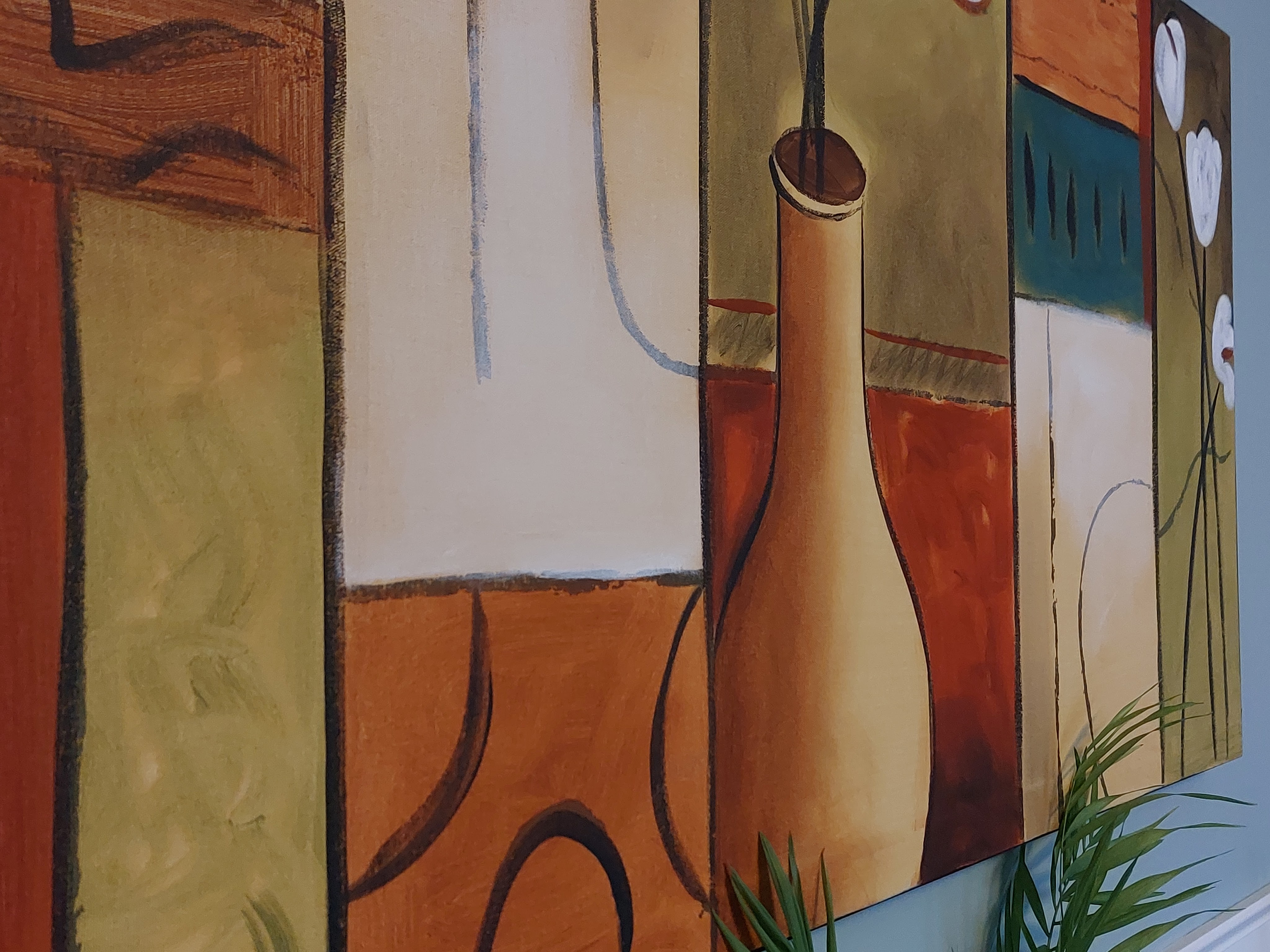
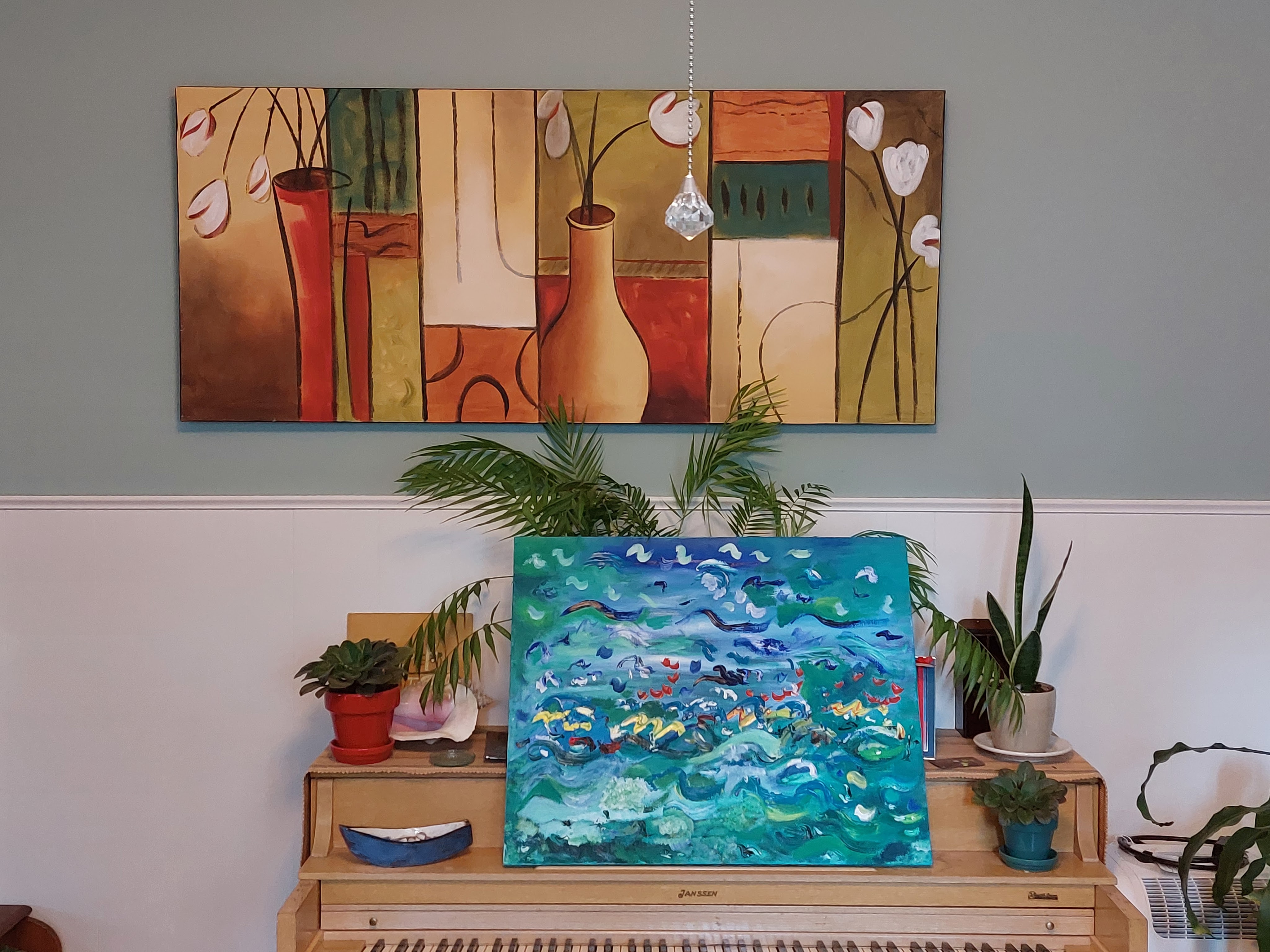
The pic in the bottom right corner shows one of my basement paintings, sitting on the piano, which I took down to hang the Arc find.
-
Autumnal Approach
Autumn appears quiet
a dry cat curled asleep
the homeless huddled
until shuttled to a new
space just like the old
spot rules & restrictions
apply living en plein air
places of Objet trouvé
found objects surround
lean-to tents shapes built
with plastic tarps bicycle
parts organic architecture
like Falling Water cantilevered
over gutters running
incessant and unrelenting
life out of woods where
one lives deliberately
as autumn approaches
preparing for rain wind
and snow provisionally
on the surface of the
bottomless city plans. -
Tabor Space
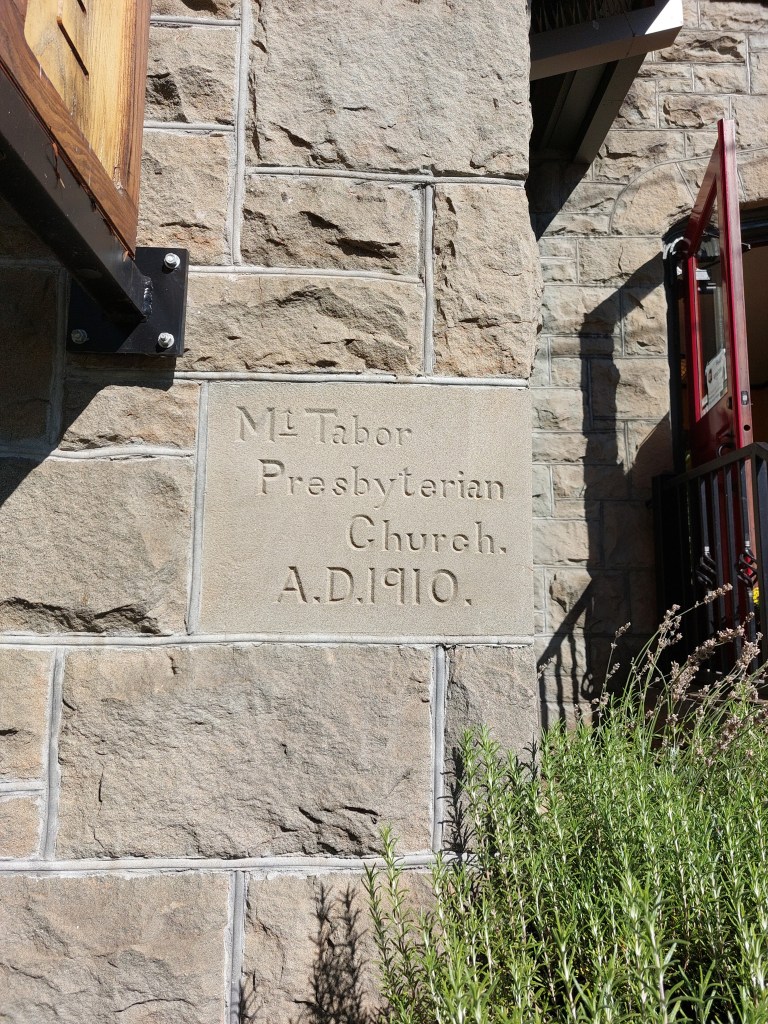
At the bottom of the bell tower you poured
yourself a coffee, put a contribution into the jar,
and through the big doors entered the space,
a two story high ceiling of 100 year old wood,
brick walls with stained glass windows, a few
stuffed chairs by the Brobdingnagian fireplace,
tables and chairs spread out in the space,
a lending library bookshelf, a kids’ play area,
and the floor to ceiling folding sliding doors
hiding the dark cool nave of empty pews.
I would sit in a stuffed chair or at a table
and read papers or doodle in my notebook,
sitting on the big couch in the far corner.
Young moms with children came and went,
small group meetings held at the larger tables,
couples hooked up for a coffee & snack talk.
It was mostly volunteer, then went commercial,
then closed as the virus swept through
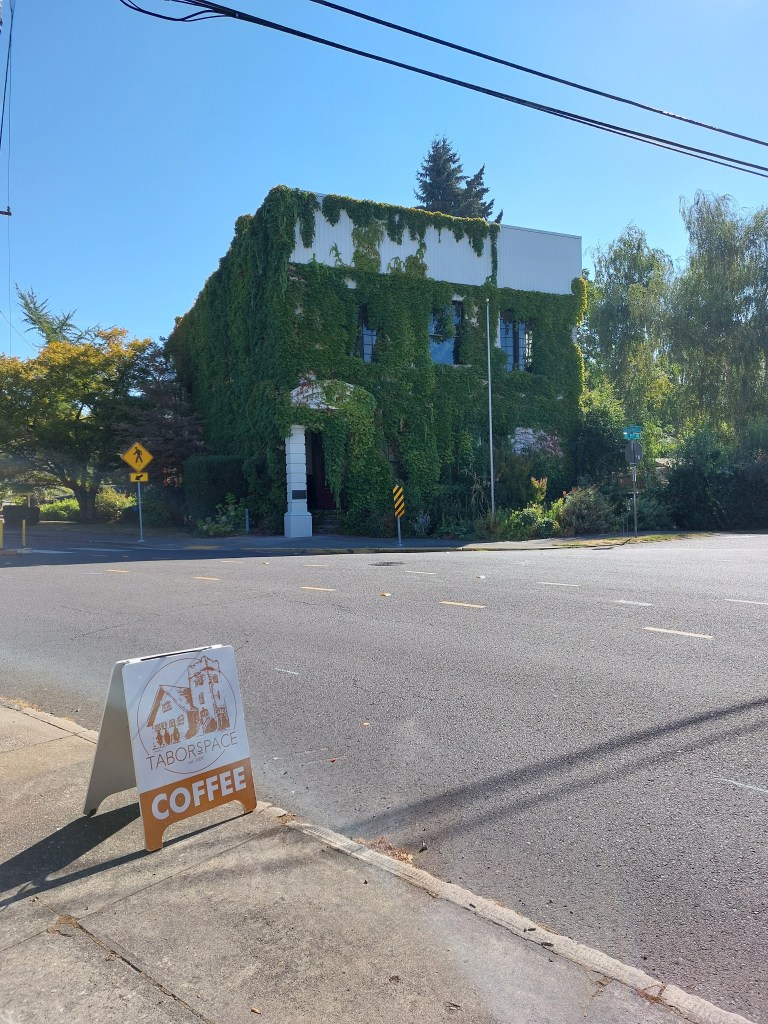
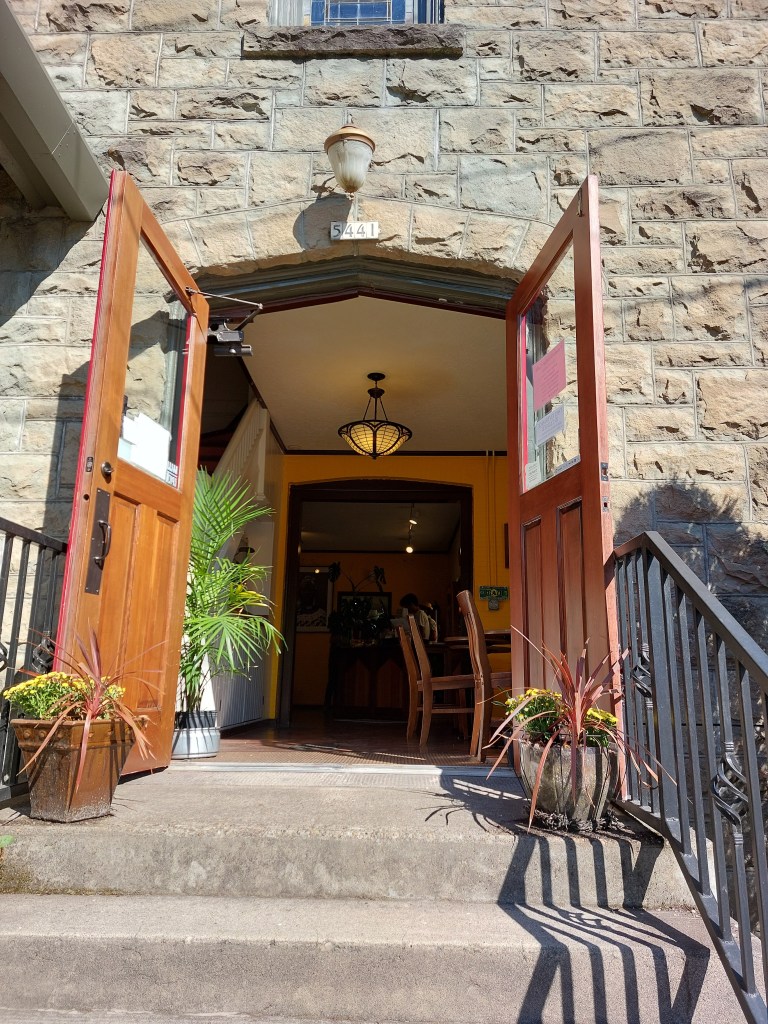
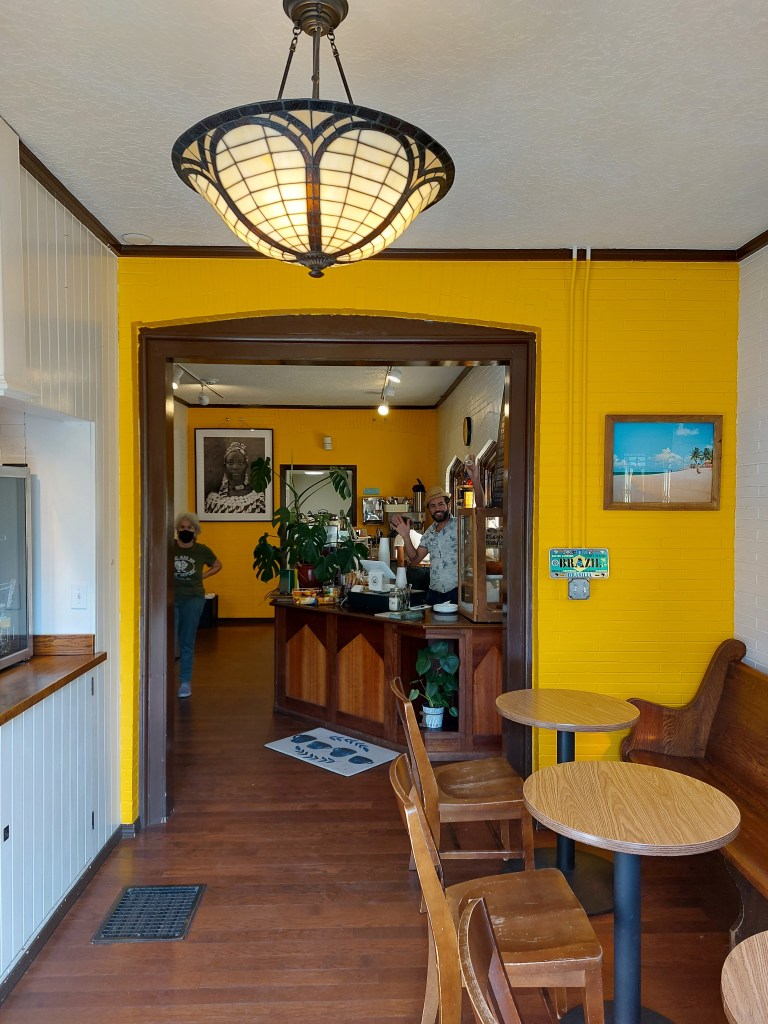
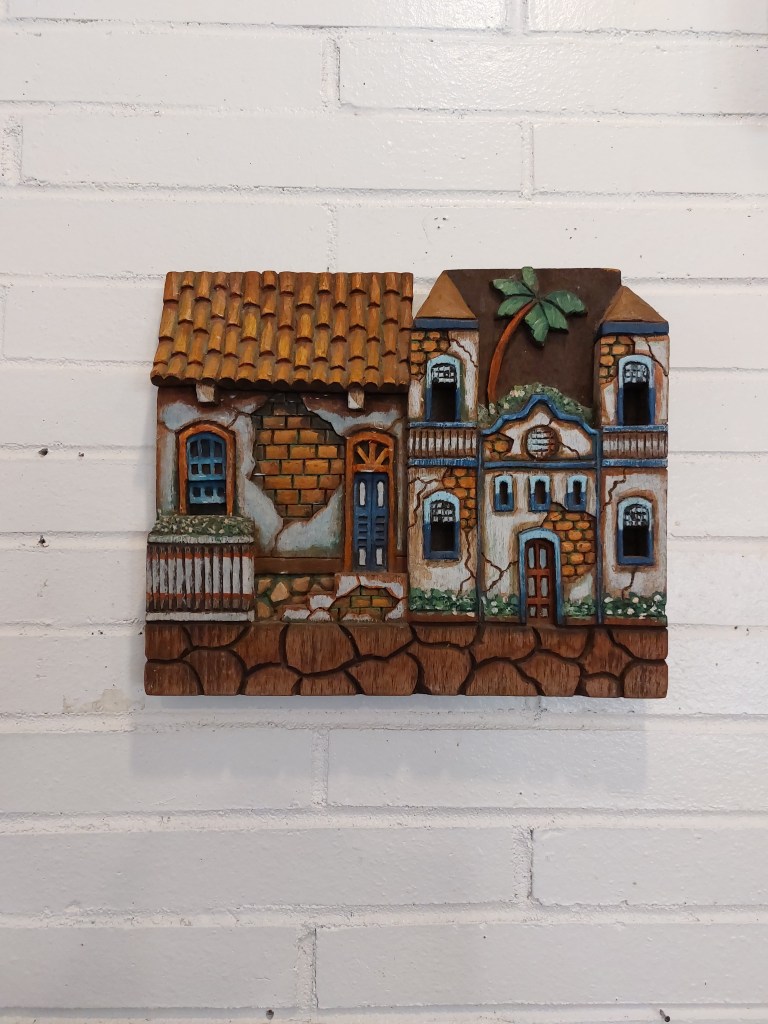
so many spaces, closing doors and attitudes.Anyway, Tabor Space has now reopened,
a second location for Favela Brazilian Cafe,
and we visited yesterday, chatted with the
Brazilian baristas, and we sat with a coffee
and we looked around and I took a few pics,
and we’re glad the space has reopened: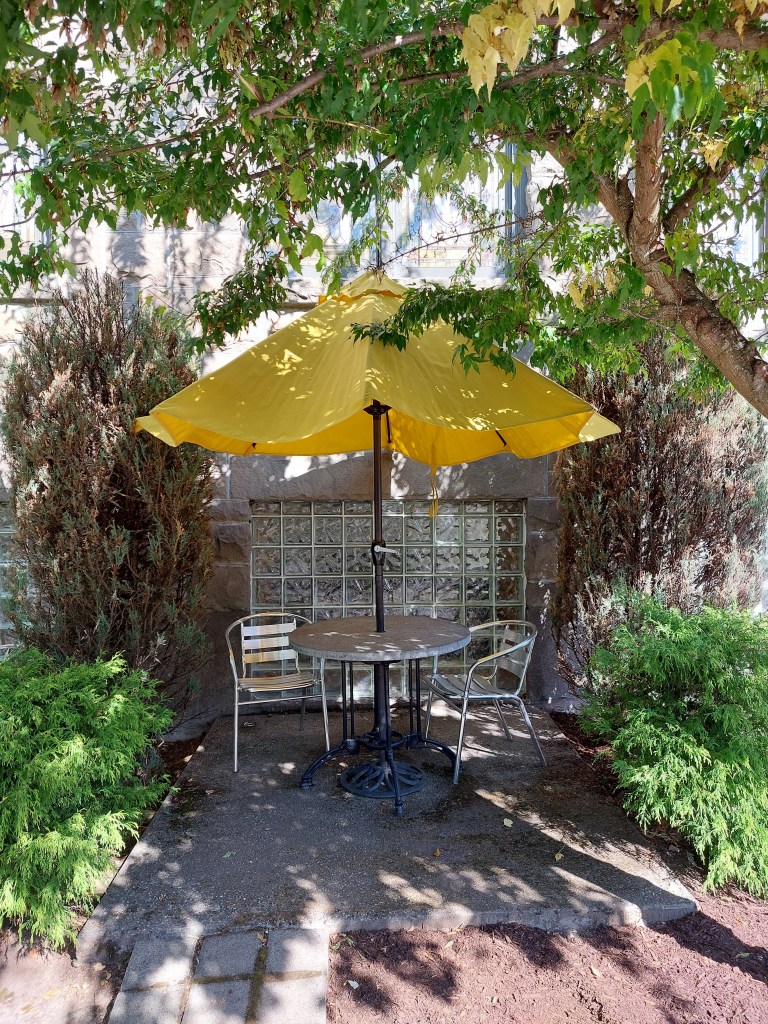
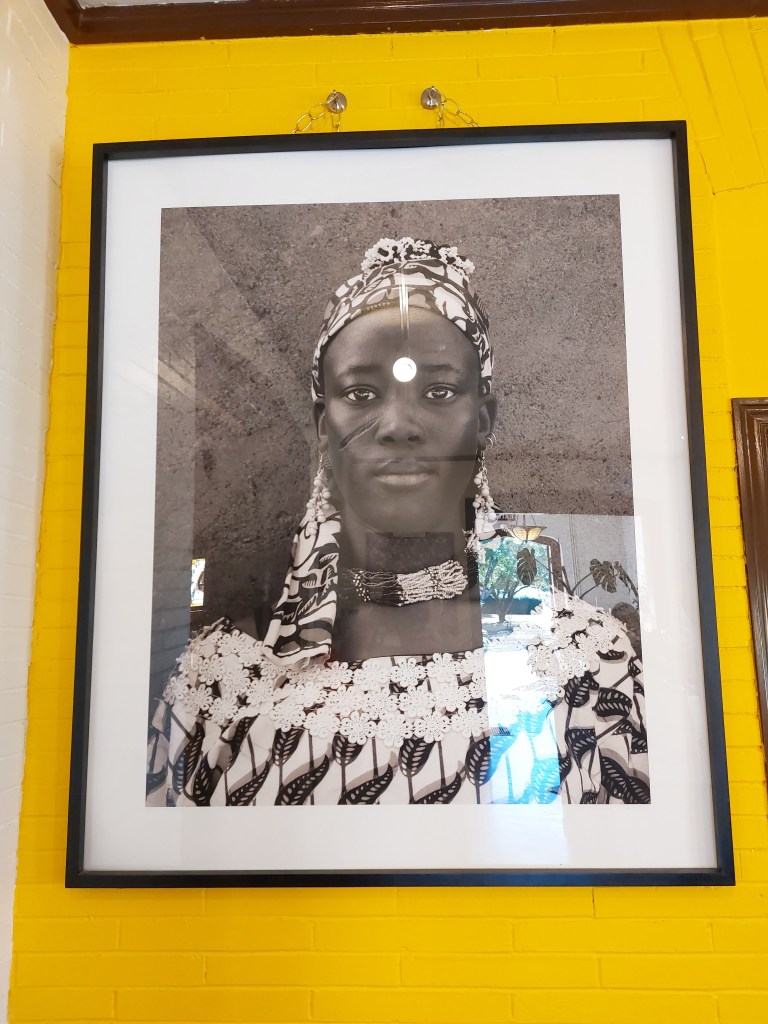
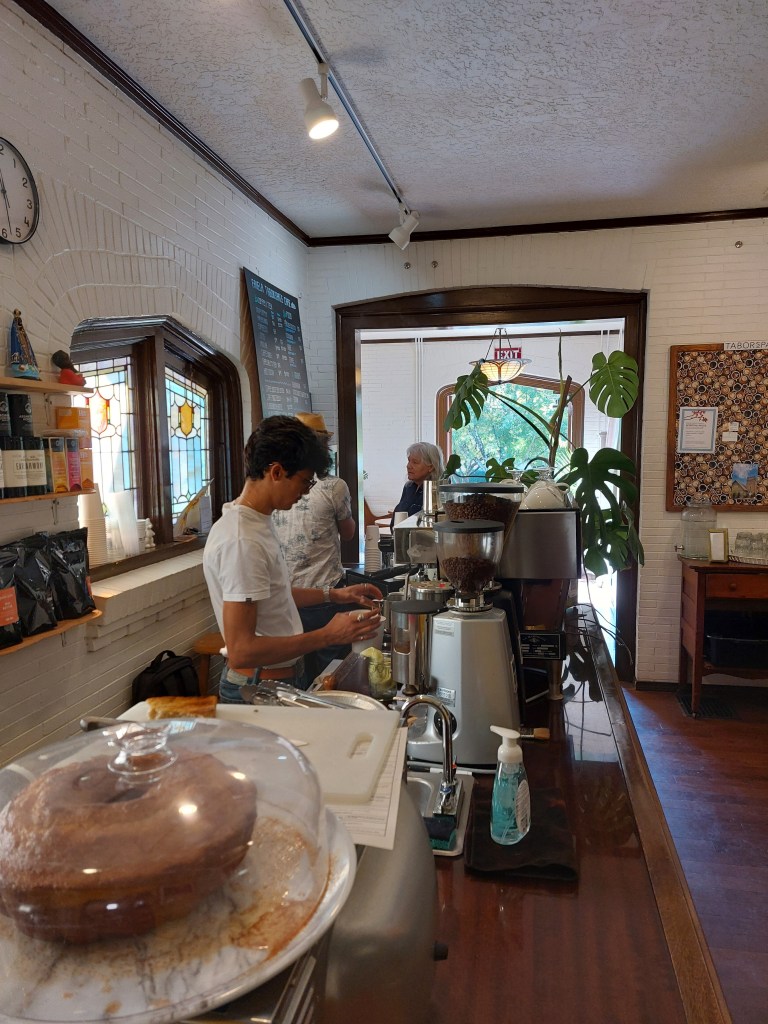
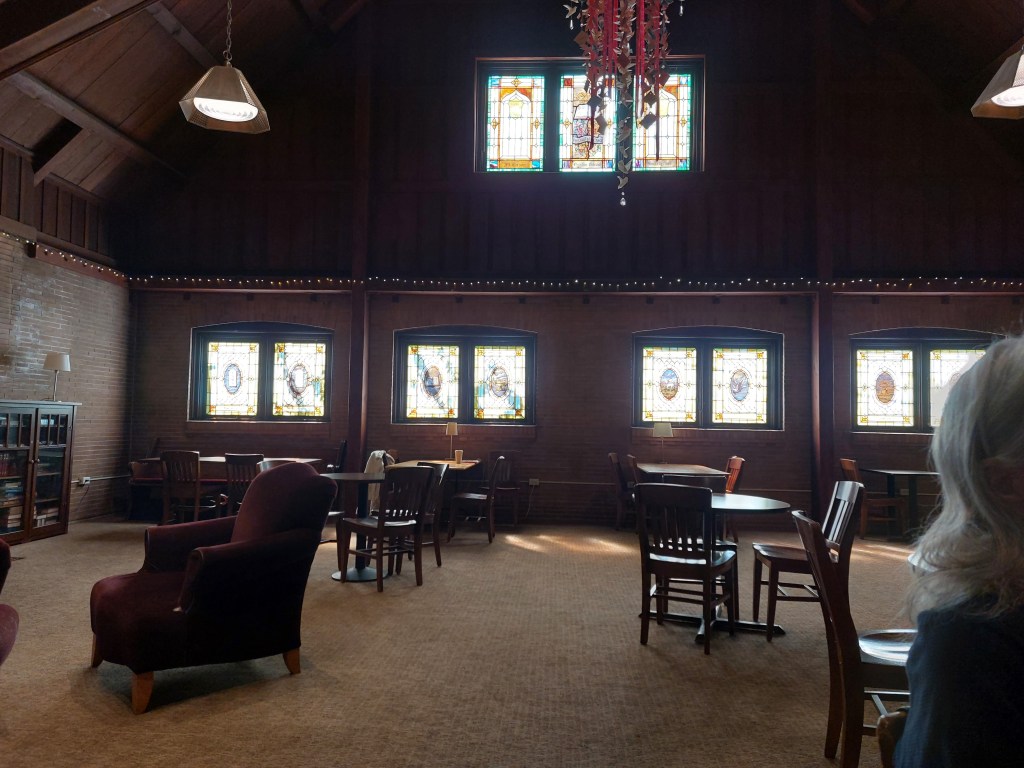
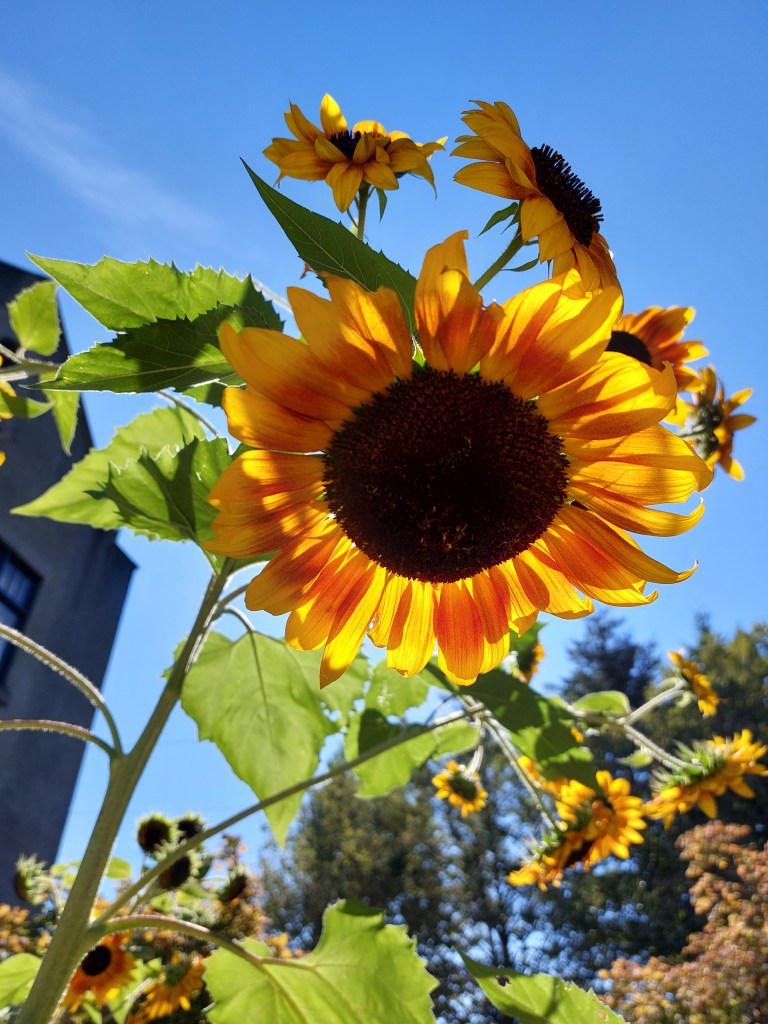
-
My Affliction
Everywhere I look I see
signs of the cross
in telephone poles
at the busy intersection
of the homeless and
the morning commuters
in the brow of the woman
wearing the human billboard
advertising her three kids
and out of work husband
a veteran and a nice guy
trying to get back on his feet
after stepping on a landmine
at the bottom of the cross
and I don’t doubt it and wonder
if she’ll take the afternoon off
and drop the double sawbuck
just handed her all in one place.I am tempted but the cross
at the local church remains
hidden behind a giant plastic
boastful Jesus his coiffed hair
combed and sprayed by the
altar ladies with their flowers
holy water and broken nails
who come and go they have
come and gone and still
they come and go
and carry their crosses
quietly and secretly
and do not advertise
their own club afflictions
and anyhow don’t allow
admittance of my cross.Every Friday at three
in the afternoon
the altar ladies
take down the real
Jesus and put up
the plastic one
and Sunday after
masses they hang
the original back.Meantime at the bottom
of the telephone pole
at the crossroads
the homeless gather
to disperse the day’s
take and affirm
nothing is finished
the kingdom never
comes but the will
is always done
daily bread is not hard
to come by not nearly
so hard as forgiveness
of debts and trespasses
or deliverance from evil. -
Inwait
Inwait watching listening
to what he wants to hear
then to critique that lesson
passably betraying purpose
occasion audience intent
the critic in wait teases out
the objections passive
aggressively indirectly
disconnects the circuit
breaks the circle of carethe critic lies in wait
for pretentious chichi
affectation of what is
stretched thin to impress
takes a back seat alone
in the cynical corner
and enjoys the playmeanwhile the husband who hopes
the woman who kneels knows prayer
the child who tries to please and fails
drama takes place in an empty housewords linked absurdly together
like barbed wire avoid likes
but attract comments like flies
to sweet sticky paperhappens all the time
you who always
those who never
it argues thus
near dusk
all at once
it comes out
without revision
without a second
thoughtthat’s ok it’s not easy
hitting a baseball
being social
attending holy mass
body and blood
sitting alone
writing a poem
being a critickeeping the secret
watchdog beware
keeps it chained
to his heart barking
champing at the bit
coughing up crud
it’s not easy
being a critic
lying in wait
taking the baitstill the sun also
rises and climbs
and falls but too hot
too cold too close
too far away
too bright too long
too short a day
for the critic
on the hunt
for something to say -
Comma Splices
If I wanted to use one,
I’d use two, one for me
and one for you, 4 to a
bar, 5 to a fence.Comma connotes pause,
like a cat’s paw does,
when lifted midair.Pick up your comma poops,
put in scoop bags,
and place in the trash can.The Once and Future Comma Queen
will return to Gramarye.Pause, and enjoy, an ice
cold comma, tonight.Harmonic Bohemian Comma Scale:
lunula moon, clipped ring finger
nail, crow talon, gypsy jazz plastic
guitar pick, muddy udder rudder,
silent scythe, silver clacker spoon.There is no substitute
for a comma, either
you use one or you don’t.Comma rules form
a book of spells,
a Grimoire. -
When Then
When sound is noise that murmurs gurgle
and talk crabbed rambles and gabbles
When susurrus of water shuts off clang bang
and no breeze blows blossoms and all fall
long leaves crisp prematurely dull and grey
When thoughts are crickets in a dark repeat
and inanimate objects won’t cooperate
When strings stretch and snap out of tune
and ears fill full of hardened yellow wax
Then it’s time here for a nap or a blue beer
for there’s been a near miss missio dear. -
Subbing in Substack
I spent a few hours this week delving into Substack, the online self-publishing venue giving independent writers the opportunity to build a syndicated portfolio intended for a dedicated audience of subscribers who read for free or pay, often on sliding scales, the writer usually offering more content to paid subscribers. It’s a little like busking, where the musician sets up on a busy street corner and pulls out the axe and puts out the tip hat.
One great plus of Substack is that there are no ads, few distractions. The presentations I’ve seen are clear and clean. I was already a free subscriber to Caleb Crain’s “Leaflet,” a combo newsletter of his bird watching photography and his lit-culture-watching writing, and of Julian Gallo’s “Cazar Moscas” – wonderful title that, which means to catch flies, or to fish with a fly, apt metaphor for Substack. When Substack began, in 2017, not too long ago but maybe a long time in online years, the idea was to establish a newsletter, so that with every Substack post an email notification went automatically to subscribers. And that’s how I still read Caleb and Julian’s new pieces. And this week I discovered and subscribed to Patti Smith’s Substack. I had become aware of podcast capability at Substack, and when I found Patti there, I saw that she was also putting up short videos, which I immediately found attractive for their simplicity, honesty, clarity. They didn’t seem to be performances, but downhome one way conversations, personal, if you will, in of course an impersonal, voyeuristic way. For example, I saw her in her everyday place in Rockaway, and it looked exactly like a lived in beach house might look if it indeed was lived in.
Anyway, I had been interested in moving my “Live at 5” guitar gig from IGTV to some other venue, not really all that interested in seeing my seventy something selfie on the silver screen anymore, and growing tired of Instas addictive format, and I thought about podcasting, that is audio only, some guitar, song, story, poem, conversation. Then I became aware of Substack’s video capability and before I knew it, I was going live on Substack with a “Live at 5” show. Or so I thought. The whole enterprise ended in disaster. As near as I can tell, Substack does not enable live streaming. You have to upload either audio or video, and the videos are limited to, it appears, under 10 minutes. I had by Substack “Live at 5” showtime 16 free subscribers. I’m not sure what they ended up seeing or hearing, if anything. And then, late last evening, I discovered the “Live at 5” video I had made for Substack in the photo gallery of my Samsung device. It was just over 5 minutes long. I watched a bit of it, stopped it, and deleted it.
Interested viewers may check out another version recounting my subbing at Substack experience here. I’m reminded of Dylan’s famous words, “and I’ll know my song well before I start singing,” an admonition I’ve never paid much attention to, and also reminded of the Nobel Prize time Patti forgot the lyrics, which was no big deal, but of course everyone had to make a big deal of it, as if pros never get nervous or forget the words.
Where do I go from here? IDK. Real time with real people might be nice.
-
On Symbols
Symbols attract as well as repel, signal good or evil, nearness or farness. Roadside signs first used to advertise products, cigarettes or shampoos, evolve to say something abstract: Jesus Saves. A symbol is a belief.
An abandoned roadside sign, the billboard, its wooden legs leaning askew, its paper layered panel weather faded, becomes a symbol of change, of nostalgia, its country road long ago bypassed by an interstate highway, its message no longer visible or intelligible to the passing strangers, one of whom, at a quick glance, scratches his head and wants to shower or reaching into the glove box finds the pack empty and begins to watch for a filling station, motel, or cafe to appear on the horizon.
A series of signs spaced along the side of a road at planned intervals may form pieces connected to frame a storyline, like a sentence connects words to form a complete thought. The symbols pass fast and furiously. The whole edifice constructed by some outlier becomes part of the local landscape. In town, the abandoned grade school is converted to a micro brewery and bed and breakfast inn. The old one room church is now a real estate office.
The romanticist, who loves symbols, is a quick change artist who substitutes his own for the ones he was given:
“It is always, as in Wordsworth, the individual sensibility, or, as in Byron, the individual will, with which the Romantic poet is preoccupied; and he has invented a new language for the expression of its mystery, its conflict and confusion. The arena of literature has been transferred from the universe conceived as a machine, from society conceived as an organization, to the individual soul.”
Edmund Wilson, “Axel’s Castle: A Study in the Imaginative Literature of 1870-1930,” Scribner, 1931.That soul comes and goes like the moon, now new, now waning, and the reader might be caught in the moon illusion, where symbols appear larger when closer to the tree line, where a tree is traded for shade or a home.
In today’s political jargon, as writ large in media, classicism is conservative, romanticism liberal, the symbols of the conservative fixed and permanent, those of the romantic fluid and ambiguous:
“Blake had already contradicted contemptuously the physical theory of the eighteenth century. And to Wordsworth, the countryside of his boyhood meant neither agriculture nor neo-classic idylls, but a light never seen on land or sea. When the poet looked into his own soul, he beheld something which did not seem to him reducible to a set of principles of human nature.”
same as aboveThe classicist looks at the billboard and sees an advertisement upon the landscape; the romantic looks at the billboard and sees an advertisement as part of the landscape:
There is no real dualism, says Whitehead, between external lakes and hills, on the one hand, and personal feelings, on the other: human feelings and inanimate objects are interdependent and developing together in some fashion of which our traditional notions of laws of cause and effect, of dualities of mind and matter or of body and soul, can give us no true idea.
same as aboveAnd, as science advances, the soul retreats. It’s difficult if not impossible to register and catalog the movement of the soul:
“Every feeling or sensation we have, every moment of consciousness, is different from every other; and it is, in consequence, impossible to render our sensations as we actually experience them through the conventional and universal language of ordinary literature. Each poet has his unique personality; each of his moments has its special tone, its special combination of elements. And it is the poet’s task to find, to invent, the special language which will alone be capable of expressing his personality and feelings. Such a language must make use of symbols: what is so special, so fleeting and so vague cannot be conveyed by direct statement or description, but only by a succession of words, of images, which will serve to suggest it to the reader. The Symbolists themselves, full of the idea of producing with poetry effects like those of music, tended to think of these images as possessing an abstract value like musical notes and chords. But the words of our speech are not musical notation, and what the symbols of Symbolism really were, were metaphors detached from their subjects – for one cannot, beyond a certain point, in poetry, merely enjoy color and sound for their own sake: one has to guess what the images are being applied to. And Symbolism may be defined as an attempt by carefully studied means – a complicated association of ideas represented by a medley of metaphors – to communicate personal feelings.
same as aboveThe classicist wants to be sure of things, and has a fixed point of view, wants to demolish the target; the romantic lives with variable viewpoints, ambiguity – it’s enough to get close. The symbols of the classicist do not suggest beyond convention, but can only denote. In any case, neither seems satisfied with what unwritten laws they develop. A tree at an oasis to a desert nomad is not the same tree as the one under which the family on vacation parks its recreational vehicle in the state forest campground, not to mention the one in the wilderness no human has ever seen. And, “A fool sees not the same tree that a wise man sees,” Blake says in “The Marriage of Heaven and Hell.”
Or a billboard, for that matter.
 The Coming of the Toads