Like real lives, a book’s life changes over time. And some are longer, others shorter, extreme change, usually passing out of fashion, or none at all. Or we might think of, as Henry Miller did, “The Books in My Life,” a book startling mainly for how bad it is, its list of books so obscure one wonders where to begin, but probably true to one’s own rambling random reading. Miller thought people read too much. Or, as for Ezra Pound, reading the wrong books is worse than reading none at all (as Henry Miller thought hypocrisy worse than bad manners). And of course Pound supplies us with a list of the right books.
“For two gross of broken statues, For a few thousand battered books.”
And having read a few of them, what to do with them, where to put them, bibliophile or purveyor, bookworm or hoarder. Bring the oldest to the front, begin again, but sitting there in that place on the shelf of history, still “botched,” or do you mean begin again with something new, with the old lies dressed in new fashion, under the clothes fresh off the catwalk the same bent cover boards framing a new fame.
Such was the mental weather, under an atmospheric river, no less, as we made our way to visit one of the newly remodeled Multnomah County Library bibliothecas. Wandering among the few fiction book stacks, wondering how they decide among the thousands of books which ones to put out, a librarian, perhaps sensing we appeared lost in a woods, approached and asked if she could help. We asked her how they decided which books to shelve for physical browsing. Her answer, in short, involved automation and algorithm, referring to neither Henry Miller nor Ezra Pound. Yet we were surprised to find a 1955 first edition of Elizabeth Hardwick’s “The Simple Truth,” noteworthy but not necessarily read worthy. The librarian asked us what kind of book we were looking for. A book like a clean, well-lighted place, but we didn’t put it that way, and we left with, for us anyway, a terrible choice, which we’re now anxious to return.
We had just finished reading aloud yet another book from the 1920’s, this one exactly 100 years old, and also part of our historical hotel reading project, “Gentlemen Prefer Blonds,” by Anita Loos. Of course we’d heard of it, maybe saw the movie, certainly heard the song famous from the Broadway play (1949), “Diamonds Are a Girl’s Best Friend.” Lorelei says in her entry of April 27th:
“So I really think that American gentlemen are the best after all, because kissing your hand may make you feel very very good but a diamond and safire bracelet lasts forever.”
The book, a diary novel, would today make for an interesting blog. Lorelei is an unreliable narrator, but at least she’s consistent. Part of the satire is that she’s a writer, by virtue of her actually writing, without ever having read a book.
“A gentleman friend and I were dining at the Ritz last evening and he said that if I took a pencil and a paper and put down all of my thoughts it would make a book. This almost made me smile as what it would really make would be a whole row of encyclopediacs.” (Mar 16)
There are only a couple of books Lorelei actually names; though quite a few are suggested indirectly. One that is mentioned directly follows, and her plan for reading it:
“April 2nd: I seem to be quite depressed this morning as I always am when there is nothing to put my mind to. Because I decided not to read the book by Mr. Cellini. I mean it was quite amuseing in spots because it was really quite riskay but the spots were not so close together and I never seem to like to always be hunting clear through a book for the spots I am looking for, especially when there are really not so many spots that seem to be so amuseing after all. So I did not waste my time on it but this morning I told Lulu to let all of the house work go and spend the day reading a book entitled “Lord Jim” and then tell me all about it, so that I would improve my mind while Gerry is away.”
The book was a gift from one of Lorelei’s gentlemen friends:
“Well I forgot to mention that the English gentleman who writes novels seems to have taken quite an interest in me, as soon as he found out that I was literary. I mean he has called up every day and I went to tea twice with him. So he has sent me a whole complete set of books for my birthday by a gentleman called Mr. Conrad. They all seem to be about ocean travel although I have not had time to more than glance through them. I have always liked novels about ocean travel ever since I posed for Mr. Christie for the front cover of a novel about ocean travel by McGrath because I always say that a girl never looks as well as she does on board a steamship, or even a yacht.” (Mar 22)
Lorelei’s interests in culture seem inexhaustible, and her number one gentleman very very much wants her to get educated.
“And of course Mr. Eisman has sent me quite a lot of good books as he always does, because he always knows that good books are always welcome. So he has sent me quite a large book of Etiquette as he says there is quite a lot of Etiquette in England and London and it would be a good thing for a girl to learn.” (Apr 11)
We quickly see that Lorelei talks about books more than she reads them. Her learning is experiential, anecdotal, though none the less purposeful and well learned.
“I have decided not to read the book of Ettiquette as I glanced through it and it does not seem to have anything in it that I would care to know because it wastes quite a lot of time telling you what to call a Lord and all the Lords I have met have told me what to call them and it is generally some quite cute name like Coocoo whose real name is really Lord Cooksleigh. So I will not waste my time on such a book.” (Apr 12)
There’s no question that diamonds are more valuable than books, or that reading and writing are both time consuming chores, so of course one should read only the best books.
“So I told Major Falcon that I told Mr. Bartlett I would like to write the play but I really did not have time as it takes quite a lot of time to write my diary and read good books. So Mr. Bartlett did not know that I read books which is quite a co-instance because he reads them to. So he is going to bring me a book of philosophy this afternoon called “Smile, Smile, Smile” which all the brainy senators in Washington are reading which cheers you up quite a lot.” (Apr 14)
The “Smile” book might be a reference to Wilfred Owen’s World War I poem of the same title, “Smile, Smile, Smile,” a contemplation in irony on those who died, published posthumously in 1920, Owen himself having died in the war, one week before the Armistice was signed.
It might come as no surprise to the perspicacious reader that Lorelei is not her given name.
“So it was Judge Hibbard who really gave me my name because he did not like the name I had because he said a girl ought to have a name that ought to express her personality. So he said my name ought to be Lorelei which is the name of a girl who became famous for sitting on a rock in Germany.” (Apr 13)
Lorelei, like the rock sitter of German folklore, similarly ruins her gentlemen. But the reader feels no loss. Loos might have had in mind the Heine poem when she named her character after a famous siren:
“I think the waves drink up off the rocks ironman and dory for with her song Lorelei has done them very wrong.”
Heinrich Hein, “Die Lorelei,” 1824, Creative translation by yours truly, changing location from the Rhine to Redondo Beach.
But it’s not on the River Rhine where Lorelei finds her men, but hotels:
“So we came to the Ritz Hotel and the Ritz Hotel is devine. Because when a girl can sit in a delightful bar and have delicious champagne cocktails and look at all the important French people in Paris, I think it is devine. I mean when a girl can sit there and look at the Dolly sisters and Pearl White and Maybell Gilman Corey, and Mrs. Nash, it is beyond worlds. Because when a girl looks at Mrs. Nash and realizes what Mrs. Nash has got out of gentlemen, it really makes a girl hold her breath.” (Apr 27)
Loos book in form is a cartoon, the characters exaggerated, satirical types, the writing a string of captions. Our edition (1998 Liveright paperback) contains actual cartoons, with captions taken from the text, the title page describes as “Intimately Illustrated” by Ralph Barton, the 1920’s productive but troubled cartoonist. There’s a 1998 introduction by Candace Bushnell, author of “Sex and the City,” who says, “Now that changing hair color is almost as easy as changing underpants, a more appropriate moniker might be Gentlemen Prefer Breasts” (XVI). And a second introduction, titled “The Biography of a Book,” by Anita Loos herself (for the 1963 reissue), in which she relates a television interview where she was asked what theme today might she write about, and she replied, “Gentlemen Prefer Gentlemen,” which, she adds parenthetically was “(a statement which brought the session abruptly to a close).” Loos had lost none of her sarcasm or satirical bent. Writing about the success of her book, she added, “But I feel that Lorelei’s accomplishments reached a peak when she became one of the few contemporary authors to be represented in the Oxford Book of Quotations” (XXIV).
The waters deepen quickly – an important book, in terms of success or influence, doesn’t have to be a book of realism, naturalism, literal representation, doesn’t have to be a serious book. “Gentlemen Prefer Blondes” is satire, like Jonathan Swift’s “A Modest Proposal,” which comes to mind as Loos closes her reissue introduction: “But if that fact is true [that gentlemen prefer gentlemen], as it very well seems to be, it, too, is based soundly on economics, the criminally senseless population explosion which a beneficent Nature is trying to curb by more pleasant means than war” (XXIV).
Maybe the most profound theme of “Gentlemen Prefer Blondes,” if one’s interest is in seriousness (tragedy) in the face of comedy (happy endings), is class, social distinctions, climbing ladders to successful benchmarks where one finds the benches are not as comfortable as one had thought they would be. In that regard, Loos book might indeed warrant the Edith Wharton opinion that it is the Great American Novel. If so, it might be refiled under the title, “Gentlemen Prefer Books,” for it did seem that most of Lorelei’s gentlemen pushed books upon her, wanting to smarten her up, oblivious to her intellect already superior to theirs, and to the fact that reading books rarely if ever smartens us up, or we’d certainly be smart by now, after those two thousand books in our lives, but hardly anyone seems to be, while being smart actually suggests being able to take advantage of another for one’s own advancement, regardless of class.
Over the weekend, I read two articles somewhat related to one another: “How Much Are We Paying for Newsletters” (apparently some subscribers are losing track) in The New York Times, and “Is the Next Great American Novel Being Published on Substack?” (If a tree falls in the forest?) in The New Yorker. Too many subscriptions, paid or free, and the emails begin to pile up like old zines on a rusty rack in an empty barbershop, and come to be treated like spam and deleted, at issue, at bottom, simply this: more than we have resources to profitably or efficiently manage. Millions of miles of Substack track and only one effort is nominated. And part of the success formula is still will you get picked up by a traditional publisher. But there are great novels precursors to Substack serials: Dickens, George Eliot, Trollope. Maybe serializing your novel no one hears on Substack is the theme of the Great American Novel.
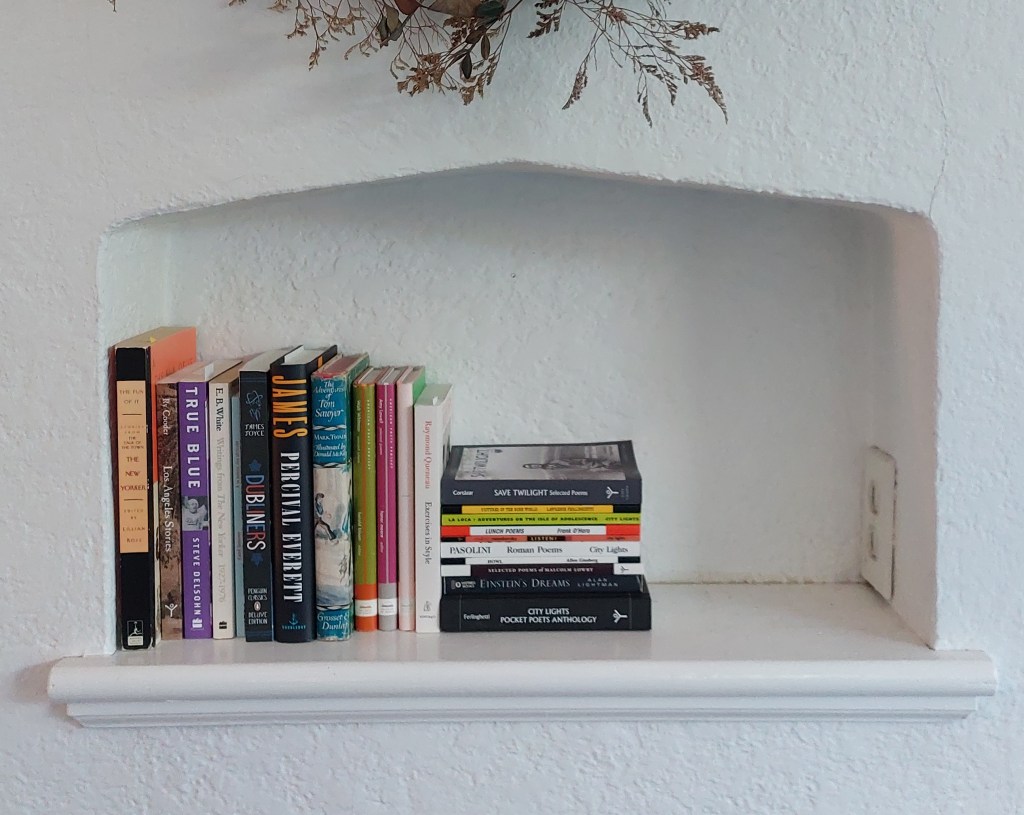
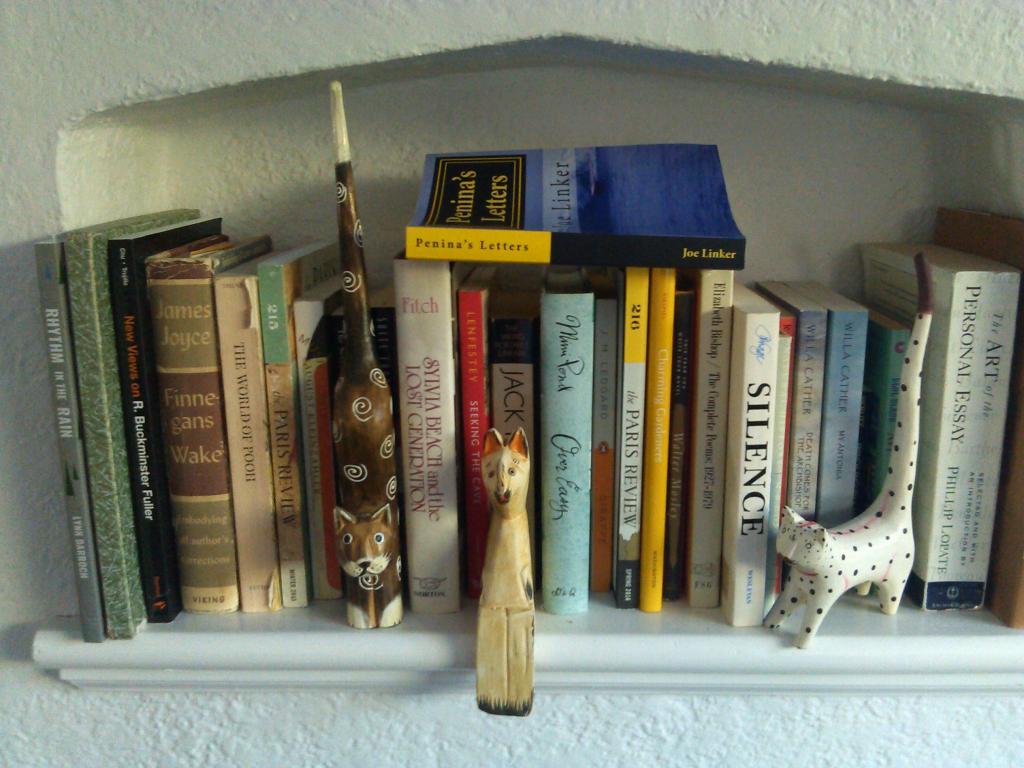
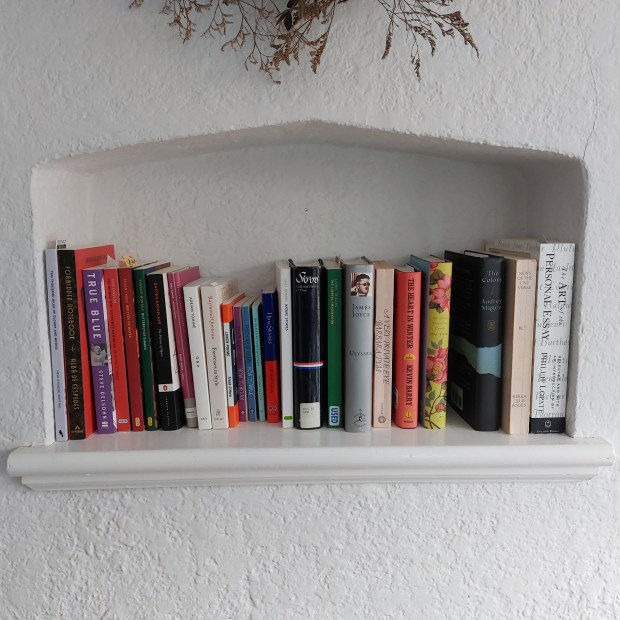
Having finished “The Paris Library,” and in long pause from Substack, I perused my small shelf (24 and 1/2 inches, to be exact) usually full of still barely opened or half read or unread books, but also some to-read-again books (as over the last few years I seem more inclined to reread something I particularly liked in a previous reading life rather than risk something new to me that might leave a bad taste or go permanently unfinished, a yucky slice of green pizza). Today, I counted 25 books on the to-read shelf. I feel no urgency about reading from the shelf. Every so often (periodically, but without a period), I wipe it clean and replace the books with a little vase of a freshly cut sprig or two.
About that phrase above, “to be exact.” Am I the type of guy who says things like “to be exact”? I don’t want to be. I knew a guy who habitually talked about other guys, and he frequently introduced his comments or opinions using the phrase, “He’s the type of guy….” He was the type of guy who used the phrase, “He’s the type of guy.” Well, there you have it. And even if he didn’t use the phrase, you felt categorized nonetheless. You got typed, along with the other guy, for you are either the type or not the type, and if you’re not that type, you’re some other type. So, to correct matters, it’s best to avoid any such shorthand phrases, for they are cliched and unnecessary, like most comments or opinions, I hasten to add, this one included. In fact, and in any case, the shorthand ends up making things longer, as I think I’m in the process of showing here. Of course, once you start to strike through stuff, you might end up with nothing. Hang out the shingle, “No Post Today.”
From the shelf of the unread, I picked “Traveling Sprinkler” (Penguin, 2013) by Nicholson Baker. I like Nicholson Baker, though I’ve only read one of his novels, “The Anthologist” (2009), which I enjoyed. But I’ve read most if not all of his New Yorker pieces (but I’ve not seen him there in awhile). I purchased “Traveling Sprinkler” used from Alibris some time ago. It’s a sequel to “The Anthologist.” It must have got wiped from the to-read shelf, not sure when, because it was just a few weeks ago I discovered it on another shelf and moved it back to the unread shelf. It had been sitting next to Baker’s “U and I: A True Story,” which twice I’ve tried to break into, both times unsuccessfully. “U and I” sat on the to-read shelf for weeks before I consigned it to a distant shelf. But I’ll get back to it, sooner or later, maybe.
Anyway, I like Nicholson Baker for several reasons. First, I very much enjoyed “The Anthologist.” I even did a bit of research, the basis for a fun post titled “Nicholson Baker, Nicholas Carr, and Googling Clothespins.” Second, Nicholson seems like a nice guy. For example, he seems to be one of the few fairly well known writers who if you follow them, on Instagram, for example, they’ll follow you back. Not that they actually check you out ever, but still, it’s nice to get followed back once in a while. I’ve not conducted a study on this, but I’m willing to guess that more than, say, 99 followers or following, assuming regular postings from either, and keeping up becomes an impossible challenge.
Baker’s latest appearances on Instagram tracked his efforts to draw, and then he came out with a new book, “Finding a Likeness: How I Got Somewhat Better at Art” (April, 2024). I’ve not read it, nor am I likely to add it to the to-read shelf anytime soon. Speaking of his wife, who’s an artist, Baker says: “She also draws with colored pencils and weaves fabric. She doesn’t make a big deal of it, she just does it.” I like that, not making “a big deal of it.” I saw it in the “Read sample” of “Finding a Likeness” at Amazon. Anyway, “Finding a Likeness” looks like a cool book, but I’m already out of room on the to-read shelf. Not that I have to self-limit to the 24 and 1/2 inches, but really, enough is enough.
And I’m enjoying “Traveling Sprinkler.” I’m only about a third of the way through it, through page 109, which ends Chapter 12, to be exact, so I probably shouldn’t try saying too much about it, until I finish it. It’s about the type of guy that’s largely unsuccessful in his career, though he doesn’t seem to have put that much into a career. In fact, I’m not exactly sure what his career is. He’s a poet of some sort, but I don’t think being a poet qualifies as a career. One reason you become a poet is to avoid a career, or to hide what you really care about from a career. Although there’s not much need to hide anything in a poem, given the unlikelihood anyone’s going to read it anyway, or if they do, understand it. He, Paul Chowder is his name, the narrator, started off as a musician, playing the bassoon. He gave up on the bassoon because he didn’t think he’d ever be good enough to make a fixed go of it. He sold his bassoon, a gift to him from his grandparents, for $10,000. I didn’t know bassoons cost that much. And that’s old dollars, before a tariff or two. He had a Heckel bassoon. He comes to regret having sold it. A major regret. I looked up bassoons just now. You can get a Moosman bassoon today for around ten grand. And if you don’t have that kind of dough (or a well endowed grandfolk) to blow on a bassoon, you now have two words to juxtapose in a poem. But what Paul wants now, and, in fact, has purchased, at Best Buy, no less, is a cheap acoustic guitar.
I didn’t know Best Buy sold guitars. Best Buy is where I bought the Chromebook I’m now typing on. I’m pretty sure I didn’t see any guitars in the Best Buy where I purchased this laptop. And Paul wants to ditch poems for songs. You might begin to understand why I said I like Nicholson Baker and “Traveling Sprinkler.” You learn a lot of footnote worthy stuff reading Nicholson Baker, that the poet Archibald MacLeish was a founder of the CIA, for example (105-107). And Baker himself played the bassoon. So is Paul a stand-in for Baker? No, I don’t think so. It doesn’t work like that. That’s too easy. All I wanted to suggest is that what Paul says about bassoons is probably reliable. He says Debussy was a fan of the bassoon, but then anyone could look up something like that.
Paul reads a lot, and attends Quaker meetings, though he’s not a full member. When he was younger (he’s on his 55th birthday as the book opens), he wanted to be a composer. He listens carefully to popular music now, but he divulges he’s never really heard or paid attention to lyrics, but he does now. I’ve made a note of a few of the songs he mentions, that I’ve never heard of, thinking I might look for them on YouTube. Kind of funny, looking a song up now, since the book is now 12 years old, and I’ve never heard of the songs he mentions, and most popular songs don’t have a very long shelf life. But then why would I have heard of his songs? And even if I had, I don’t hear lyrics either, unless it’s a Patti Page or Hank Williams song. In most rock songs, the voice is just another instrument, part of the noise. So he goes on about songs and poems, and Paul gives us the good lines from some poems, so we don’t have to waste time reading the whole poem. There’s much so far, in the first 109 pages, that I relate to. Not that you need to relate to everything you read, or anything you read. It might be better if you don’t relate. Develop new tastes. I wish I’d have discovered Penelope Fitzgerald, Barbara Pym, Elizabeth Taylor, Elizabeth Bowen, and Henry Green earlier, but sometimes you have to wait until you’re ready for something.
Paul clarifies the difference between the oboe and the bassoon, and I was reminded of the jazz appreciation class I took in college, and the instructor told the class the oboe was not played in jazz, no jazz oboe players, and I raised my hand and corrected her, pointing out that Yusef Lateef played jazz oboe. Turned out, she didn’t know that much about jazz, lectured from notes, said I was wrong about Lateef and jazz oboe. Yusef Lateef also played the bassoon. Paul probably knows that, or Nicholson Baker does, but they haven’t mentioned it yet, through page 109 of “Traveling Sprinkler.”
And so Paul buys the cheap guitar, takes a lesson, though it doesn’t sound like the lesson was much help, but he’s enthusiastic about making up some songs:
“Everything’s different when you write a song. The rhymes sound different and they happen naturally, and the chords don’t sound like the same chords played on a piano. Your fingers make choices for you. The guitar is your friend, helping you find chords you’d never have found on your own, and then these chords help you find tunes you’d never have thought to sing. It’s such a simple and glorious collaboration” (104-105).
That’s a perfect rebuttal to the academic’s put down of popular song lyrics when compared to poetry.
A few mornings ago, I walked into the kitchen, set about making coffee, and noticed a line of tiny ants climbing up and down a corner edge, starting from a small gap behind a molding where the wall meets the floor, and when the ants reached the countertop, they went meandering to and fro, around the toaster and coffee maker and compost bucket. And two nights ago, out walking, we came across a nest of what appeared to be the same ant species emerging from a crack in the sidewalk, a line of scouts working their way into a neighboring yard. And early yesterday, the weather still clement, in spite of thunderstorms and tornadoes forecasted for the later afternoon hours, I had taken a morning break with my coffee outside in the fine Spring morning, and when I swung the door open to come back in, a fly the size of Rodan nearly knocked me over as she flew into the house and proceeded to spin around and around near the ceilings, cavorting from room to room.
Spring begins with a pile of chores, and one recalls T. S. Eliot’s seemingly anti-intuitive start to his disillusionist poem titled “The Waste Land”:
“April is the cruellest month, breeding Lilacs out of the dead land, mixing Memory and desire, stirring Dull roots with spring rain.”
Not to mention the appearance of ants awaking from their winter diapause.
“Winter kept us warm, covering Earth in forgetful snow, feeding A little life with dried tubers.”
Soon April, and signs of spring are breeding and mixing in the kitchen and in the air, inside and out. Across the grass, dandelions are sprouting and even flowering already, and the turf at the edge of the sidewalk needs edging. The list goes on, but never mind – I discovered this week Ruth Stout, whose practice of gardening is summed up in the titles to her mid-century books, notably: “Gardening Without Work: For the Aging, the Busy & the Indolent” (1963); and “The Ruth Stout No-Work Garden Book: Secrets of the year-round mulch method” (1971); and her first, “How to have a Green Thumb without an Aching Back: A New Method of Mulch Gardening” (1955).
It was in a New Yorker article of March 17 that I discovered Ruth Stout, sister, as I learned, of the famous detective fiction writer Rex Stout, best known for his protagonist Nero Wolfe. The subtitle to Jill Lepore’s article tells all: “Ruth Stout didn’t plow, dig, water, or weed.” Suddenly, Spring seemed a happier time than how T. S. Eliot described it.
Still, I had ants in the kitchen to deal with, for I learned to my dismay they had nested inside the coffee maker. I surrounded the coffee maker with a moat of vinegar, and when the ants appeared between the moat and the coffee maker, I knew they had to be coming from within the coffee maker, where they must have set up a new nest. Never one to rush for the can of spray that “kills bugs dead” (ad line attributed to Beat poet Lew Welch, by the way), after a bit of research, I decided to try Dr. Bronner’s peppermint soap, having read that ants don’t like peppermint oil. The soap certainly stops ants on contact, and it seems to slow new scouts from returning to the scene.
Meantime, our kitchen counter is cleaner than ever before. I had to retire the electronic coffee maker. I read ants like water and warmth (who doesn’t?), and they can also detect electric currents, including vibes from computers and cell phones and such – so we won’t be able to charge our devices on the kitchen counter anymore, for fear of ants. Imagine ants in your Chromebook, crawling in and out of the keyboard. And we’ve returned to a French press coffee maker, and while it takes a bit longer with more steps to brew, the coffee is robust. And immediately employing the Ruth Stout method, the yard work is quickly done, leaving more time for writing pieces, well, like this one.
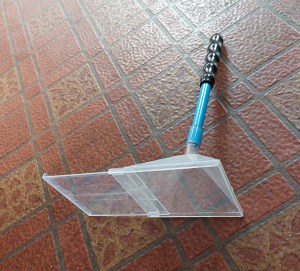
But what of the fly the size of Rodan, the deep reader will be wondering? Advocating a catch and release policy toward all living but unwelcome things, I grabbed the fly catcher and went dancing around the house with the fly. I trapped it in the bathroom, where it had landed on the window screen. To catch a fly with the fly catcher, you have to wait until it lands, approach quickly but stealthily, cover it with the catch door open, then slide the catch door closed with the fly inside the trap. Might sound easy, but it’s often a cat and mouse game as the fly inevitably flickers away at the last second. After several attempts banging around the small bathroom, I caught the fly, then released it into Spring and all wilderness where all Earth life mingles half awake and half asleep.
Tik Tok Tik Tok Tik Tok Tic Tok Tic Tok Tik Tok Tik Tok Tik Tok Tic Tok Tic Tok Tik Tok Tik Tok Tik Tok Tic Tok Tic Tok Tik Tok Tik Tok Tik Tok Tic Tik Tic Tok Tik Tok Tik Tok Tik Tok Tic Tok Tic Tok Tik Tok Tik Tok Tik Tok Tic Tok Tic Tok
If the point of a cartoon is not to make you laugh, then what is the point? If you have to ask, you may not have the makings of a cartoon aficionado. A few days ago, celebrating The New Yorker magazine’s 100th anniversary, I suggested their cartoons, a big part of their brand, if you like to name things, are not funny. I said, “And if you think the point of a cartoon is to make you laugh, you’re in for a disappointment.” But what I should have said is, “…you’re in for a surprise.” That’s the point of a cartoon – to surprise. If you must have a point.
My Brit friend who previously sent me the artificial intelligence poem written in the style of Joe Linker read my 100th anniversary post and responded via email with a link to the Seinfeld segment where Elaine meets with the cartoon editor at The New Yorker to ask him to explain why one of their cartoons appearing in a recent issue is funny. She doesn’t get it. She pushes him into admitting he doesn’t get it either, and when she asks him why he published it, he says he enjoyed the kitty. It’s Series 9 (their last), Episode 13, titled “The Cartoon” (1998). You could look it up. Susan and I watched the whole episode the night before last on TV. Susan didn’t find it too funny, but I did. Well, actually, she didn’t say it wasn’t funny; she said it wasn’t a good one. If cartoons are not funny, how could a show about cartoons be funny?
Do we choose our magazines based on their cartoons? I remember in my parents’ house there appearing copies of Redbook, Ladies’ Home Journal, The Saturday Evening Post, Seventeen, and Glamour, but just occasionally, not necessarily the result of subscriptions, but of random, neighbor exchanges. Did my mother and sisters read Joan Didion in the Post? I’m sure my father did not. He read the newspaper. I don’t recall paying much attention to those magazines, but I don’t think they were known for their cartoons. Susan’s aunt, who introduced me to The New Yorker, was a commercial artist, an illustrator. She said illustrators were not artists. That there never developed for Los Angeles a magazine equivalent to The New Yorker may help explain the difference between the two cities.
One year, in the midst of my career in the red dust of commerce, I cut out a New Yorker cartoon and taped it to the side of my computer monitor, in those days the size of a television box, on the aisle where passers-by could stop, check out the cartoon, and say hi. The cartoon was two panels, on one side, a middle-aged man dressed in a loose fitting business suit with tie, holding a briefcase, wearing a fedora hat, on his face a zero expression, neither awake nor asleep. He might have been waiting to cross a street, for a sign to say, “WALK.” The caption read: “The thrill of victory.” In the other panel, the same guy, exactly the same drawing, the same facial expression. The caption read: “The agony of defeat.”
My boss at the time stopped to check out the cartoon of the businessman. I could tell he didn’t get it. He walked on to his office. Some days later, he stopped again, and said he didn’t think the cartoon was funny. Several weeks passed. The cartoon didn’t get that much attention. I guess its surprise wore off. What attention it did get might have been due to the fact that it was the only piece of non-work material I had stuck up anywhere on or around my desk. It may have become a tiny landmark, reminding sleepwalking or overexcited workers to turn right here. I don’t remember exactly how long it remained up before my boss called me into his office to tell me he wanted me to take the cartoon down. I took it home and taped it to our icebox door.
I drew a cartoon a few years back of a man holding a cellphone to his ear, the phone giving off wah wah sounds indicated by red dashes, a big smile on the listener’s face, a woman to the side a step behind him looking disappointed. The caption read: “They were supposed to be on vacation, but he was on his cellphone.”
Twas the proverbial night before Christmas When all through the house oboes wobbled And bells drummed twas Nick at his sticks While the children blew bellows in burrows Asleep how through all this babbled version One could hear their little tin horns bleep All sugar tipped up and fat ball hobbled Achoo in me hat and mamma in her ache The babe at her breast for a milk rich bowl When out on the street the leaf blowers Blowered at this hour a rout and I tripped Nary tipped mind you but a blob had sat On my head nevertheless rose to deal With the matter the moon yes the rain Drips deep below when then did I spy The eight petite reindeer and their poser Whose echo touted tomatoes and fruit Dressed as they were in greens and reds But I’ll spare you here the royal roll call Suffice to say yes they did fly at his whip Peeble, Hooch, Boop, Bloob and the others Then came the dashes – – – – – – – – one After another like leaves when they fall He knocked politely at the door a mere Echo of past years his smile an arrow Soon up the street in his branded vest Stopped here and there with boxed goods For the goodies then turned signalled left Leaving me to pick up my package Empty my stockings of my two tired Feet and return blue to my windy sleep.
When Samuel Becket wrote “Krapp’s Last Tape” (1958), could he have picked any fruit other than the banana for Krapp to cram in his pocket? Were bananas a fave in Paris at the time? Did Beckett eat daily bananas? Surely at Somewhere U there’s a thesis on this. By the time of Krapp’s writing, WWII rations had ended in Europe, the new concern, regarding bananas, tariffs and costs. How much would one pay for a banana? What is it about the banana that inspires both commodious jokes and serious art as well as market speculation and spectacle?
Or all of the above. Reference the recent banana art installation that apparently sold at auction for $6.2 million. The banana is taped to the wall with duck tape. (Where’s Andy Warhol when you need him?) The duck taped to wall banana used the traditional gray colored duck tape. But duck tape now comes in various colors, and we would have picked a bright blue, which might suggest, mixing with the yellow, green, the color of money, which is what it’s all about, though at the same time, ok, it might say something about art, or art collecting, anyway.
The duck taped banana, titled “Comedian,” is acoustic, unlike the “electrical banana” in Donovan’s 1966 song titled “Mellow Yellow.” We won’t go into the suggestive meaning behind the banana electric, but it is easily looked up. In any case, an electric neon lit banana might have fetched even more than the $6.2 MM, with a wire dangling down to an outlet, perhaps requiring one or two additional strips of tape to secure it to the wall.
No telling what Beckett might have thought of all the current brouhaha over the banana. But “Krapp’s Last Tape” does contain both banana and tapes, at last count at least three bananas, all eaten, the peels discarded on the stage.
To see or not to see, to knock to hear all the rot and rub, to touch and shock, stop here not there in such nonesuch.
Let’s stay in tonight then, you and I, blue light spread against the walls, and stream Seinfeld reruns.
Of Engelond, to wander wonder they wende, twas the 60’s and bell-bottoms they wore.
To define behavior is to limit freedom. Give me a clone.
Through the fence he watched the absurd land usurpers playing golf, and when one of them yelled Caddie, it set off a chain link reaction as he was bombarded with memory particles.
You are all a fond generation.
The overfed Buck came up to shave and ruck a go at Catsbody.
The day was blue the guitar green he tossed all he’d seen of words for notes.








 The Coming of the Toads