Category: Reading

  • Caleb Crain and Becker-Posner Print Their Blogs

    As we watch the coming of the end of books and the disappearance of newspapers, we note an increase in electronic self-publishing, blogs the obvious pedestrian example, but then, in an interesting twist, we see blogs subsequently published in more traditional print copy format. Two recent and noteworthy examples illustrate: Caleb Crain’s The Wreck of the Henry Clay (Lulu, 438 pages, $14.95), selections from his blog Steamboats are Ruining Everything, covering blog years 2003-2009, and Uncommon Sense: Economic Insights, from Marriage to Terrorism, a “best of” The Becker-Posner Blog (University of Chicago Press, 384 pages, $29.00).

    Caleb Crain is a 19th century scholar and freelance writer with degrees from Columbia and Harvard who has written scholarly papers, a book, American Sympathy, and a novella, Sweet Grafton, as well as general interest articles and book reviews for the New Yorker and other prestigious publications. Richard Posner is a federal judge, Becker a Nobel Prize winning economist at the University of Chicago. The ethos that Crain and Becker-Posner bring to their blogs adds validity to what some consider to be an environment rife with charlatanism and chicanery – the world of the blog. But their blogs improve the potential of the art of blogging by setting a high standard of quality and quantity, by elevating and advancing the long-term potential of self-publishing, and by engaging readers in the possibility for a democratic, egalitarian, and interactive conversation that is not available elsewhere to general readers, students, or others whose interest in the discussion of ideas may go beyond skimming the mosaic of the daily newspaper or the weekly magazine.

    Crain and Becker-Posner have long lists of traditional publication credits. They don’t have to blog, nor do they have to self-publish. Crain’s blog performs a service to the reading community, so call it pro bono publico. Of particular interest are those posts that follow the print publication of his longer articles and that discuss his research; these posts have value for both the general reader and students. The links he provides are purposeful and meaningful, interesting and useful. Crain’s blog often generates civil comments and discussion, unlike some blogs that seem to foister the awry warrant. The Becker-Posner blog no longer accepts comments. Readers may miss the discussion, but the more popular a blog becomes, the less likely its founding readers will be able to follow the discussion – the traffic and the drive-by comments may become too distracting, the volley of retorts from the obsessive commenter tiresome.

    Blogs like Crain’s and Becker-Posner’s are not without criticism from within their professional writing communities (it took the n+1 blog six months to finally review Crain’s blogbook). Why would a professional writer blog, thereby giving away content, setting a bad precedent? But no writer’s every word is going to see print, and the ones that come closest, the syndicated, the featured, the columnists, frequently suffer from a paucity of ideas, quality, and freshness (consider George Will and Stanley Fish). Bloggers are under no compunction to blog daily or weekly, but blog regularly enough to maintain a loyal readership, blog when they actually have something to say and the energy to say it.

    Becker-Posner introduced their blog in December of 2004. In their first post, they said “Blogging is a major new social, political, and economic phenomenon. It is a fresh and striking exemplification of Friedrich Hayek’s thesis that knowledge is widely distributed among people and that the challenge to society is to create mechanisms for pooling that knowledge…The internet enables the instantaneous pooling (and hence correction, refinement, and amplification) of the ideas and opinions, facts and images, reportage and scholarship, generated by bloggers.” Five years later, the Becker-Posner blog posted a notice announcing their blog’s print publication.

    Crain, on his blog, explains that his blogbook comes with “six years of essays, which many of you will already have read, about dogs, torture, etymology, American history, gay marriage, political rhetoric, movies, tree climbing, indie rock, Mars, peak oil, anarchism, and literary criticism.” Crain’s blog is more personal and eclectic than the Becker-Posner blog, and the general interest reader may prefer it.

    While some writers may wonder why some bloggers give away content, readers may wonder, now that the blogs are available in print form, why they would purchase a blogbook when the content is available free on-line. The answer is simple: because the general interest readers who follow blogs like Crain’s and Becker-Posner’s for any length of time value books. Books are what they want. But it’s that book interest that sparks the interest in the blog – following such a blog allows a reader to watch a professional writer writing a book, and more, to participate in that writing by interactively watching the work develop. The last time this happened was when magazines still serialized books in progress (Dickens, for example; or the New Yorker’s serialization of Capote or John McPhee, or its publication of Hersey’s Hiroshima – these were all followed by books). The difference is the initial self-publishing aspect of the blog. While the Becker-Posner blog is an example of self-publishing, their blogbook is not, while Crain’s blog and book are both self-published. Either way, the loyal reader will look forward to sitting down with a hard copy, like spending time with an old friend, reminiscing.

    12-19-09 update: The  Becker Posner site has moved to Typepad and updated their site, citing technical problems with the old location. Comments are turned back on at the new site.
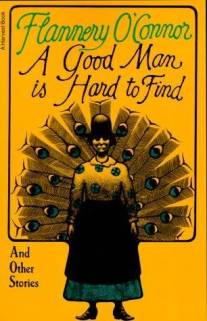
  • Kierkegaard: A Good Self is Hard to Find

    A Good Man is Hard to FindWe enjoyed Gordon Marino’s recent piece in the Times, “Kierkegaard on the Couch,” about a distinction between despair and depression, the former, according to Marino, a kind of disrespect for one’s self, not accepting who one is, the latter a disease; the former our existential condition (for which Kafka said there is no cure), the latter treatable with medication and counseling.
    We were reminded of John Cage: “It is not irritating to be where one is. It is only irritating to think one would like to be somewhere else” (“Lecture on Nothing,” Silence, p. 119).

    Perhaps the opposite of Marino’s despair and depression distinction is found in joy and happiness. A certain kind of acceptance allows for joy, which is not quite the same as happiness. Joy, like grace, lives only in the moment; occurs regardless of where we are located; and appears like the epiphany, satori, the kick in the eye. Happiness is a kind of candy that wears off, leaving us depressed. Despair is the corollary of joy, depression the corollary of happiness.

    Joy Hopewell comes to mind, a Flannery O’Connor character (“Good Country People”) who changes her name from Joy to Hulga, such is her despair. A good self is hard to find.

  • Free Parking at the Library of Congress

    ParkingWe try to imagine a world without cars. Given our experience, it’s difficult: our MOS was wheeled and track vehicle mechanic; we parked cars at the old LA International while working our way through college; we underwrote autos for a time. Our first car was a 1956 Chevy, purchased for $75 from our friend Gary leaving for Vietnam – he never returned. Our second car was a 1949 Ford pickup truck, called the “Peace Truck” for a small peace sign decal we put in the center of the rear window – we used the truck for surf trips. Then we went through a series of old Volkswagens, mostly bugs, but we did have a VW van for a time – it blew a rod one night on way home from a Jimmy Hendrix concert. We try to imagine Kerouac’s On the Road without cars: impossible.

    We try to imagine a parking space at the very spot and time we need one. We’ve always talked to our cars, but parking spaces don’t listen. We remember our first time parking in the Columbia Tower in Seattle: the entrance to the underground parking garage is a concrete circle that descends quickly around and around and around for seven stories below the building, the massive concrete beams just inches overhead – not a place for the claustrophobic, almost as bad as the MRI machine, another circle of hell. Dante would love it, were he in Seattle with a car to park. After parking, one must take four separate elevators to get to even the 33rd floor.

    John Grisham’s A Painted House contains a theme related to cars: it’s 1952 and the characters are struggling to survive on small cotton farms in rural Arkansas; some leave for the north, where they find jobs in the automobile industry, in Flint, and they travel back in their big new automobiles to visit and show off. The irony in the end of the story, underdeveloped, is that as the main characters finally give up the dream of making the farm work and follow the exodus to Flint, today’s reader knows they’ll be back – imagine cities full of hollow parking garages, empty parking lots.

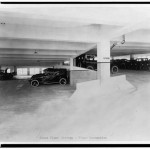
    What in the world brought on this reverie of the car? A road trip? A particularly gruesome commute? No. This, a post at the Inside Adams blog at the Library of Congress site: “Long Live the Parking Garage.” There will be free parking as soon as we get rid of the cars; meantime, we should caution you that if you are susceptible to following links you may never find your way out of the parking garage post.

  • The Retiring and Re-tiering Posner

    The claim Posner seems to be making (a claim of value) is that federal taxes should not be used to support economically non-productive groups – the retired elderly is his example. If we accept his claim of value as something we should all want, then we should include all non-productive groups, which would include the disabled (including veterans), the imprisoned, children, the mentally ill, and the unemployed. It would also follow logically that federal aid should be distributed in proportion to the level of economic productivity of groups. Thus those in the service industry, for example, should receive the least benefit (if any) from federal taxes. A stratified hierarchy is thus created.

    We encourage Becker and Posner to tune in to Professor Wolff’s (UCL Philosophy) discussion here. From his summary: “…those who leave school early are more likely to end up in physically demanding work, and may well develop physical health problems during the course of his or her working life. Accordingly, retirement, when it eventually comes, may be lived in poor health and for a much shorter period than those who start later in less physically demanding jobs. It may also be, then, that our current retirement policies contribute to the social gradient in health and life expectancy.”

    Note: The Becker-Posner Blog comment function appears to be disabled.

  • AIG, APA and the Crashing of Institutions

    300px-Brueghel-tower-of-babel[1]The frequency and severity of institutional crashes lately keep ringing in our ears. What becomes of credibility and reliability when the actuarial body politic, responsible for making the rules, tracking the results, and revising accordingly, errors in judgment, planning, execution, and follow-up? First AIG, now APA. 
    A few weeks ago, we dripped a bit of our mild satire on APA’s capricious decision to switch back to the double space following a period at the end of a sentence. At the same time, we made note of a one-off blog tracking the changes and mild hysteria following the publication of the APA 6th edition, back in July. The APA style site has now posted an apology, an eight page list of corrections, and corrected APA sample papers; the first printing of the APA 6th edition, it’s now fully disclosed, is rife with errors. It’s an OCD disaster.

    The APA note of apology reads like a Wall Street firm lobbying for a bail out. From that note:

    “The aggregate of these noted pages may look significant, but in the majority of cases, the noted change is relatively minor…Corrections to the first printing of the manual have been organized into four categories in an effort to group like changes together: Errors in APA Style Rules, Errors in Examples, Clarifications, and Nonsignificant [sic] Typos.”

    When does a number of minor problems reach a level equal to a major problem? What is needed is a repeal of the McCarran-Ferguson Act as it relates to the federal regulation of style manuals – to centralize control, avoid styled obsolescence, and bail out confused students. The silliness of the obsessive distinctions is made manifest by the unnecessary and arbitrary revisions, the Tower of Babel like edifice that has crashed into a Confusion of Tongues, and the failure of even the experts to remember or to follow the rules.

    Scratch that last paragraph. Terrible idea. A confusion of tongues is exactly what’s needed. Specialization leads to extinction. And we do intend to invoke the opt-out provision on the double space following the period.

  • On the water writing

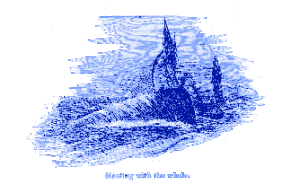
    Meeting with the whaleThere’s nothing better than being on the water. Another blog we’ve been following recently, Transparent Sea, is chronicling an open ocean paddle following the migration path of whales off the coast of Australia, and features some close-in photos and videos of whales, dolphins, and surfers.
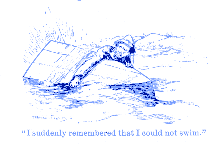
    I suddenly remembered I could not swimWe are reminded of Joshua Slocum’s classic, Sailing Alone Around the World. Slocum could not swim, yet he spent just over three years and 46,000 miles alone on the water. 
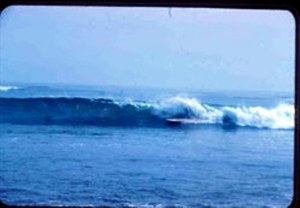
    Writing sometimes feels like being alone on the water, unable to swim.

  • Hemingway surfing and writing

    Timing is everything
    at Leo Carillo, 1969.

    We’ve been enjoying the El Porto Fridays blog. We can still feel the El Porto sand beneath our feet, the foam rushing over our board, the morning glass, the afternoon chop, the evening glass-off. We surfed there in the 60’s and 70’s, before heading out, like Huck Finns, for the territory, ahead of all the rest; well, ahead of some, behind others. The El Porto Fridays blog recently put up a post titled “5 Ways to Improve Your Surfing.” It had us thinking of Shaun Tomson’s Surfer’s Code, and of Hemingway and writing. 

    A sentence is like a wave, as Hemingway often illustrated; Hemingway didn’t surf, but he does have Jake Barnes in The Sun Also Rises body surfing, and this famous sentence from the short story “Cross Country Snow” illustrates what could be a surfer on a wave:

    “George was coming down in telemark position, kneeling; one leg forward and bent, the other trailing; his sticks hanging like some insect’s thin legs, kicking up puffs of snow as they touched the surface and finally the whole kneeling, trailing figure coming around in a beautiful right curve, crouching, the legs shot forward and back, the body leaning out against the swing, the sticks accenting the curve like points of light, all in a wild cloud of snow.”

  • Double Shot, Hold the Book

    The end of books is closer than we thought. A short article in today’s Christian Science Monitor discusses a private high school that has replaced the books in its library with a $12,000 espresso machine, three sports bar like TVs, Kindles with e-books, and laptops.

    Apparently, the old, hard copy books were not being checked out and read, anyway. Though the article does not mention Google, we look forward to a riposte from Carr. He thinks Google’s giving us the jitters now; imagine adding a little espresso to the formula.

    While we’re on the subject of books disappearing, another related piece in today’s mail threatens to amuse, from the New Yorker’s Book Bench blog, a review of cartoonist Bruce McCall’s new book, Fifty Things to do with a Book (Now that Reading is Dead).

    And our brief survey and latest Reading Crisis entry would not be complete if we didn’t remind readers of our own past post, “What we will miss when newspapers disappear.”  

    But doesn’t the espresso disturb their nap time?

  • New Outbreak of Grammar Influenza

    We’ve only just noticed someone else coming to the aid of the mistreated E. B. White – Jennifer Balderama, in a Times review of Mark Garvey’s Stylized. We find Simon & Shuster’s description of Elements and its influence hyperbolic, but they’re trying to sell a book, not grammar, while it does sound like Garvey misses neither the point of Elements nor that of the grammarians. Get your grammar shot; school’s back in session.

  • Rolling Stone’s 50 Reasons to Watch TV

    The cover story of the September 17 issue of Rolling Stone gives us the best reasons to watch television. It’s all about content, of course – not a word about form.

    Marshall McLuhan, in Understanding Media, gives us the real best reasons for watching TV.

    “With TV, the viewer is the screen,” McLuhan says (p. 272), and he foreshadows the same arguments that currently occupy Nicholas Carr and others. “The introspective life of long, long thoughts and distant goals…cannot coexist with the mosaic form of the TV image that commands immediate participation in depth and admits of no delays” (McLuhan, p. 283).

    Carr recently blamed the end of book culture on internet habits. McLuhan was writing before the invention of the personal computer, but Carr’s focus still repeats McLuhan’s claim: “The phenomenon of the paperback, the book in ‘cool’ version, can head this list of TV mandates, because the transformation of book culture into something else is manifested at that point” (McLuhan, p. 283). But then Carr goes off track. Carr thinks print culture is about deep thinking, but it’s about living on the railroad, and has little to do with all of Carr’s deep sea metaphors, as McLuhan explains: “The American since TV has lost his inhibitions and his innocence about depth culture” (p. 283).

    McLuhan illustrates that it’s impossible to be illiterate in a non-literate culture. It’s not yet clear what this might mean placed into the socially ubiquitous phenomenon of PC literacy. E. L. Mayo gives us a clue perhaps with his political (and perhaps the best yet) reason for watching TV in his short poem “The Coming of the Toads,” where TV, while perhaps the ugliest medium a book cultured person can fathom, flattens social stratification.

  • Bio-Lego-Land: Building a Better Body thru Metaphor

    In the September 28, 2009 issue of The New Yorker, we meet synthetic bio-Lego-boys Drew Endy and Rob Carlson: “Some of my best work has come together in my mind’s eye accompanied by what I swear was an audible click, ” Carlson tells New Yorker’s Michael Specter, who says Endy has never forgotten “…the secret of Legos – they work because you can take any single part and attach it to any other – in 2005 Endy and colleagues…started BioBricks Foundation…to register and develop standard parts for assembling DNA” (61).

    What if Norman O. Brown had grown up playing with Legos? Would he have named Love’s Body, Lego’s Body? In Chapter XV, “Freedom,” Brown says that “Metaphor is mistake or impropriety…a little madness…a little seizure or inspiration” (244). 

    “The glory of God is to conceal a thing, but the glory of the king is to find it out…,” Brown quotes Bacon in McLuhan (Gutenberg Galaxy, 190).

    “Feet off the ground. Freedom is instability; the destruction of attachments; the ropes, the fixtures, fixations, that tie us down” (Brown, 260). 

    William Blake, in The Marriage of Heaven and Hell, drew the modern man: “The head Sublime, the heart Pathos, the genitals Beauty, the hands & feet Proportion.” Let’s hope the synthetic biologists mix their metaphors mercifully, for “A fool sees not the same tree that a wise man sees,” Blake said; nor the same Lego, for that matter.

    More on the genome of metaphor.