Author: Joe Linker

  • You Can’t Go Home Again

    You Can’t Go Home Again

    Sylvie. 30 Day Letter. Termination. Goodbye, Seattle. Country Blues Song.

    You can’t go home again. Neither should I have stayed on another week at Hotel Julian. The subdued rhythm of my pastoral turned boisterous with the arrival of the fleet, and my absence in Seattle and now my prolonged and somewhat mysterious trip south caught up with me, testing Walter’s patience, and as he was wont to do at any sign of disloyalty among those with a seat at his table, he terminated me. There was of course more to it than that. The Walter Team was disestablished. It would be near impossible to disambiguate the transactions. In any case, I was no longer Risk Manager to the gods. Sylvie said Walter had sent me a 30 day letter. I could transfer to a desk in Morocco or take my leave, but the 30 days had already expired, and I had been cut loose with a modest severance bonus. Sylvie was on her way to spring training with her Single A team in Costa Rica. She had leased the Queen Anne house to some moonshiners out of the hills somewhere in east Skagit who planned to set up a microbrew. She had taken the liberty of putting my severance into a fund of fund of funds with no guaranteed rate of return but with a reputable track record. While I would not yet have to give up my weekly room status for a berth in the bunkroom, I would have to scout around for some part time work. I would not go back to Seattle though. I would take my risks elsewhere and in due time. Come Thursday night of my second week on board I climbed the Hotel Julian fire escape up to the rooftop bar and grill where I drank a slow beer and listened to Jack Tar and the Flower Girl with the Weathered Weary Blues Band messing around with some country blues with players on guitar, banjo, harmonica, a snare drum with a single cymbal, a Flatiron mandolin, and a stand up bass. Flower Girl nearly keeled me over with this song:

    “Back Home Again”

    What I know about love, I wrote on a postage stamp,
    and mailed myself half way up to the moon.
    I’m in stardust singing – I do, I do, adieu.
    I’m out on the road, and I can’t go home again.

    I was born in the back of a beach bum shack,
    again and again, then I sailed the seven seas.
    I never made it back home again.
    Adieu, adieu. You can’t go home again.

    She was born in a coral of a rodeo,
    off a road they call Route 66.
    Between the cowboy and the clown she broke free.
    Goodbye, goodbye. She won’t be back again.

    The moral of this story, the point of this tale,
    if you ever leave home, you can’t go back again,
    because you won’t be there when you arrive.
    Goodbye, my love, goodbye my love, goodbye.

    And it’s home again, I want to come back to you,
    see all my family and all my old friends too,
    but it’s true what they say, you can’t go home again.
    Goodbye, my love, goodbye my love, adieu.

    Note: Hear “Back Home Again” played on the guitar
    here: https://www.instagram.com/tv/CEAoxkhIXgq/

    “You Can’t Go Home Again”
    is episode 23 of
    Ball Lightning
    a Novel in Progress
    in Serial Format at The Coming of the Toads.
    (Click link for continuous, one page view of all episodes.)
  • Remet and Regret

    Remet and Regret

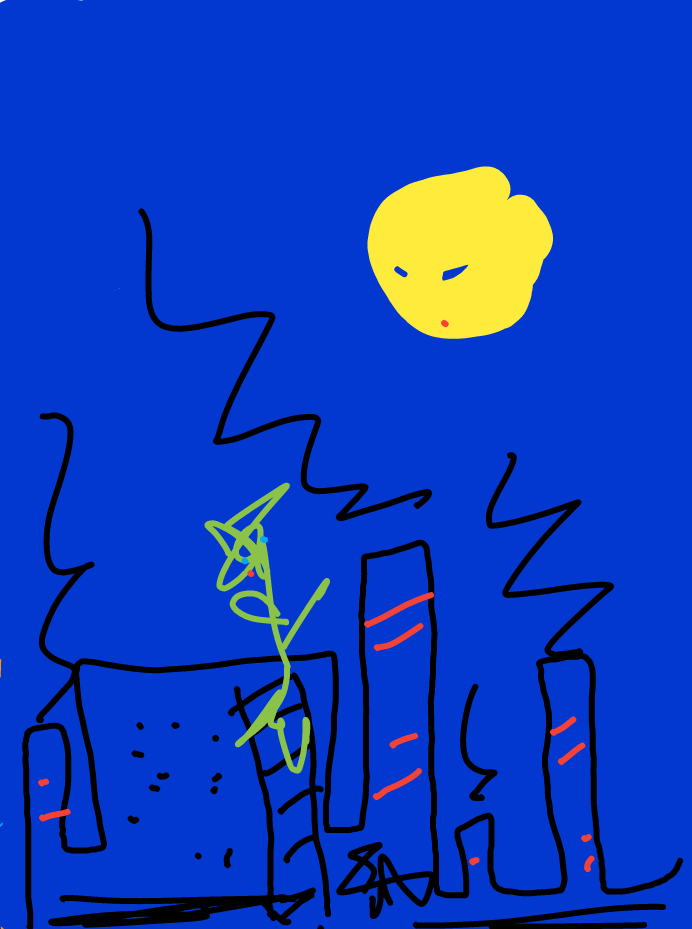
    Flower Girl again. Metamorphosis. Memory.

    Come the following Sunday, I decided to stay on for another week at Hotel Julian, having found my time there restful and enjoyable, and while I was in the lobby at the front desk getting squared away, Flower Girl appeared once again. In any metamorphosis, one must decide whether to bring one’s memory along. If she was a goddess, Flower Girl was certainly not Mnemosyne. I don’t know why she pretended not to know me, to have never met me. Maybe I found our evening talks on the veranda of the hostel more engaging. I had recalled them several times since moving out, going over what was said, where we had sat, how the evening suns dropped into the ocean. I recalled her flowers, her yellow hair, her blue eyes, her smooth, sensitive skin, her happy smile that often broke into a sudden laugh, her frown when she seemed depressed or angry with something, her slightly freckled cheeks, the way she squeezed the arms of her overstuffed chair when she was about to exclaim something important, like she was about to experience an epiphany but held it off until she couldn’t hold it anymore. With each retelling in my mind, I strengthened my memory of our time together. She, on the other hand, may never have recalled those evenings, so they easily disappeared. Or maybe she confused, in her memory, her evenings with me with any number of other persons she had spent time with, all conversations blurring into an indistinct person and incoherent discussion. Perhaps she had other reasons for denying we’d ever met and talked and shared time together, alone, on the veranda of the hostel. I mentioned I’d heard her blues singing on the rooftop the other night. She thanked me for listening and said she lately had been showing up there every Thursday. When I asked her if she was also was staying at Hotel Julian she was again evasive and seemed to prefer not to answer, instead saying something obscure about being uncertain what her plans might be moving forward. Maybe she harbored regrets of our conversations, of sharing something too deeply of herself, and now she wished to reclaim that thing and keep it for herself, or to save it for someone else, and so with that new person the experience would be new and fresh and not a rehash of already spent emotion and epiphany. Or maybe she was the kind of person who only remembered bad experiences, a characteristic of the melancholic or depressed person, who relives moments better forgotten over and over again, and can’t seem to shake loose of them, while their happy memories sink to the bottom of a murky sea, and there I was, Prufrock’s “ragged claws,” or, forgetting the metaphor, quiet literally the lonely man leaning out the window of “twenty-nine three.”

    “Rement and Regret”
    is episode 22 of
    Ball Lightning
    a Novel in Progress
    in Serial Format at The Coming of the Toads.
    (Click link for continuous, one page view of all episodes.)

  • Weathered Weary Blues Band

    Weathered Weary Blues Band

    Hotel Julian. Bunkroom. Jack Tar. Blues. 

    Room 293, my room for the week, viewed Port Street, below the monthly rooms on the third floor of Hotel Julian and above the hourly and daily rooms on the first floor. Also on the first floor, located above the ground floor grocery, was a bunk or barracks room with twelve canvas and steel spring cots let by the night, two rows of six, one on each side, a three foot aisle down the middle. The Bunkroom opened at 7 in the evening and guests had to be out by 7 the next morning. The Barracks was closed during the day. A communal latrine at the end of the room served personal needs. Other than use of the latrine for cleaning and relief, the Bunkroom, or Barracks, was for sleeping only. The room was open to men or women, but not to couples. Singles only. But how Julian enforced that rule, I don’t know. Bunkroom conversation, if there was any, was sotto voce. If Hotel Julian guests wanted to hear or make noise, they climbed the back fire escape up to the rooftop, where an outdoor bar and grill, open to guests only, featured a house blues band Thursday through Sunday nights. The rooftop was closed Monday, Tuesday, and Wednesday, and open from 9pm to midnight the other nights. I checked into Hotel Julian on a Monday, and it was a few nights later when I climbed the fire escape to the roof to hear the Weathered Weary Blues Band. Apparently, the band consisted of only one regular player, a guitarist who went by the name Jack Tar, and whether he came on alone or was joined by other players, he went by the Weathered Weary Blues Band. I got up to the rooftop around 9:30 and counted 9 folks including myself in the audience. I sat at a table in the rear and ordered a beer. But the tide was in and so was the fleet, and soon the rooftop filled to capacity, about 40 of us listening as Jack introduced none other than my disappeared flower girl who started in on “The Blues are Brewin,” accompanied by Jack Tar lovingly stroking an acoustic Gibson with a bottle neck on this little finger and a tall thin fellow blowing and sucking fills on harmonica. Up on the roof was lovely, and while dangerous waters might have been rising below, we paid that no mind as we got stuffed to the gills with the blues but never felt full.

    “Weathered Weary Blues Band”
    is episode 21 of
    Ball Lightning
    a Novel in Progress
    in Serial Format at The Coming of the Toads.
    (Click link for continuous, one page view of all episodes.)
  • Hotel Julian

    Hotel Julian

    Rooms. Lobby. A new rhythm. 

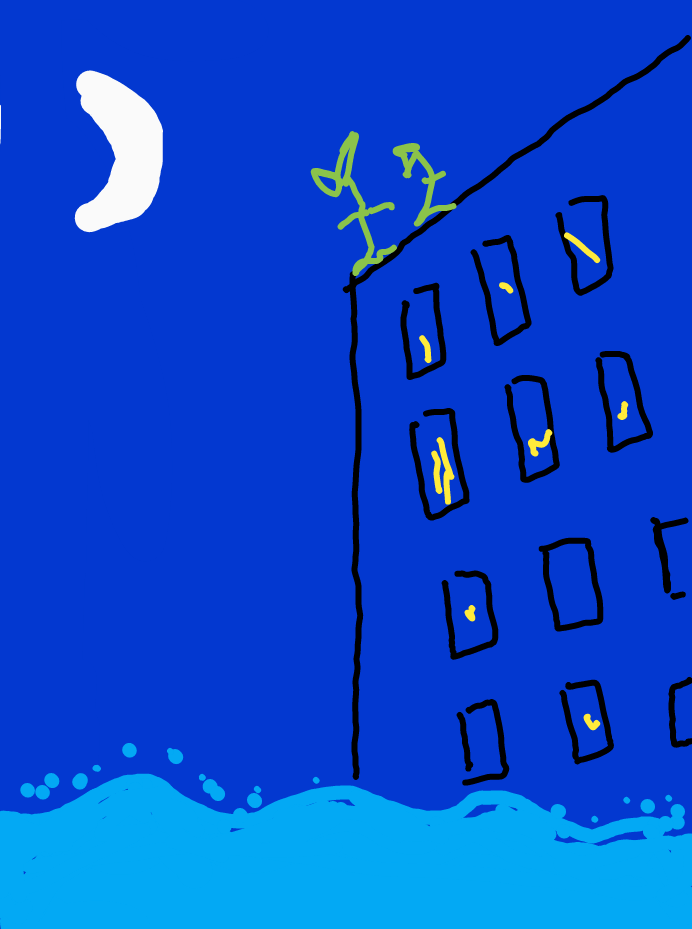
    After the flower girl vanished I moved out of the hostel and took a room in a boarding house, Hotel Julian, close to the Port, and a daily rhythm I succumbed to, as if I too were a retired seaman. The Julian was a respectable flop house still resisting gentrification, furnished rooms, and some not so furnished, rented out by the hour, day, week, or month. The rooms were on the upper floors, above a ground level row of retail shops: a corner grocery and liquor store; a one chair barber shop; a narrow tavern, no tables, just a long bar opposite a sandy table shuffleboard, a couple of dart boards against the back wall; a used book store; another shop or office space, its door padlocked and its windows butcher paper covered. The double doors and stairs leading up to the hotel opened off the sidewalk between the tavern and the book shop. At the top of the stairs was a landing with doors left and right. The door left led to the rooms, the door right to the lobby and hotel office. The lobby flaunted two overstuffed couches very hard to climb out of for most of the aged and afflicted in one way or another seamen who primarily made up the boarding house tenants. A card table with four chairs. An overturned whiskey barrel on which was painted a chess board, the pieces housed in a baleen basket, two stools inviting a game. A book and magazine rack, a couple of tourist maps. A corner self help coffee stand, open 24 hours. A sign: No Smoking, No Alcohol, No Food, No Cussing in the Lobby. The front desk and counter, cubbies for keys and notes and mail. The walls paneled in dark mahogany sheets. A few framed black and white photos from the old Port days, the ships and boats and wharfs and the men and women strolling in hats and duds now long out of style. Thick strip clear fir flooring. An absurdly ornate and elaborate chandelier a tall man would have to duck to cross under. Bay windows overlooking the street. I checked in for the week, found my room, threw my duffle bag onto my bed, and walked down to the docks to find some coffee and a plate of bacon and eggs. Thusly my new rhythm began at Hotel Julian.

    “Hotel Julian”
    is episode 20 of
    Ball Lightning
    a Novel in Progress
    in Serial Format at The Coming of the Toads.
    (Click link for continuous, one page view of all episodes.)
  • The Flower Child

    The Flower Child

    San Pedro Hostel. Flower Child. Saints.

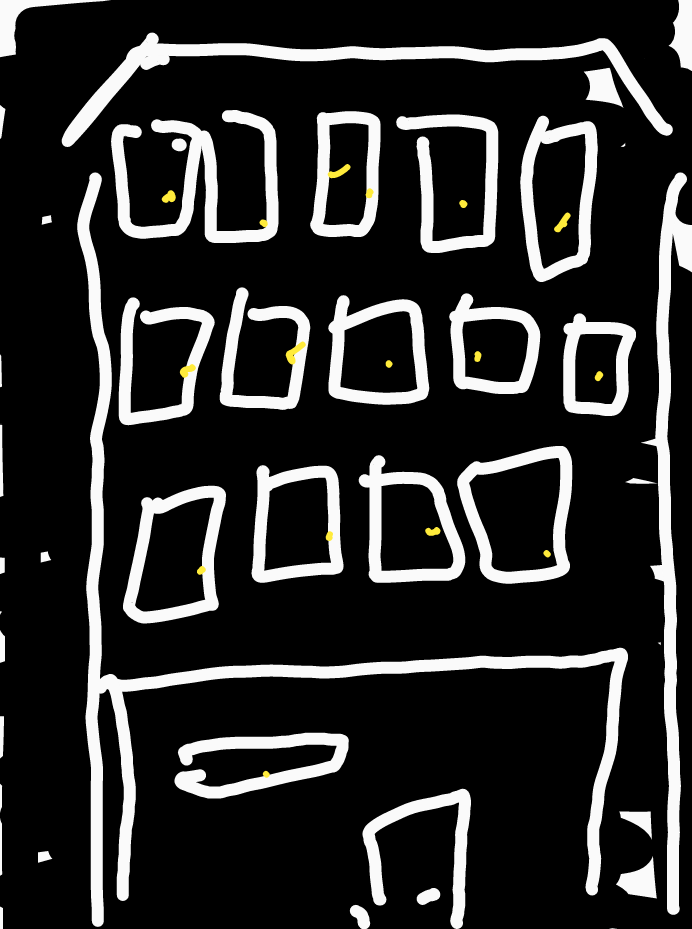
    Still no sign from Sot. I moved into a hostel in San Pedro and began frequenting the old fishery taverns in the working class neighborhoods. There was a young woman living in the hostel gathered flowers and wild herbs from parks and yards near sidewalks and vacant lots and sold them standing on street corners to drivers in cars waiting at red lights, seemed interested in godhood, wanted to be able to become invisible. One night, sitting out on the veranda of the big hostel house, we got to talking. It’s no good being invisible if you can’t walk through walls, I cautioned her. You could get locked inside some room. She wanted to talk about the Catholic saints and the Church Militant. The saints, she argued, now took the place of the old, debunked gods. The saints were invisible, but you could feel their presence. She said she had known a guy who had wanted to become a god so he could fly. He was not prepared for the dangers of modern day air travel and was sucked into an engine of a 747 on takeoff at LAX. He had been practicing flying at low altitudes from the dunes at Playa del Rey. I came to enjoy our evening talks on the veranda, then one day she suddenly disappeared, leaving no word.

    “The Flower Child”
    is episode 19 of
    Ball Lightning
    a Novel in Progress
    in Serial Format at The Coming of the Toads.
    (Click link for continuous, one page view of all episodes.)
  • Rumors

    Rumors

    Capital. Jobs. Detrimental reliance.

    Rumored it is the gods have lost power over time, and it’s true many of them have exchanged their berths in Heaven for capital on Earth. Nevertheless, many lesser gods remain, living on Earth, though adulterated with traces of human genome. And it’s difficult to determine if the god has absorbed some of the human or the human some of a god. Either way, a tiny insertion of one or deletion of another can result in unpredictable change in behavior, altruistic and selfish. As I made my way daily to and from the pier to fish, waiting for word from Sot, I saw that the South Bay was full of lesser gods: bellhops; waiters and waitresses; truck farmers with vegetables, flowers, and herbs; car wash attendants; house painters; roofers; cab drivers; dishwashers; bicycle and wheeled and track vehicle mechanics; maids, housekeepers, concierges; sex workers; au pairs; gas station attendants, clerks, bussers, baristas, bartenders. The theory goes the gods have lost power because human belief in them has waned, dwindled to a trickle. The symbiotic relationship has weakened, belief in one another deemed necessary for the continuance of both. Detrimental reliance has upset the cart. Rumor has it there’s to be a giant baseball game, good versus evil, lightning balls thrown and hit, and the losers will be cast from Earth into space. But it’s just another rumor. I don’t know how these things get started.

    “Rumors”
    is episode 18 of
    Ball Lightning
    a Novel in Progress
    in Serial Format at The Coming of the Toads.
    (Click link for continuous, one page view of all episodes.)
  • Waiting for Sot

    Waiting for Sot

    Scruples. Chance. Fishing. Hiding.

    Most of the gods are on the make. Being at least part human, as I am, may cause one to harbor some scruples. These Sylvie relies on to keep me on the straight and narrow. It’s no wonder humans have created shame in an attempt to keep the activities of the gods under some control and keep them from seducing and infesting people with their talons and talents for abuse of power. The god Sot was both cob and pen. I was waiting for Sot’s message which should tell me when to expect Wally the Whale who would carry me in its belly out to sea. It should come as no surprise given the ambiguities of our origins that gods often have more than one name. I am sometimes called Chucker’s Chance, also Prior Probability. Possibility is not the same as probability. Nothing is impossible, but not necessarily probable. Initial singularity, an oxymoron, illustrates. The problem is we like to see something happen more than once so we can begin a line of best fit. One occurrence only creates a point, but not a line. Points are multidirectional in potential, while lines are by definition linear, lineal, and must contain at least two points, one of which can always be used as a referent. All of that the actuaries to the gods taught me – but that’s not to say I was a good student. For the next seven nights I made my way down to the pier to fish, waiting, testing my new cover, hiding out during the day in an attic above a garage in North Redondo. I had let my hair quickly fall to my shoulders as part of my new disguise. The beach cities are not particularly safe havens for hiding. Because the cities are relatively small and wealthy from enormous taxes from expensive properties and prolific and diverse businesses, their police are well funded. And the locals are not friendly to outsiders, though on the pier exceptions are made for the fishers who are supposed to add color and character which satisfies the tourist expectation and taste for the exotic. Still, there are rules written and unwritten that could mean either one’s safety or danger, depending on unknown, random forces at work. One had also to watch out for the Lifeguards.

    “Waiting for Sot”
    is episode 17 of
    Ball Lightning
    a Novel in Progress
    in Serial Format at The Coming of the Toads.
    (Click link for continuous, one page view of all episodes.)

  • A Change of Clothes

    A Change of Clothes

    Oracle. Fin de siècle. Redondo Pier. Fishing. 

    I abandoned the rental running as Wormy had instructed and made my way down to the Redondo Beach Pier. From the sidewalk near Catalina and Coral I had glanced back and the rental car had already been picked up and disappeared. The classic fin de siècle houses along the Redondo beachfront had perished, replaced with balcony ocean view condominium and apartment complexes. Hard to say which era was the more degenerate. Probably all ages are similar in that human nature has not improved over time. Nor has god nature. The universe is not expanding; it’s stuck in its own muck. But the south Santa Monica Bay night was now cool, a fine mist rising from the water, the horizon dark, no sign of Helios. It would have been a good night to cruise Highland, Manhattan, and Hermosa avenues through the beach cities on my candy apple red scooter hog. I had rolled down all the windows of the rental, but the feeling of being open and about, out in the salty air, wasn’t the same. Out on the pier, a few folks fishing, some buckets yet empty, others grimy grey water, or busy with bait. As I was walking slowly along the pier railing, one of the fishers stopped me with the Two Years Before the Mast code Wormy had given me. In a bag in a trash can was stashed a change of clothes, and I used the Oyster and Shrimp Shack backroom to change. When I came out, I was now another of the fishers, and would vanish in their midst. As Risk Manager to the gods, properly speaking, I am an oracle, but I can’t foretell everything. Likewise, our pasts remain obscure, ambiguous, seemingly unnatural. My mother was a mermaid, my father a walrus. I’ve close affinities with the fishes of the oceans, seas, rivers, and streams. Shells and the creatures that live in them. Rocks, sand, and seagrass and sea wind. Though in some tellings, my mother was a twisted weeping cypress and my father a magpie.

    “A Change of Clothes”
    is episode 16 of
    Ball Lightning
    a Novel in Progress
    in Serial Format at The Coming of the Toads.
    (Click link for continuous, one page view of all episodes.)
  • A Supreme Boredom

    A Supreme Boredom

    Immortality. Stardust. Death. 

    Unique to the gods is the problem of supreme boredom. The gods have nothing to look forward to. Long after the last human has returned to stardust, the gods will live on, every day the same, infinite sameness. Mortals, humans, see that distant coach called death coming, in the distance, always somewhat distant, even if it’s knocking at the door. There’s always the chance of another breath, the breath of another chance. Death travels at night, during the day, in every season, every hour. It trots along – death by death by death. But at least mortality is not boring. To live a life without end is not a life. I don’t know how to describe immortality to mortals: a permanent scar; a tattoo that can’t be removed; a wart that keeps returning. A want that won’t go away no matter how many times satisfied. A roller coaster that never rolls to a full stop. To live knowing that you will sooner or later bid farewell – that’s exciting. If you knew you were never going to die, why would you ever bother even to get out of bed? Things could be put off until tomorrow forever. Death is a wake up call.

    “A Supreme Boredom”
    is episode 15 of
    Ball Lightning
    a Novel in Progress
    in Serial Format at The Coming of the Toads.
    (Click link for continuous, one page view of all episodes.)
  • Out of Dodge

    Out of Dodge

    Road trip. Old friends. Los Angeles. Wormy.

    Time for a road trip, distraction from this god business. A visit to Refugio. Get out of Dodge. But first a bit of unfinished business required me to be in Portland. I got a rental car, one way. I was to meet Joyce at Nick’s on Hawthorne. We often met there to review the Portland books.  Joyce was god posing as a real estate broker in Portland, among other things, and handled my local properties. He was another friend that went back to high school days, the surf junkets. Joyce had entered the seminary after high school. He could have been a professional baseball player. I always get a kick out of old Joyce. He spent two tours in Vietnam, olive drab Jesuit, nothing jejune about that, although there was plenty of fasting. I headed south on the I-5 out of Seattle, past the dark ball park and the orange stork dock creatures, a ball of lightning curving down and away, a foul ball, and past Boeing Field, not too much stop and go, up above Kent, through the Federal Way suburbs, made the turn west down through the flat Fife stretch, around the Tacoma Dome where once again I would miss Dylan, on through Fort Lewis. I took my time. I didn’t need any more traffic cops pointing out to me the speed limit in Washington is more than a mere suggestion. Traffic thinned out after Tacoma, the sky finally opening up. Nisqually Valley was lovely, the river running high and fast, but the bridge was quickly behind me and I wished I would soon be out in the warm water in some good waves, or maybe I would take a hiking trip somewhere on the eastside and fish some trout. Maybe even a raft float trip down the Deschutes, float the Trout Creek area. I passed the Sleater Kinney exit before Olympia and rounded the I-5 left curve south of the capitol around the brewery and pulled off on Trosper Road for the Starbucks there. The yellow Hummer that I had first noticed pulling on in Tacoma pulled off behind me. Back on I-5 with Grande Americano in the console and Dylan’s Highway 61 Revisited in the CD slip of the rental and I fixed the cruise on 70 and turned the volume up but pulled off about twenty minutes later for a Centralia pit stop. The yellow Hummer again got off behind me. Coincidence, maybe, so I decided to get another Americano, even though the Trosper Road one hadn’t cooled enough yet to get more than a couple of hot sips. The yellow Hummer also stopped at the Centralia Starbucks. The yellow Hummer was getting curiouser and curiouser. I got back on the I-5 south. I stopped at each rest stop, the last one just before Vancouver, the yellow Hummer still in tow. Then I didn’t stop again until I hit Portland. From the I-5 I took the I-84 east and got off at the first exit, Southeast 33rd Avenue. I wanted to drive by Brewski’s stepson’s place in the Laurelhurst neighborhood. I lost the yellow Hummer at 33rd and Glisan, at the intersection by the Greek Orthodox Catholic Church. The Hummer stayed south on 33rd. I turned left onto Glisan. Jack was a young god posing as a local Portland lawyer who had helped me a few times on real estate deals. I might find him home since this was a Saturday, but rain was falling in Portland too, and no one was outside. Jack’s lawn was clean of the three feet deep leaves from the gargantuan maples that canopied the streets when I was last in Portland in the fall. There were cars in the drive. I cruised slowly past, not wanting to be seen (Jack’s wife didn’t care for me, and it would spell trouble for him if she thought we were meeting up), and came out onto East Burnside, went up 39th and over to Hawthorne where I parked behind the Fred Meyer on the corner of 39th and Hawthorne. Hawthorne was busy in spite of the rain and gloomy and cold weather. Nick’s was packed. College football was on the TVs. I found Joyce at the bar drinking a Heidelburg. I got a beer too and we both ordered doubles loaded. As I put away my Coney Island dogs Joyce described the Portland situation to me. We drank another beer and enjoyed the football and the noise and talk in Nick’s. No sign of the yellow Hummer at this point. I left Joyce at Nick’s and drove out to the Portland airport where I would catch an Alaskan flight down to Los Angeles. I drove slowly out 82nd toward the airport, no sign of the yellow Hummer on the way to the airport. I landed in Los Angeles a few hours later, grabbed my overnight bag, and walked out to the curb. The air was warm and moist with a hint of fuel in an onshore breeze. The palm trees swayed slightly as the cabs and shuttles jockeyed in and out of the traffic. A couple of traffic cops blew their whistles and waved cars to move on. The ubiquitous voice over the loud speakers continued to soothe the lonely or weary travelers in its Sisyphean cadence: The red zone is for the loading and unloading of passengers only: no parking. The no parking gal’s voice and the powder blue sky invited balloons or made you want to join the Hare Krishna and go sleep up in the hills above Santa Ynez where all you had to do was chant and be happy, or be happy and chant, not sure what comes first. I felt Los Angeles, first in the nose, then in the eyes, then in the mouth and throat. I caught a shuttle to a car rental agency off of Century where I rented a silver Taurus and pulled onto Sepulveda south, drove through the tunnel under the runway, and into Refugio. I was on my way to the Orange Tiki Room where Mariposa Avenue dissembles up in the dunes above Santa Monica Bay. I turned right on Mariposa off of Sepulveda, stopped briefly at Center Street but the old place looked deserted and like Nickels was not home. I went on up and over the Mariposa hill and came down to the high school and crossed Main Street. Nothing much looked changed since my last visit. I glanced over at the trees and the green grass in the library park. I might have stopped and gone for a walk, but the god in me frowned on sentimentalism. And this was not that kind of road trip. I was thinking at one point Sylvie might have been riding shotgun in the yellow Hummer. But why would that be? Thicken the plot a bit. But she could just hop a flight in Seattle and meet me at Nick’s in Portland. Why would she need a Hummer? My itinerary was not a big secret from anyone who knew me well. And a yellow Hummer wasn’t an easy thing to hide. I didn’t want to get aggressive with the Hummer. I would wait for the right opportunity. Anyway, I passed the library park without stopping. The Orange Tiki Room was lit up with new green neon lights, the tacky fake bamboo fence at the entrance. Inside the only light was the glow of an old juke playing a Duane Eddy thick stringed surf riff. A sandy grit covered the floor, and a couple of longboards leaned against the wall behind the bar. A waitress I did not know wearing a yellow polka dot bikini came over and asked me did I want a drink. I ordered a Pacifico and a couple of fish tacos. The evening was starting to jell in the basin. You could feel the air tighten a bit. There would be an evening glass off. The dry air was a relief after Seattle and Portland. Wormy around? I asked the yellow polka dot bikini after the tacos. Who should I say is calling? Tell him Woody’s outside covered with rain. Wormy came out. He was covered with the shavings of a surfboard blank. He still wore the long droopy mustache and had his hair pulled back into a long pony tail. His skin was a burnt bronze where not covered with the white foam shavings. He wore trunks and sandals and no shirt. He had the thick neck and strong upper body of the swimmer and surfer. His knees bulged with surf knots. My old lady! Wormy yelled. Been a long time coming this time around, man. Wormy, what’s happening? Shaping some new boards, man, come check out this new design. I followed Wormy into the back yard outside the bar. How’s business, Wormy? Not bad, not bad. We still got the wrestling Monday nights. Yeah? The nuns still take over the place Sundays, put the food out for all the homeless surf cats, you dig? Whoa! What’s this? Surfboard shop, man, dig it?  Wormy Surfboards, right here out of Refugio. Check out this five-fin. Far out. That’s Hoppy’s. You remember Hoppy. Of course. I’m working on this retro line, man, dig it, simple clean lines, single wide skeg, 9 and 10 foot boards, long, but not too slow, not so long. Good for the chop, the three foot slop, man, that’s what we get here, you know that. But when the good stuff comes in, this board, quick, smooth, rides high up in the water, you can sit on it and it won’t sink, you know what I’m saying, yeah, dig this board, man. I’m real happy with this board. So what’s up, man? What brings you down to Gundo and environs out of the wet country? I need a ride, Wormy. Where to? I’d be looking for a back door that no one’s watching. I think we might find an opening, yeah. How much? How far? When? What do you need exactly? Need to dissemble for a few days, few weeks, not sure yet. I don’t know, maybe this one’s the last trip, maybe I don’t come back this time. I’m thinking a boat out of King’s Harbor, fishing or something, diving maybe, south, Ensenada, Baja, then a small plane somewhere, then a big boat off of Peru to the South Seas. Any islands for sale these days? Nah, man, satellite tracking, zone right in on your bare naked ass, the only guy on an island, you kidding me? You’re better off someplace crowded nowadays, somewhere you can get lost in the crowd. Outback maybe, if you insist on being alone, takes forever to get there and longer to find your way out. Bounty hunter find you someday though, and they can satellite in on your butt in the Outback too. Dig it man, takes a crowd to be alone these days. Not easy, big important dude like yourself, wealthy like a horse fly, easy to swat, not so quick, some kind of god. You’re just too damn big, man. Who are the interested parties that might be coming in here next week asking after you? There’s no one on my tail. There’s a dozen hungry women tracking your every move, man, don’t kid me, hungry, angry, frustrated, and really mean women just wanting to make a meal out of you, a plate of oysters, like a beach after a night of storm surf, sea girls picking your parts, man. Ever the romantic, making up stories. New war, new stories, old war, old stories, same war, same stories. We’re talking sorties here, not stories. Wormy got on the phone, hung up, and said ride can be arranged. Drive down to Redondo. Stay close to the Strand. Pull over and leave the car running, walk out onto the pier. Someone will ask you if you’re the poet looking for the collector’s copy of Two Years Before the Mast. You reply, what’s the water like? But I’ll tell you what, man, you need to rethink this whole caper. Go homeless, man, go homeless right here in Refugio. Best place to hide. Disappear right here. Into the surf.

    “Out of Dodge”
    is episode 14 of
    Ball Lightning
    a Novel in Progress
    in Serial Format at The Coming of the Toads.
    (Click link for continuous, one page view of all episodes.)

  • Walter and the Panhandler

    Walter and the Panhandler

    The gods and one's nature. Metamorphosis. Unhuman. Inhuman. Panhandling. Gold. Plutocracy.

    Most gods have little choice but to follow their nature. It’s not so much that they are bound to, but that they want to. It’s what fulfills them, brings them happiness, even if its taste is bitter. It’s true though, that with a lot of hard work, one may achieve a kind of metamorphosis of one’s nature, changing, over time, but then that very change has always been a part of one’s nature, waiting in the wings, as it were. Metamorphosis is different from mutation or mistake or accident. The snail wants to be a snail, slipping and sliding slowly along its trail to and fro its eats. The seal is at home in her wavy salt water coves, climbing the rocks to dry in the sun after a meal of fish. So too the human can not be unhuman. Inhumanity is a different matter. One follows a slippery slope toward inhuman behavior, landing in the pond of selfishness, fed by streams of stinginess and hoarding. If you are happy, you will hand over some change to the panhandler on the corner, and not think twice about it. His cardboard sign may be filled with lies (veteran, three hungry kids and no place to call home, need money for ticket back home); so what, of these lies? Doesn’t all advertising fib? Appeals to the emotive, the passions. So when Walter and I reached the corner where sat the fellow with his sign (can’t work – groin injury), and Walter scoffed what was he, an NFL quarterback? I gave the fellow a greenback. Why Walter should care, Ray having just recovered the missing transaction of $300 million, is a story not of metamorphosis but of one’s nature. Walter is a miser. And, one of the wealthiest men in the world, he is, by nature, a panhandler who advertises by pandering to the base desires of a soft audience he detests. The language of the gods is not made of words. The best prayer, as Thomas Merton has told us, is wordless. As a flight of birds. As a sea breeze. As a flight of bills falling into a hat sitting on a sidewalk between two wretched legs. Words are seeds in bloom, flowers and weeds, wanted and unwanted. The bee is on your lips, her long tongue slipping through for the nectar of your words. It will take many bees to change these words to honey. The panhandler is working, similar to Walter, sifting his investment pan for gold nuggets, panning for gold. As an enterprise, it’s one of the most efficient. Surely, I told Walter, even you must appreciate at least that much. Money in one’s pockets, like gold, does nothing. It’s a dead weight. It must be circulated. This wretched state of affairs is part of human nature. Zeus blinded Plutus so that the god of money could freely pour the goods of his cornucopia without regard for worthiness. Thus we arrive at our current plutocracy, which affords sans philosophy, sans religion, sans love, sans hope, sans charity.

    “Walter and the Panhandler”
    is episode 13 of
    Ball Lightning
    a Novel in Progress
    in Serial Format at The Coming of the Toads.
    (Click link for continuous, one page view of all episodes.)