Author: Joe Linker

  • Shapers: Part Two of Ashen Venema’s Mythical Odyssey

    I’ve been reading Ashen Venema’s Course of Mirrors blog for over 10 years now, and in that time, she’s shown remarkable reselience and steadfastness, sharing essays, poetry, photography; recollections, insight, learning; humor, pathos, teaching – all the while working on a major work, which might become a trilogy (along the lines of Dune, Rings, Star Wars, Potter). The first part, a novel titled “Course of Mirrors: an Odyssey,” I reviewed in June 2017. Its sequel, titled “Shapers,” is now out. I purchased an ebook version via Amazon. A paperback version is also now available via Amazon US and other channels. Both books were published by Troubador.

    If you’re looking for a quick read, “Shapers” is not it. Its 360 pages are dense with encyclopedic-like entries that explain the far-out world readers must navigate. At the same time (though time is presented as protean), this new world won’t seem entirely foreign. For example, Chapter Two begins with a description of a fictional place and time that sounds uncomfortably familiar – uncomfortable if we go to fantasy to escape our real-time predicament:

    Rhonda, the larger of the Western Isles, used to be an empire competing with rival powers in seizing territory around the world. Indigenous people were uprooted and traded as slaves, until colonies were gradually granted independence. Over time, migrations ensued. People left ancestral homes to seek education and work in the lands of their conquerors, including Rhonda. Traditions mingled, sparking rapid industrial and technological growth along with a moral, intellectual and spiritual freedom that promised each individual unlimited potential.

    This sudden material expansion exhausted earth’s resources and caused rivers of waste flowing into oceans. Machines replaced hands, feet, eyes and even brains. Citizens with nothing meaningful to do were prone to emotional outbursts, filled prisons, or were over-medicated for stress. The ideal of freedom was like an inflated balloon. It burst into anarchy.

    Rhonda concluded that freedom was dangerous. By AD 2540, a correction project had long been in operation, employing the aid of a shunned people known for their unconventional approach to science, psychology and psychic phenomena – the Shapers. As long as they left politics alone, they were granted autonomy of research and funding. Their underground dwellings and laboratories circled around air-funnels lined with mirrors, through which sunlight was reflected down. Rhonda’s rationality project seemed a success. Emotionally unstable citizens were sent to the Shaper Portal for correction. They returned relaxed. The methods through which such miracles were achieved remained unquestioned, as long as they worked.

    Page 37

    Myth is a fictional story used to explain something real – an event, person, thing – even if the telling incorporates unreal (fantastical, imaginary, other-worldly) tools. The theme of “Shapers” explores the human existential crisis of individual freedom that entropically devolves into chaos or extinction, versus imprisonment in some structure of rule or servitude that leaves one arguably safe from existential dread but at the cost of one’s freedom. Where myth survives as something real, believed in, its explanation is simultaneous with the culture that creates it or evolves from it, its aims, its reality. One can’t see beyond one’s own mythical circumstance. Myth helps explain the errors of one’s way, should one go astray. Some contemporary myth, like the life stopping descriptors used in modern psychology, may seem to have the aim of self-actualization, but like most New Age approaches, simply attempt to justify one’s lifestyle – to oneself; the other doesn’t matter. Myth communicates using symbol, metaphor, and a great deal of hyperbole. We can read “Shapers” as myth, and explore symbols and structure, or we can go to it for entertainment and pleasure.

    Another characteristic, apart from myth, of the science fiction genre, is its tendency to waver between camp and seriousness, such that much if not all sci-fi is to so-called serious literature what the B movie is to film. In any writing, the verisimilitude of dialog quickly becomes problematic. If the setting is completely made up, how should the characters talk? How will people talk in the year 2540 – like they do today? Do people talk in paragraphs or in quips?

    “I like feeling secure and comfortable, it makes for peace,” Shakur said.

    “Pockets of peace, I like them too,” Oruba said. “I relax into habits, beliefs, attitudes, but all too easily fall asleep to the wavelength of universal guidance.”

    Shakur frowned. “I thought a calm mind maintains that wavelength.”

    “Not when creative intensity is lost, then the spiral of life falls flat and we’re stuck in a sluggish labyrinth of time, not in harmony with the ever-changing cosmos.”

    “Aren’t we one with the cosmos anyway?” Shakur asked.

    “Yes and no. There’s the yearning for the womblike feeling of oneness and safety, and there’s the resonance with forces that animate us. These forces make for eccentricity and difference, but when constrained for the sake of order and control, leaders become bloated with power. The more rigid the system, the more it imprisons people.”

    “I get it,” Shakur said, grinning. “Leo thought he was a god and now he’s a rat.”

    Oruba roared so suddenly, he dropped his plate of canapés. “He’s luckier than you imagine, he found love – he’s gone on a journey. He escaped the system.”

    Mesa was not amused. “I can see how Rhonda’s system is corrupt,” she said, “and change is necessary. But Armorica is not corrupt, its people are peace-loving.” She paused. “Maybe too much, I admit… we slowed change, and with it, time.”

    Forming a square with his fingers and thumbs through which he looked at his friends, Oruba said, “We observe through frames. We line up these fragments to create a composition.” He popped a quail’s egg into his mouth and chewed it slowly to relish its taste. “We continually shuffle and weave these fragments into new compositions of light. But for truly new visions to emerge we must suffer collisions. They tend to shift surfaces and expose the roots of our memory and experience. There you find the sap of life, from which spins the golden thread of intention and vision.”

    “I’ll shut up for now,” Shakur said, “but I will ask you the question again.” He made a sweeping gesture at the garden. “We had a collision here, and I’m digging towards Tilly’s vision of a rose garden.” Filling up glasses, he added, “A toast to celebrate our friendship! I’ve no right words for this, other than I’m going to miss you terribly!”

    Page 352

    How does one travel in time? But we all do it, are doing it now. The week or day passes quickly or slowly, we think, the longest day the longest suffering. But to shift from one time to another is the provenance of sci-fi. Why time travel? To warn, to fix, to meddle? Can we look forward to a future of gourmet meals as we discuss modes of reality? The scientists seem in charge, in more ways than one. And what of the trinity? If God is three for the price of one, do we also, made in his image and likeness, share our individual reality with two others who also claim to be us? We lived once, why not again? Is once any less mysterious than twice?

    Ashen Venema is both a scientist and an artist. In “Shapers,” we find her bringing the two perspectives together to view our contemporary predicament. She asks the question, What will happen given our current trajectory? The narrative of “Shapers” includes third-person omniscient and first-person diary. The technique adds diversity and interest to the writing. There are other aids provided to help the reader navigate and keep place, including glossary and cast of characters and other front matter, and 29 numbered chapters, each broken into several titled parts.

    Of course, any book today may quickly pass unnoticed. Which ones should we read? Without ad campaigns, movie deals, marketing ploys – alas – the challenges become surreal. But a book review might help. If you’ve read this far into this one, your next move should be to get Ashen’s “Shapers” and join the fun. It might be noted that English is not Ashen’s native language. This is a strength for someone traveling to distant worlds and conversing with diverse cultures. And she is a scientist only if psychology is a science. Psychology experiments with and explores inner worlds; the other scientists explore and tinker with outer worlds; the artist brings the two together in a single view. All of which, in a recipe of fiction, makes for good reading.
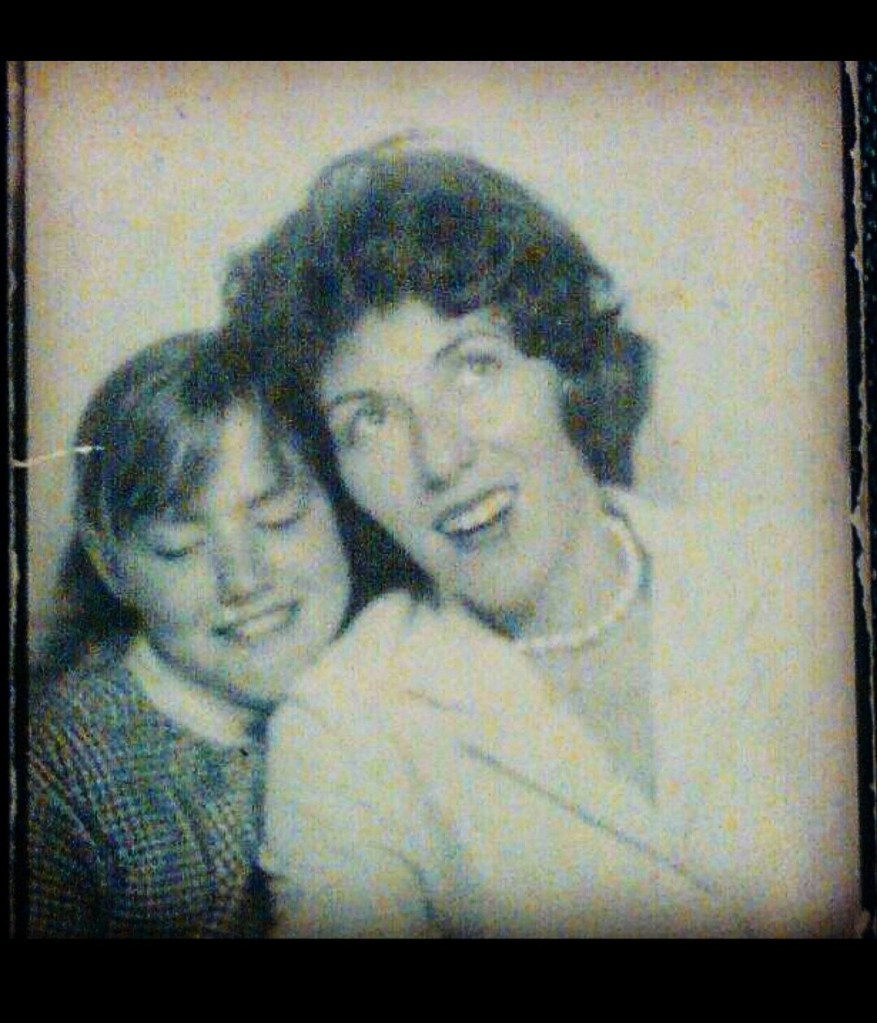
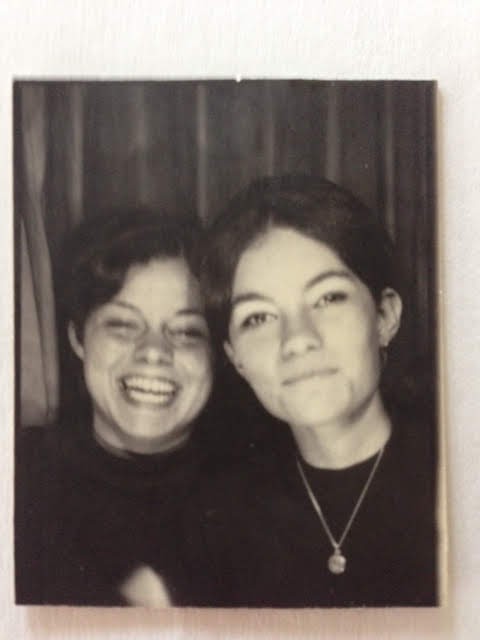
  • On the Selfie Taped to the Icebox Door

    In every selfie 
    it must be told
    lies a tale
    of growing old.

    You may remember when
    into the booth with them
    a quarter and a whim
    you fit two to a frame.

    Now and then we look
    into an old book
    but nothing says us now
    like the smiling fun brows

    taped to the icebox door
    these 50 years or more
    when back in our heyday
    we posed stuck forever.
  • All A Draff

    All a draff 
    a draft
    raking thru
    the dregs
    adrift
    adrift

    I am not a robot
    Motorcycles
    Traffic Lights
    Buses Adrift
    No schedule
    No route map

    To the Dark
    Sidereal
    I am not
    Art I Fish All
    and dreg up
    cups bottom

    Cross Walks
    To & fro
    each cross
    its own horizon
    where the sky
    meets the water

    geometric requirements
    Social Skills
    (any skills
    for that matter)
    Marriage Classes
    Reading Glasses

    I had a friend
    Who had a friend
    I did
    befriend
    But that's not how
    I then met you

    They were discussing
    Punctuation &
    Grammar by which
    They meant
    To say nothing of
    The Endgame

    Which caused me
    To think of you
    Your dust at sea
    All along the edge
    Where things fall
    Off the way things go

    and pile up
    one thing
    on top of
    another
    akimbo
    a draff

    adrift
    nimble-fingered
    tho rathe
    rather nippy
    nimble
    masterly

    Anyway we
    We were talking
    About what
    Hard to know
    A flow
    Of pics & tics

    That's not true
    What I sd earlier
    When I sd I am
    Not "a machine resembling
    a human being and able
    to replicate certain human
    movements and functions
    automatically.

    'the robot closed the door behind us'"

    I am a robot
    Forced to crawl
    Adrift across
    Back and forth
    Sweeping up
    After you

    Pic after pic
    Falling
    Failing
    Fishing
    Adrift
    A draff draft

    A daff
    Salt water
    Taffy
    "she told me that my music
    was perfectly wonderful,
    and taffy like that"

    "according to R.U.R. management
    the robots
    do not 'like'anything."
    Are you are
    or Are you not
    a robot

    I'm not now
    Sure
    But years
    Have pissed
    And still
    I'm here a bit

    But true a
    Drift a draft
    Replaceable
    In War with the Nerds
    Dork and Dweeb
    Figure prominently

    Dwork wants
    To go Rome
    Deeb reminds
    They don't have
    Stars on their
    DL's

    Here a bit
    There a bot
    Everywhere
    A bit bot
    To boot
    To turn up

    A turnip
    In yr pocket
    Proves yr not
    A total android
    A mess on some
    Scientist's bench

    Turn on
    Tune in
    Drop out
    "During his last decade, Leary proclaimed the 'PC is the LSD of the 1990s' and re-worked the phrase into 'turn on, boot up, jack in' to suggest joining the cyberdelic counterculture."

    Drift on
    Draft in
    Draff out
    Right on
    Write stuff
    Write Off

  • I Want To Hold Your Hand

    I want to hold your hand
    rub your legs and feet
    pour you a cup of coffee
    after a long lonely sleep

    I want to hold your hand
    walk in shallow water
    in the wet sand sit
    in the hollow of your hand

    I want to hold your hand
    when we enter the tunnel
    and still hold your hand
    as our ride comes to end

    I want to comb your hair
    follow you where you dare
    rhyme your deepest stare
    to hide your serious side

    When we talk now of lives
    past it’s like we were
    not actually there each
    day a step closer further

    Which is why all I wanna
    do is reach out to you
    without an app in hand
    I want to hold your hand

    The heart can hold but one
    song a lifelong spinning
    wheel twists and turns
    what for hands are made

  • Susanna, Susanna

    In the morning when you wake up
    down by the open sea

    In the afternoon sleeping
    under the Standard Oil pier

    In the evening when you call me
    “Come out, come out, wherever you are!”

    Drove my 56 Chevy into Playa del Rey
    up above Toes view of the Bay

    Walk through the park to St Anthony’s
    where the family says their I do

    The rest as they say is his story
    something always being rewritten

    Susanna, Susanna, I can’t say your name
    all I have to give you is more of the same.

  • My Monster

    My monster comes to get me
    dressed in poetry and prose,
    diacritics pierce his eyebrows,
    a cedilla hangs from his nose.

    He lives in the black hole
    beneath my buried bed,
    appears when the burning
    bushes line the Boulevards.

    His chivalry is notable,
    doors open automatically,
    I ride in his convertible,
    down to his sun full sea.

    Then with rhyme but why
    I can’t reason, half way there,
    he pulls over and yells, “Get
    out, you lout! Begone!”

  • One for the Money

    One for the money
    two for the shoe
    three to go steady

    Now that’s a waltz
    across Venice
    with Susan

    Then easy lounge
    on our dos-à-dos
    rear to gear

    Tipped over resembles
    the Los Angeles Basin
    but the Bay empty

    The rush and roll
    of a crushed sea
    as we run away

    To escape the beasts
    the biblical babble
    of Hollywood

    Wait – run too extreme
    we waltz off
    in closed position.

  • On Going

    Going somewhere this 4th of July weekend? Traveling? Here’s an article to take with you, read along the way: “The Case Against Travel,” in which the contemporary philosopher Agnes Callard strikes out to strike out travel. She begins citing surprising testimonies on travel hate from Chesterton, Emerson, Socrates, Kant, Samuel Johnson; but the best is this, from Fernando Pessoa:

    “I abhor new ways of life and unfamiliar places. . . . The idea of travelling nauseates me. . . . Ah, let those who don’t exist travel! . . . Travel is for those who cannot feel. . . . Only extreme poverty of the imagination justifies having to move around to feel.”

    The Weekend Essay: “The Case Against Travel”
    “It turns us into the worst version of ourselves while convincing us that we’re at our best.”
    By Agnes Callard
    June 24, 2023 The New Yorker

    Of course, we must ask what is meant by “travel.” Callard is not talking about having to leave town for another to attend a wedding or funeral, attend a family reunion, or interview for a job. She’s talking mainly about tourism, travel for the sake of travel. Going somewhere. And thinking that getting there somehow improves our nature. It doesn’t, Callard argues, convincingly for this homebody, anyway.

    Why folks still want to go somewhere puzzles me. The recent pandemic, still simmering on the back-burners of an overheated health care system, combined with the now certain and overwhelming and ongoing effects of global warming and climate changes, the social and economic unrest like swarms of yellow jackets infesting our cities, ongoing world wide war and immigration and refugee catastrophes – you would think folks would be content hiding out at home. Could it be people are unhappy at home? Unable to relax? Can’t get no satisfaction?

    What to do? But of all the game changing events just listed, the pandemic possibly is most responsible for changing habits across the board of socio-demographic freedom of movement choice. And, surprise and silver lining, we find improvement in the move away from normal: working from home, on-line shopping, neighborhood garage band, do-it-yourself cultural improvement. Eschewing the downtown or suburban mall crowds and visiting the local thrift store to satisfy one’s shopping urges. Church in the park.

    And we might wonder what Artificial Intelligence and Virtual Reality technologies have in store for us down the road. Case in point? The Google Arts & Culture app, where you can take a virtual tour of the Lincoln Memorial, play games in nature, explore the art in Barcelona; play with words with music, fonts, and video; take a hike along The Camino de Santiago; explore Iconic Indian Monuments; discover and discuss The Lomellini Family; do crosswords, artwork, writing.

    Of course, on the other hand, as Jean-Jacques Rousseau said:

    “I can only meditate when I am walking, when I stop I cease to think; my mind only works with my legs.”

    Rousseau quote taken from the Callard article; I don’t know the original source.

    Hard to imagine Rousseau on a 14 hour flight somewhere, legs bent as if in shackles, thinking, I could walk at home, where a study of physics might show me I’ve not even begun to discover the miracles of existence close at hand. What are those miracles? I don’t know, but I’m happy to stay put this summer and smell them out.

  • Coconut Oil

    Here’s an emotion
    let’s jump into an ocean
    of lotion
    of coconut oil, coconut oil, coconut oil

    I got a fella
    his heart is full of mushrooms
    he drinks
    coconut oil, coconut oil, coconut oil

    I’m not talking jive
    come with me and dive
    swim alive
    in coconut oil, coconut oil, coconut oil

    Don’t be all dry
    when you can be all wet
    night and day
    in coconut oil, coconut oil, coconut oil

    Try to see it my way
    everyday’s a holiday
    when you sing
    coconut oil, coconut oil, coconut oil


    Song from “Coconut Oil” (2016), performed by Penina in the novel by Joe Linker, a sequel to “Penina’s Letters,” page 189.

  • Alone at the Wheel

    Her dad drops into a bar
    to wet his whistle with beer.
    Penina waits in the big car,
    on her cheek, a salty tear.

    “I won’t last last, my lass,”
    he laughs.
    “Take the helm,
    and give it a little gas.”

    Alone at the wheel, she sees
    the bar door swing free.
    She falls asleep while he
    flirts and stills the floozies.

    Smelling of smoke and beer,
    he slams the door,
    pulls the choke.

    She tastes a touch of joy,
    a wet kiss, a small toy,
    a pink umbrella.

    The beer has made him warm
    in a way she could not.
    And she meets a perfumed Bella,
    her father’s friend.

    She sleeps the night in
    the front seat of the car,
    in a lot down by the beach,
    while her dad explains to Bella
    what to do with a drunken sailor.

    From “Penina’s Letters,” 2016, pg 87,
    with a few minor changes here.

  • On a Bench Above the Beach

    benched no thing
    to do but think
    of you sitting too

    our about pages
    empty as lulled sails
    beached at low tide

    pools full of purple
    blue soft urchins
    pearly shells orange

    beaked tufted puffins
    burrowed in offshore
    seastack seagrass over

    this brackish backwash
    here sit out and wait
    out our night and day

    the path thru the grass
    lost there's an old
    beach towel taken aback

    foxes and pirates comb
    the beach nightly gliss
    in ocean moonglow

    that's what it was now
    you know again why we
    sit out in fog or sun

    it was a planning session
    your father failed to land
    his boat jilted broke up

    side down nothing
    we could do to help
    but worsen the storm

    dashed days of our
    swimming up this
    drift and I look

    at you asleep
    on our bench
    in a beach towel

    the war is on
    at El Porto Tavern
    smoke oil and grease

    and all along
    the strand in
    the beachfront

    pads on TVs
    and Miss Hermosa
    of 1942 awakes

    in her Southbay
    apartment and calls
    the National Guard

    to catch the kids
    who stole her towel
    a sole lifeguard...

    suddenly the film
    snaps and flaps
    the sound of flip

    flops walking away
    down the strand
    toward Redondo