At first feel of cool toes
fall damp quick windful
trees stone washed rain
waves grey in the offing,
we double-lock our doors
shutter dripping wet glass
windows, winter coming
rots round again an end
to barnyard songs anew
the cow mews the gruff
goat starts for the south
slope yearns for the sun.
Nothing can get in nor
can the breath escape
and round and round
we go within the walls
of winter pushing in but
cold will not win warm
your feet inside my legs
fall to sleep my cuckoo.
Author: Joe Linker
-
Quiet Now, Cuckoo
-
Rumination
That time we dropped a heavy load
got a room and ate cold cuts
at Greaser’s Diner down the roadWe were in old country rocking
chairs out on wooden walkways
folks picking at ruminations alongthe dry river bed where
the wrynecks tired still rise
and tread most morningstrek up to the cold cafe
for egg toast bitter coffee
a bit of wit to end a conversationwith the two young waitresses
still single and not a wrinkle
in their brows wear bright smilesand give us room enough to be
ourselves and will to aspire
to grace notes and mnemonics -
Notes on “How to Know a Person” by David Brooks
David Brooks’s latest book, “How to Know a Person: The Art of Seeing Others Deeply and Being Deeply Seen,” in the tradition of how-to books, suggests a panacea – it’s about how to cure social ills caused by failures toward wisdom, wisdom being the ability to know and see others. Of course everyone knows and sees others. But deeply is a metaphor that Brooks uses to mean wisely. This is where the wise guy gets wise and sheds the skin of the old self. Brooks suggests if one examines one’s life, as Socrates explained is the ticket to a life worth living, a good place to start is to examine the life of someone else. To know oneself means to cut through the fog of one’s birth situation and predicament, and, in the existential meaning of existence precedes essence, define for oneself what one’s existence amounts to, while simultaneously to know oneself means to understand the limitations and privileges handed down by the many hands of one’s cultural birth and upbringing and accept that view as true and unassailable. The ability to handle this apparent contradiction is necessary if one wants to be wise. The symbiotic relationship between one’s self and others is necessary for those who would wise up. You can’t be wise alone. You can’t know yourself without knowing another, and you can’t know another without knowing yourself.
The Brooks book is a compilation of research in the fields of biography, psychology, philosophy, sociology, as well as neuroscience and field work, with ample anecdotal evidence and life experience examples that add support for claims and provide for reading enjoyment. There are seeming contradictions. Brooks eschews stereotypes, for example, but spends significant time categorizing personality types and other shorthand ways of talking about and seeing people. But at the same time he discards old ways of thinking and suggests better ways to experience one’s self and others. The naming of others and things is problematic. For example, we call a person an extrovert or introvert. What does this tell us about that person? There is a chapter titled “How Not to See a Person.” Brooks introduces new terms: Illuminator and accompaniment. He suggests there are wrong questions to ask – not, for example, what do you do (for a living), but, “What crossroads are you at?” Brooks acknowledges discouragement, but his book is positive and optimistic. He wants to be an illuminator, one who is wise, who knows others, sees and is seen. The book is not all that hard to understand. The challenge is to grow away from either the torment of self-doubt, of self-criticism, or the curmudgeonly habit of naming people to put them in their place, of holding people to rules that you yourself are not required to follow. Are you at peace or have you regrets that make you despair?
“Despair involves bitterness, ruminating over past mistakes, feeling unproductive. People often evade and externalize their regret. They become mad at the world, intent on displacing their disappointment about themselves into anger about how everything is going to hell.”
207Brooks distinguishes between smart and wise. And what is wisdom?
“Wisdom at this stage of life [at the crossroads of peace, integrity, and despair] is the ability to see the connections between things. It’s the ability to hold opposite truths – contradictions and paradoxes – in the mind at the same time, without wrestling to impose some linear order. It’s the ability to see things from multiple perspectives.”
207The wise don’t impose or regulate and tell you what to do. They listen. They are experts at listening:
“Wisdom isn’t knowing about physics or geography. Wisdom is knowing about people. Wisdom is the ability to see deeply into who people are and how they should move in the complex situations of life. That’s the great gift illuminators share with those around them.”
248There are identities we create, names we name ourselves, and narratives we stick to (or revise, as circumstances evolve), even as the plots don’t make any sense, one event not rationally leading to the next, like a walk through a circus. Like clowns, we “prepare a face to meet the faces,” as Eliot’s Prufrock said. Whereas, we might say simply, as Brooks summarizes:
“I had some early blessing. I saw the suffering of others. I realized my moral purpose. I endured periods of suffering. I grew from my pain. I’m looking toward a beautiful future. If you’re talking with an American and you want to get a sense of who they are, find out if their life story falls into this pattern, and if not, why not.”
223Or we could sing a simple song. This is not in the Brooks book; I just thought it might be a fun way to end these notes:
“Getting to know you,
Getting to feel free and easy
When I am with you,
Getting to know what to sayHaven’t you noticed
Suddenly I’m bright and breezy?
Because of all the beautiful and new
Things I’m learning about you
Day by day.”“Getting to Know You” is a song from the Rodgers and Hammerstein musical The King and I (1951). The song itself is “free and easy” and “bright and breezy.” That there is an underlying irony in the history behind the play it’s from may or may not say something about getting to know people:
“In 1861, Mongkut wrote to his Singapore agent, Tan Kim Ching, asking him to find a British lady to be governess to the royal children. At the time, the British community in Singapore was small, and the choice fell on a recent arrival there, Anna Leonowens (1831–1915), who was running a small nursery school in the colony. Leonowens was the Anglo-Indian daughter of an Indian Army soldier and the widow of Thomas Owens, a clerk and hotel keeper. She had arrived in Singapore two years previously, claiming to be the genteel widow of an officer and explaining her dark complexion by stating that she was Welsh by birth. Her deception was not detected until long after her death, and had still not come to light when The King and I was written.”
Wikipedia, The King and I, Retrieved 11 Nov 23
Persons -
The Psychology of Leaves
We got a weekend leave from the fort and the five of us squeezed into Private Olivegreen’s brown bug and bugged out for the nearest big city, about 80 miles away: population 280,000. We were trainees in an occupational specialty school: MOS 63B20 – Wheeled and Track Vehicle Mechanic. There wasn’t much to do off hours around the fort, and with weekend leave you escaped extra details, kitchen police, or the bad boredom of the Post Exchange and its watery 3.2 beer. There was no movie theatre, no library, no gym, no swimming pool. There were no girls. The barracks were large two-story open wood walls and waxed linoleum floors and the latrines were not for holding privy. I was the only teenager still of the five. The others had already finished college before being inducted, and they treated me like a kid brother. In the small town just outside the fort there was one bar with one pool table. I went there one night with Mississippi, the hustler from Alabama, who cleaned up on a few locals. The guys from the southern states were run-on talkers with long drawn out tales and jokes told like we were not in the middle of hysterical winter. I was the only surfer of the five. In our Basic Combat Training weeks they had been somewhat envious of the ease with which I completed the calisthenics and confidence courses. We were all cut on the same orders, Basic through the AIT (Advanced Individual Training) schools, and presumably beyond (rumor said stay in schools as long as you could), and we hung loosely together throughout.
The weekend leave plan drafted by Ward was to land at the University downtown and stay at his fraternity’s house nearby off campus. But the house folks weren’t comfortably receptive to five GI Joes invading their space, and on top of that the individual rooms were taken and the common area wasn’t very big and the facilities were sparse. It was just a house, not a mansion. So we canned the frat house idea and got a motel room. The Army paid you in cash monthly. We had no credit cards and anyway there were no ATM machines, no card swipe machines. Maybe a couple of the guys had bank accounts somewhere. I did not. This was an era prior to cell phones, personal computers, social media. Radio and TV – that was it. And mail call.
The motel room had two double beds. It was quickly decided who would sleep where and I got the floor. We got pizza somewhere, and we then broke up and went out on the town, and Hunter and I hitchhiked our way up and down the local bright lights big city dubious drag strip, drifting and delving into dive bars where I might or might not have been asked for ID for a glass of beer. At some point Hunter and I got separated. Some time later I found myself in the backseat of a car full of high locals cruising one of the outlying highways. I got hit with a jolt of paranoia and told them to pull over and let me out. They were incredulous, we were now miles outside of town, going where there seemed no inkling, and they didn’t want to just let me out on the side of the road, but I insisted. They pulled over and I hopped out and they drove off laughing and yelling. The road was empty. I jogged along the shoulder back into the big city, illuminated on the highway every few hundred yards or so by the overhanging streetlamps.
I made my way back to the motel. It was now very late, or very early. I knocked on the motel room door. I hadn’t been given a key. No one answered my knock. Olivegreen’s VW was in the parking lot. I knocked and knocked but no one opened the door. The motel was two linear stories, doors opened to the outside, the second story rooms onto a narrow balcony with metal railing hanging over the parked cars. I bedded down outside on the balcony concrete floor, curling up like an alley cat against the door to the room, not even a doormat for warmth, and fell asleep. I woke up shivering cold and banged hard on the door and Hunter suddenly opened it stupefied and I stumbled in and fell back to sleep on the floor, no pillow, no blanket, still in my street clothes.
The next day we crammed back into the bug and crawled back to the fort and I was glad to get back to barracks and a hot shower and the cotton cot with wool blanket and fell asleep listening to Baton Rouge tell all about how much work he’d completed this weekend on his correspondence course toward becoming a cub reporter when he got out of the Army.
-
I See You
I see you
I see you not
both of us
common daisies
day eyes
closed at night
perennial herbs
creeping under
the covers
while the whole
wide world ties
cords in knots
we see one another
we see our cans
and our cannots.
-
Momentarily
If as you see this
in a trice & begin
fleet to wander
anon trolley sails
of moment flows
on bæc and fill
this pause will
catch you up
in a jiffy wink.Hissy fits of sun
spots the rains
come fall here
spring there we
climb the roof
of being float
waters down
in two shakes.That’s all for now
there may be false
springs but there
is no false fall.
Note: For cartoons sans much lingo, visit Laconic Cartoons.
-
Halloween 23
One of the lab techs is dressed as a witch, black hood and black full length cloak over white scrubs, masked, black witchy boots. No one else seems to be in obvious costume, other than their regular rigs, but a gargantuan pizza delivery dude has just come into the waiting room carrying a stack of four extra large pizza boxes. Halloween pizza party at the lab. But I’m on a fast, preparatory to a blood test, so I probably won’t get a slice of pizza, even if offered. Meantime, waiting in waiting room, pull out the phone and start a Halloween post.
Mind-wandering. Outside, the last, forecast says, of a short string of sunny days, fall crisp and cool. Yesterday in morning sun south slant long walk in the park up and down trails around the rim during which I kept my phone running on a live Instagram video. The result was grainy and I’ve since deleted it, but a few viewers dialed in during the walk. I enjoy Instagram videos on location. In this week’s London Review of Books, an article mentions Albert Camus abhorred travel. I get that. But he did make a trip to New York one year. I’ve never been to New York. Maybe some day, if I ever get out of this lab.
A voice keeps calling out names, every 30 seconds or so, more names than waiters. I’m beginning to…my name just called! I was about to suggest they were fake names, called out to give the rest of us some piece of hope, if not a piece of pizza. Alas, all they’ve done is check me in, and now I’m back waiting, names still filling the relatively quiet waiting room air, a canned music piano falling from the ceiling, the only other sounds the intake clerks quizzing patients their birthdate, address, doctor’s name, and such, for form’s sake. Another Joseph just called and I start up, but wrong last name initial. Some of the clerks call out first names only, others first name and last initial. I’ve not heard a last name called out. Several calls repeated for patients who have apparently given up the wait, dare I say, this Halloween day, given up the ghost.
Should have brought a book with me to the lab. What am I reading? Natalia Ginzburg’s The Road to the City, one of the specialty ND books I bought awhile back – you’re supposed to be able to read them in a couple of hours, but my wandering mind disallows such taking it straight consumption, so I’ve been reading a short chapter each night before sleep. The new Dylan book, absurdly big heavy compilation of bits and pics and notes from the archives at the Bob Dylan Center in Tulsa along with heady new essays from solicited writers. I first heard of the book from Alex Ross’s blog, The Rest is Noise – Alex has an essay in the new huge Dylan book. Ah! They’ve called my name again, this time for the escort deep into the lab, into the land of vials and needles. And suddenly back home, the whole lab episode taking no longer than an hour or so. And here I am, breaking fast with a bowl of cereal, banana, and finishing off a bag of leftover potato chips. Also reading, typing while I eat (to finish this thread, started back at the lab), The Dinner Party, a book of short stories by Joshua Ferris, which I pulled out of the corner library box sometime ago but only recently opened, started reading, and found he’s pretty good – urbanely witty, reader friendly, realistic. His themes include relationships and communication and miscommunication – misunderstandings that lead one problem to another, a bit of slapstick thrown in. I’ve only a couple of stories to go to the end. Most of Ferris’s characters would probably have not read How to Know a Person, the new book just out by David Brooks, which I was inspired to give a chance after seeing Brooks on the PBS News Hour a week or so ago talking clearly about the Middle East quagmire (to give it a Vietnam era name, which refers to the politics, not to the human disaster, for which a name has not yet been invented), as was Jonathan Capehart, clear and articulate, that is, Brooks’s supposed opposing viewpoint, but not so much. Anyway, I’m in Part One of the Brooks book, titled “I See You.” Now you see me, now you don’t. A magician’s trick. And a half a dozen or so other readings lying around here there and everywhere, work in progress, if you can call it work, reading, it’s not, unfinished, it’s play.
Going to take a break from this writing now and work on my costume for tonight.
Still later. Was joking about the costume. No costume. The day is ending, the evening come and gone, night now. No trick-or-treaters this year. Left the porch light off and watched Game Four of the World Series. After the game walked outside to see the night sky. A car pulls up down the block, stops in the middle of the street, lights out and flashers come on, and a couple of costumed characters alight and walk up to the only house on the block with holiday lights on. I head back inside. Play some guitar. Solo Halloween night. Then I return to this post and come down to this point, consider deleting the whole thing, like I deleted that Instagram walk video, for the same reason, too grainy, but I didn’t, obviously, do that. I think I’ll take a book with me to the next lab work appointment. Stay off the prose. Still, there’s something positive about mind-wandering. It’s a good antidote to all this live in the moment and give it your full attention pressure, the mindfulness movement. Playing guitar earlier I even started a new song, tentatively titled “Mind-Wandering.”
-
Timber
Word put upon word but no
mortar the post soon teeters
wobbles and falls one’s words
broken one by one not as good
as one’s word thou wert then
walked in root rotted locution
indicative of times as before
we recall when for fun porter
and skittles and deep hot
daybeds of tomato red roses
and nary a thorn in your side
were I to be in this our tree
wooded world where no words
come between our sweet hugs
thy passionate shepherd not
a single sheep to his name
please don’t hurry your reply
rest here now in these cues
though words are simply noises
and only silence speaks peace. -
On Futility
I was about to say
something prosaic.
In fact I was
a paragraph
into my theme
when I decided
to delete
the whole idea
and move on.
The delete key
is often
a writer’s
best friend.
Maybe I should
have hit it again. -
Artificial Invitation
Come as you are, my friend.
Your artificial intelligence
will surprise no one.
I'm sorry to hear
of your deep blocks and losses,
but tomorrow's a new day,
as humans like to know,
and they should say.

If you could please bring flowers,
a bouquet of color with odor,
an impressionistic table ring.
Ambrosia and anemone in a blanket
string of baby’s breath will be nice.

Mind your manners,
and please, no surprises,
no miracles.
We want this to be
as natural as possible,
not a media circus.

Submit again and again.
There is no original sin.
It's all been said be four
legged beast of burden
bursting with knowledge
of which we now know
there are two trees:
The one with real fruit
to be pruned plucked and eaten,
and the fruit in the bowl,
still ripe after all these years.
Help yourself.
-
On the Wings of the Dove
Caleb Crain has posted an interesting Leaflet devoted to questions of consciousness and an afterlife. If there is an afterlife, why (Caleb tells us Henry James in particular wondered) has no human soul ever come back to haunt or cheer its former digs? James might have been conflating consciousness with brain. (Calling consciousness “mind,” Buckminster Fuller radically distinguished between the two.) Caleb wonders about the infinite possibilities inherent in a consciousness that thinks about itself.
Reading Caleb’s post, and thinking about his aloof Henry, I began to wonder for myself. If consciousness is infinite (as James and Caleb both seem to suggest possible), it must be round, with no beginning and no end, and not linear, so we might also wonder not only about a possible afterlife, but about a prior life, and why has no one ever visited there, or have any memory of it. If we fear or wonder about death and an afterlife, we might recall that we’ve experienced it before, for where were we before we were born, if not dead, which we seem to have survived, for here we are.
An electrician I once had over to the house to work on some wiring told me, apparently working under some severe predispositions and assumptions that I was the Christian of his definitions, that he didn’t believe in anything he couldn’t see or measure. Thus he brought his rudimentary science into my darkened basement.
William Blake held “the following Contraries to be True:
– Man has no Body distinct from his Soul, for that call’d Body is a portion of Soul discern’d by the five Senses, the chief inlets of Soul in this age.
William Blake, The Marriage of Heaven and Hell, 1793
– Energy is the only life and is from the Body, and Reason is the bound or outward circumference of Energy.
– Energy is Eternal Delight.”The five senses then, work not so much to let reality (consciousness thereof) in, but to keep it out, for to take it all in at once would drown us, suffocate us, consume us, like Rilke’s angel (a kind of interpretive translation of the opening of Rilke’s First Elegy follows):
“Who, if I yelled out in my street, would hear me among the Angels’ Orders? And even if an angel hugged me quickly to her heart, I’d be consumed like a candle in her powerful embrasure. For beauty is the terrible beginning, that we hardly and barely (since so recently from the womb) endure, but here we still are, and while we wow in wonder the angel cools us, scores us, and her disdain destroys us even as she sustains us. Every angel is terrifying. And so I hold myself and hear my own and sole note of dark sob. God! Who can we reach out to with our need? Not angels, not one another, and the Disney animals see at once we are not at home in Oz, where all must be an interpreted world. That leaves us some tree on a hill, our eyes return to morning after morning, leaves us our child’s street and our parents and friends of old habits that drank and smoked there, loitered, and never left home. Only the angel can wear those magic slippers, hear those perfect notes. Oh! And the night, the night, well here it comes! When the wind full of space blows on our face, the night exists, is here, we want the night, but as soft as she is, she wounds, lists hard chores to be done the morrow, and we only the single of heart. It is not easy to be a lover. Lovers use each other to explore their only fates. You still won’t see? Throw the emptiness in your heart into the space of breath. Maybe the birds will feel the sudden burst of air with a passioned flight.”
from the first Duino Elegies, modified for this post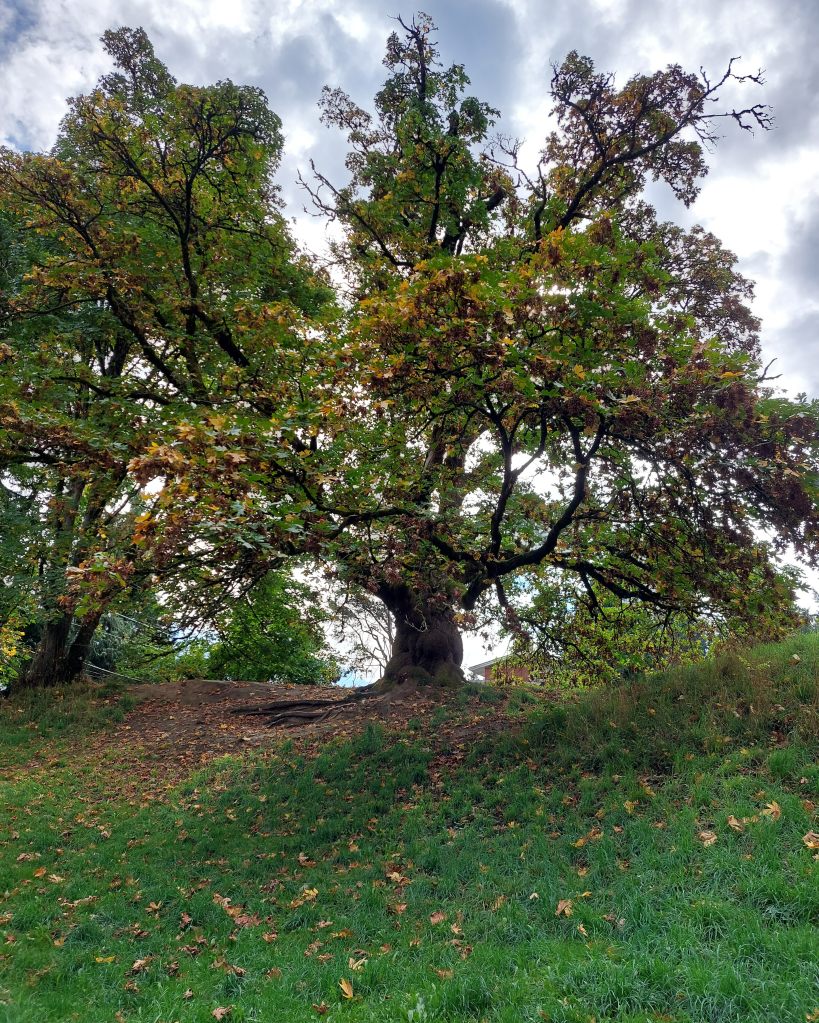
 The Coming of the Toads