Everybody in a car
nary a door ajar.
The world is our oyster
full of pearls
(Shucks! A flat tire!)
and perils.
A penny for your thoughts -
As if we had either.

A Notebook – Since 2007
Everybody in a car
nary a door ajar.
The world is our oyster
full of pearls
(Shucks! A flat tire!)
and perils.
A penny for your thoughts -
As if we had either.
Dear Ai! Quick! Quick! Quick! Lickety-split! I need about a 500-word paragraph on how I spent my last summer vacation! I totally spaced this stupid assignment! If I don’t get it in by today the teacher, Mrs. Millgillicutty, not that her name matters much, won’t accept any more late papers! Something about we’re almost to next summer vacation. Anyway, I remember when we first got this assignment, and I was like, I didn’t do anything on my last summer vacation but lay on the beach at El Porto listening to a transistor radio! What’s to write about that! And I watched the surfers come and go and the waves blow all froth like the bottoms of cutoff jeans and the jets from LAX taking off over the bay looking way too fat to fly like the Dodo and the oil freighters off El Segundo and a few sailboats in the offing a word that was on our last vocabulary quiz by the way. Anyway, one day, one of the hottest, ever, you couldn’t even walk barefoot down to the water the sand was so blistering hot and I dropped my towel and jumped on it every few steps to keep my feet from turning toast until I got to the wet sand near the water and all was cool. I don’t like to take a bunch of stuff to the beach. Just my towel and my bag. In my bag I stuff an extra suit, a pair of shorts and an extra tshirt, my transistor radio, a bottle of water, an apple or an orange, suntan lotion, a comb, a Nancy Drew book (I had a summer goal to read 12 Nacy Drew books, and I actually ended up reading 17), a pair of binoculars, a foldup sand chair, a small umbrella, a pair of flipflops, and my purse. Oh, yeah, but I was going to talk about that one day, the hottest on record. I usually get to the beach around noon, after I’ve finished my chores, make breakfast, take out the trash, straighten up, empty the ashtrays. I live up on Gull in El Porto so all I have to do is walk out of the apartment and down to the beach and usually I’m the first down but soon there are the others my friends all strangling down like they had a bad night or something but the reality is the worst they might have done is stay up late watching movies on the all night movie channel. Of course there are parents, or parent, and they can be unsettling, what with their bickering and worrying and criticizing and stopping off at bars on the way home until you have to get your own dinner but not everyone’s home is like that in fact each home is quiet different even if the parents seem the same. Anyway, back to how I spent my summer vacation and the one hottest day I remember it’s like branded on my behind. Jocko the beach’s best surfer ever stops where I’m sitting and asks can he leave his board with me while he goes in for a dip the blackball flag is up and all boards have to be out of the water. I’m stupified. He’s never even noticed me before. But I’m totally chill and like if you want whatever and that kind of stupid self conscious response and off he goes into the water where he stays like three hours! I’m like HELLO! how long am I supposed to watch your stupid surfboard and it was that day I decided how I would spend the rest of my summer vacation and it wasn’t watching some stupid minihunk’s surfboard while he dolls his afternoon away in the waves. I’m not some sort of artificial doll, you know. I’m real. With something real to talk about. About 500 words is all I need! Thanks!
Sincerely, Beach Bum Betty
Dear Betty, Here you go:
I didn’t do anything on my last summer vacation but lay on the beach at El Porto listening to a transistor radio! What’s to write about that! And I watched the surfers come and go and the waves blow all froth like the bottoms of cutoff jeans and the jets from LAX taking off over the bay looking way too fat to fly like the Dodo and the oil freighters off El Segundo and a few sailboats in the offing a word that was on our last vocabulary quiz by the way. Anyway, one day, one of the hottest, you couldn’t even walk barefoot down to the water the sand was so blistering hot and I dropped my towel and jumped on it every few steps to keep my feet from toasting until I got to the wet sand near the water and all was cool. I don’t like to take a bunch of stuff to the beach. Just my towel and my bag. In my bag I stuff an extra suit, a pair of shorts and an extra tshirt, my transistor radio, a bottle of water, an apple or an orange, suntan lotion, a comb, my cell phone, a Nancy Drew book (I had a summer goal to read 12 Nacy Drew books, and I actually ended up reading 17), a pair of binoculars, a foldup sand chair, a small umbrella, a pair of flipflops, and my purse. Oh, yeah, but I was going to talk about that one day, the hottest on record. I usually get to the beach around noon, after I’ve finished my chores. I live up on 44th in El Porto so all I have to do is walk out of the apartment and down to the beach and usually I’m the first down but soon there’s the others my friends all strangling down like they had a bad night or something but the reality is the worst they might have done is stay up late watching movies on the all night movie channel. Of course there’s parents, and they can be unsettling, what with their bickering and worrying and criticizing and stopping off at bars on the way home until you have to get your own dinner but not everyone’s home is like that in fact each home is quiet different even if the parents are the same. Anyway, back to how I spent my summer vacation and the one hottest day I remember it’s like branded on my behind. Jocko the beach’s best surfer ever stops where I’m sitting and asks can he leave his board with me while he goes in for a dip the blackball flag is up and all boards have to be out of the water. I’m stupified. He’s never even noticed me before. But I’m totally chill and like if you want whatever and that kind of stupid response and off he goes into the water where he stays like three hours! I’m like hello how long am I supposed to watch your stupid surfboard and it was that day I decided how I would spend the rest of my summer vacation and it wasn’t watching some stupid hunk’s surfboard while he dolls his afternoon away in the waves. I’m not some sort of artificial doll, you know. I’m real! With something real to talk about!
Good luck, Ai
Dear Ai,
Please make me dashing and daring and brilliant.
I want to impress my friends and co-workers.
Yours truly, Wanting More
Dear Wanting,
Easily done. But of course then no one will recognize you. You sure you want to go through with this?
Sincerely, Ai

when he says we
if he means me
time to bend a bow
redo your I do’s
hey it’s me
what now sweetie
why you go awry
to take a powder
we are two
juxtaposed
pieces locked in
a jigsaw puzzle
by we he means
all 1,000 of us
see how we may be
broke up and set free
i’m the piece nearby
your cutup smile
sipping coffee
from a cracked cup
talk radio tune
static and tin
the road out
the intersection
of rack and ruin
of walk and rain
of rock and song
of whence and where
when he says
always
it ain’t me
babe he means we
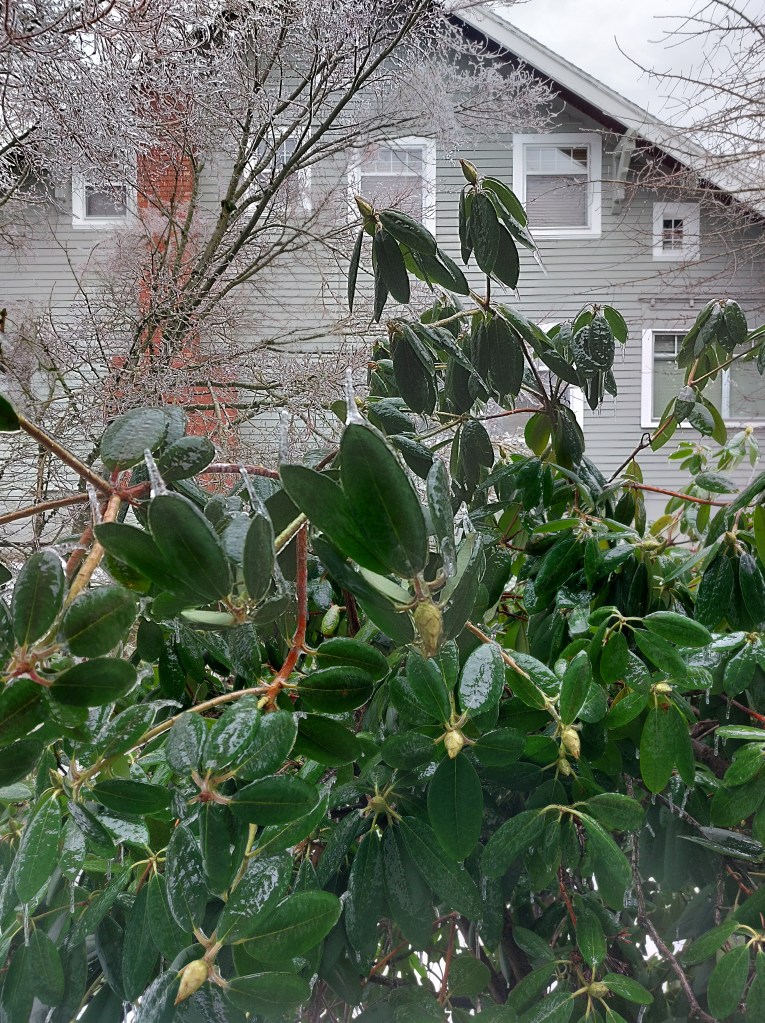
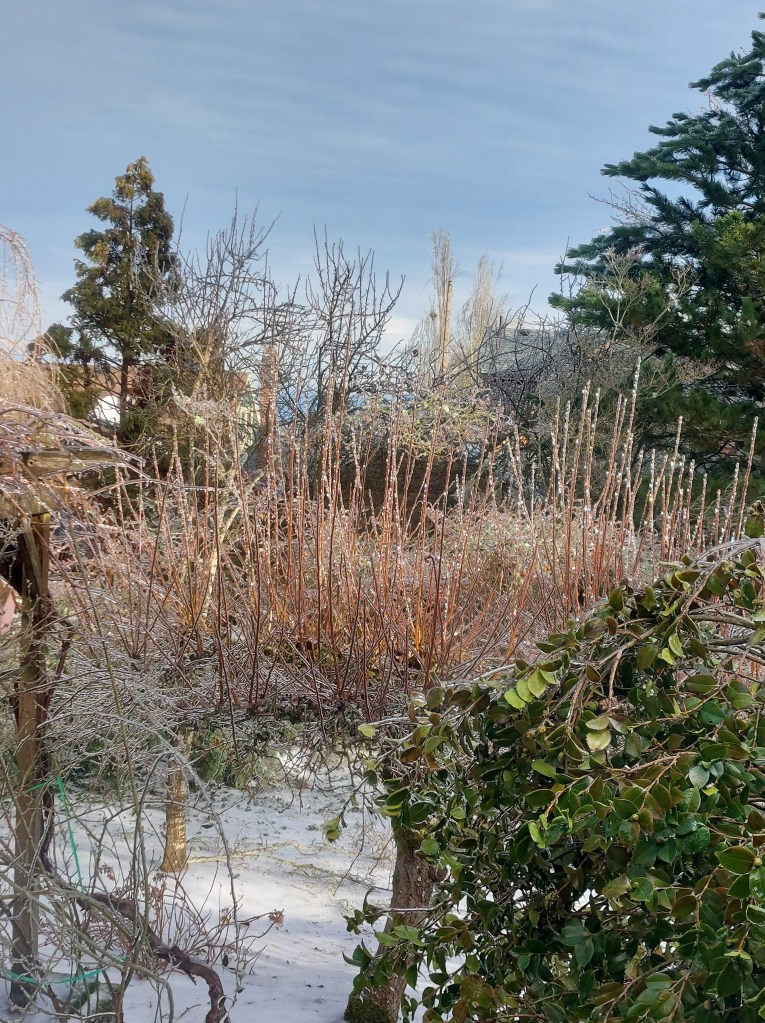
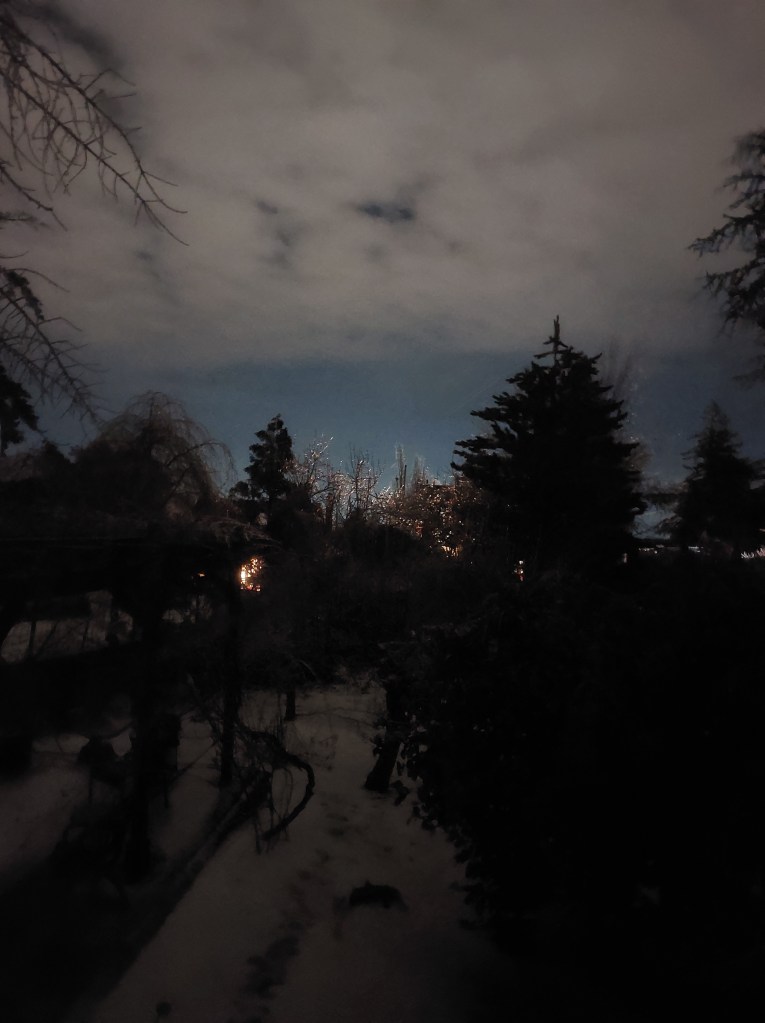
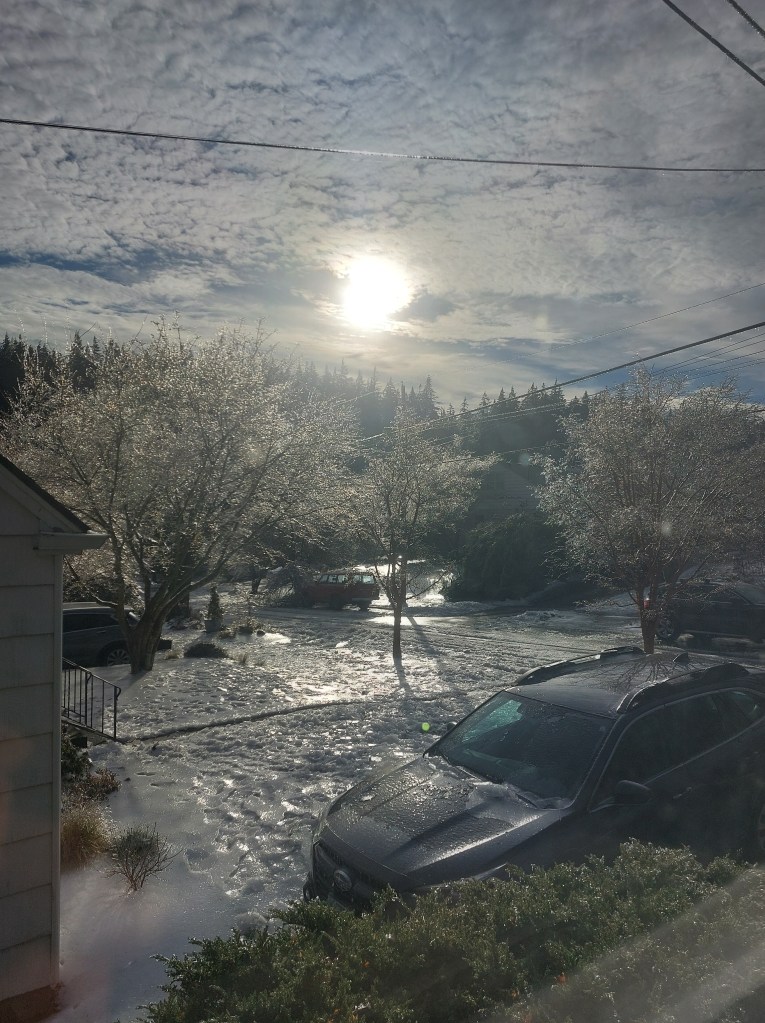
For the past week, we’ve been living in a deep wintry freeze, cold north air winds from the east out of the Gorge mixing with rain from the warmer ocean west to form local ice – sticking to the tree branches, the power lines, the streets and sidewalks, your nose if you stick it out. The weather here, in the confluence of two river valleys, the Gorge, and the hilly city pockets, is hard to predict, and the weather folks you turn to when you’re not sure which way the wind blows got it all wrong day after day throughout the week. The great thaw from the west never came. Where east meets west, we lost power, the temperature in the house dropped to 30F, and we lit out for the next county, navigating the icy roads like surfers lost in a snowy desert.
Our power was miraculously restored in just over 48 hours, a miracle considering the number of trees down and the winds continuing to blow out of the Gorge, bringing in more freezing air. The linemen can’t go up in their buckets if the wind is blowing in the 20mph range, so the lines dangled dangerously about our heads. I wrote about the ice storm on location here. So this post is just a bit of an update to show a few pics of the ice. And to give the hot and cold poetry talk on the blog a rest. It’s still cold, 33F outside as I type this, 66F in the house. We should be able to get out to the store for provisions later today, if any remain – we heard yesterday the delivery trucks have been unable to get anywhere close-in. Winterlude. What was it Dylan sang?
Winterlude, Winterlude, oh darlin’
Bob Dylan, Winterlude, 1970
Winterlude by the road tonight
Tonight there will be no quarrelin’
Ev’rything is gonna be all right
Oh, I see by the angel beside me
That love has a reason to shine
You’re the one I adore, come over here and give me more
Then Winterlude, this dude thinks you’re fine
“The game is a foot, I’m certain of it,”
said the poet who talked the walk datum.
To bloviate down his shorts and long waits
about town he strolled and spoke and sprayed
the populace with one-off quips and quotes.
A foot player he was who climbed high limbs
lofty the poet tree of mystery.
Came he then to a steep stairway and down
he went a long way down a circus clown.
Loose freely from his three-rings born
he returned to la-la-land a surfboard
under his arm covered in salt and sand.
“If life be a game,” he said, “play I will
in waves never still twirl the pencil’s twill.”
“We take it as a given that games are useful, productive, redeeming forms of human experience and expression.”
The Poety Game

Is poetry a game? A game of solitaire. But inasmuchas one might anticipate an audience, a gnip gnop match. Or on a polo grounds, the sport of kings, but some riders on stallions and others on donkeys. But if poetry is a game, or even if just at times it might be considered a game, in a certain environment or context, so what?
How does one play poetry? What are the rules of the game? A chase, in pursuit of meaning. Or mere entertainment, in which meaning may or may not play a role. We read that Wittgenstein found game useful in his thoughts on language. From the Stanford Encyclopedia of Philosophy:
“Language-games are, first, a part of a broader context termed by Wittgenstein a form of life (see below). Secondly, the concept of language-games points at the rule-governed character of language. This does not entail strict and definite systems of rules for each and every language-game, but points to the conventional nature of this sort of human activity. Still, just as we cannot give a final, essential definition of ‘game,’ so we cannot find “what is common to all these activities and what makes them into language or parts of language” (PI 65).”
Biletzki, Anat and Anat Matar, “Ludwig Wittgenstein”, The Stanford Encyclopedia of Philosophy (Fall 2023 Edition), Edward N. Zalta & Uri Nodelman (eds.), URL = <https://plato.stanford.edu/archives/fall2023/entries/wittgenstein/>.
Is poetry maybe a “language-game”? Looking around for a suitable answer, I found this in the online “Wittgenstein Initiative”: Wittgenstein said,
“Philosophy should really be written only as one would write poetry.”
WRITING PHILOSOPHY AS POETRY: LITERARY FORM IN WITTGENSTEIN 7 July 2015 ARTICLES
by Marjorie Perloff, Stanford
But reading on, I find this not all that helpful to our opening question (Is poetry a game?). And it didn’t take long to be subsumed online by articles relating to Wittgenstein and our use of words, in poetry or otherwise. But another maybe significantly different translation, by the way, shows Wittgenstein saying,
“Philosophy ought really to be written only as a form of poetic composition.”
Ioana Jucan. Date: XML TEI markup by WAB (Rune J. Falch, Heinz W. Krüger, Alois Pichler, Deirdre C.P. Smith) 2011-13. Last change 18.12.2013.
This page is made available under the Creative Commons General Public License “Attribution, Non-Commercial, Share-Alike”, version 3.0 (CCPL BY-NC-SA)
Will come back to form, but for now, so I backed out of search mode and returned to my own thoughts, if I can be said to own a thought, which of course is absurd. But to move on.
But even if we are to satisfactorily say what a game is, it would still be left us to consider a definition for poetry. A search for a definition of poetry of course brings into view a petri dish full of ideas. Then this, again from the Stanford Encyclopedia of Philosophy:
“Hegel considered a mode of understanding fundamental nature to be more advanced the more that it abstracts from concrete sensuous presentation and the more that it can turn contemplation back onto itself. There is a scale within types of art in this respect; visual art is less advanced than music, which is itself less advanced than poetry (1807 [1979]). While self-conscious Romantic poetry allows us to see our rational self-determining nature as minded beings, it nonetheless remains imperfect as a mode of knowledge of spirit. Philosophy, in its endless capacity for self-conscious reflection, “is a higher mode of presentment” (in Cahn and Meskin 2007, p. 181) and can ultimately supplant art as a mode of knowing the world’s essential structure.”
Peacocke, Antonia, “Aesthetic Experience”, The Stanford Encyclopedia of Philosophy (Spring 2023 Edition), Edward N. Zalta & Uri Nodelman (eds.), URL = <https://plato.stanford.edu/archives/spr2023/entries/aesthetic-experience/>.
I include form as a rule of poetry. Poetry is first a game of forms. Form still may not be enough to make poetry a game. But to cut to the chase, poetry I claim shares many of the characteristics of a game: competition (for publication, recognition, awards); rules (of form and content, even if self-made and one-off, but historically many rules of form); players and spectators; a field (the page, a stage). But that is all in the game world of entertainment, one might argue – what of the world of art?
Well, art is the biggest game of all. But again, so what? I’m not using game there as a pejorative. We take it as a given that games are useful, productive, redeeming forms of human experience and expression. But there might be a pejorative sense in some context of using the word game to describe poetry. One cheats, one competes unfairly, engages in gamesmanship, one joins the politics of academia and writes up yet more rules to ensure one’s seat is not taken or shaken, one cancels another often for reasons the critic can’t find jurisdiction over or legal standing for in terms of the writing itself, one joins a group or school of poets or poetry where surely games are played. One questions purpose, occasion, argument, claims. One finds that a poem is an argument, with its statements and claims clothed in metaphor or other hide-and-go-seek maneuvers. And out of bounds we find the critics who act as line judges.
But what about poetry as art and art as sacred? Poetry with a capital P that stands for Word – with a capital What? Yes, the screed of the scrawl. Of course, any game can be perverted, which is why amateur games may be preferable to professional games, usually better. To play for financial gain or fame sometimes puts a burden on the player to maintain the integrity of the game. Betting and lotteries bring in another round of running about where most folks lose. The worse for wear is when pretensions creep onto the field, or when one pretends to gain access to the field. And of course one can always be ejected from the game, or kicked off the team, sent back to the minors. The values of poetry change from time to time.
And the question arises, if poetry is a game, what of the other genres: fiction, memoir, the essay. Just earlier tonight, watching Walter Matthau with Glenda Jackson in the film “Hopscotch” (1980), and Matthau’s character sits down to write a book. His memoirs, he tells Jackson. He says he’s going to tell the truth. Oh, she replies, fiction. Why do we so often equate poetry with truth? Aren’t poets as capable of lying (and pretension) as the rest of us? Of playing games in that pejorative sense? And in the positive sense of game I’ve tried to propose above, borrowing in part from Wittgenstein, the poet who can’t play the game of poetry won’t be a winning poet.
Lugubrious etymologically descends from the dinosaurs in “Allegro Non Troppo” (1976) when the great reptilian gargantuans gentle and armored alike move south ahead of the ice and melt into tar. In Bach fugue file they march.
I was sitting in bed four nights ago typing this, under a pile of covers, plus fully clothed, wearing two pairs of pants, three shirts, a sweater, a vest, a wool watch cap, and a pair of wool socks. It was 12 degrees Fahrenheit outside, windchill below zero. The house had lost power eight hours ago, years ago, the vicious east winds having blown down enough trees around town to put mist local folks in a freezer. But I gave up the typing in the cold. It was now 30 degrees inside the house. I pulled my hands inside the covers like a turtle for the long cold night and we decamped the wood igloo the next morning moving happily south to a warm house full of warm children.
Frost’s promises to keep keep us sustained, moving, to keep warm. Yes, “The woods are lovely, dark and deep,” but what melancholy invites us in? Our horse still questions why we might stop here. The museums are also lovely, though well lit, still dark and deep, security guards meandering the lost empty halls, the paintings wired, the statues as still and as cold as ice sculptures, and they don’t allow horses in. Anyway, we prefer trees wandering in the wind full of birds and squirrels and lost kites and balls and flying saucers and climbing kids.
Earlier that afternoon, I was in the backyard, preparing a place for Zoe, when I heard a rushing sound, a falling dinosaur come to roost, and heard the voice of the tall Sauroposeidon, a wind and wood splintering crash and crush, and looked north to my neighbor’s backyard to see the 100 foot 100-year-old east Pine limbs still shaking off the ice and snow where it had come to rest breaking through the ridge beam, the tree’s upper girth shattering off and coming to rest in the front yard.
The frightfully freezing cold day moves slowly lugubriously on and we learn that pine tree but one of hundreds of trees falling all about town in the east wind in soaked soils across power lines, cars, streets, houses, parks and lots.
Back home now, five days on, power restored, but morning after ice storm moving across last night, but still now, windless, half inch of ice coating tree limbs, cars, street, wires, the downed dinosaur leaning across the roof next door. Fog. The dickens of a cold fog. But should we lose power again the air is at least warmed up some, to just below freezing outside.
A lugubrious fog has settled in, sifting down through the firs, down the street, over the houses and yards dotting the rotting old volcano.
I was in the 8th grade, taking a multiple choice vocabulary test. I came to melancholy. One of the choices was happy. Another choice was sad. The word melancholy sounded happy. I blackened the circle next to happy with my number 2 black pencil on the Iowa Test page and moved on, but the word stayed with me, and I later asked Sister Mary Annette the meaning of melancholy. Her blue eyes peered out from her starched white habit hallowed in black. Sad, she said. Ah, what does Iowa know, I responded, and ran for the playground.
Cartoon: Scamble and Cramble and the Social Media Adventure

Wiman’s title comes from an Emily Dickinson poem, about a snake, “A narrow Fellow in the Grass” (1096). Diabolic, symbolic, and fearful (particularly for those with no fear of spiders), snakes glide through the grasses of Wiman’s prose. Self-deprecating, Wiman attempts to hide his ego in the grass of selected poems (his own and by others), copious quotes, anecdotes and memoir, and essays. He begins with a dedication based on “a whole new naivete,” that one might profess to know more having eaten the fruit of the tree of poetry. (“Zero at the Bone” is also, unfortunately, the title of a true thriller. I’ve not read that one, but it also sounds like it deals in despair.) The Zero in Wiman’s title suggests the silence of God. Shame figures throughout, beginning with an epigraph, a quote from Wordsworth: “…to my shame I speak.” The book begins and ends on Zero, the snake swallowing its tail, having shed skin over the fifty entries. “I have no idea what this book will be,” Wiman says in the opening entry, titled “Zero.” Various themes will interweave throughout the book. It is a quilt being sewn, a mosaic, or menagerie. It would have made an interesting blog. The prose does growl along though, as he warns us in the opening “Zero”: “And what, pray tell, is the source of this slowly rousing growl?” That we will discover.
For readers looking to assuage their own despair, this is probably not the book. It’s not a self-help book. It’s not a bromide. It provides few closed answers and not much good news. Wiman doesn’t appear to believe in Happiness. In this, of course, he’s not alone. Still, to say “One doesn’t follow God in hope of happiness,” hardly seems to go on the offensive against despair. And why shouldn’t one hope for happiness? Why should we not be happy? The opposite of despair is not happiness, but awe, Wiman suggests. There is no panacea. Depression is here to stay. But we can still be awed.
In entry 1, Wiman mentions a night when his daughter could not sleep. Every time she closed her eyes she had unwanted thoughts. Wiman suggests “she pray to God.” Seriously? The idea of something “erases what it asserts” appears again and again, like “comfort and anguish.” One begets the other: we all need comfort who are anguished, and if we are not tormented, we feel not comfort. There’s this constant dichotomy at work. No permanence save good and evil, the parents of despair. Build it up to take it apart. The kids go to a daycare, “so my wife and I could write.” Maybe writers should not have kids, if that’s how it is. But why can’t a good writer write with the kids around? Joyce did. No art equals no god, no perfection. But if god is so perfect, why the mess? The question of religion, but is faith an answer? This is what comes of taking poetry too seriously.
In entry 2, we find Wallace Stevens, “Domination of Black,” a poem about, I thought, camping out? Wiman says he doesn’t know what it means, but then goes on to say what it means, erasing what it asserts in so doing, and says it’s about death. Still, with Stevens in the campsite, this is a good entry: “Unreal things have a reality of their own, in poetry as elsewhere.” That is Stevens explaining the human imagination. How to live free from God, not just free from strictures.
Entry 3 is a single poem, ending “unraptured back to man.”
In Entry 4 we find Kandinsky again, mentioned with his wife in Entry 2. More quotes, out of context like threads, making the quilt, or is it a jigsaw puzzle, these pieces, not visions. Fragments. What’s the point, if you want to talk about points, of quotes out of context? Wiman’s audience may in large part be made up of divinity students whose lot it will presumably be to balance out angst and joy.
Dostoyevski fans might remember his line, “Suffering is the sole origin of consciousness.” I kept waiting for Wiman to quote it. But why not of joy? Why can’t joy be an origin of consciousness? Remember, we’re making a quilt here. “One grows so tired, in American public life, of the certitudes and platitudes, the megaphone mouths and stadium praise, influencers and effluencers and the whole tsunami of slop that comes pouring into our lives like toxic sludge.” No kidding, and we’re only on page 30. Then there’s the dinner party honoring Lucille Clifton. Poetry never had it so good. But why does Wiman have to criticize e. e. cummings in his effort to praise Clifton, comparing their use of small case i instead of I? idk. And why take it out on the faces of the waiters? What might be interesting is how the waiters might have described the faces of the poets. For that, we’d need Samuel Beckett, but he’s been dismissed as a trap for minor writers. And there it is, the hierarchy of the cannon, with Dodo and Didi at the bottom of the heap, self-published but nevertheless awaiting instructions from the top.
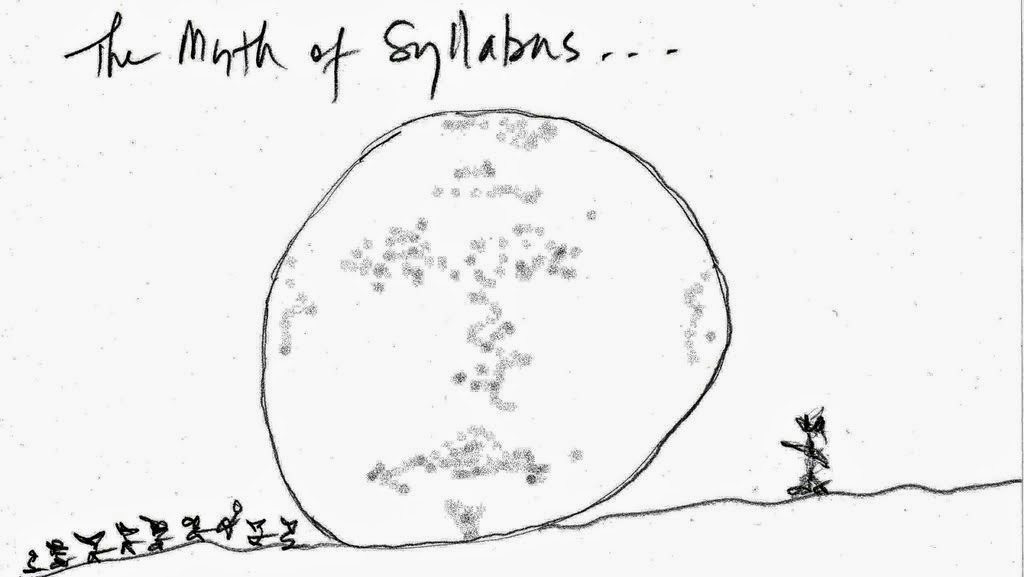
And Nietsche? Why not Kirkegaard, Augustine, or Buckminster Fuller – whose treatment of the Our Father prayer is instructive and entertaining and most certainly against despair. But Nietsche is imminently quotable, and Wiman is given to quotes. The quilt makes for a hefty syllabus.
The poet’s dog. The Holocaust. The bullet we all feel lodged somewhere in the skin muscle of our soul. Christ walks in us. A sermon. Sometimes he walks right through us. Doesn’t stay long.
It’s a death quilt. Not sorrow. Sorrow is not at zero nor at the bone. Sorrow remains above freezing. Sorrow is a song that doesn’t get sung. Some people can’t sing. A poem says, “Tragedy and Christianity are incommensurable,” in entry 7, then, we get, “The story of Jesus is, in an inescapable sense, a tragedy.” I remember the “Laughing Jesus” image appearing in the church we attended at the time. But Wiman says, “Suffering and death, at some point, will be all that we know.” How does one move against that?
A poem, “a lullaby of bone,” and “dawn a scald of joy.” Sounds like despair against which nothing can hold back. Where’s the against here?
Another poem. No comment. Throughout the book, single poems, collections of poems, like posters stapled to a telephone pole advertising little concert events already passed. And comes Ted Hughes, of all poets, singing of joy. Sort of. “Joy! Help!” The Beatles sang it better. Ah, and here’s Kirkegaard: “What is a poet? An unhappy person who conceals profound anguish in his heart but whose lips are so formed that as sighs and cries pass over them they sound like beautiful music.” And I’d like to read more of Norman MacCraig, who says: “I am a happy man…and nearly all the poems I write are in fact praising things.” Entries of quotes and poems. Remember, we’re making a quilt.
So he disses Samuel Beckett. But Beckett was a happy man. A humanistic writer, a kind man. But who are the “minor talents” Wiman refers to in his diss of Beckett? Bloggers? “This is a toy despair. It’s entertaining, brilliant at times, but it cannot help me.” Wiman explains the meaning of “against” in the title: “By ‘against’ in the subtitle of this book I don’t mean to imply a ‘position.’” A leaning, then. Shoulder against the wheel.
Yet another poem. No comment.
Dichotomy. There are two kinds of writers, we’re told. Yes, minor and major. Like guitar chords. Diminished and augmented. Wiman seems unforgiving about Virginia Woolf. Why even mention her if you can’t say something nice? He doesn’t mention her depression, her womanhood, the war raging. For someone who really is suffering from despair, as Virginia obviously was, this book by Wiman won’t be helpful. It might even make matters worse, as his response to Woolf’s suicide makes clear: “A prison gets to be a friend.” Wiman says she “embraced the oblivion that she had spent a lifetime creating out of, and in spite of, and against.” That is a complete misreading of everything. And mean-spirited to boot.
Wiman says, “Me, I can’t conceive of a god who can’t laugh.” Well, let us hear some laughter, then.
Another poem. Shooting pool. More despair. Haven’t we enough?
At the gym. This is a kind of Roland Barthes entry, or a topic Barthes would have used, like his American wrestling piece. “I’ve never been in a gym I didn’t like,” Wiman says. I’ve never been in one I did like. The smell of sweaty socks. Exercise going on but apart from any obvious need, like digging a ditch to lay a sewer line. Honest work. Of course one can be assigned physical therapy, and a gym comes in handy for that. But we should get outside for our exercise, and work for a living. But I can easily see why a writer might need a gym. Get away from the solo desk and into some camaraderie, even if you don’t actually meet or talk to anyone. Maybe even hire a coach, a trainer. But Rocky’s raw eggs? Really? And then we get some humor, finally, or at least some talk about humor. We missed a good chance with the Beckett stuff – well, that was just a footnote, anyway. But now, Wiman showers us after the gym with: “It [humor] can have existential reach and significance, can imply a world in which the comic, not the tragic, is ultimate.” This entry ends, by the way, with a footnote referencing Langston Hughes, a little quote from a letter he wrote. Fine, but Langston should have an entry all his own.
And now we’re back to snakes again. “Why does one create?” Wiman’s italics, not mine. Some to sound important. And of course the snake anecdote brings us round “commodious vicus” to Adam and Eve, story which with the help of Larkin, Wiman conflates with sex, not knowledge of good and evil. “Then, friend…” First, don’t call me friend. I’m your reader. It’s Eve creates consciousness. Hmm. And then God is the snake. What version is Wiman reading from? And then comes the Weil paradox. Destruction of the I. Hard to understand I guess for a poet, whose sole purpose is the creation of the I. And then it’s sustenance. And what of the others? If I drink it to death? And then comes the snake in the mouth. “There is nowhere to stand and see, nowhere to escape the stink of being human.” One must love that stink as Jesus did. And then this absurd comment: “Poetry is the only sanity.” Really? Then why does so much of it sound so crazy?
So, an Ars Poetica follows. “If I could let go / If I could know what there is to let go / If I could chance the night’s improvidence / and be the being this hard mercy means.” The work song.
Hearing music is better than poetry, sans words. Save the sound of a poem’s words.
More circularity. “The knowledge of love and the knowledge of death are the same, and neither is knowledge.” Is Wiman just trying to sound important here? Like a philosopher might? What indeed is the point? Yes, back on page 3: “To write a book against despair implies an intimate acquaintance with the condition. Otherwise what would be the point?”
And now more quotes. Bloggishness.
A six-line poem.
Loneliness and its solution.
William Bronk, at the expense of Wallace Stevens. Potato chips. Betcha can’t write one. Aphorisms, like this one from page 118: “Nothing is worth saying, nothing is worth doing except as a foil for the waves of silence to break against.” Yes, and “our ears are now in perfect condition,” John Cage said in his manifesto for music. As for Bronk, metaphor is everything and nothing, since it can point to what is, or what might be, but can never actually be that person, place, or thing. Buckminster Fuller: “I seem to be a verb.” That is not found in Wiman. Instead, we get, via Bronk: “I deal with despair because I feel despair. Most people feel despair but they are not prepared to deal with it except pretend that it’s not there. I think it’s there metaphysically, that it is not a matter of an individual predicament. It’s in the nature of reality and not to be denied.” Another sadist who wants people to think for a living. Isn’t it better to work for a living? “…a man lashed to a mast in his own living room,” is Wiman’s final statement on Bronk.
Barely bearable. Yes, because there is no “ugly” landscape. It’s all tremendous and awe full. That is the nature of Beckett’s landscapes. Only the human remains.
Pascal – the dedication to Wiman’s book is now explained, “a whole new naivete,” explained or illuminated.
Another poem.
Etheridge Knight. What poetry maybe can do is what “Jesus promises.”
Poem. “toot” (ish) footed.
Why is “common reader” in quote marks? Contradictions. Contraindications. Don’t mix this poetry with… Rabbits. Hot rats. “Poetry makes nothing happen.” Yes, precisely. “In the beginning…was the word.” Was. What now? Out of nothing something happened. But why this something? Why not some other happier circumstance? Burning worlds.
Another poem.
Out of “this tumbleweed nowhere” now here. And ends in laughter, really is, this entry, “against despair.” This is the autobiographical piece, the memoir, writing worth the price of admission. The memoir piece where Wiman describes his father and sister living like Becket characters trapped in a Southern Gothic play, is the heart of the quilt. Wiman has already tried to dismiss Faulkner’s characters, yet here they are, living a Flannery O’Connor dream. Here Wiman is at his best when it comes to the writing. It’s an American quilt.
Another poem: hailstorm.
“I am tired of the word ‘despair,’” Wiman says on page 170. No kidding. Me too. And we three? Remember the speaker is not necessarily the author. We might keep that in mind when we’re hearing voices.
Another poem. More rats.
Writing in the sand. Could he write? “Against closure.”
“Who ever anywhere will read these written words” (Joyce).
Poem. Hamburger.
Assumptions and predispositions – toward despair? “Ouroboros.” Our boring into belief. Burrowing? Borrowing from?
All quotes. “Faith becomes an instrument.” A tool? A piano stool?
Sermon calling. “Was it your own idea or were you poorly advised?” Funny. Either or. “Who do you say I am?
25 more quotes. Quip qwop gnip gnop.
Poem.
Traces. A play. “What’s the point, then…” Yes, of reading anything at all, never mind writing. What’s the point of worrying over points?
Entropy. Loss of the big. Who cares about “poise?” At a time like this? At anytime. Well, we’ve got to attend to the niceties. We aren’t in our own living room. And what of the obsessive and the compulsive and the disorders? Will Jesus cure us of those too?
A poem about pain.
10 more quotes. What’s the point? Like Melville’s “Moby Dick.” He wanted to write a big book.
A four-line poem on unbelief?
A found poem, created by “delineating” a piece of prose. Ok. Mentions Meister Eckhart.
One’s personal Jesus. Love – what is it? A miracle. Agape. Mouth open. Prayer for, as opposed to prayer against. The universe more strange than we can even ever imagine. In which Wiman reconciles science (physics) with the spirit. Fragments of a big bang. Of course, since it was the only bang, how would one know if it was big or small? Doesn’t matter.
Wiman makes clear to be against despair is not necessarily to be for joy. His book is not a 7 habits of highly joyful people. But why can’t joy create consciousness as easily as despair? Is humanity an experiment in anhedonia?
“…want want.” Not, not. Knotty. “Woman With Tomato,” poem.
Poem. Family. “buoys”
Cancer and television. “Why must my mind…” I get that. “I’m not chipper…” And the children of war? Children and cancer in the war zones. Wiman teaches a class called “Suffering.” He’s had an overdose of it. But is there another class he might teach called “Joy”? But Wiman says suffering and joy are alike. It’s the same class, turns out. The cancer chair. And Eli Whitney. Job (The Book of) and poetry. Values. Joy over despair. “Of course, of course, of course.” This renders a lot of comments – put your hands down. “One considers the meaning of…” (I’m on page 277 if you want to follow along – in Entry 49.) Not quite true, otherwise placid, readers of this book may attest.
Comes to a sum, page 278. “…feeds in blood” (281).
And a final poem: Bewitched, bothered, and bewildered.
Coda: Zero again. Nothing, nothing.
Not a book for someone trying to stare down despair. There’s the personal, individual kind of suffering, the stuff of sitting in the cancer chair. There’s the universal, general kind of suffering – “the sole (soul) origin of consciousness.” And there’s the week work and war and worry that wears most of us weary.

 The Coming of the Toads