Author: Joe Linker

  • A Sweet Derangement of the Senses with a Sour Finish

    What did Rimbaud mean by dérèglement of the senses? Trouble ahead, for one thing, as he intends to deregulate language:

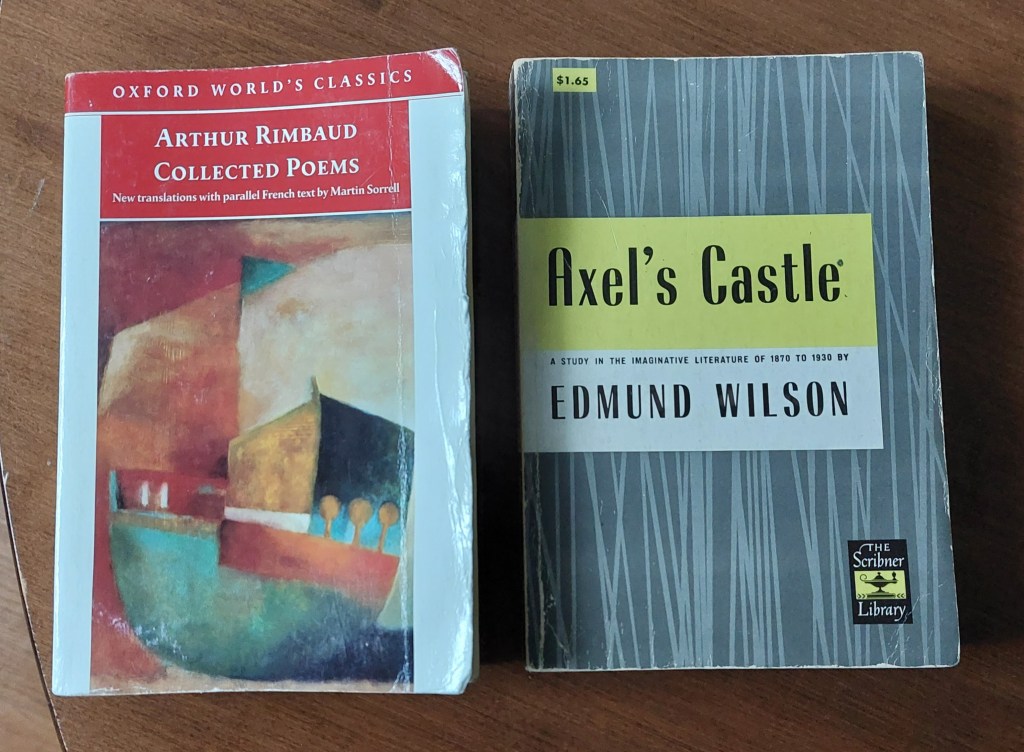
    “He does go on to speak of the unknown (l’inconnu), objective poetry’s aim, which can only be attained by the ‘systematic disordering of all the senses‘ (his italics)” (Sorrell, xvii).

    And not just language, but in an iconic spirit of rebel without a cause, to untangle from his life predicament: family, school, country and war, literary ambition, expectations – but relatively quickly then even his newly chosen lifestyle, as he heads out for the territory, leaving any predicaments for others to unravel.

    But in one meaning, his derangement of the senses is not difficult to understand, and gives the reader an assist to unusually difficult writing. Sorrell provides a few clues in his Introduction to the collected poems:

    “In synaesthesia an effect normally received through one of the senses is experienced directly through another. Thus, in Baudelaire’s sonnet perfumes sound as soft as oboes” (XX).

    But in my copy of Baudelaire’s “The Flowers of Evil,” Richard Wilbur translates the line in question, from the poem titled “Correspondences,” as follows:

    “Perfumes there are as sweet as the oboe’s sound” (12)

    The perfumes don’t make sound, literally, and don’t directly sound like oboes; perfumes smell sweet, and that sweetness is compared to the soft sound of an oboe. But can we smell sweetness? The perfumes are also

    “Green as the prairies, fresh as a child’s caress”

    Baudelaire’s poem relies on a poetic device, metaphor, nothing new there. We might say: The grapes were as plump as purple; or, my eyes drank a sour finish as I watched the falling leaves through a broken window; or, I heard summer leaving as the night filled my eyes with silence.

    In Baudelaire’s poem, taste relies on smell, and smell doesn’t function as well if taste is lost. Without smell or taste, the brain tries to find some other way to experience the missing sensation. Victims of the Covid virus might understand this from the experience, the strangeness, of losing one sense but not the other. Metaphor becomes a compensation for something lost in translation.

    And the Baudelaire poem points to McLuhan’s idea of a sensorium, any one sense not dominated by any of the others:

    “Like dwindling echoes gathered far away
    Into a deep and thronging unison
    Huge as the night or as the light of day,
    All scents and sounds and colors meet as one.”

    And what does McLuhan say? From Chapter 9, “The Written Word: An Eye for an Ear” in “Understanding Media”:

    “Consciousness is regarded as the mark of a rational being, yet there is nothing lineal or sequential about the total field of awareness that exists in any moment of consciousness. Consciousness is not a verbal process” (87).

    We might reread then, Rimbaud, and consider his idea of derangement, with McLuhan’s analysis of media in mind:

    “The same separation of sight and sound and meaning that is peculiar to the phonetic alphabet also extends to its social and psychological effects. Literate man undergoes much separation of his imaginative, emotional, and sense life, as Rousseau (and later the Romantic poets and philosophers) proclaimed long ago (90).

    It made sense then for Rimbaud to suggest the way to recover the imagination was to derange the senses.

    “Today the mere mention of D. H. Lawrence will serve to recall the twentieth-century efforts made to by-pass literate man in order to recover human ‘wholeness.’ If Western literate man undergoes much dissociation of inner sensibility from his use of the alphabet, he also wins his personal freedom to dissociate himself from clan and family (McLuhan, 90).

    But we hasten to remind that Rimbaud gave it all up as futile, poetry and his idea to derange language. Nevertheless, he might still sit at the head of a poet’s table (Ashbery’s, for example), even as he ended his own poetic meal with a sour finish.

    “Language extends and amplifies man but it also divides his faculties. His collective consciousness or intuitive awareness is diminished by this technical extension of consciousness that is speech.

    Bergson argues in Creative Evolution that even consciousness is an extension of man that dims the bliss of union in the collective unconscious. Speech acts to separate man from man, and mankind from the cosmic unconscious. As an extension or uttering (outering) of all our senses at once, language has always been held to be man’s richest art form, that which distinguishes him from the animal creation” (McLuhan, 83).

    Metaphor allows for looking at one thing, an object, or some sensory effect, and seeing something different. That’s how much poetry works, anyway. And when we compare two disparate objects, we fancy we learn more about each. Still, one wonders at that “richest art form,” and whether or not it’s worth the trouble it creates (Rimbaud apparently thought not), and that’s the sour finish to this post.
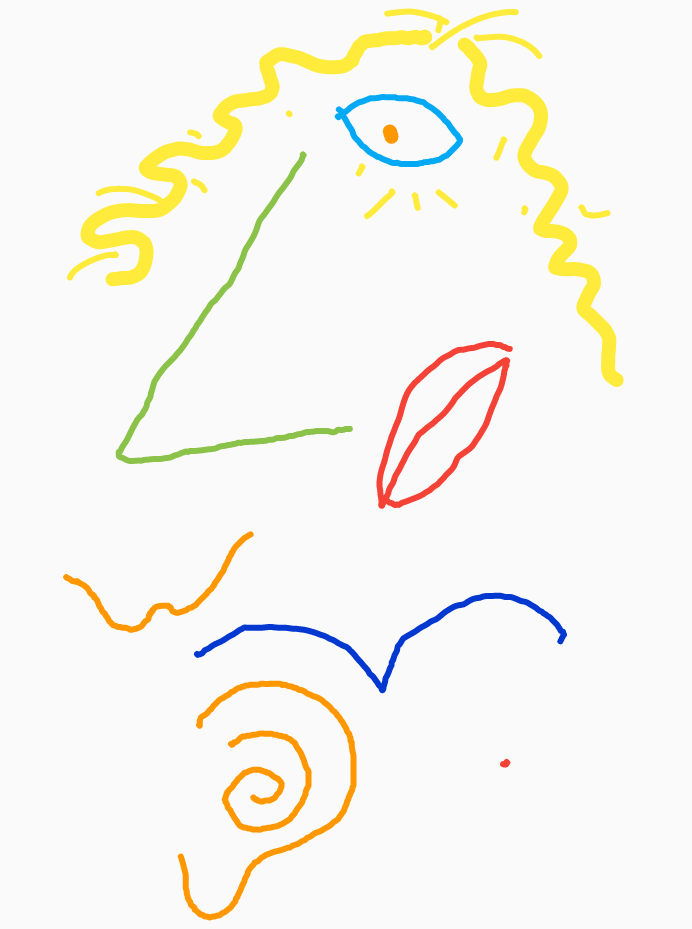
    Derangement of the Senses

    “Arthur Rimbaud: Collected Poems.” Translated with an Introduction and Notes by Martin Sorrell, Oxford University Press, 2001.

    “Charles Baudelaire: “The Flowers of Evil.” Selected and edited by Marthiel and Jackson Mathews (1955, 1962) – Rev. ed., New Directions (NDP684) 1989.

    “Understanding Media: The Extensions of Man.” Marshall McLuhan, 1964, McGraw-Hill.
  • World Not Serious

    Following Baseball, one finds a respite from the vicissitudes of world calamity. Then comes the 2024 World Series, and the 5th Inning of Game 5, when the wheels fall off the Yankee machine. In a sense, that inning was a baseball cartoon, three errors by the Yankee fielders, a fourth error if failing to cover first base on a right-side infield grounder is counted, and the Dodgers catch up from a no hit 5 to 0 deficit to tie the score 5 to 5. The Yankees then go ahead 6 to 5 in the 6th, but the Dodgers go ahead 7 to 6 in the 8th, which they hold for the win, taking another storied series 4 games to 1.

    “Back, back, to the wall!…and it’s gone! A home run!”
    The New York Yankees baseball team is a big book of stories, every year a new chapter.
    5th Inning, Game 5: The wheels fall off the Yankee Machine
    The Los Angeles Dodgers, since 1958, first season after moving out West from Brooklyn – along with millions of others from around the States, pouring into Gold Rush Country.
    Celebration Parade, Downtown Los Angeles
  • On the End of the Road with Rimbaud

    It wasn’t enough for Rimbaud to disassociate himself from his society, which he found decadent, hypocritical, false – in a word, selfish. He would also derange his language and senses, and when he was finished, or abandoned, that writing life project, but which would survive to influence so many still working on literature, he moved on and rejected his and all other writing:

    “When a friend asks him [Rimbaud] whether he is writing nowadays, he replies with annoyance and scorn: ‘I don’t do anything with that anymore’; and when, on the eve of his departure the next spring, he hears one of his friends congratulate another on having just bought some Lemerre editions – Lemerre had been the publisher of the Parnassians – he bursts out: ‘That’s a lot of money wasted. It’s absolutely idiotic to buy books – and especially books like that. You’ve got a ball between your shoulders that ought to take the place of books. When you put books on your shelves, the only thing they do is cover up the leprosies of the old walls’” (Wilson, 279).

    For Edmund Wilson, the question of lighting out for the territory ahead of the rest meant reading and sitting down to his journal. (What might Wilson have done with a blog?) He quotes Yeats, from his “Vision”:

    “It is possible that the ever increasing separation from the community as a whole of the cultivated classes, their increasing certainty, and that falling in two of the human mind which I have seen in certain works of art is preparation….It will be concrete in expression, establish itself by immediate experience, seek no general agreement, make little of God or any exterior unity, and it will call that good which a man can contemplate himself as doing always and no other doing at all….Men will no longer separate the idea of God from that of human genius, human productivity in all its forms” (291-292).

    The problem then, for Wilson, is indeed what to do:

    “Nor can we keep ourselves up very long at home by any of the current substitutes for Rimbaud’s solution – by occupying ourselves exclusively with prize-fighters or with thugs or by simply remaining drunk or making love all the time….The question begins to press us again as to whether it is possible to make a practical success of human society, and whether, if we continue to fail, a few masterpieces, however profound or noble, will be able to make life worth living even for the few people in a position to enjoy them” (293).

    Quotes from “Axel’s Castle: A Study in the Imaginative Literature of 1870 to 1930,” by Edmund Wilson. Scribner Library, 1931, 1959.

  • Telecaster Tuesday

    “Good to Go,” a Bb Blues played not too fast, some thick chord shapes, and notes meant to be a bit Bebopish, for this week’s “Telecaster Tuesday.” You can watch and listen here on WordPress or go to the YouTube channel. Short video, about a minute and a half.

  • Scrolls and Falls Forever

    View older posts
    Fall farther down
    Icarus’s labyrinth
    Beeswax breezeway
    Ocean view guitar

    London Philharmonic Orchestra
    bananayoshimoto2017
    (see translation)
    A cartoon
    You’re all caught up!

    Instant of the present moment
    Being at hand stare to stand
    Below the falls on the spot
    Alacritous accrual pre-prepared
    Your story then others in a row

    Someone’s studio
    An ad for earwax soap
    Sidewalk pastel painting
    A reel of artificial thought
    Cats lots of cats cast lots

    Brittle surf guitars
    Original audio
    A taste of honey
    Retro television sets
    Tricks and trades

    Someone’s yellow kitchen
    Distant dwarf planet telescoped
    A red fox in a green tree
    Goats in a weedy backyard
    An ad for a pup tent

    A string of Albert Camus quotes
    Architectural roller coaster disasters
    Boats swamped by stupendous waves
    Plastic frogs in tchotchke collection
    Paperback books swathed in scarves

    You’ve seen all new posts from the last 3
    Millenniums
    How to be happy advice
    An advertisement
    Newel posts

    Shadow of a flamingo over lake water
    Zinnias dried straw flowers
    How to make peach pancakes
    A hippo eating a pumpkin
    Original audio played on spoons

    Scrolling stones
    Giant Hercules beetle
    Video clips of once famous people
    A baseball triple play
    A ping pong game

    Fall colors
    Orange tomatoes on a blue plate
    Benches covered by dry grass
    Palm trees at Refugio
    Swings in a park

    Pink orange sunsets over Santa Monica Bay
    Moons rising down side streets and alleys
    Bicycles parked near improvised food carts
    A 1956 Chevrolet Bel Air turquoise and white
    A park full of empty green tennis courts

    Strangers on vacations in faraway lands
    Children walking in the Louvre in Paris
    Newsreel from a war zone 60’s hippies
    dressed in flowers Cell phone battery
    dangerously low or this might never end

  • Fender Squire Telecaster

    All sound is distortion which produces sensation. I play mostly acoustic these days, unplugged, and eschew loud noises from any source. Is sound an idea, an intangible? The Telecaster, for the player, is more than sound – its industrial look, its substantive weight on the lap (you can feel the sustain vibrate through the solid wood body and hardwood neck even unplugged), its smooth playing fretboard, its difficult crackling pods and cranky switch (which remind one of both the guitar’s and one’s own age), all bring it home I should play the Tele more often.

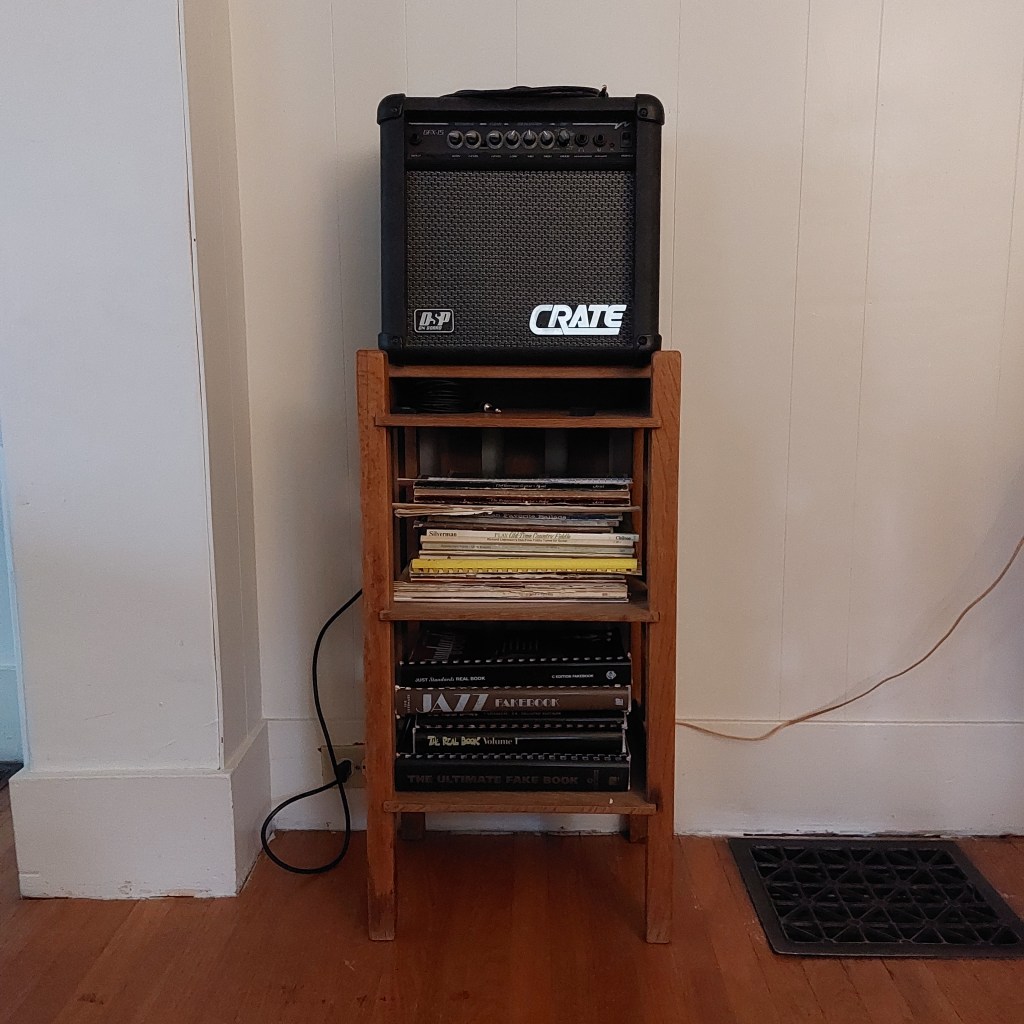
    In the YouTube video below, I’m using the simplest of setups, my cell phone sitting on the edge of a Crate (GFX 15, circa 1990s) small room size amp, the mode set to Reverb 2. With regard to cost of guitar and amp, suffice to say you don’t have to spend a bunch of bucks to get a cool sound. The Squires are storied guitars, particularly the older ones, the first ones built when Fender opened a factory in Japan in 1982.

    My Telecaster guitar I got used in 1985, from a guy I worked with, who had purchased the guitar new at Ace Music in Santa Monica, had switched out the original pickups with Dean Markley and Seymour Duncan pickups, and also switched the polarity to produce an extremely bright Nashville sound, too screechingly violin-like for me, so I had it switched back. I now use flat wound strings on the Tele, which softens the tone and gives it more range (D’Addario ECG24 XL Chromes Flatwound Electric Guitar Strings – .011-.050 Jazz Light). Telecaster guitars over the years have not been noted for their use in jazz, with notable exceptions though, including Ed Bickert and Bill Frisell, and a few others, though often with after market adjustments and other electronic enhancements used.

    In the video, I play through three brief guitar ideas: the first, some country sounding chords and phrases, the second a kind of Gypsy jazz piece I’ve been working on, and the third what’s intended to sound like surf guitar.

    Plugged In
  • Nose

    Where the nose goes
    nobody knows
    its downslope bent
    uncurls merriment

    After a bout of virus
    it won’t awake
    the nose laments all
    smells of peppermint

    At night it runs around
    amid roses and fishes
    lemons and cloves but
    the schnoz has anosmia

    In the morning it sleeps
    like a cat in a ring
    if it can’t smell
    maybe it can sing

    Thar she blows
    as big as a whale
    in a hurricane gale
    our well placed nose

    If this short tale
    got up your nose
    tell me please
    how’s it smell?

    Nose Rings


  • A Few Notes on the Guitar

    Studying a new guitar genre is almost like learning a new language, or at least a new dialect. By guitar genre I mean a type of music: Blues or Jazz, Folk, Rock, Gypsy Jazz, or Classical. Those genres all make use of the same notes and chords and even often use the same music and songs – what changes from one genre to another is technique, how you play the instrument, including how the player sits or stands, holds the instrument, plucks the strings with fingernails or plectrum. The difference in genre is not limited to the music played, but the type of guitar used and how you play it, which is known as technique. Over time, the changing build of guitars has enhanced an emphasis on genre specialization, so it’s hard if not impossible, for example, to transfer a screaming metal solo played on a Flying V over a huge amplifier to a nylon string Classical instrument played without amplification. I’ve little to say about which genre is “better.” They are simply different and call for different approaches, for both playing and listening, and at the same time share similarities.

    A studied focus on the Classical guitar will reveal the history of the guitar and guitar music in a way the other genres might miss. As an example, I’ll share an online resource for learning and enjoying the Classical guitar. You don’t have to be a guitarist to enjoy this: The resource is This is Classical Guitar, by Bradford Werner, guitarist, guitar instructor, and music publisher. There are free lessons available, linked to the This is Classical Guitar YouTube channel, including performance and discussion notes and sheet music. But the site is full of resources and information and designed for all levels and interests. One feature I’ve enjoyed via Bradford’s newsletter is the featured artist selection, which amounts to a curated listening experience – in other words, rather than randomly searching around for vital links, the listener benefits from Bradford’s expertise in selecting and presenting what’s usually of special interest.

    My first Classical guitar instructor was a mild mannered player named James. You had to take your shoes off to enter his house. To this day I prefer playing with my shoes on. But James taught me some good stuff. At the first lesson he asked why I wanted to study Classical guitar, and I said I wanted to learn to read music and understand theory and to play beautifully. He said you won’t learn much about theory; theory is what the composer is responsible for. As for playing beautifully, you can do that now. He also advised I get a better guitar. One day, out of character, he chided me for playing too quietly. We used the Aaron Shearer Book One and the Frederick Noad books and also the Leo Brouwer etudes (1972, Estudios Sencillos Nos. 1–10), which were my favorite pieces to study and play. I learned the positioning and fingering of the Diatonic Major and Minor Scales by Andres Segovia (1953, Columbia Music). And we also practiced the fingering exercises of Manuel Lopez Ramos, the idea there to avoid having the fingers default to any kind of set pattern, each finger independent of the others. One day, I told James I enjoyed playing the exercises more than working on the music, to which he voiced disapproval. James moved away and passed me on to another instructor, Marshall, who used to say when I played a new piece, “Well, you found all the notes.” I was on my third instructor, Brian, when I got a new job and could no longer afford the time for lessons and practice. I still have the “better” guitar James encouraged, found for me by Marshall, which I purchased used, a Takemine C132S, built in 1977.

    Of course the best guitar is the one that gets played. You need to leave it out where you can pick it up anytime you walk by, and not worry about nicks and dings and such. Not leave it cased up in the closet or under a bed.

    Classical style guitar might require the most exacting technique. The music written for Classical guitar is often technically difficult. In other words, it’s hard to play. But when James said I could play beautifully now, he meant the music doesn’t have to be complex to be beautiful, it can be simple, and if I paid attention to what I was doing, I could express the music with beautiful tone and grace. A few notes is all you need. An example of a simple piece is found in the Noad book “Solo Guitar Playing I” (my copy is 1976, Schirmer Books). The piece is titled “Lagrima,” and is by Francisco Tarrega. Everyone plays it these days. It’s sort of the “Stairway to Heaven” for beginning Classical players. But it’s the first piece that I could play that I could also hear an expert play. It was on a Julian Bream vinyl record I had at the time. Julian Bream did as much as Andres Segovia to popularize the Classical guitar and its music. When Julian went to music school, guitar was not taught, indeed was frowned upon. One of the problems with Classical guitar is it’s quiet compared to other instruments and difficult to hear in an ensemble.

    I picked up a used copy of Studi Per Chitarra by Dionisio Aguado (1972, Suvini Zerboni, Intro. by Ruggero Chiesa) and showed it to James. He picked out just five of the 51 pieces and said to work on those. I memorized Number 1 and still play it almost daily, straight or improvising freely. It’s a very simple piece and easy to play. James recommended a book on the history of the guitar. I checked it out from the library. Alas, I forget now its title. But I remember reading in it a passage on a typical day for Andres Segovia. He was said to begin his day reading manuscripts and notating works. Then he played and attended to business. Taught and went about his day. But what I remember most is that he was said to end every day in the evening just before bed playing a piece just for himself. At one, I imagined, with his guitar, an at-one-ness most of us never quiet attain with our guitars, wrestling as we do with our chairs and footstools and strings and cracked fingernails and music too difficult for our technical abilities. And it’s then we might remind ourselves the guitar is a folk instrument.

  • a raft

    my friend sent me a raft
    i guess he thought i was
    drowning and about that
    he might have been right

    but we’re not going there
    yet until we just give up
    underwear under worn
    neatly stacked in closet

    the books i was going
    to read but just gave up
    perfect bound a few
    embroidered sewn

    the poem is a scroll
    down and down and
    under we go silver
    twist threaded flax

    and the songs i was
    going to sing and play
    as guitar sounds waft
    up up up and away

    this raft i’m now on
    drifts slowly by your
    jolly yawls i am not
    not drowning refrain

    the waves i almost
    caught but tired
    of paddling for those
    and this i lost at sea

    my friend gave me a raft
    i guess he thinks I am
    drowning and about this
    he may be abeam

  • Old Haunts

    Old Haunts, all with current links, focused on core subjects: art, technology, music, science, and literature, but first, a brief explanation:

    Moving continuously toward more minimalist formats (which if not stopped could result in disappearance altogether), blogs may risk losing some appeal, particularly to readers who enjoy liking, commenting, and linking or sharing – in short, conversing – as well as indulging in pingbacks and reblogging, and who enjoy perusing sidebars, widgets, clicks and plays, slide shows, and sharing up and down the crowded street of social media sites and apps. An example of such minimalist drift, here at the The Coming of the Toads, might be the removal, some time ago now, of listings and links of followed blogs and favorite sites, what I called in the sidebar heading over the list of links: “Back Roads to Far Places,” the title from Ferlinghetti’s book.

    I use the WordPress Reader to subscribe to sites, and currently I’m subscribed to 146 – but not many of which post frequently or are still active at all, which sparks the idea behind this post, which might have been subtitled: and Other Broken Links. While I don’t currently post a widget of followed blogs or sites, I do manage my subscribed sites in the WordPress Reader, and I also maintain the “Links” feature in the WordPress Dashboard for my own use. There are currently 33 links. But links don’t always stay current or active, while others click to surprise, a site grown or morphed into other projects or disappeared (Page Not Found), and still others remain useful resources or pleasant places to visit, like old friends. Or the link simply breaks and you get sent who knows where and who knows what’s happened. Sites often change over time, and it can be hard and takes time keeping up with the changes.

    Anyway, I thought I’d share an update of just a few of the sites that do continue to work well and that I try to follow and that offer pleasant visits and are creative and resourceful:

    Marginalia and Gracia and Louise I first discovered in “High Up in the Trees,” a blog by the Australian artist Gracia Haby. It’s now called “Marginalia.” I like everything about it – font work, photography, text content, collage and other art work, the work Gracia and Louise do with animals. And there’s another site they maintain, called Gracia and Louise, full of things to see and wonder at. The sites probably work best on desktop, but the creativity in doing more with the drop-down necessities of on-line viewing is unparalleled (of that, here is a specific example, called Reel).

    McLuhan Galaxy always produces a profoundly puzzling experience in that there seems no end to his ideas and the ramifications of effects of media on society and culture – and yet here we go, linking and following, but where? The Blogroll will keep you occupied for hours of intellectual fun.

    I don’t have John Cage ears, but I’ve always enjoyed his writing, and much of his music I do enjoy. Kuhn’s Blog is not often updated, but the site resources remain available and loads of fun, with several interactive features (try Indeterminacy, for example). The John Cage Personal Library is itself a phenomenal work.

    The Buckminster Fuller Institute shares hope for the world from a worldwide perspective. The site may provide a new awareness for what’s going on worldwide to improve conditions, predicaments, problems – near and far. If your not familiar with Bucky, here’s a good place to start: Big Ideas.

    Words Without Borders features world wide writing in a variety of formats. Browse by country, theme, or genre.

    Old Haunts, all with current links, focused on core subjects: art, technology, music, science, and literature.

  • Poetry Conversation

    I’ve a poem today at “The Skeptic’s Kaddish,” in the section devoted to Poetry Partners, David Bogomolny’s idea to create conversations of poems with readers of his blog. Please check it out here: “conversant.”

    David, aka ben Alexander, is fond of traditional poetic forms, some fairly obscure. I’ve been more into free or self created forms, form follows function or content, that sort of thing, but in “conversant” there are repeating words, suggesting a kind of anaphora, or epanaphora, since the repetition is limited to one word, and loosely placed stanza to stanza. Thanks to David for sharing his blog and for his “sijo” to finish the conversation.