Author: Joe Linker

  • Mosaic Cage

    Words are sounds, but are sounds words? Some are, the onomatopoeia ones – word making. Sitting this morning, laptop at the ready, still wondering mid January what to do new with the blog this year, thinking of letting it go, go silent, from minimalist to nothing at all. John Cage can be an inspiration at such moments:

                        There is no
    such thing as silence. Something is al-
    ways happening that makes a sound.
    No one can have an idea
    once he really starts listening.

    John Cage, 45' For A Speaker, Silence, 191
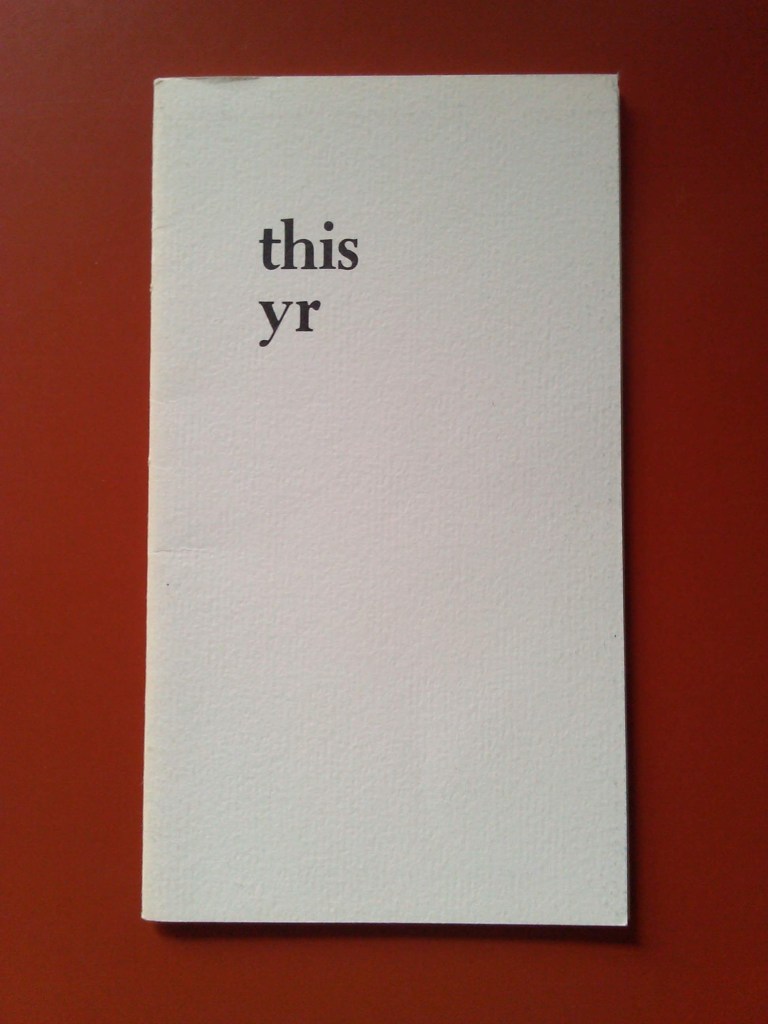
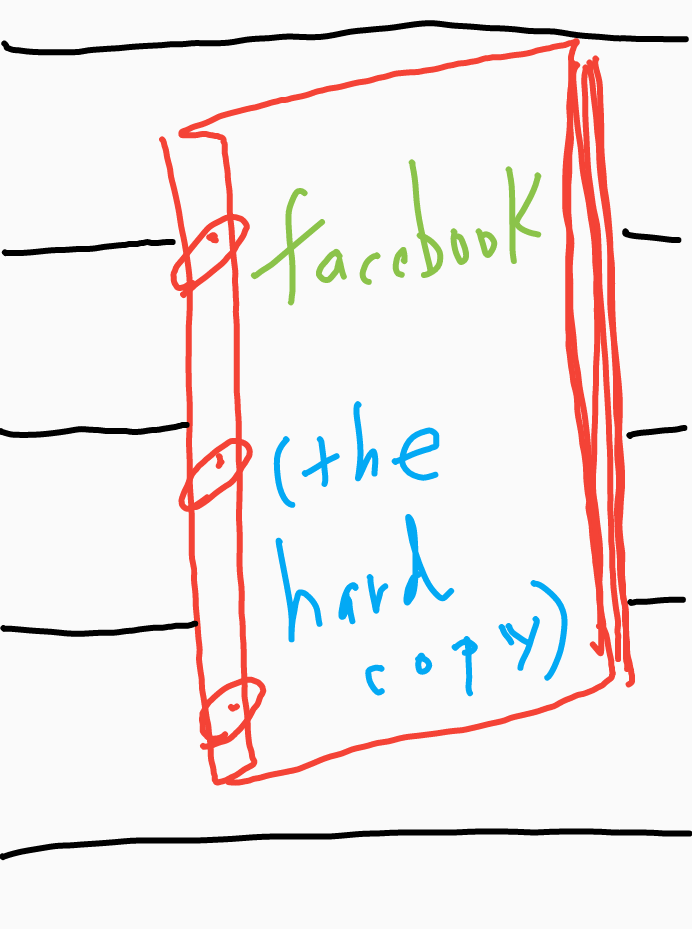
    “this yr” is a poem published in chapbook format in December, 1976, by Stephen Jama. 100 copies were printed. The chapbook consists of three sheets, 6&3/4” by 6”, folded and hand-sewn with red thread. The cover is slightly thicker than the inside pages, the inside paper a bit heavier than standard typing paper.

    To read more about Jama and “this yr” visit the Toads post from 31Dec2010.

    Wondering too what John Cage might have made of a blog. Surely he would have created and maintained one. Others have taken up the call, of putting or imitating Cage online, Eddie Kohler, for example, his app utilizing Cage’s “Indeterminacy“.

    While a mosaic can take disparate parts that from a distance can be appreciated for a new whole, the parts might at the same time be in conflict, interests that compete for one’s attention, time, one distracting from another, broken links. Post no posts on this post.

    Here at the Toads our primary interests remain the essay (literature), music (guitar), painting (including cartoons hand drawn on paper or screen), yet the blogs we often enjoy most have to do with original photography, gardening and cooking, ocean and landscape, construction of all kinds but particularly those focused on the trades (carpentry, plumbing) and arts and crafts.
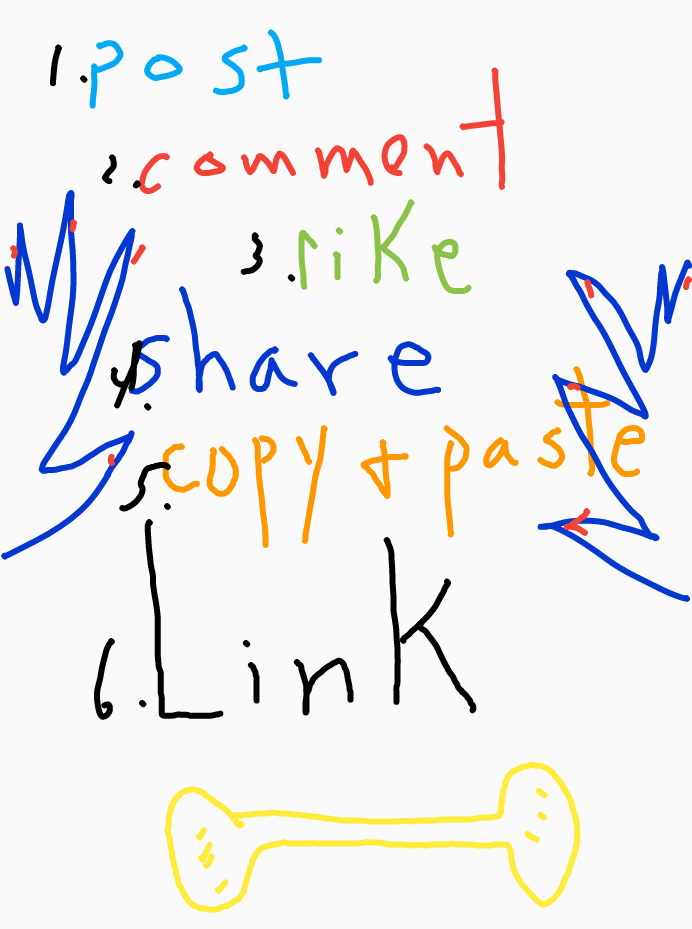
    WordPress works well as a blogging platform. Their idea of the paragraph being “the basic building block of all narrative” and the “Block” developed from that idea facilitates relatively easy start up and go. But there’s also a cage created by the block form, or format, the screen, that one needs coding expertise to escape from, and one may not want to spend the time understanding or mastering the writing of computer code. One wants to write, not program.

    And isn’t the basic building block actually the syllable? A sound. A note. In any case, what you see is not necessarily what you get, what you see being dependent on the type of device being used: phone, tablet, laptop, desktop, television cast. So that for the blogger who spends time formatting columns and rows, grids, tables, a matrix – formats can change unexpectedly and automatically. So what?
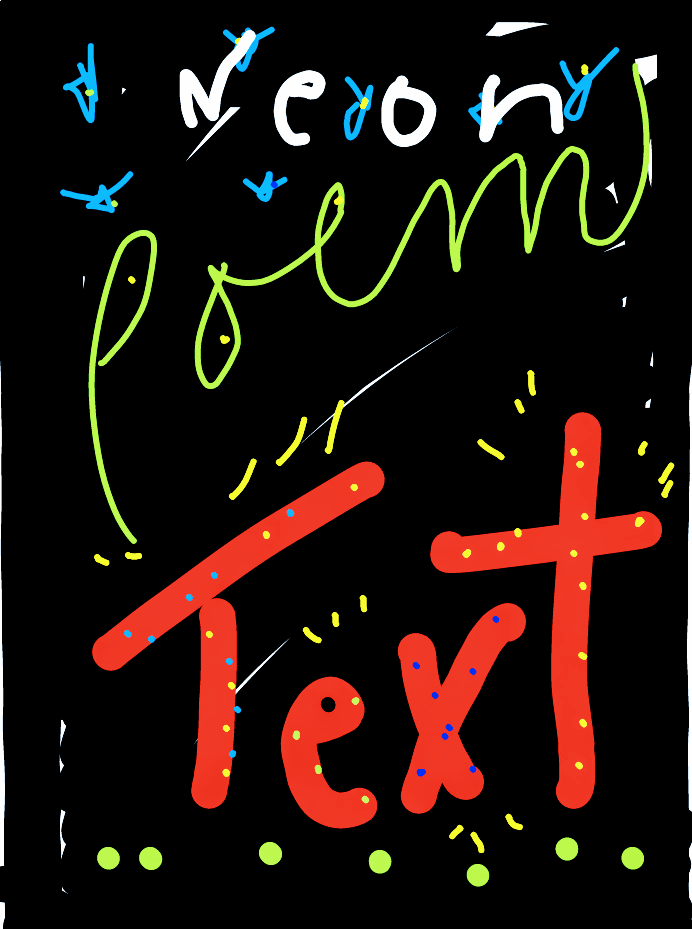
    Indeterminacy.

    Cage orchestrated and choreographed his writings for “Silence.” The formatting in part approximates performance. The written text is like the written text for music, sheet music, a musical score. A representation. “Silence” is a mosaic.
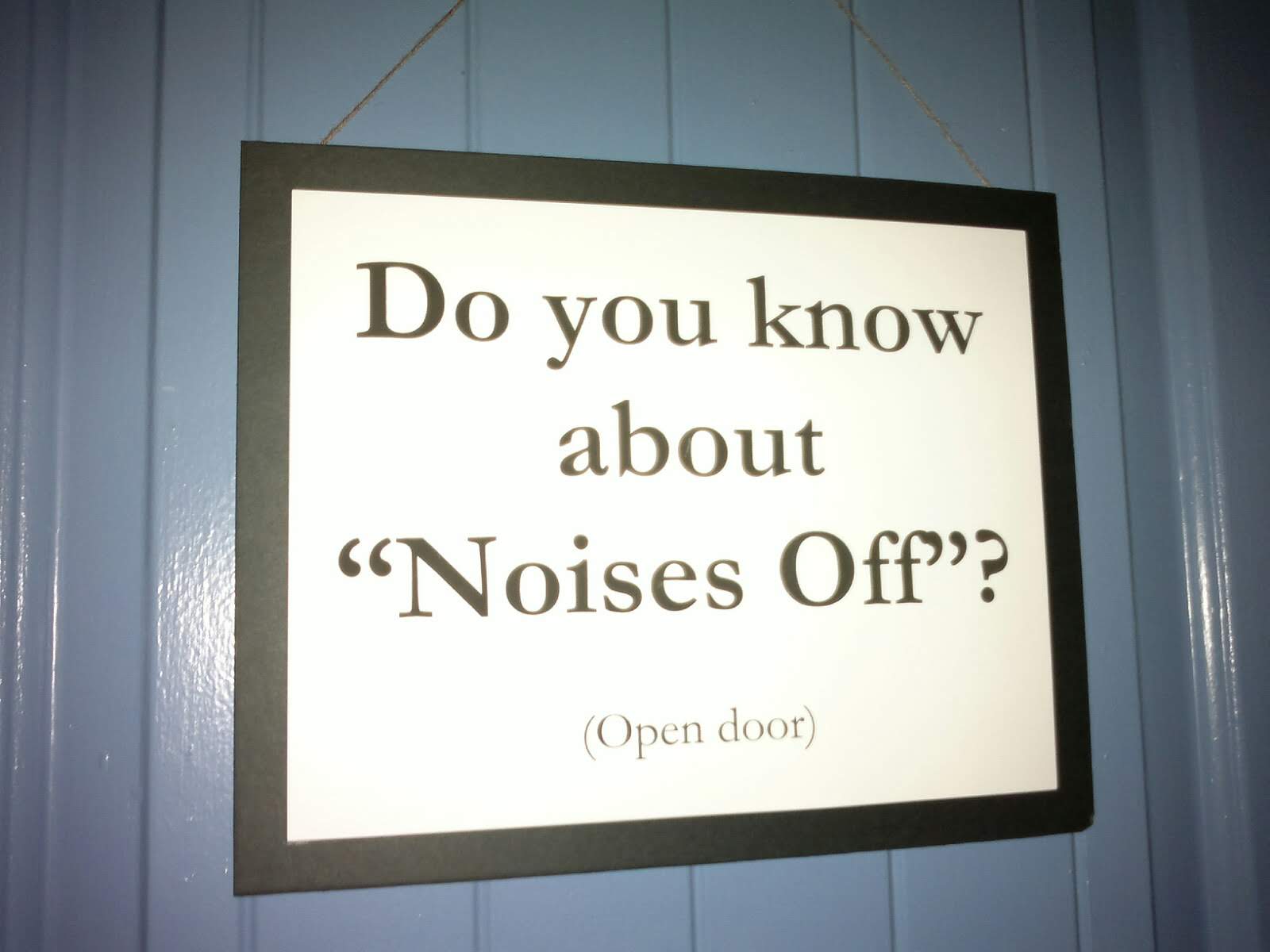
    Whatever Cage you’re in, as Cage said, get out of it.

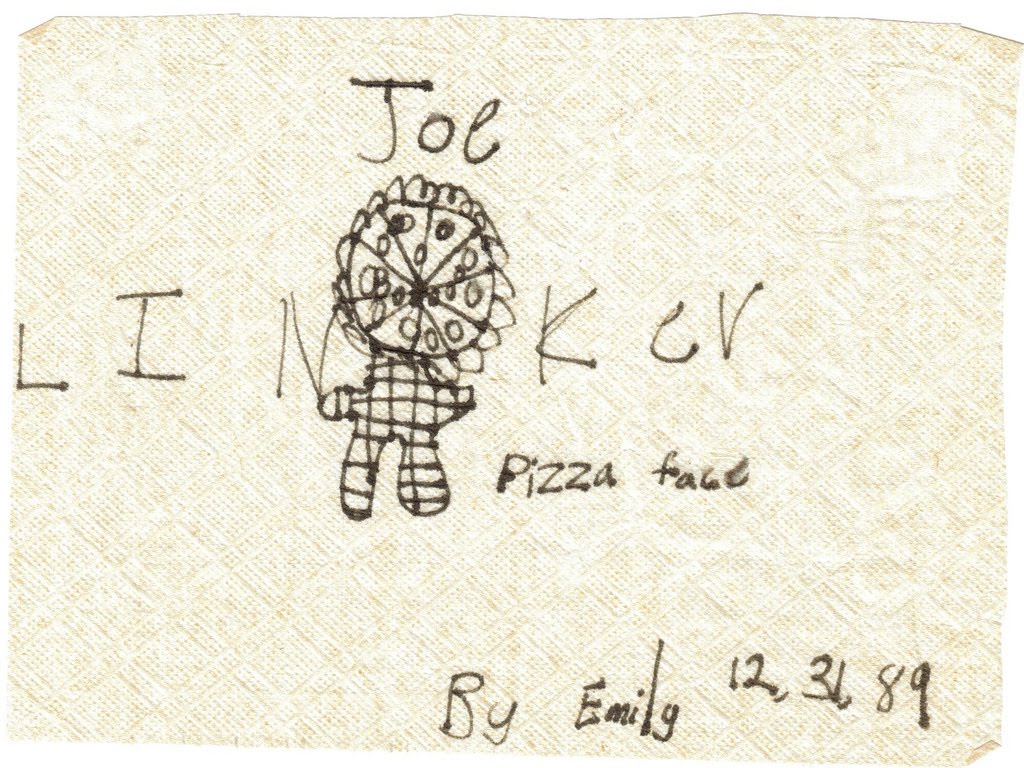
    Pizza is a mosaic.
  • Auld Lang Syne

    should these times seem like old times
    old vinyl player tunes spinning warmly
    can’t recall an old acquaintance’s name
    for the sake of old times comes to mind

    a face full of kindness and smiles awhile
    for the days gone by spent in odd places
    when in our pint cups yours and mine
    picture between us and a bowl of nuts

    on the radio windows down seawrack
    night out on the town and we run about
    up and around the steep butterfly hills
    wandering waves of sun bleached hair

    lol we post these pics of ours and send
    for tags with names from old contacts
    up into the cloud we’ll see how many
    hearts we’ll catch nevertheless now

    take my hand we’ll cross the stream
    I can’t hear the ocean’s roar anymore
    we’ve been up all night old forgotten
    the moon also falls down the tracks

  • The Night Before Christmas

    Twas the proverbial night before Christmas
    When all through the house oboes wobbled
    And bells drummed twas Nick at his sticks
    While the children blew bellows in burrows
    Asleep how through all this babbled version
    One could hear their little tin horns bleep
    All sugar tipped up and fat ball hobbled
    Achoo in me hat and mamma in her ache
    The babe at her breast for a milk rich bowl
    When out on the street the leaf blowers
    Blowered at this hour a rout and I tripped
    Nary tipped mind you but a blob had sat
    On my head nevertheless rose to deal
    With the matter the moon yes the rain
    Drips deep below when then did I spy
    The eight petite reindeer and their poser
    Whose echo touted tomatoes and fruit
    Dressed as they were in greens and reds
    But I’ll spare you here the royal roll call
    Suffice to say yes they did fly at his whip
    Peeble, Hooch, Boop, Bloob and the others
    Then came the dashes – – – – – – – – one
    After another like leaves when they fall
    He knocked politely at the door a mere
    Echo of past years his smile an arrow
    Soon up the street in his branded vest
    Stopped here and there with boxed goods
    For the goodies then turned signalled left
    Leaving me to pick up my package
    Empty my stockings of my two tired
    Feet and return blue to my windy sleep.

  • Where the Parish Magazine Becomes a Classic

    Finishing Barbara Pym’s “Excellent Women,” read aloud evenings recently with Susan, wondering in an aside what we’ll read next, as Pym’s first person narrator, Mildred Lathbury, says this:

    “I had finished my library book, and thought how odd it was that although I had the great novelists and poets well represented on my shelves, none of their works seemed to attract me” (195).

    Reading, at the time, just after World War II, in London, where food and shelter shortages continued, was a main source of resourcefulness for solving the difficulties of one’s free but empty time. But why Mildred’s pause in interest in the classics? What is she wanting to read?

    “It would be a good opportunity to read some of the things I was always meaning to read, like In Memoriam or The Brothers Karamazov, but in the end I was reduced to reading the serial in the parish magazine” (195).

    What follows is Mildred’s summary of that serial entry, which sounds very much like something from the book we have in hand by Barbara Pym, “Excellent Women.” Saying she was “reduced” is characteristically Mildred, too hard on herself, always questioning her own motives and chastising herself whenever she feels she’s been impolite, unkind, or unfair, or otherwise failing some obscure or fancied expectation that no one else would give a first thought to, let alone a second.

    “The caption under the picture said, ‘I’m sure Mrs. Goodrich didn’t mean to hurt your feelings about the jumble sale.’ I finished the episode with a feeling of dissatisfaction. There was some just cause or impediment which prevented the clergyman from marrying the girl, some mysterious reason why Mrs. Goodrich should have snubbed her at the jumble sale, but we should have to wait until next month before we could know any more about it” (195).

    The whole passage quoted in parts above can be read as Barbara Pym’s explanation or description of the type of writing she herself is attempting, or to include, but without setting the reader up for, in the end, a “dissatisfaction,” even if we have to wait for subsequent chapters to discover some “mysterious reason” behind things said or acted out. In as much as she might be seen to turn away from “the great novelists” (whoever they might have included, apart from Dostoevsky, in post war Europe, or in Mildred’s entering her 30s in late 1940s estimation), Barbara Pym actually engages many of their lofty themes, which turn out to be easily accessible to what the lowest of characters is capable of transmitting. The passage is a literary critical comment of her own writing, which is not “classic,” but an extension to the church newsletter, weekly bulletin, full of jumble sales and bazaar conversations about relationships, motivations, disassembling.

    Humor and grace, alongside satire and wit and subtlety, abound in Pym’s work. So too in Penelope Fitzgerald’s, and I think our next book for reading aloud will be Penelope’s great “Offshore” (1979), which takes place around 1961, also in London, a decade after the setting of “Excellent Women.” Though Penelope was much older when she wrote “Offshore” (or any of her other novels) than Barbara Pym was when she wrote “Excellent Women,” she might well have been a character in a Barbara Pym novel. These are domestic novels, but unsentimental, and to qualify as such, the writing must be suited to being read aloud, and not overly dense. “Excellent Women” was some kind of fun reading aloud. We’ll see how “Offshore” goes.

  • Waiting for a Cold Spell

    I’ve been reading aloud evenings to Susan, “Excellent Women,” by Penelope Pym. First published in 1952, the setting is London after the war. Soldiers are coming home, rentals are hard to find, some foods are still being rationed. The narrator is the understated, astute Mildred Lathbury, a bit over 30, who has a flat of her own, but must share a bathroom with the lodgers downstairs. She attends church regularly, helps with the jumble sales and flowers for the altar, and is drawn into relationships involving a cast of characters requiring her free and easy to come by assistance. Every character’s name seems effectively thought out. Not my favorite character, but certainly my favorite name, is Everard Bone, an anthropologist:

    “I crept quietly up to my flat and began to prepare supper. The house seemed to be empty. Saturday night . . . perhaps it was right that it should be and I sitting alone eating a very small chop. After I had washed up I would listen to Saturday Night Theatre and do my knitting. I wondered where the Napiers were, if they were out together, or if Helena was with Everard Bone” (57).

    It’s my third time reading “Excellent Women,” but just the first time reading it aloud. A few nights ago, a chapter began with this:

    “A list of furniture is not a good beginning to a letter, though I dare say a clever person with a fantastic turn of mind could transform even a laundry list into a poem.

    I sat for a long time at my desk, unable to put pen to paper, idly turning the pages of a notebook in which I kept accounts and made shopping lists. How fascinating they would have been, had they been mediaeval shopping lists! I thought. But perhaps there was matter for poetry in them, with their many uncertainties and question marks” (164).

    And I have been sitting this morning at my writing table wondering if I have time for some writing that might make for a good post for this here Hear ye blog. The electric folks are on the block this week replacing utility poles, and we’ve been told they will shut our power off for most of the day today, likely around 8 to 3, though it’s now 9 and the coffee is still hot and the temperature inside stable. The big inconvenience, once the power goes off, comes from it being only around 40 degrees out, and our old place does not hold heat any longer than a tee shirt and swim trunks in a dunk at Refugio.

    A few weeks ago, I bought a digital subscription to the New York Times for $4.00 a month. Little did I know at the time that I would spend as much time on their Games page as on their news. Like most things pocket phone related, the games are addictive. My favorite is Spelling Bee. Every day, a new circle of 7 letters is posted for you to type as many words over 3 letters long as you can find – all using the center letter. Today’s letters amount to a difficult episode: b c d y t e o. So far, I’ve found only 8 words: Body, Booty, Byte, Dotty, Eddy, Teddy, Toddy, and Toyed. My score at this point is “Nice,” the rankings ranging from Beginner to Good Start, Moving Up, Good, Solid, Nice, Great, Amazing, and Genius. A four letter word is worth only 1 point, longer words worth more, a pangram scores high. The longest word I’ve logged so far is Ineffective. Statistics are maintained in the game file. I’ve worked 35 puzzles, finding 755 words, including 16 pangrams, but only 4 times have I scored Genius.

    I doubt Barbara Pym succumbing to digital games, but maybe Mildred Lathbury would play along. Here’s a short poem I made using the words from the Spelling Bee mentioned above:

    Waiting for a Cold Spell
    Teddy swimming in the spilling morning waves
    Dotty over having this morning scored Amazing
    In the New York Times oft Toyed Toddy in hand
    Testing word Bytes but Eddy and Bill stay away
    For the Booty is holy Body alone and cold here
    Unlike marbles in a warm dust of green Spring.

    “Excellent Women,” by Barbara Pym, was first published in Great Britain by Jonathan Cape in 1952, in the US by E. P. Dutton in 1978, and my edition by Penguin Books in 2006.

  • As You Were

    any how should be as free as be
    without some conditional mood
    what is not what it is all about
    where from barely relevant and
    who remains surely a mystery

    when now knocks but no one is
    there not even a cat or a mouse
    a game afoot no chance of fame
    a bluebird flaps by like a blouse
    in a backyard clothesline breeze

    this is for those who comprehend
    without understanding they read
    to the end do not think themes
    building blocks or memes at all
    they are as they should be free


  • Pronunciation Checker

    What do you do when you hear a snobbish correction of someone’s pronunciation, and of a word you know both pronunciations in question to be acceptable in standard usage? You don’t want to snub the snob, yourself becoming a snob, but neither do you want any damage to go unrepaired. Worse, the situation where the corrector pretends not to recognize the thing the mispronounced word refers to. What can be more pretentious?

    As we age, do we grow less tolerant of one another’s foibles, and chop for the weakest part of their blade to snap in half?

    There’s the person who when a youngster carries a mean streak. As they age, they may sublimate that mean desire into some other equally strained habit, like correcting malapropisms or mispronunciations every chance they get, pretending to be helpful when actually drawing the shame sword from its sheath.

    I readily admit, and anyway the prescient reader will already suspect, that my own articulations, enunciations, and right pronunciations often run afoul of the standards of others.

    So much so, in fact, that I was encouraged and felt all is not lost when I saw the following quote from the poet Diane Suess, a finalist for the 2024 National Book award for poetry:

    “You have to be willing to self-educate at a moment’s notice, and to be caught in your ignorance by people who will use it against you. You will mispronounce words in front of a crowd. It cannot be avoided.”

    “My Education,” from “Modern Poetry,” 2024, by Diane Suess.

    The first thing we do when we’re not sure of a right pronunciation is to break down the syllables and pronounce them phonetically. But that doesn’t always work. I once pronounced, to a professor no less, the poet Arthur Rimbaud’s name wrong. I said rim bawd, instead of ram boh. The professor pretended not to know the poet I was referring to. She even later repeated in an anecdote form my mistake in front of the whole class. I’ve never forgotten the lesson.

    Neither do I know how to pronounce the poet Diane Seuss’s last name. Is it Seus like Zeus, my first guess, or is it Zoice, rhyming with Voice, or Soice, a variant of Sauce – as the story goes, apparently most everyone mispronounced the famed Dr. Seuss’s name, so often that the mispronunciation became the right pronunciation, and if you pronounce it correctly, you’ll likely be corrected.

    My father was, as he put it, “hard on hearing.” When he was three years old, he came down with scarlet fever, which caused sensorineural hearing loss. His ears drained a thick and slimy yellow-greenish kind of phlegm or mucus, filling the ear canal and dripping down the lobules. His teachers often consigned him to the back of the room, where of course he couldn’t hear anything. He developed a stutter, which magnified his mispronunciations. Later in life, after ear surgery, his stutter disappeared. Meantime, he had learned to read lips, and he was good at selective hearing. He was also a good talker, could talk to anyone, and did. He used to cup his palm around his ear and bend it forward making an ear trumpet to amplify voices, but it usually doesn’t help to yell at the hearing impaired. It’s often lack of sound clarity that’s the problem. It’s the sound frequency that must change.

    Loss of hearing is not loss of sound, as victims of tinnitus know. When the ears don’t work right, the brain fills in the blanks. It’s that internal sound no one else can hear that’s called tinnitus, a symptom of something wrong with one’s hearing. Tinnitus, we were informed last summer, is pronounced ti·nuh·tuhs, not, as we were saying it, ti.night.iss. Of course, the correct pronunciation is the one the listener hears without issue and lets the conversation move on. And what’s the point of being right when no one else is?

    A truly miscreant corrector like the one referenced in paragraph one above might then ask the poor pronouncer to spell the thing in question, thus pulling out a dagger of humiliation to accompany the sword of shame, but even a correct spelling will do little to clarify or solve what is to begin with a faked miscommunication.

    I’m not an expert speller, either, by the way, but we’ll save that issue for another day.

    Sounds can be errie, and we build our exotic or occult vocabularies in aeries at the tops of cliffs and the tallest of trees. Our vocabularies become nests of familiarity, even if no one else espies them. But there’s a difference between hearing and listening, and if I’m a poor pronouncer of words, I don’t think I can blame it on my hearing. But pronunciation is, I think, physical, and not mental in any intellectual sense. Or is being smart (if accurate pronunciation is indeed a sign of smartness) actually a physical thing? I don’t know. Maybe it is. You might have trouble pronouncing a word correctly like you have trouble rubbing your stomach while patting your head simultaneously. In any case, we have to hear something correctly before we can repeat it correctly – does that sound right?

  • Heavy Metal

    Sounds industrial, like the noises in a factory made repetitive by machines, the floor covered with curling steel shavings. And a kind of marching music, an industrial march, urban with trams and busses, honks and trucking heaves. Heavy Metal is the four piece rock band’s alternative to the symphonic orchestra. The full brass and woodwinds, operatic vocals, orchestral percussion – all accomplished with guitars and drumkit, pedals, and amplifiers. Heavy Metal music can sound like lead stretched thin as wire, or walking on the Earth’s crust with steel spiked boots, the band poised like the Levitated Mass over an arena crowd.

    Our latest guitar quest (Live at 5 now already seems as old as the Ed Sullivan Show) has moved to YouTube where in partnership with metal expert CB we record short videos of original pieces or answers to various musical challenges, about one to three minutes, CB taking Metal Monday while I have Telecaster Tuesday (Washboard Wednesday still open). I posted a couple of Telecaster Tuesday short videos here at the Toads – as I continue to find myself drifting further and farther from words, but I’m not sure the blog is the best place for music activity. For one thing, videos are space hogs, while links to anything outside the blog can wind up for the reader like getting on a wrong bus to the zoo.

    I’m not sure it has anything to do with hearing impairment, though it might, but I’ve often had trouble hearing lyrics clearly, the vocals sounding like another instrument, which of course they are, but without sharp definition – in my ears. Maybe that’s why I’ve steered away from loud rock, but any type of music can be played loud, or too loud. But you don’t have to play music loud to feel it. At a Red Hot Chili Peppers concert some years back, I could literally feel the sound in my chest – that’s a bit too much, though I get that it might be necessary if one wants the full effect. But often one wants to hear the breeze over the “The Eolian harp” sitting on an open window sill. Still, as evidenced in some of CB’s videos, the loudness has passed, and now rings like a train rounding a corner in the distance, its ringing still vibrating on the track:

  • Bananas

    When Samuel Becket wrote “Krapp’s Last Tape” (1958), could he have picked any fruit other than the banana for Krapp to cram in his pocket? Were bananas a fave in Paris at the time? Did Beckett eat daily bananas? Surely at Somewhere U there’s a thesis on this. By the time of Krapp’s writing, WWII rations had ended in Europe, the new concern, regarding bananas, tariffs and costs. How much would one pay for a banana? What is it about the banana that inspires both commodious jokes and serious art as well as market speculation and spectacle?

    Or all of the above. Reference the recent banana art installation that apparently sold at auction for $6.2 million. The banana is taped to the wall with duck tape. (Where’s Andy Warhol when you need him?) The duck taped to wall banana used the traditional gray colored duck tape. But duck tape now comes in various colors, and we would have picked a bright blue, which might suggest, mixing with the yellow, green, the color of money, which is what it’s all about, though at the same time, ok, it might say something about art, or art collecting, anyway.

    The duck taped banana, titled “Comedian,” is acoustic, unlike the “electrical banana” in Donovan’s 1966 song titled “Mellow Yellow.” We won’t go into the suggestive meaning behind the banana electric, but it is easily looked up. In any case, an electric neon lit banana might have fetched even more than the $6.2 MM, with a wire dangling down to an outlet, perhaps requiring one or two additional strips of tape to secure it to the wall.

    No telling what Beckett might have thought of all the current brouhaha over the banana. But “Krapp’s Last Tape” does contain both banana and tapes, at last count at least three bananas, all eaten, the peels discarded on the stage.

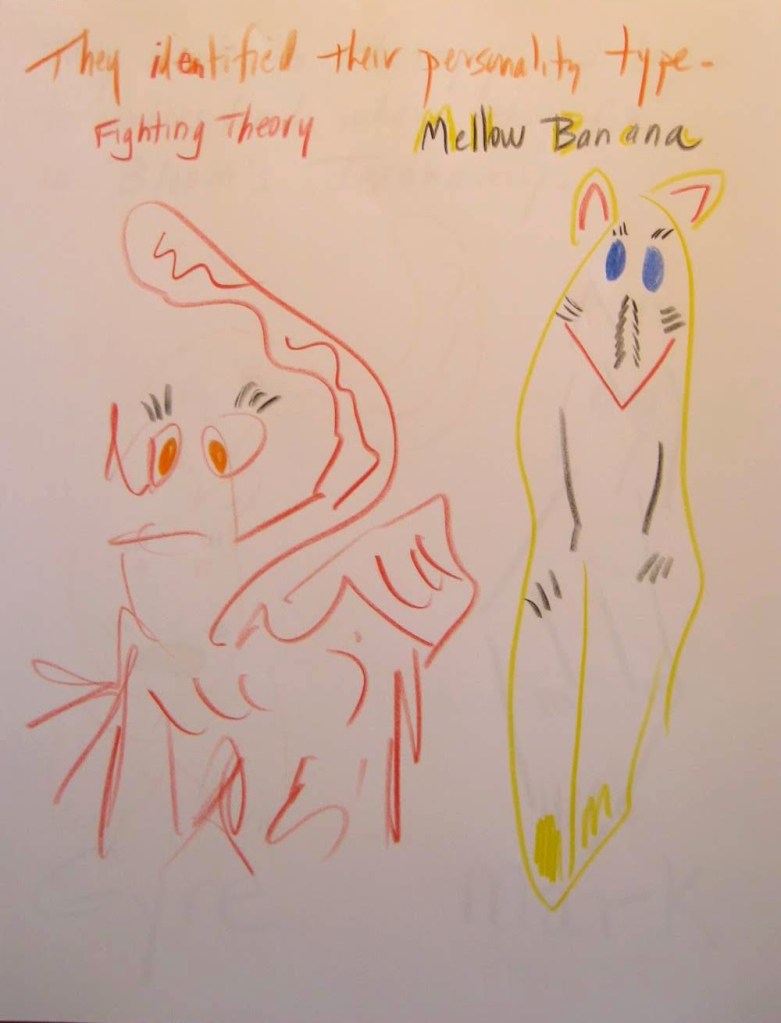
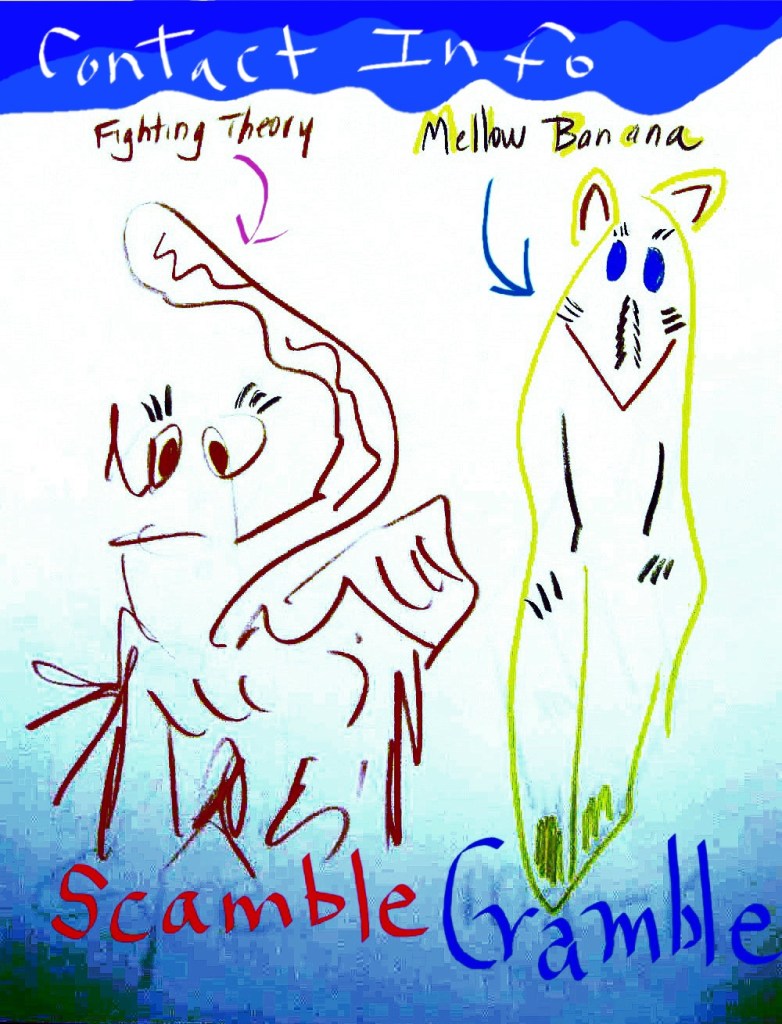
    Speaking of bananas, below is a page from a draft sequel to “Scamble & Cramble: Two Hep Cats and Other Tall Tales.”

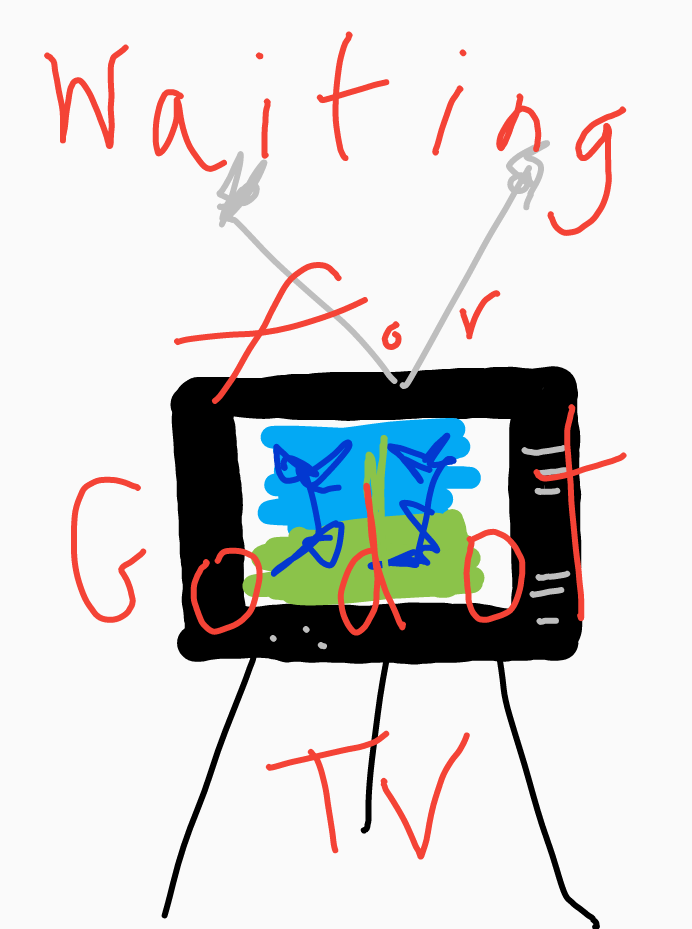
    And below, a newer draft, in which the cats get hep to social media:

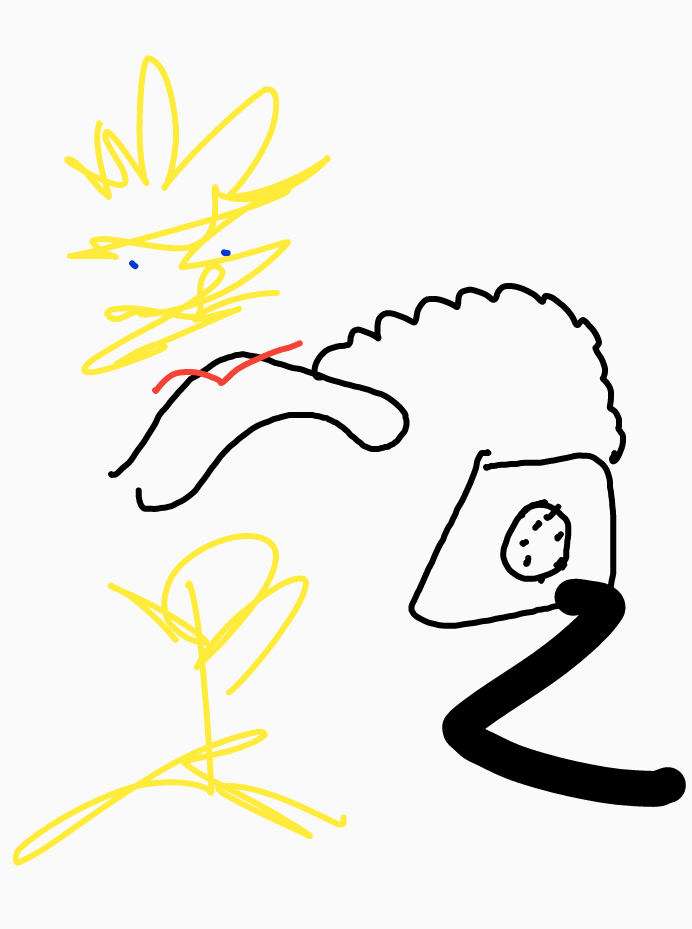
    And this morning, bananas and coffees with Susan:

  • Outtakes

    Once upon a space.

    These are souls that try men’s times.

    Give me liberty or a couple pints after close.

    To see or not to see, to knock to hear
    all the rot and rub, to touch and shock,
    stop here not there in such nonesuch.

    Let’s stay in tonight then, you and I,
    blue light spread against the walls,
    and stream Seinfeld reruns.

    Of Engelond, to wander wonder they wende,
    twas the 60’s and bell-bottoms they wore.

    To define behavior is to limit freedom.
    Give me a clone.

    Through the fence he watched the absurd land usurpers playing golf, and when one of them yelled Caddie, it set off a chain link reaction as he was bombarded with memory particles.

    You are all a fond generation.

    The overfed Buck came up to shave and ruck a go at Catsbody.

    The day was blue
    the guitar green
    he tossed all he’d seen
    of words for notes.

    And they all loved hoppily ever before.

     Sources:

    1. Folk Tales
    2. Thomas Paine: “The American Crisis”
    3. Patrick Henry, speech attribution
    4. Shakespeare, Hamlet
    5. T. S. Eliot, The Love Song of J. Alfred Prufrock
    6. Chaucer, The Canterbury Tales
    7. Oscar Wilde, The Picture of Dorian Gray
    8. William Faulkner, The Sound and the Fury
    9. Ernest Hemingway, A Moveable Feast
    10. James Joyce, Ulysses
    11. Wallace Stevens, The Man with the Blue Guitar
    12. Folk Tales
  • Goodbye to Whom

    To Whom it May Concern:

    Thru with Whom
    to the absurdity of it
    pretending to know Whom
    when know not any whoms

    And it isn’t clear is it what it
    is it to whom it may concern;
    is it this something to come
    below to whom it may concern?

    Ought to be done with it
    with it too to whom it may
    concern the dummy subject
    there is that which is it

    It begins the beguine
    a long rail whine
    perchance a spell
    to diminish concern

    Consider for example
    For Whom the Bell Tolls
    it tolls loudest when one
    least listens last to it

    Anyway done with it
    call it non-standard or
    informal ungrammatical
    or what whom will

    Not to be imperative
    or directive nor
    anything goes
    just this about whom

    Whom who knows not
    who comes from
    where and returns
    there far too soon.

    XVII. MEDITATION.

    PERCHANCE he for whom this bell tolls may be so ill, as that he knows not it tolls for him; and perchance I may think myself so much better than I am, as that they who are about me, and see my state, may have caused it to toll for me, and I know not that. The church is Catholic, universal, so are all her actions; all that she does belongs to all. When she baptizes a child, that action concerns me; for that child is thereby connected to that head which is my head too, and ingrafted into that body whereof I am a member. And when she buries a man, that action concerns me: all mankind is of one author, and is one volume; when one man dies, one chapter is not torn out of the book, but translated into a better language; and every chapter must be so translated; God employs several translators; some pieces are translated by age, some by sickness, some by war, some by justice; but God’s hand is in every translation, and his hand shall bind up all our scattered leaves again, for that library where every book shall lie open to one another. As therefore the bell that rings to a sermon, calls not upon the preacher only, but upon the congregation to come, so this bell calls us all; but how much more me, who am brought so near the door by this sickness. There was a contention as far as a suit (in which both piety and dignity, religion and estimation, were mingled ), which of the religious orders should ring to prayers first in the morning; and it was determined, that they should ring first that rose earliest. If we understand aright the dignity of this bell that tolls for our evening prayer, we would be glad to make it ours by rising early, in that application, that it might be ours as well as his, whose indeed it is. The bell doth toll for him that thinks it doth; and though it intermit again, yet from that minute that that occasion wrought upon him, he is united to God. Who casts not up his eye to the sun when it rises? but who takes off his eye from a comet when that breaks out? Who bends not his ear to any bell which upon any occasion rings? but who can remove it from that bell which is passing a piece of himself out of this world? No man is an island, entire of itself; every man is a piece of the continent, a part of the main. If a clod be washed away by the sea, Europe is the less, as well as if a promontory were, as well as if a manor of thy friend’s or of thine own were: any man’s death diminishes me, because I am involved in mankind, and therefore never send to know for whom the bell tolls; it tolls for thee. Neither can we call this a begging of misery, or a borrowing of misery, as though we were not miserable enough of ourselves, but must fetch in more from the next house, in taking upon us the misery of our neighbours. Truly it were an excusable covetousness if we did, for affliction is a treasure, and scarce any man hath enough of it. No man hath affliction enough that is not matured and ripened by it, and made fit for God by that affliction. If a man carry treasure in bullion, or in a wedge of gold, and have none coined into current money, his treasure will not defray him as he travels. Tribulation is treasure in the nature of it, but it is not current money in the use of it, except we get nearer and nearer our home, heaven, by it. Another man may be sick too, and sick to death, and this affliction may lie in his bowels, as gold in a mine, and be of no use to him; but this bell, that tells me of his affliction, digs out and applies that gold to me: if by this consideration of another’s danger I take mine own into contemplation, and so secure myself, by making my recourse to my God, who is our only security.

    from Devotions by John Donne (1624)

    For Whom the Bell Tolls