• Common Earworm Remedies and the Mutant Earworm

    Thanks a compost heap to the Atlantic’s Jeffrey Goldberg (April, 2011) for re-infecting readers with a term we already could not forget – earworms. Earworms are snippets of jingles or songs that unwanted, uninvited, and unannounced crash the polite party of our otherwise peaceful thoughts. We now have a mutant version that has crawled through our ear producing an image of the brain as a worm farm, a compost bin of electric eels. Our previous version of the insidious virus was bad enough, a sponge soaking in brine. Our brain plays host like a seashore shell to homeless snails that worm their way in, and no Q-Tip can reach them.

    It’s like the kid whose mom washes his mouth out with a washrag and a bar of soap, for she overheard him let slip with a playground ditty, a mouthworm, a dirty word, and she hopes to get to his brain by way of his mouth, but no amount of mouthwash can clean the miscreant tongue. Just so, Q-Tips cannot reach earworms.

    The mutant earworm is a strain some think threatened by the current reading crisis, exemplified by the pending disappearance of newspapers. But its mutant capabilities seem to make full eradication unlikely. The very word “earworm” is a classic example. We now think of the brain as a mass of worms electronically touching ends, randomly sparking the dull slow mass to inexplicable thoughts, thoughts like thinking of the brain as a mass of worms…. The mutant earworm invades without benefit of the jingle or song. The word is enough, and it seems to infect readers more than non-readers.

    Neurologists don’t know where earworms come from, and given the current health care crisis, cries for help are being ignored.

    There are of course two kinds of earworms: the bad kind, and the good kind. They often travel in pairs, but it sometimes takes two or three good earworms to outwit the bad earworms. To outwit a bad earworm with a good earworm, it helps to have a ready list of songs you can stick in your ear, common earworm remedies, household cures. A few bars of any of the following should reduce your bad earworm to compost dust after a few bars:

    1. “Hear Comes the Night” (Bert Berns, 1964). Van Morrison with Them, 1965.
    2. “I’m So Lonesome I Could Cry” (1949). Hank Williams.
    3. “Walkin’ After Midnight” (Block & Hecht, 1957). Patsy Cline.
    4. “Are You Lonesome Tonight” (Handman & Turk, 1926). Elvis & other versions.
    5. “Skylark” (Johnny Mercer & Hoagy Carmichael, 1941). Many versions, one of the best is K. D. Lang’s for the soundtrack to the film “Midnight in the Garden of Good and Evil.”
    6. “Oh Lonesome Me” (Don Gibson & Chet Atkins, 1958). Johnny Cash 1961, Neil Young 1970.
    7. “All of Me” (Marks & Simons, 1931). Many versions.
  • Spring Reading List: The Double Dream of Baseball

    We awoke this morning in Portland to a snow folks looked forward to like opening day. Alas, Portland will have no opening day this year, for Portland baseball was at the end of last season kicked out by soccer.

    In the notes to John Ashbery’s “The Double Dream of Spring” (1970), we find he’s taken the title from a painting by Giorgio de Chirico, but neither the painting nor the book appear to have anything directly to do with baseball, though Ashbery does mention a “ball of pine needles” in his poem “Summer.”

    This got me thinking of a Spring Training reading list, pastime reading while the players are warming up in spring training and we await opening day. The whiffle ball bats and balls are still in the bucket in the back yard. Never did bring them in for the season. The cold tempers the bats.

    Anyway, to the Spring Training reading list:

    At first base, Ernest Hemingway’s The Old Man and the Sea (1952). “I would like to take the great DiMaggio fishing…Maybe he was as poor as we are and would understand.”

    At second, Ring Lardner: Haircut and Other Stories. My Scribner paperback copy shows a UCLA Student Store date of Feb 1, 1964, ½ price off $1.25. It’s falling apart. I hadn’t opened it in awhile, and this morning found a Mariners ticket stub at page 141: Seattle Mariners vs Cleveland Indians, Thursday, August 1, 2002, 7:05 PM. Aisle 132, Row 26, Seat 10. “If all the baseball writers was where they belonged they’d have to build an annex to Matteawan” (“Horseshoes”).

    At third, Tim O’Brien’s The Things They Carried (1990). You can’t wait to get home, but then “The war was over and there was no place in particular to go.”

    At shortstop, Bernard Malumud’s The Natural (1952), mainly because of the error of Hollywood’s ending, and we want to get the story right.

    We’ll put the poets in the outfield: in center, The Complete Poems of Marianne Moore (1967), “Writing is exciting and baseball is like writing”; in left, 100 selected poems by e. e. cummings (1926), “in Just- / spring / when the world is mud- / luscious…”; and in right, The Happy Birthday of Death (1960), by Gregory Corso: “Herald the crack of bats! Hooray the sharp liner to left! Yea the double, the triple! Hosannah the home run!” (“Dream of a Baseball Star”).

    Behind the plate, Glory Days with the Dodgers, and Other Days with Others by Johnny Roseboro, with Bill Libby, (1978). Out of print and rare – I read a library copy. This book is a good story of what can happen and often does when winter follows the glory days of summer.

    And on the mound, Ball Four: My Life and Hard Times Throwing the Knuckleball in the Big Leagues (1970), by Jim Bouton. “To a pitcher a base hit is the perfect example of negative feedback” (Steve ‘Orbit’ Hovley to Bouton).

    It’s a good game, baseball, and if you can find a ballpark that’s fairly quiet between innings, and it’s a warm evening – and if you can or you cannot, you’ve a book to wile away the time, like some outfielder without much to do, because Koufax is on the mound, well, there’s no better way to spend a few hours when you’ve “no place in particular to go.”

  • Fear and Loathing in Lexical Vegas

    Over at Language Log we find a discussion on “words we hate.” I can’t tell if discuss is one or not. But some words strike some as literally offensive, or cause physical stress, a kind of lexical anxiety. This is not about disdain for the simple malapropism, or of academic scorn for the wrong word in the wrong place, but of word phobia, a word like some dreaded dog we walk around the block to avoid.

    What is the source of this strange malady, a fear of certain words? Perhaps some words do have facial expressions. Lenny Bruce tried to solve part of the problem, the dirty words versus dirty minds dichotomy. In the beginning was the word, and “the fall is into language” (O. Brown, Love’s Body, 257). Lenny may have gone down with his solution in part because we don’t want a solution; we need words we abhor.

    So I googled (a word I don’t like, but don’t hate, but like certain tools we’d rather not have to pick up, the plunger, for example, the plumber’s helper, knowing we’re headed for another good word, “by means of suction,” add rubber cup and we’re having some fun here, sometimes we just have to grab it and get on with things – though to google hasn’t always been this way: from the OED: 1907 Badminton Mag. Sept. 289 The googlies that do not google) “words we love,” and guess what? The words we love are the same words we hate.

    Perhaps James Joyce best explains words that cause fright: “Every night as I gazed up at the window I said softly to myself the word paralysis. It had always sounded strangely in my ears, like the word gnomon in the Euclid and the word simony in the Catechism. But now it sounded to me like the name of some maleficent and sinful being. It filled me with fear, and yet I longed to be nearer to it and to look upon its deadly work” (“The Sisters,” in Dubliners, 1916).

  • Wall Street Journal Springs Honorifics from Sports – Cut in Pay?

    Messres and Mesdames: Fans at Chicago Day at White Sox Park between ca. 1908 and ca. 1925.

    Mr. Jason Gay, sportswriter for The Wall Street Journal, has just announced that The Journal this week will begin dropping honorifics in its sports section pages.

    This means that instead of “Mr. Piniella, after kicking his hat and dirt in the direction of the first base umpire, then pulled the first base bag from its mooring and tossed it down the right field line,” we’ll get “Piniella,” without the “Mr.,” and then the rest of it.

    The timing of the WSJ decision seems right as we enter baseball spring training season, and we wonder if the WSJ editorial style change, yet another concussion to the prestige of sports, will change baseball’s position as the country’s number one sport honorific – its status as the national pastime.

    We briefly entertained the idea of honorifics here at the Toads blog (Mr. Dylan; Mr. Shakespeare), to pick up the slack, but Mister isn’t much of an honorific after all if you consider that it originally was used as “A title of courtesy prefixed to the surname or first name of a man without a higher, honorific, or professional title” (OED). In other words, to designate the bleacher bums. “Hey, Mister, mind gettin’ your dog out of my beer?”

    The word Mister used to refer to one’s occupation: Shortstop Mister. But that shouldn’t mean that we need to call Derek Mr. Jeter. In any case, only in some special cases is the use of Mr., or Mister, or Sir, an honorific, for Mr. adds distance and denies familiarity. More from the OED:

    1722 H. Carey Hanging & Marriage 8 Squeak: Pray ye, Mr. Stubble, let me alone. Richard: Ay its Mister, is it?

    1888 J. W. Burgon Lives Twelve Good Men I. 440 ‘Well, Mr. Burgon?’‥‘Mister at the end of 20 years!‥I wish you wouldn’t call me Mister’.

    1993 S. McAughtry Touch & Go xxii. 174 Well, Mister Bighead, we’ve both been there, Bucksie and me both, so up yours.

    We wondered too if WSJ writers get paid by the word, and, if so, if dropping honorifics means a cut in pay, yet another blow to this country’s number two waning national pastime, newspapers.

    Photo “Messres and Mesdames,” at Library of Congress.

  • “Examined Life”: Socrates on Ice; or, Engaged Life: Riding the Clutch with Today’s Philosophers

    In Astra Taylor’s film “Examined Life” (2008, DVD 2011), the camera captures contemporary thinkers walking through everyday environments that reflect and frame their dialogue. But there’s not much dialogue, more monologue, which is what I assume is Martha Nussbaum’s complaint in her upset and defecting review in The Point Magazine, “Inheriting Socrates” (Winter, 2010).

    I can only assume, since part of the point of The Point Magazine seems to be open conflict with open access. In any case, Nussbaum’s point in what we do have is clear: “…I found Examined Life upsetting…a betrayal of the tradition of philosophizing that began, in Europe, with the life of Socrates….” The film is upsetting to Nussbaum because the cast features “figures in cultural studies or religious studies or some other related discipline (I’d call Cornel West a political theorist), but what they do is not exactly philosophy as I understand it.”

    Philosophy as Nussbaum understands it is no doubt Socratic dialogue that admits “no special claim, no authority.” Socrates “doesn’t like authority,” and certainly “doesn’t like long speeches.” But the segments in “Examined Life” run only ten minutes; the real problem for Nussbaum, and, perhaps, for the film, is the lack of dialogue and what Nussbaum considers the lack of “rigorous argument, or with the respectful treatment of opposing positions.”

    We may find, however, the opposing positions in the filmed environments, for philosophers live in the world, the same world the rest of us live in, and why we should saddle the film with any kind of philosophical expectation is unclear. Why would we criticize a film for not being what it was not intended to be? Wouldn’t we all agree that “Jaws” is a terrible romantic comedy? “One might quarrel, first, with the choice of participants,” Nussbaum argues. “Peter Singer, Anthony Appiah and I are all solidly within philosophy, as that discipline is usually understood.” Understood by whom?

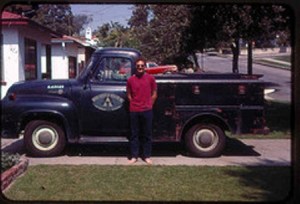
    One day, my Dad came home with a used 1949 Ford pickup truck, a six cylinder, three speed on the column, no air, no heat, no seatbelts, no radio, no-nonsense truck. He handed me the keys, and I backed the truck out of the driveway, my first stick shift experience. Hardly anyone drives sticks anymore – most of our transmissions are automatics; so too are our philosophies, automatic shift transmissions that allow for smooth acceleration through the busy vicissitudes of our popular culture. Automatic too, it seems, is Nussbaum’s insistence on the so-called rigor of an automatic philosophical tradition transmission. In other words, I think Socrates would have enjoyed Astra Taylor’s film “Examined Life.”

    Nussbaum also gets ten minutes in the film, so it’s a bit surprising she winds up finding the film “upsetting.” Indeed, her segment is one of the most speech-like presentations, as she appears raw-nosed and cold walking along Chicago’s Lake Shore Drive. Still, her point in her ten minute segment is clear: she wants all of us to be able to live rich and capable lives. But that seems consistent with what the other philosophers in the film want for us also.

    According to Cornel West, the lover of wisdom must have courage: “Courage is the enabling virtue to think, love, hope.” West, if not a philosopher in Nussbaum’s understanding of the tradition, is certainly a character, and characters make better film subjects than philosophers. West is the star of the film. His ten minutes are spread across three segments, and his reappearances create a happy motif, for his love of life is apparent and contagious – and his syntax moves in curious, unexpected directions.

    Meanwhile, Slavoj Žižek strolls through a London dump, where he advises don’t idealize, accept, learn to love the world in all its imperfections. “We should become more artificial,” Zizek says, and give up the romantic notion of becoming one with nature. He’s a realist, as is Cornel West, who seems to agree with Zizek when he says give up on the idea of having the whole, a romantic notion, he says, that inevitably ends in disappointment. As it turns out, Nussbaum comes across as the romanticist philosopher. She can’t love Zizek’s garbage. And it’s ironic, in the end, that the most romantic philosopher seems least comfortable out in the cold and trash of everyday existence. Still, she has a point: we shouldn’t go to philosophers for how to live our lives, and most of the philosophers in the film seem bent on just that, telling us what we should do, what we need to do, how we should live – well, that’s a bit of an exaggeration, but it allows for a closer examination of Nussbaum’s point, which is that the true philosopher (as I understand how she understands it, and I could certainly be wrong here) doesn’t tell others how to live, but tries to help them become capable of making and living their own “human dignity.” But exactly to that end, “Examined Life,” if not a great film, if an imperfect film, is a necessary film.

    And what about riding the clutch? Saves on the brakes, my Dad told me. Your brakes will always last longer with a stick shift, he said.

    Note: Scott McLemee reviewed the film for Inside Higher Ed before Nussbaum’s defection was published, and he used the word “transformative” to describe the segment with Astra’s sister, Sunuara. I agree; Sunara’s segment transcends all the other arguments.

    Update, Nov. 12, 2011: The Point Magazine, since I wrote the above post, has improved its website. The full text of an article from Issue 2 (the same issue as the Nussbaum article) discussing the film “Examined Life,” by Jonny Thakkar, “Examined Life: What is Popular Philosophy” views the film with Nussbaum’s concerns but leaves the theatre with different conclusions. Thakkar’s discussion of philosophy in the streets versus in the academy is definitely on point: for what is philosophy, who does philosophy best, where should philosophy be done, and what happens when philosophy gets into the wrong hands? Thakkar’s quote of Bernard Williams is more than mere touching: “…his [Williams’s] last essays reveal a man disillusioned with his academic career, which had ‘consisted largely of reminding moral philosophers of truths about human life which are very well known to virtually all adult human beings except moral philosophers.’ It was, he owned, ‘less than clear that this was the most useful way in which to spend one’s life, as a kind of flying mission to a small group isolated from humanity in the intellectual Himalaya.’”

  • “What’s Happening?”; or, the Faux Social Finish of Verb People

    To twitter is indeed to sound off like a bird. “No full sentence really completes a thought,” said Hugh Kenner, in The Pound Era (1971), throwing a rock into several generations of roosting English grammar teachers: “And though we may string never so many clauses into a single compound sentence, motion leaks everywhere, like electricity from an exposed wire. All processes in nature are inter-related” (157). This from the “Knot and Vortex” chapter, where Kenner introduces the “self-interfering pattern,” using Buckminster Fuller’s sliding knot illustration: “The knot is a patterned integrity. The rope renders it visible” (145).

    Social networking as experienced via Twitter or Facebook allows for no stillness. One is always in flight. One is not a noun; as Buckminster Fuller said, “I seem to be a verb.” Nouns represent dead flight, the verb at rest in its grammatical nest: “The eye sees noun and verb as one, things in motion, motion in things,” explains Kenner (157).

    Verbs have no permanency. What’s happening must constantly change. Twitter is a rush of tweets each jolting the flock to flight, while posts on Facebook fall down the page like crumbs from a plate at a reception. Nothing is saved because in the social network world there are no nouns. The text is a mirage, the words constantly falling, falling down, down feathers falling through the electric light.

    Ezra Pound’s short poem “In a Station of the Metro” is a perfect tweet: “The apparition of these faces in the crowd; / Petals on a wet, black bough.” The short poem with title fills the tweet space with 40 characters to spare, fixes the stare of twitterers but momentarily, as the faces can only pause in apparition not even of ink, but of light, and the social connection is a faux finish. People are verbs, constantly changing tense.

  • How Literary Critics Think

    Harold Bloom’s How to Read and Why (2000), James Wood’s How Fiction Works (2008), Nabokov’s Lectures on Literature (1980), which he proposed to subtitle “How to be a Good Reader,” are all books about how critics think. Oxford University Press has announced John Sutherland’s “How Literature Works: 50 Key Concepts,” due out in March, 2011. We’ve put our order in, never tiring of the How books; in fact, we’re thinking of writing our own: How Literary Critics Think. Of course, slim chance, for as Laura Miller discusses in a Salon interview with Louis Bayard (“Who Killed the Literary Critic,” May 22, 2008), “at a certain point there’s nothing left to dismantle.” Bayard observes “So the only critics left to evaluate most contemporary fiction are journalists, ranging in seriousness from someone like Wood to your average newspaper freelancer who mostly delivers plot summary. There are no critical movements evident today.” Blogging certainly doesn’t count; in any case, Laura says, “I’m not really a reader of blogs.” Sure, and professional literary critics probably don’t watch television, either. Yet Barnard notes that he’s “learned things from Amazon reviews, from letters pages, from literary blogs, from all sorts of non-traditional outlets. The quality of writing is certainly variable, but then so is the quality of traditional journalism.”

    Ah, but what about the How school of literary criticism? The how of something is the scientific part. Nabokov puts it this way: “There are three points of view from which a writer can be considered: he may be considered as a storyteller, as a teacher, and as an enchanter…To the storyteller we turn for entertainment…to the teacher…for moral education but also for direct knowledge, for simple facts….” And to the enchanter we go “…to study the style, the imagery, the pattern of his novels or poems.” This last part Nabokov calls “the intuition of science.” Can literature be taught as a science? Certainly it can, and it may be the only way to teach it. Northrop Frye, in his instructive and influential essay “The Archetypes of Literature,” said, “Art, like nature, is the subject of a systematic study, and has to be distinguished from the study itself, which is criticism. It is therefore impossible to ‘learn literature’: one learns about it in a certain way, but what one learns, transitively, is the criticism of literature. Similarly, the difficulty often felt in ‘teaching literature’ arises from the fact that it cannot be done: the criticism is all that can be directly taught.”

    Yes, but that bit about nature: Nabokov says, “Every great writer is a great deceiver, but so is that arch-cheat Nature. Nature always deceives…The writer of fiction only follows Nature’s lead.” So the professional critic clues us in on which writers are the most deceitful?

    The reader speaks, ignoring the sign “Silence in the Library,” and the amateur spirit in literary criticism is born. Why kill this amateur spirit? Because ( more agreement between Miller and Bayard) “talent is inequitably distributed in all art forms… great critics are even rarer than great novelists or poets, and I wonder if that’s because criticism itself is held in such low esteem…McDonald mentions that one of academia’s last havens for evaluative criticism has been the creative-writing class, and he suggests that universities should offer more in the way of ‘creative criticism’ classes, teaching the craft of interpreting other people’s works. All the same, I’m skeptical this would reverse the current state of affairs. People will only value literary criticism to the extent they value literature.”

    Any true experience of reading literature is an experience that calls for a reflective response, and this response can be made without a conscious understanding of how figurative language and connotative meanings (and the often resulting ambiguity) inform how literature works. We might even argue that the less conscious one is of how these things work, the more primal the reading experience. Yet one can see the merging of the effects of literature on cultural, societal, and individual development (of course these effects might also be considered only a reflection of changes already occurring in culture, society, and the individual, changes that become, in turn, the subject of literature – note the latest effort to change Twain’s Huck Finn). In any case, literature as cultural value is key to the interest of adult readers, which is why if we want to read Langston Hughes in a book (since we can’t very well still read him in a newspaper), we will end up wanting to know something about the Harlem Renaissance.

    Reading literature can be a perplexing experience. We want to understand the meaning of a story, poem, or play, and when we don’t “get it,” we feel disappointed. But the idea that a work of literature “means” something is part of the problem. Flannery O’Connor once put this problem this way: “…something has gone wrong in the process when, for so many students [readers], the story becomes simply a problem to be solved….” Rene Char put the problem this way: “No bird has the heart to sing in a thicket of questions.” Yet, we can learn to ask the right questions of literature, questions that don’t scare the bird off, and we can through the discussion of these questions discover how literature works. That’s what the general interest reader wants after the reflective response, the discovery of how literature works, for that discovery enables more enjoyable reading and helps us better understand the influence of literature on culture, society, and the individual.

  • “Politics and the English Language”

    In “Politics and the English Language” (1946), George Orwell advises “never use a metaphor, simile or other figure of speech which you are used to seeing in print.” Perhaps Orwell didn’t go far enough; a total abstinence from metaphor might be more effective. Orwell recommended checking against the rule when one might be “in doubt” regarding the effect of a word or a phrase. Orwell offered six “rules” writers might consult when “instinct fails.” The rule regarding metaphor is the first; the second suggests “never use a long word where a short one will do.” But rule number three cuts even deeper: “If it is possible to cut a word out, always cut it out.” Rule four is tricky, requiring grammar notes: “Never use the passive where you can use the active.” Don’t have grammar notes? Don’t worry; Orwell himself breaks the passive rule occasionally. Rule number five reminds us to stick to the English we know: “Never use a foreign phrase, a scientific word or a jargon word if you can think of an everyday English equivalent.” Finally, the clean up rule makes all the others serve a common goal: “Break any of these rules sooner than say anything outright barbarous.”

    Orwell refused to give up on either politics or the English language. He remained positive about both, and believed that improvements in the use of language would lead to improvements in politics: “…the English language. It becomes ugly and inaccurate because our thoughts are foolish, but the slovenliness of our language makes it easier for us to have foolish thoughts. The point is that the process is reversible. Modern English, especially written English, is full of bad habits which spread by imitation and which can be avoided if one is willing to take the necessary trouble. If one gets rid of these habits one can think more clearly, and to think clearly is a necessary first step toward political regeneration: so that the fight against bad English is not frivolous and is not the exclusive concern of professional writers.”

  • “this yr”

    “this yr” is a poem published in chapbook format in December, 1976, by Stephen Jama. 100 copies were printed. The chapbook consists of three sheets, 6&3/4” by 6”, folded and hand-sewn with red thread. The cover is slightly thicker than the inside pages, the inside paper a bit heavier than standard typing paper.

    Jama was a popular instructor at El Camino College. The “this yr” shown in this post was a 1976 Christmas gift to me from Michael Mahon, also a friend of Jama’s, and a professor at Dominguez Hills. Another example of a Jama poem, this one in a kind of broadside, or broadsheet, format, “each sounding’s its answer,” is on-line as part of Jama’s Kent State library donations.

    Chapbooks and broadsides were popular self-publishing formats in the 1960s and 70s, and were also popular formats used by small press, or alternative press, publishing, a popularity in part perhaps inspired by and certainly fueled by the folk revival, which spread songs around the country by word of mouth, in small coffee houses in cities and around campuses, and in small concert venues, and which, along with the Beat writers and musicians, helped popularize and rescue poetry from the scholiastics.

    James Joyce’s Pomes Penyeach is another kind of chapbook, published originally by Shakespeare & Co. (Paris) in 1927. It was published again in 1966 by Faber and Faber. Shown in this post is a Faber reprint published in 1971 that I purchased used for $1.00 some time ago. The penny each is at least literal, for Joyce, who understood the difficulties of publishing, self-publishing, and quick-scrapping, calls to mind street hawkers selling fruit from carts.

    While broadsheets are usually only one page, chapbooks contain more pages, but by definition not very many pages. The Faber book is only 47 pages, and includes a “Publishers’ Note”: “In order to make this volume more substantial and to show a wider range of James Joyce’s verse, there have been added to Pomes Penyeach the following…,” and three additional poems are added, including “The Holy Office” and “Gas from a Burner,” which each run a few pages, including footnotes. The original Pomes Penyeach contained only 13 poems.

  • Locke, Freud, Tinker, Tailor

    Norman O. Brown opens his Love’s Body (1966) talking of liberty: “Liberty means equality among the brothers (sons)….” One problem immediately apparent to Brown is that if the sons rebel against the father, overthrowing the absolute monarch, because there are many sons, but there can be only one monarch, and who would assume the throne must either cultivate the father’s wishes or dump the brothers, both options against liberty, then there is no father, and “without a father there can be no sons or brothers.” Locke, for Brown, solves the problem in Two Treatises of Civil Government by disallowing earthly fathers: “Thus the defense of sonship turns into the discovery of another father, the ‘real’ father; and the real question in politics is Jesus’ question, Who is my father?”

    For no matter what the sons do, everything still belongs to the father: “As fraternal organization covertly assumes a father, ego-organization covertly assumes a super-ego.” Enter the double-agent, whose genesis is the inability to solve the mystery of the father, as John Le Carre explains in his 1991 introduction to his 1974 novel Tinker, Tailor, Soldier, Spy, which might have been sub-titled The Brothers: “But what very few people managed to understand,” Le Carre says, “was the pushme-pullyou nature of the double-agent’s trade.” The plot-solving question involves what is good for the double-agent, who must give something of value to both fathers.

    What’s the motive for the mole’s behavior? Social class structure and father conflicts, Le Carre gives us. The double-agent Haydon’s motive is alienation attributed to class conflict and a difficult father. As an explanation, this seems inadequate. But there it is, the schoolboy vocabulary and antics of boys’ clubs being worked out in the adult world, where already, in 1991, Le Carre is saying “It is odd, in these altered days, to discover that Tinker Tailor’s already an historical novel….” Yes, but, what has been solved, after the mystery is solved, if the solution is recursive, a recirculation?

    “We were new boys together,” Bill Roach (nickname Jumbo) overhears Jim Prideaux (nickname Rhino) explaining the nickname to the on-site parents. But the gun was not a dream of Jumbo’s, and Tinker and the others are nicknames for adults working out their childhood issues in an adult plot of boys’ club conflicts. And the novel ends on Jumbo getting a new father, an old spy.

  • The Anxiety of Imaginary Literature

    Don’t worry, you’re only imagining things. The mature advice deflates what has come to be called imaginative, or worse, imaginary, literature, and the professorial ushers, their narrow torches leading tourists down dark aisles to witness the Literary Canon, every day are followed by fewer readers. Deflationary lit.

    The word “imaginary,” used in discussions of “imaginative literature,” sets up a road block and confusion, defining literature in a narrow, denotative way, and it sounds like we’re about to embark for the circus – it sounds, in another word, childish. That’s the road block. For adult readers don’t like being considered childish. But the confusion comes with not knowing what to do with a Wall Street report that turns out to be purely “imaginary,” or a political speech that is rife with metaphor. And where do we place propaganda – with fiction or non-fiction? Or consider Wilfred Owen’s “Dulce et Decorum Est”: the strength of this war protest poem is that it is not imaginary at all. Or consider Thoreau’s Walden: does Thoreau not “imagine” a new way of living? The woods, populated with metaphors, are imaginary, yet we classify the book as non-fiction, an essay. And E. O. Wilson is not finished imagining his science, as his imaginary short story, Trailhead” (New Yorker, January 25, 2010) illustrates.

    The term “imaginary writing,” having replaced “creative writing” in classes that teach the writing of literature, leads us to an inadequate definition of literature. Texts mention “oral literature,” pre-literacy tales, but there’s little evidence that the users of this form of literature at all considered it “imaginary.” And to consider it imaginary even now deprives it of its magic, for the stories are not “true”; they are “only” fiction, the writers only imagining things. They don’t belong on Main Street – and we miss the fact that Main Street is also part of the great “fiction.”

    The Bible is often read as literature. But the Bible is not imaginary, but the language expresses truths through the use of metaphor, symbol, image, and other literary tools. For the etymology of literature includes “letter,” and specifically a holy letter : “A writing, a written book, a story. holy lettrure = Holy Scripture” (OED).

    Imaginary literature used to refer to a specific sub-genre of literature, describing science fiction or Poe’s extraordinary tales. Most modern literature is profane, a secularization of what used to be sacred (an experience consecrated through metaphor) and treated as such, something profound (“downward, inward extent”). To reach the truth of the imagination we must learn to read again, as children who live in imaginary worlds, as the neuroscience journalist Jonah Lehrer explains in a post published last spring titled “Childish Creativity” – we must learn to read fiction as if we are not reading fiction. All stories are true – you are not only imagining things, after all. Now how do you feel, the critic wants to know.

    The adult world is carefully protected by terms like “imaginary literature,” and perhaps in this sense literature is a disease, like hypochondria, and adults have enough anxiety trying to hold on to their reality as it is.