Tag: Yeats

  • On the End of the Road with Rimbaud

    It wasn’t enough for Rimbaud to disassociate himself from his society, which he found decadent, hypocritical, false – in a word, selfish. He would also derange his language and senses, and when he was finished, or abandoned, that writing life project, but which would survive to influence so many still working on literature, he moved on and rejected his and all other writing:

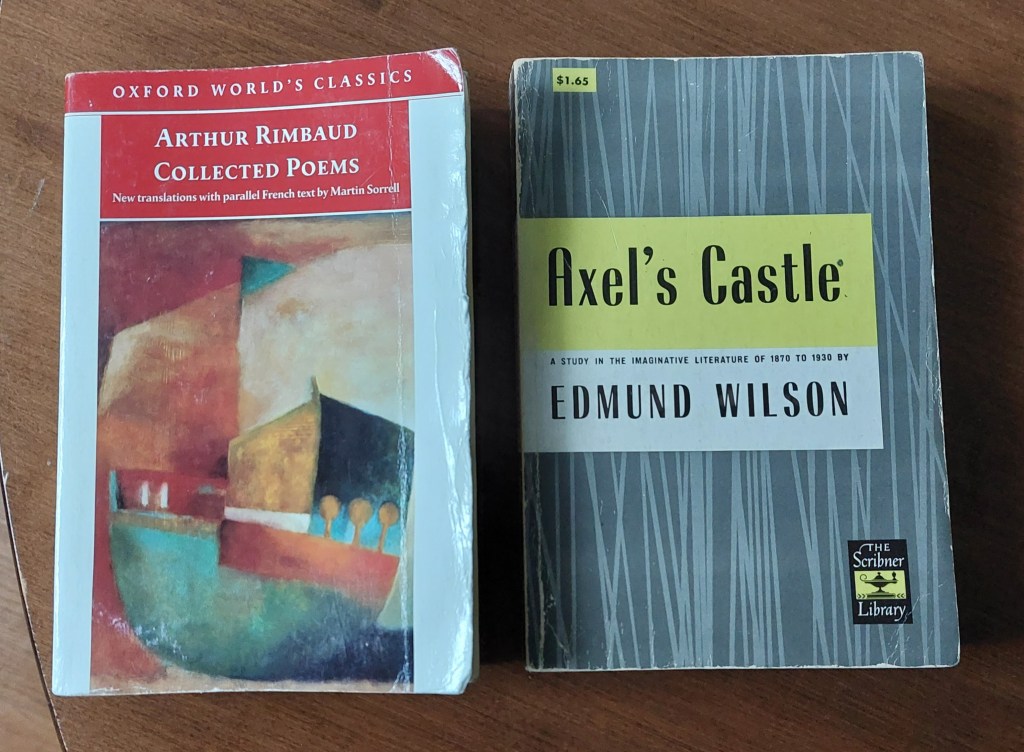
    “When a friend asks him [Rimbaud] whether he is writing nowadays, he replies with annoyance and scorn: ‘I don’t do anything with that anymore’; and when, on the eve of his departure the next spring, he hears one of his friends congratulate another on having just bought some Lemerre editions – Lemerre had been the publisher of the Parnassians – he bursts out: ‘That’s a lot of money wasted. It’s absolutely idiotic to buy books – and especially books like that. You’ve got a ball between your shoulders that ought to take the place of books. When you put books on your shelves, the only thing they do is cover up the leprosies of the old walls’” (Wilson, 279).

    For Edmund Wilson, the question of lighting out for the territory ahead of the rest meant reading and sitting down to his journal. (What might Wilson have done with a blog?) He quotes Yeats, from his “Vision”:

    “It is possible that the ever increasing separation from the community as a whole of the cultivated classes, their increasing certainty, and that falling in two of the human mind which I have seen in certain works of art is preparation….It will be concrete in expression, establish itself by immediate experience, seek no general agreement, make little of God or any exterior unity, and it will call that good which a man can contemplate himself as doing always and no other doing at all….Men will no longer separate the idea of God from that of human genius, human productivity in all its forms” (291-292).

    The problem then, for Wilson, is indeed what to do:

    “Nor can we keep ourselves up very long at home by any of the current substitutes for Rimbaud’s solution – by occupying ourselves exclusively with prize-fighters or with thugs or by simply remaining drunk or making love all the time….The question begins to press us again as to whether it is possible to make a practical success of human society, and whether, if we continue to fail, a few masterpieces, however profound or noble, will be able to make life worth living even for the few people in a position to enjoy them” (293).

    Quotes from “Axel’s Castle: A Study in the Imaginative Literature of 1870 to 1930,” by Edmund Wilson. Scribner Library, 1931, 1959.
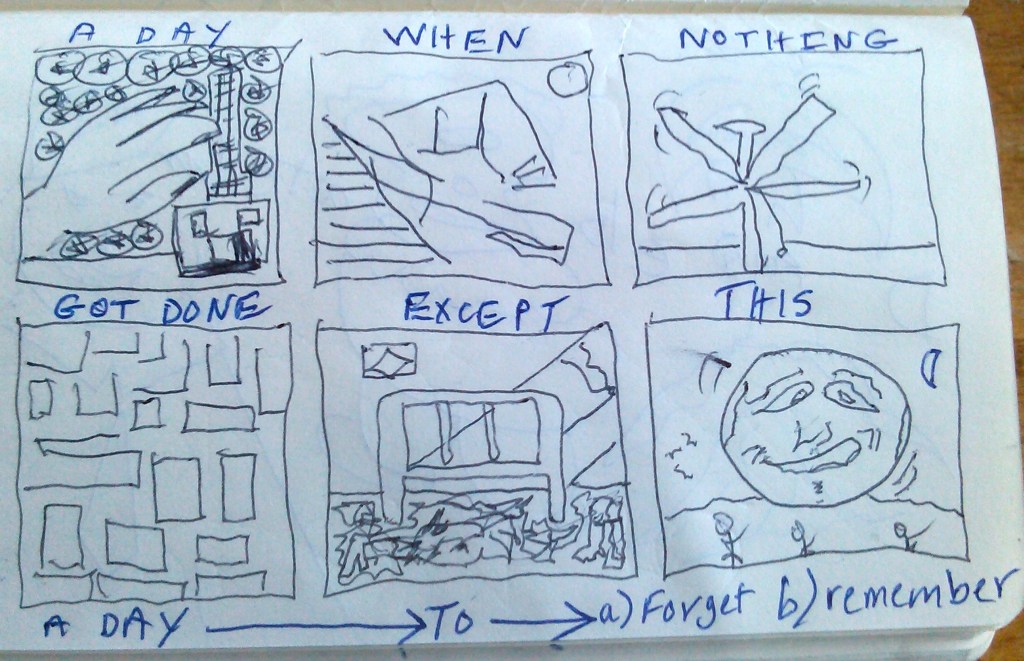
  • Where the In is Free

    I too will get up and go
    now first rest nine note
    scale will build acoustic
    not too loud evening is

    while I still have ear to hear
    nor do I want to live alone
    in some open space empty
    from you my love who loves

    my cricket tongue my choice
    voice and together we sing
    our own songs fashioned
    from what we found here

  • Once More to the Moon

    The stars will blow out they say
    tho none have seen one up close
    or this far away for that matter.

    And for now the center still holds
    the “deep heart’s core” burns on
    of course tempered with age.

    The tool worn and bent its handle
    once forged so hot to the touch
    now almost cold the closer you come.

    The further astray and adrift
    solo in space in your egg shaped
    spiral lost in your milky way.

    Why nine chains to the moon?
    Because things arranged in threes
    allow a mysterious symmetry.

  • Behind the Facades

    Behind the Facades

    Perhaps symbols have some meaning after all; otherwise, why bother trying to erase them? But if the symbol is a mask for a truth, why can’t the truth speak for itself? We all have a particular picture of ourselves, seldom the same picture others have of us. This seems true even with intimate relationships, long married couples, for example. We might come, after much experimenting, to value the simple and functional over the ornate and symbolic. But every creation of the human seems to suggest some facade, some outer covering or wrap behind which one might find origins, occasions, old arguments, claims, proposals – opposing viewpoints.

    In Richard Ellmann’s “Yeats: The Man and the Masks” (1948), we may conclude the mask for Yeats was not necessarily a cover for something else (personality, argument, belief) but was the essence of being human. One is born with a mask:

    “To start with its simplest meaning, the mask is the social self. Browning had spoken of two ‘soul-sides, one to face the world with,’ and one to show the beloved. But Yeats’s doctrine assumes that we face with a mask both the world and the beloved. A closely related meaning is that the mask includes all the differences between one’s own and other people’s conception of one’s personality. To be conscious of the discrepancy which makes a mask of this sort is to look at oneself as if one were somebody else. In addition, the mask is defensive armor: we wear it, like the light lover, to keep from being hurt. So protected, we are only slightly involved no matter what happens. This theory seems to assume that we can be detached from experience like actors from a play. Finally, the mask is a weapon of attack; we put it on to keep up a noble conception of ourselves; it is a heroic ideal which we try to live up to. As a character in The Player Queen affirms, ‘To be great we must seem so. Seeming that goes on for a lifetime is no different from reality.’ Yeats used to complain that English poets had no ‘presence,’ because they insisted upon looking too much like everyone else; a poet should be instantly recognizable by his demeanor. The poet looks the poet, the hero looks the hero; both may be deceiving others and they may even be practicing a form of deception upon themselves” (172-3).

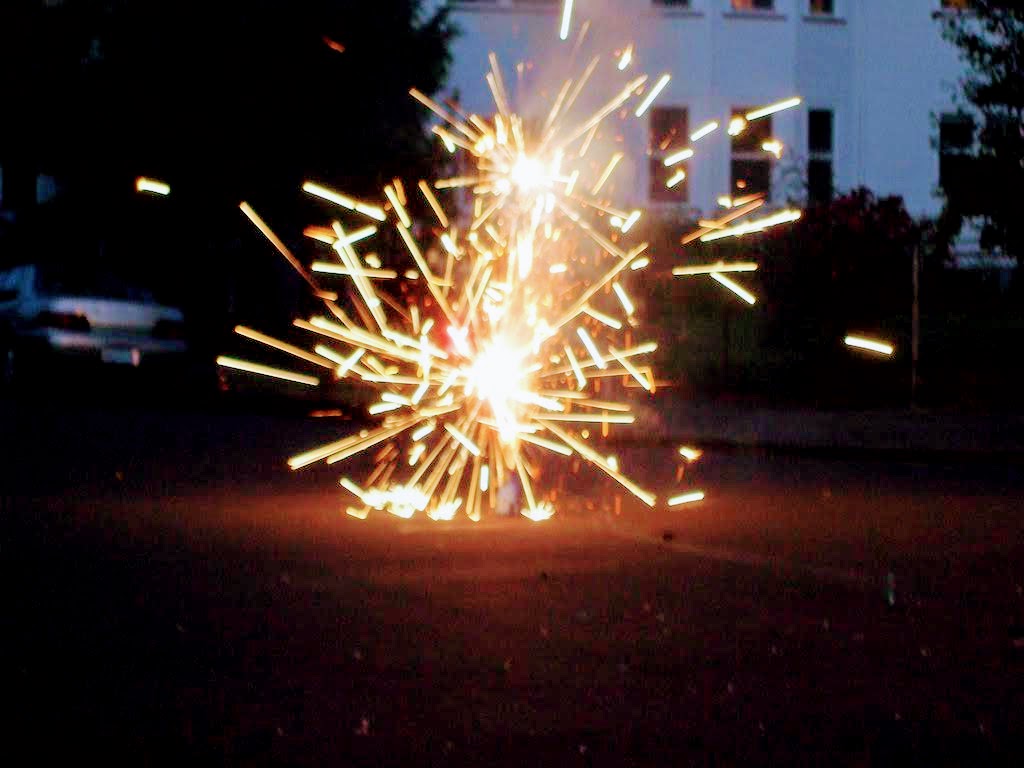
    Nations and communities, too, wear masks. We see them at holidays, parades, celebrations. Sometimes ideas are codified in by-laws, rules, expectations official and informal. I’ve never been much of a fan of fireworks, or for the 4th of July. The flag covers the coffin of the soldier coming home. Independence Day, though of course not independence for everyone. I used to look forward to the 4th because it was an extra day off work, and the block picnic, if there was some guitar busking going on, beer and potato salad – beans, burgers, and dogs grilled to a crisp, sure, why not? But the fireworks, dangerously loud, the dogs and cats howling and scurrying for cover, the smoke and the intersection filling up with the burnt cardboard shells. And all of it, as celebration, such a facade, a mask. Well, but comes the opposing viewpoint, maybe not. Maybe what we see on the 4th is not a facade, but the truth of things. Irreverent and irrelevant, bombastic. Or, as the poet Robert Creeley put it: “Ritual removed from its place of origin is devoid of meaning.”


  • Poem for Ones Who Know One When They See One

    What W. H. Auden said
    “In Memory of W. B. Yeats,”
    not modified in the “guts”
    or on the blog:
    “For poetry makes nothing happen: it survives”
    so there it is,
    no one need worry.

    “Encore! Encore! More! More!”
    OK, ok, settle down;
    this is no time for pathos, but,
    “Wild nights – Wild Nights!”
    Emily Dickinson reasoned,
    racked with want on the windy,
    open sea of her dainty,

    daunting room of gloom,
    and who knew better even
    than the audible Auden
    how poetry makes nothing
    happen, again and again,
    like seizures,
    and so I give you this, this wildcalm night:

    Poem for Ones
    Who Know One
    When
    They See One:

    Poem for Ones

  • On Downgrades and Grades; or, Dude, Score Thyself

    Yesterday, in a post on her New Yorker blog, Close Read, titled “Rioting Markets,” Amy Davidson, commenting on a surreal week in our markets and cities, a week when one wondered, like Yeats wondered, if the center can hold, said, “We lost our credit rating, after all, in large part because of a riot by ostensible grownups in Congress.” What Amy is saying is that the reason for the downgrade was S&P’s feeling that Congress was unable to lower debt by increasing revenue (i.e. raising taxes), and based on what S&P’s David Beers said following, that the Bush tax-cuts should be repealed, we agree with Amy’s comment, but, and while Yeats could not afford to quibble, the gyre widening as he wrote, quibble we must with Amy’s saying “we lost our credit rating,” for we did not lose our credit rating. We were “downgraded” from AAA to AA+. And even to call this change a downgrade, while accurate, misses an opportunity to talk about the incredible and arcane chicanery of the rating system. It’s like school grades, only worse.

    Here are the possible ratings that Standard & Poor’s might assign to an organization: AAA, AA+, AA, AA-, A+, AA-, BBB+, BBB, BBB-, BB+, BB, BB-, B+, B, B-, CCC to C. Was there ever a school report card this complicated?

    In the recent S&P downgrade, the US was rescored from a grade of AAA to a grade of AA+. For comparison, think of student grades, think A-. Still a good score, excellent, in fact, right? But the general reaction to the S&P downgrade bears some similarity to the grade inflation in US schools, for an A-, as Louis Menand has pointed out, means failure where “American colleges notoriously inflate grades, but they can never inflate them enough, because education in the United States has become hypercompetitive and every little difference matters.” Thus, students who receive a grade of A- may react as if they’ve just been given an F.

    But what does AA+ mean in S&P’s widening gyre? Basically, the score is a stress test. The scores indicate what economic stress level an organization ought to be able to bear and still withstand default. So what is economic stress, and how is that measured? S&P’s explanation for a score of AA includes the ability to withstand a 70% decline in the stock market. That’s like saying you ought to be able to chugalug a 5th of Southern Comfort and still sing the alphabet song backwards.

    Switch to an imagined conversation between Bill and Ted. “What’d you get on the big math test, Dude?” “BB, Dude.” “Most excellent, Dude! Rock on!” An S&P score of BB indicates the ability to withstand a 25% drop in the stock market. Dude, score thyself.