Tag: technique

  • A Few Notes on the Guitar

    Studying a new guitar genre is almost like learning a new language, or at least a new dialect. By guitar genre I mean a type of music: Blues or Jazz, Folk, Rock, Gypsy Jazz, or Classical. Those genres all make use of the same notes and chords and even often use the same music and songs – what changes from one genre to another is technique, how you play the instrument, including how the player sits or stands, holds the instrument, plucks the strings with fingernails or plectrum. The difference in genre is not limited to the music played, but the type of guitar used and how you play it, which is known as technique. Over time, the changing build of guitars has enhanced an emphasis on genre specialization, so it’s hard if not impossible, for example, to transfer a screaming metal solo played on a Flying V over a huge amplifier to a nylon string Classical instrument played without amplification. I’ve little to say about which genre is “better.” They are simply different and call for different approaches, for both playing and listening, and at the same time share similarities.

    A studied focus on the Classical guitar will reveal the history of the guitar and guitar music in a way the other genres might miss. As an example, I’ll share an online resource for learning and enjoying the Classical guitar. You don’t have to be a guitarist to enjoy this: The resource is This is Classical Guitar, by Bradford Werner, guitarist, guitar instructor, and music publisher. There are free lessons available, linked to the This is Classical Guitar YouTube channel, including performance and discussion notes and sheet music. But the site is full of resources and information and designed for all levels and interests. One feature I’ve enjoyed via Bradford’s newsletter is the featured artist selection, which amounts to a curated listening experience – in other words, rather than randomly searching around for vital links, the listener benefits from Bradford’s expertise in selecting and presenting what’s usually of special interest.

    My first Classical guitar instructor was a mild mannered player named James. You had to take your shoes off to enter his house. To this day I prefer playing with my shoes on. But James taught me some good stuff. At the first lesson he asked why I wanted to study Classical guitar, and I said I wanted to learn to read music and understand theory and to play beautifully. He said you won’t learn much about theory; theory is what the composer is responsible for. As for playing beautifully, you can do that now. He also advised I get a better guitar. One day, out of character, he chided me for playing too quietly. We used the Aaron Shearer Book One and the Frederick Noad books and also the Leo Brouwer etudes (1972, Estudios Sencillos Nos. 1–10), which were my favorite pieces to study and play. I learned the positioning and fingering of the Diatonic Major and Minor Scales by Andres Segovia (1953, Columbia Music). And we also practiced the fingering exercises of Manuel Lopez Ramos, the idea there to avoid having the fingers default to any kind of set pattern, each finger independent of the others. One day, I told James I enjoyed playing the exercises more than working on the music, to which he voiced disapproval. James moved away and passed me on to another instructor, Marshall, who used to say when I played a new piece, “Well, you found all the notes.” I was on my third instructor, Brian, when I got a new job and could no longer afford the time for lessons and practice. I still have the “better” guitar James encouraged, found for me by Marshall, which I purchased used, a Takemine C132S, built in 1977.

    Of course the best guitar is the one that gets played. You need to leave it out where you can pick it up anytime you walk by, and not worry about nicks and dings and such. Not leave it cased up in the closet or under a bed.

    Classical style guitar might require the most exacting technique. The music written for Classical guitar is often technically difficult. In other words, it’s hard to play. But when James said I could play beautifully now, he meant the music doesn’t have to be complex to be beautiful, it can be simple, and if I paid attention to what I was doing, I could express the music with beautiful tone and grace. A few notes is all you need. An example of a simple piece is found in the Noad book “Solo Guitar Playing I” (my copy is 1976, Schirmer Books). The piece is titled “Lagrima,” and is by Francisco Tarrega. Everyone plays it these days. It’s sort of the “Stairway to Heaven” for beginning Classical players. But it’s the first piece that I could play that I could also hear an expert play. It was on a Julian Bream vinyl record I had at the time. Julian Bream did as much as Andres Segovia to popularize the Classical guitar and its music. When Julian went to music school, guitar was not taught, indeed was frowned upon. One of the problems with Classical guitar is it’s quiet compared to other instruments and difficult to hear in an ensemble.

    I picked up a used copy of Studi Per Chitarra by Dionisio Aguado (1972, Suvini Zerboni, Intro. by Ruggero Chiesa) and showed it to James. He picked out just five of the 51 pieces and said to work on those. I memorized Number 1 and still play it almost daily, straight or improvising freely. It’s a very simple piece and easy to play. James recommended a book on the history of the guitar. I checked it out from the library. Alas, I forget now its title. But I remember reading in it a passage on a typical day for Andres Segovia. He was said to begin his day reading manuscripts and notating works. Then he played and attended to business. Taught and went about his day. But what I remember most is that he was said to end every day in the evening just before bed playing a piece just for himself. At one, I imagined, with his guitar, an at-one-ness most of us never quiet attain with our guitars, wrestling as we do with our chairs and footstools and strings and cracked fingernails and music too difficult for our technical abilities. And it’s then we might remind ourselves the guitar is a folk instrument.
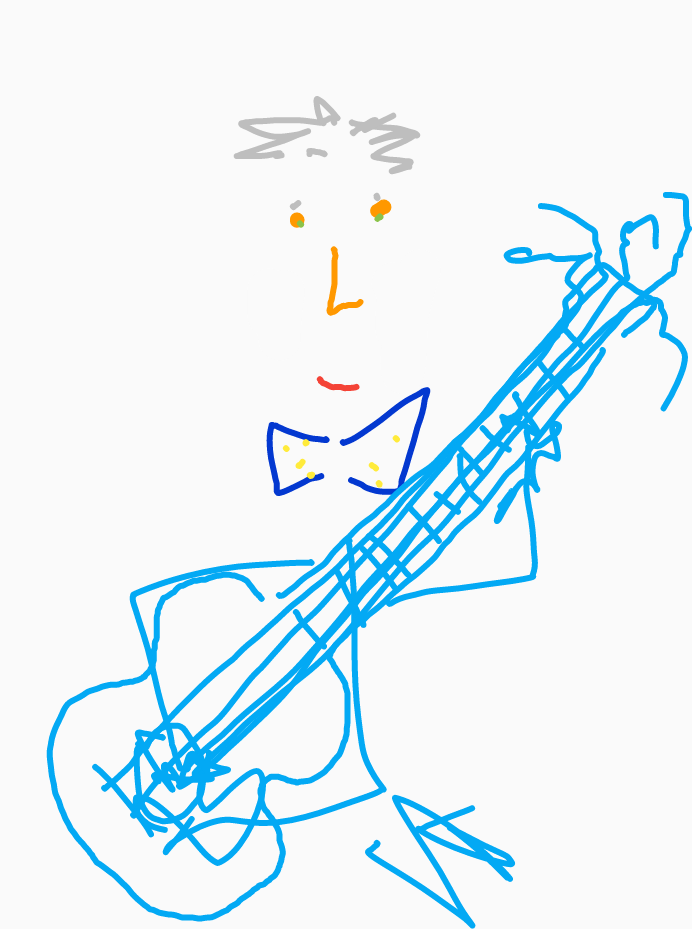
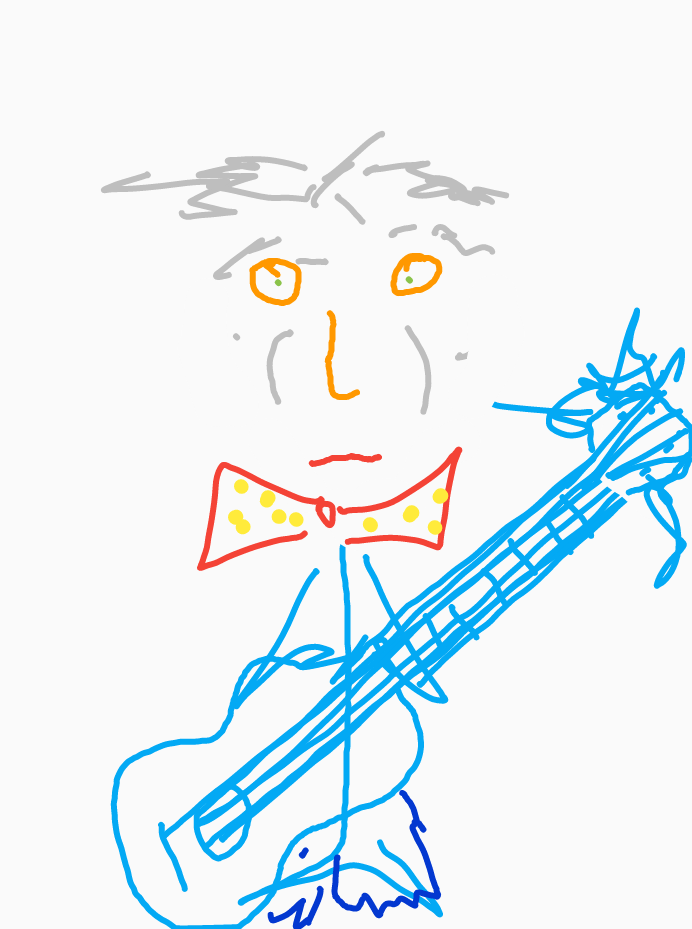
  • On the Patterns of Pairs

    Humanism begins with making connections
    which is drawing technique taught and ends
    with constellations for classroom discussion
    cafe conversations or solo contemplation,

    technique how guitar held and strings plucked
    plectrum or nails or La Pompe with tooth comb,
    poetry chords of thought arpeggio aligned
    necessary for navigation to & fro up & down

    back & forth, pitter patter, pitter patter
    this & that, that & this, pig and pepper
    pants the hatter all that matters as if
    as if nothing whatsoever has happened.

  • Beyond Yourself: Where the Poet Hides

    Clive James argues that poets should know the rules before breaking them. “Technique’s Marginal Centrality” (Poetry, January 2012, pp. 326-335) is a very conservative argument, often repeated by those who do know the rules and have come to control the prescriptions, and we find the argument in the criticism of all the arts as well as in the professions. Few exceptions are acknowledged, and those must be geniuses. And yet what these same critics value is hiding the rules, dressing the technique in camouflage. But isn’t this what we call advertising?

    Why James sees fit at the end of para 1 to dis the lovely Yoko Ono isn’t clear, but his value goes beyond technique. To prove something simple has lasting value, a simple but beautiful line of Picasso, for example, the critic must work hard at uncovering the camouflage, thus validating the artist’s “expect[ing] to charge you a fortune for it” (326). Whenever we see something simple or even “bland,” but good, James argues, we can be sure the poet has been to school and learned the trade first, before, as E. B. White prescribed, “omitting needless words.”

    James uses as one of his proofs the musician, who must learn scales, for example, the rudiments of technique. One problem with the comparison of musicians to poets is that most musicians don’t learn technique to compose, but to play the work of others, who themselves might not be very good musicians, but very effective composers. And musicians need not know much theory to play pieces proficiently, for the theory is embedded in the piece and brought to life through the musician’s technique. Is technique an art? Itzhak Perlman practiced his violin technique while watching television.

    James is not talking about the reading of poetry as much as the writing of poetry. He’s not talking to readers of poetry (an increasingly dwindling number), but to writers of poetry (an increasingly increasing number, and James would plainly like to see fewer poems written by fewer poets). James is trying to restore poetry’s value in linguistic skills, prescriptions that he argues are learned then disguised or ignored to create something new. But the new isn’t always pretty to James’s taste.

    Consider the Coltrane example. “Ugly on Purpose,” an Open Letters Monthly review (2008), by John G. Rodwan, Jr., of Richard Palmer’s Such Deliberate Disguises: The Art of Philip Larkin, also addresses the issue of the apparent camouflage. Here, the subject is jazz, where musicians like John Coltrane blow dissonance and cacophony at their audience. They can also play otherwise, but their sound is deliberate, however unintelligible the average listener may find it. But here James doesn’t seem to approve of the disguise. Even average listeners require training, experience, or special upbringing to appreciate an art form, popular or other, lowbrow or highbrow, standard or anti-standard. Rodwan says that in his Cultural Amnesia, “Clive James complains of Coltrane ‘subjecting some helpless standard to ritual murder’ and the ‘full, face-freezing, gut-churning hideosity’ of his playing, in which ‘shapelessness and incoherence are treated as ideals.’” But where James can read through to what’s concealed in poetry, he seems to have missed it in free-jazz. James’s conservative argument will never approve of free form improvisation.

    These arguments, that the simple or incomprehensible work of art is rooted in learned, valued, talented apprenticeship, are by now classic responses to the popular criticism of “modern” art, that a monkey could have made it, or a child. Indeed, James barely disguises his acknowledgement of this argument in his opening paragraph, where he discusses the Japanese artist Hokusai, who made a painting, in part, by having chickens, their feet dipped in paint, walk across the paper. So much depends upon a critic justifying technique. I understand that James prefers Ben Webster over John Coltrane; what I don’t understand is why he thinks John Coltrane should sound like Ben Webster (another conservative argument). Should we criticize something for not being what it was not intended to be?

    James has more to say, that poets often write too many poems, thus ruining whatever reputation, “name,” they might have earned with their few really good poems. There’s also an interesting discussion of technique suitable to message: “…the argument is the action”; and “…the reasoning is in command of the imagery” (332). But there have been so many successful informal poems, so many successful Duchamps and Rauschenbergs, that “…we must contemplate the possibility that there is such a thing as an informal technique,” but James rejects this notion, for to accept it would suggest that we can write poems while watching television.

    James ends his short but full piece with an odd coda of sorts, about a copy of a book owned by Elizabeth Bishop (not one she wrote) in which she jotted notes for a poem, and the book recently was put up for sale, valued by virtue of its being owned and written in by Bishop. Says James, chances are this won’t happen to most poets (no kidding), “but that’s the chance that makes the whole deal more exciting than Grand Slam tennis. Unless you can get beyond yourself, you were never there.” From chickens with paint on their feet walking across an artist’s paper to Grand Slam tennis – I for one am certainly beyond myself at this point. But I don’t quite get James’s conclusion. He seems to be saying that fame is the exciting part, the chance that a poet might become so famous that readers would scrounge for her notes. But fame seems an odd place to want to hide.