All sound is distortion which produces sensation. I play mostly acoustic these days, unplugged, and eschew loud noises from any source. Is sound an idea, an intangible? The Telecaster, for the player, is more than sound – its industrial look, its substantive weight on the lap (you can feel the sustain vibrate through the solid wood body and hardwood neck even unplugged), its smooth playing fretboard, its difficult crackling pods and cranky switch (which remind one of both the guitar’s and one’s own age), all bring it home I should play the Tele more often.
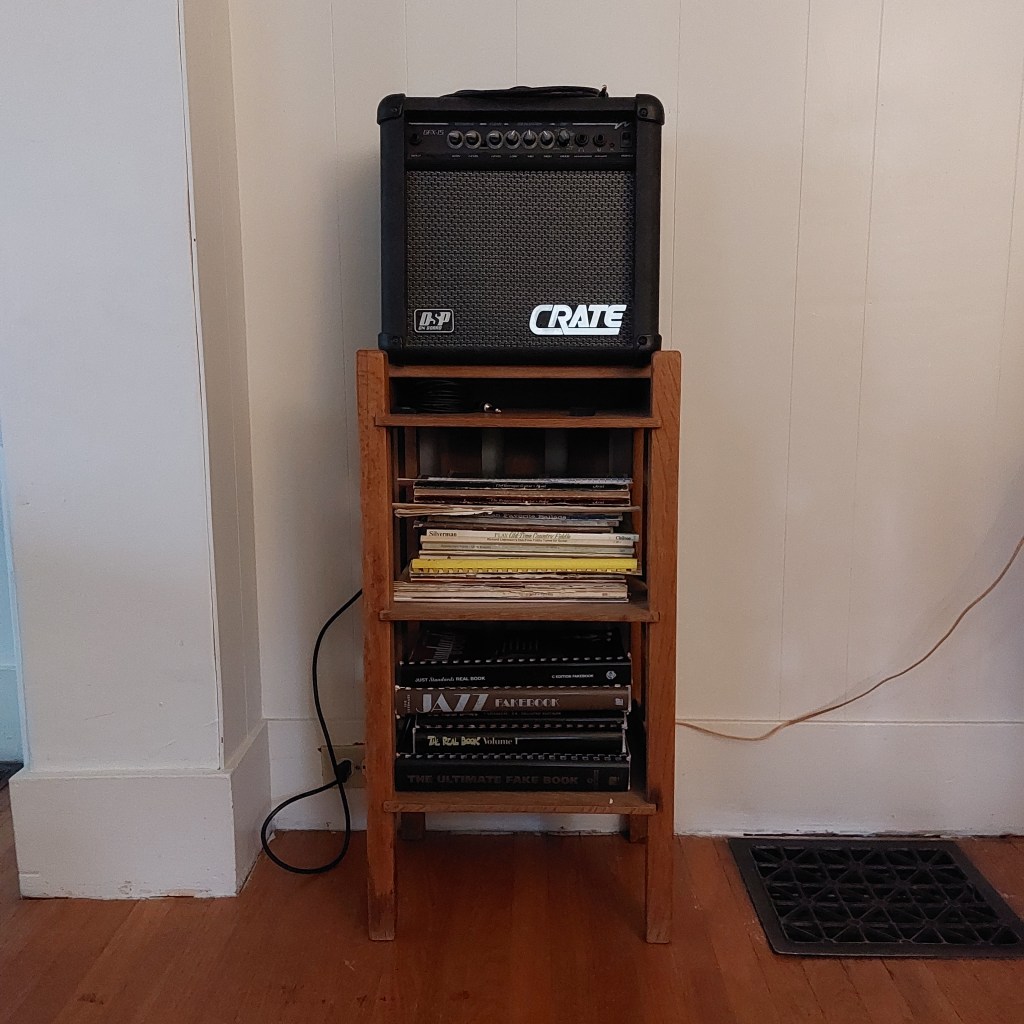
In the YouTube video below, I’m using the simplest of setups, my cell phone sitting on the edge of a Crate (GFX 15, circa 1990s) small room size amp, the mode set to Reverb 2. With regard to cost of guitar and amp, suffice to say you don’t have to spend a bunch of bucks to get a cool sound. The Squires are storied guitars, particularly the older ones, the first ones built when Fender opened a factory in Japan in 1982.
My Telecaster guitar I got used in 1985, from a guy I worked with, who had purchased the guitar new at Ace Music in Santa Monica, had switched out the original pickups with Dean Markley and Seymour Duncan pickups, and also switched the polarity to produce an extremely bright Nashville sound, too screechingly violin-like for me, so I had it switched back. I now use flat wound strings on the Tele, which softens the tone and gives it more range (D’Addario ECG24 XL Chromes Flatwound Electric Guitar Strings – .011-.050 Jazz Light). Telecaster guitars over the years have not been noted for their use in jazz, with notable exceptions though, including Ed Bickert and Bill Frisell, and a few others, though often with after market adjustments and other electronic enhancements used.
In the video, I play through three brief guitar ideas: the first, some country sounding chords and phrases, the second a kind of Gypsy jazz piece I’ve been working on, and the third what’s intended to sound like surf guitar.
 The Coming of the Toads