One summer, I worked for one of my Dad’s friends in the body and fender shop at a Ford dealership in Culver City. He entertained the idea of getting a race car and I would be his driver. He foreshadowed the advent of the short surfboard. “Why are the boards so big?” he asked. “You could ride a two-by-four if you could get up the momentum.” Another summer my Confirmation sponsor hired me to work as a lab assistant at UCLA, where he was working on a graduate degree, the chalkboards in the lab covered with formulas and equations that looked like hieroglyphs left by sanderlings bicycling around the wavelets at El Porto.
The first thing my Dad taught me about plumbing was to name the tools, so I could hand them to him when needed. And I learned to dig a trench with the correct slope, for “shit falls downhill.” I worked odd plumbing jobs with him and knew enough of plumbing to know a plumber by trade was not what I wanted to be. Today, though, I feel some affinity for the plumber’s craft, even if my Dad would not now recognize it as the same trade, the new plastic pipe, the special tools, the glues that have replaced the lead and oakum joint jobs. Boiling the molten pig of lead in a lead pot then working the cooling lead sealing the oakum with a cold chisel around the lip of the cast-iron pipe. Yarned and roped, poured and caulked.
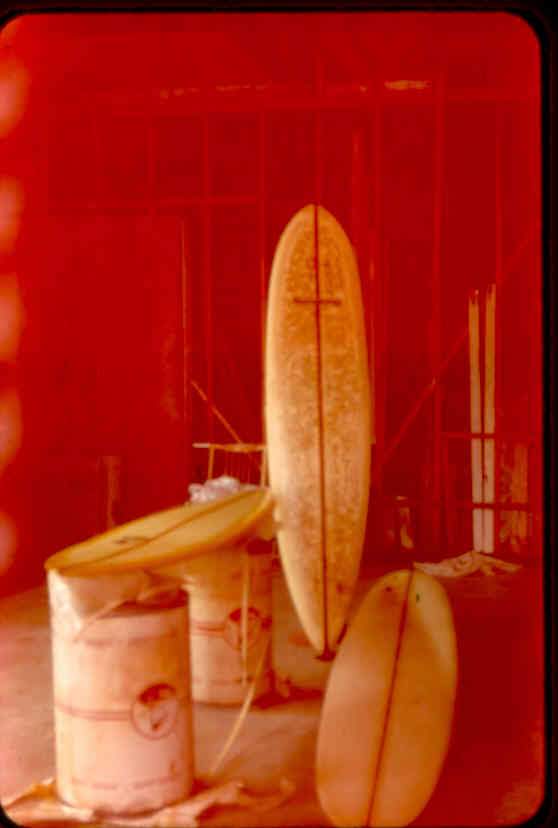
One day, my Dad, a plumber by trade, he would say if asked, asked me what I wanted to do, to be: a carpenter, an electrician, a plumber. I wanted to surf, which he knew, his garage a surfboard shop, but while I was a good surfer, I wasn’t an excellent swimmer, like my two best friends who were county lifeguards, but we all knew we weren’t going to surf our lives away. And I played guitar, but as an ambition as aimless as walking on a surfboard, for while I was a good guitarist, I wasn’t an exceptional musician, and had no taste for the business. And cars, beginning with the 1956 Chevy I bought for $75 from Gary, who was headed for Vietnam. I became a wheeled and track vehicle mechanic, MOS 63BC20, which helped see me through school, that talk with my Dad over and out.
What’s all this got to do with Benjamin Wood and his novel “Seascraper,” recently longlisted for the 2025 Book Prize?
“The horse needs feeding up and harnessing. He gets into his boots on the back doorstep, rolls a ciggie underneath the rusty canopy his grandpa built from corrugated iron – it’s hanging by loose screws, and one more heavy rain could bring it down. He’s not repaired it yet, as mending stuff like that requires an aptitude he doesn’t have. His talent is for something else – his grandpa would decry it as a waste of time if he were still alive to hear him sing a tune, and if his ma knew anything about the pocket watch he gave to Harry Wyeth in trade for his guitar, then she would make a bonfire of it in their own backyard” (5).1
That talk with my Dad I replay like old vinyl, now full of scratches of course. I might pick an electrician to be, and maybe I’d specialize in electrical musical instruments. Or I might have moved from carpentry to lutherie. Those are indoor jobs. Do you want to work indoors or out was not a key question for a kid growing up in Southern California, where the weather was taken for granted. There were a dozen guys I knew having conversations with their Dads similar to the one I described above. Families just scraping by, recovering from one war and beginning another, and then another, or couples with a cache of war bonds that would see their two kids through USC or Stanford.
“It never used to foul his mood this much, the cold, the loneliness, the graft, but that was long before he harboured any aspirations for himself besides what he was raised to want. He used to think it was enough to fill the whiskers up with shrimp each morning and accept the cash for them by afternoon. Providing is surviving – that’s what Pop would tell him, and what else should any man desire? Perhaps a wife, if he could find one that’d have him” (12).
He has more than a job, an occupation, he’s a seascraper by trade. He both loves and hates it. For love, the culture and tradition, the brawn and brack, the freedom. For hate, the cold and wet and muddiness, the poverty, and not enough time to devote to his true calling:
“He was thirteen when he first went out to sea with Pop and, in those days, few adaptations to the old equipment had been made – the cart still had two wagon wheels with metal rims, and he felt queasy after half an hour of riding in the seat with him. It was supposed to be a weekend job, that’s all, and it was something he would beg his ma to let him do, believing it to be a rite of passage. Every other Flett had been a shrimper, going back to his great-grandpa who had putted barefoot on the beach alone with just a push-net and a basket on his back” (34).
Scraping for money, too. There’s the rub. And he learns and loves to read, fatal flaw. And comes under the spell, though he’s naturally wary, of an outsider who sees just some kind of romance in the beach and sea and fishing for a living, and who wants to make some kind of movie about it, with him the star, and the promise of some big bucks. He’s not sure.
“The folk club at the Fisher’s Rest begins at eight, and if he wants to play tonight he’s got to put his name down on the list by quarter to. Perhaps it wouldn’t be so bad to wait a week, rehearse his songs a few more times before subjecting people’s ears to them. He’s not in a position to refuse that kind of money. ‘I dunno,’ he says” (32).
What’s the catch? The empty promise of a false calling. And who is calling? You’ll meet all kinds of charlatans wanting to hear your story and help you to tell it. How could you tell? He’ll make a tourist scene of your livelihood. Tom Flett is the only seascraper around who still works with a horse and wagon. The others use motorized carts. He’s like a plumber who might still be using lead and oakum. Idealized and sentimental. The tourist view doesn’t see behind the facade. There’s no money in the songs. There’s no money in the seascraping. What’s he waiting for? To know his song well before he starts singing?2 What’s he going to sing about? Seascraping. Dangerous work, and just scraping by.
“He’s committed now and has to see it through. ‘Bear with me, then. I’ve got to work the nerve up.’ The guitar of Harry’s is much bigger at the body than he’s used to and its neck seems thicker when he takes hold of it. At least it’s strung the right way up. The frets are old and blackened, but it sounds in tune. ‘I need to warn you, I’ve not sung this more than twice from start to finish. It’ll come out ragged, but you’ll get the gist’” (161).
 The Coming of the Toads