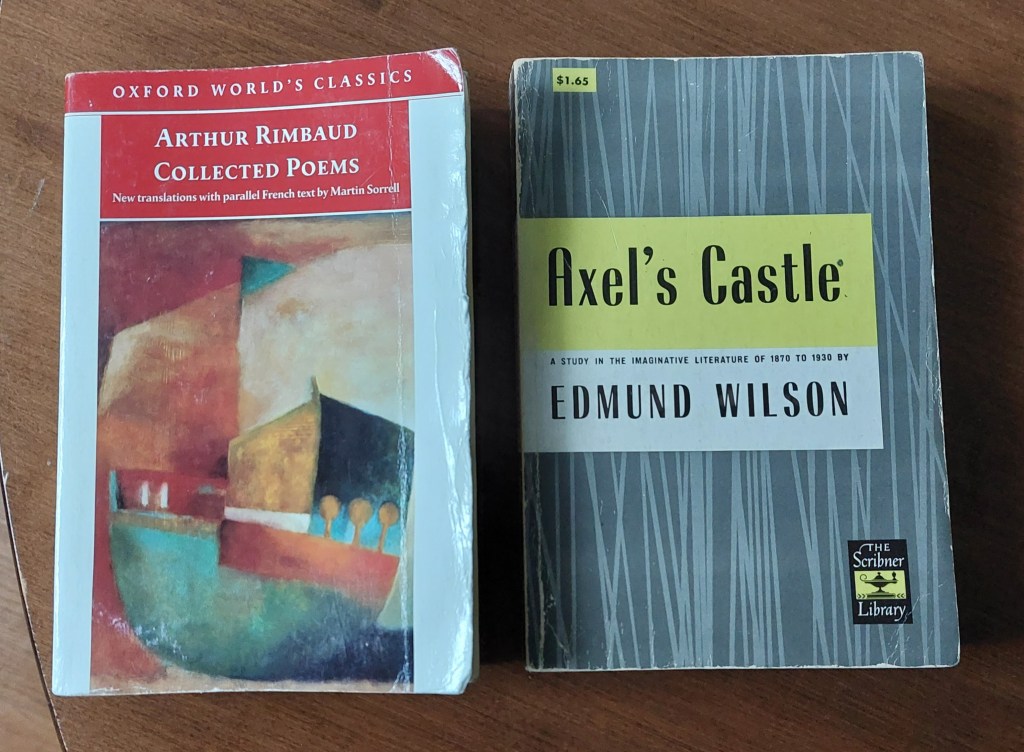
Tag: Rimbaud

  • A Sweet Derangement of the Senses with a Sour Finish

    What did Rimbaud mean by dérèglement of the senses? Trouble ahead, for one thing, as he intends to deregulate language:

    “He does go on to speak of the unknown (l’inconnu), objective poetry’s aim, which can only be attained by the ‘systematic disordering of all the senses‘ (his italics)” (Sorrell, xvii).

    And not just language, but in an iconic spirit of rebel without a cause, to untangle from his life predicament: family, school, country and war, literary ambition, expectations – but relatively quickly then even his newly chosen lifestyle, as he heads out for the territory, leaving any predicaments for others to unravel.

    But in one meaning, his derangement of the senses is not difficult to understand, and gives the reader an assist to unusually difficult writing. Sorrell provides a few clues in his Introduction to the collected poems:

    “In synaesthesia an effect normally received through one of the senses is experienced directly through another. Thus, in Baudelaire’s sonnet perfumes sound as soft as oboes” (XX).

    But in my copy of Baudelaire’s “The Flowers of Evil,” Richard Wilbur translates the line in question, from the poem titled “Correspondences,” as follows:

    “Perfumes there are as sweet as the oboe’s sound” (12)

    The perfumes don’t make sound, literally, and don’t directly sound like oboes; perfumes smell sweet, and that sweetness is compared to the soft sound of an oboe. But can we smell sweetness? The perfumes are also

    “Green as the prairies, fresh as a child’s caress”

    Baudelaire’s poem relies on a poetic device, metaphor, nothing new there. We might say: The grapes were as plump as purple; or, my eyes drank a sour finish as I watched the falling leaves through a broken window; or, I heard summer leaving as the night filled my eyes with silence.

    In Baudelaire’s poem, taste relies on smell, and smell doesn’t function as well if taste is lost. Without smell or taste, the brain tries to find some other way to experience the missing sensation. Victims of the Covid virus might understand this from the experience, the strangeness, of losing one sense but not the other. Metaphor becomes a compensation for something lost in translation.

    And the Baudelaire poem points to McLuhan’s idea of a sensorium, any one sense not dominated by any of the others:

    “Like dwindling echoes gathered far away
    Into a deep and thronging unison
    Huge as the night or as the light of day,
    All scents and sounds and colors meet as one.”

    And what does McLuhan say? From Chapter 9, “The Written Word: An Eye for an Ear” in “Understanding Media”:

    “Consciousness is regarded as the mark of a rational being, yet there is nothing lineal or sequential about the total field of awareness that exists in any moment of consciousness. Consciousness is not a verbal process” (87).

    We might reread then, Rimbaud, and consider his idea of derangement, with McLuhan’s analysis of media in mind:

    “The same separation of sight and sound and meaning that is peculiar to the phonetic alphabet also extends to its social and psychological effects. Literate man undergoes much separation of his imaginative, emotional, and sense life, as Rousseau (and later the Romantic poets and philosophers) proclaimed long ago (90).

    It made sense then for Rimbaud to suggest the way to recover the imagination was to derange the senses.

    “Today the mere mention of D. H. Lawrence will serve to recall the twentieth-century efforts made to by-pass literate man in order to recover human ‘wholeness.’ If Western literate man undergoes much dissociation of inner sensibility from his use of the alphabet, he also wins his personal freedom to dissociate himself from clan and family (McLuhan, 90).

    But we hasten to remind that Rimbaud gave it all up as futile, poetry and his idea to derange language. Nevertheless, he might still sit at the head of a poet’s table (Ashbery’s, for example), even as he ended his own poetic meal with a sour finish.

    “Language extends and amplifies man but it also divides his faculties. His collective consciousness or intuitive awareness is diminished by this technical extension of consciousness that is speech.

    Bergson argues in Creative Evolution that even consciousness is an extension of man that dims the bliss of union in the collective unconscious. Speech acts to separate man from man, and mankind from the cosmic unconscious. As an extension or uttering (outering) of all our senses at once, language has always been held to be man’s richest art form, that which distinguishes him from the animal creation” (McLuhan, 83).

    Metaphor allows for looking at one thing, an object, or some sensory effect, and seeing something different. That’s how much poetry works, anyway. And when we compare two disparate objects, we fancy we learn more about each. Still, one wonders at that “richest art form,” and whether or not it’s worth the trouble it creates (Rimbaud apparently thought not), and that’s the sour finish to this post.
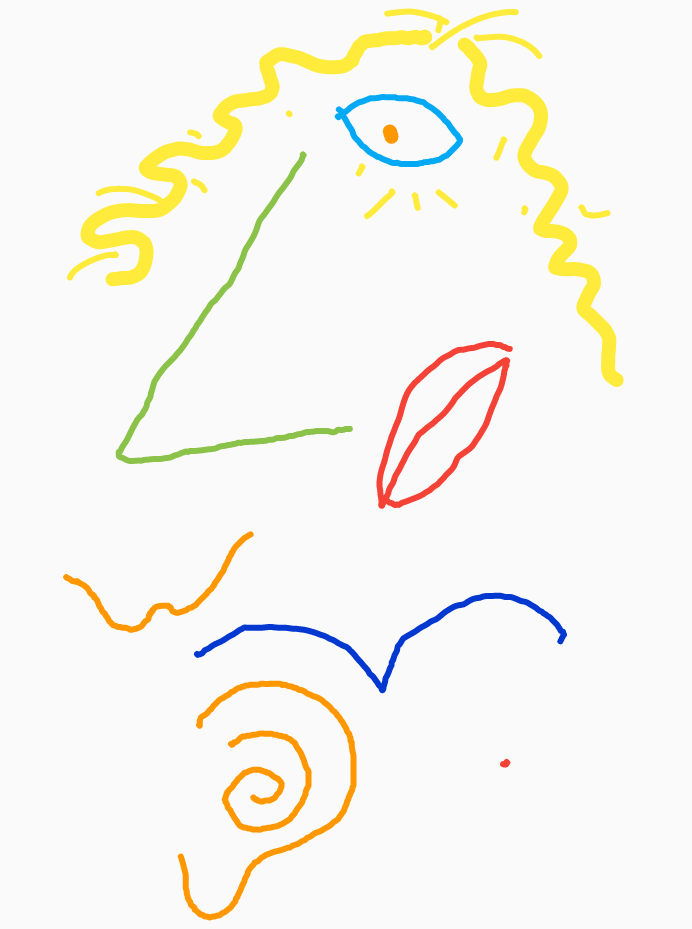
    Derangement of the Senses

    “Arthur Rimbaud: Collected Poems.” Translated with an Introduction and Notes by Martin Sorrell, Oxford University Press, 2001.

    “Charles Baudelaire: “The Flowers of Evil.” Selected and edited by Marthiel and Jackson Mathews (1955, 1962) – Rev. ed., New Directions (NDP684) 1989.

    “Understanding Media: The Extensions of Man.” Marshall McLuhan, 1964, McGraw-Hill.
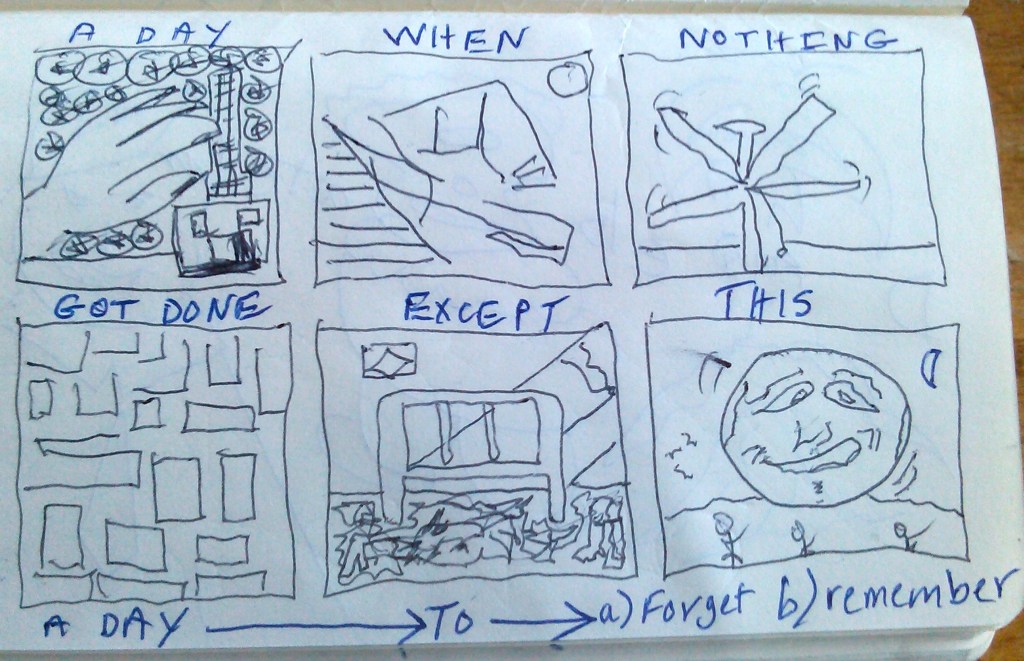
  • On the End of the Road with Rimbaud

    It wasn’t enough for Rimbaud to disassociate himself from his society, which he found decadent, hypocritical, false – in a word, selfish. He would also derange his language and senses, and when he was finished, or abandoned, that writing life project, but which would survive to influence so many still working on literature, he moved on and rejected his and all other writing:

    “When a friend asks him [Rimbaud] whether he is writing nowadays, he replies with annoyance and scorn: ‘I don’t do anything with that anymore’; and when, on the eve of his departure the next spring, he hears one of his friends congratulate another on having just bought some Lemerre editions – Lemerre had been the publisher of the Parnassians – he bursts out: ‘That’s a lot of money wasted. It’s absolutely idiotic to buy books – and especially books like that. You’ve got a ball between your shoulders that ought to take the place of books. When you put books on your shelves, the only thing they do is cover up the leprosies of the old walls’” (Wilson, 279).

    For Edmund Wilson, the question of lighting out for the territory ahead of the rest meant reading and sitting down to his journal. (What might Wilson have done with a blog?) He quotes Yeats, from his “Vision”:

    “It is possible that the ever increasing separation from the community as a whole of the cultivated classes, their increasing certainty, and that falling in two of the human mind which I have seen in certain works of art is preparation….It will be concrete in expression, establish itself by immediate experience, seek no general agreement, make little of God or any exterior unity, and it will call that good which a man can contemplate himself as doing always and no other doing at all….Men will no longer separate the idea of God from that of human genius, human productivity in all its forms” (291-292).

    The problem then, for Wilson, is indeed what to do:

    “Nor can we keep ourselves up very long at home by any of the current substitutes for Rimbaud’s solution – by occupying ourselves exclusively with prize-fighters or with thugs or by simply remaining drunk or making love all the time….The question begins to press us again as to whether it is possible to make a practical success of human society, and whether, if we continue to fail, a few masterpieces, however profound or noble, will be able to make life worth living even for the few people in a position to enjoy them” (293).

    Quotes from “Axel’s Castle: A Study in the Imaginative Literature of 1870 to 1930,” by Edmund Wilson. Scribner Library, 1931, 1959.

  • Why Read Poetry?

    Much of modern poetry is unintelligible or seems incoherent. That’s not modern poetry’s problem though. The problem with modern poetry is the absence of a general interest reader of poetry. Cautious readers avoid the crafted, arched bridges called poems precariously balanced over esoteric estuaries. But was there ever a general interest reader of poetry? Well, who filled the pit of Shakespeare’s Globe Theatre? Who did Walt Whitman write for? Why did Langston Hughes use the Blues? Who did Woody Guthrie sing to? Who listens to Bob Dylan?

    A word about craft, to those poets who would sit down to “craft” a poem: One may write a poem, compose a poem, draw a poem, paint a poem, photograph a poem, fingerprint a poem, press a poem, memorize a poem, sing a poem, post a poem, but one crafts a toilet bowl gasket seal, crafts a kitchen cabinet, crafts a chair to sit on to scribble the poem. Let poets work for a living and craft their poems in their sleep. And let them be well rested and sober when they begin to speak.

    Why would someone who does not read poetry suddenly start? Where would they begin? Any menu would look strange, even the crafted menu, maybe especially the crafted menu. Why would they taste anything on the table? It would look a strange feast: snake knuckles, chocolate covered roses. Most of the dishes the average reader wouldn’t even recognize as food. There’s little appetite for it, for poetry is strange. Yet here’s a poet craftily writing for an audience with a special hunger, Dylan Thomas, “In My Craft or Sullen Art,” writing for those “Who pay no praise or wages / Nor heed my craft or art.”

    I packed Rimbaud into my duffle bag a long time ago. “The first study for a man who wants to be a poet is the knowledge of himself, entire…But the soul has to be made monstrous,” Rimbaud wrote in the preface to his Illuminations, where quickly things get “unbearable! and the Queen, the Witch who lights her fire in the earthen pot will never tell us what she knows, and what we don’t know.” What did that mean? I didn’t know, but the “hare,” who “stopped in the clover and swaying flowerbells, and said a prayer to the rainbow, through the spider’s web,” I wanted to talk to, and the words curled up on the cold grate of reason and warmed one another, and soon started to glow and illuminate like candles of beeswax.

    Yesterday in conversation with a colleague I was asked why I read poetry.

    I am thankful for poetry. In the beginning was the word, and the word was posted to a tree, and around the tree gathered listeners and readers who began to talk among one another, even as the word was forgotten and fell to the ground and was buried in the falling leaves, and in the spring a young man out walking found the word now obscured from weather and compost and thought it said wood, or wode. This was the first reader of poetry, and Rimbaud’s Witch.

    Arthur Rimbaud. Illuminations and Other Prose Poems. Trans. Louise Varese. Revised Edition. A New Directions Paperbook, 1957, NDP56.