Tag: power outage

  • Where East Meets West

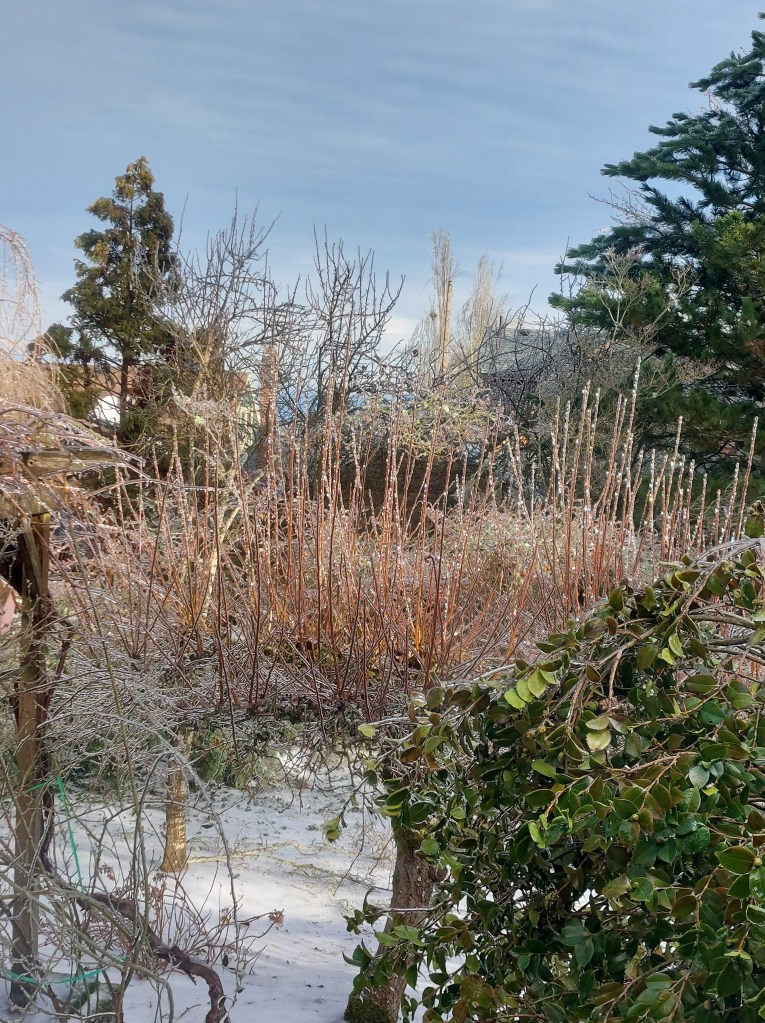
    For the past week, we’ve been living in a deep wintry freeze, cold north air winds from the east out of the Gorge mixing with rain from the warmer ocean west to form local ice – sticking to the tree branches, the power lines, the streets and sidewalks, your nose if you stick it out. The weather here, in the confluence of two river valleys, the Gorge, and the hilly city pockets, is hard to predict, and the weather folks you turn to when you’re not sure which way the wind blows got it all wrong day after day throughout the week. The great thaw from the west never came. Where east meets west, we lost power, the temperature in the house dropped to 30F, and we lit out for the next county, navigating the icy roads like surfers lost in a snowy desert.

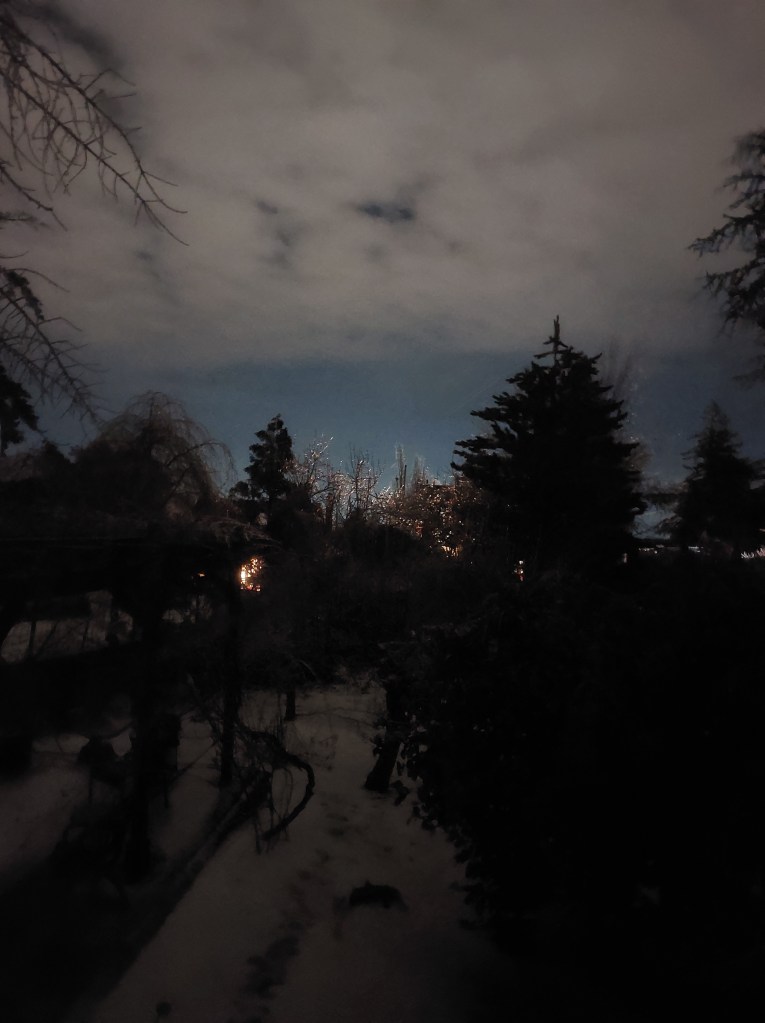
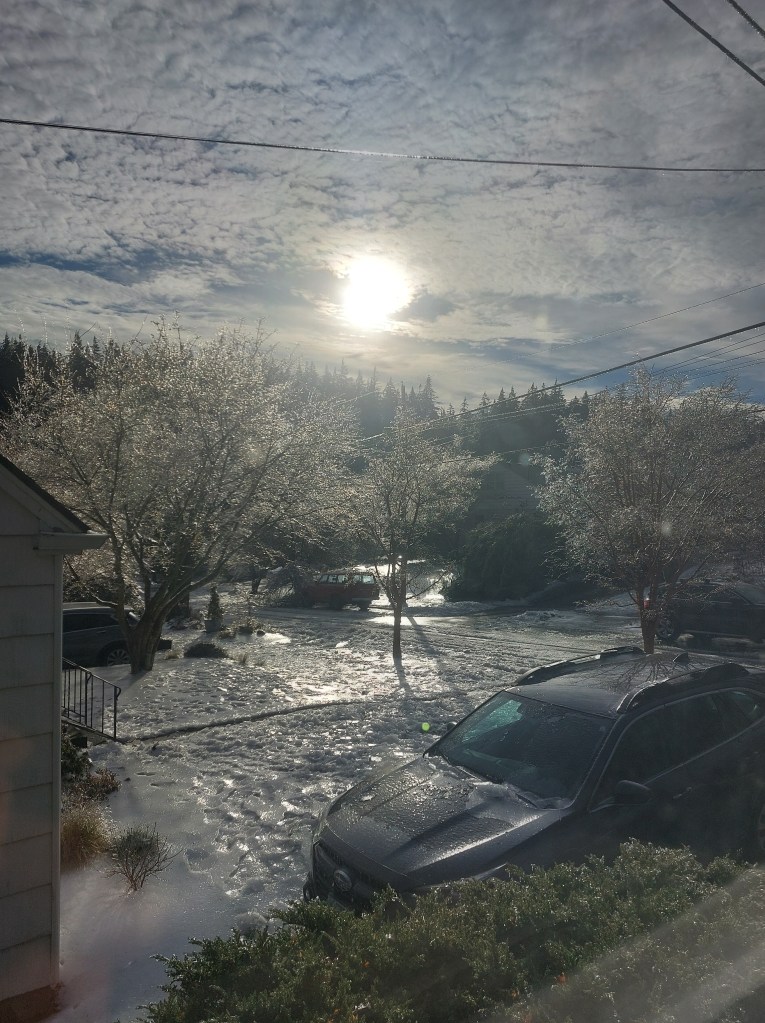
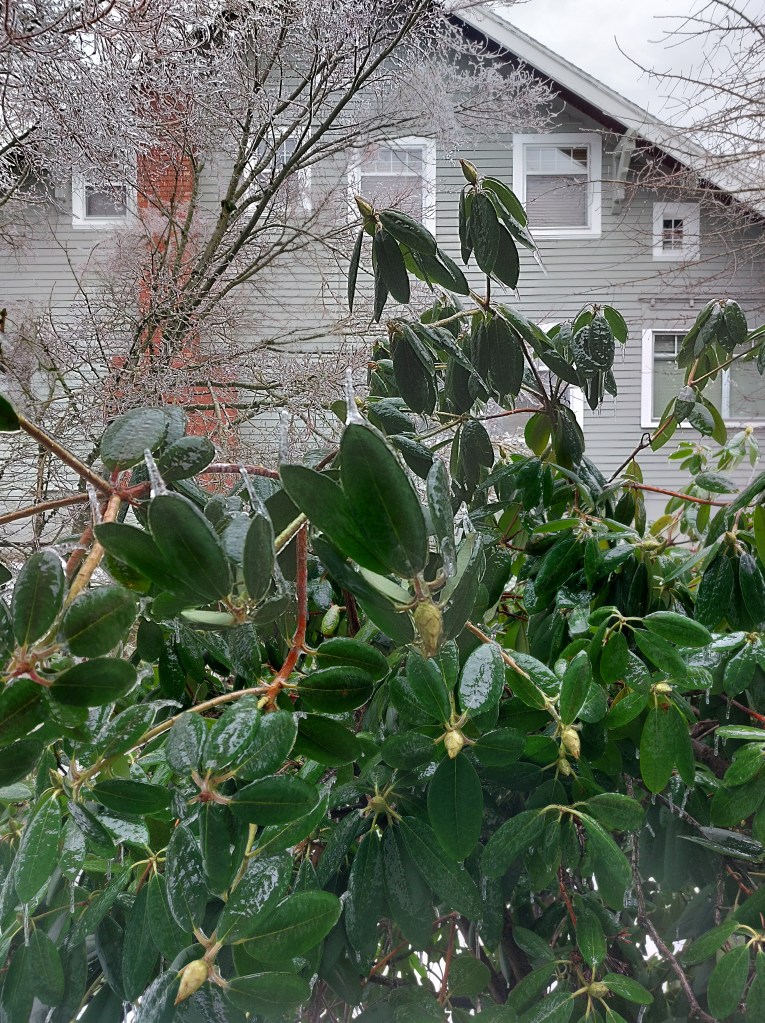
    Our power was miraculously restored in just over 48 hours, a miracle considering the number of trees down and the winds continuing to blow out of the Gorge, bringing in more freezing air. The linemen can’t go up in their buckets if the wind is blowing in the 20mph range, so the lines dangled dangerously about our heads. I wrote about the ice storm on location here. So this post is just a bit of an update to show a few pics of the ice. And to give the hot and cold poetry talk on the blog a rest. It’s still cold, 33F outside as I type this, 66F in the house. We should be able to get out to the store for provisions later today, if any remain – we heard yesterday the delivery trucks have been unable to get anywhere close-in. Winterlude. What was it Dylan sang?

    Winterlude, Winterlude, oh darlin’
    Winterlude by the road tonight
    Tonight there will be no quarrelin’
    Ev’rything is gonna be all right
    Oh, I see by the angel beside me
    That love has a reason to shine
    You’re the one I adore, come over here and give me more
    Then Winterlude, this dude thinks you’re fine
    Bob Dylan, Winterlude, 1970
  • Lugubrious Fog

    Lugubrious etymologically descends from the dinosaurs in “Allegro Non Troppo” (1976) when the great reptilian gargantuans gentle and armored alike move south ahead of the ice and melt into tar. In Bach fugue file they march.

    I was sitting in bed four nights ago typing this, under a pile of covers, plus fully clothed, wearing two pairs of pants, three shirts, a sweater, a vest, a wool watch cap, and a pair of wool socks. It was 12 degrees Fahrenheit outside, windchill below zero. The house had lost power eight hours ago, years ago, the vicious east winds having blown down enough trees around town to put mist local folks in a freezer. But I gave up the typing in the cold. It was now 30 degrees inside the house. I pulled my hands inside the covers like a turtle for the long cold night and we decamped the wood igloo the next morning moving happily south to a warm house full of warm children.

    Frost’s promises to keep keep us sustained, moving, to keep warm. Yes, “The woods are lovely, dark and deep,” but what melancholy invites us in? Our horse still questions why we might stop here. The museums are also lovely, though well lit, still dark and deep, security guards meandering the lost empty halls, the paintings wired, the statues as still and as cold as ice sculptures, and they don’t allow horses in. Anyway, we prefer trees wandering in the wind full of birds and squirrels and lost kites and balls and flying saucers and climbing kids.

    Earlier that afternoon, I was in the backyard, preparing a place for Zoe, when I heard a rushing sound, a falling dinosaur come to roost, and heard the voice of the tall Sauroposeidon, a wind and wood splintering crash and crush, and looked north to my neighbor’s backyard to see the 100 foot 100-year-old east Pine limbs still shaking off the ice and snow where it had come to rest breaking through the ridge beam, the tree’s upper girth shattering off and coming to rest in the front yard.

    The frightfully freezing cold day moves slowly lugubriously on and we learn that pine tree but one of hundreds of trees falling all about town in the east wind in soaked soils across power lines, cars, streets, houses, parks and lots.

    Back home now, five days on, power restored, but morning after ice storm moving across last night, but still now, windless, half inch of ice coating tree limbs, cars, street, wires, the downed dinosaur leaning across the roof next door. Fog. The dickens of a cold fog. But should we lose power again the air is at least warmed up some, to just below freezing outside.

    A lugubrious fog has settled in, sifting down through the firs, down the street, over the houses and yards dotting the rotting old volcano.

  • Perseverance

    “Houston, we have a problem.” The now cliche hyperbolic understatement comes from the Apollo 13 mission to land on Earth’s moon in 1970. Part of the flight journal, dialog between astronauts Jack Swigert and Jim Lovell and Mission Control Houston can be read on Wiki:

    055:55:19 Swigert: Okay, Houston…
    055:55:19 Lovell: …Houston…
    055:55:20 Swigert: …we’ve had a problem here.
    055:55:28 Lousma: This is Houston. Say again, please.
    055:55:35 Lovell: Ah, Houston, we’ve had a problem. We’ve had a Main B Bus Undervolt.

    But they persevered, came up with a plan, called an audible, held on tight, and made it home to a grateful country. Last week, a seemingly ungrateful US senator from Texas, unaware, apparently, of other cliches of crisis, such as, “The Captain goes down with the ship,” and “Women and children first,” lit out for a Cancun resort hotel while his constituents back home faced freezing weather, loss of heat for their homes from frozen gas lines, and loss of electrical power for their homes from damaged equipment left exposed to extreme weather conditions, all while remaining lined up according to protocols made necessary by a limited supply of pandemic vaccine. The New York Times editorial board provided the lessons, though we might doubt if any lessons learned will be put to the test. What seems to persevere the most is political rhetoric aimed at scuttling the facts, the issues, what actually broke and why, in short, the truth. But while Texas was suffering from a statewide major “undervolt,” the third Mars rover, “Perseverance,” landed safely on Mars, close to 300 million miles away.

    The irony of another space exploration achievement while the country’s infrastructure, education, medical, work, and political systems continue to spiral out of control, reminds us of the response from the classic news journalist Eric Sevareid, who, for one, was unimpressed with the promise of the first photographs promised of the dark side of the moon, many moons ago. From his short article, “The Dark Side of the Moon”:

    “There is, after all, another side — a dark side — to the human spirit, too. Men have hardly begun to explore these regions; and it is going to be a very great pity if we advance upon the bright side of the moon with the dark side of ourselves, if the cargo in the first rockets to reach there consists of fear and chauvinism and suspicion. Surely we ought to have our credentials in order, our hands very clean and perhaps a prayer for forgiveness on our lips as we prepare to open the ancient vault of the shining moon.”

    And we continue to advance, to persevere, to and fro, back and forth, a few steps forward, another few backward.