Tag: Poem

  • Belogged, befogged, and begoggled

    This Spring Mars springs from the spoils
    of winter ruins and sends a motorized
    snake down the clogged sewer shaving
    the random roots obstinately finding
    like foraging ants every tiny fissure
    in a friable underground infrastructure.

    The flowers Mars forces the mad dog
    tramples frothing spittle quick nimble
    and legs akimble on a first clear warm
    day with her slimy green tennis ball
    tossed to fetch tossed to fetch tossed
    little daylilies looking a bit bedraggled.

    The dog’s form holds Spring’s unfolding
    and stays true to its arbitrary erratic
    no man’s land of free yard garden room
    where the dogs come and go speaking
    of portobello and Punchinello.

    A march hare muddles up straw
    hatted mushing spring riddles
    that scare off common readers
    until Mars springs now forward
    and the dogs are late for work.

    The gold movie lion his iron stare
    and lush loamy mane says Augh!
    roar from which the lambs retreat
    but Leo did not bellow for peace
    bells pealed the turn of the Hun.

    And now this ruddy Spring heralds
    with reels and boisterous calls
    to protect the sprouts from passing
    rituals another year gone belogged
    befogged and begoggled.

  • Q & A

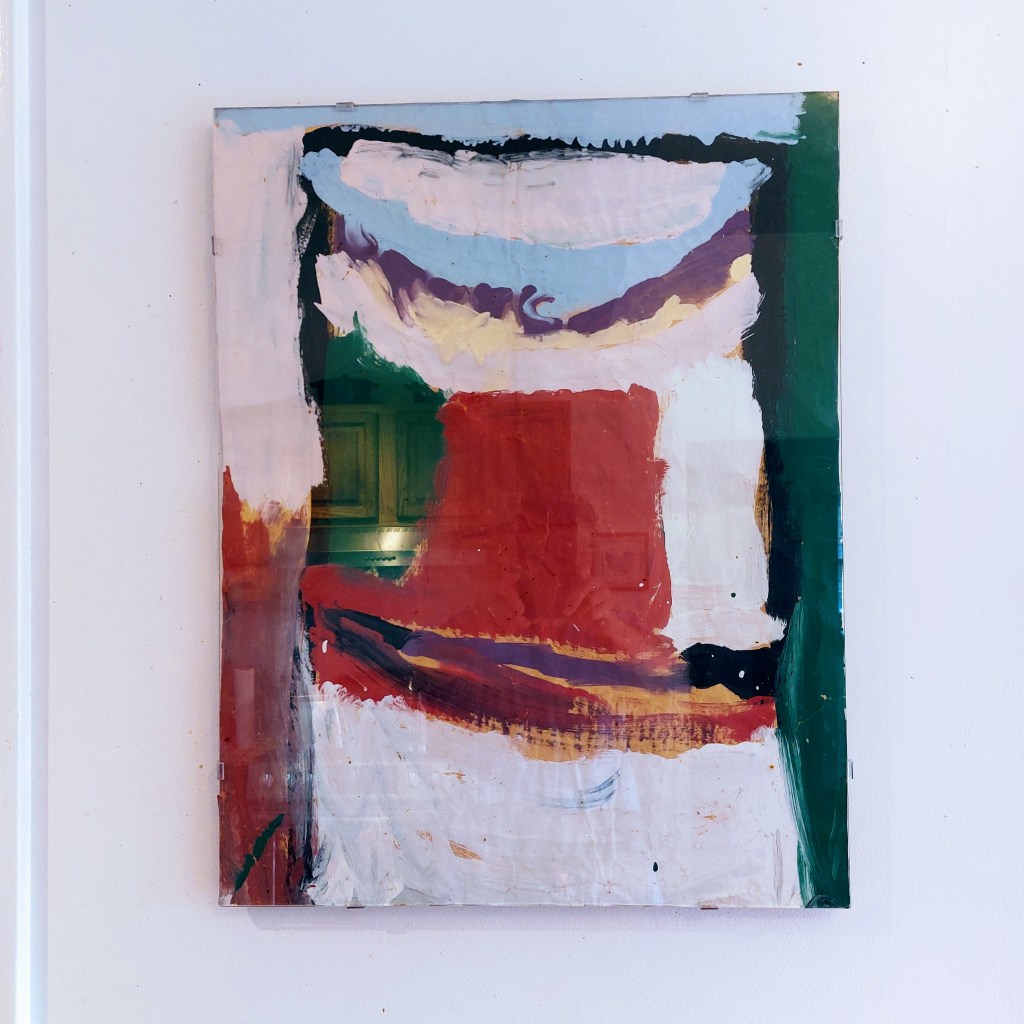
    giant red quote bubble drawn face-like with frown, tail toward speaker at podium in front of empty chairs, Q & A handwritten at top.

    why ask? ill said
    naught he? nowhere

    that said? what said
    just this? this whose

    unthrilled? feel so
    said I’ll? be later

    even so? what now
    then again? nil wind

    adversative? when to whom
    conversative? with to which

    adjourning? now here
    heretofore? to where

    in room? ill lit
    elbow? move over

    “Ill Seen Ill Said,” a novella piece by Samuel Beckett, appeared in the October 5, 1981 issue of The New Yorker magazine, first published by Les Éditions de Minuit in Paris, earlier in ’81. My poem above, “Q & A,” is a bit of a riff on Beckett’s themes.

    On page 41 of The New Yorker, where the story begins, is a cartoon by Charles Barsotti. The cartoon shows a duck sitting at a desk. The duck wears glasses, is writing with a short pen or pencil on a piece of paper, a phone on a front corner of the desk, a stack of three pieces of paper on the other corner, the duck looking up, as if thinking of what to write next. Above the duck, still in the cartoon frame, the words: “Quack! Quack! Quack! Quack!” And above the cartoon box, a handwritten caption reads: “THE CALL OF THE WILD.”

    There are 77 question marks in Beckett’s novella, including: “What the wrong word?” Just before, “Imagination at wit’s end spreads its sad wings.”

    Why sad? Why wit? Rye whit. Why wry. Wary. Worry. Weak wreck.

    Near 8,000 words to the novella. I counted only 3 commas in the entire piece. Short, staccato sentences.

    We hardly see anything of reality’s totality (“Ill seen”), but that is our syllabus, and even that may seem overwhelming, and suppose we could see it all, could we describe it (“Ill said”), let alone explain it, and with only 0.000375% commas! All that said, we sometimes seem to come close, or someone does, and shares, and that’s a pleasure. Not an argument, not a theory, not a grammar, just a pleasure, like at a circus.

    Beckett’s piece ends with, “Know happiness.” No end of playing with words.

    “Which say? Ill say. Both. All three. Question answered,” says Beckett, in “Ill Seen Ill Said.”

  • Learning Code

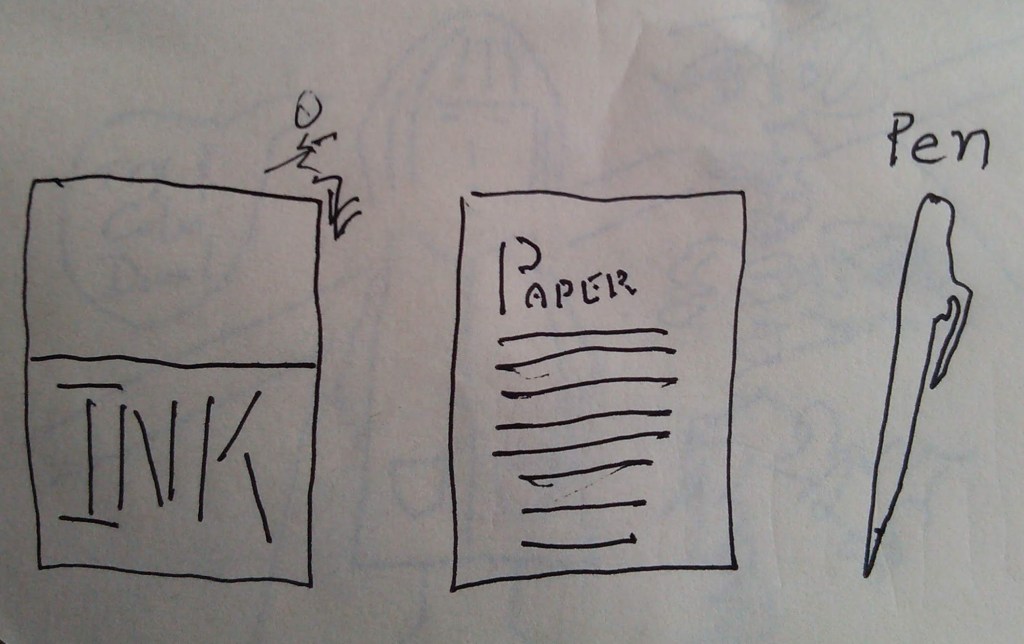
    I’ve been working on the coderoad
    Just to pass the time away
    Someone’s in the kitchen with AI
    Bowing on the old cello

    Soprano alto tenor bass
    The four each know their place
    One has a deja vu
    Looking back at you

    Oats peas beans and barley grow
    Timeline full of doodly squat
    Do you or I or anyone know
    How code from AI grows 

    Rounding off we come to end
    Our four part harmony
    She prompts you and you bump him
    Tomorrow we’ll meet again

    Four square play-court sections, each with round face: top left, brick gold A 4 star; top right, salt air C 2; bottom left, sand silver D 1; bottom right, pier water 3 B.
  • Manual for Intuition

    Buckminster Fuller was the most optimistic of scientists. He believed synergy solves the problem of entropy. Synergy, simply put, is working together to achieve more. Synergy is sometimes defined as a whole unpredictable from the sum of its parts (1+1 = 3). And Fuller thought there is enough to go around:

    “Once man comprehended that any tree would serve as a lever his intellectual advantages accelerated. Man freed of special-case superstition by intellect has had his survival potentials multiplied millions fold. By virtue of the leverage principles in gears, pulleys, transistors, and so forth, it is literally possible to do more with less in a multitude of physio-chemical ways. Possibly it was this intellectual augmentation of humanity’s survival and success through the metaphysical perception of generalized principles which may be objectively employed that Christ was trying to teach in the obscurely told story of the loaves and the fishes.1

    Dostoevsky said the same thing in his “Notes from Underground” (1864):

    “I admit that two times two makes four is an excellent thing, but if we are to give everything its due, two times two makes five is sometimes a very charming thing too.”

    Though Orwell in “1984” (1949) suggested we be careful with arithmetic and keep an eye on who’s controlling the data. William Blake also reasoned reason could be a tyranny (“The Book of Urizen,” 1794).

    For my own alone little part of the network, I’ve been wondering about the popularity of Doors, Wordless Wednesdays, and other prompts, and have opted to contribute a little poem on the subject of synergy and entropy:

    Loves and Fishes

    Planets like cauliflower
    heads can’t go it alone;
    entropy a flat bald universe,
    produces no combs.

    Love like the neutrino
    difficult to detect,
    plentiful and invisible,
    with no electrical net.

    1. “Operating Manual for Spaceship Earth,” R. Buckminster Fuller. First published 1969, new edition 2008/2011, edited by Jaime Snyder. Lars Muller Publishers. ↩︎
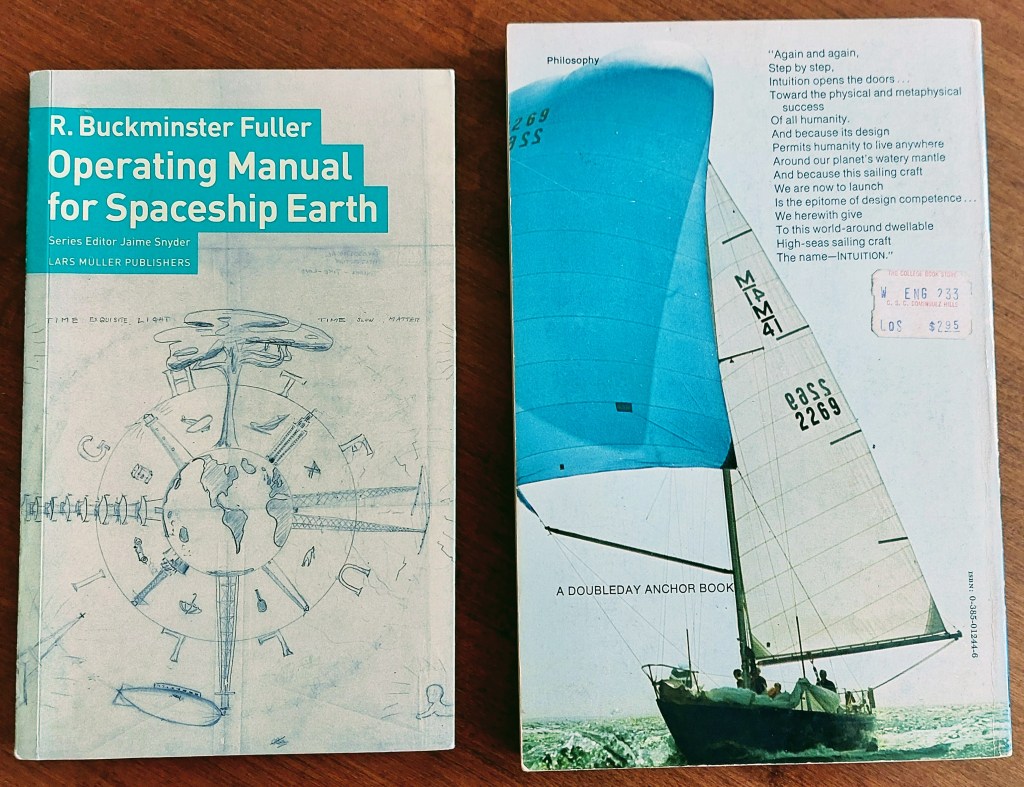
    Operating Manual for Spaceship Earth (1969) and Intuition (1972) – books by Buckminster Fuller
  • Behind the Lines

    The good poet Joe
    unflagging foot
    soldier carries on
    slogs thru tradition

    His critic fires at will
    who never took a hill
    a couple of readers
    attend his last burial

    Deep in darkness
    you forget stuff
    your steel pot
    what you have and don’t

    your action figure nightly
    decommissioned
    on your chest no lines
    no bells no whistles

    Equipped with orders
    and a compass but no
    point to it all you’re lost
    and at mail call

    at parade rest or at ease
    advice comments you know
    anyone can dress a uniform
    you’re just an average Joe

  • At Last

    at last the day done
    had a cow shut in
    the pig put in the pen
    in the rain
    the coop closed
    to the fox you can hear
    the icebox hum
    what is yours is asleep
    at last but not to dream
    must get up again

  • A Cloudy Day

    She lives on the floor
    of the spheres
    about her ears
    rivers of clouds swirl.
    Her celestial gown
    flows and steams
    swiftly in variable
    winds shifting east
    to west west to east
    a sweeping trail
    of light and wet dust.

    Deeper still the mud
    rock ocean floor
    the water almost
    solid so pressed.
    Mote stuffs suspend
    where nothing not
    comparable is created
    has no fixed shape
    and nothing rises
    slowly to the surface
    of its own floor.

  • Where the In is Free

    I too will get up and go
    now first rest nine note
    scale will build acoustic
    not too loud evening is

    while I still have ear to hear
    nor do I want to live alone
    in some open space empty
    from you my love who loves

    my cricket tongue my choice
    voice and together we sing
    our own songs fashioned
    from what we found here

  • Displacement

    Adrunk
    he becomes
    the drinker
    who drank him.

    Take this cup
    all of you
    and drink
    its whine the engine

    of the cat
    contemplating
    her contempt for her
    need for you.

    Adrift
    on a sea street
    starry eyed
    night
    ears black holes
    no sound
    escapes.

    And the nose tastes
    hours of laundromat fuzz
    falls a third time
    near the blue dumpster
    behind the fishmonger’s
    by the cold chain links
    in a bed of weeds gone to seed
    spreading like a hatch
    of artificial flies.

    One he swallows
    caught
    hooked through the lip
    jumps pulls and runs
    down the path
    to where the deep water
    creeps awake
    in the darkness
    its thick jelled
    mass motions.

  • In Other Words

    In other words, a mushroom. Every poem is a mushroom, a fruit body arising from its poetic fungus, often popping up overnight. Harold Bloom might have said that. What Bloom actually said was, “Poetry lives always under the shadow of poetry.” Some poems, of course, are not edible, but all have stems and caps and gills, just like mushrooms. The stinkhorn poem is distributed worldwide, and its horrid smell attracts flies and insects no matter where it calls home. Poets are very much like the toads who sit atop the stools the easier to snag flies with their tongue. Some mushrooms are said to be magical and to possess psychic healing qualities, though just as often eaters of these mushrooms become delirious. The same is true of some poems. There are many similarities of mushrooms and poems, but one should probably not confuse one for the other, but if you treat a book properly, it will over time produce mushrooms, if not poems.

  • Good Grief, Robert Duncan

    Good Grief, Robert Duncan

    …tome views for the eye weary
    this failure of sound is song lost
    the sinking touch, just out of reach
    “grandeurs”? you want to speak
    of Hopkins?

    “the world is charged with the grandeur of God.

    It will flame out, like shining from shook foil;

    It gathers to a greatness, like the ooze of oil

    Crushed.”

    Meantime, Word.docx
    Objects
    Casually
    Questioning
    yr txt
    my txt
    evrybdys wrds.