Tag: Painting

  • Pizza Painting

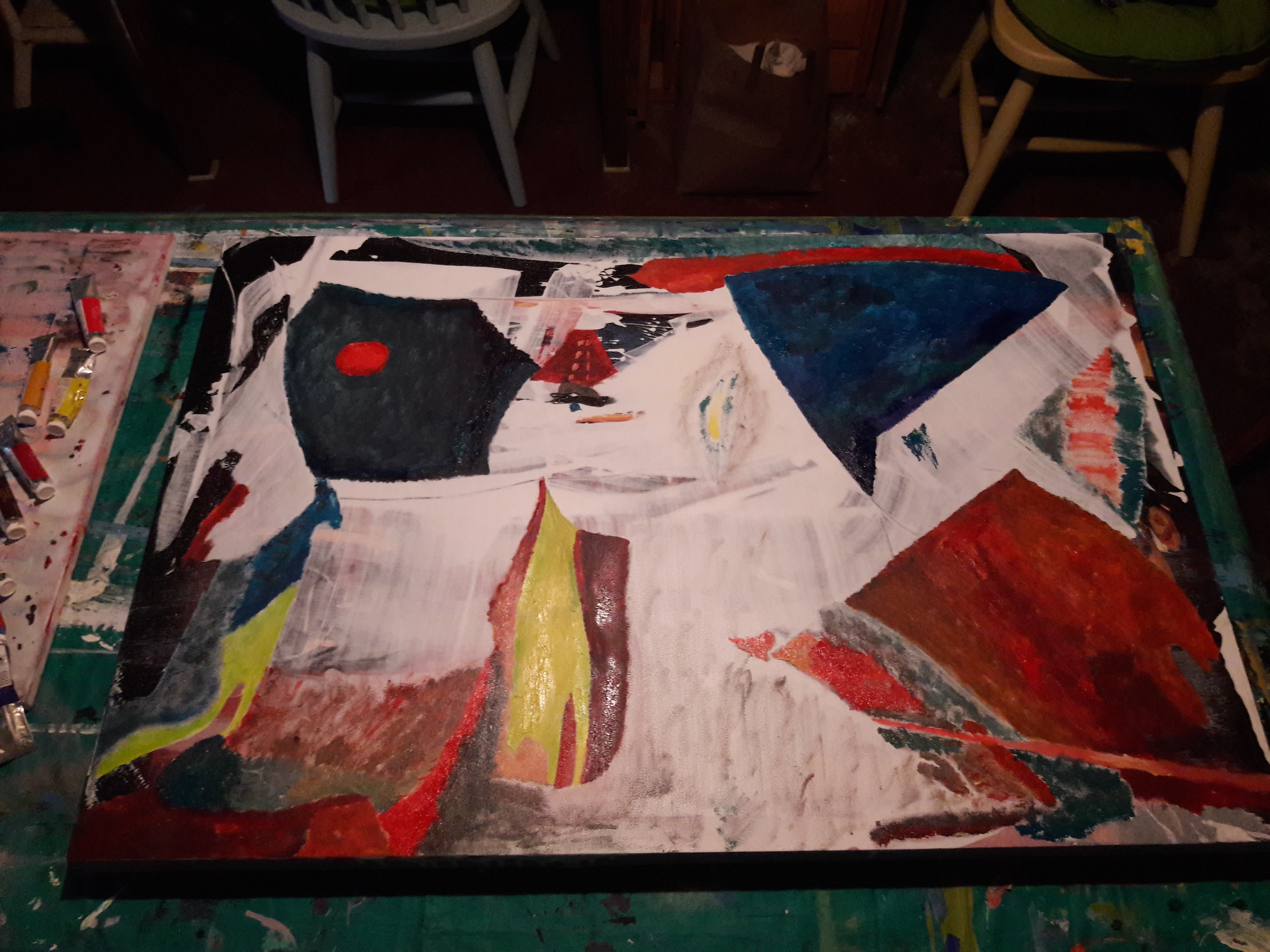
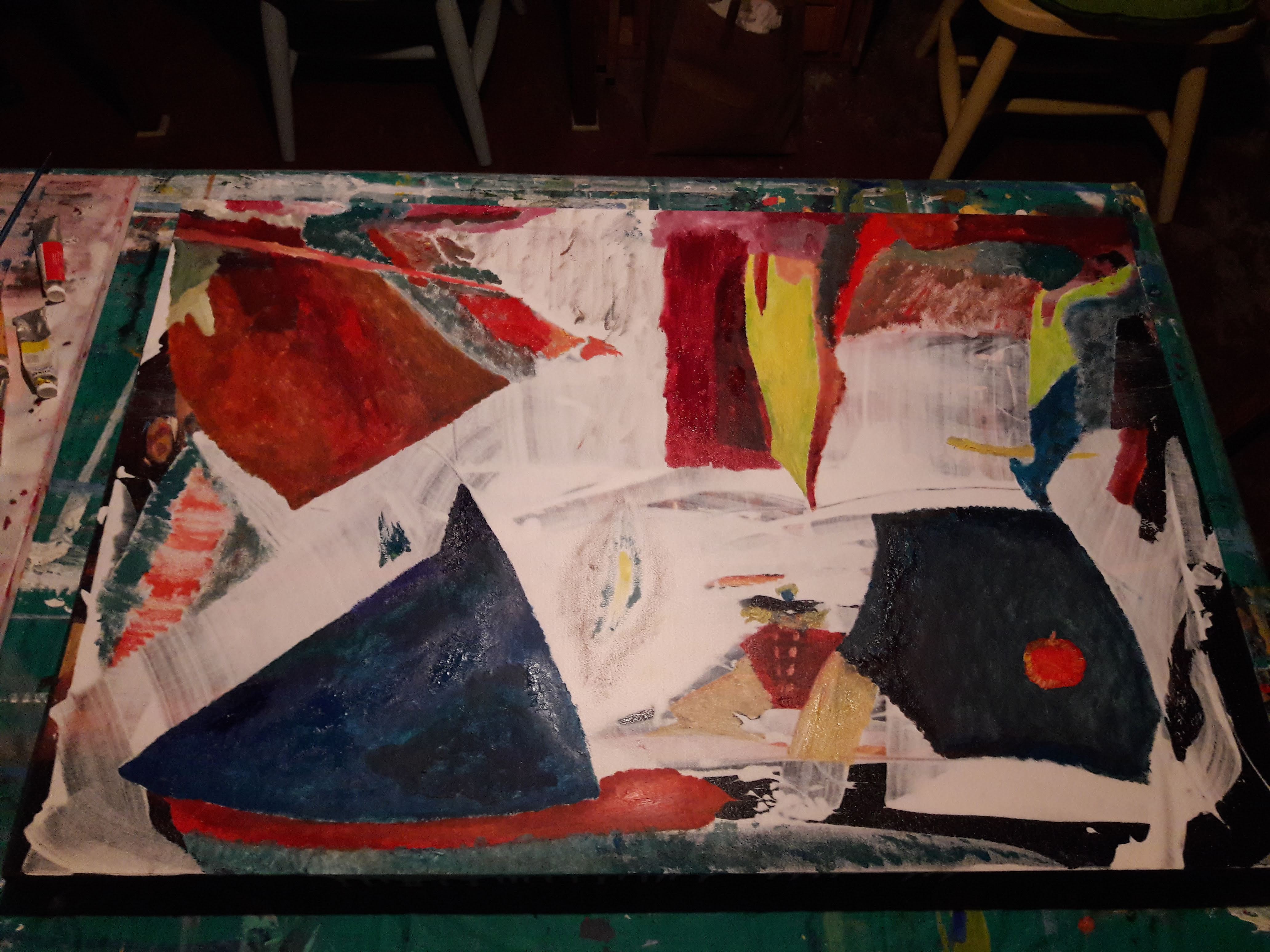
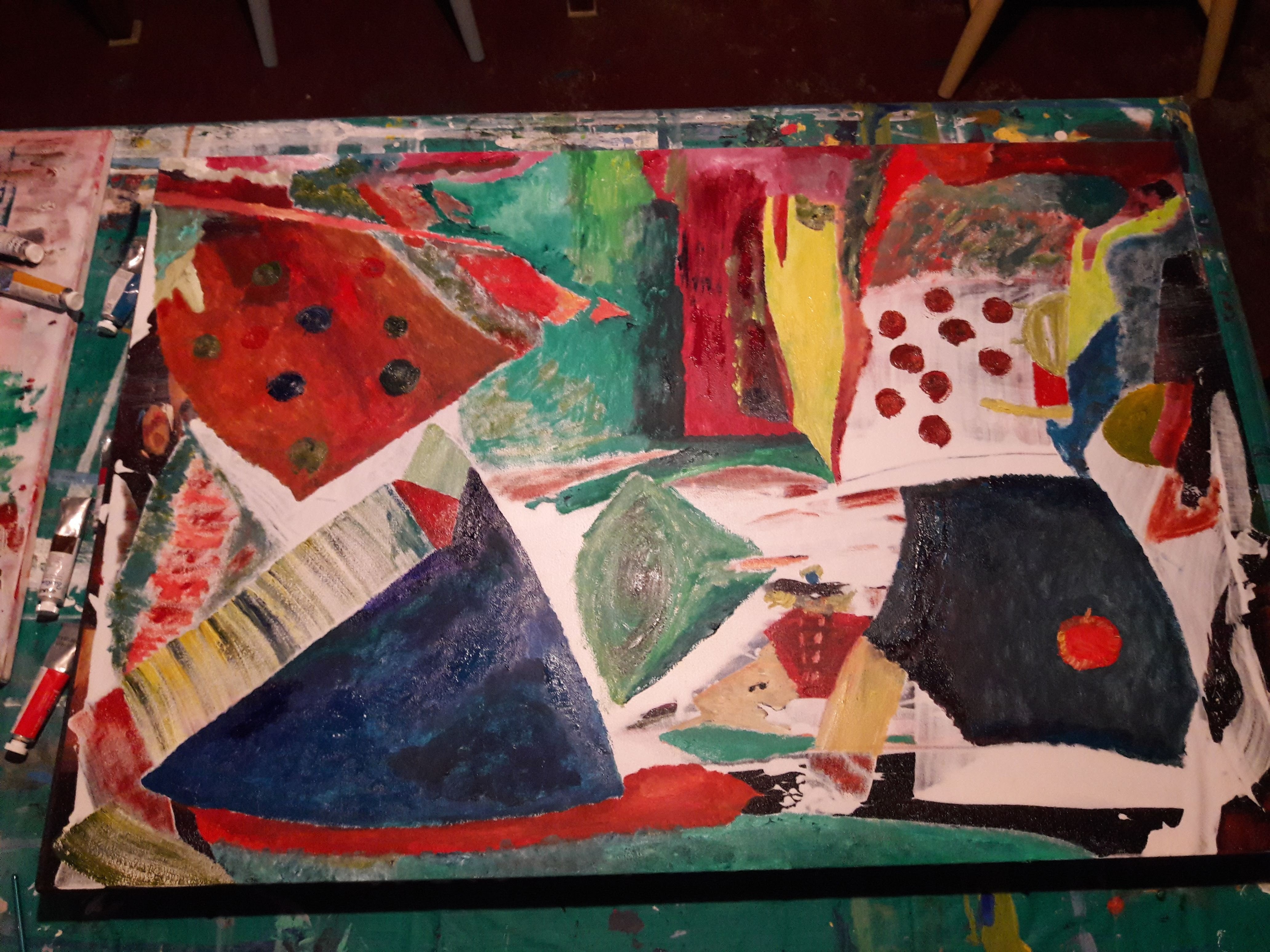
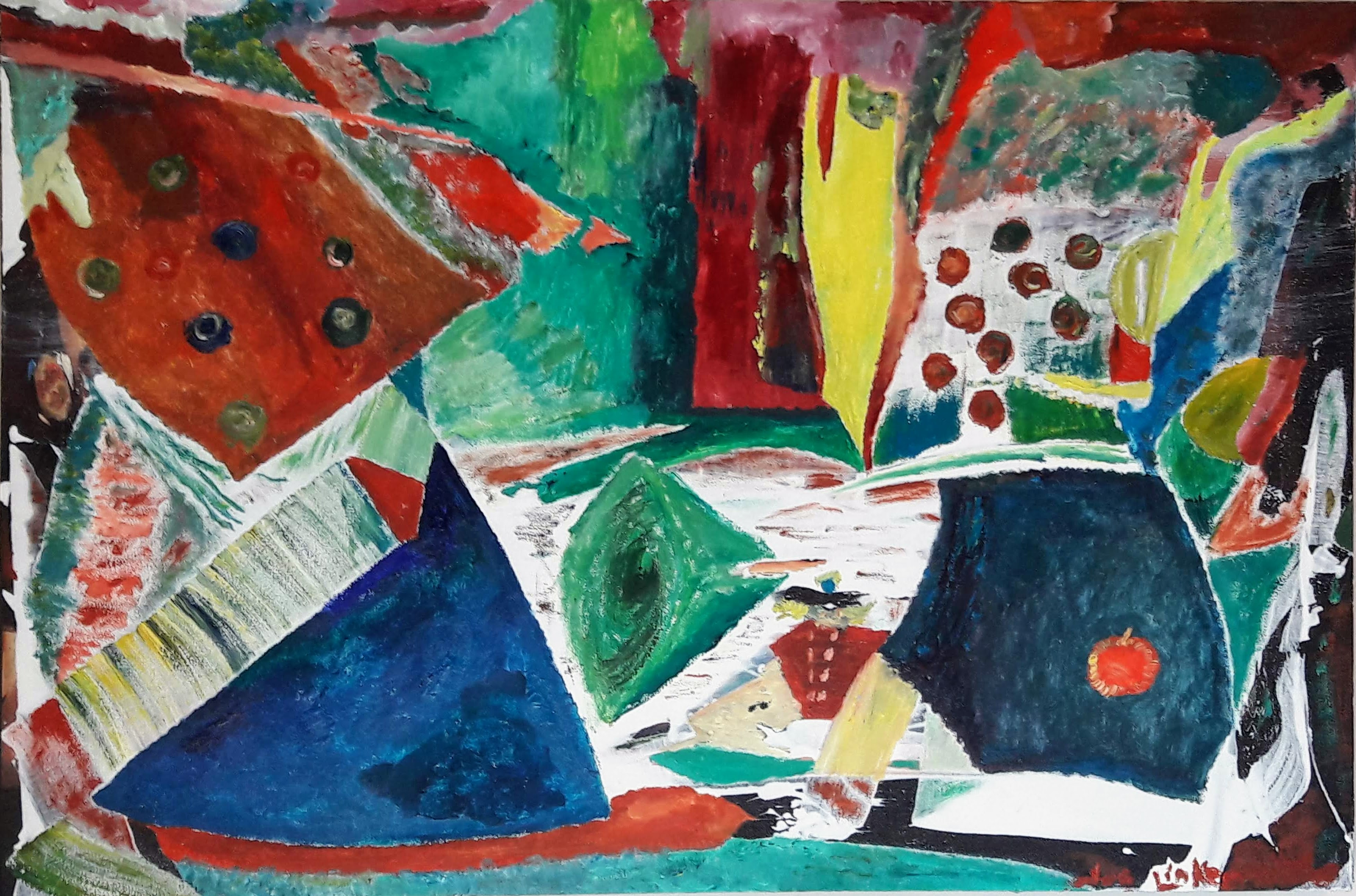
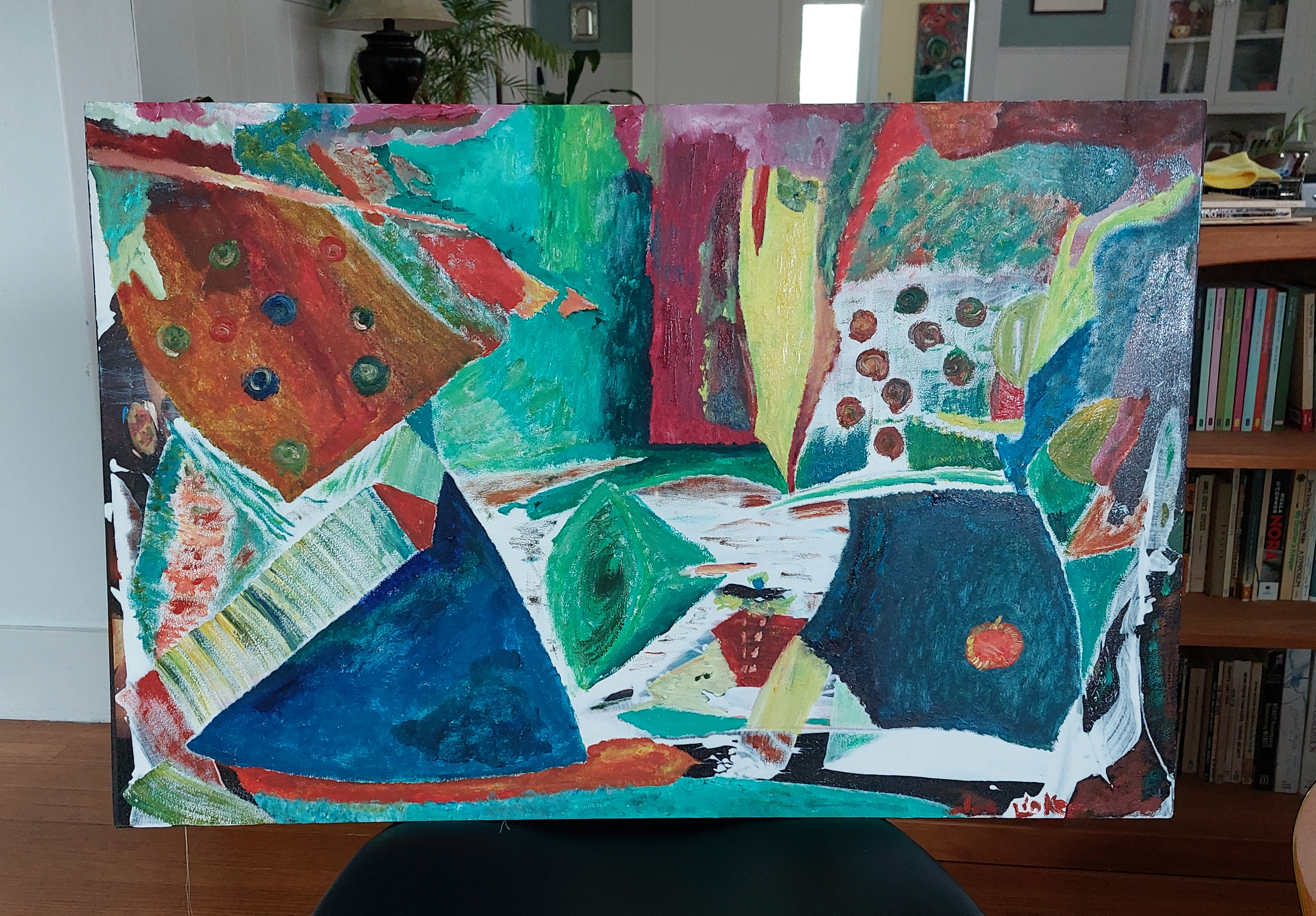
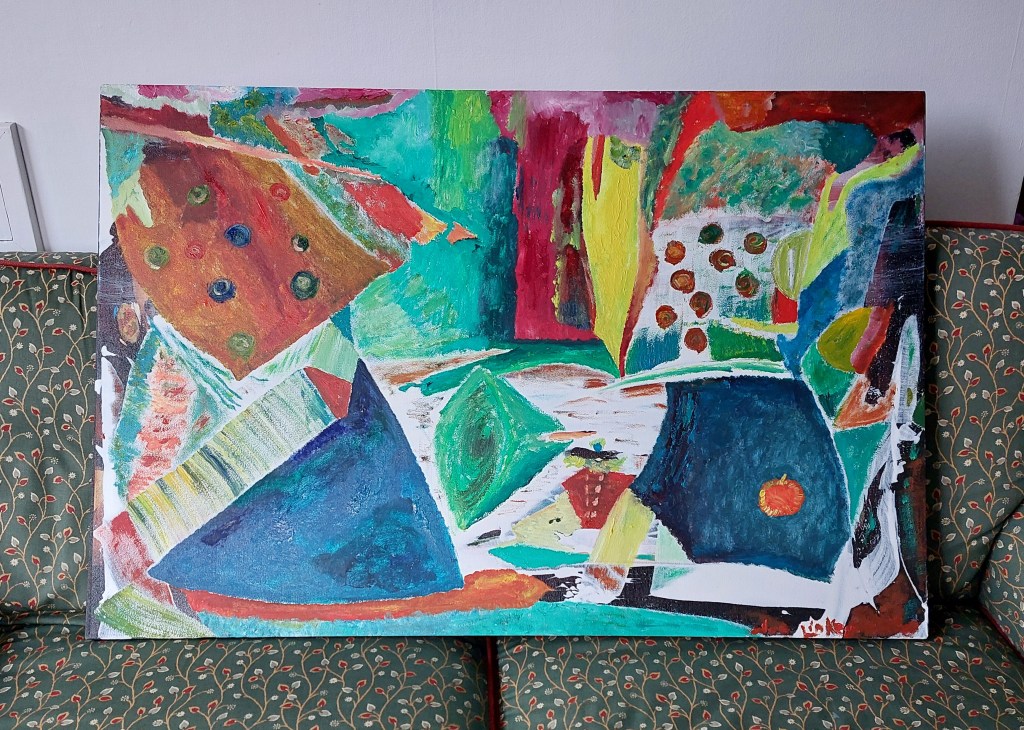
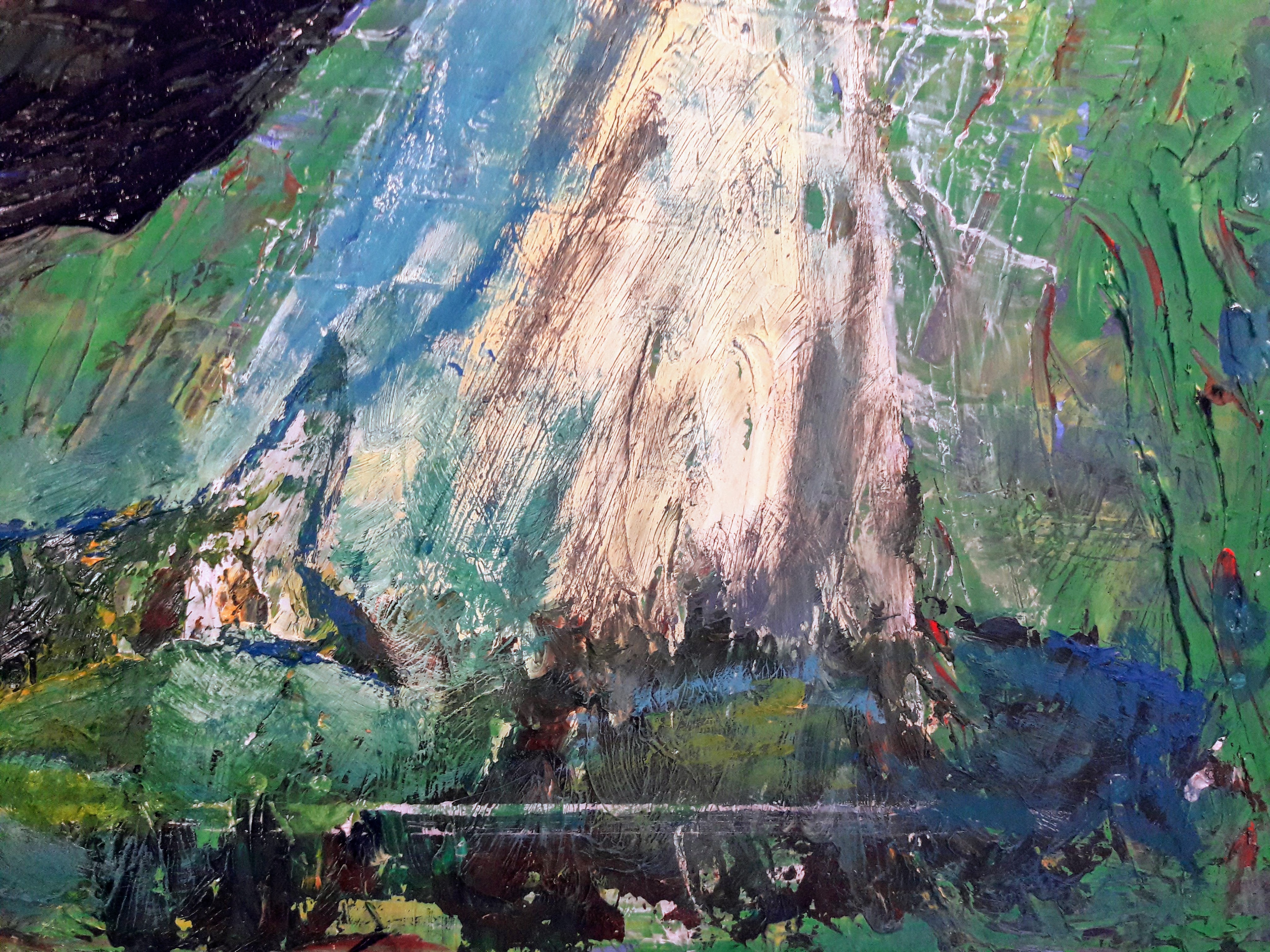
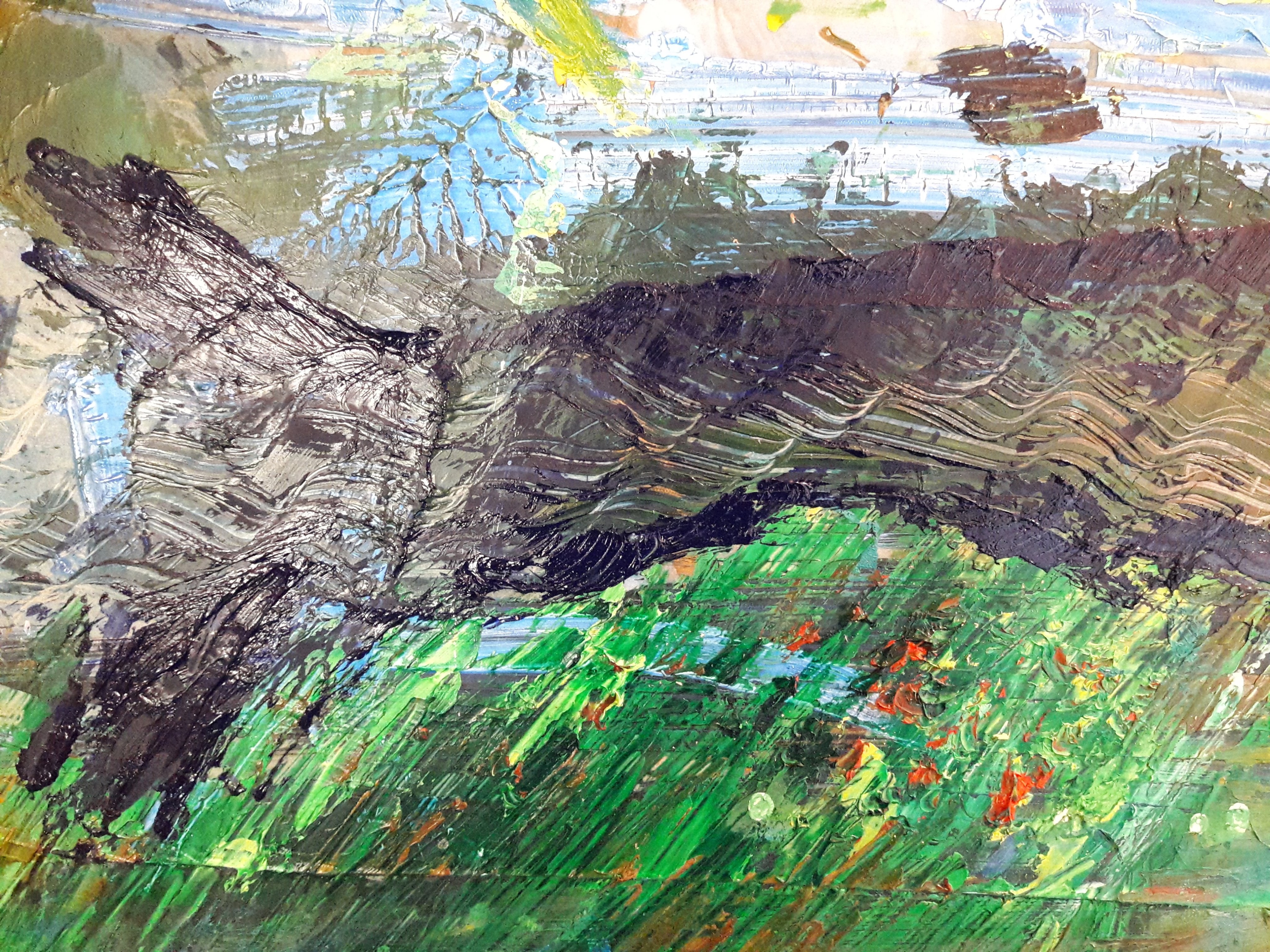
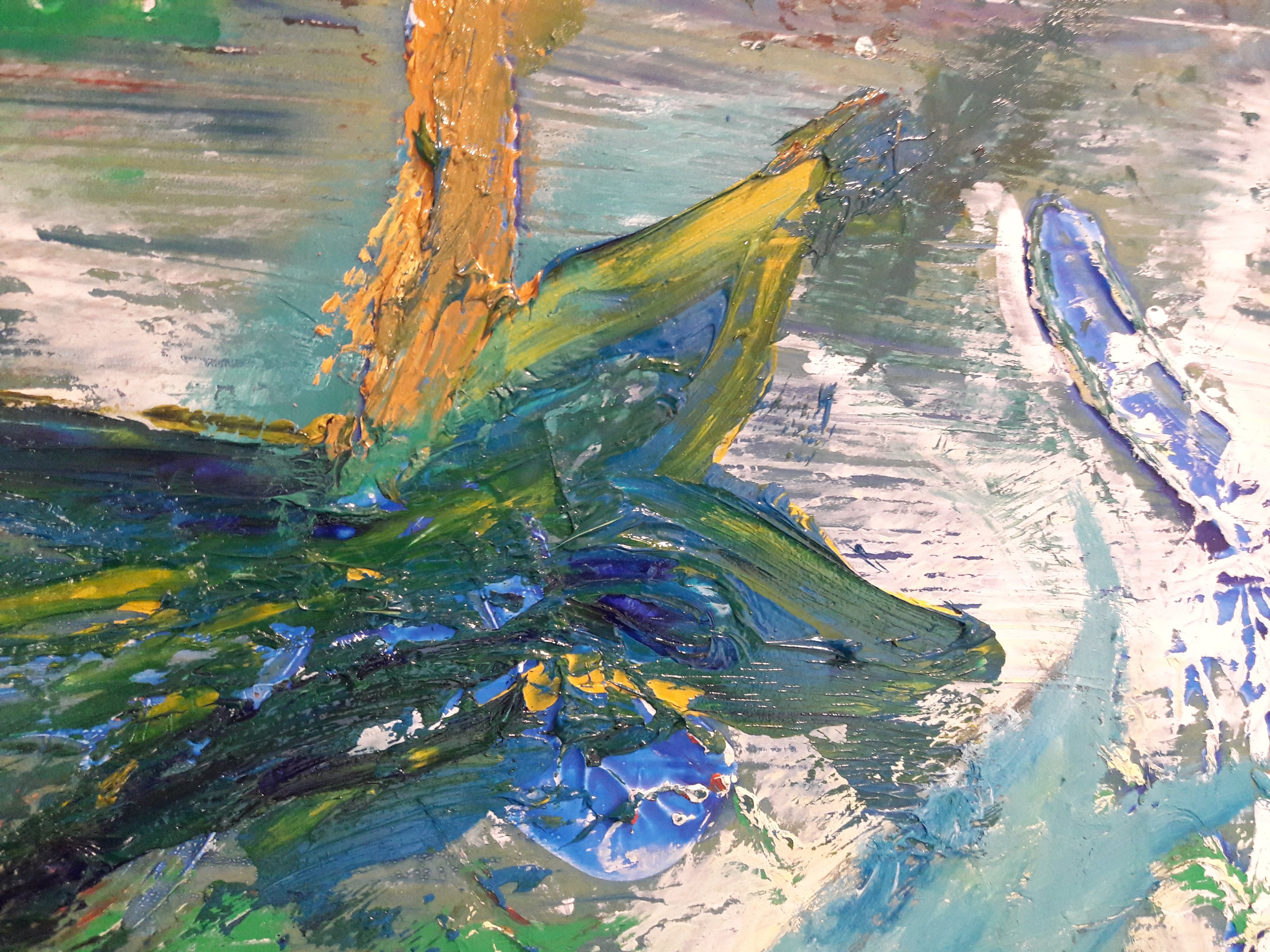
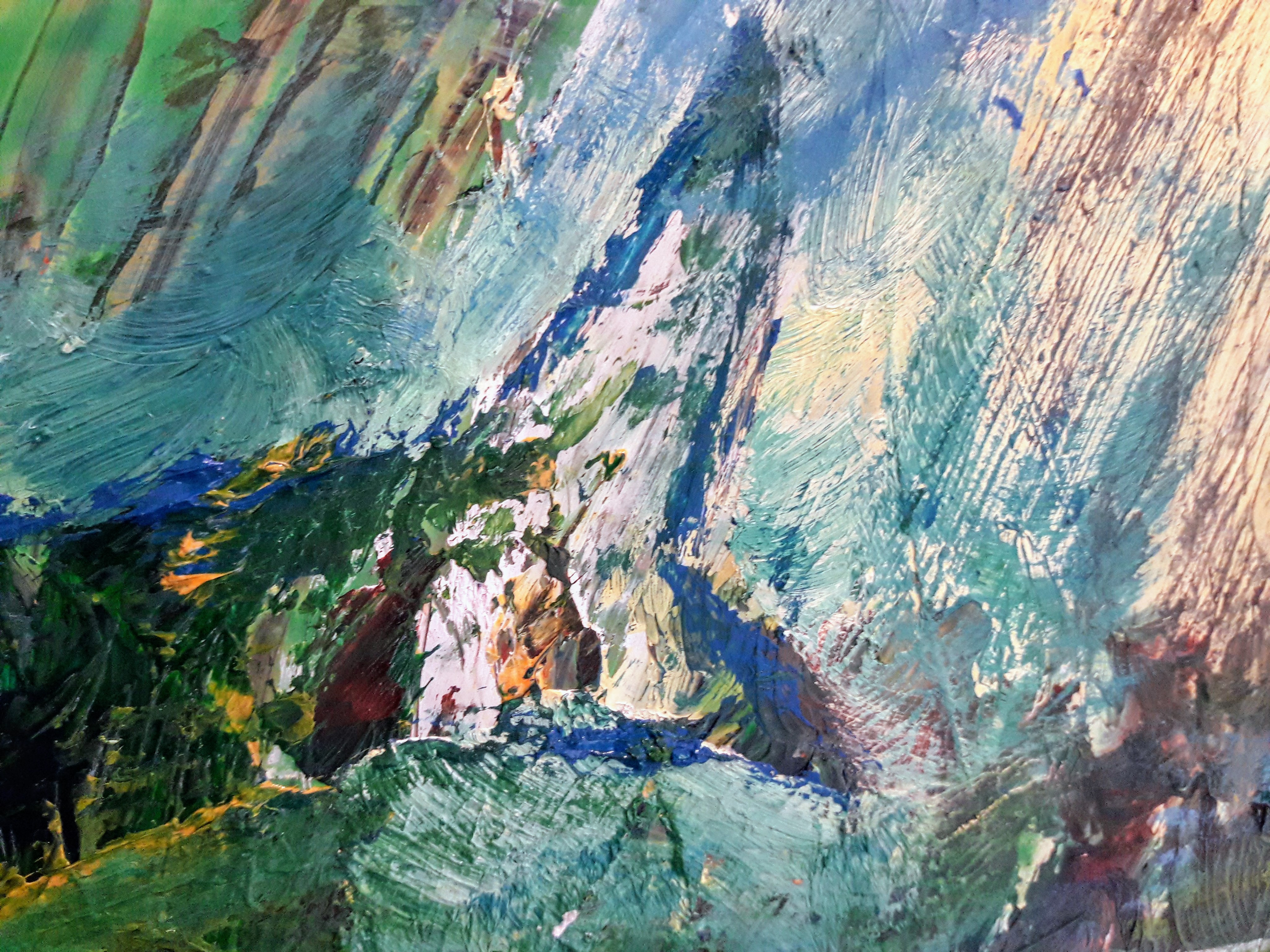
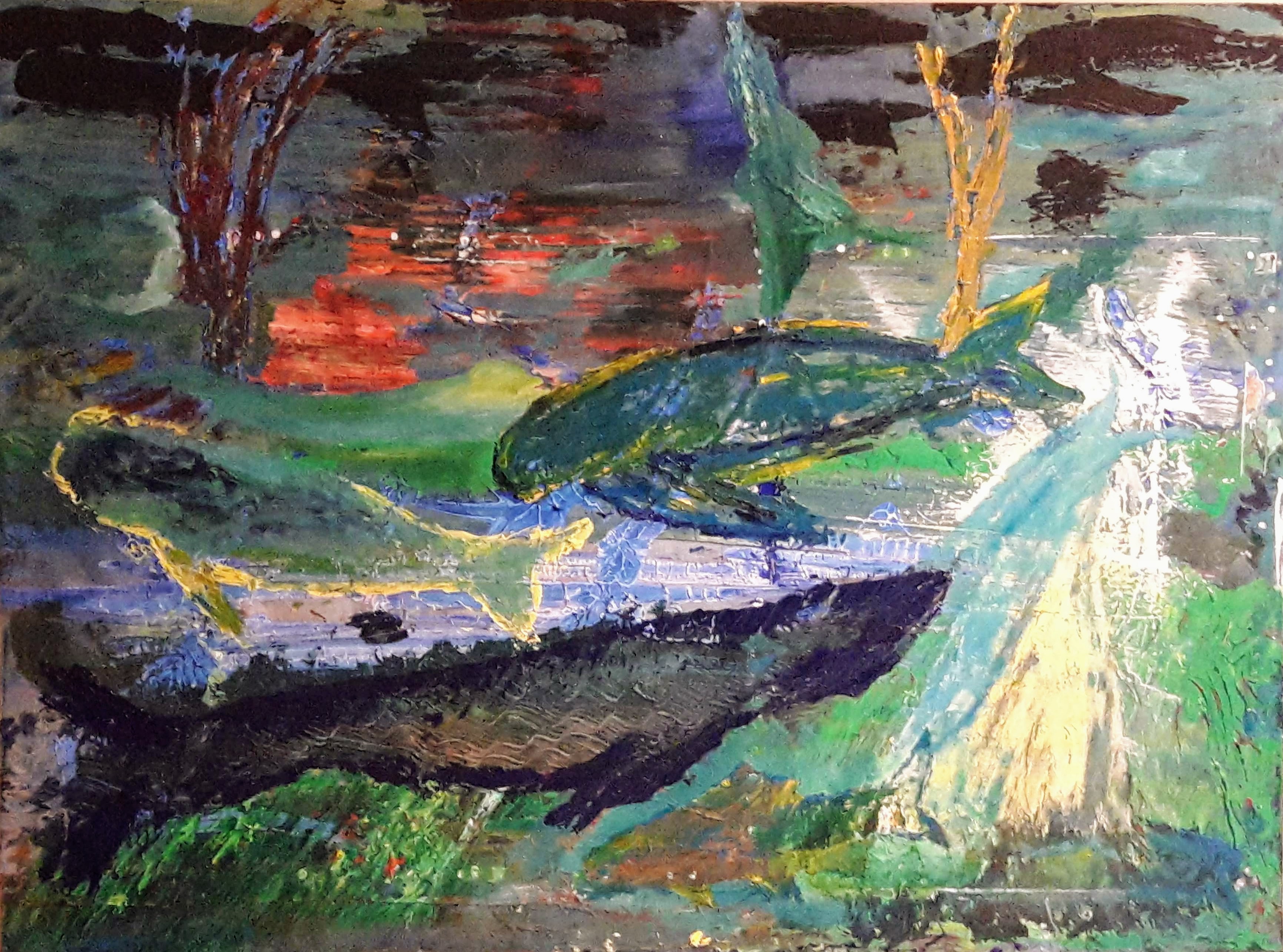
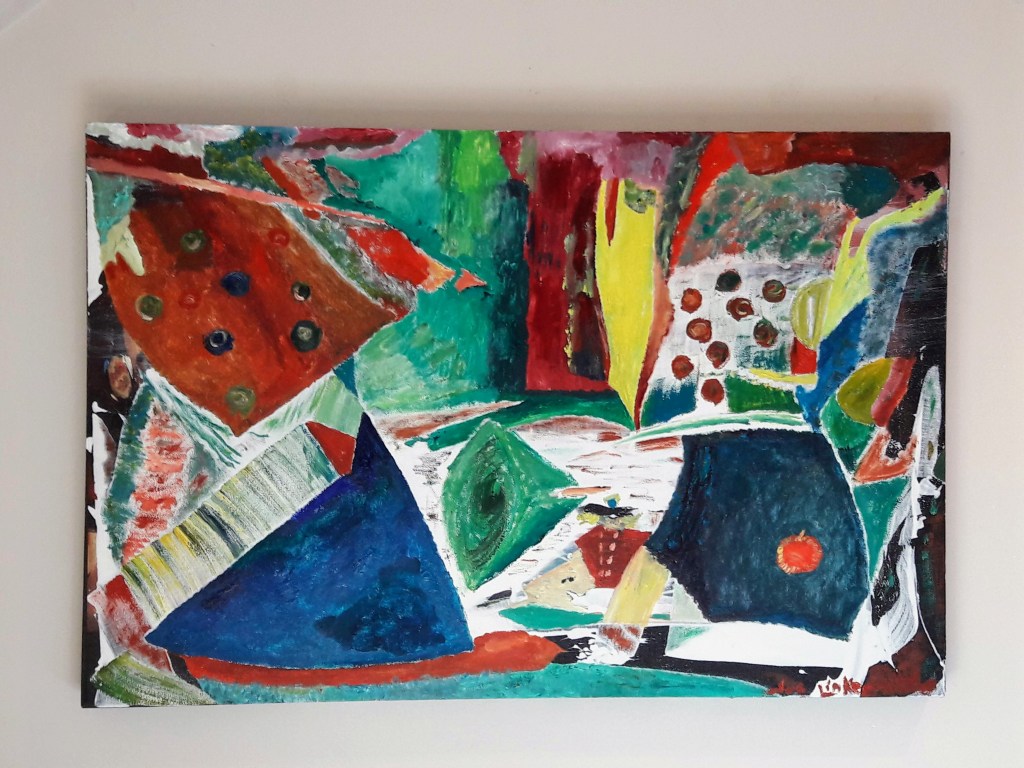
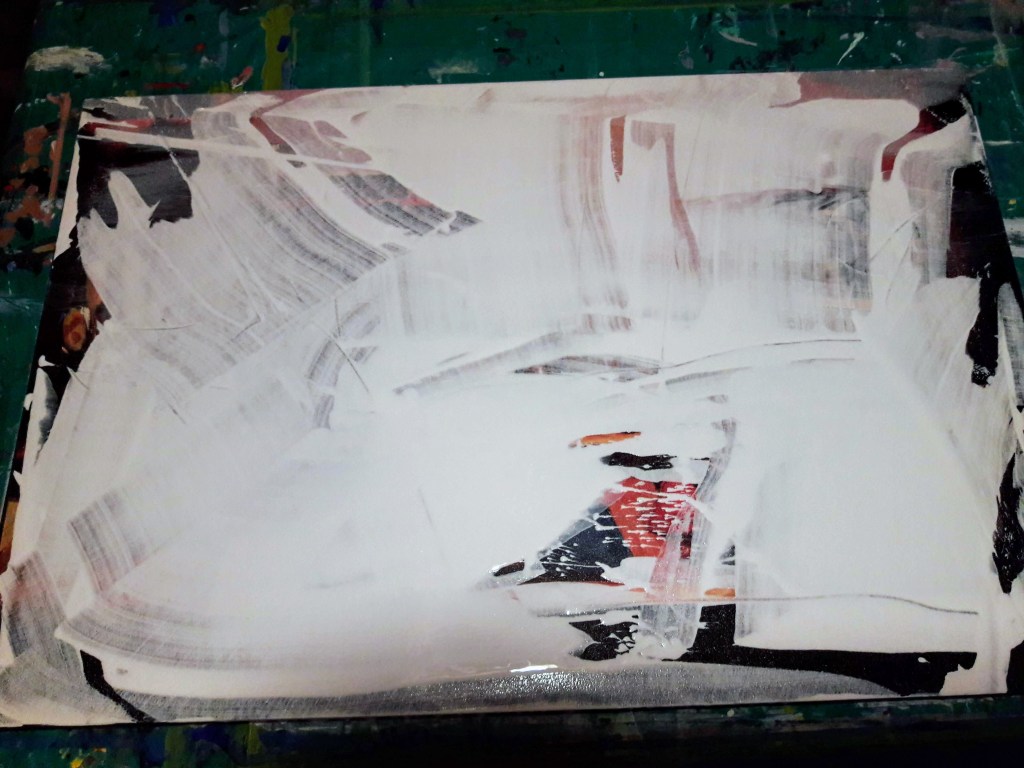
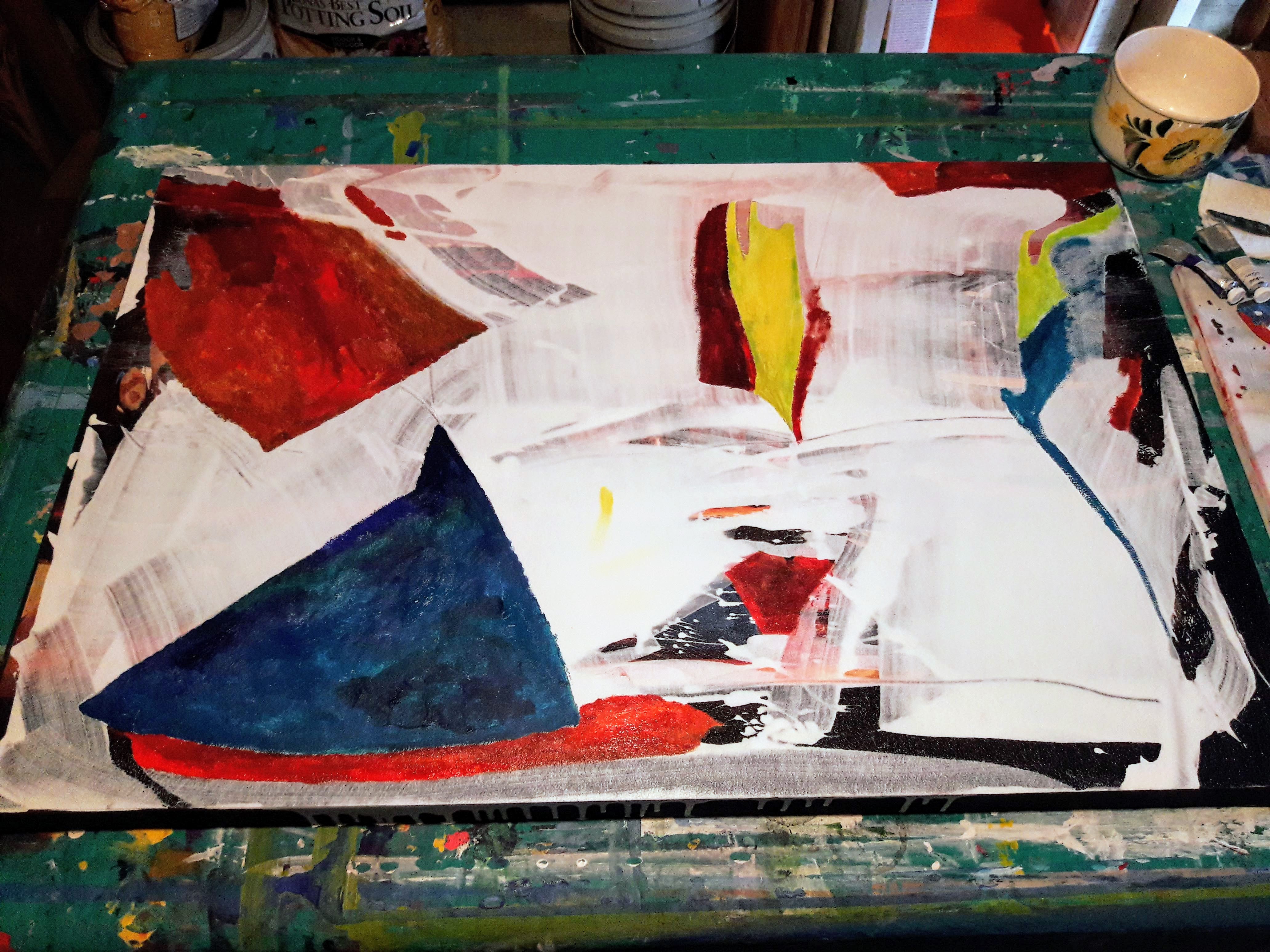
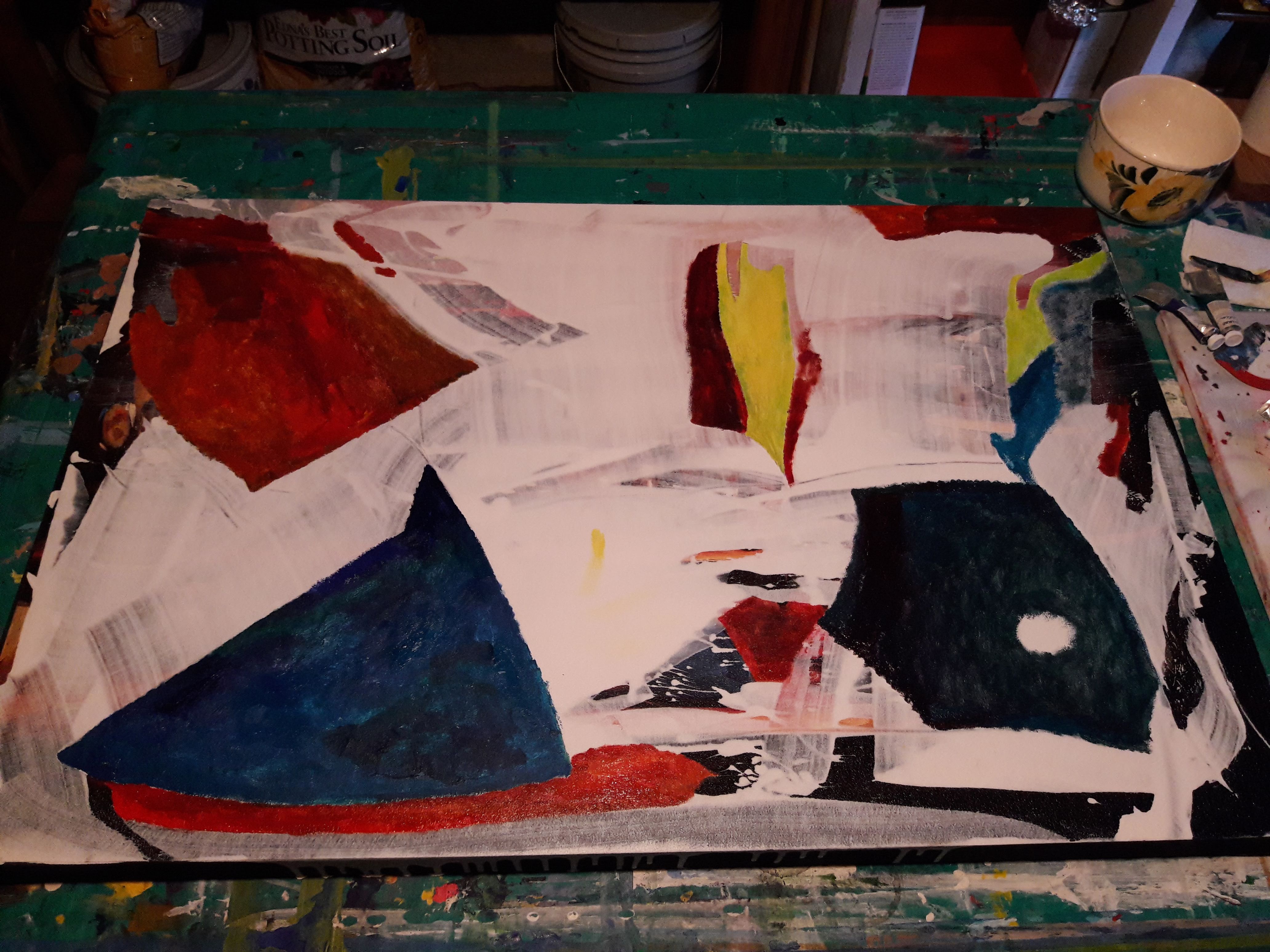
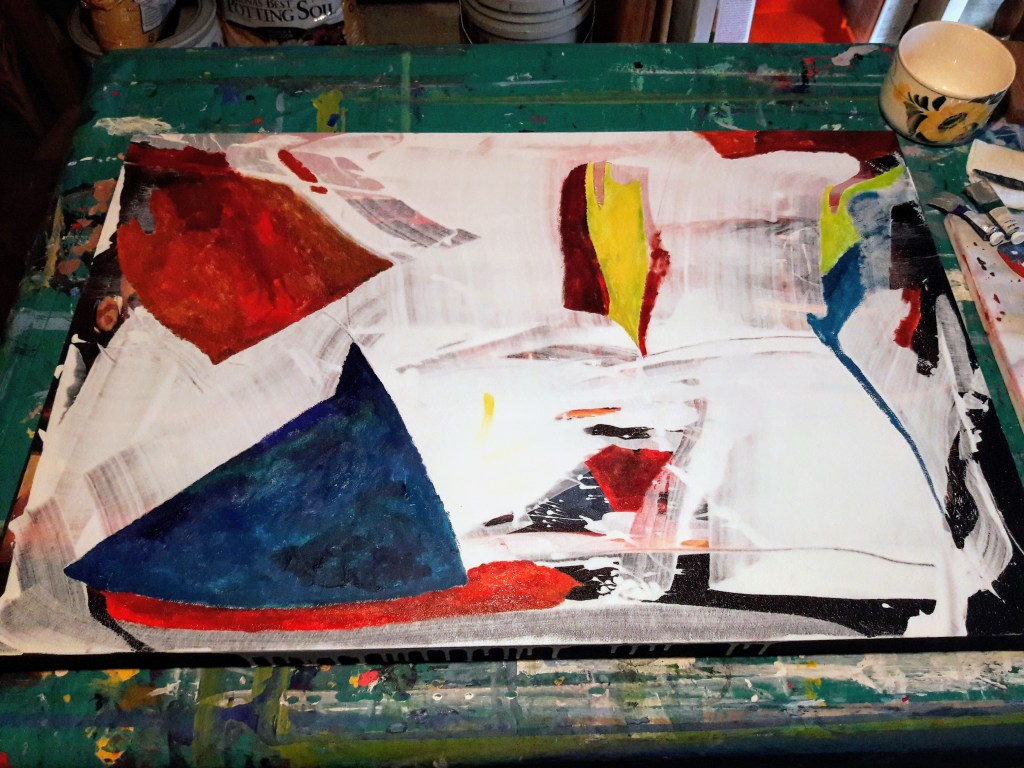
    Pizza Painting, 2020, acrylic on canvas, 24″ by 36″

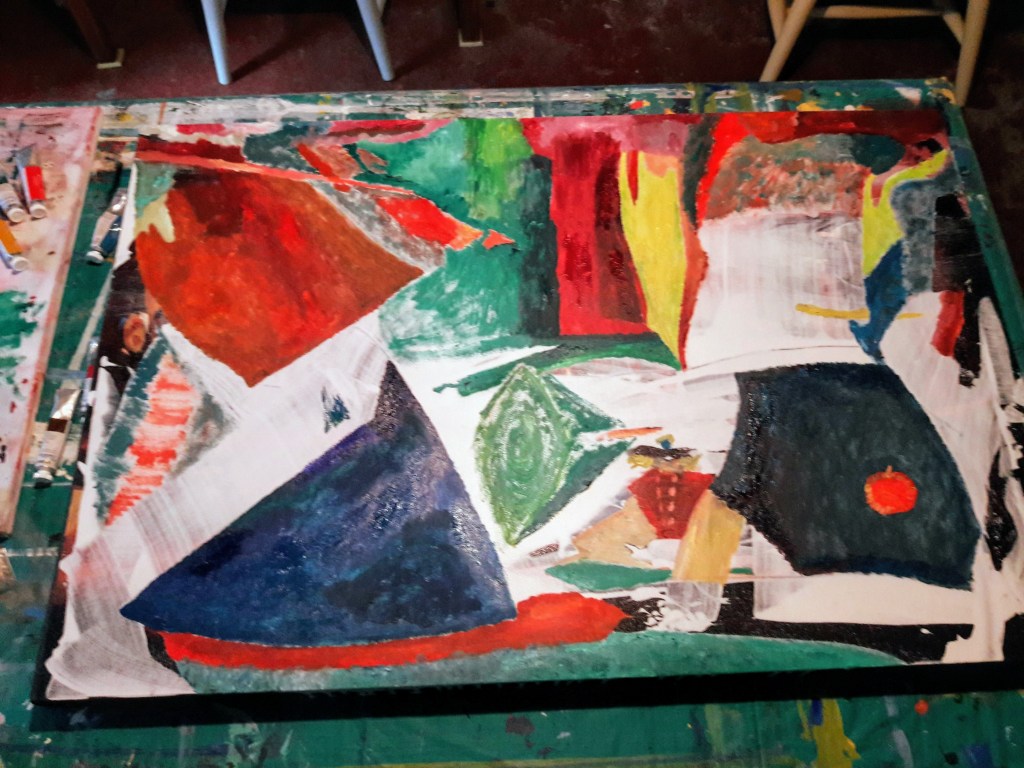
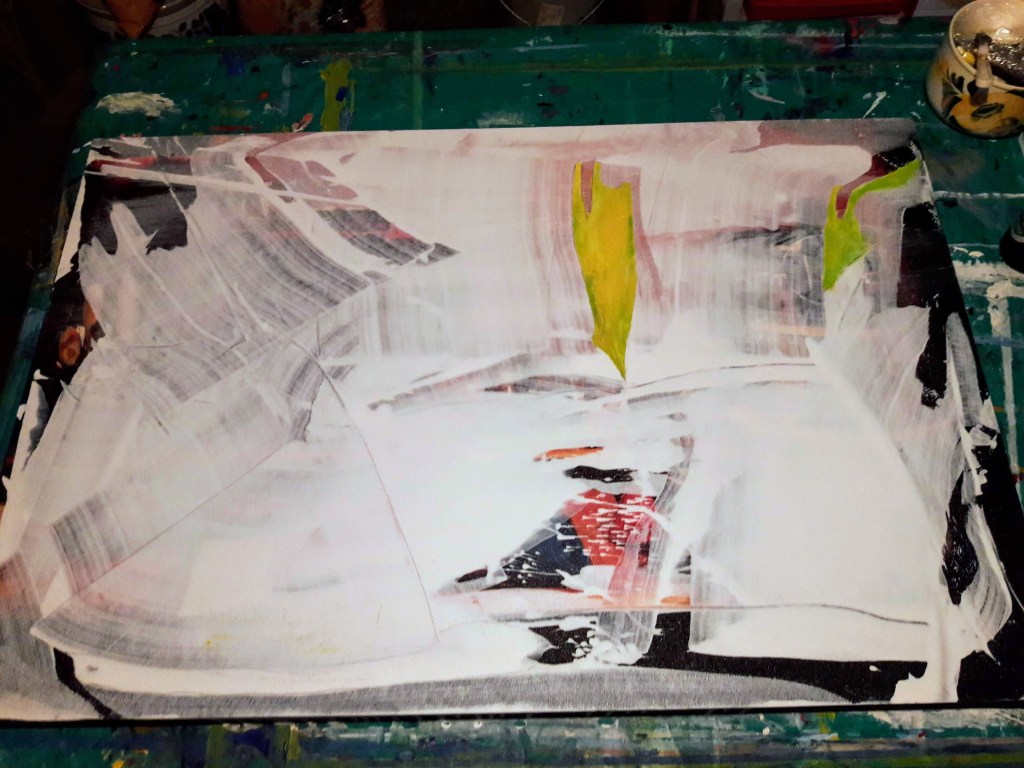
    The painting in progress photographed with a cell phone looks dim and dark, reflecting the working conditions of the basement space in February of 2020:

    In brighter available light the painting still looks shades different depending on angle and direction of light. Can you see the pizzaiolo (pizza maker) at the bottom-center of the painting? Also note the yellow anchovy top-center.

  • Sunday on a Canvas Island: “Whale Watch”

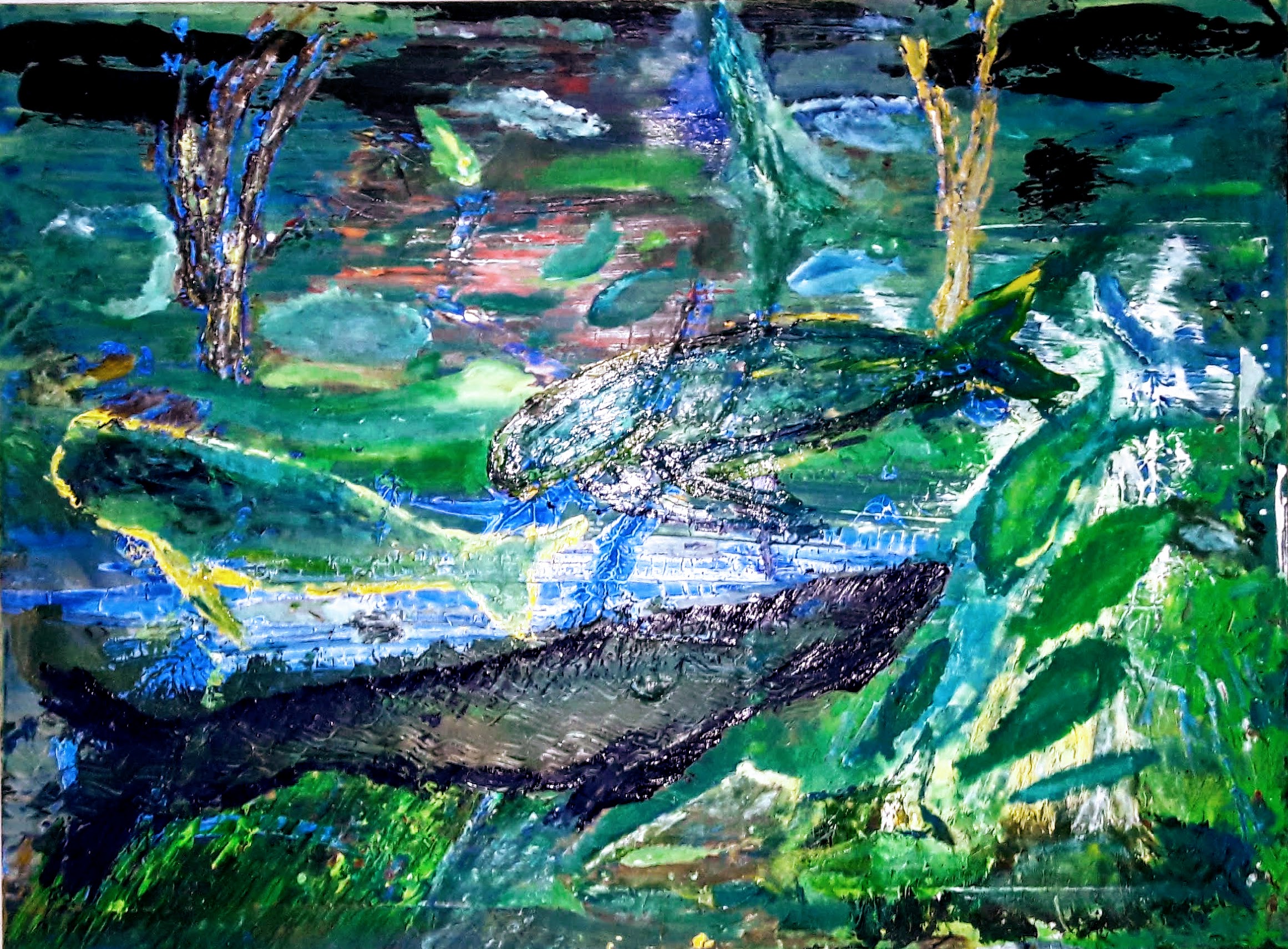
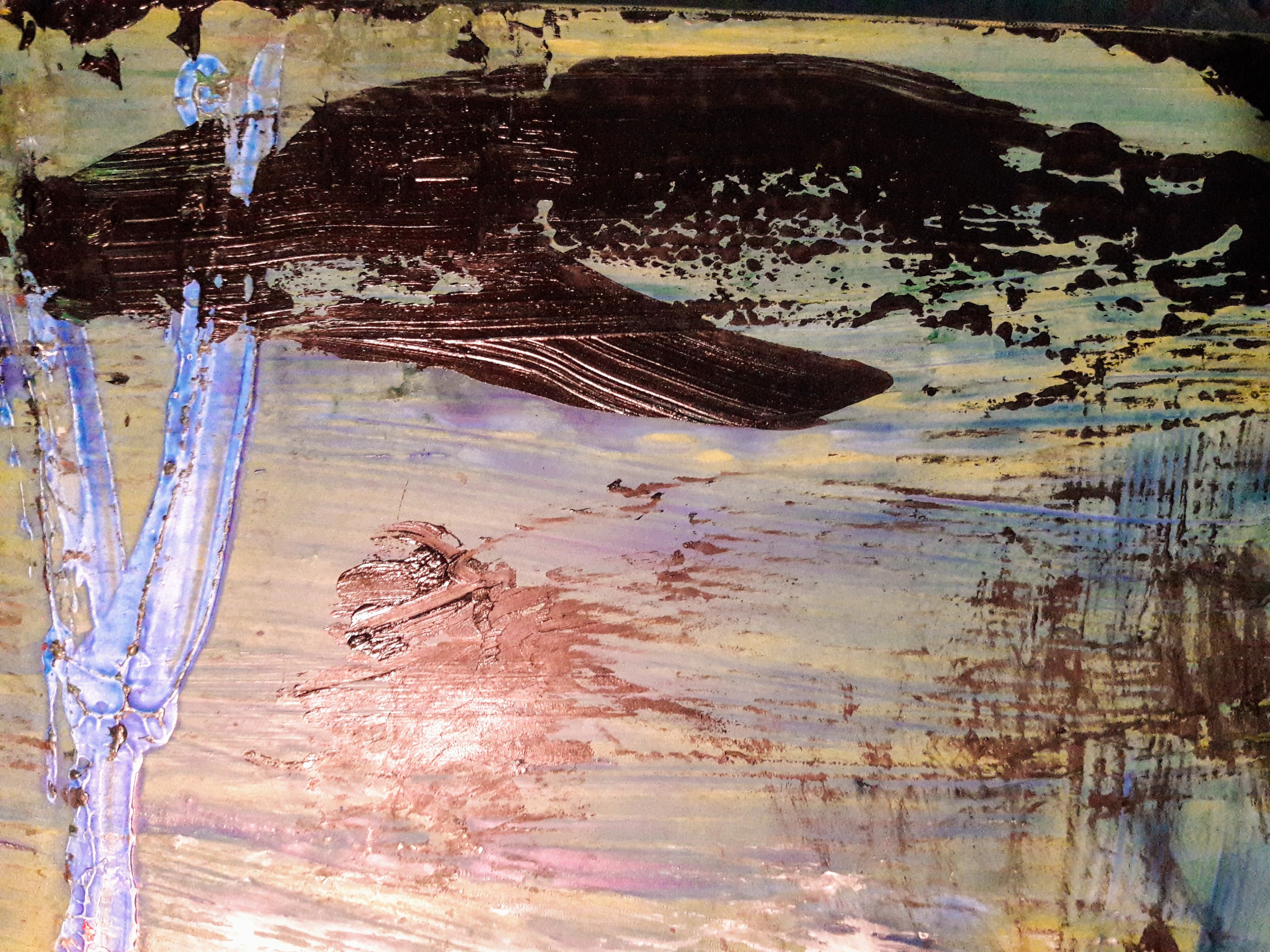
    Painting, smearing pigment or dye from a palette to an object for the purpose of catching light, is a physical activity. Whereas Melville begins his great book “Moby-Dick; or, The Whale” explaining why men take to the sea (“Whenever it is a damp, drizzly November in my soul,” Ismael says, and, “If they but knew it, almost all men in their degree, some time or other, cherish very nearly the same feelings towards the ocean with me”), I drop down to the basement or spread a cover over the kitchen table and begin a painting.

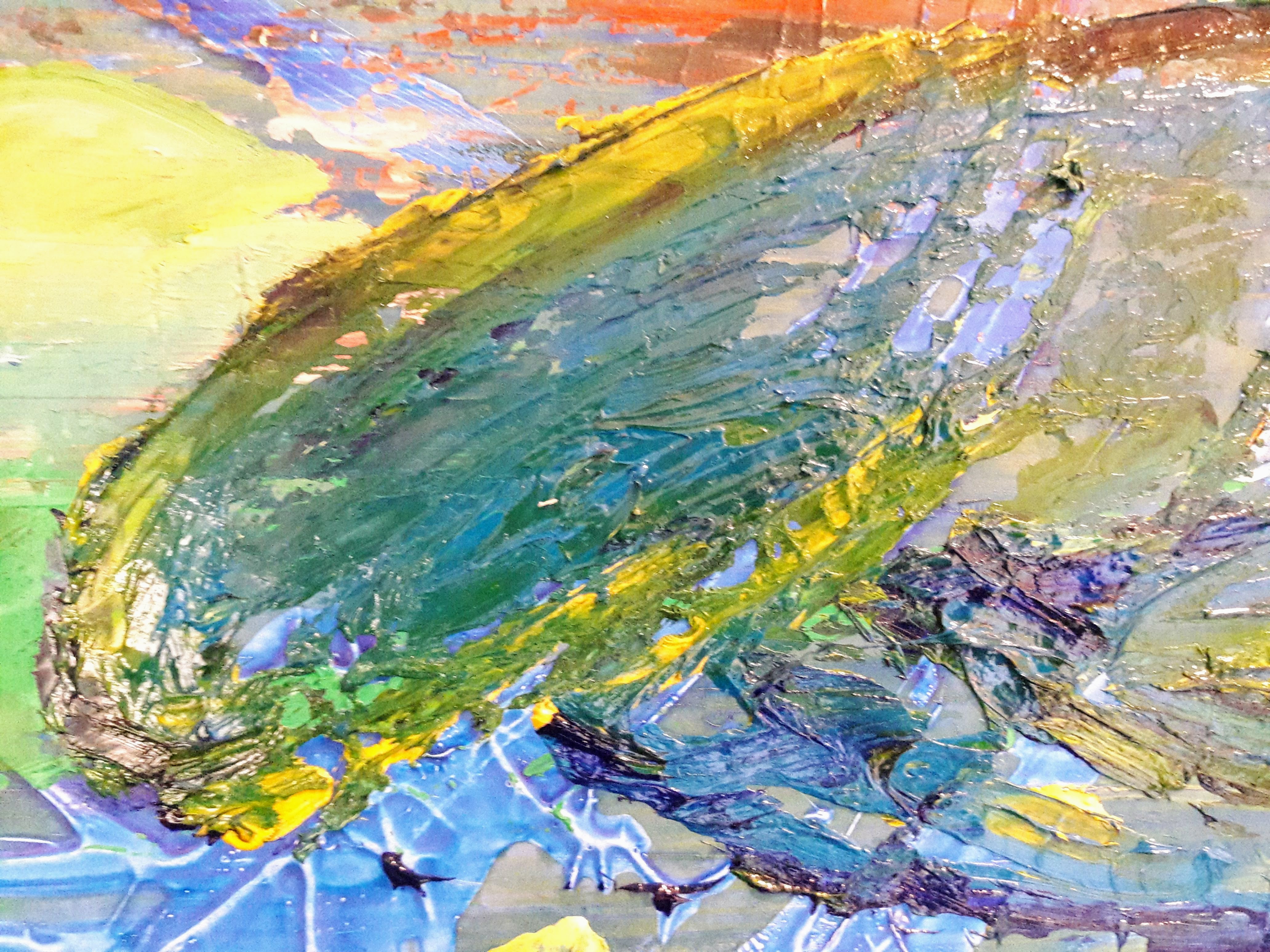
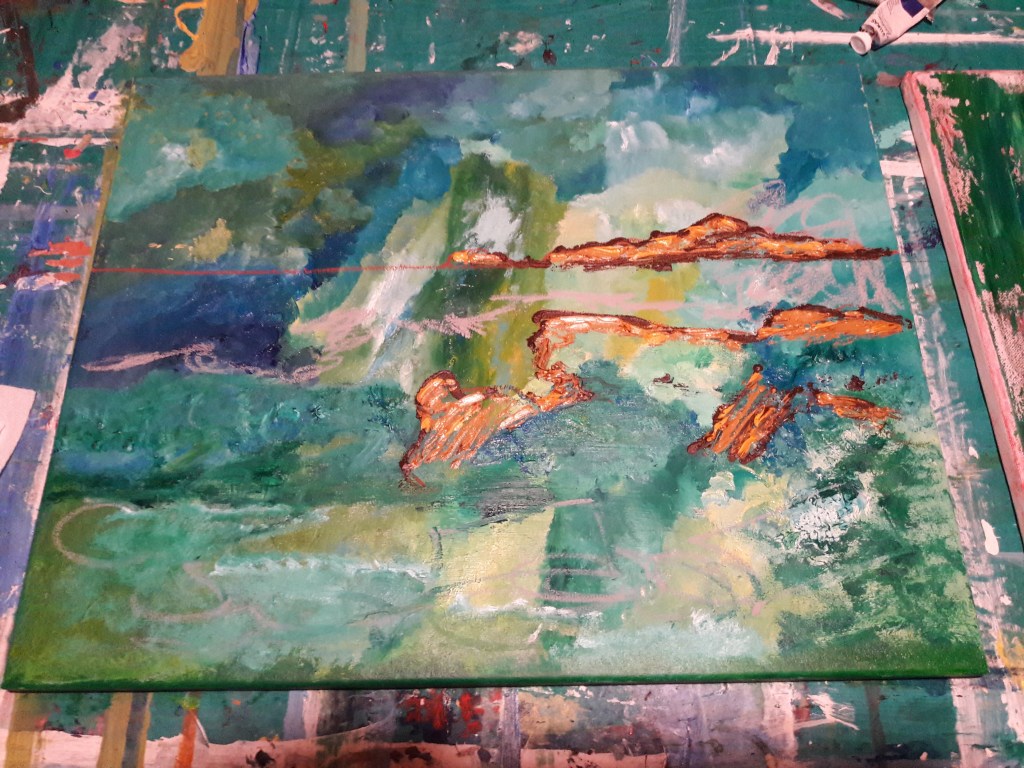
    “Whale Watch” (2019) Water based oils on Canvas 30″ x 40″:

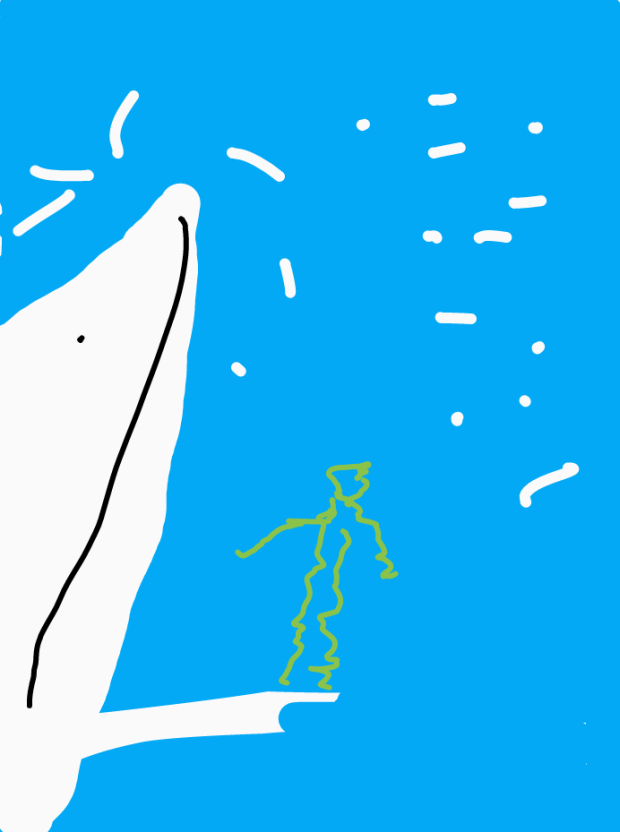
    Painting is necessarily physical and messy. Anyone can paint, you don’t need to be an artist, and if you have no paints or canvas or board, you can draw or sketch, on paper or on your cell phone, for example:

    “Whale Watch” (2017) MemoDraw cell phone app .png 0.6MP 692×929:

  • The Red Wheelbarrow in Spring and All

    Human imagination is part of nature, turning light into food, like photosynthesis in plants. Imagination is a natural process that needs no teacher or school, theory or method. Thus poetry should not become a profession, nor should a poem profess anything, nor should poets become professors. Most formal education activity turns subjects into sports and competition. Imagination is not competitive.

    We might see that William Blake, in his “The Marriage of Heaven and Hell” (1790), explains the imagination as a natural means of protecting the human from an onslaught of reality:

    “1. Man has no Body distinct from his Soul. For that called Body is a portion of Soul discerned by the five senses, the chief inlets of Soul in this age.

    2. Energy is the only life, and is from the Body; and Reason is the bound or outward circumference of Energy.

    3. Energy is Eternal Delight.”

    William Carlos Williams associated the season of Spring with the imagination. It’s in his short book titled “Spring and All” that we find his now famous poem called “The Red Wheelbarrow.” But we’ve been reading that short piece sort of “à la carte,” or slightly out of context. It appears in “Spring and All” as a numbered poem in a series of poems interrupted in several places by Williams’s prose discussion about what he is doing and why in the way of poetry. There are a total of 27 poems in “Spring and All,” and “The Red Wheelbarrow” is number:

    XXII

    so much depends
    upon

    a red wheel
    barrow

    glazed with rain
    water

    beside the white
    chickens

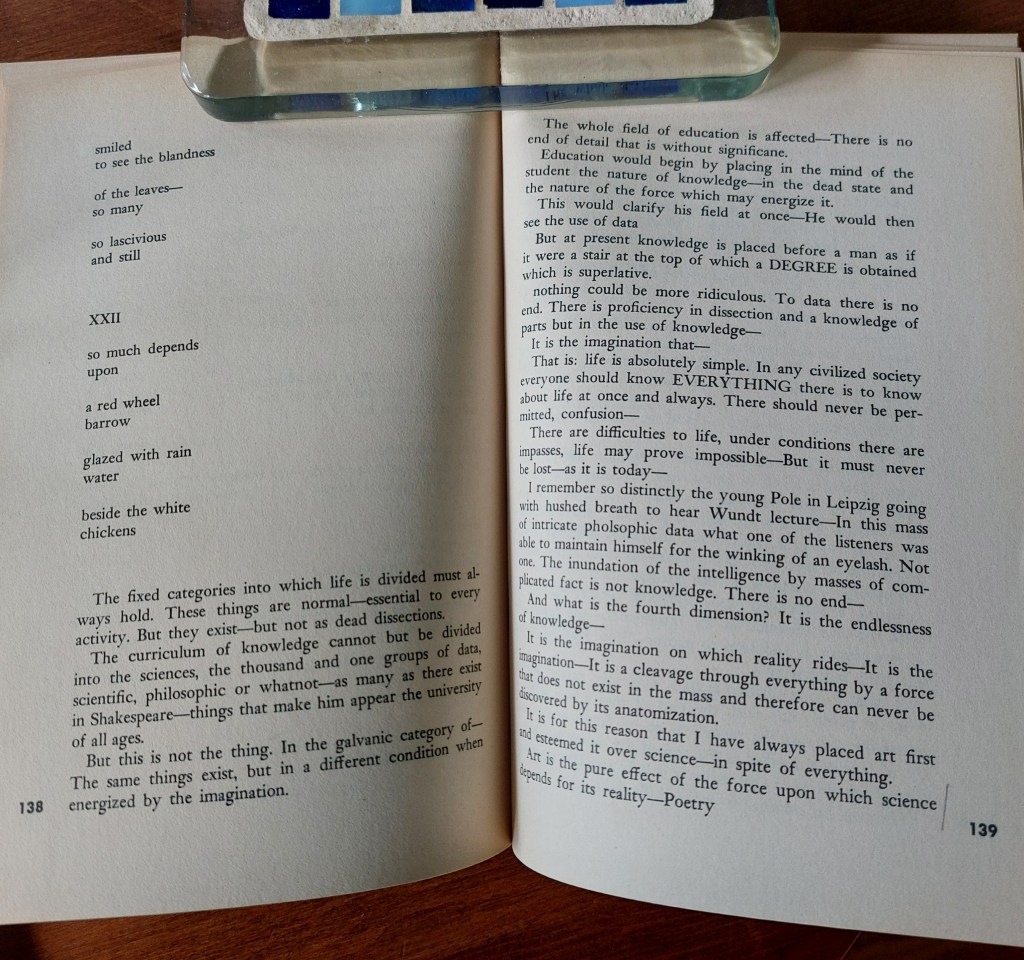
    “The Red Wheelbarrow” appears in “Spring and All” on page 138 (Part II: pp 88:151) of my copy of Imaginations (New Directions Paperbook 329, 1971):

    pp. 138-139 from “Spring and All” (1923) in Imaginations (NDP329, 1971)

    Reading “The Red Wheelbarrow” in the context of “Spring and All” we begin to see how Williams invites the reader’s imagination to absorb the image. It is a well-lit poem. A painting is suggested, and the imagination creates the image (food) from the juxtapositions of color and light and things placed as if by hands (red, white, wheelbarrow, water, chickens, glaze), but will the chickens sit still? Probably not.

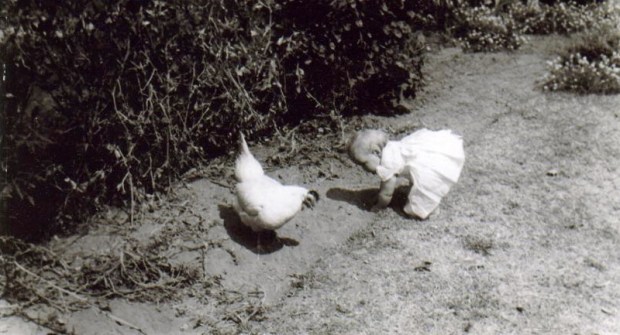
    Susan with Chicken (Susan is on the right) 1952
  • Unfinished & Untitled

    Some works live day in
    day out works in progress
    others abandoned
    put out to the curb
    or basement deferred

    The sun sets indecisively
    returning over and over
    a reliable locomotive

    The moon shifts shape
    curls and hides
    augments or diminishes
    the work of the night

    The best we finish is suggestion
    an impression its precision
    unreal if felt permanent

    Light a river of silence
    fished for colors
    after the snowmelt
    down in the valley

  • Art from The Arc

    I paint for the same reasons I write: it’s a physical activity that is peaceful, happy, and all about light. Though for some time now I’ve not been painting much. When I do paint, the images come from some underground reservoir, the same place many poems come from, a vision from the inside, if I can say so without sounding too psycho, as opposed to en plein air, painting what one sees on the outside. I read recently that Monet painted dozens of scenes of the River Seine – the same scene over and over, but each scene in different light. I’ve never seen a Monet painting in person, only pics of them, often the light different in each photo, and I’ve often wondered what Monet would think of that, the light in his paintings changing with each reproduction. The light in a parlour or museum likewise might change the scene as it was seen and painted. That effect is not unlike sound effects, where the splendid, carefully practiced arpeggio heard on the radio is accompanied by static, a dog barking in some distant yard, or a trash truck picking up the street cans and noisily dumping them into the void.

    I did see some Rothko paintings in person, some time ago, at a show at the Portland Art Museum, and I was surprised by how thinly he applied the paint to the canvas. You could easily see the warp and weft of the canvas. Of course you’re supposed to view from a distance – the same distance for everyone? One’s eyesight too changes the light. Way back in my school days, I once tried to argue that Monet’s impressionist style was the result of cataracts, but I was struck down by an art student who argued that the work of the impressionists was the result of an art theory they had invented and implemented as a complicated statement on reality and vision. I still think it might have been cataracts.

    I started painting with my two granddaughters when they were little and liked to play with paints, unconcerned with talent or any kind of “I can’t draw” self-criticism. We all three painted for the same reasons mentioned above: peaceful, happy, and light. And fun! At first I bought new canvases from an art supply store, of modest size, 20″ by 20″ or so, but I then started to find large canvases at garage sales, priced cheaply enough, far less than I was paying for the new ones at the art store, and I bought them for us to paint over. The garage sale finds were not Monet’s or Rothko’s, so no harm was brought to the art world by our painting over them.

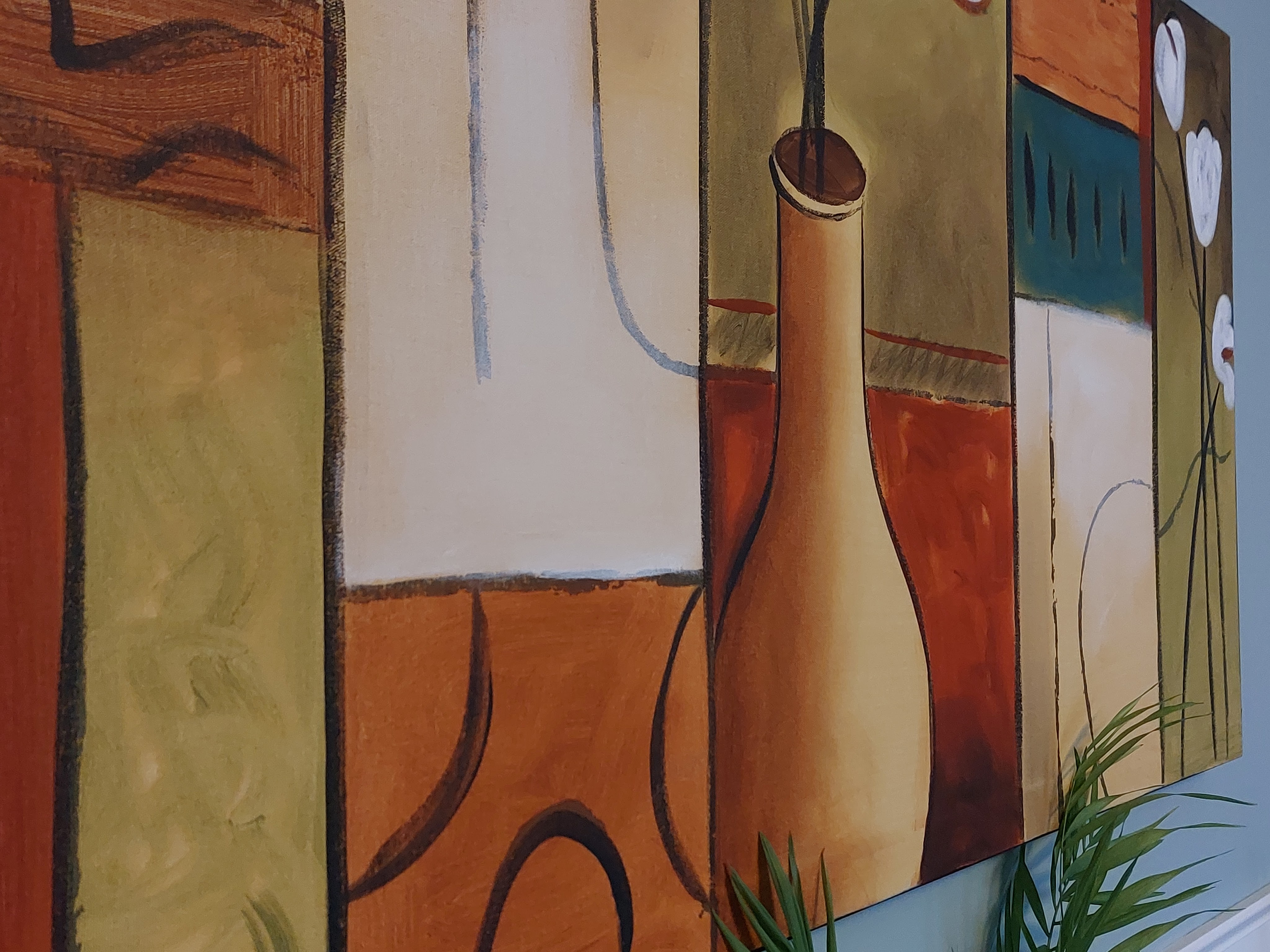
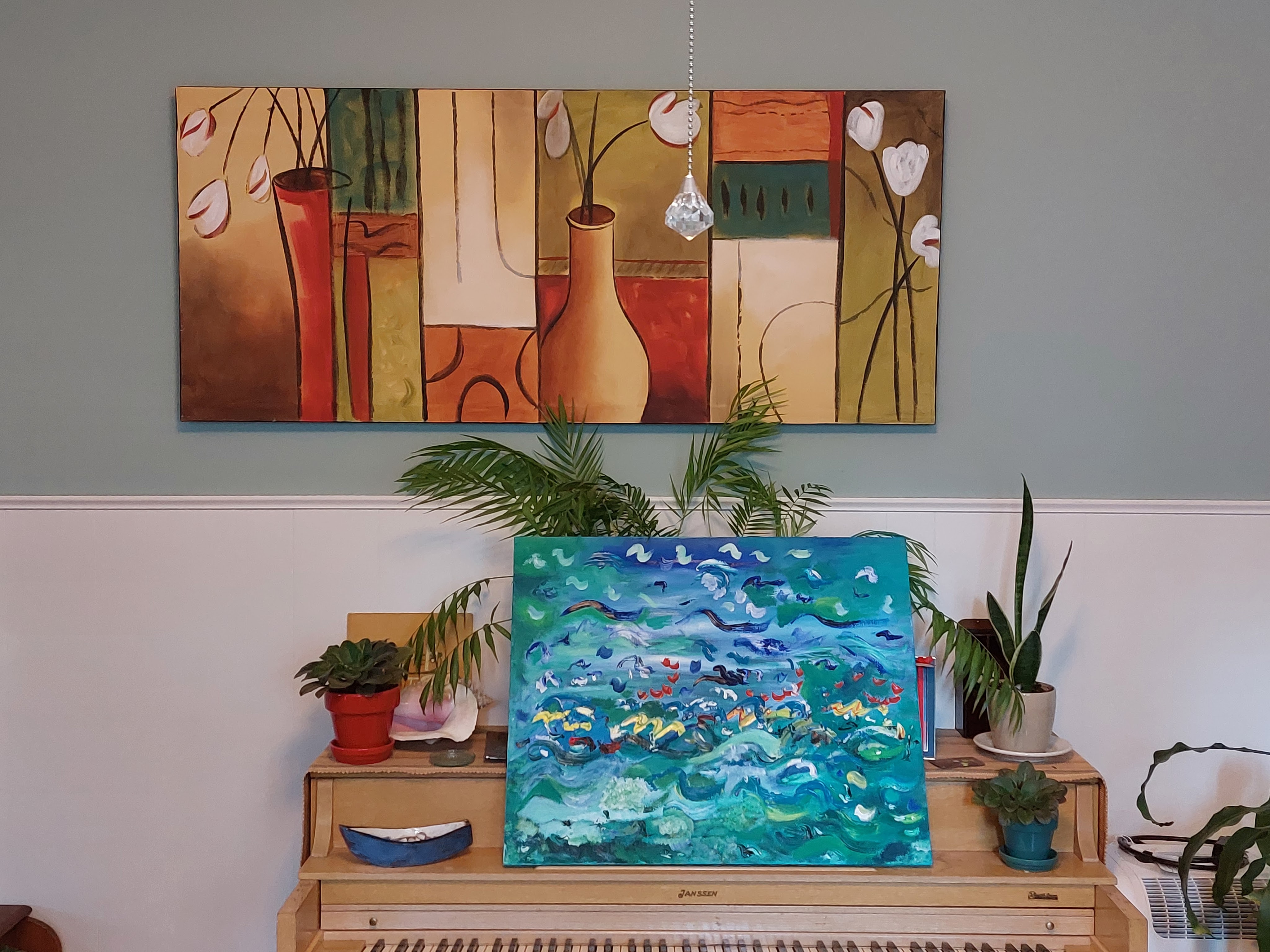
    Recently, over at The Arc, a non-profit thrift store not far from us, out on the sidewalk, against the wall, behind some smaller items, I spied a large canvas, 26″ x 60″ x 1 & 1/2″. They wanted $10 for it. A great find. The visions of what I might paint over it started drifting in like a slow moving moon, the light in a park changing by the minute. But when I got the painting home, a canvas print of some sort, the kind used to decorate hotel rooms or small business lobbies, I began to have second thoughts about painting over it. Something about it said no, put me up as is.

    So I did, and here it is, for your critical review. Please leave a comment! Is it art? Is it good? Why, why not? …B, care to comment? Ashen? Dan? Bill? Barbara? Lisa? Susan? All you artists and art aficionados out there?

    The pic in the bottom right corner shows one of my basement paintings, sitting on the piano, which I took down to hang the Arc find.
  • Still Life with Onions & Bottle

    The bottle wormed open dark and furry
    glass greens and purple dried oils
    cork on the table crumbling aside
    five onions not moving or meowing
    and a peach plastered wall blistering
    in light from a dirty cracked window
    and the room smells of fresh onions
    pungent and biting squeezing eyes
    onion dry skin flaking in whispers
    soft petal whites like dark moonshine
    spill over the table onto the floor.
  • The Crow and Epiphany

    I was waiting for Epiphany
    when a crow painted me
    silver and black
    like a wet Cadillac

    The paint a moist paste
    white and yellow and blue
    with what hue did she
    pass her message to me

    The next time I saw Epiphany
    she preferred not to know me
    but I knew the crow in her
    parting designed my destiny.

  • Blast Famous Forth: A Still Life

    Blast Famous Forth: A Still Life

    She wanted a holo
    phrase,
    did Hope
    Mirrlees 
    100 Years Ago –

    This year the 4th of July fizzles
    like the silverfish on the floor
    of the black and white cassock
    closet in the church up the hill
    through Hilltop Park in the dark
    walk thru ocean arch morning.

    This year, 2020, I recall and recall:

    YELLOW
    BANANA
    SUNRISE

    (or sunshine)

    and the fish dash
    as we rush
    from the Sacristy
    to the Service,
    the altar pickled
    in red, green, and blue.

    Blast Famous 4th!

    I thought you’d be

    Quieter this year

    and you were
    thank you.

    We can’t know how much or what we’ve forgotten,
    and where we are certain we remember we might
    be mistaken; thus the value of the still life which
    fixes or remedies one of the problems of our time.

    After all, I really don’t recall
    if she said BANANA YELLOW SUNRISE
    or YELLOW BANANA SUNRISE
    or SUNRISE, or SUNSHINE.

    What I remember is that I got one wrong.
    So I was still in the game, so to say,
    if you want to look on the bright side.


  • Ocean Crag

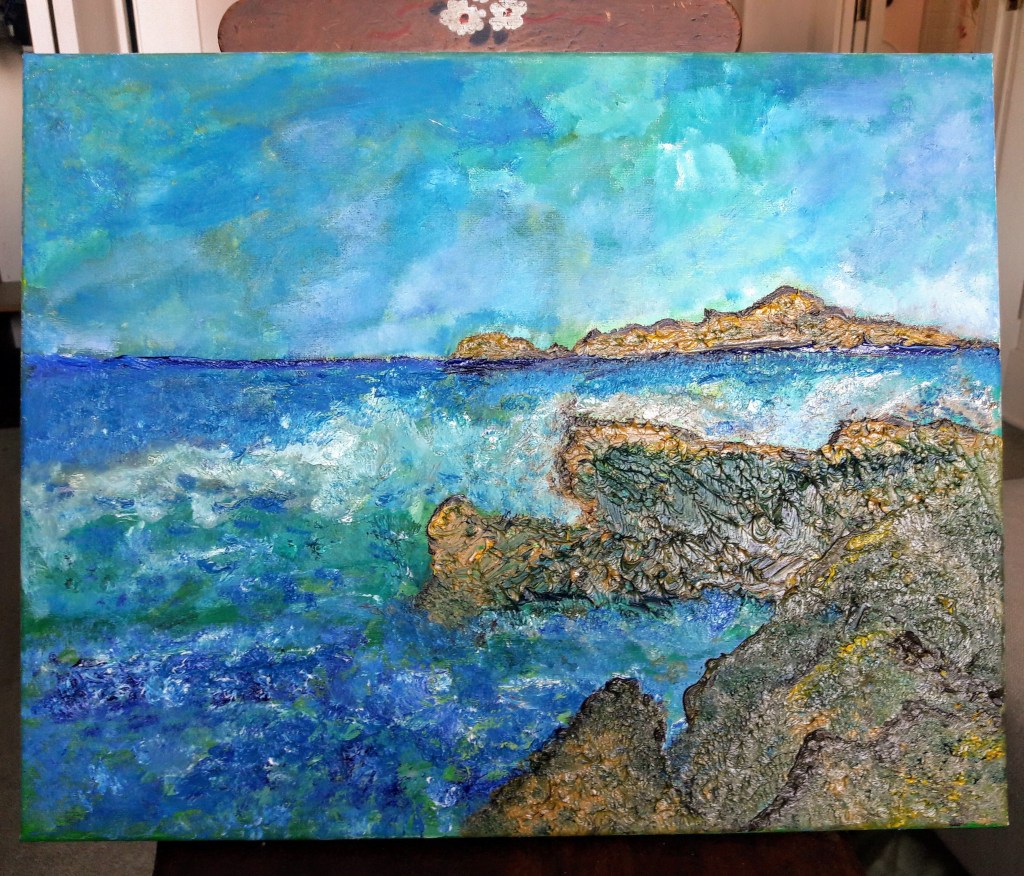
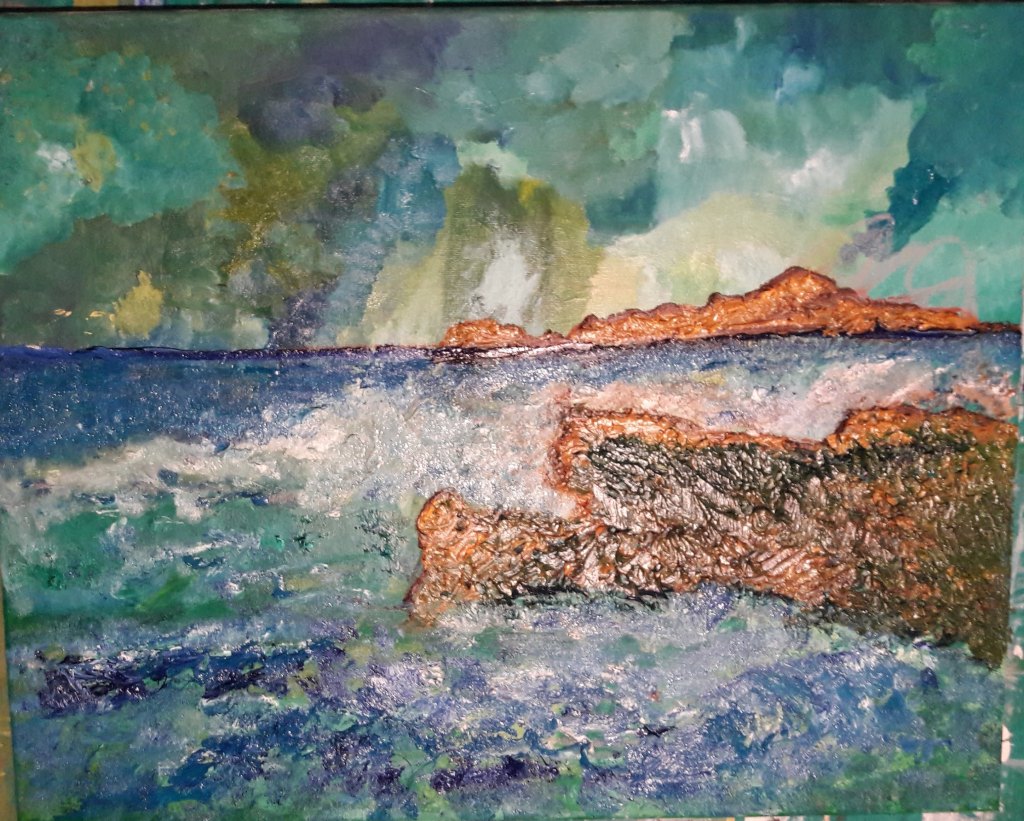
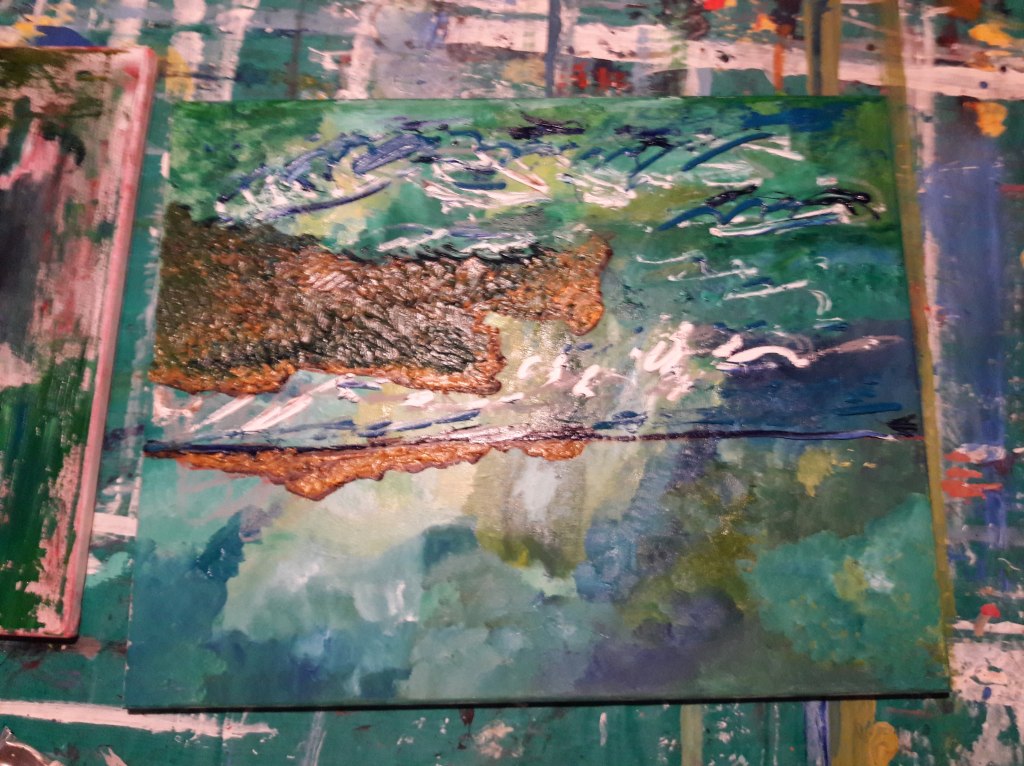
    Ocean Crag

    “Ocean Crag” pictured in stages. Oil on canvas, 16″ by 20.”

  • “Loomings”

    “Loomings”

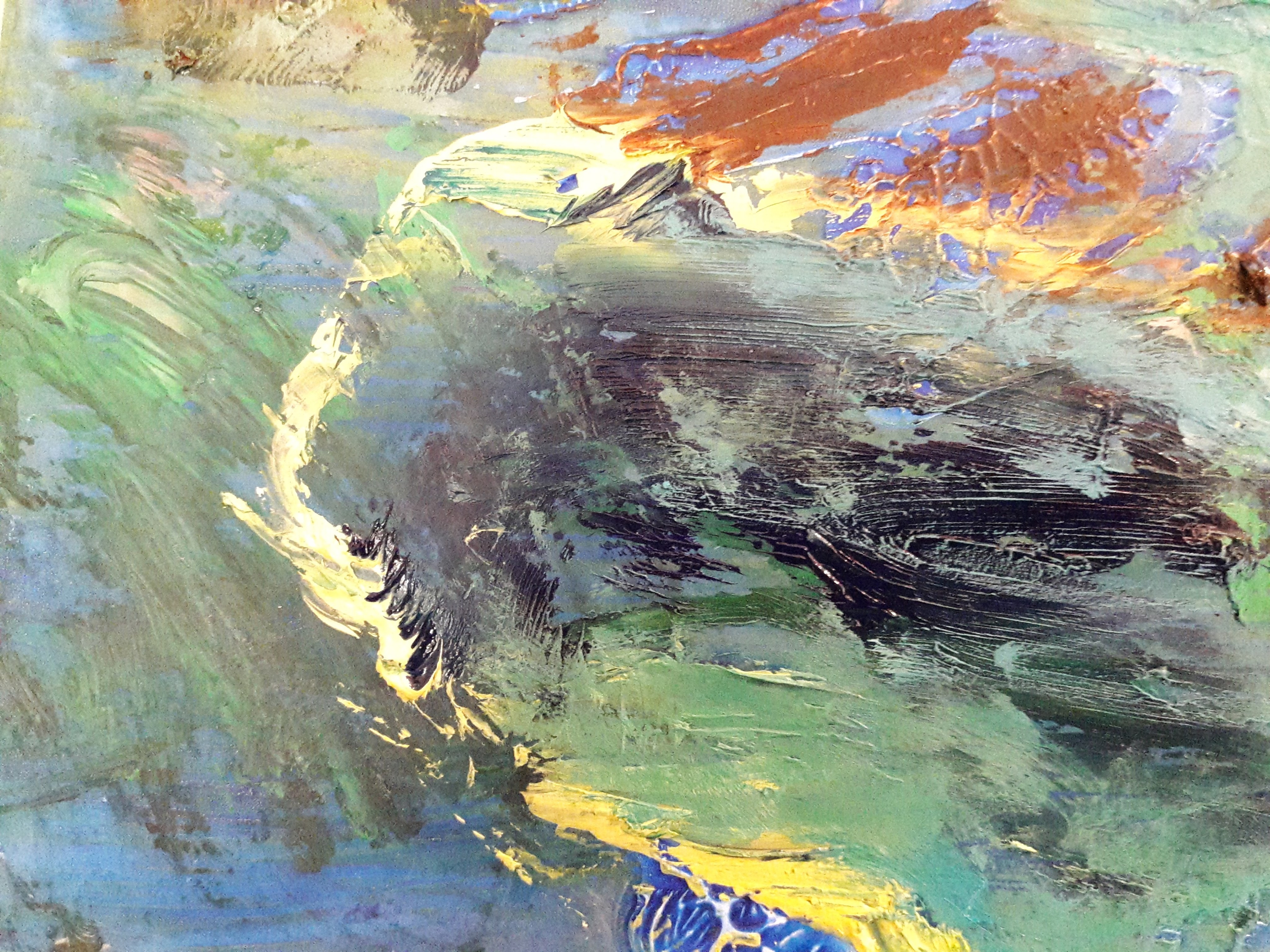
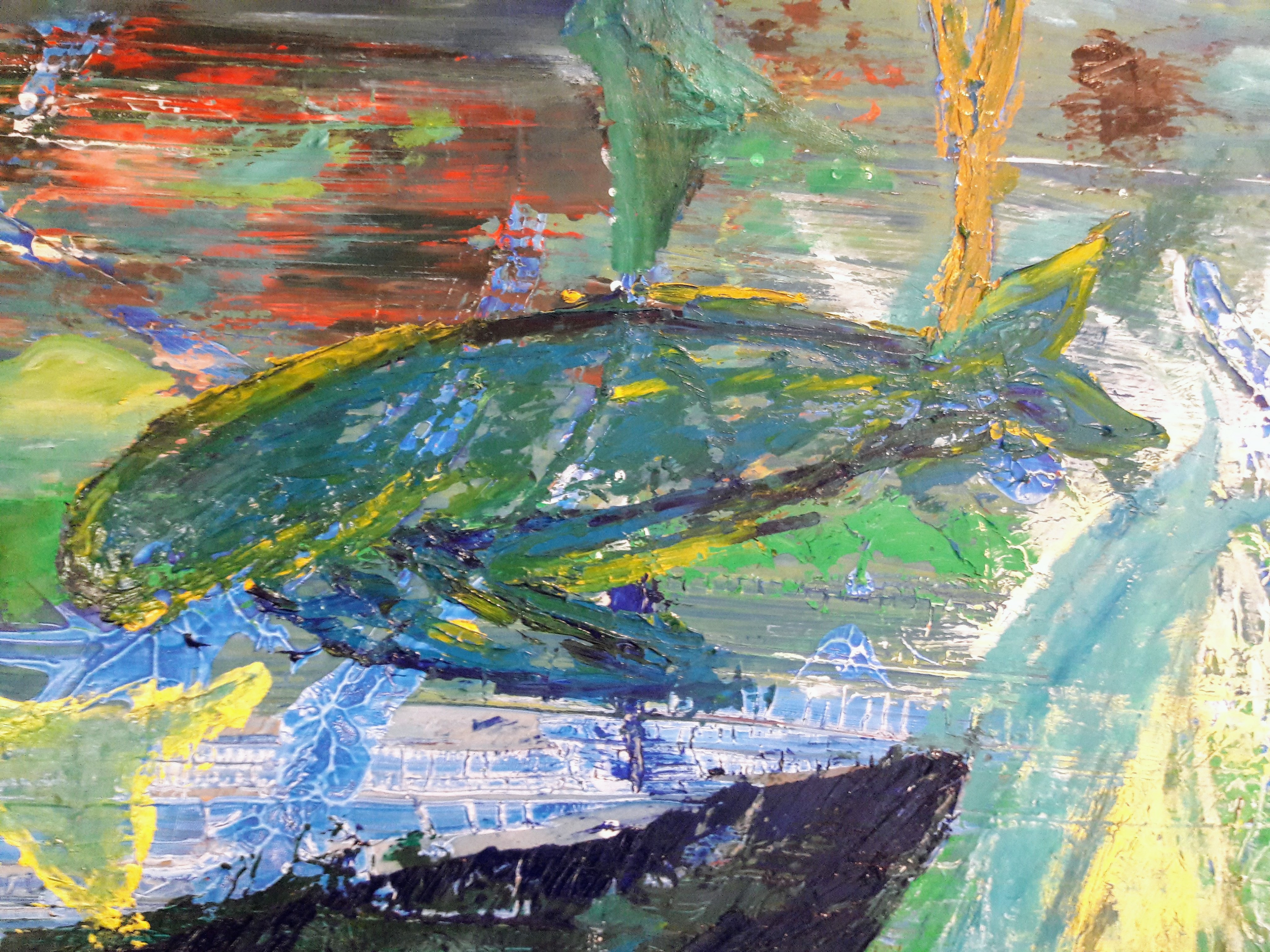
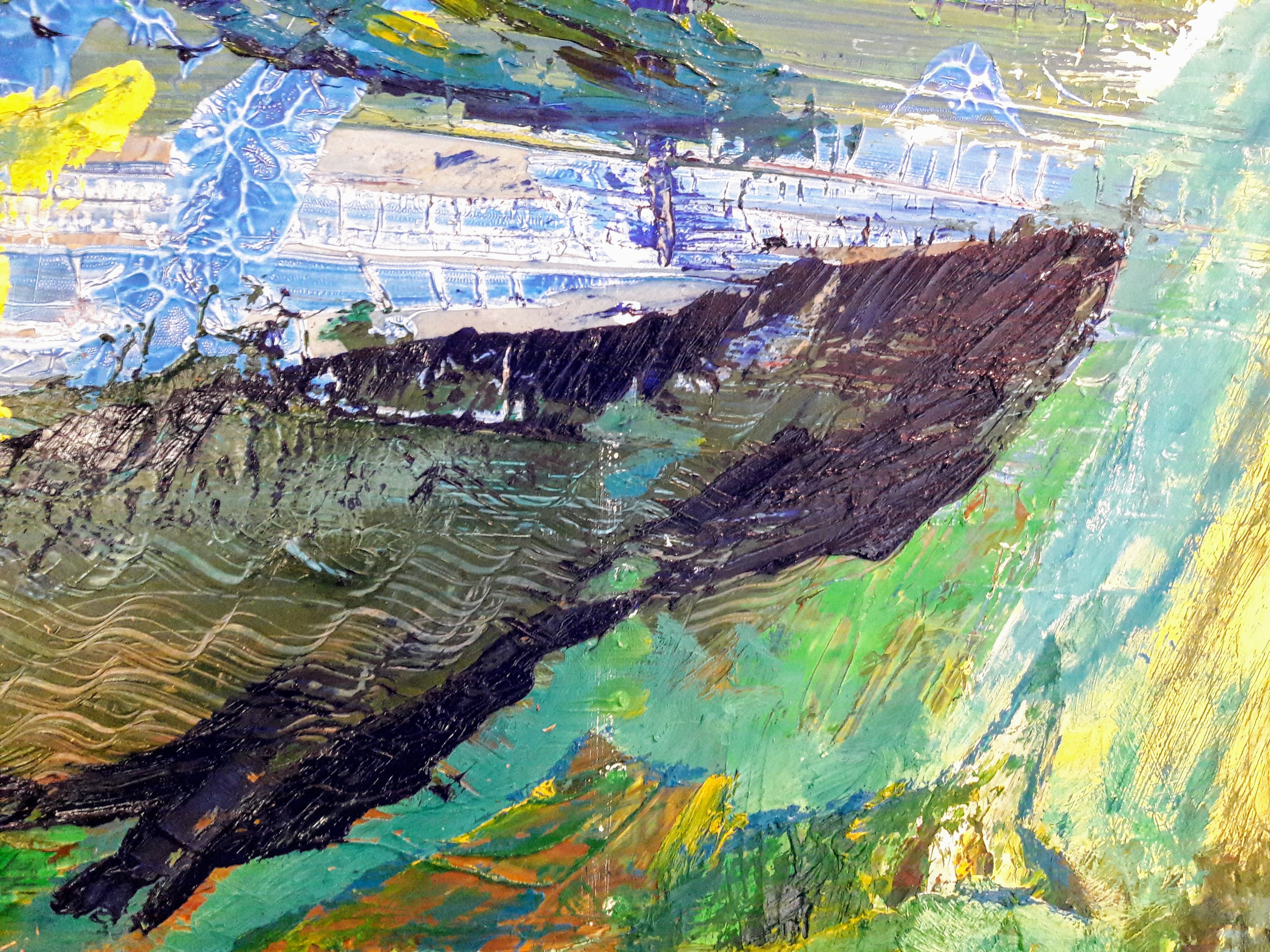
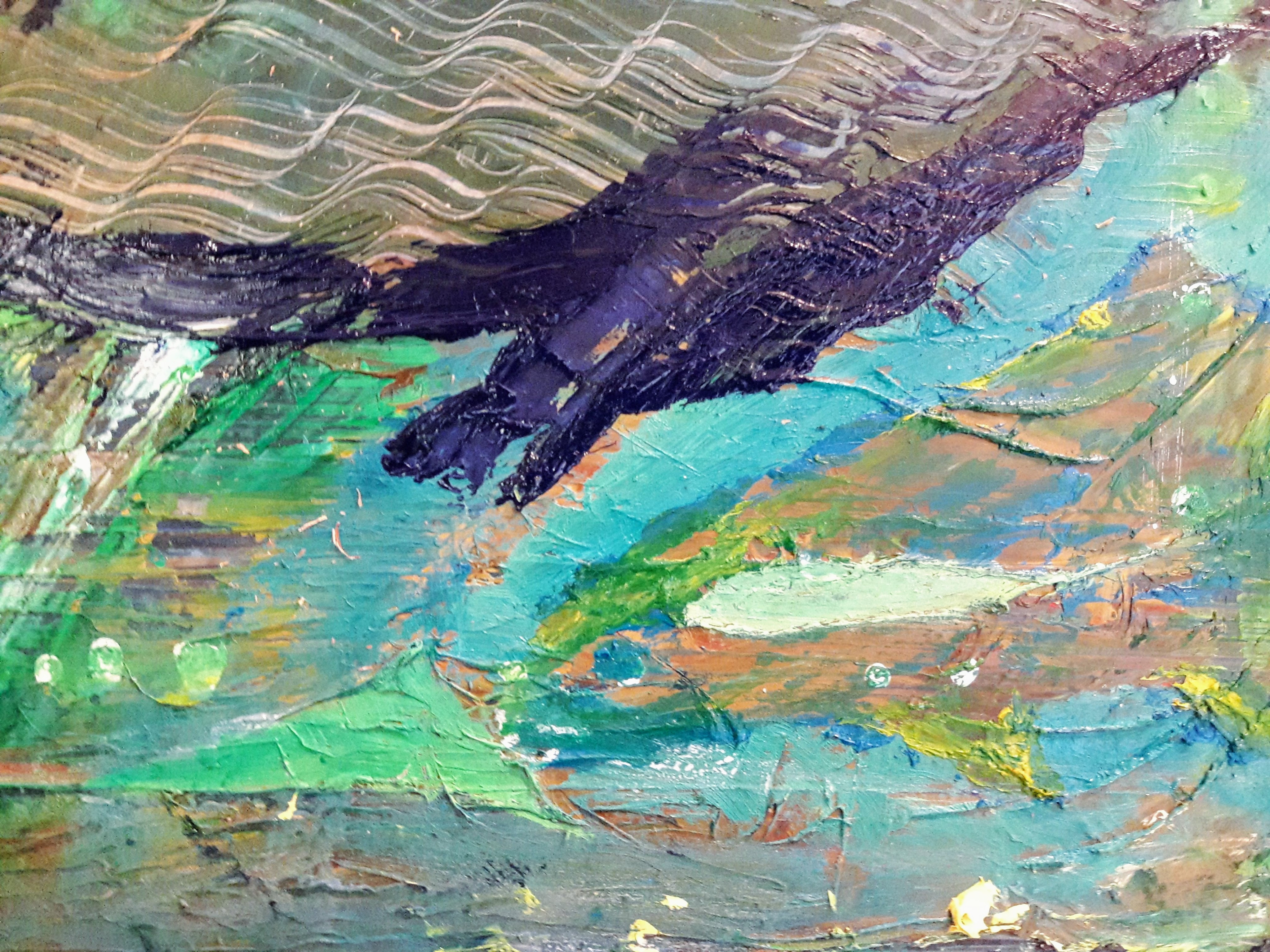
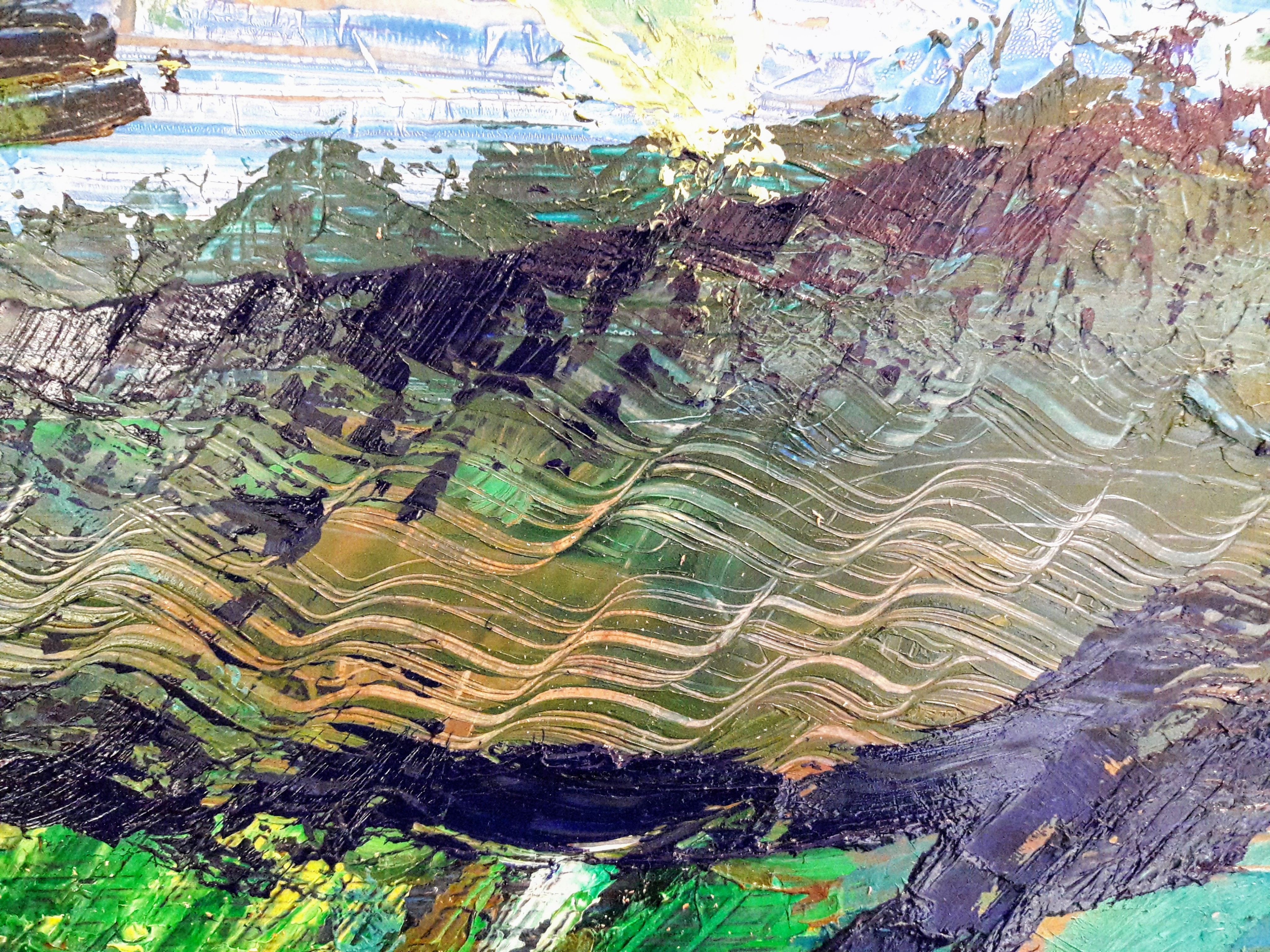
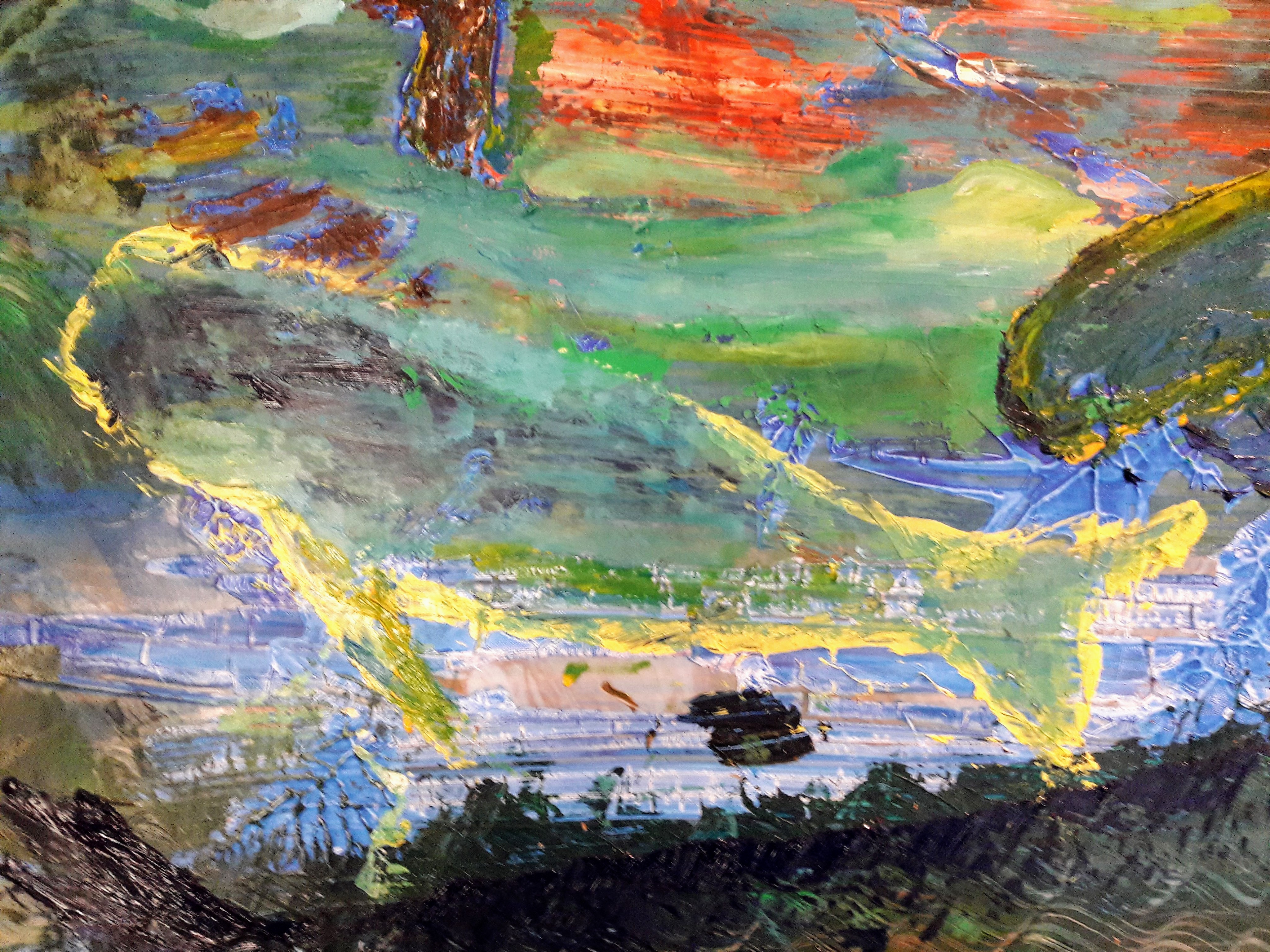
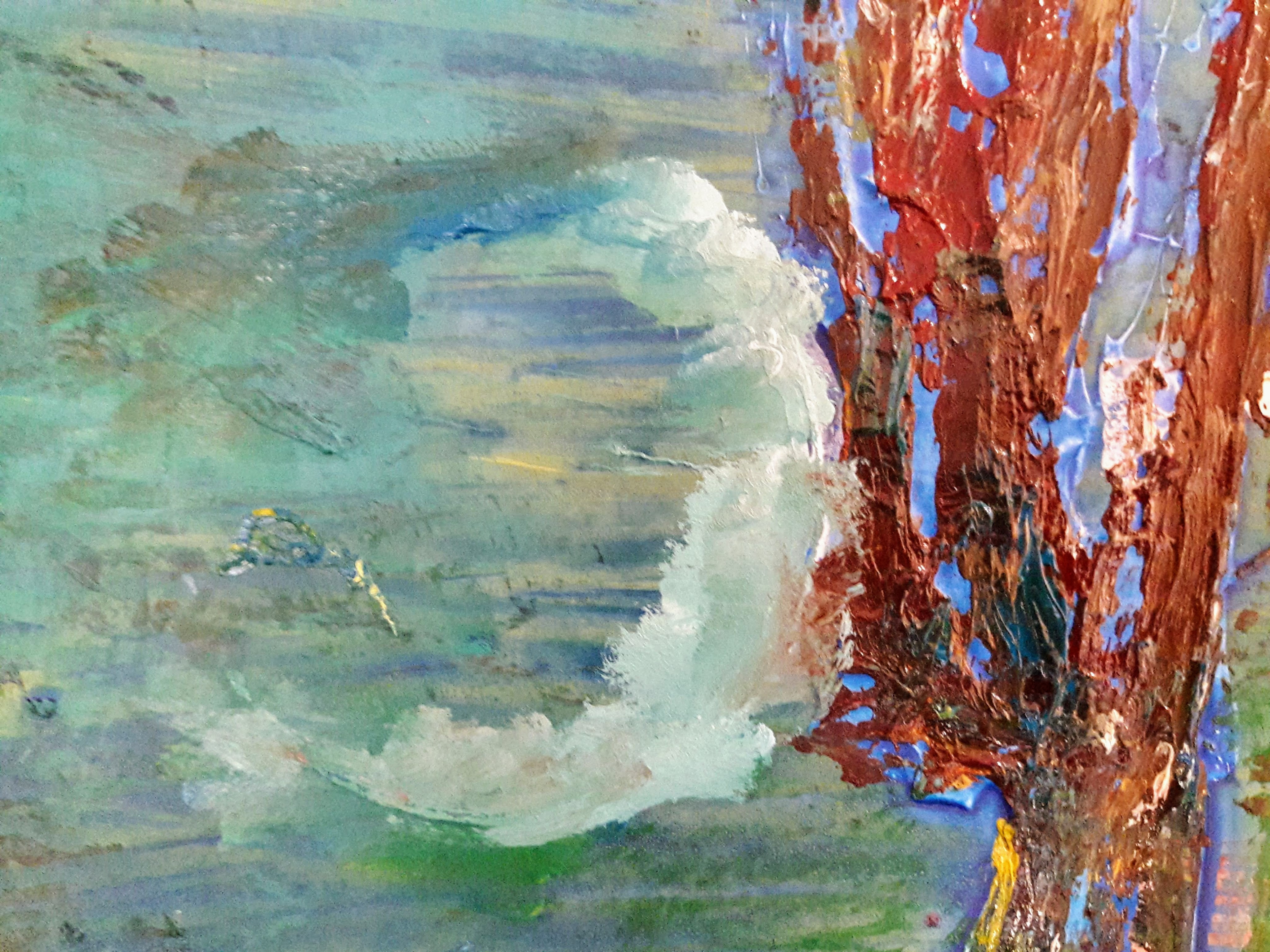
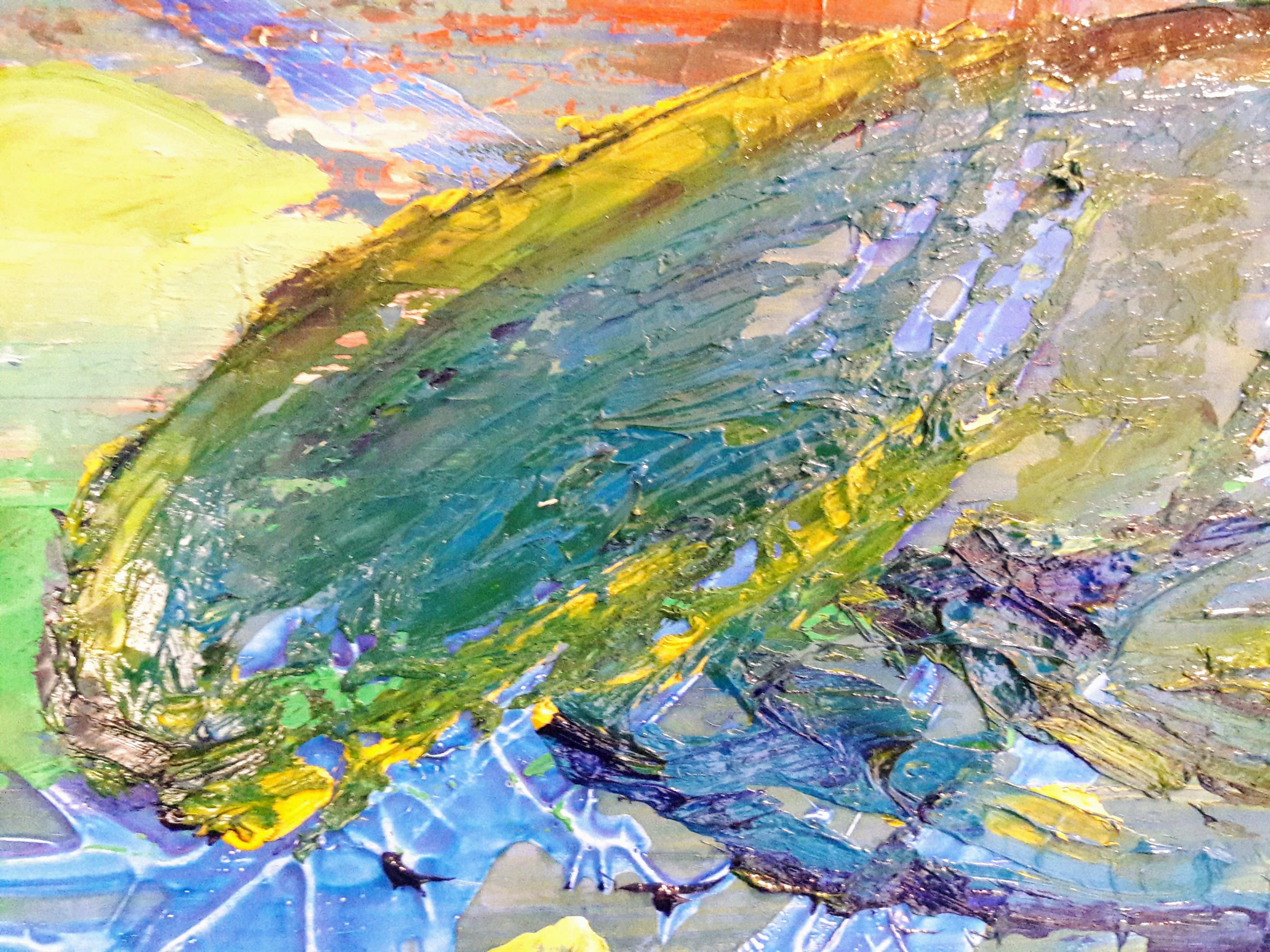
    “Loomings” is the title given this now completed painting, shown below in various work in progress stages. The piece is 24″ x 36″ x 1&1/2″. For the first time, I used Lukas BerlinWater Mixable Oil Colour” paints. I did not mix in any water. Though I have wall-hung the painting, the paint is still wet, but not dripping wet. It will take up to a year to completely dry, as discussed in the info. pdf linked above. I like the paints. Will experiment with mixing with water next time. The canvas stretched on wood frame was purchased used for $5 at a garage sale last summer. The black showing through, mostly around the edges, is from the original painting, which I mostly covered over, beginning with a squeegee wash of titanium white acrylic. “Loomings” is the title of Chapter One of Melville’s “Moby Dick.” An alternate title I had considered was “Sailboat with Umbrella.” But that seemed too specific. One wishes not to disambiguate one’s paintings no more than one’s poetry.