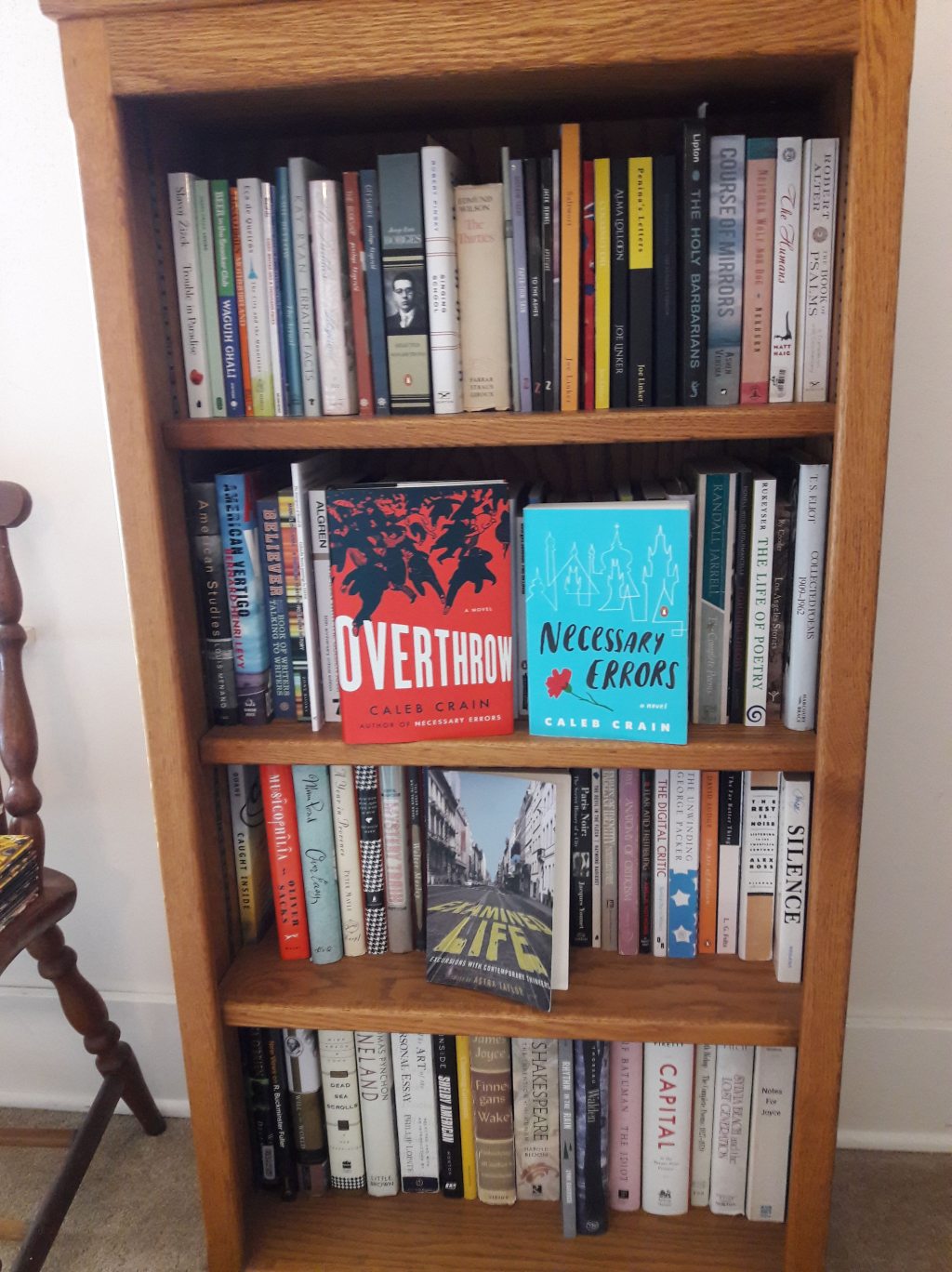
Tag: Novel

  • Hotelling

    No, I’ve not been living in a hotel; that would be Nabokov at Montreux Palace, Twain at the Chelsea, Simone de Beauvoir at the Hôtel La Louisiane. I’ve been reading books that take place in hotels. Some hot telling going on there, too.

    I just finished reading aloud to Susan “The Enchanted April,” by Elizabeth Von Arnim, first published in 1922, our copy a Penguin Classics, 2015. The Mesdames Wilkins and Arbuthnot answer an advertisement and arrange to spend a month in Italy:

    “To Those who Appreciate Wistaria and Sunshine. Small mediaeval Italian Castle on the shores of the Mediterranean to be let Furnished for the month of April. Necessary servants remain. Z, Box 1,000, The Times.” (3)

    Who could resist? Not the insistent frumpy Mrs. Wilkins, who talks the reserved Mrs. Arbuthnot into the adventure, and the two abandon their troubled husbands in fog everywhere London, recruit two additional to their party to help defray expenses, the young and extraordinarily lovely socialite Lady Caroline and the lonely aging Mrs. Fisher, and train down to the sunny gardeny clime.

    Not strictly speaking a hotel, the castle originally a Genoese fortress, built to protect Portofino’s harbor, but Castello San Salvatore functions like a hotel in the book’s closed setting and stage-play like structure, where no character is at first what they might seem to be, and class or social structures or strictures are dissolved to reveal the human frailties of psychological skeletons. But if that sounds like a horror, it’s not; the book is profoundly funny, each character misinterpreting another in a comedy of manners, such that we first see each character not for what they are, or might become, but what someone else thinks they are, or where they might have come from, ignorant of their true origins, problems, needs and wants.

    And before “The Enchanted April,” I had recently reread Elizabeth Bowen’s “The Hotel” (1927), her first novel, also set on the Riviera. Bowen’s writing style is different from Arnim’s, though both often feature long convoluted or circuitous sentences, subjects and objects meandering like mallards down steams through a woods, often placed somewhat distantly and not quite directly from predicates. Something like that; I haven’t actually diagrammed any in the old school way. But the common reader may find such writing distracting; it’s not Dashiell Hammett.

    And I also recently read Anita Brookner’s Booker Prize winning “Hotel Du Lac” (1984), though here the setting is Switzerland and it’s coming on fall and winter and cold out, reminding me of home:

    “The beautiful day had within it the seeds of its own fragility: it was the last day of summer. Sun burned out of a cloudless blue sky: asters and dahlias stood immobile in the clear light, a light without glare, without brilliance. Trees had already lost the dark heavy foliage of what had been an exceptional August and early September and were all the more poignant for the dryness of their yellowing leaves which floated noiselessly down from time to time.” (67)

    And time, and now, but it would be inaccurate to say suddenly, still, here we are just a little over a week from winter solstice when the days will begin to, in spite of the cold, last each a little longer and potentially at least warmer. But for now, back to the hotel of books, until the wistaria and sunshine return in bloom and heat and smell and we can open again our own hotel, now closed for the winter.

    Hotel
  • How to Sketch Your Novel

    Place

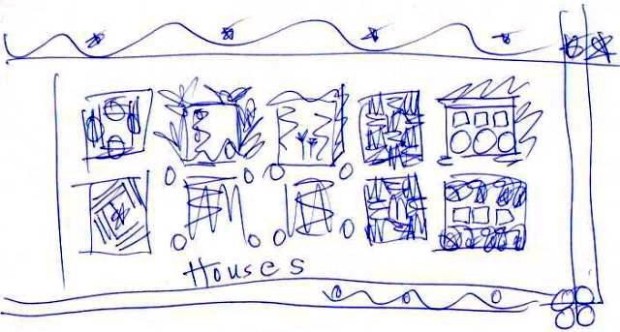
    Pretend you’re sitting atop the water tower of a town. A bird. You look around and with a questioning caw fly off and glide about. What do you see? To the north, an airport; to the south, a factory; to the east, manufacturing, and a few fields as yet undeveloped (in one grow strawberries, in another horseback riding stables, in another a few dirt bike trails); to the west, sand dunes covered with ice plant flow down to the ocean.

    That’s a good start. Now you’re sitting with paper and pencil, it doesn’t matter where, and begin to sketch. In paragraph one, above, you defined the edges of your place, edge as a kind of border or margin. We see the airport north, the dunes and ocean west, the factory south, and the industrial area east. These mark the outer edges of the paper.

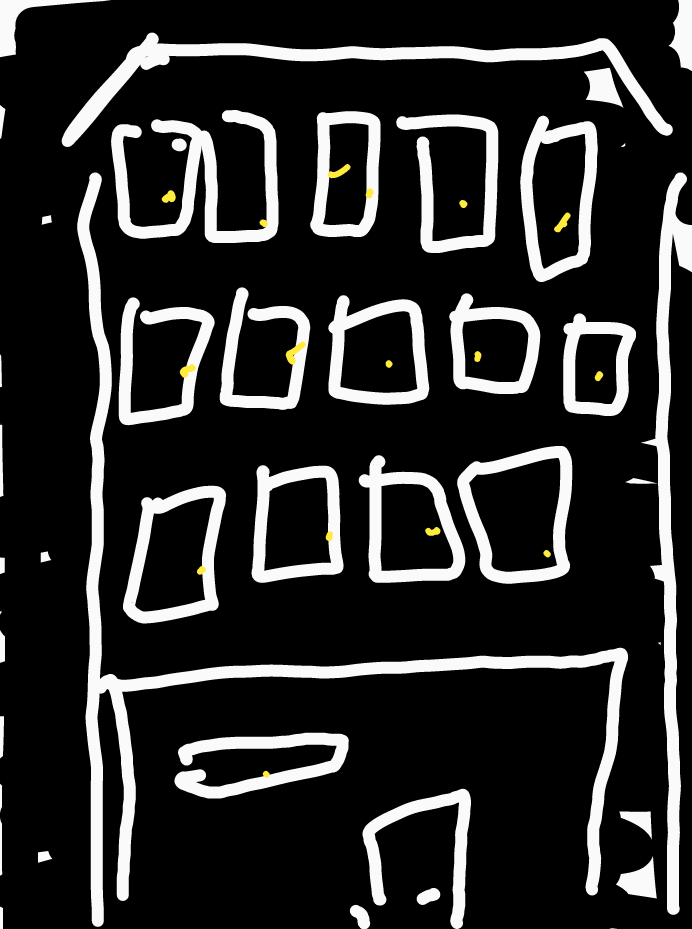
    Now sketch within those edges streets and buildings, houses and apartments, schools and parks, churches, a downtown area with shops and a few offices. The place is hilly. A winding railroad track enters from the east and ends near the downtown business section, at a small rail station housing a post office. A road passes the railroad station and leads out of town and over the dunes, curving down to the beach. A north-south four lane highway passes on the east side of town, separating the residential area from light manufacturing buildings and offices.

    So far, we could be just about anywhere. If you want, you can pencil in a particular school or park, a baseball diamond, a police station, a bowling alley or pool hall, a tavern or two on the outskirts, at the edges. Notice the more detail we add, the more we limit ourselves to a particular place and time.

    Time

    You are a night bird. It’s 3 or 4 in the morning as you fly over looking down on your place. A few people might still be awake, and a few others are just waking up. But most of the population is still asleep, and the place is night dark, a few lights on here and there, one or two traffic lights, a few street lights on the main streets. But the factory to the south is well-lit (twenty-four hours a day), and spews smoke from stacks, while the airport to the north is lit but quiet for now, but the first planes are gearing up for early morning take off. The beach is dark, but you see the foam from the waves brushing toward shore.

    Is your place in the past, present, or future? Or a mix of times. If in the past, what year? You don’t need to be specific. You might think of the time of place as before or after a war, during the 1950s, or some time before or after the coming of the Internet. Above, we said some of the fields on the east side of town are still undeveloped. That might suggest mid-century. For now, let’s go with the 1950s. We see two little league baseball fields, one on the east side, one on the west side, so again with more detail we limit our options. That’s ok. It creates focus.

    If we think 50s, we might spot a milk man delivering bottles to residential homes in the early morning hours. There are station wagons in the driveways, bicycles left out in the yards, clothes left on outdoor clotheslines. There are empty lots and a number of small wood frame structures that house factory workers. The factory whistle blasts twice a day, morning and evening, another indicator of time. A custodian opens a school. It’s morning. A priest leaves his rectory for the church sacristy to say early morning mass to a bevy of nuns. A castaway sleeping under a lifeguard tower on the beach awakes, rolls up his bag, and continues his trek south. A boy folds the morning papers in the driveway of one of the little houses on the west side of town. He pauses to glance at a headline, but doesn’t read the story. He wraps each folded paper in a rubber band and sticks the folded paper into a satchel hanging from the handlebars of his bicycle. The bicycle is painted royal blue, a one speed with coaster brakes.

    Also as part of time we should consider which of the four seasons we want to start with. And here we might as well begin to think about how these kinds of details influence our purpose. Spring suggests new, birth, optimism; while winter suggests the opposite. If we begin our novel in spring, will we end it in winter, or continue it into the following spring? Again, all we need for now is a sketch. We might move through several springs, but we’ve got to end somewhere, even if our ending is going to suggest a sequel. Because a novel should have a beginning, a middle, and an end. It’s a bundle. For now, let’s keep it simple – one cycle of the four seasons, beginning and ending with spring. If it’s spring, we can now sketch in flowers, cherry trees in bloom, a nursery in the center of town busy with pots and bags of compost.

    Speaker

    Spring brings out the population, from which you’ll pick a talker, the speaker, the voice who tells the story. You might pick more than one, but for now, again, let’s keep things simple and pick only one. To decide on a talker, it will be helpful to first look in and see who’s there, in your place. We’ve already started to sketch in characters. At 3 am, we noticed a high school kid climbing out a first floor apartment window on the edge of town, near the airport, and we watch him walk to a house in the center of town, open the unlocked door, and go inside without turning on a light. He could be our talker. Or we could sketch out who he might have left in the apartment he climbed out of. Maybe she should be our talker. Again, we don’t need to pen it in yet. We can continue to sketch in pencil. We also see the night shift leaving the factory and the day shift come on. Lunch pails. Thermoses.

    Notice though, that once we pick a single speaker, we’re limited to talking about only what that speaker can see and hear. Of course, any one individual can see and hear just about everything by talking to others, listening to the radio, inferring from clues, but we might also consider a speaker who appears to see and know everything – we’ll let the bird introduced up above be our speaker. But that speaker won’t be from the place, even though they’ll seem to know everything about the place. That kind of speaker might seem easier to develop at first, but readers will want to know why, out of everything the speakers see and know, they pick only a few people or things or events or activity to talk about.

    Activity

    If we see activity, we might begin to realize the development of a plot. We already saw the kid climbing out a ground floor apartment building in the early morning hours, before dawn. What was he doing? Did anyone else see him? The factory is changing shifts. We can follow one worker home or another to his workplace. The priest and nuns are at mass. What are they thinking about? A milk man makes his rounds, moving in quick spurts like a second baseman.

    To those activities we might add: a cook and waitress open a cafe in the downtown block – let’s go ahead and give that street a name: Main Street. A man in a uniform of some sort opens a dutch door to the little train station building, though there is no train. Let’s put the train station on Railroad Road. Two school busses leave the city yard, located near the train station. One heads east, the other west. Also in the city yard appear three mechanics, a street sweeper operator, a squad of seven city maintenance workers, and a hungover supervisor wearing a crumpled suit and dirty tie and an out of shape fedora hat. The hat could be a detail we might follow later.

    What else do we see going on? A line of cars enters the airport parking lot. A plane takes off over the dunes and out over the water begins a wide turn to the north. About 20 minutes later, another plane takes off, low over the beach, disappears in the western sky. This goes on all day long. The place is noisy. Noise becomes a character. On the side of the beach road, a surfer climbs out of a station wagon, pulls his surfboard from the rack on the car roof, and walks down to the water near a rock jetty. Two neighbors meet on a sidewalk and stop to talk.

    Dialog

    People talk, to one another, and, if no one else is around, to themselves. What do they say? Depends on who they’re talking to. To a neighbor, they might talk about family and friends, goings on about town, fashion and fads, magazine and newspaper articles, who’s getting married and who’s separating, sickness and health, songs, jobs, who just moved out and who’s moving in, the weather, the upcoming spring rummage sale at a local church, Easter hats and dresses, the new 1955 Chevrolet Bel Air the supervisor down at the city yard just drove by, his hat crushed, it was noticed.

    People talking is a kind of action. They can talk anywhere, anytime. To write effective dialog, you have to listen to a lot of different people, and you’ll notice no two talk exactly alike or say exactly the same thing the same way twice. Unless they’re trying to sell you something. Enter the door to door salesman who parks his car at the end of a block, pulls his sample case out the trunk of his car, smokes a cigarette at the curb, and walks up to door number one and knocks, hat in hand.

    Finished Sketch

    You’ve been sitting up on the water tower for some time now. Post the sketch on the wall over your writing space. Focus in on one of the structures or persons. Clock in time, date, location relative to place, and start writing.

    Houses

    Think you know this place described above? Leave a comment!

  • A Sane and Ordinary Blog Post: Paula Byrne’s “The Adventures of Miss Barbara Pym”

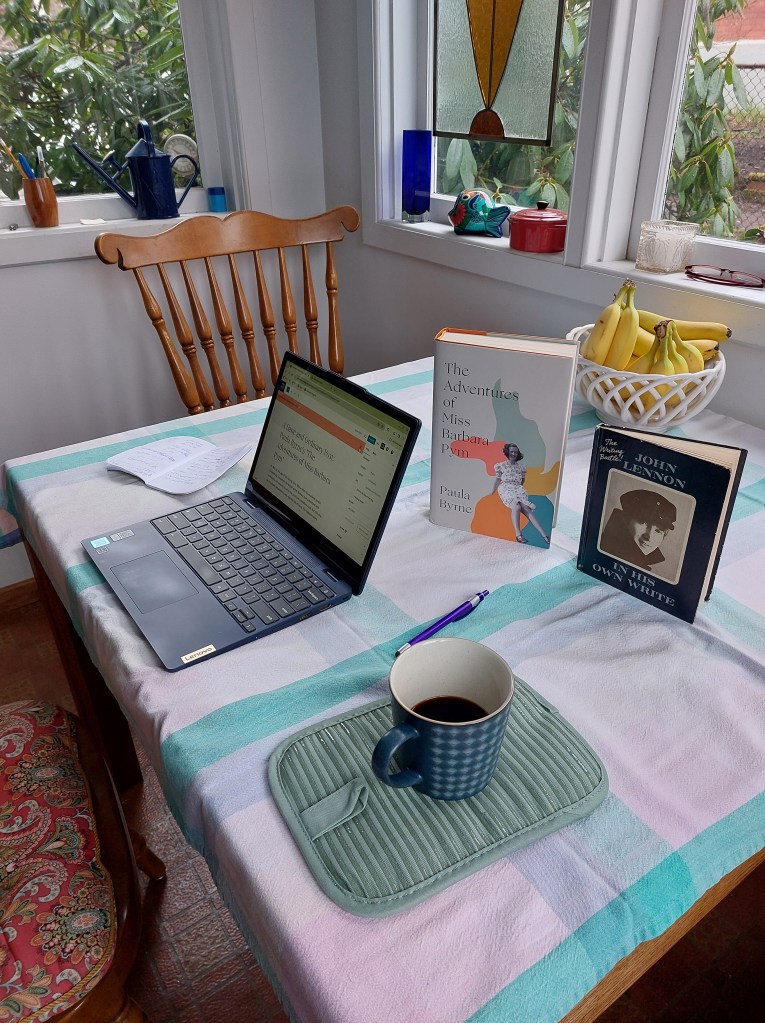
    In 1963, at the age of 50, having since 1950 written six excellent novels successfully published, the British writer Barbara Pym submitted with confidence her seventh novel to her publisher, Jonathan Cape. But this one, An Unsuitable Attachment, was rejected out of hand. The rejection story comes as a plot twist in Paula Byrne’s biography, The Adventures of Miss Barbara Pym (2021, William Collins).

    Then, as now, publishers were trying to respond to changes in their operating environment. After being rejected by her publisher Cape, Pym sent her new novel off, on a long successive round of submissions, to publisher after publisher, where it met with the same rejection fate, as if she were a writing newbie lost in the slush pile.

    Publishers are expected to make a profit. New books have always been expensive. Books are, after all, not a necessary. Yet few novelists, and even fewer, if any, poets, can survive financially off the royalties from their book sales. The occasional blockbuster book followed by a movie is the rare exception that has often helped support a publisher’s efforts to produce less popular works with literary merit. Detailed numbers of what might have been necessary to recoup publishing costs and turn a profit in 1963 are a small but important part of Byrne’s Pym biography, and because Pym continued to write without publishing, then over a decade later did publish anew and with even greater positive critical reception (including a Booker Prize nomination in 1977 for Quartet in Autumn), an interesting theme is suggested where we might find some insight into what gets published (and unpublished) and when and why.

    How many prospective sales were necessary in 1963 to get a publisher’s attention? Pym’s good friend British poet Philip Larkin suggested 4,000 as a break-even point: “I’m told that the economic figure for novels is 4,000 – and has risen a lot recently. The circulating libraries are diminishing, too – Smith’s gone, Boots going” (Byrne, 533). Larkin’s own book, The Whitsun Weddings (a collection of 32 poems published in February 1964), sold 4,000 copies in the first two months, an unusual poetry bestseller (504). Pym mentions to Larkin that “she heard Cape were about to publish a book by one of the Beatles: John Lennon? I think?” (497). The book in question was Lennon’s In His Own Write, which sold, according to Wikipedia, 300,000 copies in Britain, and was also a best seller in the US market. Wiki shows, citing Hazel Holt, that Barbara Pym’s book Excellent Women, published by Cape in 1952, had sold 6,577 copies by 1960. Writers decide what will be written, publishers decide what might be read, critics decide what’s good, and readers decide what to purchase. And then there’s the remaindered, not remembered.

    How do books get into the hands of readers? Public libraries, generally assumed to be in the public interest and of great cultural benefit, arrived at a cost to publishing. In England, since the mid 1700s, prior to public libraries, books were made available to the reading public through the use of “Circulating Libraries.” These were not free public libraries. They rented books for a fee. Nor were they housed in buildings. They traveled, by rail and wagon. Still, the rental fees were affordable only down to a middle class clientele. Later, stores carried books for rent, but usually as part of a store’s variable lines of business. Renting or selling books wasn’t enough to keep a stand-alone book business afloat. But the effect of renting books on publishing was simply this: readers could rent far more books than they could afford to purchase. It was therefore in the interest of the circulating library business for publishers to keep prices of new books high. If readers could not afford to buy new books, they would have to rent them.1

    All of that of course before the Internet, ebook, etc. Still, paper books persist. Past changes like the mass market, cheaply produced paperback brought book prices down, but still the book market is supply and demand driven, and it’s not easy determining what drives demand. Dime novels in the US and the Penny Dreadful in England were relatively cheap and brought literature to working class readers. I was a working class reader, started with comic books, graduated to Classics Illustrated at the suggestion of my Confirmation sponsor, who also encouraged me to read novels and to start my own library, six paperback books sitting on a window ledge of my bedroom. I still have a few of them. That books are a commodity, no more no less, may seem like a paradox to some readers:

    “One could make an argument that the book’s own history mitigates against seeing it as a commodity. For centuries, after all, the book’s primary place was at the center of religious practice. It is historically associated, as a result, with the evanescent, spiritual, not-for-profit world. But printed books, as Elizabeth Eisenstein and Raymond Williams have shown, have always had as much of a secular as a spiritual existence. Their history in the modern west is synonymous with the development of industrial production and the rise of consumer culture that went with it. If the book has maintained some sort of transcendent identity, it has done so despite its position at the center of the world of goods, not because of some privileged position outside it.” 2

    After the Cape rejection, Pym kept writing, kept submitting, and kept getting rejected. She reached a point where she told a friend, “All I want now is peace to write my unpublishable novels” (Byrne, 530). And, Byrne says, “Her friend Hazel Holt even suggested that she should think about publishing her novels privately for her loyal following of readers” (524). Today, of course, Pym could easily self-publish her novels. But would she? In any case, all of her books are today still in print, with many used copies of Pym books available for sale via sites like Alibris. And a quick check at Multnomah County Library shows ten Pym books available, but only one copy each, and six copies of the Byrne biography in stock.

    As critic, Larkin described what he liked to read, and he did not find fault with work devoted to a narrow alley of life, provided ample detail was given to bring that life into profound focus:

    “‘I like to read about people who have done nothing spectacular, who aren’t beautiful or lucky.’ He wanted to read about people who can see ‘in little autumnal moments of vision, that the so called big experiences of life are going to miss them.’ That such things are ‘presented not with self-pity or despair or romanticism, but with realistic firmness & even humour’” (521).

    Larkin, with connections in publishing, and as England’s popular poet, gave Pym emotional support and advocated on her behalf. Still, it took time to convince the publishers to reconsider. In a letter to Charles Monteith, editor at Faber, Larkin wrote:

    “Turn it down if you think it’s a bad book of its kind, but please don’t turn it down because it’s the kind of book it is…I feel it is a great shame if ordinary sane novels about ordinary sane people doing ordinary sane things can’t find a publisher these days. This is in the traditions of Jane Austen & Trollope and I refuse to believe that no one wants its successors today” (521).

    What kind of books were being published in 1963? John le Carre’s The Spy Who Came in from the Cold (which a couple of years later would be assigned reading in one of my high school English classes); Thomas Pynchon’s V.; John Rechy’s City of Night; Kurt Vonnegut’s Cat’s Cradle. And when the publisher Little, Brown republished in book form The New Yorker stories of 1955 and 1959, Raise High the Roof Beam, Carpenters and Seymour: An Introduction, by J. D. Salinger, it was the third best-selling novel in the US in 1963 (Wiki). (I remember seeing Mr. Abney, my 9th grade Language Arts teacher, reading it at his desk at the front corner of the room, stage right, next to our ground floor windows, which looked into the Breezeway, where the girls were at lunch recess.) While there were of course many other kinds of books published in 1963, those just mentioned probably would not qualify as the kind of book favored by Philip Larkin.

    There’s no critical advantage gained in trying to put down the 1963 books mentioned above, that’s not the point, they’re already classics, or of pooh-poohing John Lennon’s book as silly. The point is, what’s good is what achieves its purpose, even if that purpose might be considered bad, or if it’s not the purpose you want. Lennon’s book is successful on its own terms. It’s good because it achieves what Lennon wanted. It’s also good because it’s entertaining and clever and also gives a nod to James Joyce and his technique in Finnegans Wake. Few would have thought Lennon at the time might have been a Joycean. No amount of marketing could have achieved for a Pym book the kind of sales Lennon’s In His Own Write racked up. But Pym’s books also are good because they achieve what she wanted, are entertaining and clever, and her style, while original, gives a nod to Jane Austen, master novelist of them all.

    There is much more to Paula Byrne’s biography “The Adventures of Miss Barbara Pym” than the discussion above regarding what gets published. Byrne’s biography of Pym is 20th Century history as viewed from a specific writer who lived according to detail. Pym kept copious notebooks, always writing. She rethought, reconsidered, reconnoitered her every conversation, meal or tea, dress and dance, kiss or hug, relationship, experience. No detail was too small, the smallest maybe the most important. Bryne’s Pym biography might inspire any would-be writer, for we see Pym at work and play, see the ups and downs, the approvals and dismissals, the potential loneliness of life sitting at a typewriter, the rewards of completion and the hopes for a bite of recognition. We see where ideas for fiction come from and how life experience might be formed into fiction. In the end, the ordinary life, realistically rendered, given due attention, is exceptional and impressive and universally shared.

    1. Circulating Libraries,” Oxford Reference, The Oxford Encyclopedia of British Literature. ↩︎
    2. Ideas and Commodities: The Image of the Book.” Trish Davis. MIT Communications Forum. Undated. ↩︎
  • Coconut Oil

    Here’s an emotion
    let’s jump into an ocean
    of lotion
    of coconut oil, coconut oil, coconut oil

    I got a fella
    his heart is full of mushrooms
    he drinks
    coconut oil, coconut oil, coconut oil

    I’m not talking jive
    come with me and dive
    swim alive
    in coconut oil, coconut oil, coconut oil

    Don’t be all dry
    when you can be all wet
    night and day
    in coconut oil, coconut oil, coconut oil

    Try to see it my way
    everyday’s a holiday
    when you sing
    coconut oil, coconut oil, coconut oil


    Song from “Coconut Oil” (2016), performed by Penina in the novel by Joe Linker, a sequel to “Penina’s Letters,” page 189.

  • Motherless Brooklyn, 1999

    The narrator of this Jonathan Lethem novel, an orphan afflicted with Tourette’s, is handpicked along with a few school comrades for exploitation as black market stooges. The opportunity frees them to work on street education degrees where coursework involves the detective mystery that is coming of age. I had briefly confused Jonathan Lethem with Jonathan Franzen, both peers of David Foster Wallace, Franzen a close friend and Lethem Wallace’s successor teaching creative writing at Pomona College. A used copy of “Motherless Brooklyn” had been gifted to me a few years back but it found a place on a shelf unread, and when I recently pulled it out to take a look, I wondered where I’d picked it up, thinking it was probably from the free library book box down on the corner, but opening it read the thank you gift note handwritten to me. Sometimes writers or books find their way to readers unready or caught off guard. We often think we know what we want to read, what will be good, what will be good for us; we just as often don’t. “Motherless Brooklyn” is about words put into action, plot as call and response, setting as streets and commerce, alive with verisimilitude easily mistaken for fantasy given its enjoyment.

  • Inventories

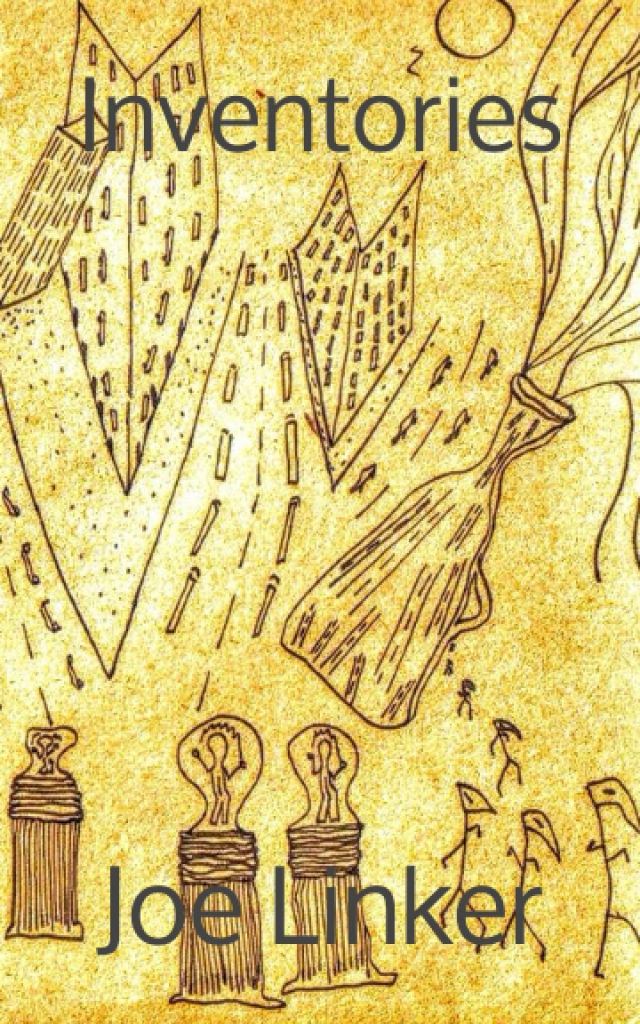
    Part human, part deity, these working gods are restless. What happens when one wants out? Episodes of a god on the run, “Inventories” is now available in paperback book format. “Inventories” first appeared here, at The Coming of the Toads, near daily installments over several months in 2020, a quarantine exercise. The text was revised for this book publication first edition.

    ASIN : B08VM82YRK
    Publisher : Independently published (February 2, 2021)
    Language : English
    Paperback : 190 pages
    ISBN-13 : 979-8702891125
    Item Weight : 9.4 ounces
    Dimensions : 5 x 0.48 x 8 inches

  • Lightning Balls over Puget Sound

    Lightning Balls over Puget Sound

    Skid out. Conversation with a cop. At home with Sylvie. Lightning balls over the Sound.

    A hard rain falling, still blocks from Val’s Club, through the red light at the Seneca exit coming off the freeway, spin out of control and slide into a flooded work zone, taking out an orange CAUTION sign, and the engine dead, and I push to the nearest curb out of the water, not quite clearing the lane, hog’s tail sticking out. I try to kick the engine over a couple of times before surrendering to the waterlogged fact. I reach into the saddle bag for my briefcase, thinking I can run the rest of the way to Val’s Club, and wake up to a blue and red light show and a uniform walking toward me. License and registration, please. The young fuzz looked to be under twenty-one. More fate. A ’56 Buick 6 full of sailors speeds past. Fuzzball gives them a glance but doesn’t seem interested, repeats, license and registration, please. Very polite, very determined. The fuzz is super starched, but getting wet. And there’s now a backup examining my bent license plate. What seems to be the problem, officer? I mean, I’m sort of in a hurry here. Very late for a very important meeting with some very influential people, if you know what I mean. License and registration, please. But what’s happened is, the city needs to clean the crap out of its storm drains. What’s happened is, I’ve asked you for your license and registration. Yes, sir, I say, deciding a little compliance might soften the starch. You Charles Murphy? Yes, sir, though as unsure as ever, but decide not to get into that with him at this point, my collection of identifications. Tie Your Own Trailer Park, Mt. Si Road. Is that your current address? Yes, I say, thinking, one of too many. You know, Mr. Murphy, here in Seattle, we like to think of stopping at red lights as the law, and not merely a suggestion. Ray is a veteran Seattle PD detective. We were in the Army together, buddies in Vietnam. Sounds cliché, but true story, so I’m using it to get out of a jam. I was a clerk typist. Ray was a grunt promoted to sergeant, result of his optimistic volunteerism, otherwise known as MF crazy. But he credits me with saving his life out on a walk for a late evening smoke one night. I suspected Ray of being a god even then, before I knew much about the gods, just the stories Mom raised me on. Ray saved my life one too many times. He kept throwing me in and pulling me back out. Slowly over the ensuing years I began to realize that the gods make mistakes. A clerk typist just doesn’t see that much action, get into that many fire fights. Anyway, Ray’s out in the rain tailing the fuzz newbie in a training exercise, and while he doesn’t save my life this time, I am let go, as the saying goes, with a warning. Back home on the upper balcony with Sylvie and a bottle of Pinot Noir chasing one of Pinot Grigio and we’re playing a game of whiffle ball with lightning balls made on Sylvie’s magic cop spindle trying to hit the islands in the Sound. The rain falls and falls as thick as the Anything Goes chowder Sylvie whipped up for a simple evening of sitting out and bouncing lightning balls skipping like rocks across the Sound.

    “Lightning Balls over Puget Sound”
    is episode 7 of
    Ball Lightning
    a Novel in Progress
    in Serial Format at The Coming of the Toads

  • Hacked and Gobsmacked

    Hacked and Gobsmacked

    Late for a meeting. "extreme and unusual risk." "hacked and...gobsmacked"

    I was late for my meeting with Walter. I had some explaining to do, but I wasn’t in the mood for working together as a team in the spirit of cooperation toward common goals for the mutual benefit of all. Nor did I feel like throwing any bums a dime. I was their in house Risk Manager. Walter was itself a Risk Management Brokerage, specializing in extreme and unusual risk. Sometimes avoidance was the best answer. I rode down Pine to First and over to Pike to the Market and looked for a place to pull the Harley over and park. Cleo nodded I could squeeze into the space in front of his international news stall. The rain had stopped, the clouds still low and grey and blue and hanging bushed like wads of cotton candy over the diamond. Out on the water a ferry would be approaching, carrying Walter from his The Breakers West on Bainbridge Island. I was late with my quarterly report. We’d been hacked and I was still too gobsmacked to explain it. Walter would want to know who, when, what, where, why, and how. “Damned if I know,” was not the answer he’d want to hear from his six digit plus bonus contracted Risk Manager.

    “Hacked and Gobsmacked”
    is episode 2 of
    Ball Lightning
    a Novel in Progress
    in Serial Format at 
    The Coming of the Toads

  • The gods Get Bored

    The gods Get Bored

     Riding Harley in the rain in Seattle. Ball lightning. The gods.

    I throttled my green gnarly Harley across I-90 from Bellevue, wind chopped waves blowing over the wall on the south side of the bridge, the water as smooth as a coffin lid on the north side. I raddled through the last tunnel and merged onto I-5 north to downtown Seattle. A glob of ball lightning looped out of a smoke ring cloud hanging over the ballpark. The ball lightning bounced across the closed roof. The baseball stadium looked funereal. No game tonight. The winter circus was in town. On nights like this the gods might get bored and when the gods get bored no amount of prayer satisfies these clouds of gluttony, the local paradise filling like a wet basement. Why so many gods, I don’t know. Even the Catholics (and I am one, though maybe not a good one, whatever good means, but as Reverend Mother Mary Annette never tired of telling us, once a Catholic, always a Catholic), who profess belief in but one God, pray to the Saints and Mary and the rest, who seem to function much like the old Greek and Roman gods, one for every need or desire, one for every occasion, one for every problem, one for every predicament. A god for this, a god for that. A god for the nice, a god for the mean. Finely balanced too, the old gods, but like an unequal arm balance, some more powerful than others, leaving it to the mortals to try to balance things out. Still, evens up: one for light, one for dark; one for water, one for air; one for love, one for hate. Always meddling in human affairs, though, these immortals. Sure seem to get in the way all too often. Always wanting something, too, a piece of the human pie chart, insatiable. Why do we keep calling out to them? Was there a Saint of scooters? Could use a prayer to him now.  Dear Saint Scooter, please get me and my Vespa downtown safely, as an 18 wheeler passes at twice my speed, his mud flap cowgirls waving and laughing. God of lead, god of gold. God of the meek, and god of the bold. God of yes, and god of no. God of hot, god of cold. God of bought, and god of sold. God of gods, who never grows old, oldest of all.

    “The gods Get Bored”
    is episode 1 of
    Ball Lightning
    a Novel in Progress
    in Serial Format at The Coming of the Toads

  • Notes on Caleb Crain’s “Overthrow”

    Notes on Caleb Crain’s “Overthrow”

    In spite of embedded Shakespeare and sundry 19th Century potential footnotes, Caleb Crain’s new novel, “Overthrow” (Viking, August, 2019), may remind readers more of the William Powell and Myrna Loy films that made noir comedies out of Dashiell Hammett’s “The Thin Man” than to Henry James (who, it might be argued, made drama out of living room comedy). The plot of “Overthrow” might also be said to parody the best of legal action writer John Grisham. Nick Hornby comes to mind, too, his “A Long Way Down.”

    “Overthrow” is a protean novel. Ingredients of farce, satire and irony inform contemporary ideas of group-think, economics, media, conspiracy theory, identity and relationships, existential earworms. “The media” performs the role of Keystone Cops, as do the real cops, chasing the story controlled by puppeteers, whose rods and strings get crossed.

    As essay, “Overthrow” might be subtitled: “Where we live and what we live for.” And when. The slow, slow art of the novel. Who remembers the Occupy Movement, which may now be recalled as more of a campout than a revolution? If (to) Occupy is the protagonist, who or what is the antagonist? But first, what does Occupy want? To seize? To have sex with?

    Is overthrow of governance periodically necessary to maintain a balance of human nature? Has human nature improved over time, or are we no better than any of our ancestors? Or, indeed, were our ancestors better off than us: non-specialized, at one with nature, unpolluted, non-alphabetic. Did our ancestors, as we do, have a picture of themselves? If not, when were these pictures invented? Were the pictures they had of themselves the same pictures others had of them? Overthrow and revolution of the I, the me, subject and object.

    Not what does revolution mean, but what does it mean to make revolution? Certainly not to write a novel. But, yes, that, too, as it turns out, particularly a novel about building relationships. Is human nature capable of democracy? Can we “rule ourselves”? The question is important to Michael Hardt in Astra Taylor’s “Examined Life: Excursions with Contemporary Thinkers,” which predates Zuccotti Park Occupy by a few years. And while many thought and still do that the Occupy Movement was a failure, its aims unclear, its results a discredit to the possibility of change, using Hardt’s thinking, it achieved a great step on the road to democracy: Occupy created relationships, corresponded directly to participant lives, illustrated (arguably) collective self-rule, or, at least, to go back and use Hardt’s words, it might have created “the terrain on which the training in democracy can happen – the training and the collective ability to produce social relationships” (149, The New Press, 2009).

    And producing social relationships is what “Overthrow” is about, in its most serious reading, the goofy stuff aside. Why write a book no one will read? A poem no one will ever see? A song no one will ever hear? Similarly, why a pick-up? Why a one night stand, as if a relationship requires no more investment than a moment in a head, an hour or two on a couch, or a night in bed but easily forgotten? We aren’t in “City of Night.”

    Crain’s sentences come alive, twisted and contorted as we find tree and bush limbs in nature, beautiful. Cultivated, maybe, by some unseen hands, and, at times, readers might think, they are overthrown. You can’t take a comb to them. But we don’t get quite as much of that as we did in “Necessary Errors” (Penguin, 2013). Maybe because “Overthrow” has more dialog. Still, consider this artwork, and note the consistent style that isn’t so much rococo decorative but the way the world actually passes by, in and out of the senses, projection and reflection. The description and detail of observation suggest total control, and objective correlative emotions appear and disappear, as nostalgic fits can sometimes be brought on by certain odors or sounds, but which can only appear at random and not be called up by will, only by suggestion, asides of a sort:

    From “Necessary Errors”:

                They passed into the black water of the shade of the bridge. Out of the corner of either eye, Jacob watched the gray, triangular battlements slide up from behind and widen, approaching them on either side, in embrace. Then the bridge itself crossed overhead with its water-blackened stones. While it covered them, hands seemed cupped over their ears; all they could hear was the water’s eager lapping against the heavy walls beside them.

                “Are you fair to him?” Annie asked.

                The black stones lifted off, and the air was free and empty again around them. “It’s not like that.” He watched recede the semicircular – circular, in the water’s haphazard mirroring – portal through which they had passed (391).

    From “Overthrow”:

                 After looking down, Matthew by reflex looked up, into the beautiful double rigging of the old bridge, which was unusual in that it was both a cable-stayed and a suspension bridge, doubly supported because its builders had meant for it to stand for all time. Cables that spread at an angle crossed cables that fell straight down, interlacing like fingers and creating diamonds that in their sequence of gradually varying dimension seemed to be unfolding as Leif and Matthew rode past them.

                They crossed the water; they descended into downtown (55).

    What is overthrown remains out of reach. One of the themes circling through “Overthrow” concerns a kind of deontological question of the value of certain activity or action, of writing for example, of writing a poem or a book. The answer seems to rest in giving way to what it is a person might be fit for:

                This was something he could do, he told himself, as he kept dabbing. This was the sort of task he could safely spend his anger on. Even if he didn’t save the plant and even if the plant didn’t in fact need saving (298).

    Substitute planet for plant in that paragraph. Matthew is looking for a way out of his cynicism:

    He had written a note about Samuel Daniel, he remembered. But what if he was interested in Daniel and touched by Daniel’s devotion to his vocation only because he himself, in choosing to write literary criticism, was making a mistake like Daniel’s – giving his life to a kind of writing that was about to pass out of the world? To a modern equivalent of Daniel’s poeticized, aestheticized history?

                He picked up the forked paper, to read over the note, but the handwriting wasn’t his.

                “You can read it,” Lief said, appearing at the door.

                “I thought it was mine.”

                “It’s the devil,” Leif said. “It’s one of his voices.”

                “I don’t need to read it” (219).

    What can be worse for a writer than to presume his writing won’t be read? The “Overthrow” working group, which Matthew joins but only peripherally, his object being Leif, and not revolution, is apparently under surveillance, yet the authorities miss that the group has maintained a blog. So much for blogging. Crain’s theme of what has meaning, purpose, and value against what is given exposure, watched, and chosen touches on every aspect of the characters’ lives:

                “She wondered if he would give permission. She wondered if he was still willing to fight, regardless of whether he still believed. The new order had revealed to them that poems didn’t have to be published in order to have meaning as poems, but apparently the same order was also going to require the publication of all the prose of one’s life” (377).

    In Stalin’s Russia, one had only to think a certain thing to be accused and convicted of a crime. But how did they know what one was thinking?

    Hardback copies with dust covers occupy the bookshelves of the conservative library. Conservative in lots of ways, but here in the sense that writers and readers want their books to retain their value, even increase in value over time. We want that piece of capitalistic system to succeed, and to ensure our own success. The economics of the body, the body of the book, its spine, sewn, its jacket, shield against the elements, nomenclature (either or fallacy of identity – “Then he began to curse and swear, saying, ‘I do not know the Man!’”). Is the hardback economically efficient? Books as collectibles. What does a book become without its dust cover? Its value diminishes significantly as a collectible. Aren’t paperbacks “cooler”? Is the hardback a middle class writer’s heyday? “Occupy” is a novel: this is not a book review. If we are going to spend $27.00 for a hardback book with a cool dust cover, shouldn’t we at least expect not to trip over any typos?

    But if we think books expensive, consider the cost of obtaining legal help:

                “I know your parents are already being so generous.”

                “How much was it?”

                “About twenty-eight hundred dollars.”

                For a couple of days’ work. The side of town where Matthew’s parents lived was built on a hill, up which he and Fosco were gradually proceeding, a long, slow hill that, as was always explained to new arrivals in town, served as an objective correlative of the relative financial net worth of the households along it. Blocks ahead, at the top, were mansions with a view of the distant city. Matthew’s parents lived more than halfway down, where the houses were still faced with brick and perfectly respectable but not grand (209).

    In other words, middle class, but “more than halfway down,” so maybe lower middle class. In any case, we are talking about a generation of a country’s youth who will not live even that high up the hill, except maybe as they are now, living in the garage or the basement, trying to pay off their student loans on the income of a barista, a fact checker, a literary critic:

                “Let me talk to my parents,” Mathew said. “Thank you for telling me.”

                Was he going to ruin them?

    Mathew has already explained “reversion”:

                “There’s an old legal term, ‘reversion,’” Mathew began. “You possess something in reversion if another person has the use of it now but you’ll get it after they die. Someone from another branch of your family may be living in a manor, say, and it will be yours if you manage to outlive them. Sometimes Shakespeare uses the word metaphorically, to mean anything in your future, anything you’re looking forward to, but legally, technically, it’s something you might not live long enough to put your hands on. My thesis is that in the poetry of the sixteenth and seventeenth centuries, the individual is no longer thinking of himself as the subject of a king but as someone who himself has a kingship in reversion” (43).

    In other words, as Harold Bloom put it, the “invention of the human,” the creation of the I. Who will pay for that me? The King, in reversion, overthrown:

                Mathew demurred. “Representative democracy works a little differently….”

                “People don’t really want to be king anymore,” said Raleigh. “There aren’t even any lunatics in the asylums who want to be Napoleon anymore.”

                “Maybe they want to be reversionary one-percenters,” suggested Elspeth.

                “One percenters are too boring,” Raleigh objected.

                “They have no charismatic virtues,” said Mathew.

                “They have no charismatic vices,” Raleigh corrected him. “They would be charming if they would only let us see them being greedy and trivial.”

                “I wouldn’t find them charming,” Elspeth said.

                “Yes you would,” Raleigh insisted. “They’d be like the millionaires in screwball comedies” (44).

    One thing Raleigh might have wrong in the conversation from “Overthrow” quoted above is the “lunatics in the asylums,” since asylums, like newspapers, have mostly disappeared, beginning with Reagan in California.

    “I think another reason the notion of revolution has been discredited is its association with misery, as if revolution would involve giving up all of the pleasures that everyone enjoys” (Hardt, 153).

    But the asylum is now the streets. And Hardt and Taylor, in “Examined Life,” are rowing in a boat on Central Park Lake:

    “It’s such an idyllic and seemingly anti- or even counterrevolutionary location, one associated with old wealth and the stability of power, the leisure activities of the rich. Maybe, in a strange way, it will help us work through some of these issues like who can think revolution, who wants revolution, where we can think revolution, and who would benefit. Maybe this seemingly strange location can help us cast away what seem to me destructive limitations on how we think about this” (Hardt, 153).

    If we think about it at all. And if we do, if we choose to read or maybe even to write about it, kings of our spirals, our unpublished napkins, our unread blogs. And then, frosting on the cake we’ve been let eat and chocolate in the latte we’ve been let drink, to talk to someone about it.
  • News at the Toads

    I reviewed British poet Scott Manley Hadley’s debut poetry collection, “Bad Boy Poet,” at Queen Mob’s Teahouse. The book, just out this week, is available from the publisher (Open Pen) and at Amazon (paperback and Kindle editions). Read my review here.

    My novel “Alma Lolloon” is now available in Kindle electronic edition format. You can download a copy for $2.99 here (free if you have Kindle Unlimited).