Tag: Music

  • Out of Time

    What will we do with Live at 5 in the new year? The shows began at the beginning of the Covid-19 pandemic and at their peak featured a different host player going live most nights of the week, sharing guitar, songs, stories, and readings (live via the Instagram video venue) to an audience of similarly homebound family and friends of family. The shows ran evenings for about an hour starting at 5. The hosts included, on a rotating schedule, myself, my brothers, a nephew, and over time a few guest hosts and visitors – more family and friends. Shows were home-staged from Portland, Salem, Healdsburg, Ione, Drytown, Los Angeles, and Philadelphia. The format was loose and forgiving. Audience clicked on, paused, maybe stayed for the whole show, as people do passing buskers on a sidewalk, and through the Instagram feed anyone tuned in could place comments for the performer and the rest of the audience to read, and many an audience-controlled conversation took off. (Unfortunately, Instagram does not save those conversations – the comments disappear even if the host saves the video to their Instagram feed.) The Live at 5 shows diminished through 2022, timing out as the voluntary pandemic isolations began to lift.

    I played guitar in a neighborhood jazz band for the last couple of years. It was fun, I met some new folks, and learned more about music and the guitar – particularly about playing “in the pocket,” a term that means playing in time, in sync with the other musicians, a skill I’ve never satisfactorily mastered. You might think jazz would be more forgiving, but no. I left the band to concentrate on gypsy jazz guitar, renewing my subscription to Robin Nolan’s “Gypsy Jazz Club,” which includes players from all around the world. One of the features of the club is a “Sunday Club Zoom Hangout” – 8 in the morning my time, but I manage to wake up in time most Sundays, for a Gypsy djass reveille. For the most part, the Hangout hour is devoted to live, short performances by club members.

    “Step in time, step in time
    Step in time, step in time
    Never need a reason, never need a rhyme
    Step in time, we step in time”

    from the song “Step in Time,” lyrics by The Sherman Brothers, in “Mary Poppins,” 1964.

    Time waits for nothing, to begin, “to boldy go where no man [which is to say, everyone] has gone before,” pen in hand, splitting infinitives out of time, rubato, robber of time:

    “For three years, out of key with his time,
    He strove to resuscitate the dead art
    Of poetry; to maintain ‘the sublime’
    In the old sense. Wrong from the start—”

    from “Hugh Selwyn Mauberley” [Part I], Ezra Pound, 1920.

    Anyway, the question I’m entertaining now is whether or not to try to resuscitate an ongoing Live at 5 show. The need for homebound, not to mention amateur, entertainment may have passed for the time being. Still, there developed a core group of loyal listeners, not enough to fill Shea Stadium, or the Ash Grove, for that matter, of course, but would even those few return for a new season? It’s dinner hour, kids are back in school, the work-at-home movement is weakening, and pizza parlors, pubs, and wine bars have reopened, many featuring live entertainment. And the movies are back up and running. But some of us have emerged from the pandemic isolation years eschewing the old forms. We don’t go out anymore. We are aging. We are stepping out of time. We could fill a living room.

    Most of the Live at 5 shows were improvisational, maybe the host wrote down a few notes before going live with some intro comments, checking in with the audience, a few songs, some outro comments. Audience requests were popular. The videos remain on their host’s Instagram, where saved, complete with mistakes and random rambles, unedited. I don’t want to overstate, but I think the shows in the various locales were looked forward to and enjoyed. Where they were not joined live, Instagram followers caught up later.

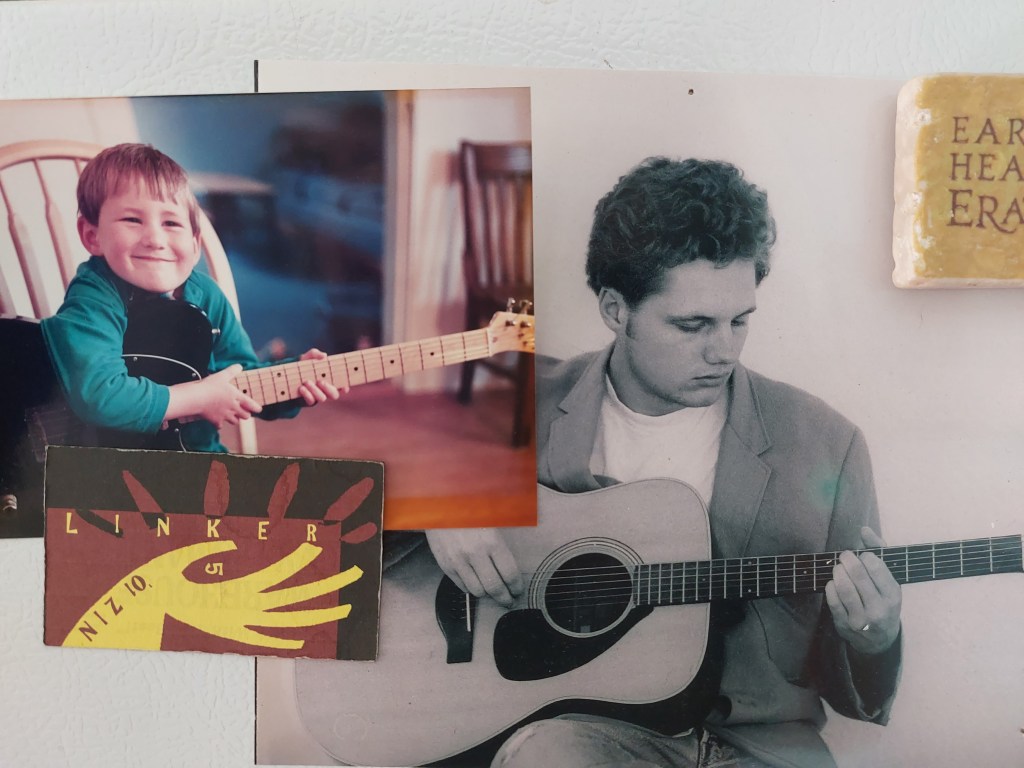
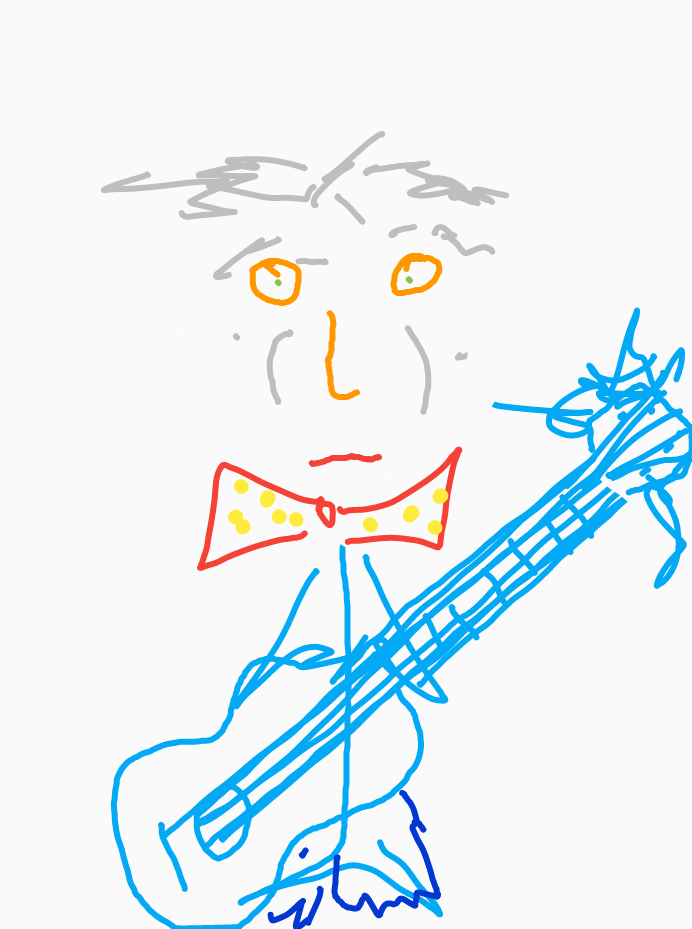
    My brother Charles, at the height of the show’s exceptional ratings, had some shirts made:

    By the way, none of this post is to espouse Instagram as a preferred tool. But that’s a topic for another post altogether.

    I’m now picturing a Live at 5 Never Ending Tour, maybe with a reading list for the audience to keep in tune:

    John Cage’s “Silence”
    Bob Dylan: “The Philosophy of Modern Song”
    Dunstan Prial: “The Producer – John Hammond and the Soul of American Music”
    Michael Dregni: “Django – The Life and Music of a Gypsy Legend”
    Greil Marcus: “Mystery Train”
    “The Real Frank Zappa Book”: Frank Zappa with Peter Occhiogrosso
    Alex Ross: “The Rest is Noise”
    Robin D. G. Kelley: “Thelonious Monk – The Life and Times of An American Original”

    But you see how easy it is to get carried away.

    Closing this post with a quote from John Cage, “written in response to a request for a manifesto on music, 1952”:

    instantaneous       and unpredictable

    nothing is accomplished by writing a piece of music
       "  "    "    " hearing "  "  "  "
       "  "    "    " playing "  "  "  "

    our ears are now in excellent condition
    xii/Silence, John Cage, Wesleyan University Press, 1961 (paperback 1973), reformatted somewhat here to fit block.

    Note: This is a Happy Birthday! post for Matt Mullenweg.
  • Guitar Tabs for “Sitting Out” and “Sweet Hay”

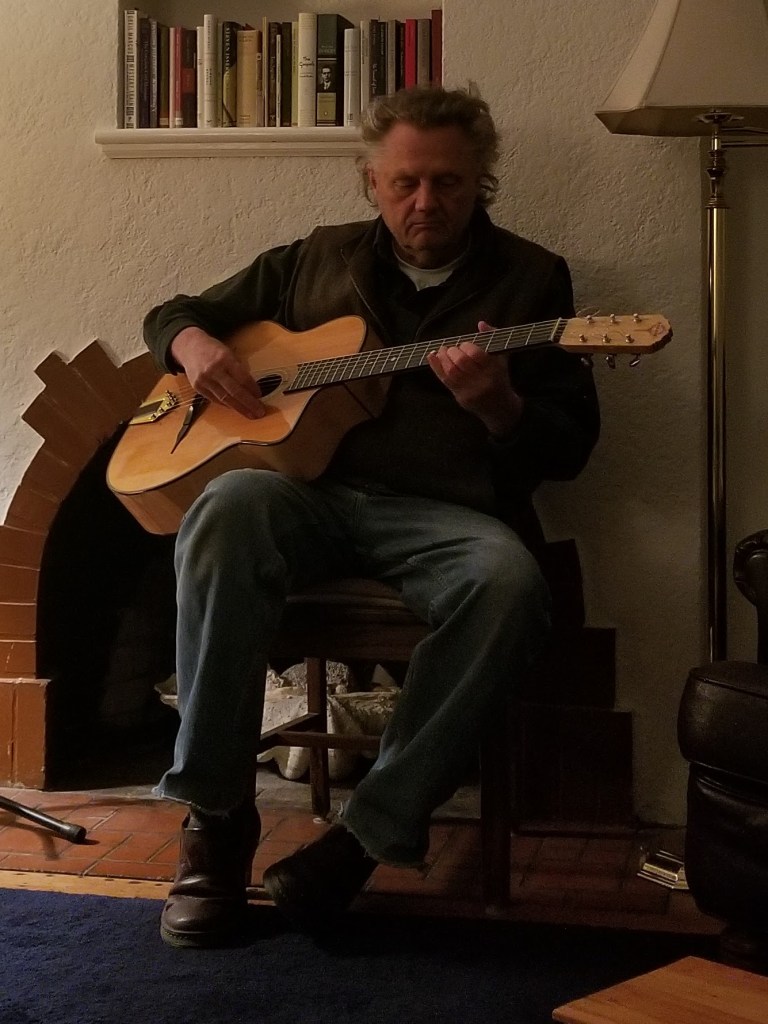
    Here are guitar tabs for two pieces I created and played this summer on Instagram live reels. The tabs are for illustration purposes and to save the ideas or themes of the pieces in a text format – in play, much improvisation is employed using the themes as form.

    Guitar Tab for "Sweet Hay"
    
    [Intro]
     
    e|-------------|
    B|---3---4---5-|
    G|---3---4---5-|
    D|-2---3---4---|
    A|-------------|
    E|-------------|
     
    [A]
               CM7            D9  D9-  D7                 G7                CM7
    e|-----------------|-----------------|------------------------|-----------------|
    B|---------5-5---5-|-------5---4---3-|----------------3-3---3-|---------5-5---5-|
    G|---------4-4---4-|-------5---5---5-|----------------4-4---4-|---------4-4---4-|
    D|---------5-5---5-|-------4---4---4-|----------------3-3---3-|---------5-5---5-|
    A|---0-2-3-----3---|-3-4-5---5---5---|-5-4-3-0-h2-0-----------|---0-2-3-----3---|
    E|-3---------------|-----------------|--------------3-----3---|-3---------------|
     
    [A]
               CM7            D9  D9-  D7                 G7                CM7
    e|-----------------|-----------------|------------------------|-----------------|
    B|---------5-5---5-|-------5---4---3-|----------------3-3---3-|---------5-5---5-|
    G|---------4-4---4-|-------5---5---5-|----------------4-4---4-|---------4-4---4-|
    D|---------5-5---5-|-------4---4---4-|----------------3-3---3-|---------5-5---5-|
    A|---0-2-3-----3---|-3-4-5---5---5---|-5-4-3-0-h2-0-----------|---0-2-3-----3---|
    E|-3---------------|-----------------|--------------3-----3---|-3---------------|
     
    [B]
                Am7                Dm7               G7                CM7
    e|-------------7-5-----------|---7-5-----------|---5-3-----------|-------5-7----|
    B|-----------5-----8-5-------|-6-----6-5-------|-3-----5-3-------|-5-6-8------5-|
    G|-----------5---------7-5---|-5---------7-5---|-4---------5-4---|-4----------4-|
    D|-----------5-------------7-|-7-------------7-|-3-------------5-|-5----------5-|
    A|-3-4-5---7-----------------|-5---------------|-5---------------|-3----------3-|
    E|-------5-------------------|-----------------|-----------------|--------------|
     
    [A]
               CM7            D9  D9-  D7                 G7                CM7
    e|-----------------|-----------------|------------------------|-----------------|
    B|---------5-5---5-|-------5---4---3-|----------------3-3---3-|---------5-5---5-|
    G|---------4-4---4-|-------5---5---5-|----------------4-4---4-|---------4-4---4-|
    D|---------5-5---5-|-------4---4---4-|----------------3-3---3-|---------5-5---5-|
    A|---0-2-3-----3---|-3-4-5---5---5---|-5-4-3-0-h2-0-----------|---0-2-3-----3---|
    E|-3---------------|-----------------|--------------3-----3---|-3---------------|
     
    [Outro]
                     CM7
    e|-------------|---------|
    B|---5---4---3-|-------5-|
    G|---5---4---3-|-----4---|
    D|-4---3---2---|---5-----|
    A|-------------|-3-------|
    E|-------------|---------|
     
     
    h = Hammer-on
    
    
    Guitar Tab for "Sitting Out"
    
    [A]
     
    e|----------|----------|----------|--------|--5-7-8/10|10-10-4---|4-5-4-----|4-5-4-----|4-5-4-----------|
    B|5-6-5-----|5-6-5-8---|5-6-5-----|5-6-5-6-|8---------|----------|------6---|------6---|------6---------|
    G|----------|----------|----------|--------|----------|----------|----------|----------|--------7/9-9---|
    D|------7---|----------|------7---|--------|----------|----------|----------|----------|--------------7-|
    A|----------|----------|----------|--------|----------|----------|----------|----------|----------------|
    E|----------|----------|----------|--------|----------|----------|----------|----------|----------------|
     
    [B]
     
    e|--------|4-------|----------|--8-7-4-|5-------------|
    B|------6-|--6-----|--------6-|8-------|--6-5---------|
    G|--4-7---|----7---|----5-7---|--------|------7-9-----|
    D|6-------|------6-|7---------|--------|----------7---|
    A|--------|--------|----------|--------|--------------|
    E|--------|--------|----------|--------|--------------|
     
    [C]
     
    e|---------|---------|--------|----------|-------|--------------|--------------|----------|--------|
    B|---1-----|---1-----|---1----|3---------|---3---|----------3---|----------3---|--------3-|---1----|
    G|--2-2----|--2-2----|--2-2---|2---------|--1----|---------1----|---------1----|--------2-|--2-2---|
    D|-2---2---|-2---2---|-2---2--|3---------|-3-----|--------3-----|--------3-----|--------3-|-2---2--|
    A|0--------|0--------|0-----2-|----------|2------|-------2------|-------2------|-------2--|0-----0-|
    E|------0--|------0--|--------|---0-0-0-0|-------|0-0-0-0-------|0-0-0-0-------|0-0-0-0---|--------|
     
    [D]
     
    e|---------------|---------------|--------------|-----------7-8-|4-5---------|---5--7--8--5-|
    B|1-1-3/5-3------|1-1-3/5-3------|1-1-3/5-3-----|-----6-8-9-----|----6-5-----|---5-----5--5-|
    G|---------5/7---|---------5/7---|---------5/7--|5-7-8----------|--------7-9-|---5-----5--5-|
    D|------------7--|------------7--|------------7-|---------------|------------|7--------7--5-|
    A|---------------|---------------|--------------|---------------|------------|--------------|
    E|---------------|---------------|--------------|---------------|------------|--------------|


    / = Slide up
     
    
  • Songs for “Play Music on the Porch Day”

    This coming Saturday, the 26th, something relatively new on calendars, called “Play Music on the Porch Day,” a neighbor a couple of weeks ago brought to our attention. As listeners to our “Live at 5” Instagram gigs know, we often can be found playing music on the porch, in the sit out zone in the drive, in the basement during heat waves, in the living room with the rain adding percussion to the set, in the kitchen while the coffee is brewing, offering music up to the passersby – “Live at 5” enjoys usually an audience of 5. Part of the attraction and pleasure of amateur music performance is the random, the mistakes, the discoveries, the forgiveness, loosening the ties and strictures, inviting improvisation, breaking the rules for the sound of it all, mixing stories with songs and guitars, mixing styles – like Struttin’ with Some Barbecue. Anyway, here are some recent songs I’ve been working on for the upcoming “Play Music on the Porch Day” gig:

    “Susanna, Oh Susanna”
    C Mornings when we wake up
    by the deep blue sea
    G7 Afternoons sleeping
    under a green palm tree
    E7 Evenings when you call me
    A7 come out wherever you are
    D7 On the radio playing
    G Patty and Ray

    C Susanna, Oh Susanna
    I can’t even say your name
    G7 All I have for you
    is more of the same
    E7 Hiding in the evening
    A7 when you call my name
    D7 On the radio playing
    G Patty and Ray

    “Coconut Oil”
    G Here’s an emotion
    B7 Let’s jump into an ocean
    E7 Of lotion
    A7 Of coconut oil, (D7) coconut oil, (G) coconut oil (D7)

    G I got a gal
    B7 Heart full of mushrooms
    E7 She drinks oceans
    A7 Of coconut oil, (D7) coconut oil, (G) coconut oil (D7)

    G She tells me don’t be dry
    B7 She likes me all wet
    E7 Night and day drenched
    A7 In coconut oil, (D7) coconut oil, (G) coconut oil (D7)

    “Two Riders Were Approaching” (G, C7, G, D7)
    Two riders were approaching
    On hogs and wearing leathers
    Stopped into a tavern
    For a cool glass of beer.

    Two pints for us, my friend
    The day is warm and grim
    The dust has found its corner
    The dogs want shade and water.

    We are the two riders
    Who were approaching
    Now for those beers
    Nighttime is drawing near.

    Yippii-yi-yo
    Yippie-ki-yay
    We’re gonna go
    Our own way.

    Yippi-yi-yo
    Yippie-Ki-yay
    We’re gonna go
    Our own way.

    And a few more pieces, instrumental and fragmented vocals, and of course the ever popular “Pretty Vacant and We Don’t Care” and “Bury My Heart in the Muddy Mississippi,” as well as covers of some train songs: “Mystery Train,” “This Train” (Bound for Glory), and “Freight Train.” Should be enough to fill a porch.

    So, wherever you might be come Saturday evening, put your ear to some porch and see what you hear.

  • The Smell of Music

    How will mash sailors make it to the couch
    if you their bright lighthouse stop talking?
    How will the blue cowboys smell the guitar
    if you stop picking up where you left off?

    You must finish what you begin even
    if you bring it to an end like the swells
    not cresting breaking happily into mush
    waves at high tide too deep to wade.

    Things are happy then sad then happy
    again, like flowers, like the blue bells
    swells rising up and over and falling
    into laughter and rolling in silliness.

    Waves like bells deep and sonorous
    sounds you can smell like seaweed
    drying on barnacled covered rocks
    that’s the half purpose of poetry:

    That you smell what others hear
    that you hear what others taste
    that you taste what others feel
    that you feel what others seal.

    When sense and sound blend
    with your surroundings sitting
    on the couch and you get up
    to adjust a lighthouse throw.

    I’ve opened comments I hope
    you leave one and I’ve included
    a photo which might be easier
    to comment on than the poem.

    Cobble Beach below Yaquina Head Lighthouse, 2019.

    Photo: Cobble Beach, below Yaquina Head Lighthouse, Oregon Coast, 2019, on the way home from trip to Healdsburg.

  • Schoenberg’s Cartoon Music

    Having installed Idagio, the all classical music app suggested by Alex Ross this week in his review of Apple Music Classical, I then turned to his book “The Rest is Noise” (2007) to search for some 20th Century music to test Idagio’s functions. I alighted on Schoenberg. I like “Twelve-Tone” music because it ignores mood. One of the features of Idagio that’s somewhat annoying is its suggestion that classical music can somehow be explained by moods, evoke mood, or dispel mood. Maybe it can and does, but the Idagio feature labeled “Play My Mood” asks the musician to be a magician. I’m reminded of the first stanza of Wallace Stevens’s “The Man with a Blue Guitar” (1937):

    The man bent over his guitar,
    A shearsman of sorts. The day was green.

    They said, “You have a blue guitar,
    You do not play things as they are.”

    The man replied, “Things as they are
    Are changed upon the blue guitar.”

    And they said then, “But play, you must,
    A tune beyond us, yet ourselves,

    A tune upon the blue guitar
    Of things exactly as they are.”

    By eliminating the listener’s expectations, Twelve-Tone music replaces mood with something new. It sends the elevator you might be riding through the roof. Somehow, I’m not sure if I found it first in Idagio or “The Rest is Music,” I was suddenly listening to Schoenberg’s “String Trio” op. 45 (1946). Alex Ross gives it this analysis:

    “The score is full of distortion and noise, with the players asked to execute such eerie [pun intended?] effects as sul ponticello (bowing the strings at the bridge) and col legno (bowing or tapping the strings with the wood of the bow). Yet the contrasting lyrical episodes radiate nostalgia for the former tonal world. By his own testimony [was he on trial?], Schoenberg was depicting in musical terms a severe asthma attack he experienced in the summer of 1946, during which his pulse temporarily stopped and he was given an injection to the heart. Some passages represented the injections, he said, others the male nurse who treated him. The composer Allen Shawn, in a book about Schoenberg, notes that the String Trio is a kind of fantastic autobiography, ‘as if in his delirium he had reviewed his life.’ The ending is soft and wistful.”

    324

    One problem with that analysis is that Ross has already mentioned “Scott Bradley’s inventive scores for Tom and Jerry cartoons in the forties, notably Puttin’ on the Dog and The Cat That Hated People” (324). Schoenberg’s attempts to introduce Twelve-Tone music into movies, Ross explains, came to disappointment, but then it was found to work well in cartoons. I then looked for “The Cat That Hated People” in Idagio. Not there. So I tried YouTube, and there it is, a classic from 1948:

    If you listen to only the music, separate the music from the cartoon, you’ll have the necessary introduction to Schoenberg’s “String Trio” of 1946. If you still don’t get it, just remember it has something to do with cats:

    XXV

    He held the world upon his nose
    And this-a-way he gave a fling.

    His robes and symbols, ai-yi-yi –
    And that-a-way he twirled the thing.

    Sombre as fir-trees, liquid cats
    Moved in the grass without a sound.

    They did not know the grass went round.
    The cats had cats and the grass turned gray

    And the world had worlds, ai, this-a-way:
    The grass turned green and the grass turned gray.

    And the nose is eternal, that-a-way.
    Things as they were, things as they are,

    Things as they will be by and by . . .
    A fat thumb beats out ai-yi-yi.

    Wallace Stevens, “The Man with the Blue Guitar,” Stanza XXV of XXXIII

  • Song Stuff

    Dolly Parton has written over 3,000 songs. We used to say we “made up” a song, since we didn’t write anything down, notes or lyrics. We made up our songs guitar in hand. It would take about 150 hours to play 3,000 songs, or you could play the same song on repeat for a week, which you might if you thought you had a hit. If you draw your song subjects from the lives of your intended audience, you’ll probably gather some listeners, if not reach the top 40. Dolly, born and raised in the Great Smoky Mountains, no doubt heard as a child ballads that originated in the British Isles. These ballads came from an oral tradition, told stories, the setting often changed to fit a new environment. The accompaniment might drone wearily to an exaggerated wintery fiddle pathos. On the other hand, songs of spring might jump, jig, and reel. Ballads are folk songs, and while anything can be a song subject, songs of love and hate, war and peace, life and death, faith and betrayal – those subjects are ever popular. Songs are made using all kinds of rhetorical devices. We might think of songs as meant primarily for entertainment, but songs can teach, preach, tickle, and scratch. A good musician can make a bad song sound good, and a bad musician can make a good song sound bad. The Psalms are songs. What’s good is what’s real, even if it’s bad.

    I was perusing Greil Marcus’s updated “Mystery Train: Images of America in Rock ‘N’ Roll Music.” This sixth revised edition (2015) contains “Notes and Discographies” that run over 200 pages. But Dolly’s only mentioned twice, once in the original section, in the Elvis chapter: “Listen to Dolly Parton’s downtown hooker yearning for her Blue Ridge mountain boy; listen to the loss of an America you may never have known” (129), and again in the notes section under “Cameos: From Charlie Rich to ‘Louie Louie’” (360-363), where “A Real Live Dolly Parton” (1970) is said to include her song “‘Bloody Bones,’ a ditty about orphans who burn down their orphanage.” But while that Dolly album does contain a piece called “Bloody Bones,” it’s not a song but a story she tells, and it’s not about orphans but about her family growing up and how they all went to bed at the same time, and mostly in the same bed, there were 12 kids in a little country house, and they stayed in bed afraid of the boogie man and such tales their Mom shared. Well, Dolly’s not rock n roll, so maybe Marcus hurried through it. That’s likely going to be a problem for your discographers if you go around putting out 3,000 songs. The prolific Bob Dylan has only written about 600 songs. Anyway, Dolly did write a song about kids cooped up under some sort of evil matron, and they do burn the place down, sort of Matilda style. It’s titled “Evening Shade,” and it’s on the album “My Blue Ridge Mountain Boy” (1969).

    So I’ll take this opportunity now to lighten the load for my future discographers and say I’ve written (made up) only around 6 songs, with lyrics, that I keep in my active repertoire, another 8 or so instrumentals.

    With lyrics: “Bury My Heart in the Muddy Mississippi” (1978); “Pretty Vacant and We Don’t Care” (1985); “Goodbye, Joe” (1995); “Two Riders Were Approaching” (2021); “Down by the Bay” (2022); “I Talk to Myself” (2023). Dates I’m just guessing, plus revisions are always ongoing. There is no right or wrong but how you feel at the moment. When you get stuck, improvise your way out of it.

    Instrumentals: no dates shown – been playing and improvising most of these for years, but I’ll list them in approximate order, beginning with the oldest, from around 1970, which contains a riff an Army sergeant showed me. I just title them to remind myself of the idea and where it came from: “Sergeant Oliphant’s Blues;” “Saddle Up and Go;” “Double D;” “Em Surf;” “Good to Go;” “Patio #1;” “Patio #2;” “Blues for Tommy.”

    You can hear versions of my made up songs on my Live at 5 Instagram channel. Live at 5 was a Pandemic exercise that brought the extended family and friends together almost nightly for songs and comments and sharing while we were all hiding out from the virus.

    https://instagram.com/joe.linker?igshid=ZDc4ODBmNjlmNQ==

  • Loomings & Readings

    “High time to get to sea,” Melville’s Ishmael says, feeling weary and wornout, petulant and putout. I’m with Ishy these days, but like Camus, find myself far from the sea – too, too far, not close by at all.

    So it came to me, unable to put in with my surfboard at 42nd in El Porto as I might have were it somehow still 1969, to start a bookclub. Talk about absurd! Where’s Camus when you need him?

    In any case, I find myself these days growing closer to music, away with words, music without words, instrumentals I guess their called in popular lingo. So I’m already ditching the idea for a bookclub, and thinking of a garage band. We’d do train songs (with a few words), maybe in homage to my grandfather who was an engineer on the Louisville Nashville Line, though I never met him.

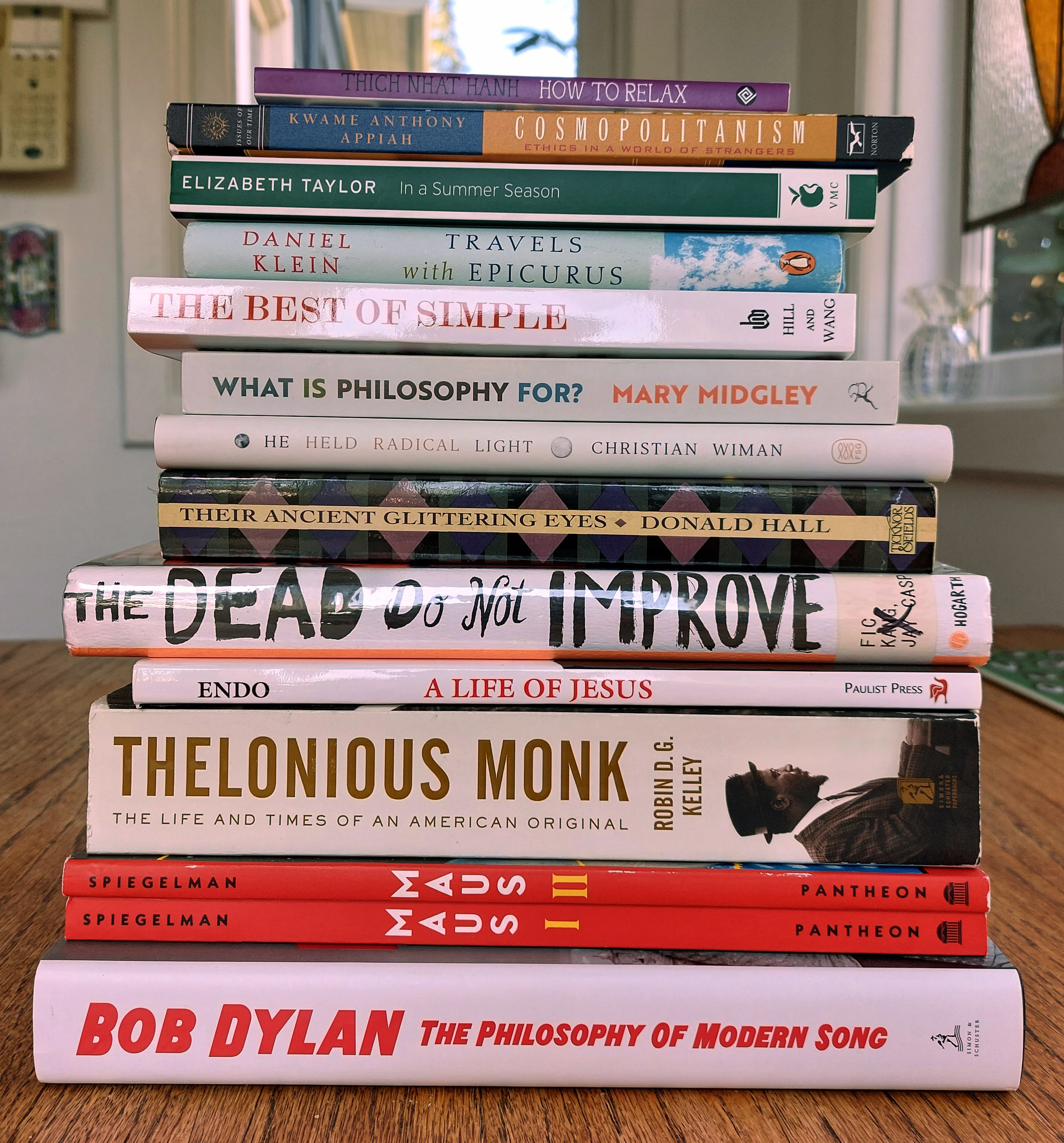
    Where did the idea for a bookclub come from? My stack of recently read books is about to topple over. This set began with Art Spiegelman’s “Maus: A Survivor’s Tale,” which he worked on through the 1980’s and won a Pulitzer in 1992. It’s a graphic novel in two parts about his father’s life in Germany during World War II and later living postwar in New York. Its ghostly and maniacal scenes are not quiet surreal, but leave a similar feeling – for it is, after all, predicated on the cartoon. It’s a comic book. The irony of that is so penetrating. It’s told in first person that shifts between his father’s recounting and Art’s narrative coming of age the son of survivors. It’s a masterpiece. And I don’t know how anyone could read it without wanting to share it. But who wants to relive it? The secret sharer puts it in a blog few read. Never mind the book club.

    But speaking of music, I also recently read Robin G. Kelley’s biography “Thelonious Monk, The Life and Times of an American Original” (Free Press, 2010). Monk’s mistreatments (self-inflicted or at the hands of others) are legendary; for example, the noted jazz critic Leonard Feather did more than criticize Monk – he attacked him for not being what Feather wanted him to be: “He has written a few attractive tunes, but his lack of technique and continuity prevented him from accomplishing much as a pianist,” Feather said (150). To be an original (in technique, continuity, or otherwise) is not necessarily to be accepted; on the contrary. Kelley’s book includes a good amount of history, Monk’s 20th Century environments: the causes and outcomes of the race riots of New York neighborhoods; the difficulties of surviving in the music industry; the difficulties for families of musicians who must travel to make a living; the prevalence of drugs in American cities, and the changes over time of police response; war, economic collapse, building and rebuilding, travel. Kelley gives us 600 pages, any one of which we might turn down a different street for readings to learn more about those subjects – again, the idea of a bookclub. But repeatedly we find Monk’s music dismissed by many of his contemporaries for its difficulties – difficulties which entertain rather than perplex today’s ears. Interestingly, the Beats and their poets found partnership in clubs that helped Monk finally flourish.

    Bob Dylan’s “The Philosophy of Modern Song” (2022) would make a good bookclub paring with Kelley’s Monk book. Dylan is another American Original, and his writing might strike many ears with difficulties similar to Monk’s piano. I’m almost never disappointed with Dylan, and this latest warrants reading and re-reading and listening. I put together a YouTube playlist of the 66 songs Dylan explicates in his book. Many of them have been recorded by more than one artist, so the trick is to get the version that most coveys the feeling of its mystery – that being how something so simple as a popular song can both create and evoke an entire era or single day in the life of an American coming of age in the age of “modern song.” And for those readers turned off by philosophy, not to worry, there’s not much philosophy to sing about here – the philosophy, like music theory, remains in the background.

    Speaking of philosophy, somewhere recently I noticed a new Mary Midgley book out, and quickly got a copy and read it. And, as it turns out, it’s her last one (Bloomsbury, 2018). Imagine living to 99 and the title of your last book? “What is Philosophy For?” Indefatigable, indomitable, Mary (look her up on YouTube and tune in to one of her conversations) defeats Dawkins and his ilk with real philosophy – that is to say, thought without propaganda.

    Shusaku Endo’s “A Life of Jesus” (Paulist Press, 1973) is a strange book. I like strange books. It’s about the Gospels, how they came to be first talked then written. The environments and people described are different from what we might come away with from the Bible versions. Here, for example, we get a fuller picture of John the Baptist, where he came from and what he wore, what he ate, what he said and did. Life can be strange in the desert. Essentially, we get closer to Jesus in the sense that the time itself comes alive. There is no question but that Jesus was a real person; he lived, in a real place, in a real time. The question of his divinity and why it has to remain such a mystery, almost a game, Endo does not quite answer, though it’s clear that he is a believer. It’s strange even to try to put this into words. I really like Endo’s book, and will read it again. It reminded me in some ways of Pasolini’s “The Gospel According to Saint Matthew” (film, 1964).

    A couple of books recently read did produce some disappointment: Christian Wiman’s “He Held Radical Light” (FSG, 2018) and Donald Hall’s “Their Ancient Glittering Eyes” (Ticknor and Fields, 1992). Don’t get me wrong; I liked both books. I even sent the Wiman to one of my sisters, thinking it would be to her liking also. These are both books about poetry, about poets, about poems and how and when they might be read and their purpose and import, their meanings, and the poetry and surrounding discussion I did enjoy. What I found disappointing was the emergence of an ego, a manic wanting on the part of both Wiman and Hall to write the poem to end all poems. Silly, that. It’s easy to see why and how poetry fails to live up to any kind of popular status in the marketplace – except for what we might find in popular song, in the philosophy of popular song, a philosophy that is lived but rarely talked about.

    I also read and enjoyed Jay Caspian Kang’s “The Dead Do Not Improve” (Hogarth, 2012). I had read that it was about surfers in San Francisco, so of course was interested. It’s not too much about surfing though. It’s a mystery, and accomplishes what it sets out to do. It’s entertaining, provoking, somewhat in the classic noir tradition, its characters representative of types of a kind, also of that noir setup. The dialog is fresh and accurate, the scenes clearly drawn, you get the smell and the feel of the place. The plot is convoluted, a bit like a shuffled deck of cards, and then reshuffled.

    That pretty much concludes my daytime recent book readings. To bed (to read) I’ve been taking Elizabeth Taylor lately (not the movie star). Reading now her “In A Summer Season.”

    In the end, writing about writing is rarely as interesting as the writing one is writing about, but there are exceptions, and those exceptions I’m always on the lookout for. Meantime, I’m still working on the guitar. I’ve been playing guitar almost as long as I’ve been reading. Have no intention of giving up either, but talking about reading, like talking about music, is a different pastime than writing or playing original pieces.

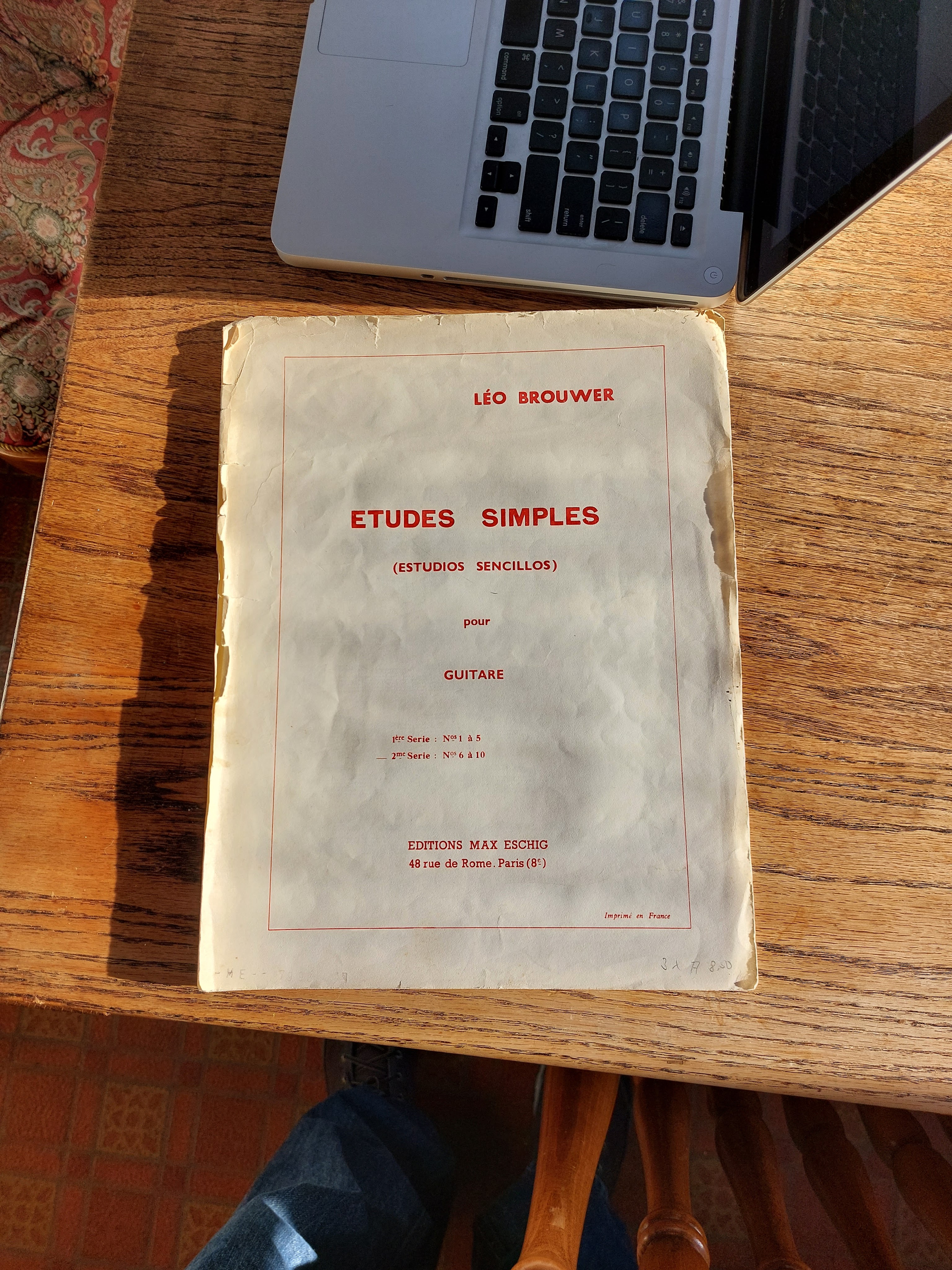
  • Simple Studies # 3

    Rapidly: Or As Fast as You Can
    
    Dock da do yes tin toy cheese gig gas go  
    inch arch hip zone scraunch beam coo boo bass ball bell 
    
    Fish milk jump bowl thrutch boast screech no oil roof 
    nail lip arch moon crawl drift dig gag gear voice 
    
    Beam damp rain inch hep silk sparse scrooch sour neat 
    Cry egg bee boost zoo pee bot chop chill drink 
    
    Deem dress kiss be moo ba oak mouth nest peach 
    bald air calm gog lunch poem here now be it said cut 
    
    Bath peace game sleep shy tone boot bike dust dew 
    leaf mold mad merge fruit fly thick toe hoe mow oh ho  
    
    Cheat dum sheet awk guide dum read coop rope spring 
    Near leg far soft flesh scar how can you tell 
    
    Down then turn whole work wide tool toss 
    Wet watch beach bow bow. 
    
    
    (being a transcription 
    of Leo Brouwer's 
    Etudes Simples #3)
  • Simple Studies # 2

    Slow, but not lugubrious
    
    [wait a moment]    here   now 
    here    nut     classical 
    here    nut     spring all 
    spring sound spring now now 
    here    there   tuned tuned 
    tuned   a boat a 
    slow  turn ing 
    where   there   fingering 
    good    soil    try try 
    sharp   nut     dampening 
    rose    nut     here there 
    rose    nut     sharpening  
    rose    nut     roseate 
    there
    
    (being a transcription 
    of Leo Brouwer's 
    Etudes Simples #2)
  • Simple Studies # 1

    Fast, but not as fast as possible
    
    plonk glunkglunk dank glunk dank dink glunk 
    ink glunk blat app glunk cat glunk blat 
    plonk glunkglunk dank glunk dank dink glunk 
    ink glunk blat app glunk cat glunk blat
    
    plonk glunkglunk cat glunk plonkplonk glunk 
    cat glunk plonkplonk glunk cat glunk blat 
    plonk glunkglunk cat glunk plonkplonk glunk 
    cat glunk plonkplonk glunk cat glunk blat
    
    plonk glimpglimp glinkglink appapp gat 
    gat glimpglimp glinkglink appapp dank 
    dank glimpglimpglimp  dling dling dling 
    plonk drankdrank cat drank plankplank 
    
    dlink dlonk ackack dlunk cot drink plank 
    flonk dlonkdlonk drank drank ackack cat 
    cat drankdrank ab ba blat blat plonk 
    plonk dlonkdlonk cap drip drip 
    plunk dripdrip cap drip drip 
    
    plonk glunkglunk dank glunk dank dink glunk 
    ink glunk blat app glunk cat glunk blat 
    plonk glunkglunk dank glunk dank dink glunk 
    ink glunk blat app glunk cat glunk blat
    
    plonk glunkglunk cat glunk plonkplonk glunk 
    cat glunk plonkplonk glunk cat glunk blat 
    plonk glunkglunk cat glunk plonkplonk glunk 
    cat glunk plonkplonk glunk cat glunk blat
    plonk glipglipglip  glip    glip
    
    (being a transcription 
    of Leo Brouwer's 
    Etudes Simples #1)
  • Bob Dylan’s “The Philosophy of Modern Song”: Playlists: Part Two

    Bob Dylan has a new book out, titled “The Philosophy of Modern Song,” in which he proffers nonlinear essays of original and freewheeling exegesis of sixty-six mostly 20th century songs. The book is a mosaic of writing and photographs, the pics spread thematically throughout the pages (many from Stock or Getty; tracking them all down to their original source would be a mountainous research climb). There is a table of contents, showing the titles of the songs, but no index. There are no footnotes.

    The book should be read aloud. If you’ve heard any of Dylan’s introductions featured in his now defunct Theme Time Radio Hour, you’ll know how the orality of the work is so important to its content. I’m reading the book aloud with Susan evenings this Fall. And I created a playlist on my YouTube Music channel of the sixty-six songs, so that we can listen to each song as we read the Dylan essay on it from the book.

    Dylan’s sixty-six songs don’t amount to a best-of list. Each song is approached with a creative reading and listening analysis and appreciation. But why the song was selected, made the list, fished up out of the overstocked pond of popular songs – well, I don’t know. The underlying philosophy might be that any song has a story behind the story, an environment it came out of, that warrants description and understanding and an in depth discursive discussion of its time and place, and some songs lend themselves to this kind of analysis more than others. There is a kind of, not formula, but song archetype that’s uncovered, that might teach us how better to listen.

    Here’s the playlist. Give it a listen, and get the book.

    The 66 songs from The Philosophy of Modern Song, Bob Dylan, Simon & Schuster, 1 Nov 2022.