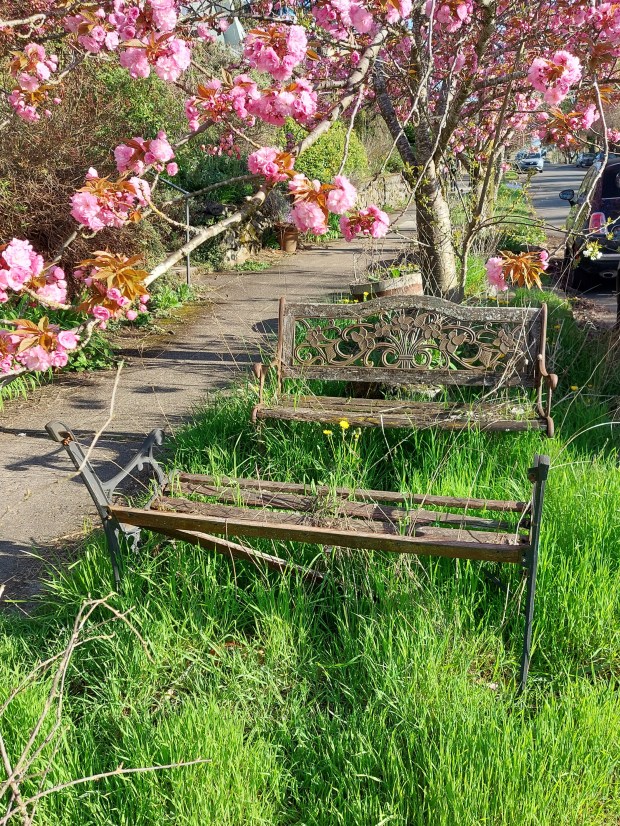
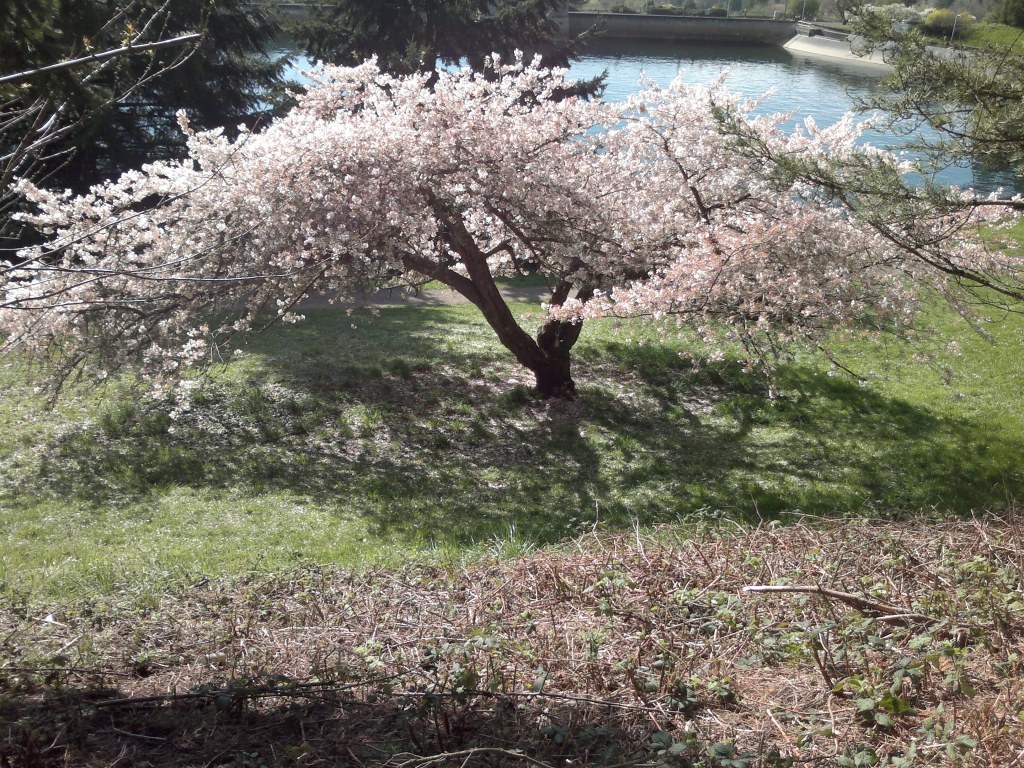
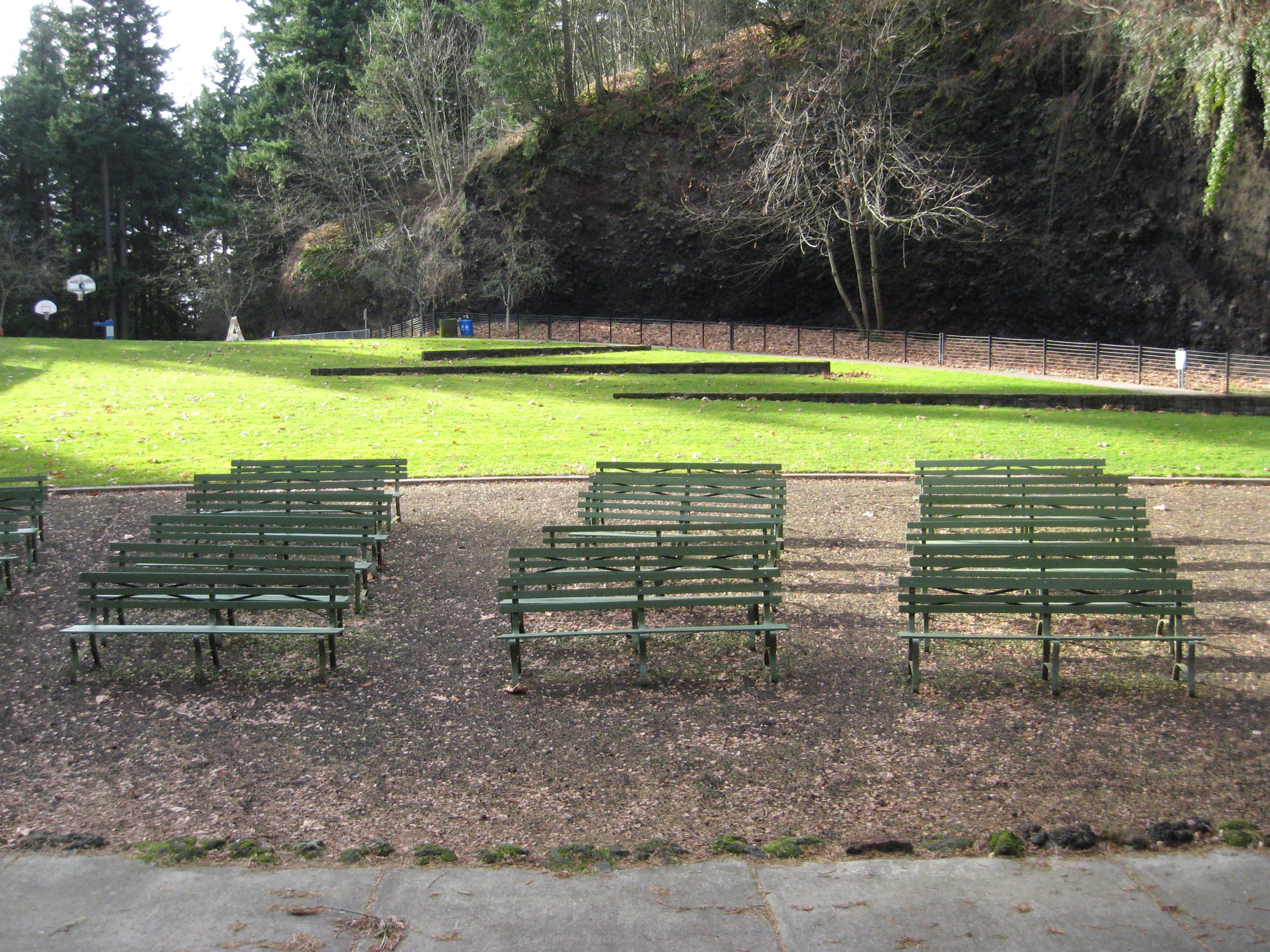
Winter passes when the cherry trees blossom. Passersby frequently pause to view the blooms from various angles and take photos with their phones. I wonder what the viewers feel or if they make a note to come back summer to pick some cherries. Of course these street trees across from our place are ornamental flowering cherry trees that don’t bear fruit. Some consider the ornamental a waste; others think it’s art. Here’s a photo of flowering cherry branches across the street, above a set of nonfunctional benches – some consider those art, too:
Just before leaving England for France, where he would die in the Battle of Arras (1917), the British writer Edward Thomas turned from prose to poetry. Here is his short poem titled “The Cherry Trees”:
“The cherry trees bend over and are shedding
On the old road where all that passed are dead,
Their petals, strewing the grass as for a wedding
This early May morn when there is none to wed.”
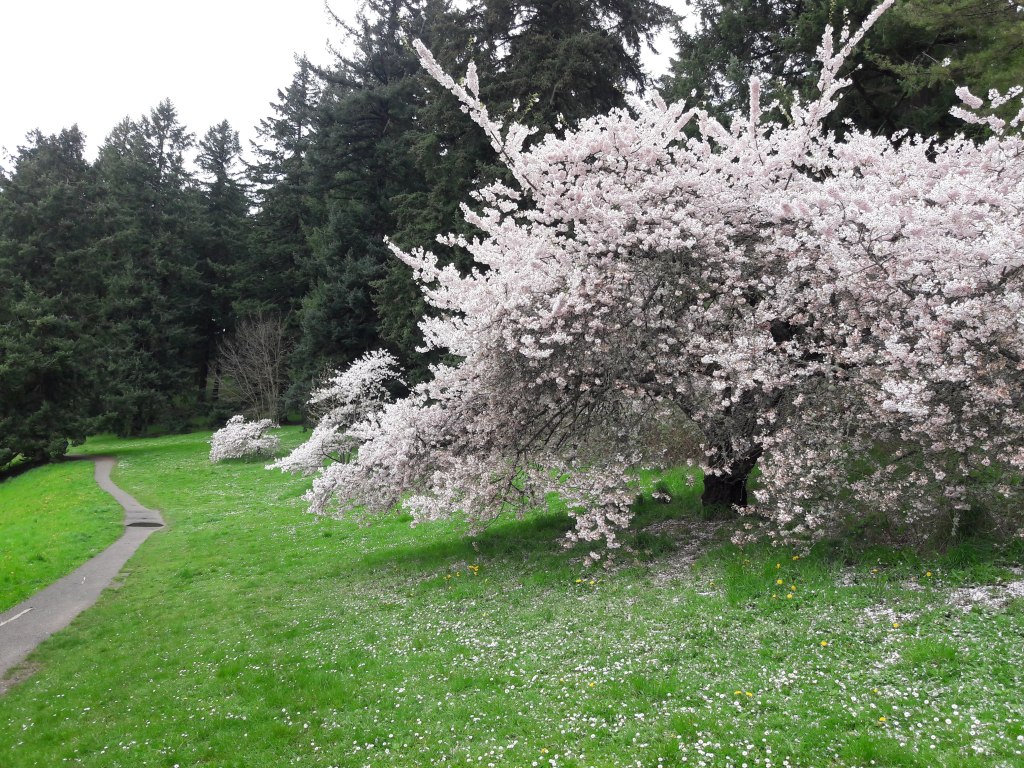
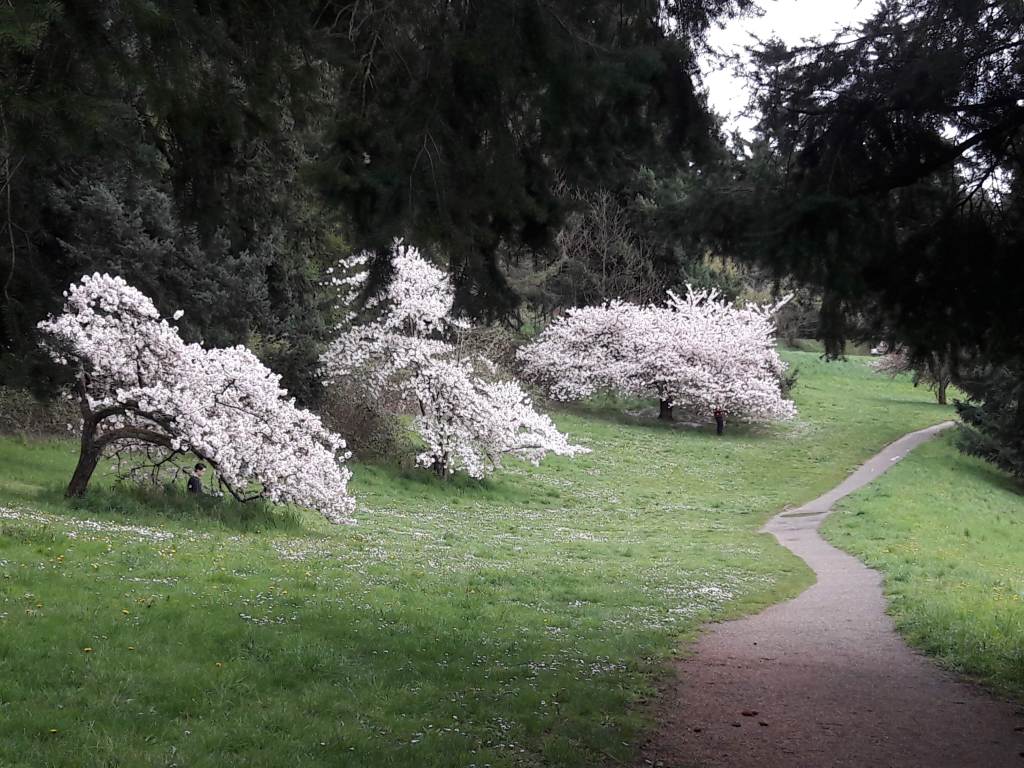
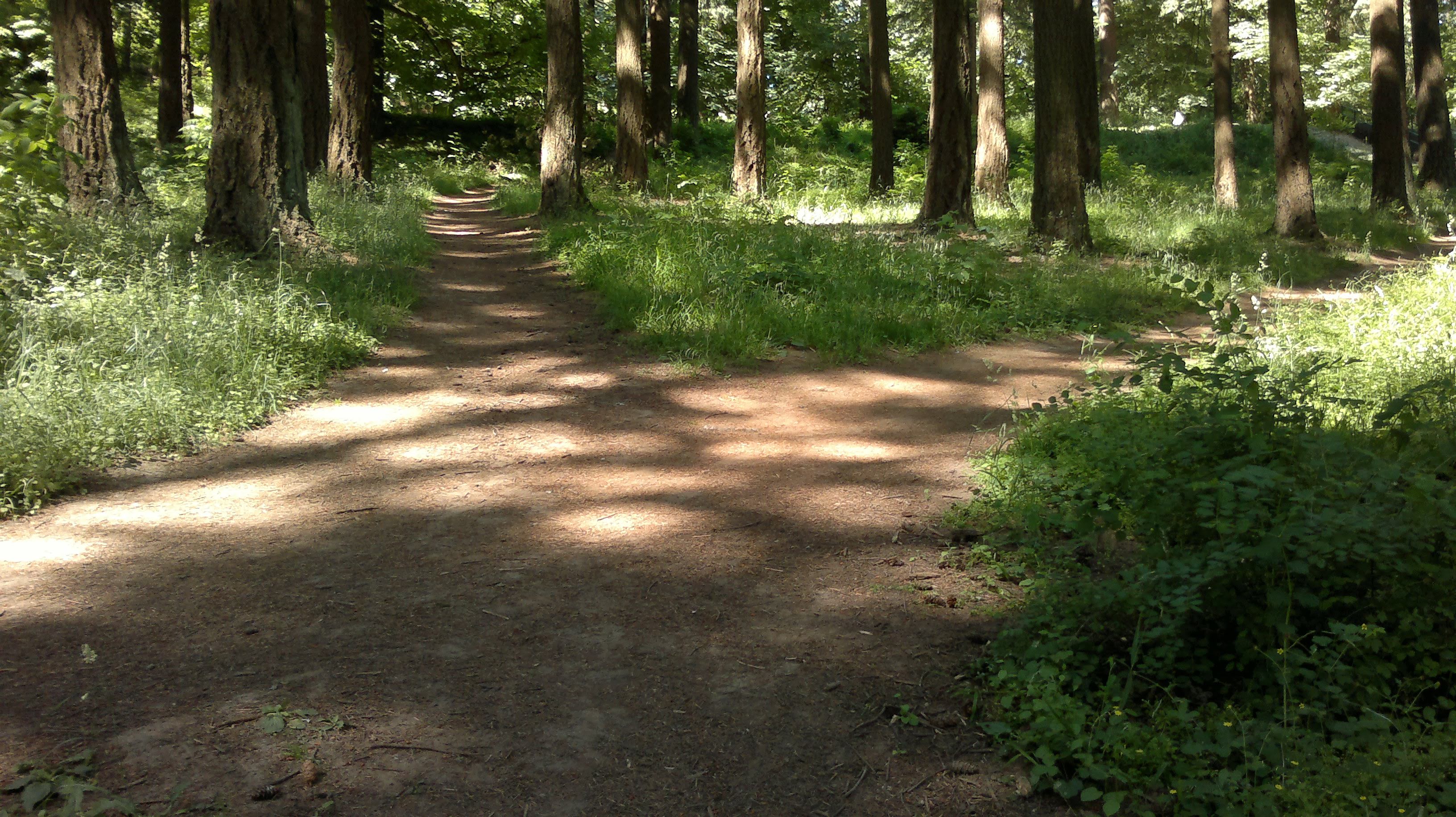
Here are two photos of cherry trees near an old path in Mt Tabor Park:
The Minnesota poet Robert Bly talked about nature’s capacity to send and receive images in transference from object to subject back and forth. The cherry tree in blossom might leave its image resonant in focus in the viewer’s consciousness. Not only the image, but what it felt like in the moment of sending and receiving, and Bly talked about how poetry might reconvey that image and feeling.
“Descartes’ ideas act so as to withdraw consciousness from the non-human area, isolating the human being in his house, until, seen from the window, rocks, sky, trees, crows seem empty of energy, but especially of divine energy….
As people begin again to invest some of their trust in objects, handmade or wild, and physicists begin to suspect that objects, even down to the tiniest molecular particles, may have awareness of each other as well as ‘intention,’ things once more become interesting.”
“News of the Universe: poems of twofold consciousness,” 1980, Sierra Club Books, San Francisco, pp 4-5.
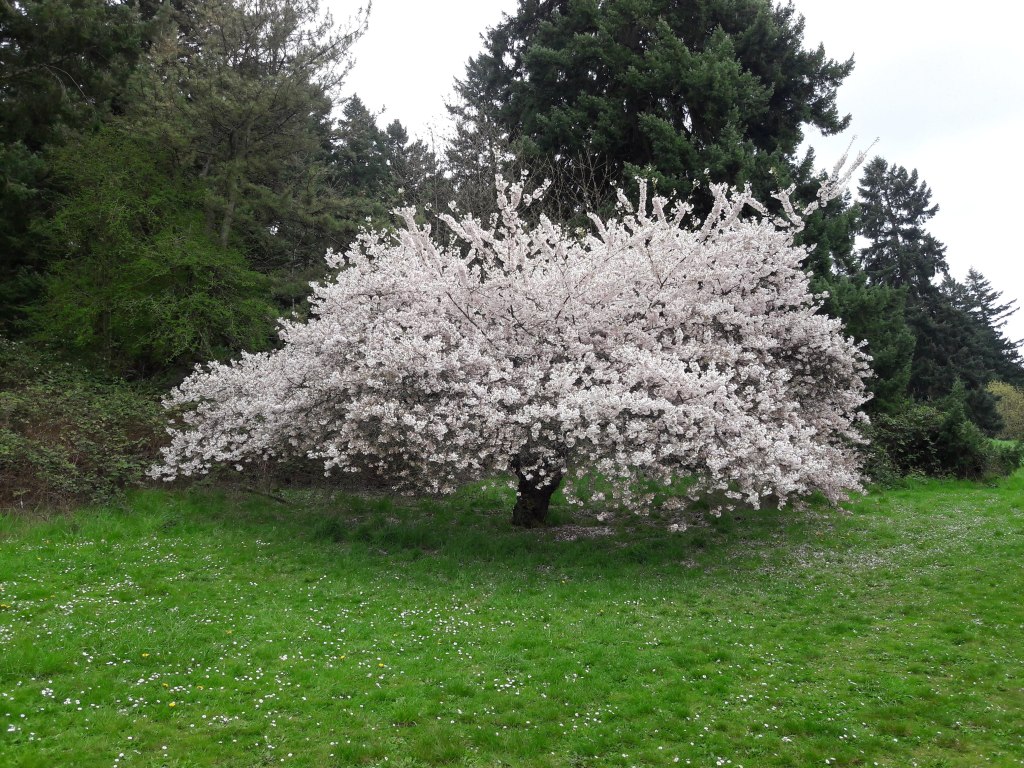
Bly referred to the transference of consciousness idea using the poetic term deep image. Some might consider the ability to so access such images an affliction of the imagination. However it works, the cherry trees in spring seem to attract more than bees, and the pollinators are certainly responsible for more than honey. Here is another photo of one of the cherry trees in Mt Tabor Park, this one accentuated by the surrounding shades of green:
Walter de la Mare chipped in on the cherry tree theme with his poem “The Three Cherry Trees.” He reflects on the passing of both blossoms and viewers. Here is the last stanza:
“Moss and lichen the green branches deck;
Weeds nod in its paths green and shady:
Yet a light footstep seems there to wander in dreams,
The ghost of that beautiful lady,
That happy and beautiful lady.”
A. E. Housman seemed to conclude waiting for a tree to blossom one might miss the ongoing opportunity to catch other images of that tree. From his poem about the cherry tree titled “Loveliest of Trees”:
“And since to look at things in bloom
Fifty springs are little room,
About the woodlands I will go
To see the cherry hung with snow.”
Images don’t always come with sound. Here is a four second video of cherry blossoms in a wind:
 The Coming of the Toads