Tag: Memorial Day

  • Notes on Sebastian Barry’s “A Long Long Way”

    It was sometime over the recent long Memorial Day weekend I received a worn copy of Sebastian Barry’s “A Long Long Way” (2005), a gift from my old friend Dan, first person blogger at Tangential Meanderings at WordPress. I had mentioned Barry to Dan after reading a New Yorker piece about the Irish author’s writing (March 20, 2023). I had never read Barry.

    I dug into “A Long Long Way” as into a trench somewhere along the Western Front. Barry in his technique seems to take the encyclopedia entries that summarize events and rewrites them using imagined characters, though apparently the Dunnes were part of his own family. My interest in WWI grew, and I read that a few years ago a trove of diaries written by soldiers during the war was digitized:

    Many older people in Britain knew veterans of World War I. But the diaries provide a different level of detail, says Michael Brookbank, 84. On a recent day, he was drinking a coffee in the archives cafeteria. He had come to learn more about his father.

    “My father very rarely talked about the war, and I think that is common with most of the veterans of the war,” says Brookbank. “The experiences that they went through and the conditions that they lived in were just something that, unless you were actually there, nobody could really comprehend.”

    “From The Trenches To The Web: British WWI Diaries Digitized.” Heard on Morning Edition, 23 Jan, 2014. Ari Shapiro. Read here.

    That idea of what it might take to comprehend, and of what point there might be to talk about it, about anything, one might add, incomprehensible to another, plagues many veterans. And in the Army, one does not step out of place, let alone speak out of place. Who does tell the stories then? And who will listen with comprehension?

    The reader has no privileges. He must, it seems, take his place in the ranks, and stand in the mud, wade in the river, fight, yell, swear, and sweat with the men. He has some sort of feeling, when it is all over, that he has been doing just these things. This sort of writing needs no praise. It will make its way to the hearts of men without praise.

    New York Times book review of “The Red Badge of Courage,” 31 October, 1896.

    Crane, like Barry must have, had read accounts of those who had experienced the war in some way (Crane had not), and used them to create a truthful but fictional (a psychological rendering) account. The danger here, for most writers, is the chance the result will sound like a second hand telling. Also that it might affront those who actually did the fighting, or who in some way, psychologically, if not physically, experienced the war. But that begs the question: does a distant war not create an experience for the moms and dads, the girlfriends, the boyfriends, the folks back home, reading the headlines, the news, the letters from the front? And does not that experience test the dichotomy of mind and body – the psychological is physical.

    In his blog “Time Now: The Wars in Iraq and Afghanistan in Art, Film, and Literature,” Peter Molin, himself a veteran and writer, furthers the discussion of who can write what with what authority:

    The question of whether a writer who hasn’t been to war can write well about war also intrigues me. Gallagher cites Ben Fountain as the example par excellence of an author who never served in the military, let alone saw combat, but who can still convey what it is like to be a soldier. I love Billy Lynn’s Long Halftime Walk, too, but have noted that Fountain evades extended description of battle. Is that a place he just didn’t feel comfortable going? Brian Van Reet, a decorated vet, portrays two horribly mangled veterans in comic-grotesque terms in “Big Two-Hearted Hunting Creek.” Would a civilian feel as comfortable doing so? Is there something wrong with someone who isn’t disabled portraying characters who are? Both these cases reflect the issues of credibility and authority that permeate discussions of war writing.

    “Veterans Writing,” Peter Molin, 29 September 3013.

    Sebastian Barry, in “A Long Long Way,” gives all his characters the credibility of war experience, even those who have no comprehension of what they’re going through, of the dehumanizing effects war tattoos on one’s memory, and a tattoo becomes a story:

    ‘And what happened to her, Pete?
    ‘Who?’
    ‘That Belgian woman, Pete, that you – just like the sainted Germans did, just like all those stories we were told, Pete, what they did to the women.’
    ‘Don’t be so holier than thou, Willie. You’d’ve done the same.’
    ‘What happened to her, what happened to her?’
    O’Hara said nothing for a moment.
    ‘All right, all right.’ But he didn’t seem able to say it for another few moments yet. Then he nodded his punched face. ‘She died of what had happened to her. She was bleeding all those hours. She was not treated right. She was fucking torn to pieces, wasn’t she? And she died. And we tried to save her.”
    ‘You think so?’
    ‘It’s just a story, Willie, a story of the war.’
    ‘You can keep your story, Pete. You can keep it.’

    168

    Willie’s girlfriend’s (Gretta) father shares a test he uses to qualify one’s experience. It has to do with knowing one’s own mind. Gretta repeats it:

    ‘We have to wait, Willie.’
    ‘For what’ he said, a touch desperately.
    ‘For the war to be over and you to be home and you to know your own mind. There’s never any sense in a soldier’s wedding, Willie.’

    77

    If Barry’s characters and scenes seem stereotyped it’s because we’ve seen them so often. There’s not much of a plot. Boy goes to war, not really understanding why, maybe comes back, maybe not, still not understanding why. All the arguments are pandered down the ranks, where, in the end, they don’t hold water. The grunts do the work, the dirty work, for which they receive insult and despair. Barry’s approach gives the reader a kind of historical fiction without the overt history, such that the Easter Rising happens real time, with Willie and his cohort working laboriously trying to figure out what’s going on and why and how they should feel about it, what side they should side on, a process of getting to know one’s mind.

    Who is the narrator? Not exactly Willie, neither can it be Barry. Some figure hovering over the gas clouds, looking through, picking out a figure here or there to zone in on. There are many to choose from. But the main characters are Willie, his sergeant-major Christy Moran, Willie’s father, Willie’s girlfriend, Gretta, Willie’s sisters, a few of Willie’s platoon members, Father Buckley, a Catholic priest who makes the rounds through the trenches trying to clean the spiritual and mental messes (which he does a fair enough job of). And Pete O’Hara whose single act of betrayal does more damage to Willie than anything the other side may have thrown at him.

    The theme is irony, though it might seem somewhat backwards – the characters seeming to know something the reader does not, in spite of the reader’s armchair advantages. The book is composed of set pieces (gas attack, up and over charge, furlough – and the results thereof, field boxing match) and the action is described in realistic detail, too much detail some readers may feel. There’s humor, the excellent cussing of the sergeant-major, sarcasm and wit. On the whole, maybe it’s all a bit romantic, though, so full of purple vestment, not maudlin, but still sentimental, like the customs of Memorial Day, even if that day has yet to come anywhere in the novel. The dialog is brisk and easy and rings true. The point of the novel, if the reader must have one, is probably the Irish need and desire to have and know its own mind, which might also explain the need for every narrative trick, the deceit and betrayal writ large and small, the pawn-like movements that when stacked one upon the other make up the family histories that add up to a country’s history.

    The title comes of course from the song, used to march by:

    Up to mighty London
    Came an Irishman one day.
    As the streets are paved with gold
    Sure, everyone was gay,
    Singing songs of Piccadilly,
    Strand and Leicester Square,
    Till Paddy got excited,
    Then he shouted to them there:

    It’s a long way to Tipperary,
    It’s a long way to go.
    It’s a long way to Tipperary,
    To the sweetest girl I know!
    Goodbye, Piccadilly,
    Farewell, Leicester Square!
    It’s a long long way to Tipperary,
    But my heart’s right there.

    Paddy wrote a letter
    To his Irish Molly-O,
    Saying, “Should you not receive it,
    Write and let me know!”
    “If I make mistakes in spelling,
    Molly, dear,” said he,
    “Remember, it’s the pen that’s bad,
    Don’t lay the blame on me!”

    Molly wrote a neat reply
    To Irish Paddy-O,
    Saying “Mike Maloney
    Wants to marry me, and so
    Leave the Strand and Piccadilly
    Or you’ll be to blame,
    For love has fairly drove me silly:
    Hoping you’re the same!”
    Jack Judge, 1912.
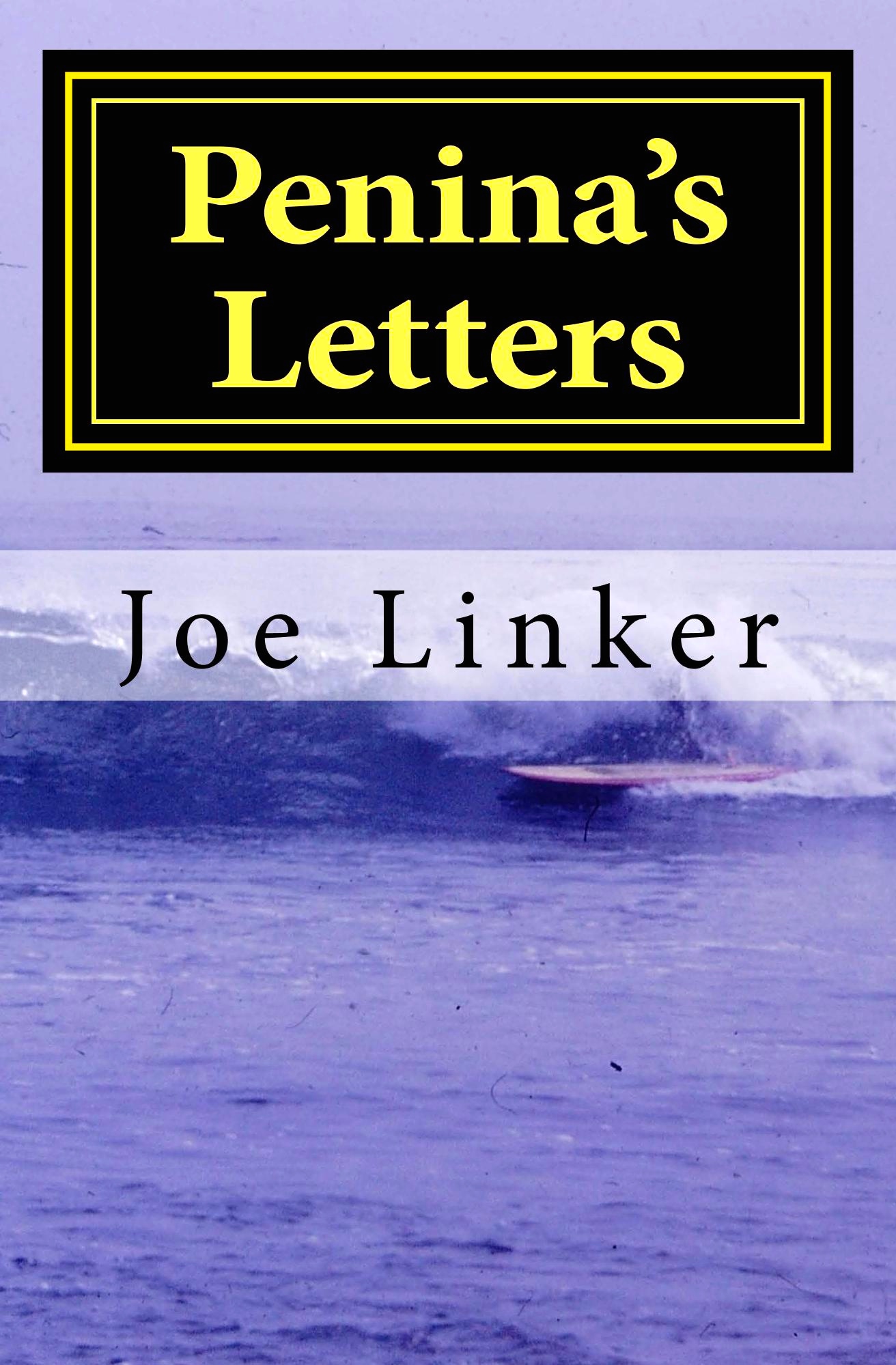
  • Memorial Day Excerpt from Penina’s Letters

    The following excerpt is from the “On Television” chapter of Penina’s Letters.

    I drove my truck with Malone down Vista del Mar and up Grand Avenue into El Segundo. The Chippys lived in one of the old refinery-worker houses just over the sand dunes. We turned off Grand and drove slowly down their street. Through the side yards we could see where the sand had been sliding down the dunes and spilling through twisted, wood slat fences into the back yards. We stopped at Tom’s house and climbed out and walked to the front door and knocked.

    Mary Chippy, Tom’s mother, answered the door, looking distracted, but when she saw who it was, she gasped and threw open the screen door, coming out and grabbing me into her arms, and Tom’s dad came to the door to see what all the commotion was about. Mary held my face in her hands and stared into my eyes.

    “Look, look who’s here, Ray,” Mary said, “home from the war.”

    They invited us in, and Malone and I filled their living room couch. The little couch smelled of lavender, the pillows covered with fresh, ironed linen. The room was clean, and barely looked lived in, not a speck of dust or sand on the hardwood floor, as if they had been expecting guests. Mary sat awkwardly down in her rocker, across from us, pulling her short housedress down over her thighs. She was a narrow, small woman, all elbows and knees and ankles, but with the face of an overripe peach. Her fingers and hands were wrinkled and twisted with arthritis. Her long hair was tied up in a tight, grey bun. Next to her, Tom’s dad, Ray Chippy, fell heavily with a sigh into his overstuffed easy chair. He sat with his big hands cupped over the arms of the chair. He wore a buzzcut, and his big, tanned head looked like a bronze sculpture.

    Tom’s mother said how good I looked, and his dad agreed, and said it looked like the war had done me no harm, but said of course he knew that was probably not true. I started off calling them Mr. and Mrs. Chippy, but they said no. They would feel more comfortable now if we called them by their first names. They asked how Puck was doing, and said they had not seen him since the funeral, but had read an article in a local shopping guide about how his surf shop was getting popular, but it was soon clear they wanted to talk about Tom.

    “One night, we was watching the war on the television,” Mary said, “and that’s how we come to know he’d been hurt.”

    “I used to watch the war on television every night, every night,” Ray said, shaking his head slowly back and forth.

    “And then, one night, Suzie yells, ‘There’s Tom’! In the war, on the television.”

    “I was sitting right here, and I saw him,” Ray said, pounding the arms of his chair, “camera right on his face. You wonder if something like that’s gonna happen, if you’ll see somebody you know, but you never do, but all of a sudden, wham, there’s our Tom.”

    “They was carrying him on a stretcher, running to a helicopter,” Mary said.

    “Stooped over, stumbling, weighted down with equipment.”

    “One of them was holding up the bottle with the tube coming out of it,” Mary said, holding her hand over her head to show us.

    “You could see the high grass,” Ray said, “blowing in the wind under the chopper blades and hear the blades spinning and all kinds a noise, guys yelling.”

    “Then the camera went back to the news desk. And what could we do but just sit here, like we was knocked out, not knowing what had happened, how bad Tom was hurt.”

    “We waited for something more,” Ray said, “but it was just another night of the war on TV, and as soon as we heard Cronkite saying, ‘And that’s the way it is,’ we turned the TV off and tried to make some phone calls. We got a hold of the Red Cross, and they called us back the next day.”

    “They tried to save him, but it was too late,” Mary said, “too late for Tom.” She reached over and touched Ray’s hand, but he pulled it away.

    “Poor Suzie,” Mary said, “she like to faint dead away, all that waiting around for Tom to come home, storing things up for when he got back, playing around in her hope chest, making all kinds of plans, and suddenly see it all come to nothing like that. She used to come over near every night and watch the war on the TV with us.”

    “Hell, she’s already found herself somebody new,” Ray said. “But that’s the way things should be. I don’t fault her none, needing to get on with her life. You know what I mean. What the hell’s she gonna do hanging round here, spend all day unfolding and folding his letters?”

    “I’ve saved his letters and his pictures and his flag, but we don’t like to display them out,” Mary said.

    “But I do miss Suzie, too” Ray said. “Don’t get me wrong, now.”

    “I miss them both,” Mary said, rubbing her hands together in her lap, rocking quietly back and forth for a few moments.

    “I’m sorry Tom didn’t make it back,” I said, looking first at Mary then at Ray.

    “Grab us some beers, why don’t you, Mary?” Ray said, and Mary got up and went into the kitchen.

    “The hell of it is, Sal,” Ray said, leaning forward and whispering, “is that Tom got hit by what you call that friendly fire, you see. That’s the truth of things. That’s what got him. Not that it matters, but did you know that, Sal?”

    “I don’t know. Things did get confused sometimes. But it’s hard to say.”

    “Don’t say nothing about that to Mary. It would just open up her bleeding heart all over again.” He leaned back in his chair again.

    Mary came back into the living room, her arms full with three beers and a Tupperware bowl full of potato chips.

    We drank our beers and snacked on the chips.

    “Tom, now, he’d of liked some of the jobs I been working lately, up in the canyons. You know what I mean,” Ray said.

    “Yeah?” I said. “Have you been up in the canyons?”

    “Oh, yeah,” Ray said. “Up Topanga, I been. Up Malibu. I’m just now on a job, we can see the ocean. I climb up to the roof and eat my lunch and take my shirt off to work off this farmer’s tan, you know. Tom used to always kid me about my farmer tan.”

    “I don’t want you climbing up on no more roofs no more,” Mary said.

    “Ah, hell.” Ray took a long drink of his beer. “And you can smell the licorice bushes up there, you know what I mean, the air full of the hot canyon smells. And the air so fresh and wet in the morning but by the afternoon all hot and dry. We work until the sun starts to go down, and we drive down to the highway and get us a beer at one of the bars on the water. Yes, Tom would have loved these jobs up in the canyons with me.”

    We were quiet again, and the room felt smaller. Mary dropped her hand down into a basket of yarn next to her chair and squeezed one of the balls of yarn. Then Ray got up to go into the kitchen, and we knew he was crying. Mary stayed a moment then got up to go into the kitchen.

    “Jesus,” Malone said.

    “Yeah,” I said.

    An onshore, late afternoon breeze was now coming through the house, drifting down the dune behind the house and coming through the kitchen window, curling through the living room, and passing out the front screen door. We could hear the Chippys whispering in the kitchen. We finished our beers, sitting on the couch in the living room in silence.

    Tom’s parents came back into the living room. I did not want to look into their eyes, red and watery, their faces worn and worried looking.

    I stood up before they could sit back down and said, “Well, we just wanted to come over and say hi.”

    “Thank you, boys,” Ray said. “Thank you.”

    Malone got up and said, “Thanks for the beer.”

    “You boys are welcome here anytime,” Mary said, “anytime.”

    “Tom was a hell of a carpenter,” Ray said. “Know that?”

    “Yes, sir,” I said. “I do know that.”

    “Why, he could drive 16 penny nails, sinking the heads flat in three swings, leaving no hammer mark, all day long,” Ray said.

    He reached out and shook my hand, and his hand felt like an open-end wrench, hard but worn smooth. He did not fully open his hand.

    We stepped to the front door and went out. We turned to say goodbye to them. They were standing in the open door. Ray went back inside, but Mary walked out to the truck with us.

    “Sal,” she said, touching my arm. She stopped and looked back at the house.

    “I just want to tell you.” She paused again, looking into my eyes. “There are no jobs.”

    “I don’t understand,” I said. “What jobs?”

    “Ray has not been working any jobs in any canyons. Ray has not worked since the day we met Tom’s body in his bag coming off the plane from the war.”

    I looked at Malone. We looked at Mary.

    “I just think you boys should know the truth of things,” she said.

    She stood at the edge of the yard and watched us get into the truck. She took a short step forward and waved and brought her hand to her mouth and covered her lips with her fingers as we drove away.

    …excerpt taken from Penina’s Letters.

    Peninas Letters Front Cover
    Front Cover

  • Remembering Grubbs

    In 1968, I bought my first car, a 1956 Chevy, for 75 dollars, from my friend Gary Grubbs, who had been drafted. Gary went up to Fort Ord for Basic, came home and married his girlfriend, Kathy (he had also dated my sister Peggy for a spell in high school), then went up to Fort Lewis for AIT. Then he shipped out for Vietnam.

    He was wounded and sent to Japan for some R&R. We exchanged a couple of letters. He told me about the rains and how hard it was to keep his rifle clean. I told him I had a chance to join the Guard, and asked if he thought that was better than waiting to get drafted. He said the Army sucks either way. I didn’t hear from him for a time, then came the news he had stepped on a land mine, and was coming home in a body bag. He was 20 years old.

    His picture was in the influential article “One Week’s Dead,” in Life Magazine. The week was May 28 – June 3, 1969. Here’s a link to the article. You can page down and see Gary’s picture. His name is spelled Garey, and his hometown is listed as Denver, but I knew him as Gary and his hometown as Lawndale. He had a great sense of humor, and his smile in the Life photo shows it.

    Today is another Memorial Day, 40 plus years since Gary’s last one, and I just finished reading a paper written by one of my students, an Iraq veteran. The description and narration in the paper are clear and concise, the details shiny and telling; the dust and smells and heat and noise seep out of the writing. But there is no sensationalism, no politics or pity, no moral to the story, which tells of a single, isolated event. Every detail shows, every spark of dialog tells. Nothing is wasted; no word is wasted.