“Q & A” is an entertaining and instructive book on cartoons and comics and the life of a professional cartoonist. There are 52 questions over 163 sewn pages of high quality paperback from the graphic comics publisher “Drawn & Quarterly.” I saw the book reviewed on the “Briefly Noted” page in the November 11, 2024 issue of The New Yorker magazine. I ordered a copy, read about half, an easy and enjoyable read, but got distracted by the holidays and other readings and this week thinking more about comics and cartoons picked it back up from my unfinished stack of books and reread it from the beginning.
Few of the questions come as a surprise. What materials do you use and other technical questions. But how does the “180 degree rule” work? I didn’t know cartoons had rules. How did you get started and how did you get into “The New Yorker?” Like the basic question in the job hunting book “What Color is Your Parachute?,” some of the questions in Adrian Tomine’s (toh-mee-neh) “Q & A” ask, “How did you get to where you are and what’s it like being there?”
But because he’s writing, he’s reflecting, and has development time to give the questions patient and thoughtful response and clarity. And there are ample examples in photos and drawings of his work in progress, his work space, his tools, and finished cartoons and drawings. The technical answers I think are relevant in any league, but I particularly liked his saying, “I would also like to make a brief pitch on behalf of cheap tools” (21), and, “I made a decision to set aside most of my fancy art supplies and start from scratch, gravitating towards the cheapest, most readily-available materials” (22).
But there’s plenty in his answers about technical process and development that is out of my league, and I made a decision to stick to ballpoint pen and pencil and notebook paper and napkins or drawing on my phone with my fingers. I’ve not the time but more not the want to try now to master high-tech modes. But for anyone starting out, drawing cartoons or comics, or on their way, or with an interest in The New Yorker covers and cartoons – including the editorial process – “Q & A” is a must, and fun, read.
He covers his influences and the development of his graphic books and his work habits and environment. He’s witty and sounds honest and he’s certainly helpful, and I particularly appreciated what he said to the student asking if they could adapt his work into a film for a student project: “I’d strongly recommend generating your own material for a student project. It’s not like any of my stories are particularly ‘high concept,’ and you could probably come up with similar – if not better – ideas on your own” (118).
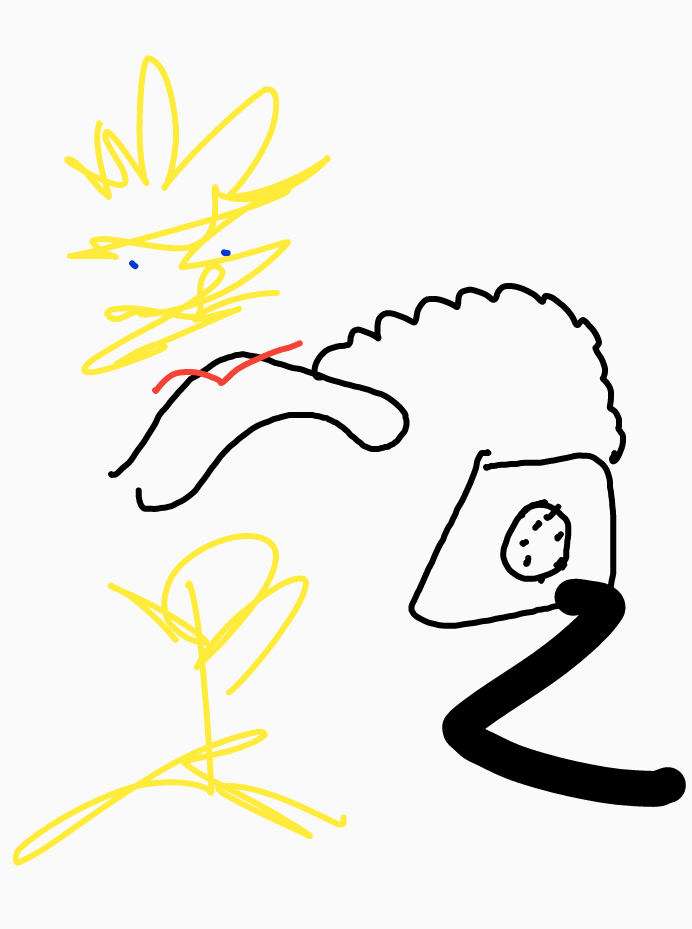
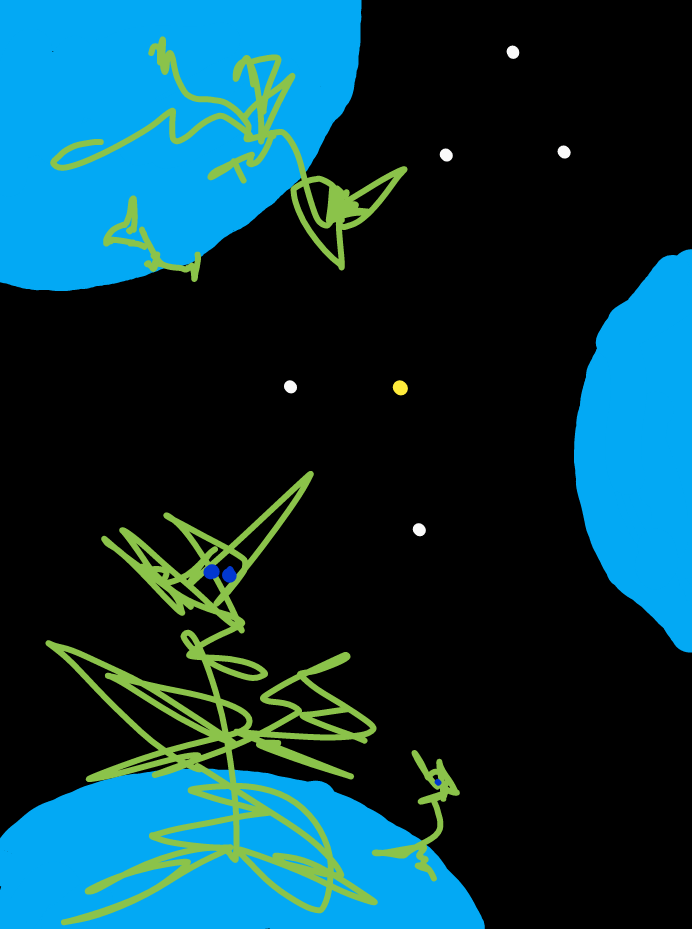
I’m waiting for my Brit friend to send me an Artificial Intelligence cartoon drawn in the style of Joe Linker. Meantime, here’s one of my cartoons for your quick and easy consideration, drawn with my fingers on my phone:
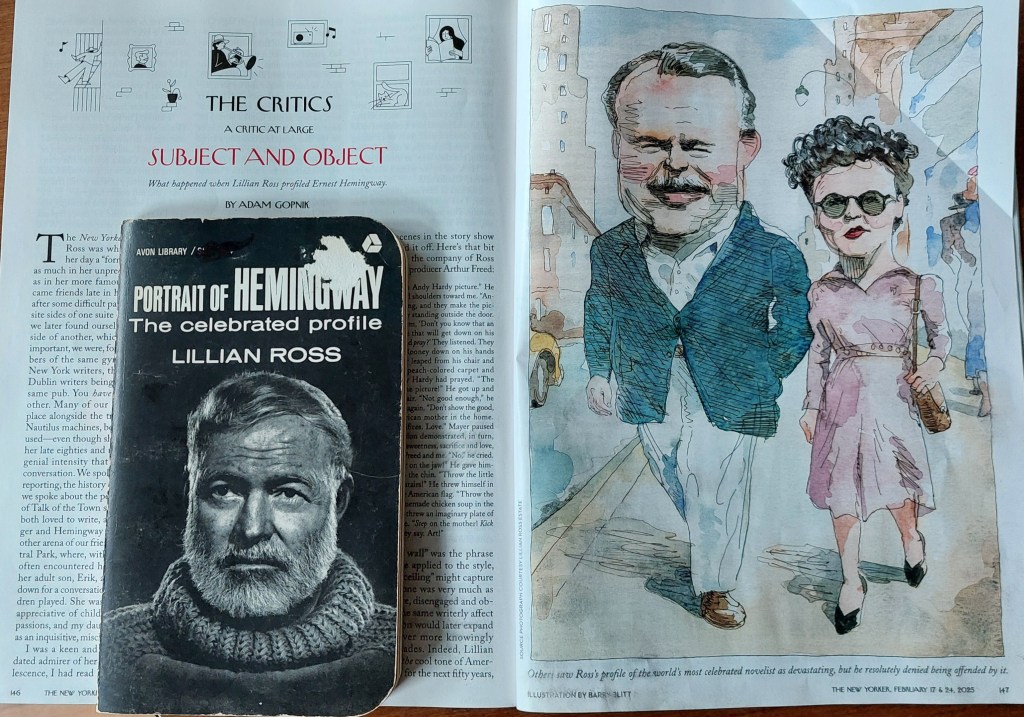
In the 100th anniversary issue of The New Yorker (February 17 & 24, 2025), we find Adam Gopnik’s Profile of a Portrait, titled “Subject and Object: What happened when Lillian Ross profiled Ernest Hemingway.” The subtitle is not a question, but maybe it should be. Gopnik holds that Hemingway’s reputation was devastated by the Lillian Ross 1950 Profile article, but that he insisted on not being bothered by it, but maybe Hemingway’s response to the article, and more to the reaction to it, was in character of his own value which he described in a different context as “grace under pressure.” In any case, while Gopnik does mention that the Profile was later published in book form (Portrait of Hemingway: The Celebrated Profile, 1961*), he ignores Lillian Ross’s preface to that book, written a decade after the brouhaha had unfolded:
“Hemingway said that he had found the Profile funny and good, and that he had suggested only one deletion. Then a strange and mysterious thing happened. Nothing like it had ever happened before in my writing experience, or has happened since. To the complete surprise of Hemingway and the editors of The New Yorker and myself, it turned out, when the Profile appeared, that what I had written was extremely controversial. Most readers took the piece for just what it was, and I trust that they enjoyed it in an uncomplicated fashion. However, a certain number of readers reacted violently, and in a very complicated fashion. Among these were people who objected strongly to Hemingway’s personality, assumed I did the same, and admired the piece for the wrong reasons; that is, they thought that in describing that personality accurately I was ridiculing or attacking it. Other people simply didn’t like the way Hemingway talked (they even objected to the playful way he sometimes dropped his articles and spoke a kind of joke Indian language); they didn’t like his freedom; they didn’t like his not taking himself seriously; they didn’t like his wasting his time on going to boxing matches, going to the zoo, talking to friends, going fishing, enjoying people, celebrating his approach to the finish of a book by splurging on caviar and champagne; they didn’t like this and they didn’t like that. In fact, they didn’t like Hemingway to be Hemingway. They wanted him to be somebody else – probably themselves. So they came to the conclusion that either Hemingway had not been portrayed as he was or, if he was that way, I shouldn’t have written about him at all. Either they had dreary, small-minded preconceptions about how a great writer should behave and preferred their preconceptions to the facts or they attributed to me their own pious disapproval of Hemingway and then berated me for it. Some of the more devastation-minded among them called the Profile ‘devastating’” (17-18).
Adam Gopnik appears in his critical article about the Ross Profile to be one of those people. He does reference as support for his argument (that the Ross Profile is devastating) the back and forth letters between Hemingway and Ross that followed the publication of the original Profile, but I didn’t find enough in those letters (what Gopnik shares of them) to offset what Ross says above or to prove that she was dissembling in some way.
A Profile, as Gopnik points out, is more than a Q & A, particularly more than those interviews of today that are carefully controlled by agents and protectors of reputations and public reactions, damage control specialists. There’s also more to Gopnik’s profile of a Profile that gives insight to the writing and reading of one, the editorial process, and what informs intents and results. But why do we expect would-be heroes to have good character, or not to enjoy the simple and ordinary? Gopnik points out that the Profile as written by Ross was a new form, in which the reporter follows and observes and records just about everything, including the mundane and ordinary or trivial and everyday. Going to a store and buying a new coat for example. Is there some special way a famous novelist should behave in a coat store? Gopnik says:
“The Hemingway in the piece is a comic figure – self-dramatizing, repetitive, marooned within his own monologues, and sometimes ridiculously affected.”
Why? Because “The novelist, now fifty, complains of a sore throat,” but won’t see a doctor? Or because “His wife had suggested that he look for a coat at Abercrombie & Fitch, and after he buys one there he decides he’d like to look at a belt,” and while picking out the belt he jokes with the belt clerk about his belt size, and affects happiness when the clerk suggests he must work out to be so fit. But he doesn’t appear to be cross.
*Portrait of Hemingway: The Celebrated Profile. Avon Books, 1961. 94 pages, paperback.
What do you do when you hear a snobbish correction of someone’s pronunciation, and of a word you know both pronunciations in question to be acceptable in standard usage? You don’t want to snub the snob, yourself becoming a snob, but neither do you want any damage to go unrepaired. Worse, the situation where the corrector pretends not to recognize the thing the mispronounced word refers to. What can be more pretentious?
As we age, do we grow less tolerant of one another’s foibles, and chop for the weakest part of their blade to snap in half?
There’s the person who when a youngster carries a mean streak. As they age, they may sublimate that mean desire into some other equally strained habit, like correcting malapropisms or mispronunciations every chance they get, pretending to be helpful when actually drawing the shame sword from its sheath.
I readily admit, and anyway the prescient reader will already suspect, that my own articulations, enunciations, and right pronunciations often run afoul of the standards of others.
So much so, in fact, that I was encouraged and felt all is not lost when I saw the following quote from the poet Diane Suess, a finalist for the 2024 National Book award for poetry:
“You have to be willing to self-educate at a moment’s notice, and to be caught in your ignorance by people who will use it against you. You will mispronounce words in front of a crowd. It cannot be avoided.”
The first thing we do when we’re not sure of a right pronunciation is to break down the syllables and pronounce them phonetically. But that doesn’t always work. I once pronounced, to a professor no less, the poet Arthur Rimbaud’s name wrong. I said rim bawd, instead of ram boh. The professor pretended not to know the poet I was referring to. She even later repeated in an anecdote form my mistake in front of the whole class. I’ve never forgotten the lesson.
Neither do I know how to pronounce the poet Diane Seuss’s last name. Is it Seus like Zeus, my first guess, or is it Zoice, rhyming with Voice, or Soice, a variant of Sauce – as the story goes, apparently most everyone mispronounced the famed Dr. Seuss’s name, so often that the mispronunciation became the right pronunciation, and if you pronounce it correctly, you’ll likely be corrected.
My father was, as he put it, “hard on hearing.” When he was three years old, he came down with scarlet fever, which caused sensorineural hearing loss. His ears drained a thick and slimy yellow-greenish kind of phlegm or mucus, filling the ear canal and dripping down the lobules. His teachers often consigned him to the back of the room, where of course he couldn’t hear anything. He developed a stutter, which magnified his mispronunciations. Later in life, after ear surgery, his stutter disappeared. Meantime, he had learned to read lips, and he was good at selective hearing. He was also a good talker, could talk to anyone, and did. He used to cup his palm around his ear and bend it forward making an ear trumpet to amplify voices, but it usually doesn’t help to yell at the hearing impaired. It’s often lack of sound clarity that’s the problem. It’s the sound frequency that must change.
Loss of hearing is not loss of sound, as victims of tinnitus know. When the ears don’t work right, the brain fills in the blanks. It’s that internal sound no one else can hear that’s called tinnitus, a symptom of something wrong with one’s hearing. Tinnitus, we were informed last summer, is pronounced ti·nuh·tuhs, not, as we were saying it, ti.night.iss. Of course, the correct pronunciation is the one the listener hears without issue and lets the conversation move on. And what’s the point of being right when no one else is?
A truly miscreant corrector like the one referenced in paragraph one above might then ask the poor pronouncer to spell the thing in question, thus pulling out a dagger of humiliation to accompany the sword of shame, but even a correct spelling will do little to clarify or solve what is to begin with a faked miscommunication.
I’m not an expert speller, either, by the way, but we’ll save that issue for another day.
Sounds can be errie, and we build our exotic or occult vocabularies in aeries at the tops of cliffs and the tallest of trees. Our vocabularies become nests of familiarity, even if no one else espies them. But there’s a difference between hearing and listening, and if I’m a poor pronouncer of words, I don’t think I can blame it on my hearing. But pronunciation is, I think, physical, and not mental in any intellectual sense. Or is being smart (if accurate pronunciation is indeed a sign of smartness) actually a physical thing? I don’t know. Maybe it is. You might have trouble pronouncing a word correctly like you have trouble rubbing your stomach while patting your head simultaneously. In any case, we have to hear something correctly before we can repeat it correctly – does that sound right?
Sounds industrial, like the noises in a factory made repetitive by machines, the floor covered with curling steel shavings. And a kind of marching music, an industrial march, urban with trams and busses, honks and trucking heaves. Heavy Metal is the four piece rock band’s alternative to the symphonic orchestra. The full brass and woodwinds, operatic vocals, orchestral percussion – all accomplished with guitars and drumkit, pedals, and amplifiers. Heavy Metal music can sound like lead stretched thin as wire, or walking on the Earth’s crust with steel spiked boots, the band poised like the Levitated Mass over an arena crowd.
Our latest guitar quest (Live at 5 now already seems as old as the Ed Sullivan Show) has moved to YouTube where in partnership with metal expert CB we record short videos of original pieces or answers to various musical challenges, about one to three minutes, CB taking Metal Monday while I have Telecaster Tuesday (Washboard Wednesday still open). I posted a couple of Telecaster Tuesday short videos here at the Toads – as I continue to find myself drifting further and farther from words, but I’m not sure the blog is the best place for music activity. For one thing, videos are space hogs, while links to anything outside the blog can wind up for the reader like getting on a wrong bus to the zoo.
I’m not sure it has anything to do with hearing impairment, though it might, but I’ve often had trouble hearing lyrics clearly, the vocals sounding like another instrument, which of course they are, but without sharp definition – in my ears. Maybe that’s why I’ve steered away from loud rock, but any type of music can be played loud, or too loud. But you don’t have to play music loud to feel it. At a Red Hot Chili Peppers concert some years back, I could literally feel the sound in my chest – that’s a bit too much, though I get that it might be necessary if one wants the full effect. But often one wants to hear the breeze over the “The Eolian harp” sitting on an open window sill. Still, as evidenced in some of CB’s videos, the loudness has passed, and now rings like a train rounding a corner in the distance, its ringing still vibrating on the track:
Thru with Whom to the absurdity of it pretending to know Whom when know not any whoms
And it isn’t clear is it what it is it to whom it may concern; is it this something to come below to whom it may concern?
Ought to be done with it with it too to whom it may concern the dummy subject there is that which is it
It begins the beguine a long rail whine perchance a spell to diminish concern
Consider for example For Whom the Bell Tolls it tolls loudest when one least listens last to it
Anyway done with it call it non-standard or informal ungrammatical or what whom will
Not to be imperative or directive nor anything goes just this about whom
Whom who knows not who comes from where and returns there far too soon.
XVII. MEDITATION.
PERCHANCE he for whom this bell tolls may be so ill, as that he knows not it tolls for him; and perchance I may think myself so much better than I am, as that they who are about me, and see my state, may have caused it to toll for me, and I know not that. The church is Catholic, universal, so are all her actions; all that she does belongs to all. When she baptizes a child, that action concerns me; for that child is thereby connected to that head which is my head too, and ingrafted into that body whereof I am a member. And when she buries a man, that action concerns me: all mankind is of one author, and is one volume; when one man dies, one chapter is not torn out of the book, but translated into a better language; and every chapter must be so translated; God employs several translators; some pieces are translated by age, some by sickness, some by war, some by justice; but God’s hand is in every translation, and his hand shall bind up all our scattered leaves again, for that library where every book shall lie open to one another. As therefore the bell that rings to a sermon, calls not upon the preacher only, but upon the congregation to come, so this bell calls us all; but how much more me, who am brought so near the door by this sickness. There was a contention as far as a suit (in which both piety and dignity, religion and estimation, were mingled ), which of the religious orders should ring to prayers first in the morning; and it was determined, that they should ring first that rose earliest. If we understand aright the dignity of this bell that tolls for our evening prayer, we would be glad to make it ours by rising early, in that application, that it might be ours as well as his, whose indeed it is. The bell doth toll for him that thinks it doth; and though it intermit again, yet from that minute that that occasion wrought upon him, he is united to God. Who casts not up his eye to the sun when it rises? but who takes off his eye from a comet when that breaks out? Who bends not his ear to any bell which upon any occasion rings? but who can remove it from that bell which is passing a piece of himself out of this world? No man is an island, entire of itself; every man is a piece of the continent, a part of the main. If a clod be washed away by the sea, Europe is the less, as well as if a promontory were, as well as if a manor of thy friend’s or of thine own were: any man’s death diminishes me, because I am involved in mankind, and therefore never send to know for whom the bell tolls; it tolls for thee. Neither can we call this a begging of misery, or a borrowing of misery, as though we were not miserable enough of ourselves, but must fetch in more from the next house, in taking upon us the misery of our neighbours. Truly it were an excusable covetousness if we did, for affliction is a treasure, and scarce any man hath enough of it. No man hath affliction enough that is not matured and ripened by it, and made fit for God by that affliction. If a man carry treasure in bullion, or in a wedge of gold, and have none coined into current money, his treasure will not defray him as he travels. Tribulation is treasure in the nature of it, but it is not current money in the use of it, except we get nearer and nearer our home, heaven, by it. Another man may be sick too, and sick to death, and this affliction may lie in his bowels, as gold in a mine, and be of no use to him; but this bell, that tells me of his affliction, digs out and applies that gold to me: if by this consideration of another’s danger I take mine own into contemplation, and so secure myself, by making my recourse to my God, who is our only security.
If you want to read a book, unless you plan on reading it all in one sitting, impossible if you’ve picked a big old obsolete kicker, you’ll need a bookmark to avoid dogeared pages, and a place to store your book while you go about your other business: rucksack, briefcase, purse, table, shelf – an empty pocket, maybe. Books are not nomadic. Reading is a sedentary exercise. As for the argument for obsoleting print books in favor of ebooks, they require a hot reading device with batteries or electricity hookup nearby. A paper book might be simpler, and nothing worse than on the bus ride home and coming to the denouement of your thriller a pop-up appears telling you to plug in your device, you’ve only got 5% battery left, and your screen suddenly turns to an overcast sky, and you don’t know who done it.
Read enough books and you might even think about writing one yourself. But how do you turn that thought into a book? And what kind of book? In Louis Menand’s most recent piece for The New Yorker (August 26, 2024), he says, “Not only is there no settled definition of what counts as a bookstore; there is no settled definition of what counts as a book” (68). But that’s not to say books are not counted. They are, ad infinitum. Suffice to say, however you define or count it, your chances of your book selling off the shelves are worse than finding life on Mars. You’d have a better chance going viral with a reel of your recent garage sale. In any case, again no matter how you define and count them, you’ll always be confronted with the existential theorem that says the number of books sold will never be the same as the number of books read: it will always be more or less – most probably more sold than read. But if you persist in writing your book, try a romance. According to Menand, “The big winner in the pandemic was the romance novel. Eighteen million print copies were sold in 2020; in 2023, more than thirty-nine million copies were sold. Romance is among Amazon’s most popular genres” (72).
But Menand’s piece isn’t so much about books as about bookstores. A “Critic at Large” feature, it’s titled on-line at The New Yorker site, “Are Bookstores Just a Waste of Space? In the online era, brick-and-mortar book retailers have been forced to redefine themselves, but the print issue title is “Remainders: Why do bookstores still exist?” A remainder, in the book industry, is an unsold book, a writer’s doom word. Much to our disappointment, but not really diminishing his article, Menand doesn’t mention Penelope Fitzgerald’s “The Bookshop” (1978, movie version 2017). There you’ll find not the augmented hopes of the would be writer but the diminished hopes of the would be independent bookshop owner. We must read carefully for the antagonist though – there are several, for the odds of a bookstore succeeding may not be much better than the odds of a book being read.
Maybe bookstores still exist, and persist, like public libraries, because they appeal to the painting of a desired cultural landscape that includes a peaceful Main Street lined with shade trees and with ample sidewalk space for browsing the boutique window displays, though without much advertising fanfare but word of mouth. But an industrial setting also works as the cultural landscape: railroad tracks down a block of warehouses, light manufacturing shops of brick walls and metal roofs, building supply stores, a bakery, and a brewery, a National Guard armory – and a poetry reading tonight at the Vacant Lot Bookstore. The most successful bookstore, like the cafe or tavern, will likely be local and, to use Menand’s word, curated, by which he means specialized in a particular genre, the bookseller a trusted critic, the books on hand discussed neither as commodity nor snob fodder but cultural artifact of one’s own time and place.
At the same time, maybe books have nothing to do with bookstores, and the trends are simply part of the overall decrease in interest in offline retail shopping. Bookshops can be of course special places in that they merge the urge to purchase something, anything, with the cultural value, real or perceived, of reading. And many bookstores offer more than a retail outlet. They sponsor readings, art shows, writing classes, lectures, book launches and meet the author opportunities. Some have even added coffee and doughnuts. But as a place to simply go in and buy a book in the window, like going into a phone booth to make a call – well, first you have to find a phone booth. It’s possible that the current decline in retail interest reflects the general current decline in post World War II commercializations, commodifications, standardizations, much of which has moved virtually online, where it’s realized the physical necessity of the thing was never a reality. Why will a person buy something they don’t need?
Thinking back to my earlier days of blogging, when it now sometimes seems writers then often wrote with different purpose, as in sharing a conversation with themselves to which others might be invited to listen in and, if need be, comment. Have we stopped talking to ourselves? Some days these days I’m nearly the only person I talk to, so if I do talk to someone else, some random Q & A with a passerby or on a visit to the grocery, I’m likely to mull over what was said with playback on repeat. Too often I find myself looking for meaning in a bucket of refuse, wanting to rebuff the debris, worried I might have not given someone or something my full attention, mired in muddled memory. Of course my interlocutor is long gone and remembers none of it and would be surprised to know I have it on mental-virtual video. Talking to ourselves is where conversations begin. Where can they end? I suppose many prepare a speech or lecture or opinion or anecdote, or spurn the prep and just go for it, though most rarely press it, but one might in conversation attempt to lecture or tell a story of something that once happened and for some reason the links still work, but not all of them, or the links take you places unexpected, but what’s the purpose of a lecture, a one way conversation, or an anecdote impossible to research? Do casual conversations have purpose, or are they simply a template for one’s personality, a way of spraying one’s mental territory? After a decade and more, a blog full of broken links, difficult to refresh. And we lose purpose, or misplace it, or deleted it by accident.
Olivia Manning’s writing is full of conversations. Characters come and go and return and you feel like you know not so much what they are going to say but how they are going to say it, and after a time there’s no difference. If the conversation contains nothing new, how something is said takes on more importance than what is said. But since it’s fiction, or selective memoir, everything that’s said must have some meaning, some purpose in the whole. Some reason for being said:
“The evening was one of the few that they had spent in their living-room with its comfortless, functional furniture. The electric light was dim. Shut inside by the black-out curtains, Harriet mended clothes while Guy sat over his books, contemplating a lecture on the thesis: ‘A work of art must contain in itself the reason why it is so, and not otherwise.’”
“Who said that?” Harriet asked.
“Coleridge.”
“Does life contain in itself the reason why it is so, and not otherwise?”
“If it doesn’t, nothing does.”
“Fortunes of War: The Balkan Trilogy.” NYRB 2010. Page 872.
But is life a work of art?
Critics have called Manning’s work somehow less than art. A blurb by Howard Moss on the back cover of my NYRB copy says,
“One of those combinations of soap opera and literature that are so rare you’d think it would meet the conditions of two kinds of audiences: those after what the trade calls ‘a good read,’ and those who want something more.”
You’d think that’s what a good conversation ought to purpose for. Why isn’t soap opera considered literature? It is, but one without an end – like a blog. Critics don’t like something that doesn’t come to an end. Someone that goes on and on and on is not considered a good conversationalist. But having enjoyed “The Balkan Trilogy” so much, I’m now on to the second of Manning’s trilogies, “The Levant Trilogy.” I’m only about 50 pages in, but already I think I can say it’s another good read mix of soap and lit. Though I’m not bothered by soap alone. Hemingway is full of soap. Soap and sap. Though the soap is rarely used for its purpose. The blurb was taken from a review of Manning’s Balkan and Levant trilogies Moss wrote for The New York Review, April 25, 1985, titled “Spoils of War.” Moss liked the books, almost in spite of his taste, it seems:
“The way this past world comes to the surface is un-Proustian and non-metaphorical; the thrust of the whole rarely has time to stop for digressions. Manning, who avoids elevations of style as if an ascent were a bog, also evades sentimentality, and although she can handle atmosphere, her main interests are those two staples of realistic fiction, character and action.”
But we do find digressions in the Manning books, mostly in the form of colorful sensory and physical descriptions of the weather and its effects on the streets, parks and gardens, the mountains and valleys and the trains traversing under the sky above and above the people below. But while these descriptions are placed here and there frequently it’s true they are short and appear almost as doilies or tchotchkes arranged to create atmosphere. But in the end, for Howard Moss, the trilogies lack poetry. But a poetry of war might create illusions, and what would be its purpose? Moss has already said of Manning:
“An enemy of illusions, she does not quite see how crucial they are both in love and in war.”
Was it on purpose Manning avoided metaphor and poetry? We can take purpose too seriously, forgetting that mostly what’s said is said in jest, to fill the spaces of silence, or to scratch common itches. We usually proceed without purpose. In Alice, on purpose, we find:
“They were obliged to have him with them,” the Mock Turtle said: “no wise fish would go anywhere without a porpoise.”
“Wouldn’t it really?” said Alice in a tone of great surprise.
“Of course not,” said the Mock Turtle: “why, if a fish came to me, and told me he was going a journey, I should say ‘With what porpoise?’”
“Don’t you mean ‘purpose’?” said Alice.
“I mean what I say,” the Mock Turtle replied in an offended tone. And the Gryphon added “Come, let’s hear some of your adventures.”
“I could tell you my adventures—beginning from this morning,” said Alice a little timidly: “but it’s no use going back to yesterday, because I was a different person then.”
“Explain all that,” said the Mock Turtle.
“No, no! The adventures first,” said the Gryphon in an impatient tone: “explanations take such a dreadful time.”
Indeed they do. Such might be to blog, or to write an epic trilogy or two, but while some explanations seem to require a long form, others can be riffed off in a tweet or two.
We say “on purpose” to explain some experience wasn’t “by accident.” But purpose is confounded by all those imperatives upon us that determine how we feel and experience but are not within our control, like the medulla oblongata stuff. We might try to proceed with purpose to do something purposeful with our day, or at least with our writing, or our blog, but to what purpose other than to show what happened and how our feelings may have changed over time and what ideas if any might accrue from those changes. But if all we can show is pettiness, narrow-minded cheap anecdotes, or soap operatic epic-intended purpose or explanations that go nowhere, why bother wading through the bog of a blog or a trilogy of books, all of which can never ascend but only descend, down as the page rises and disappears, one post after another, more often than not style and sense on repeat, poetry or not? Speak Memory, Nabokov said, while others might say, “Shut up!” Memory is like an upstairs neighbor pounding on the floor.
Memory is the editor-in-chief of experience:
“The Dormouse had closed its eyes by this time, and was going off into a doze; but, on being pinched by the Hatter, it woke up again with a little shriek, and went on: “—that begins with an M, such as mouse-traps, and the moon, and memory, and muchness—you know you say things are ‘much of a muchness’—did you ever see such a thing as a drawing of a muchness?”
Memory is an example of a muchness at work (or play).
“That’s the effect of living backwards,” the Queen said kindly: “it always makes one a little giddy at first—”
“Living backwards!” Alice repeated in great astonishment. “I never heard of such a thing!”
“—but there’s one great advantage in it, that one’s memory works both ways.”
“I’m sure mine only works one way,” Alice remarked. “I can’t remember things before they happen.”
“It’s a poor sort of memory that only works backwards,” the Queen remarked.
If memory only works backwards, what do we call the facility by which we look ahead? Can we imagine a future different from anything that’s contained in our memory? Imagination is muchness at work (and play). But character and action need a place to unfold, and Manning describes dwellings and rooms, bars and cafes, parks and walkways and trails. You can have a conversation anywhere. And her writing while sparse of metaphor is not devoid of poetry:
“The lawn was set with citrus trees that stood about in solitary poses like dancers waiting to open a ballet (695).
The landscape is part of the weather:
“As they rounded the house and came in sight of the sea, the clouds were split by streaks of pink. The sun was setting in a refulgence hidden from human eye. For an instant, the garden was touched with an autumnal glow, then the clouds closed and there was nothing but wintry twilight (695).
For all indents and excursuses, we have run out of purposes, if we ever had any, having relied on the feeling that we might as we sometimes do find our purpose in the act of going forth, but there’s never a guarantee.
Reading Darwin’s The Origin of Species (1859) this week, three days of 100 degree plus heat wave, we find many of his claims now absorbed as common sense and not controversial: when conditions of life change (flood, drought, extreme heat or cold, virus), plants and animals move, adapt, or perish. But Darwin may have underestimated the speed with which human intervention might disrupt nature’s pace:
“How fleeting are the wishes and efforts of man! How short his time! And consequently how poor will be his results, compared with those accumulated by Nature during whole geological periods. Can we wonder, then, that Nature’s productions should be far ‘truer’ in character than man’s productions; that they should be infinitely better adapted to the most complex conditions of life, and should plainly bear the stamp of far higher workmanship?”
What can we learn from the case of the demise of Florida’s orange groves? We might forget that orange trees are not native to Florida, or not think that 500 years is the wink of an eye in nature time. In any event, Florida’s orange trees, in the relative space of a few years, having been decimated by citrus greening, are being replaced with a new import, the pongamia tree, native to India. But what is said to be native to any given place is subject to constantly changing borders of nature. And natural partnerships are ever being created, renewed, broken, refreshed.
Darwin made prolific use of metaphor, seemingly to his own chagrin, at times almost apologizing for using it.
It has been said that I speak of natural selection as an active power or Deity; but who objects to an author speaking of the attraction of gravity as ruling the movements of the planets? Every one knows what is meant and is implied by such metaphorical expressions; and they are almost necessary for brevity. So again it is difficult to avoid personifying the word Nature; but I mean by Nature, only the aggregate action and product of many natural laws, and by laws the sequence of events as ascertained by us. With a little familiarity such superficial objections will be forgotten.
So what are we to do with that “stamp of far higher workmanship” quoted in paragraph two above? And why would what Nature produces be any more true than what man produces when man is simply a part of nature?
But the question blistering the headlines today is about the high tide of these heat waves, tsunamis of heat, every day breaking a new record somewhere, temperatures rising, plants wilting, animals dizzy from heat stress. Is the cause inscrutable Nature on some new unfathomable course, or “truer in character” yet, the stamp of human activity? And what’s to be done?
Man can act only on external and visible characters: Nature, if I may be allowed to personify the natural preservation or survival of the fittest, cares nothing for appearances, except in so far as they are useful to any being.
Where we see “survival of the fittest,” we may read survival of the best at adaptation, and the quicker to adapt, the more successful at continued comfortable living. Learning to live indoors at 70 AC degrees while the temperature outside is 103 degrees is not to adapt, and is not sustainable. Likewise, being able to navigate Death Valley as a tourist by virtue of AC in your Auto is not the same as slow adaptation to climate change. And we’re probably making matters worse. Yet Darwin remained optimistic, that Nature will continue to provide and sustain through change and adaptations, something like Matthew’s “Consider the lilies of the field, how they grow; they neither toil nor spin.” But to describe how something works does not explain why, and Darwin can’t seem to escape either metaphor or reference to “an active power or deity.”
Authors of the highest eminence seem to be fully satisfied with the view that each species has been independently created. To my mind it accords better with what we know of the laws impressed on matter by the Creator, that the production and extinction of the past and present inhabitants of the world should have been due to secondary causes, like those determining the birth and death of the individual. When I view all beings not as special creations, but as the lineal descendants of some few beings which lived long before the first bed of the Cambrian system was deposited, they seem to me to become ennobled.
But what does it mean or signify to become ennobled if you’re unable to enjoy the status of the moment? But the lily is Nature in all its so-called glory enjoying the sunny field. So is nature not at all anhedonic but hedonic in its random dance toward – toward what? But by definition hedonic pays not much heed to direction or purpose other than the pursuit and sustain of its own pleasure, which is to continue to procreate the game. The answer to that Darwin also suggests optimistically, is simply not to worry:
It is interesting to contemplate a tangled bank, clothed with many plants of many kinds, with birds singing on the bushes, with various insects flitting about, and with worms crawling through the damp earth, and to reflect that these elaborately constructed forms, so different from each other, and dependent upon each other in so complex a manner, have all been produced by laws acting around us. These laws, taken in the largest sense, being Growth with Reproduction; Inheritance which is almost implied by reproduction ; Varia- bility from the indirect and direct action of the conditions of life, and from use and disuse : a Ratio of Increase so high as to lead to a Struggle for Life, and as a consequence to Natural Selection, entailing Divergence of Character and the Extinction of less-improved forms. Thus, from the war of nature, from famine and death, the most exalted object which we are capable of conceiving, namely, the production of the higher animals, directly follows. There is grandeur in this view of life, with its several powers, having been origi- nally breathed by the Creator into a few forms or into one; and that, whilst this planet has gone cycling on according to the fixed law of gravity, from so simple a beginning end- less forms most beautiful and most wonderful have been, and are being evolved.
Reading Darwin’s The Origin of Species is an enjoyable way to spend a heat wave, if you have AC. He can be funny, too, though here probably not intentionally so:
“Now the number of mice is largely dependent, as everyone knows, on the number of cats.”
And on what is the number of cats dependent? The temperature outside today is coming down. We’re done with Darwin for now. So it goes.
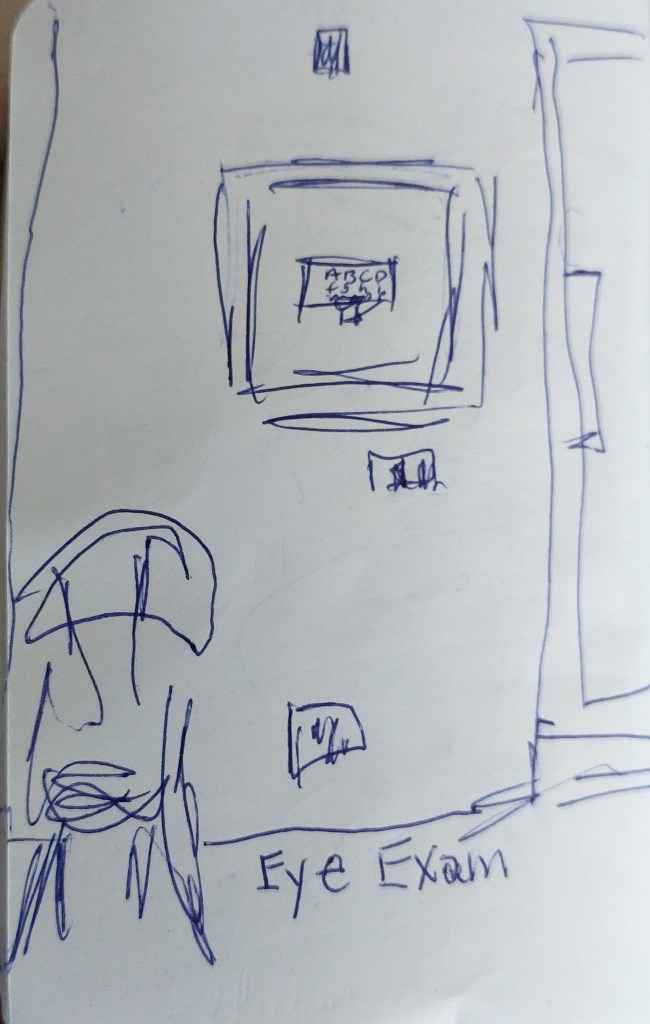
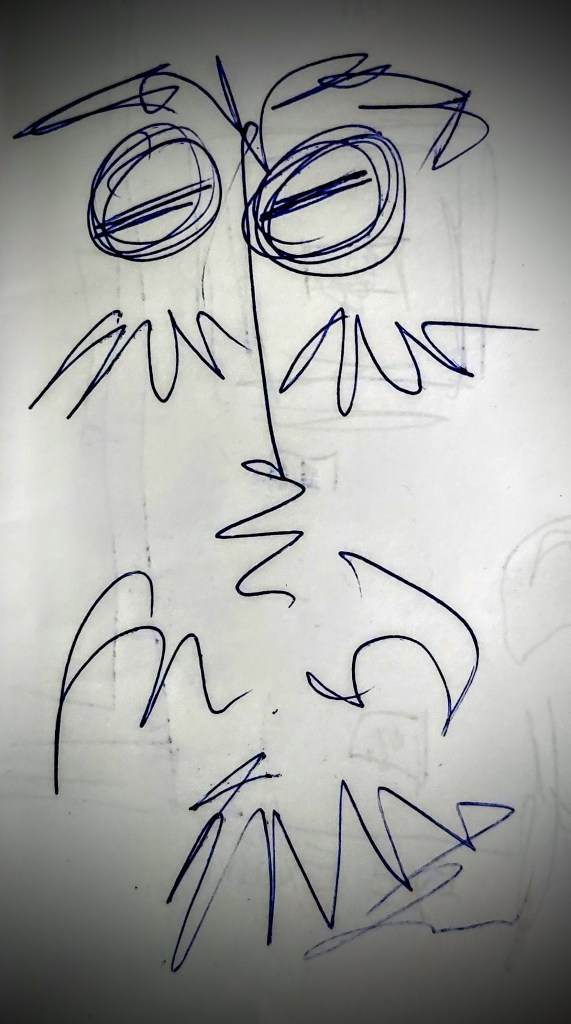
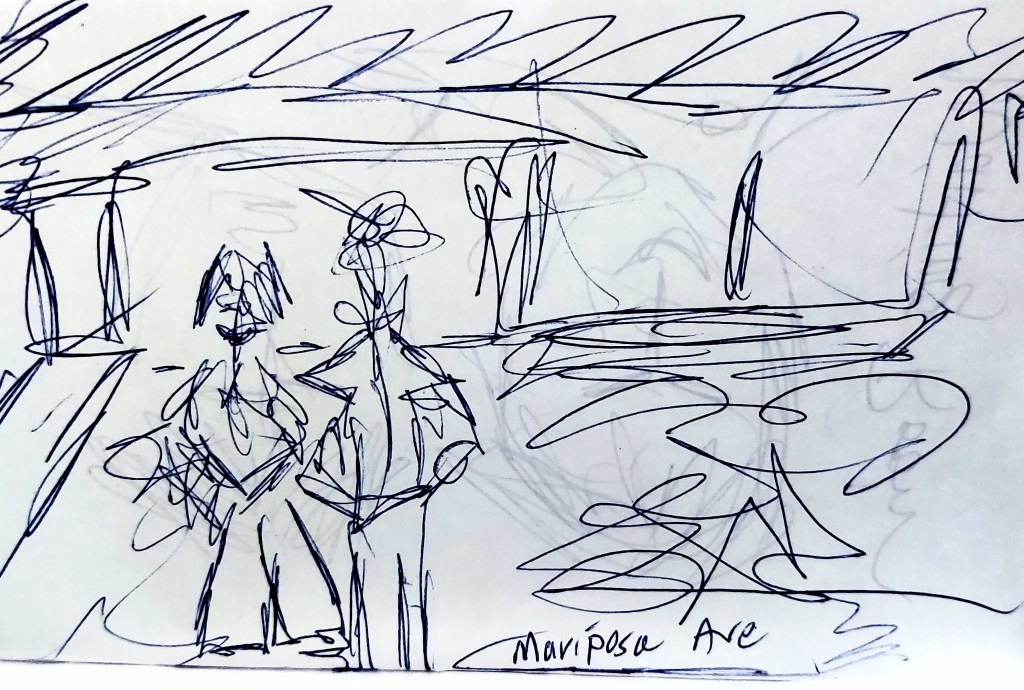
We got a new pair of eyeglasses. Things look different now. Epiphanic frames. There’s seldom a guarantee others will see things the same way we do. Was he safe or out sliding into second base? Nine replays from nine different angles in slow motion and still the umpires are not certain. And we don’t see things the way we used to. The way we were. The light ever changing, en plein air an open challenge. Take away the mirrors!
We were using non-prescription readers. Look over the top rim to see distance. The readers are inexpensive, and we had several pairs, easy to grab here or there, easily lost, broken, discarded, get a new pair, be found using someone else’s pair. The new eyeglasses are prescription, bifocal, a bit spendy, not to be lost, scratched, misplaced, stepped on.
We used the readers for close up work: Chromebook, phone life, ingredients, books and magazines and sheet music, pics, shaving, mail call, is that a bug? Habit forming, may have used them when we didn’t really have to. Convenient.
The new spectacles will take some getting used to. Evolution. Natural selection. We once tried to argue the impressionists painted what they saw – their vision blurred, eyesight not so good; someone said they painted from a well worked out theory. We still think theory comes later, what keeps the academics employed, the art appreciationists. Artists paint what they see. They don’t all see the same thing in the same way, and even if they do, are not trying to paint a photograph, but what they see feels like, the experience of the changing light. If you look closely at a Monet, you might see a slide show in progress. Might need a special pair of glasses.
So we are now dependent on glasses. They won’t change the way we dream:
“And I dreamed I was flying and high above my eyes could clearly see the Statue of Liberty sailing away to sea”
Paul Simon, “American Tune,” 1973
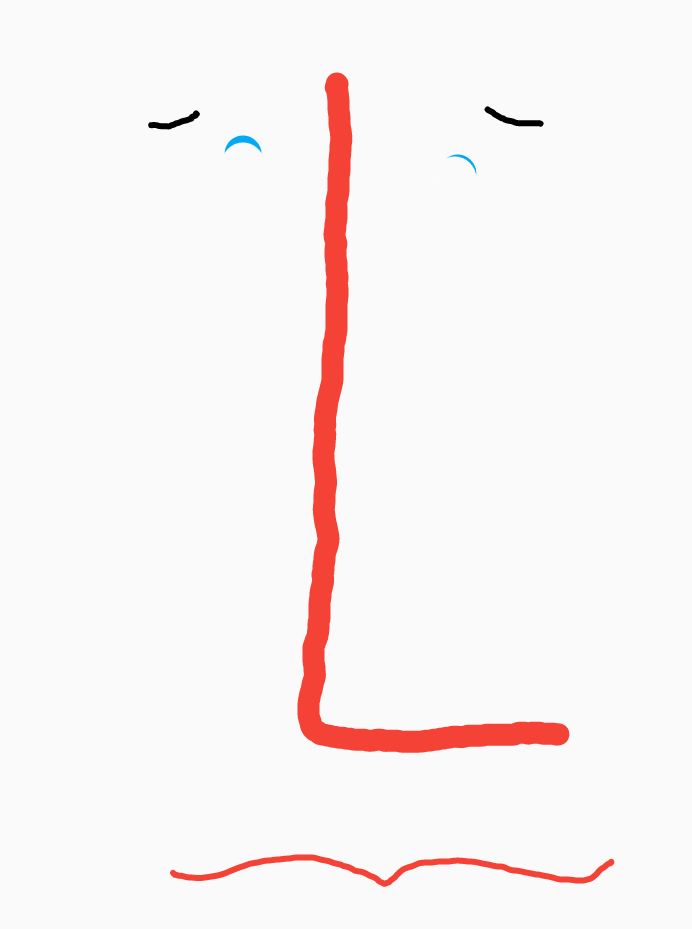
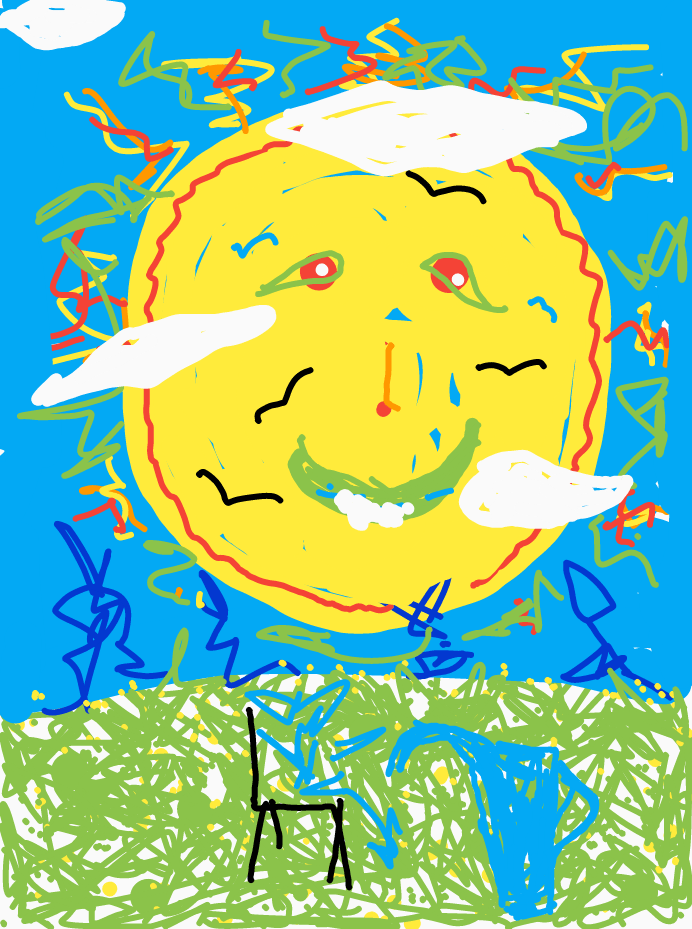
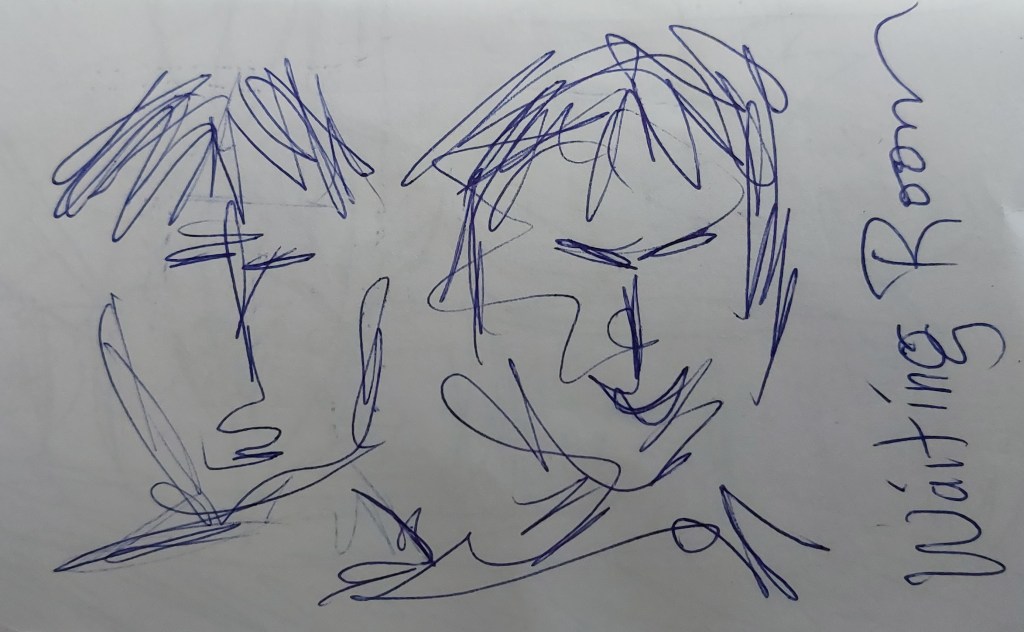
Waiting RoomEye ExamDilatedOn the Road AgainMariposa Ave
Why do some derive pleasure from some other’s misfortune, a strange joy often described as schadenfreude? The English version is epicaricacy. Now there’s a good word, suggesting epic caricature. A form of sadism, maybe. It’s not one of the seven deadly sins, though it could be related to wrath or envy. Or moral desert.
Is it a weakness not to feel happy at a bad person’s misfortune? Is it impossible for a bad person to experience misfortune? Is misfortune a precursor to happiness? Can we even recognize true misfortune? What appears to be divine retribution may turn out to be a blessing in disguise. Likewise, do we know luck when we find it? Trina wins a lottery in Frank Norris’s novel “McTeague.” She ends up sleeping on the coins, literally, a bed of coins.
The blessing in disguise is of course impossible to know. We can’t know what does not happen, only imagine it. But we’re good at imagining things. And our predispositions and assumptions often make no sense. We don’t believe in God, but we think people get what they deserve. We stick to the belief that good deeds are rewarded while bad acts get punished even as the headlines are proof of an alternative reality. Pride, greed, and envy are well-dressed floats in our celebration parades.
We scan the headlines for signs of redress: the writer whose best seller is found to be plagiarized; the preacher who kept a mistress; the scholar who misspells, mispronounces, misses tenure; the sports hero hooked on drugs; the politician prosecuted. But the schadenfreude feelings these misfortunes stir up are no substitute for kindness and humility. What we seem really to be looking for is vengeance. But our code of disbelief has already struck down any possibility of such a judge.
We are given then to randoms. We don’t know why things happen the way they do. And no event seems final. The so-called extinction of the dinosaurs is belied by the hummingbird and crocodile. I’ve been thinking of the dinosaurs recently, the ones we once thought now fill the gas tanks of our cars, but that’s a myth. Life doesn’t pass so much as alter – allegro non troppo: fast, but not so fast we can’t see or feel it go; and for the most part happy, though not permeating or permanently so. In any case, and as Slavoj Zizek points out in his segment of the Astra Taylor film “Examined Life,” the catastrophe of one species may be the good fortune of another.
Is happy misfortune a universal truth, like the constant speed of light or theories of relativity? In the absence of proof of life elsewhere in the universe, is life on Earth a happy misfortune? Or is life elsewhere already over, ended, and not so happily? And would we feel a sense of schadenfreude to find out?
One day, a child sitting in his grammar school classroom, I swallowed a ferrule, the metal eraser-holder cap at the top end of the pencil. I had been chewing the end of my pencil, thinking, I like to think now, was why, or maybe I was just hungry, but, in any case, I had like a beaver at work on a log, bit through, and suddenly the ferrule shot like a pill right through my mouth and down my throat. I hardly felt a thing. It didn’t lodge or get stuck, just down it went, where things go when you swallow them.
As if chewing the pencil through and swallowing the ferrule wasn’t foolish enough, when I got home, I told my mom. That night, in the hospital bed, after visiting hours, the nurse came in to turn out the light and told me in the morning to use the bedpan so they could check to see if the ferrule had gone all the way through. The ferrule was never found, but I was discharged after the one night’s stay anyway.
Yesterday, I Googled “Why did I chew on the end of my pencil?” and found this, from a site called “Pen Heaven,” an article titled “Pen Behaviour; Chewer, Clicker, Twiddler…?”: “Those who are in the habit of chewing and/or nibbling on their writing implements are generally nervous souls. Other than not wanting to borrow their pen, this person needs to be handled with care as they are often anxious, thin-skinned and take offence easily.” Nailed it? Not sure, but it was the most interesting answer in between all the more obvious dental hygiene warning posts.
It’s a neat trick, of course, naming things based on casual observation of ticks and such. You can do it with just about anything, works like astrology. When something is given a name, a certain amount of control is exchanged, and explanations exceed their boundaries. But the trick after time is often exposed. Several recent articles serve to demonstrate.
In “Why We’re Turning Psychiatric Labels into Identities,” Manvir Singh takes a close look at the Diagnostic and Statistical Manual of Mental Disorders (The New Yorker, May 6, 2024). The DSM is the desktop guide of the American Psychological Association, used to reference diagnoses. Behavior is given a name, and the named one assumes an identity. One problem with the process, as Singh makes clear, comes when the names are changed or deleted and those assumed identities are abandoned: “Revamping the DSM requires destroying kinds of people.”
In “Who’s Afraid of Judith Butler?” (The New Yorker, April 29, 2024), Parul Sehgal profiles the Berkeley based philosopher. Butler, Sehgal says, “recently adopted they/them pronouns but doesn’t ‘police it.’” Sehgal refers to Butler as an academic celebrity – is that a non-sequitur or oxymoron, I wonder. Certainly Butler had not set out to achieve celebrity: “Butler told me that they had little notion of what was happening at first. ‘Someone from the Village Voice asked, What are you thinking about the new directions in queer theory? I said, What’s queer theory? They thought I was being Socratic.’”
In grammar school, we were required to have two pencils, one red, the other black, and one pen, blue ink. At the top of each loose folder page we wrote “JMJ,” invoking the Holy Family to bless our work, no matter how messy or failing it might become. The pencil was used for math; in fact, to use ink for math (or arithmetic, as it was then named), cost points. So I must have been involved in some arithmetic function at the time I swallowed the ferrule. I doubt the word ferrule was at the time part of my speaking or even reading vocabulary. Imagine swallowing an iron bracelet.
Pope Francis may seem by some bound by something like iron bracelets, but he always seems able to break free from them. In “The Pope Goes Prime-Time” (The New Yorker, May 21, 2024), Paul Elie comments on the Pope’s recent appearance on the news show “60 Minutes.” I missed the show, but found Elie’s comment piece noteworthy. The Pope had to respond to questions as if he were running for political office. Elie comments: “In substance, it was something like a highlight reel of topical remarks similar to those the Pope has previously made in interviews, homilies, and blessings. The wars in Ukraine and Gaza; women, children, and migrants; sexual abuse and climate change; the nature of the Church; the need for hope; and the attitude that Francis calls ‘the globalization of indifference’—were all mentioned, if briefly. When Francis was asked about antisemitism, for example, he replied, ‘All ideology is bad, and antisemitism is an ideology, and it is bad. Any ‘anti’ is always bad. You can criticize one government or another, the government of Israel, the Palestinian government. You can criticize all you want, but not ‘anti’ a people. Neither anti-Palestinian nor antisemitic.’”
Also of special interest, the Pope’s definition of conservative: “A conservative,” the Pope said, “is one who clings to something and does not want to see beyond that. It is a suicidal attitude. Because one thing is to take tradition into account, to consider situations from the past, but quite another is to be closed up inside a dogmatic box.” The Pope seems to be trying to speak without a dogmatic ferrule bound around his neck.
Dogma may be the practice of naming things. We used pencil for arithmetic because it was assumed in math we make errors, which need erasing (seemingly contrary to that was the requirement to show one’s work). I’m not sure why it was not equally assumed we’d make errors in writing sentences. The red pencil was used for both math and writing, where the lines of a diagrammed sentence would be drawn in red. We named the words diagrammed: noun, verb, adjective, adverb, pronoun, preposition, conjunction, interjection. Grammar became dogma.
Once you start thinking about ferrules, you might begin to see them everywhere, as, indeed, they are ubiquitous. Without them, things unravel, fall apart, come undone.
 The Coming of the Toads