I’ve been enjoying the New York Times game called “Connections,” even if it’s usually as stacked as a one armed bandit in a Western saloon. And I noticed they’ve created a sports version called “Connections: Sports Edition,” which I’ve not tried. I’ve enough sports watching my home team Dodgers falter down the stretch. But it occurred to me to try my hand at a poetry puzzle version.
How to Play: Find the solution that ties all the words in the puzzle table together. Click the footnote number in the bottom right hand corner of each table to view that table’s solution. Or feel free to post your own solution in a comment to the post.
From Disney’s Mary Poppins, here changed to an adverb, a multi-compound word.
A musical term: “As Slow As Possible” (notable example, John Cage’s organ composition ORGAN²/ASLSP).
A person who uses long words, from Latin for a foot and a half long.
Making connections.
Making an essay out of it.
To be unable to move forward for fear of “ifs.”
The correct spelling of irresistably.
1953 Samuel Beckett novel: The Unnameable.
Once considered the longest word in English. Refers to a 19th-century political movement in Britain opposing proposals to disestablish (separate) the Church of England from the state. It’s a turnaround word.
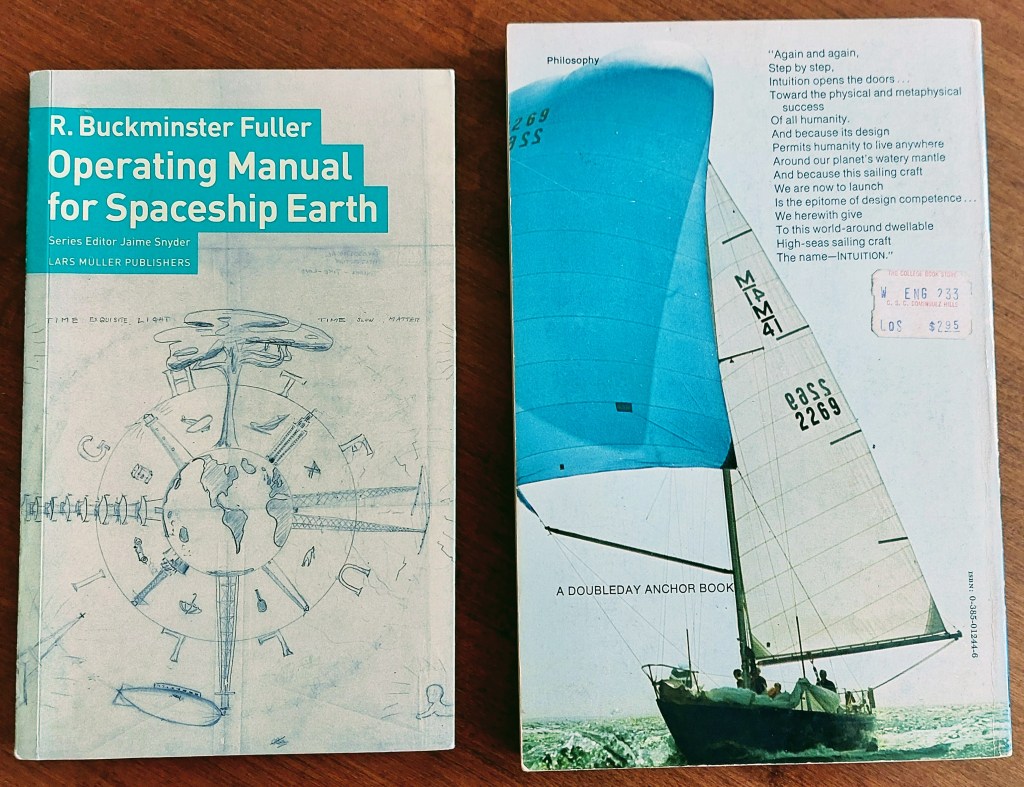
Buckminster Fuller was the most optimistic of scientists. He believed synergy solves the problem of entropy. Synergy, simply put, is working together to achieve more. Synergy is sometimes defined as a whole unpredictable from the sum of its parts (1+1 = 3). And Fuller thought there is enough to go around:
“Once man comprehended that any tree would serve as a lever his intellectual advantages accelerated. Man freed of special-case superstition by intellect has had his survival potentials multiplied millions fold. By virtue of the leverage principles in gears, pulleys, transistors, and so forth, it is literally possible to do more with less in a multitude of physio-chemical ways. Possibly it was this intellectual augmentation of humanity’s survival and success through the metaphysical perception of generalized principles which may be objectively employed that Christ was trying to teach in the obscurely told story of the loaves and the fishes.1
Dostoevsky said the same thing in his “Notes from Underground” (1864):
“I admit that two times two makes four is an excellent thing, but if we are to give everything its due, two times two makes five is sometimes a very charming thing too.”
Though Orwell in “1984” (1949) suggested we be careful with arithmetic and keep an eye on who’s controlling the data. William Blake also reasoned reason could be a tyranny (“The Book of Urizen,” 1794).
For my own alone little part of the network, I’ve been wondering about the popularity of Doors, Wordless Wednesdays, and other prompts, and have opted to contribute a little poem on the subject of synergy and entropy:
Loves and Fishes
Planets like cauliflower heads can’t go it alone; entropy a flat bald universe, produces no combs.
Love like the neutrino difficult to detect, plentiful and invisible, with no electrical net.
“Operating Manual for Spaceship Earth,” R. Buckminster Fuller. First published 1969, new edition 2008/2011, edited by Jaime Snyder. Lars Muller Publishers. ↩︎
Operating Manual for Spaceship Earth (1969) and Intuition (1972) – books by Buckminster Fuller
Is blogging an art form? We might talk about art and craft and trade. Crafts and trades are necessities as cultures move from survival mode to commercialization and commodification and eventually to increasingly artificial realms; art is not necessary, and its very lack of necessity is what gives it integrity. Art is innate and therefore authentic. It can be faked; when it is, it becomes precious. You might reply that art is necessary for the soul, but you won’t find the soul in a museum. Visitors to the Louvre spend about 15 seconds viewing da Vinci’s “Mona Lisa,” during which time their attention is diverted as they snap a few pics. But I’m actually not all that driven by such pronouncements as Art is whatever. Or whatever is art, or not. Art is a verb, as in the Buckminster Fuller sense, when he said, “I seem to be a verb.” A to be verb. If blogging is an art form, surely it must be part of the to be genre.
All bloggers confront the same form, the template or layout, and one can spend forever and a day figuring it out, while one’s content sits waiting for something to happen. For the writer, the question arises, do you want to write or become a programmer? The photograph on a blog is not a photograph, in the same sense that Magritte’s pipe is not a pipe. For the poet who thinks poetry is about sound as much as sense, the phrase “mouth watering” might not wet a reader’s lips. Likewise, pics of food don’t always do much for the appetite. As for argument, the use of ALL CAPS quickly tires the eyes.
Of course there are all kinds of blogs, evidenced in ongoing varieties of designs and templates and categories and tags. And almost any pursuit can be used as a unifying topic: photography or painting, travel and sightseeing, nature and gardening, music or poetry, fiction and memoir, literature or linguistics, criticism and notes and comments, politics and religion, comics and cartoons, news and history, advice and cooking, do it yourself and repair work, sports and leisure. Opinion and argument. The makers behind most blogs probably are not concerned with whether or not they are engaged in some sort of art form. But if a blogger is serious at all about being taken seriously, even if their theme is satire or sarcasm or humor, they will want to set up their blog as efficiently and effectively as possible to ensure an appropriate welcome to their target audience. If they have a target; that’s not a requirement for a successful blog. What is a successful blog?
Without further Ado, I give you my Top 10 list of the characteristics of a successful blog, a site I can appreciate and that I’ll come back to. In other words, here is a list, limited to ten items, of some attributes of a blog that might warrant repeated visits:
Original Content: I prefer original content rather than seeing copying and pasting from some third party source. I’d rather see an original photo of any quality, an original poem, an original sketch. I suppose there is an art to curating, selecting and collecting together pieces for a show, but too often these shows are too long or overwhelming or redundant to what one’s already experienced elsewhere. There are also issues of copyright, the use of Artificial Intelligence, and other forms of spam, quackery, or hoaxes which corrupt one’s reading.
Identified Source: I tend not to read a blog the author of which is completely anonymous. There are no doubt valid reasons any individual blogger may have for remaining anonymous, privacy concerns or insecurity; those same concerns in turn make me want to know enough about sources to guarantee both originality and reliability.
No Ads. This is a tough one, since to remove ads usually requires a subscription or premium of some kind, which some bloggers can’t afford. But ads are intrusive and distracting, often way off target, and sometimes aesthetically ugly, designed to raise a welt. Of course there’s also opportunity for bloggers to earn money from ads. I recently read that Substack is experimenting with ads, and of course there is one kind of blog that is an ad, promotional material, a link to elsewhere.
Frequent Posting: I prefer blogs that post frequently, but not too often. Frequently could mean daily, weekly, or bi-weekly, depending on the length and complexity of the post, while too often might mean multiple postings per hour or day.
Most of the blogs I read, I view via the WordPress “Reader.” There are advantages and disadvantages to the Reader. One disadvantage is you don’t see the blogger’s actual site, with all its bells and whistles, and formats appear differently depending on what device you’re using (which is one reason I keep moving more toward a minimalist format at the Toads). If there’s a way to view the whole blog in a reader, I’ve not discovered it. Some bloggers simply use excerpts in the Reader, and you must go to the full site to view the whole post, which can be rewarding because you get the full meal deal, not the à la carte entry. I don’t know what the answer is to using or not a reader. To subscribe via email, to a newsletter or alert, is an opening of a floodgate. Were I better organized and satisfied with having found ten or so of the best blogs in the world, blogs that answered every aesthetic and practical need, I would simply bookmark them and check them manually daily. Fickleness appears on both sides of the viewing platform. And by the way, the Reader does not contain ads, even if ads do appear on the actual blog.
I prefer writing that is quirky, that ignores style guides, that is not fashionable, but presents a good fit for its subject. At the same time, I often enjoy the rants of the rule bound, the arguments over what tie goes with what shirt, even when, or especially when, it’s obvious no one wears ties anymore except for costume, uniform, or kitsch. “At no time,” Jeeves tells Bertie, “are ties unimportant.” But where’s Jeeves when you need one?
Some blogs venture toward becoming full-blown sites, multiple pages and interactive tools, like the old TV variety shows. But the bed of the blog is the individual post, a diary entry, about experience rooted and grounded outside the blog. But the mirror blog is also interesting. It’s not about itself, but about you, its reader, without being intrusive; it’s subtle, seductive. A post starts off being about jam and ends up a preserve.
I like learning how to do things, seeing how things are done. So if I see a photograph, some explanation of where and how and with what it was taken adds value to the blog post visit. Not that I only value the professional photo, quite the opposite; the amateur unposed snapshot often captures the most moving light. And of course descriptions take time and effort and might spoil a photo’s effect by focusing too much on technicality. There are times when sources should be revealed, footnotes added, links provided, though these can also ruin a visit with too much pomp and falderal.
I enjoy arts and crafts blogs, particularly when they illustrate and track the process. These bloggers of course would be hard-pressed to post daily. It’s a lot of work, blogging, or can be, and posts are often obviously cut short or abandoned for lack of time or inability to get things right, whatever that might be. Which brings up the question of length. How long should a successful blog post be? I don’t know, but reading back over this one, it’s beginning to look too long, and I wonder what readers will have made it this far.
I’m a general interest reader. I don’t have favorite or niche needs. But I do enjoy blogs dedicated to a particular mode or form. The original blog was called a weblog, a log posted to the web, like a ship’s log or an economic diary, updated frequently. Often a community evolved and comments or discussion ensued. I’m not myself these days given to commenting. It’s enough to do a post. Likewise, the blog or post dedicated to sending me elsewhere in the form of links galore can overdo it. I’m not sure how many bloggers remain that spend all day working on their blogs.
I’d been asking, like a smart aleck or wise guy school-kid, a couple of Artificial Intelligence apps (Gemini and ChatGPT) questions to see if I could stump them. The apps provide disclaimers. ChatGPT cautions, “ChatGPT can make mistakes. Check important info.” I questioned ChatGPT what is meant by “important.” In short, important is any fact or idea that you might rely on to your detriment if proven wrong.
I was also thinking of the Universe, and William Blake’s “Auguries of Innocence”: “To see a world in a grain of sand….The questioner, who sits so sly, Shall never know how to reply.”
I asked ChatGPT how many photos had been uploaded to Instagram since its beginning:
Based on the latest available data, here’s what we know about Instagram:
Estimates from mid‑2024 to early 2025 indicate that:
Roughly 1,074 photos/video posts are uploaded per second
That equates to about 95 million posts per day, or almost 4 million per hour
I retrieved that data a few days ago, so I caution my reader to recheck the numbers with ChatGPT if important. The universe is expanding.
I then asked ChatGPT about blogs, how many new blog posts go up daily:
WordPress.com alone sees roughly 2.3 million new blog posts per day.
All blogging platforms combined—WordPress.org, Tumblr, Medium, Blogger, self-hosted setups, and more—generate around 7.5 million posts daily.
I then asked, considering social media formats, at what point, a tipping point or a break-even point – what is the number or percent a user can functionally follow other users? ChatGPT’s answer was long and involved, including definitions I had not specifically asked for:
Tipping Point in Following Behavior This is the point at which a user starts experiencing diminishing returns from following more accounts — the quality of their feed drops, content becomes more generic or algorithmically filtered, and they lose meaningful engagement with individuals.
Breakeven Point for Social Value This could be defined as the point where a user’s following count results in reciprocal value — e.g., they follow others and start receiving useful content or engagement in return.
I might have thought ChatGPT would quote John Cage somewhere in its answer, but it did not. The Cage quote I might have suggested, my paraphrase here: “If you don’t know the answer, why are you asking the question”?
One day down at Black Mountain College, David Tudor was eating his lunch.
A student came over to his table and began asking him questions.
David Tudor went on eating his lunch.
The student kept on asking questions.
Finally David Tudor looked at him and said, “If you don’t know,
Why, indeed, not to mention who. Who (or what) do you ask? (And before you get your red pencil out, I know all about who and whom, but I’ve my own style book here at the Toads, and I’ve unfollowed whom, so don’t bother.) I first read “Indeterminacy” in John Cage’s book titled “Silence” (1961, 1973, Wesleyan) – from page 260:
“In oral delivery of this lecture, I tell one story a minute. If it’s a short one, I have to spread it out; when I come to a long one, I have to speak as rapidly as I can” (260).
Part of ChatGPT’s answer to my question regarding the number of social media accounts one can follow or be followed with meaningful contact referenced “Dunbar’s Number”:
📊 Data-Based Estimates and Psychological Limits
1. Cognitive Limit — Dunbar’s Number (~150)
Humans can meaningfully maintain social relationships with around 150 people.
In social media, this is often expanded because of the passive nature of interaction — but past ~500–1,000 follows, users typically experience:
Less meaningful engagement
Algorithmic filtering becomes dominant
👉 Tipping point for meaningful social following: ~150–500 follows Beyond that, you don’t “functionally” follow people — the algorithm filters most content out.
What is meaningful or reciprocally engaging of course differs depending on one’s purpose or goal and the type of social media format one’s using. I did know the answer, but I wanted ChatGPT to confirm and provide some data with support. I was just playing around. But I had not heard of Dunbar’s Number. Dunbar’s Number is 150 – humans can interact meaningfully with 150 others. A further breakdown of Dunbar’s Number as supplied by ChatGPT follows:
Dunbar’s Number (~150) is more than just a single limit. Robin Dunbar, a British anthropologist and evolutionary psychologist, proposed that human social relationships are layered in discrete tiers, each with its own emotional closeness and frequency of interaction.
🔹 Dunbar’s Social Group Layers
These layers form a hierarchy of relationships, expanding by a rough factor of ~3 at each level:
Layer
Approx. Size
Relationship Type
Characteristics
1. Support Clique
3–5
Closest relationships
Daily contact, deep emotional support (best friends, close family)
2. Sympathy Group
12–15
Good friends
Weekly contact, trusted confidants
3. Close Network
~50
Friends you would invite to a party
Monthly contact, mutual interest, still emotionally meaningful
4. Casual Network
~150
Dunbar’s Number
People you know and recognize by name/face, occasional contact
5. Acquaintances
~500
Recognizable individuals
Low or no emotional intensity, weak ties (colleagues, mutuals)
6. Faces Known
~1,500
People whose faces you recognize
Stored in memory, but not personally connected
🔸 What This Means for Social Media
Most people can recognize ~1,500 profiles, but only maintain meaningful interaction with ~150.
Your Instagram close friends list or Twitter DMs likely reflects the 15–50 layer.
Follows, likes, or casual comments beyond the 150–500 range are often algorithmically or socially shallow.
I don’t mention any of this to cause or reflect distress, and I think most users intuitively realize a law of large numbers at work with regard to social media accounts, but I want to emphasize the importance, significance, or value of any relatively small number of followers writers may have, or may be following, not necessarily as “follow backs” without ever looking again, but in efforts to maintain meaningful reading and writing encounters, effort that takes time and trust and mutual engagement.
There is of course much more to this discussion one might pursue (the phenomenom of likes and comments, or lack thereof, for example), but this has been question and answer enough. To follow is not necessarily to befriend; to unfollow is not necessarily to defriend. In summary, I’m reminded of the advice Shakespeare’s Polonius gives to his son Laertes:
“Those friends thou hast, and their adoption tried, grapple them to thy soul with hoops of steel” (Hamlet, Act I, Scene 3).
But Polonius, in spite of his reputation for sound advice, is a bumbling fool and not to be trusted, and anyway, who wants to be grappled to another’s soul with a hoop of steel, particularly where grapple means wrestle and struggle?
About the only thing my folks brought with them when we moved to California was their accents. We kids brought ours too. “Can we all borrow ay catsup bottle from you all,” Peggy Ann asked our new next door neighbor Aunt Marty who lived with Uncle Hugh and their four boys and a Persian Blue. They were not our real aunt or uncle but we had many real ones but we would never know them. Ray called Mom Patty, but her real name was Mary, and Aunt Marty and Uncle Hugh called Ray, John. Uncle Hugh and Aunt Marty and their four boys and Persian Blue cat that used to sit atop the wall and stare into our bedroom moved away. The new neighbor mom Pennye’s real name was Mary too. When we first got Out West I went to public school, put ahead a grade, even though I’d never went to kindergarten, because the LA kids were slower. I remember sitting in class another kid reading aloud and I waited for the teacher to come down on him because he was saying his ay’s wrong. He said a cat with a soft article a, short and not at all sleek. It came my turn to read and I gave ay cat a hard ay, as long and hard and wiry as a cat’s tail when it’s a bottlebrush, and was astonished to hear the teacher interrupt me and correct my pronunciation of ay. Gradually we older kids lost most of our hard a’s and other quirks but the foibles of pronunciation still fool my tongue, like pass the catsup, and I wonder how his little tale might be changed had the author of my second grade book said the cat instead of a cat.
“Tele Piece #1” is the title finally settled on for the first of a planned series of short pieces played on the Telecaster Squier guitar.
Squier not to be confused with Squire, as in Chaucer’s “The Squire’s Tale.” I considered titling the piece “The Squire’s Tele.” Chaucer’s tale for the squire is characterized by a bit of rambling, seemingly planned for a long piece, if planned at all, but interrupted by the Franklin, who might be in terms of social class considered subservient to the up and coming squire. And the Telecaster Squier guitar is often considered subordinant to the Fender American made Telecaster. Fender acquired the name Squier when it bought the Squier brand, a family name, in 1965. The V. C. Squier Company out of Battle Creek, Michigan began in 1890 and made strings for violins, banjos, and guitars.
But the early Telecaster Squier is now considered a classic in its own right. In short, it’s a good guitar. Close to 20 years ago now, I was playing my Tele on Thursday evenings at a local wine bar, which closed almost as soon as it opened, victim of The Great Recession. I wasn’t up front or on a stage. I set up with a small room amp (Crate GFX-15) in a corner and played background instrumental pieces, mostly impromptu and rambling, or taking off on standards and going often I wasn’t sure where. Anyway, one night a family of four with some time to spend before their movie started across the street stopped in for a drink. They seemed inordinately interested in what I was doing. Most patrons just ignored me. Then the son, in his twenties, came over to chat. He and his father played guitar, and from where they were sitting he said they couldn’t tell if I was playing what he called a real Telecaster or a Squier.
One of the first guitars out of the new Fender factory opened in Japan in 1982, this one is fitted with aftermarket Dean Markley and Seymour Duncan pickups, and it’s strung with D’Addario ECG24 XL Chromes Flatwound Electric Guitar Strings .011-.050 Jazz Light.
The amplifier used in “Tele Piece #1” is a Fender Champion 20, with the Voice knob set to 02 Tweed Deluxe, and the FX knob set to 03 Reverb Hall. This combination gives a bit of mild amped style without too much distortion or fancy effects taking over. Filmed with a cell phone leaning against the bottom of the amplifier.
We saw that the C Major Scale of notes is useful because it has no sharps or flats. We’ll find that it’s particularly useful in other ways for the guitarist.
Let’s review the C Major Scale of Notes. C to C gives us an octave. We can number the notes. We’ll use the numbers to build chords:
Numeric Note
1
2
3
4
5
6
7
8
Letter Note
C
D
E
F
G
A
B
C
A major chord is built stacking the 1st, 3rd, and 5th of a scale. We can build a chord that begins with each letter of the C Major Scale. When finished, we’ll have the C Major Harmonized Scale of chords:
Chord #
I
ii
iii
IV
V
vi
vii
Name
CM
dm
em
FM
GM
am
b-dim
Notes
5
G
A
B
C
D
E
F
3
E
F
G
A
B
C
D
1
C
D
E
F
G
A
B
The C Major chord (I, or CM in the table above) contains the notes C, E, and G, the 1st, 3rd, and 5th steps of the C Major scale of notes. The D minor chord (ii, or dm in the table above) contains the notes D, F, and A. Why is it a minor chord? A minor chord is built also using the 1st, 3rd, and 5th steps of a scale, but the 3rd is flatted, moved a half step down, which, on the guitar, is one fret down. I thought you said there were no flats or sharps. Here’s where things get a bit tricky.
Let’s take a look at the C Chromatic scale of notes. This is a scale that shows all the notes, including the flats and sharps. A sharp is indicated with a # sign, and flats are indicated with a b. Note that a C# and a Db is the same note, called a flat when moving down and a sharp when moving up):
1
1#2b
2
2#3b
3
4
4#5b
5
5#6b
6
6#7b
7
8
C
C#Db
D
D#Eb
E
F
F#Gb
G
G#Ab
A
A#Bb
B
C
The C Major scale of notes uses just 7 of the notes of the Chromatic scale above. As we have seen, those notes include: C D E F G A and B. What happened to the sharps and flats? We skipped over them. How do we know where to skip? That’s a given. To build a major scale, we skip over the 1#2b and the 2#3b, but notice there is no 3# or 4b, and there is no 7# or 8b. So we have notes that skip like this:
1 (skip) 2 (skip) 3 4 (skip) 5 (skip) 6 (skip) 7 8 C (skip) D (skip) E F (skip) G (skip) A (skip) B C
In other words, there is no 3# or 4b and there is no 7# or 8b. There is no E sharp or F flat and there is no B# or Cb in the C Major scale. If we want to flat the F, we get E. If we want to flat the C, we get B.
It might be useful now to take a look at the whole guitar fretboard (depending on your device, you should be able to slide right to see all the columns):
Open Strings
1st Fret
2nd Fret
3rd Fret
4th Fret
5th Fret
6th Fret
7th Fret
8th Fret
9th Fret
10th Fret
11th Fret
12th Fret
13th Fret
e
f
g
a
b
c
d
e
f
b
c
d
e
f
g
a
b
c
g
a
b
c
d
e
f
g
d
e
f
g
a
b
c
d
a
b
c
d
e
f
g
a
e
f
g
a
b
c
d
e
f
And here are the same notes using corresponding numbers:
Open Strings
1st Fret
2nd Fret
3rd Fret
4th Fret
5th Fret
6th Fret
7th Fret
8th Fret
9th Fret
10th Fret
11th Fret
12th Fret
13th Fret
3
4
5
6
7
1
2
3
4
7
1
2
3
4
5
6
7
1
5
6
7
1
2
3
4
5
2
3
4
5
6
7
1
2
6
7
1
2
3
4
5
6
3
4
5
6
7
1
2
3
4
Notice the 1 skips a fret to 2, but the 3 does not skip a fret to 4. Same for 7 to 1. The 1 corresponds to C, the 2 to D, etc.
If we start a major scale on D and use the skipping method of counting through the Chromatic scale, we get:
1
2
3
4
5
6
7
8
9
1
2#3b
3
4
4#5b
5
5#6b
6
6#7b
D
D#Eb
E
F
F#Gb
G
G#Ab
A
A#Bb
If we build the D Major chord using the 1, 3, and 5 of the scale in the table above, we get a chord with the notes D (1), E (3), and F# (5). The D Major chord is built using the notes D, E, and F#. Taking the D Major chord of D, E, and F# but flatting the F#, we get D, E, F. The chord is now a 1, flat 3, 5 chord, or, a minor chord.
Now, back to the C Major Harmonized scale, which is built with the chords C Major, D Minor, E Minor, F Major, G Major, A Minor, and B Diminished. The chords are shown in the table as
I
ii
iii
IV
V
vi
vii
CM
dm
em
F
G
am
b-dim
It’s a bit tricky to say all of the chords contain no sharps or flats, since we saw that the D minor chord has a flatted third. But the flatted third of a D chord, as we’ve seen, gives us an F note, not an F#. You can work it out for the E minor and A minor, as well as the B diminished (which flats both the 3rd and the 5th notes of a scale). What you’ll find is that the chords as expressed in the C Major Harmonized scale appear to have no sharps or flats. They are built with “natural” notes, meaning not sharped or flatted notes.
Chord #
I
ii
iii
IV
V
vi
vii
Name
CM
dm
em
FM
GM
am
b-dim
Notes
5
G
A
B
C
D
E
F
3
E
F
G
A
B
C
D
1
C
D
E
F
G
A
B
Here are some suggestions for practical application:
Play chord progressions using chords from the C Major Harmonized scale. For example, play ii (dm), V (GM), I (CM), or play I (CM), vi (am), ii (dm), V (GM). Play I, IV, V.
Memorize all of the C notes on the guitar fretboard. Be able to jump from one to the other, in any order.
Play the C Major scale of notes on the fretboard beginning (ascending and descending) with each of the C notes you found in 2 above.
Play all of the chords in the C Major Harmonized scale in the first position of the fretboard (frets 1 thru 3). Play them in order, ascending and descending.
A good way to learn the notes on the guitar fretboard is to begin with the notes in the C Major scale, which has no sharps or flats1. The C Major scale, using letters to signify notes, goes like this:
C D E F G A B C.
To begin, play the scale, one note at a time, using the open strings and fingering the notes on the 1st, 2nd, and 3rd frets, beginning and ending on the C note, forward (ascending) and backward (descending), memorizing each note in its open or fretted position.
Use your 3rd (ring) finger on the 3rd fret, 2nd finger (middle) on the 2nd fret, and 1st finger (index) on the first fret. If you want to finger-pick, alternate index with middle fingers of your right hand, or use your thumb throughout. The table below shows the 6th (thickest) string at the bottom.
Open String
1st Fret
2nd Fret
3rd Fret
B
C
G
A
D
E
F
C
Now play the C Major scale on the 2nd through the 8th frets. Here you’ll be playing through two octaves2. Again, play forward (ascending) and backward (descending) in alphabetical order, memorizing the notes. When you get to the C on the 3rd string (5th fret), move your hand up so that your index finger plays that note, ring finger the D, index the E, middle the F, pinkie the G, index the A, ring the B, and pinkie the final C (1st string, 8th fret):
1st Fret
2nd Fret
3rd Fret
4th Fret
5th Fret
6th Fret
7th Fret
8th Fret
A
B
C
E
F
G
A
B
C
D
E
F
G
C
D
As you play through the notes, you can sing: Do Re Mi Fa So La Ti Do. Or, sing the notes: C D E F G A B C. Or sing numbers: 1 2 3 4 5 6 7 8.
Solfa
Do
Re
Mi
Fa
So
La
Ti
Do
Numeric Note
1
2
3
4
5
6
7
8
Letter Note
C
D
E
F
G
A
B
C
Next, we’ll look at the C Chromatic scale and the C Major Harmonized scale to see how chords are built.
On the piano, to play the C Major scale, you press only the white keys, skipping over the black keys, but on the guitar, every fret is what is called a half step, and the sharps and flats can’t be seen. ↩︎
An octave is 8 notes, beginning and ending on the same note. ↩︎
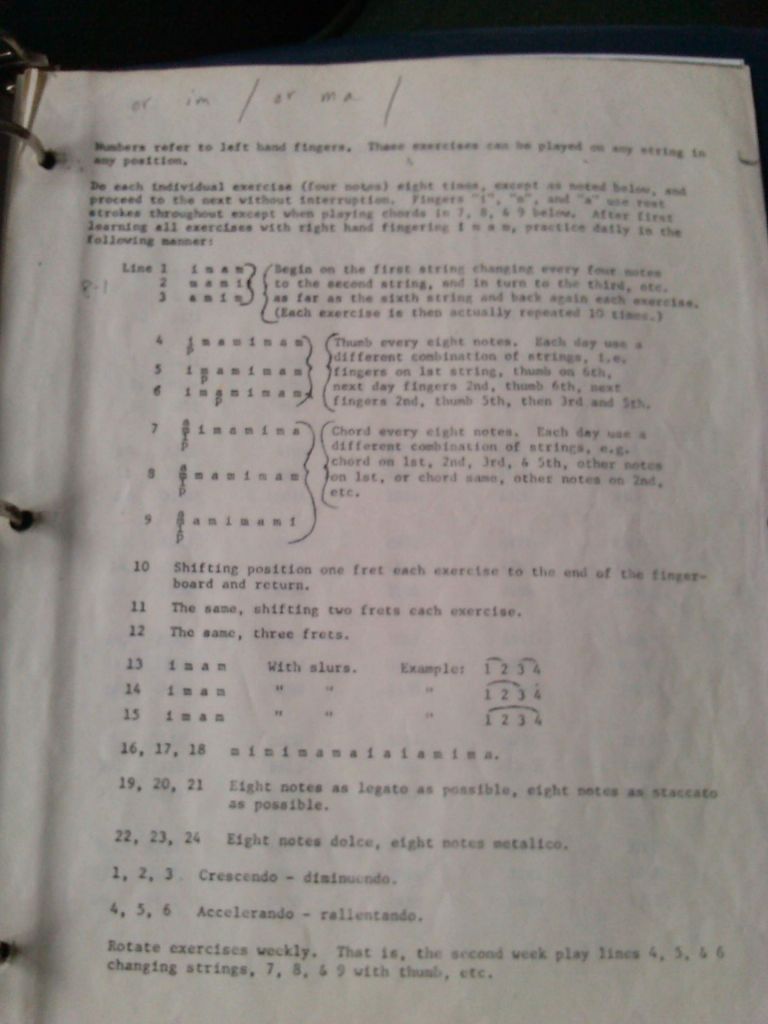
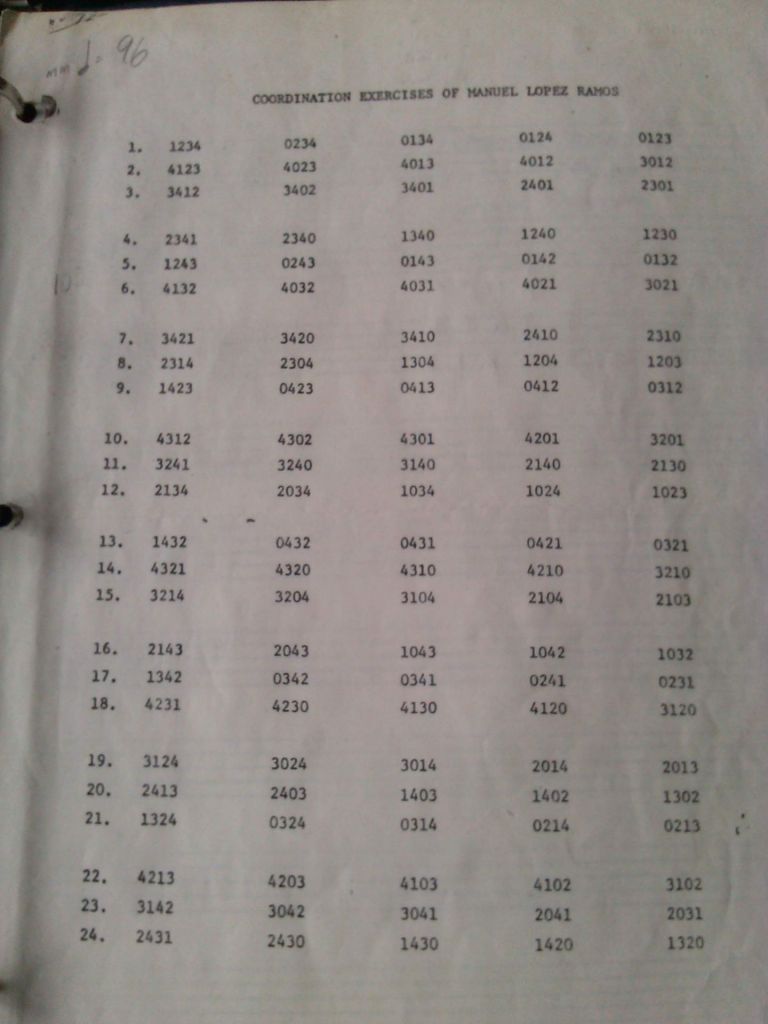
I was given the exercises to practice by my first classical guitar instructor. After many years of carrying them around in my three-ring binder guitar workbook, I’ve taken photos of the two pages, from which I’ve copied below, adding just a few edits and a short glossary of terms. In addition to being useful developmental exercises, the lines can be used for warmup in any setting. While the exercises were written with classical guitar in mind, they work for any guitar genre. The basic idea is that you don’t want your fingers to simply remember riffs, because then they fall into forced habits, often limiting and hard to change, but the exercises encourage a flexible, ambidextrous capability, each finger able to move independent of the others.
EXERCISES (1 thru 24 - see Instructions below Line 24):

1.1234 0234 0134 0124 0123

2.4123 4023 4013 4012 3012

3.3412 3402 3401 2401 2301

4.2341 2340 1340 1240 1230

5.1243 0243 0143 0142 0132

6.4132 4032 4031 4021 3021

7.3421 3420 3410 2410 2310

8.2314 2304 1304 1204 1203

9.1423 0423 0413 0412 0312

10.4312 4302 4301 4201 3201

11.3241 3240 3140 2140 2130

12.2134 2034 1034 1024 1023

13.1432 0432 0431 0421 0321

14.4321 4320 4310 4210 3210

15.3214 3204 3104 2104 2103

16.2143 2043 1043 1042 1032

17.1342 0342 0341 0241 0231

18.4231 4230 4130 4120 3120

19.3124 3024 3014 2014 2013

20.2413 2403 1403 1402 1302

21.1324 0324 0314 0214 0213

22.4213 4203 4103 4102 3102

23.3142 3042 3041 2041 2031

24.2431 2430 1430 1420 1320
Instructions
Numbers refer to left hand fingers (index is 1, middle 2, ring 3, little 4). The exercises can be played on any string in any position (i. e. beginning at any fret). An “0” in lines above, e.g. 1320, means play string open (un-fretted).
Do each individual exercise (four notes) eight times, except as noted below, and proceed to the next without interruption. Fingers “i”, “m”, and “a” use rest strokes1 throughout except when playing chords in 7, 8, 9 below. After first learning all exercises with right hand fingering i m a m, practice daily in the following manner:
Begin on the first string changing every four notes to the second string, and in turn to the third, etc. as far as the sixth string and back again each exercise. Each exercise is then actually repeated 10 times. The “Lines” below refer to the rows or exercises in the section above.
Line 1: i m a m Line 2: m a m i Line 3: a m i m
Thumb (indicated with p) every eight notes. Each day use a different combination of strings, i. e. fingers on 1st string, thumb on 6th, next day fingers 2nd, thumb 6th, next fingers 2nd, thumb 5th, then 3rd and 5th.
Line 4: i&p m a m i m a m Line 5: i m&p a m i m a m Line 6: i m a&p m i m a m
Chord (a&m&i&p) every eight notes. Each day use a different combination of strings, e.g. chord on 1st, 2nd, 3rd, & 5th, other notes on 1st, or chord same, other notes on 2nd, etc.
Line 7: a&m&i&p i m a m i m a Line 8: a&m&i&p m a m i m a m Line 9: a&m&i&p a m i m a m i
Line 10: Shifting position one fret each exercise to the end of the finger-board and return.
Line 11: The same, shifting two frets each exercise.
Line 12: The same, three frets.
Line 13: i m a m – With slurs2. Example: 1~2 3~4 Line 14: i m a m – With slurs. Example: 1~3 2~4 Line 15: i m a m – With slurs. Example: 1~4 2~3
Lines 16, 17, 18: m i m i m a m a i a i a m i m a
Lines 19, 20, 21: Eight notes as legato3 as possible, eight notes as staccato as possible.
Rotate exercises weekly. That is, the second week play lines 4, 5, & 6 changing strings, 7, 8, & 9 with thumb, etc.
The finger of a rest stroke, or apoyando, after plucking a string, comes to rest on the string above it, thus allowing for a more controlled stroke that can produce more volume. While the instructions call for all rest strokes, the player may prefer also practicing with free strokes (where the finger does not come to rest but plays through). ↩︎
There are two kinds of slurs, the hammer-on and the pull-off. In each, the note is sounded with the left hand finger by hitting a higher fret on the same string after a stroke (ascending slur) or pulling quickly off a string to an lower fret of the same string (descending slur). ↩︎
Legato is playing smoothly and continuously from one note to another; staccato is playing each note with a stop between notes. ↩︎
Dolce is soft or hollow; metalico is bright or electric. To play dolce, move the right hand forward of the sound hole; to play metalico, move the right hand back toward the bridge. ↩︎
Human imagination is part of nature, turning light into food, like photosynthesis in plants. Imagination is a natural process that needs no teacher or school, theory or method. Thus poetry should not become a profession, nor should a poem profess anything, nor should poets become professors. Most formal education activity turns subjects into sports and competition. Imagination is not competitive.
We might see that William Blake, in his “The Marriage of Heaven and Hell” (1790), explains the imagination as a natural means of protecting the human from an onslaught of reality:
“1. Man has no Body distinct from his Soul. For that called Body is a portion of Soul discerned by the five senses, the chief inlets of Soul in this age.
2. Energy is the only life, and is from the Body; and Reason is the bound or outward circumference of Energy.
3. Energy is Eternal Delight.”
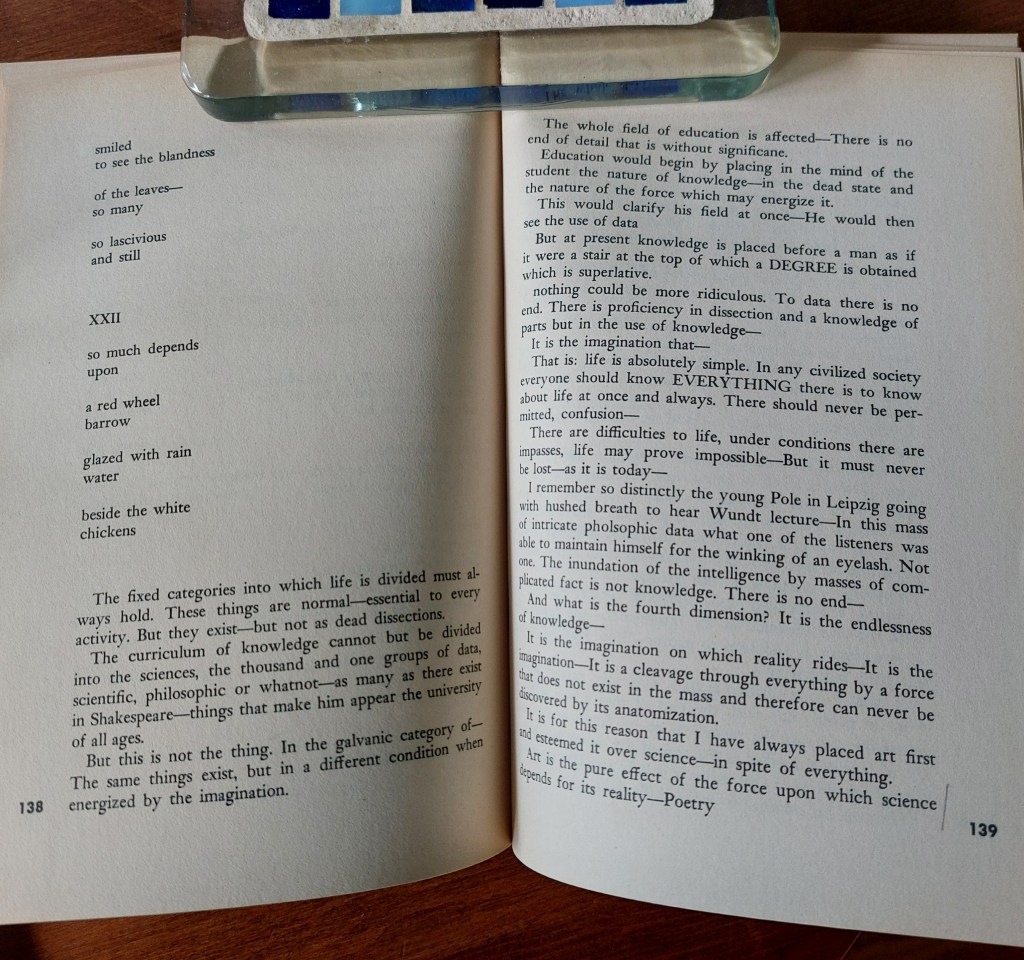
William Carlos Williams associated the season of Spring with the imagination. It’s in his short book titled “Spring and All” that we find his now famous poem called “The Red Wheelbarrow.” But we’ve been reading that short piece sort of “à la carte,” or slightly out of context. It appears in “Spring and All” as a numbered poem in a series of poems interrupted in several places by Williams’s prose discussion about what he is doing and why in the way of poetry. There are a total of 27 poems in “Spring and All,” and “The Red Wheelbarrow” is number:
XXII
so much depends upon
a red wheel barrow
glazed with rain water
beside the white chickens
“The Red Wheelbarrow” appears in “Spring and All” on page 138 (Part II: pp 88:151) of my copy of Imaginations (New Directions Paperbook 329, 1971):
pp. 138-139 from “Spring and All” (1923) in Imaginations (NDP329, 1971)
Reading “The Red Wheelbarrow” in the context of “Spring and All” we begin to see how Williams invites the reader’s imagination to absorb the image. It is a well-lit poem. A painting is suggested, and the imagination creates the image (food) from the juxtapositions of color and light and things placed as if by hands (red, white, wheelbarrow, water, chickens, glaze), but will the chickens sit still? Probably not.
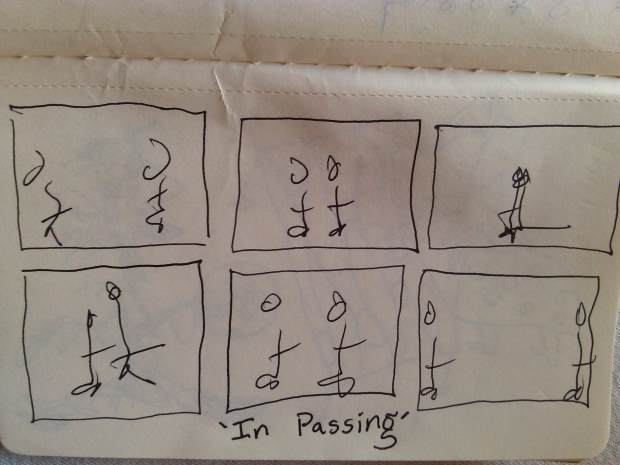
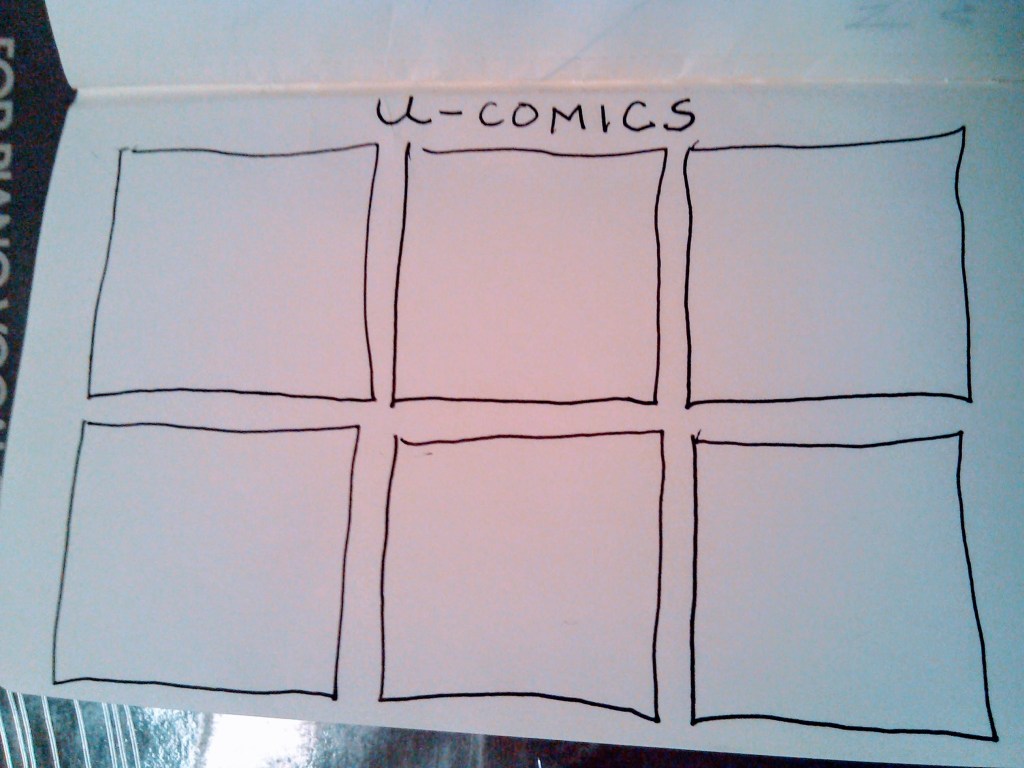
What is style and where does it come from? In his book “Q & A,” Adrian Tomine says, “If you create a page of blank panels and give that to a kid, they will immediately start creating a comic. And you will be surprised and delighted by what they create” (141).
Then again, when you were a kid, you might have been told to stay within the lines when coloring. And the panels were not blank, but pre-filled with assumptions and presuppositions.
Adrian says: “I understand that feeling of self-consciousness all too well, and I think the only reason I’m able to publish the work I do is that I started on this path before I knew any better….I’ve found it helpful to try to trick myself back into that earliest creative mindset, where I’m just creating the work for its own sake” (136-137).
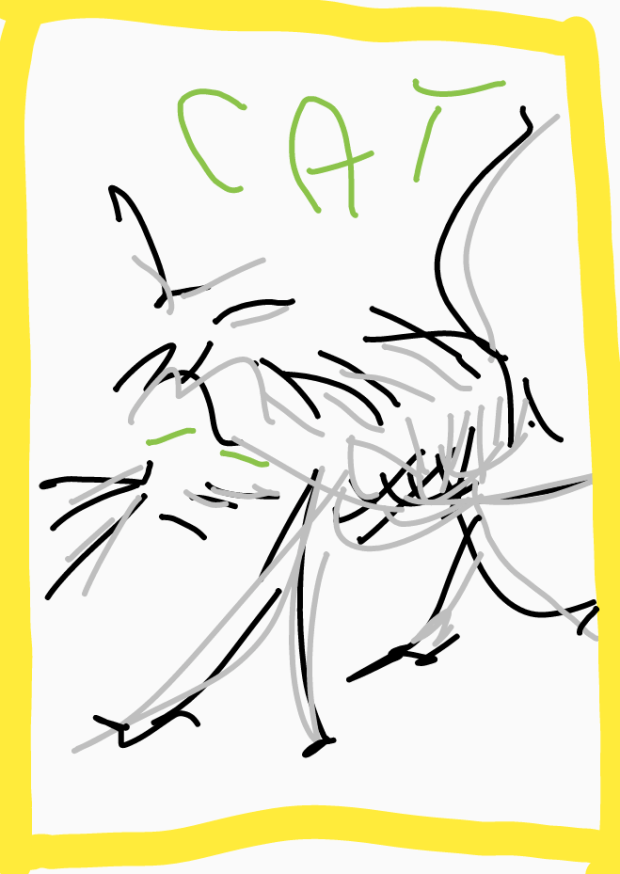
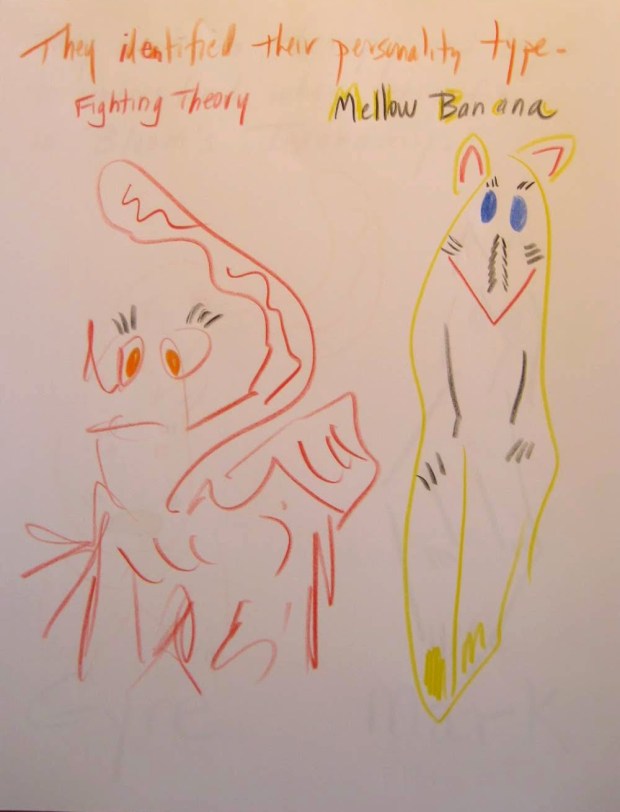
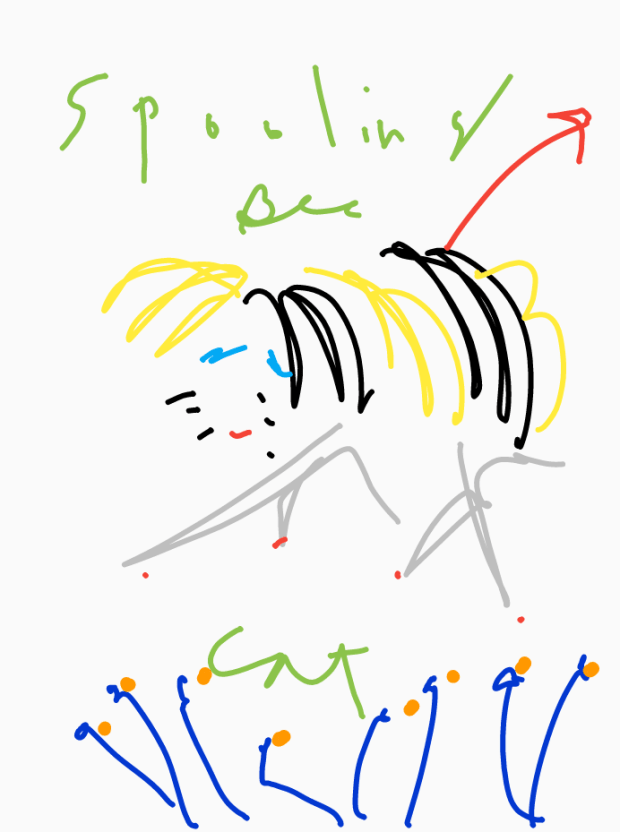
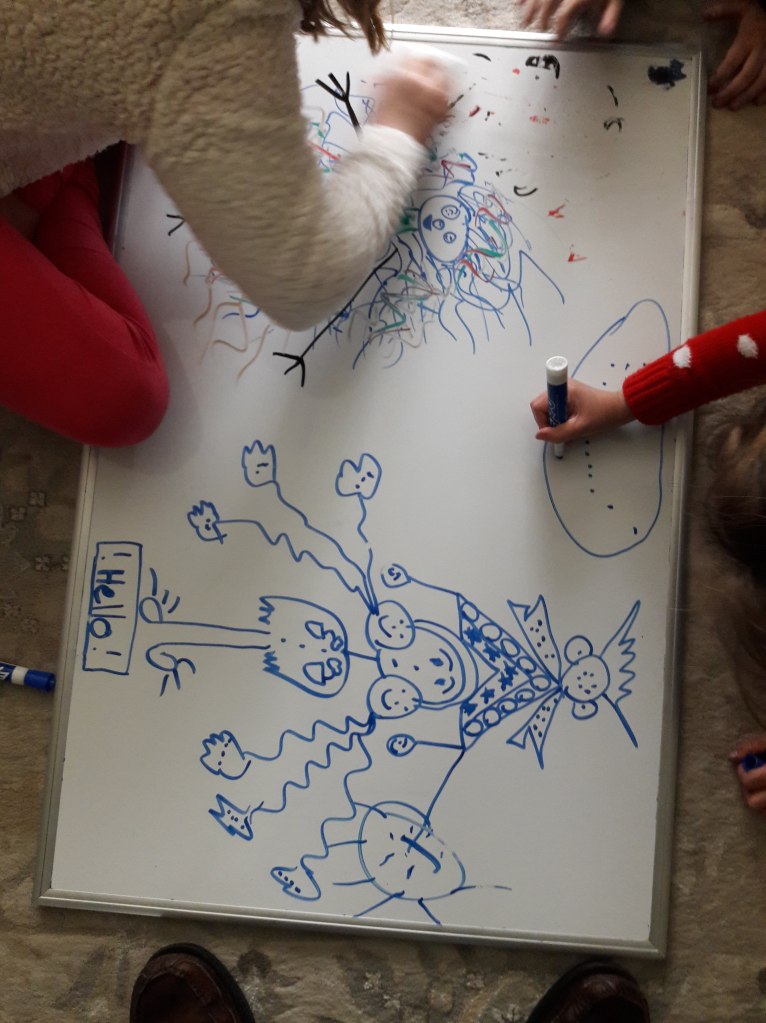
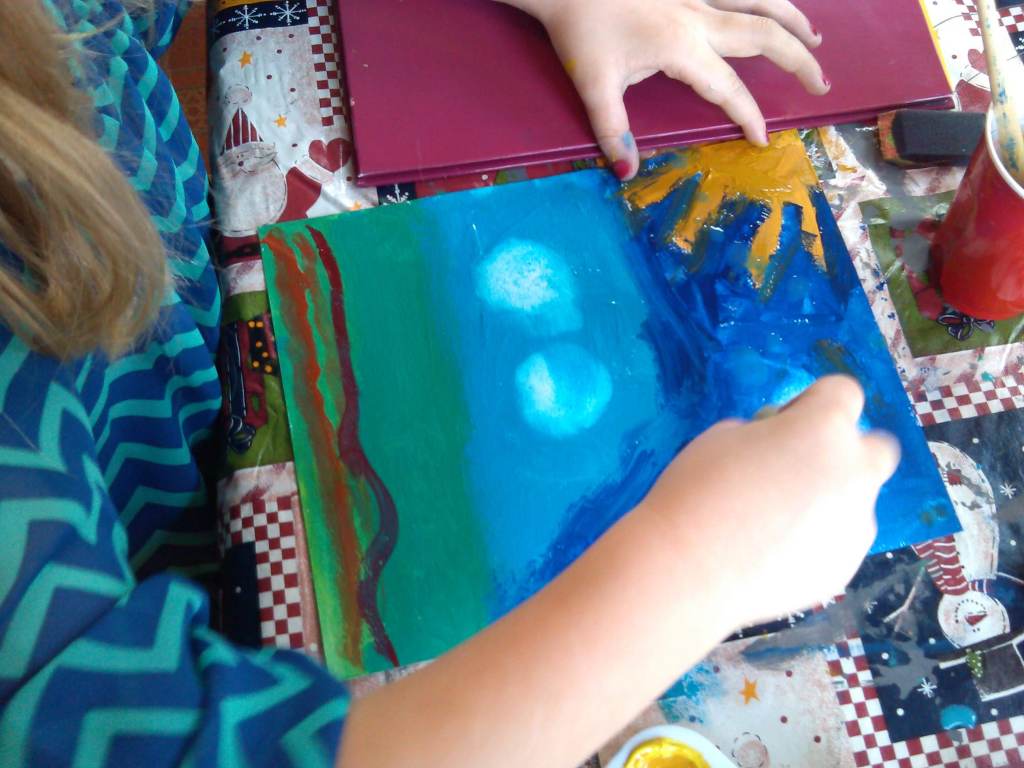
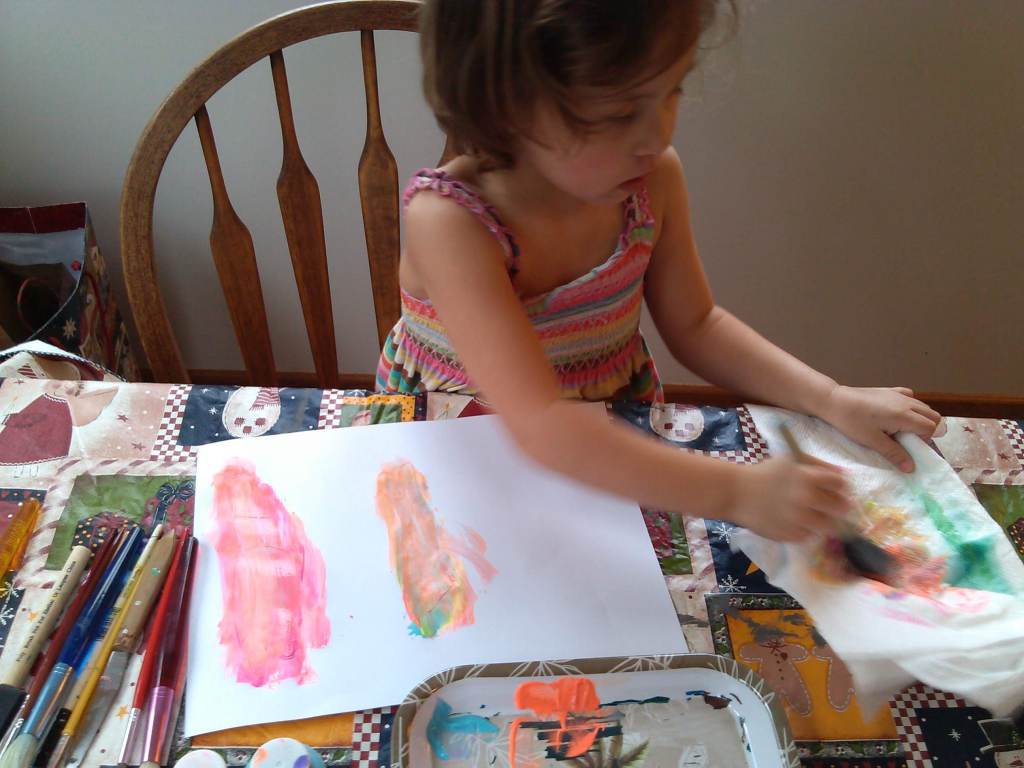
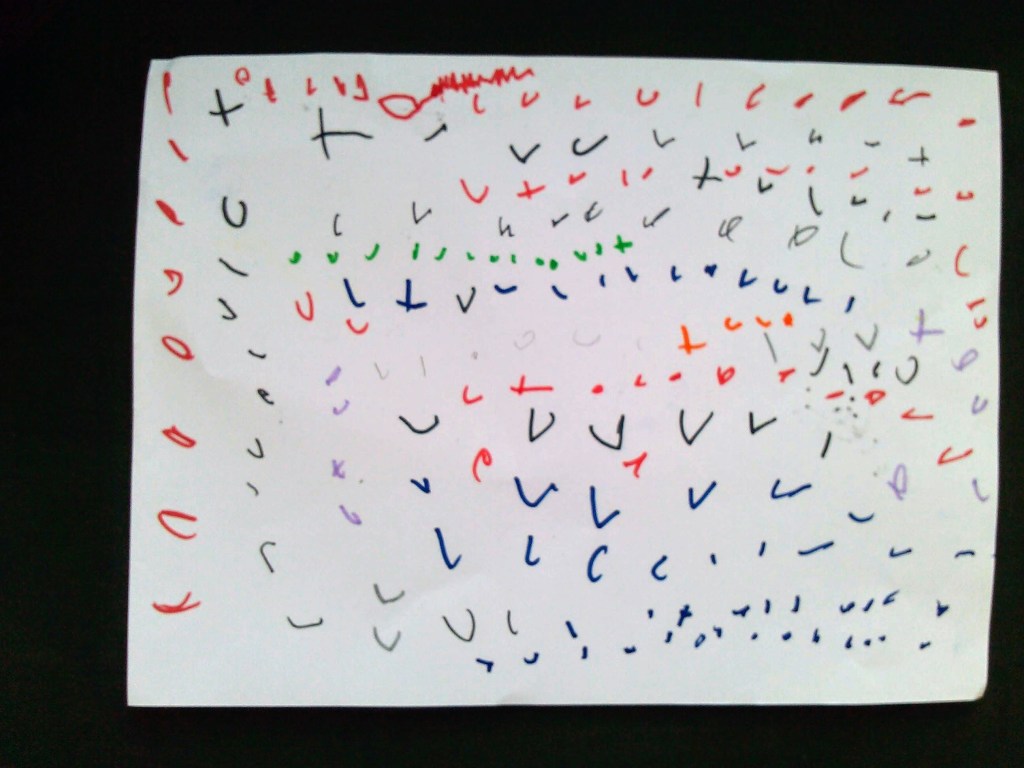
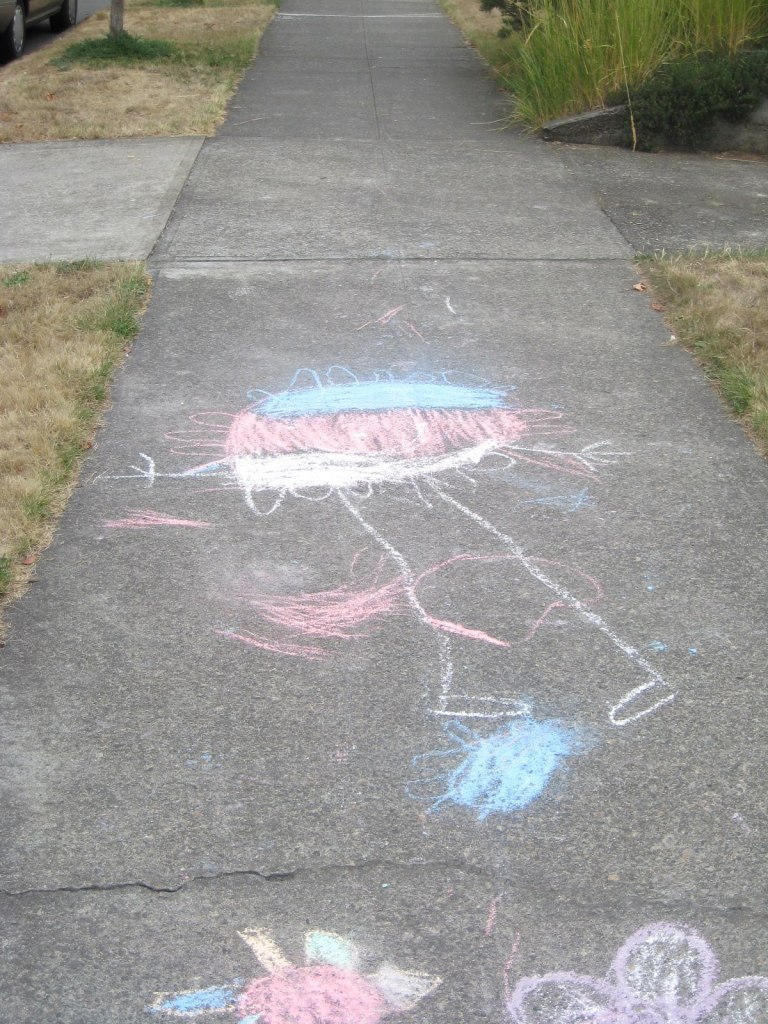
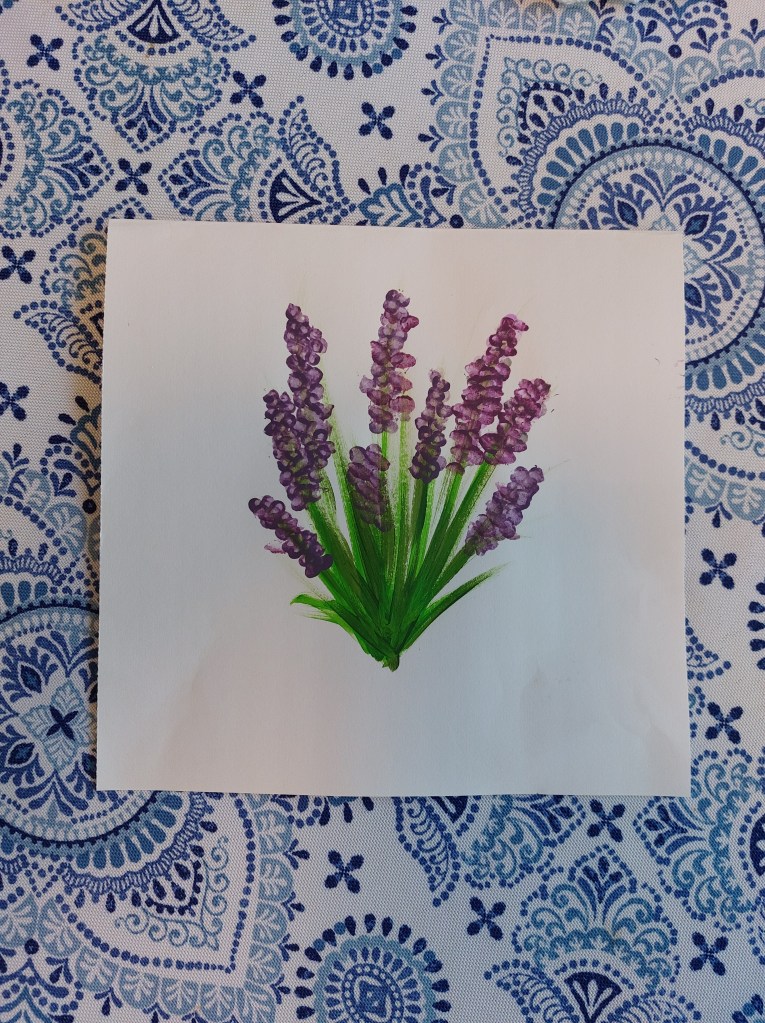
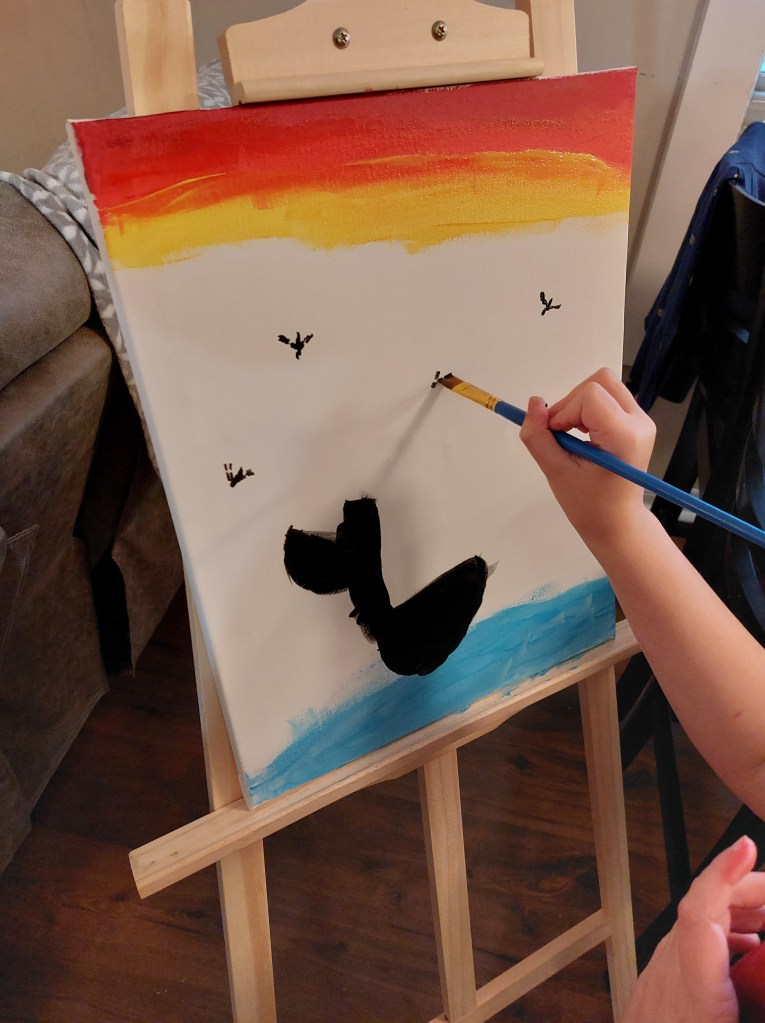
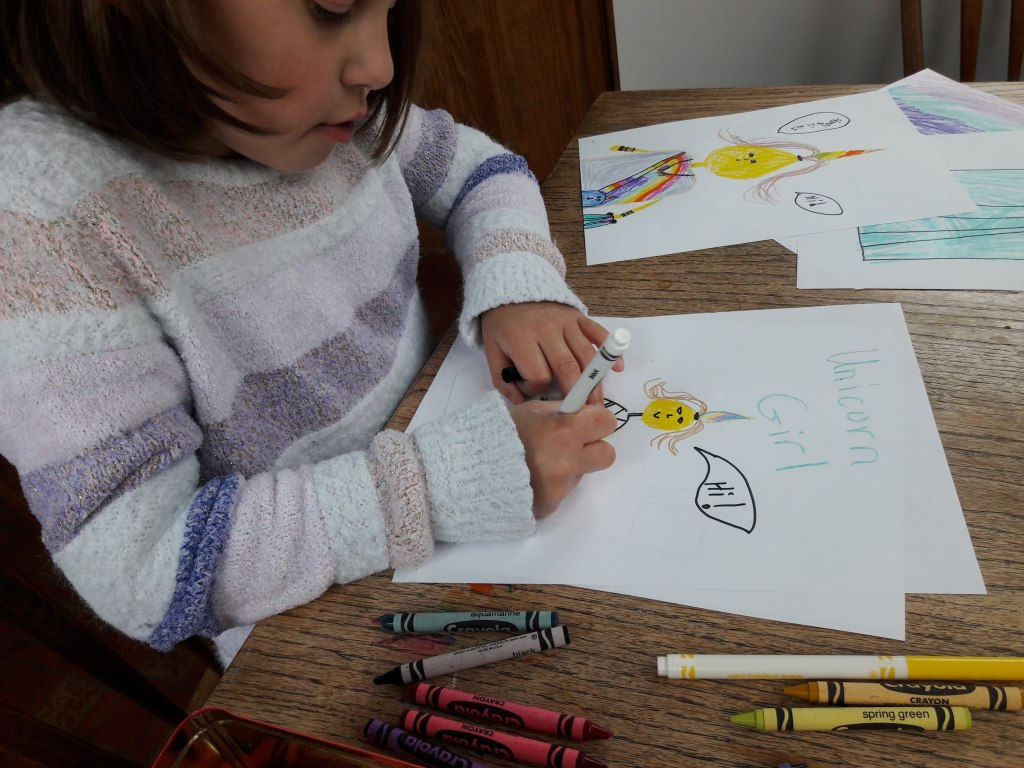
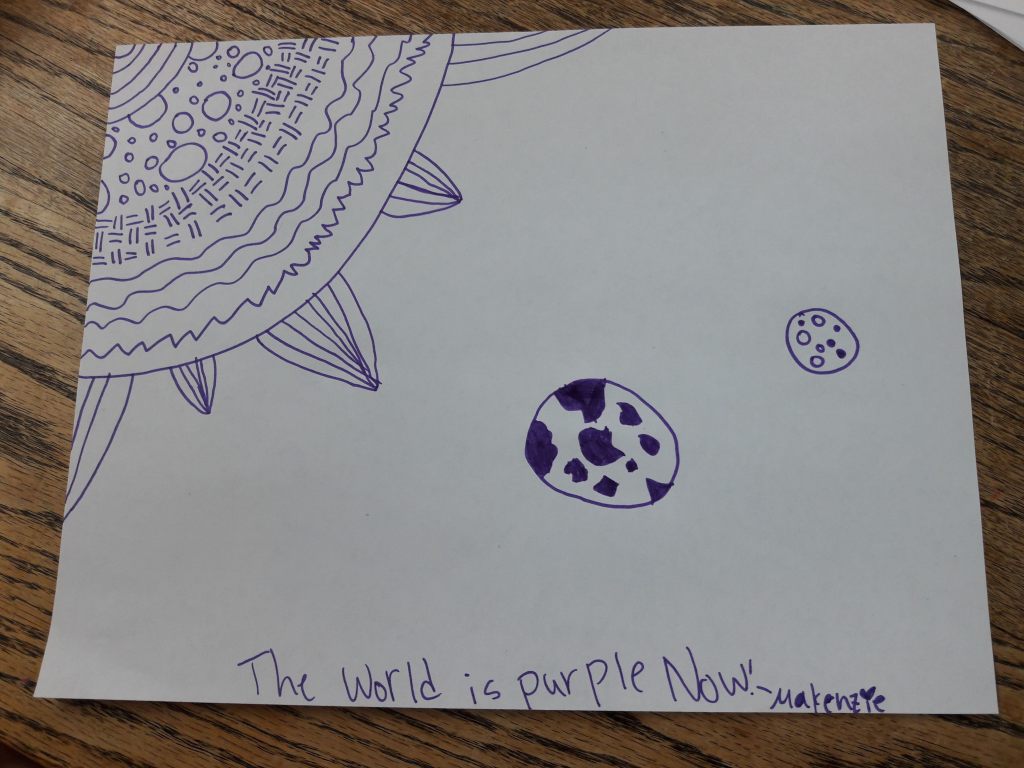
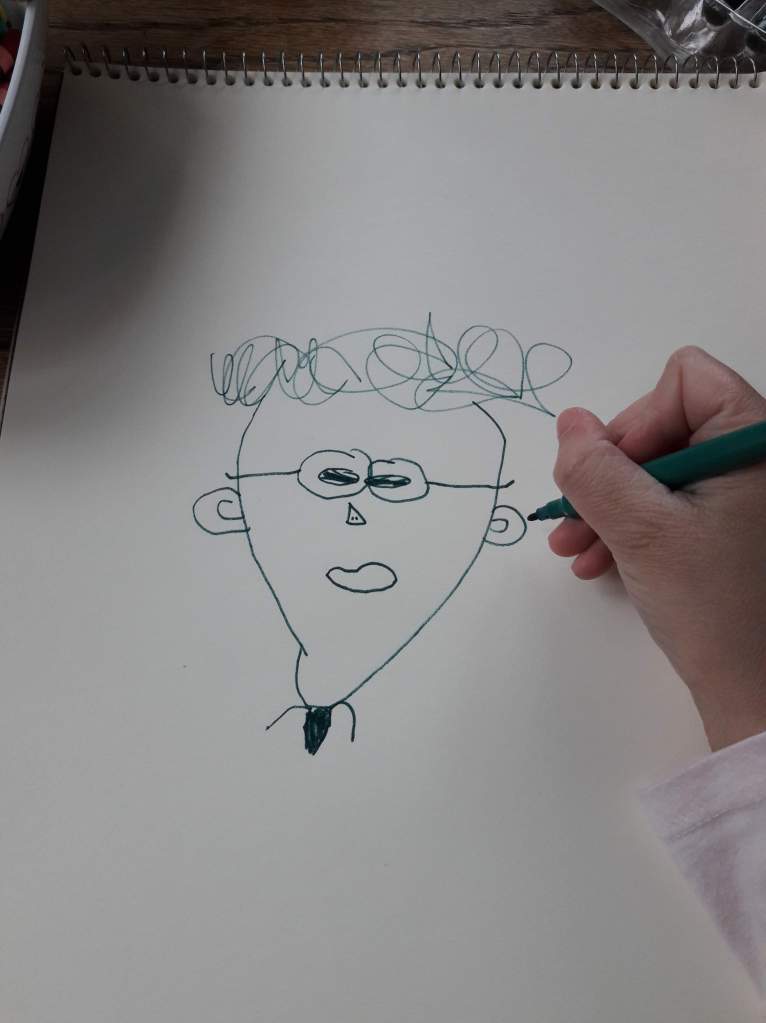
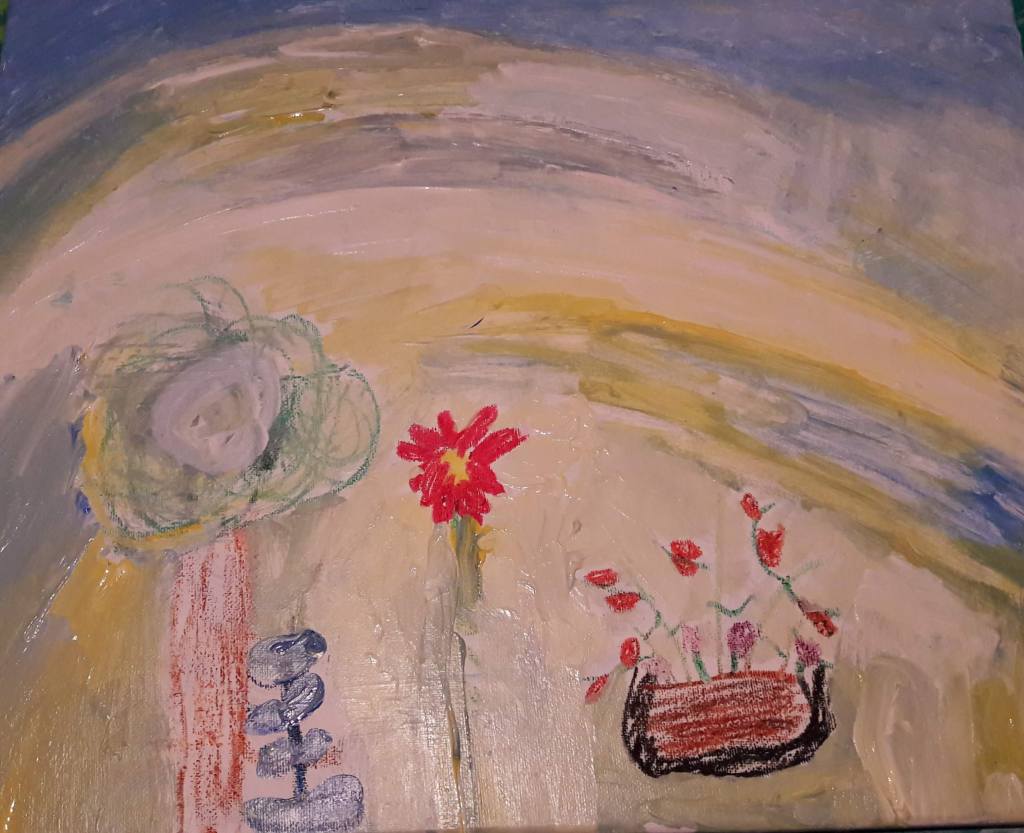
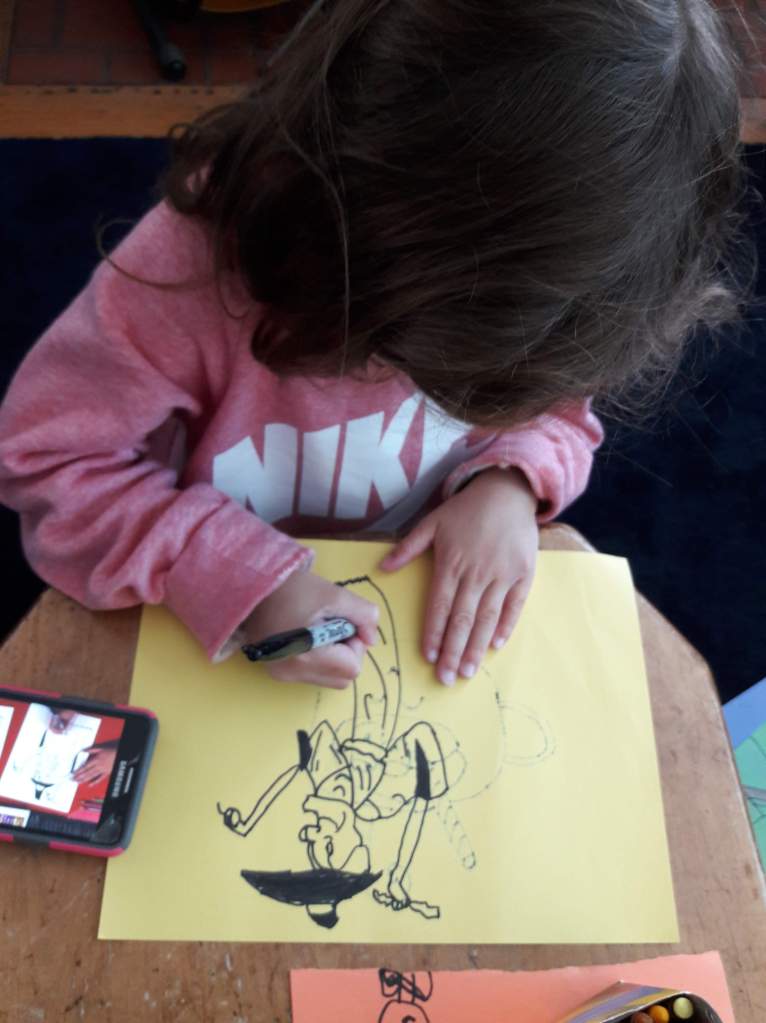
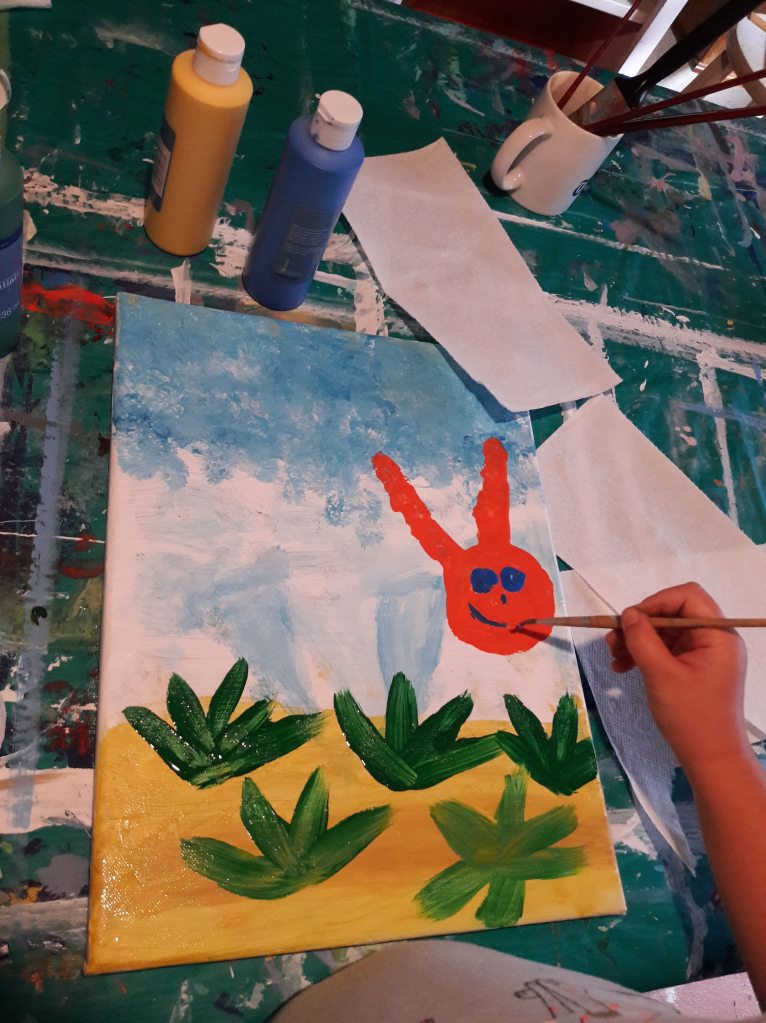
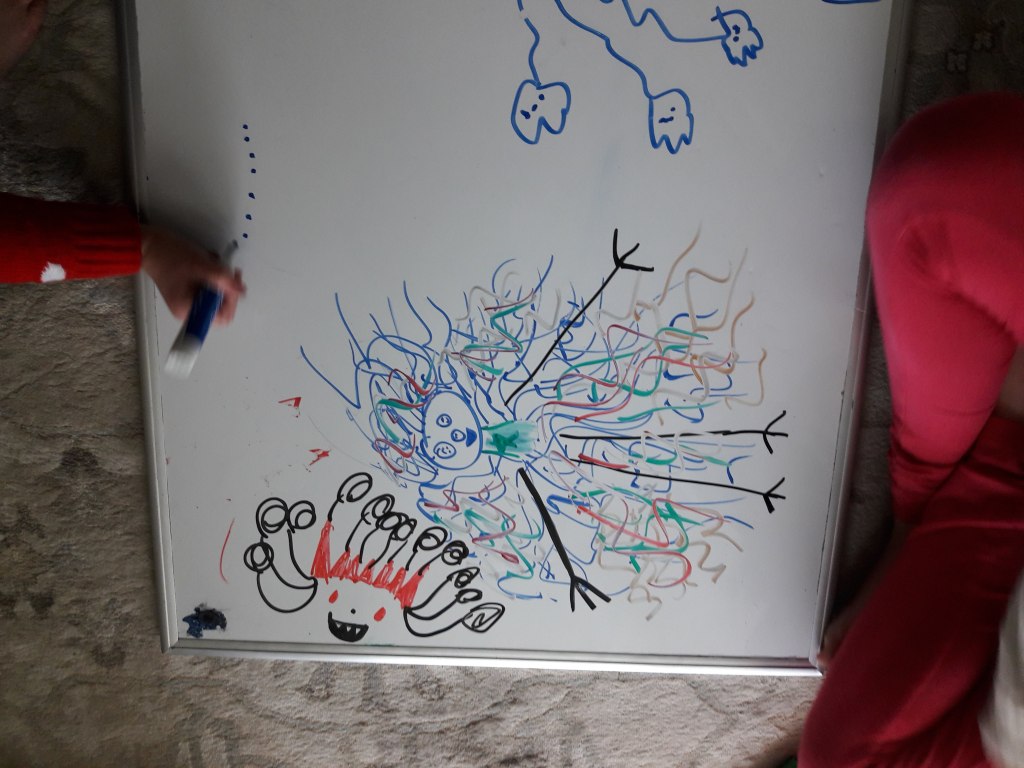
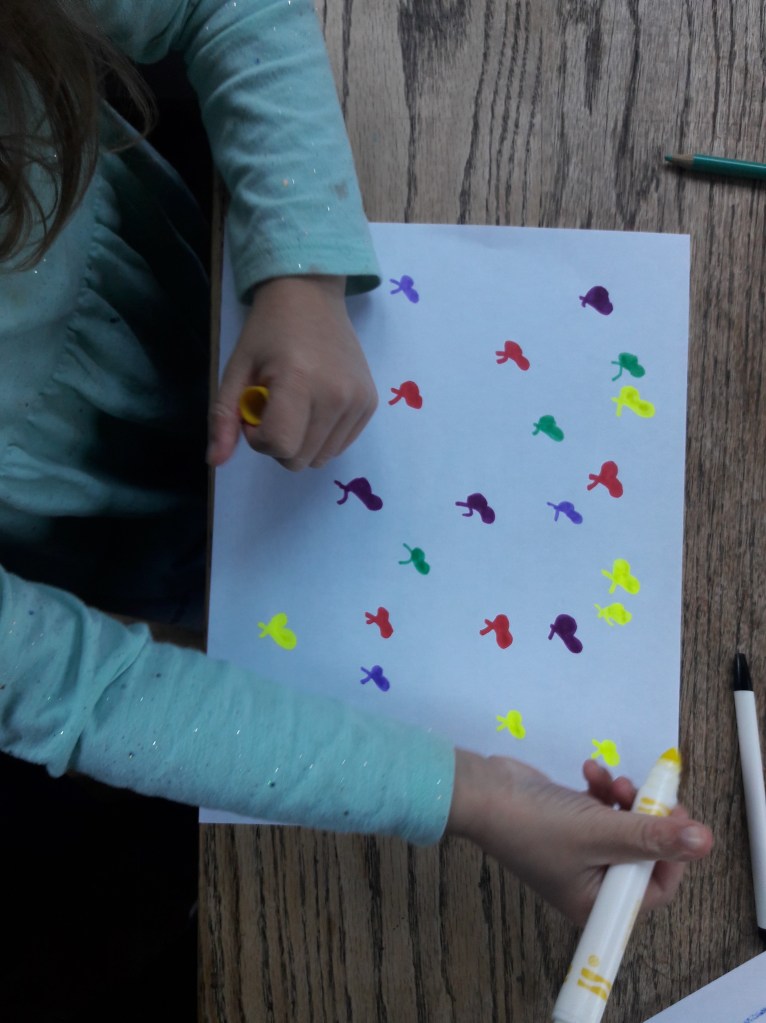
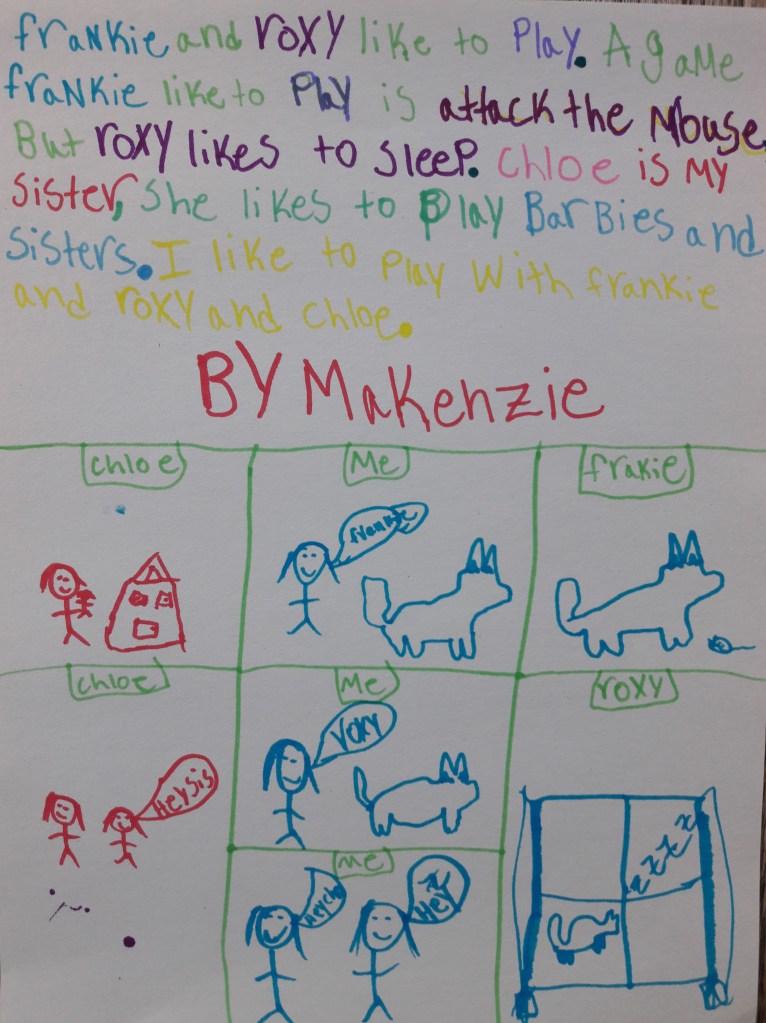
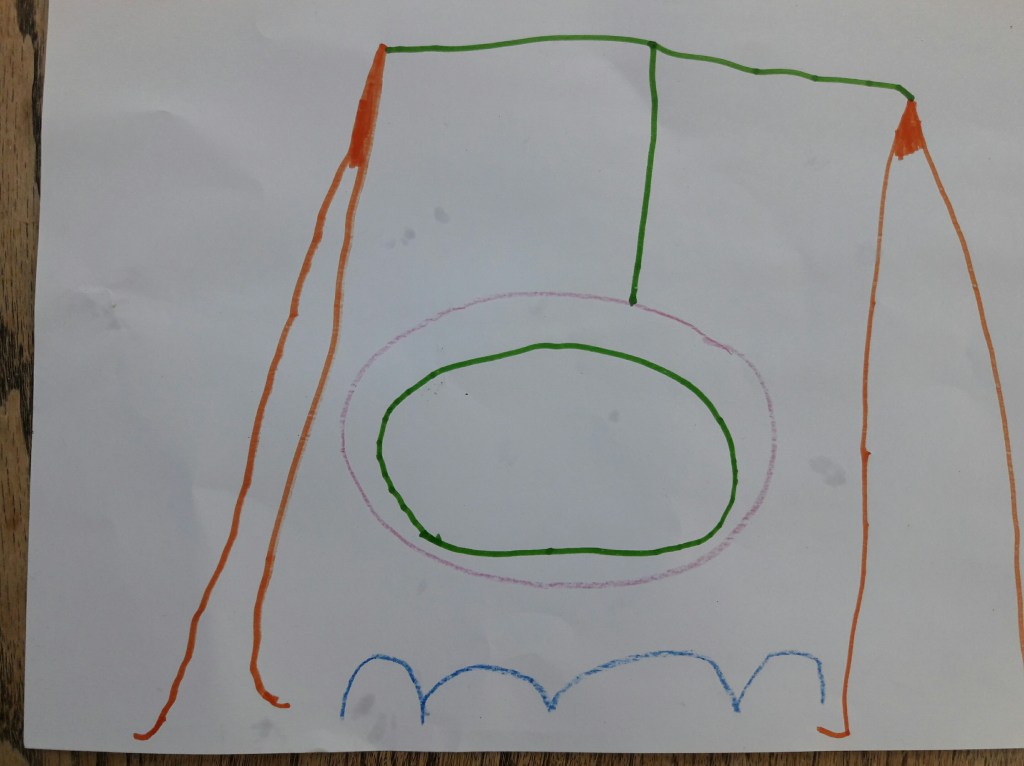
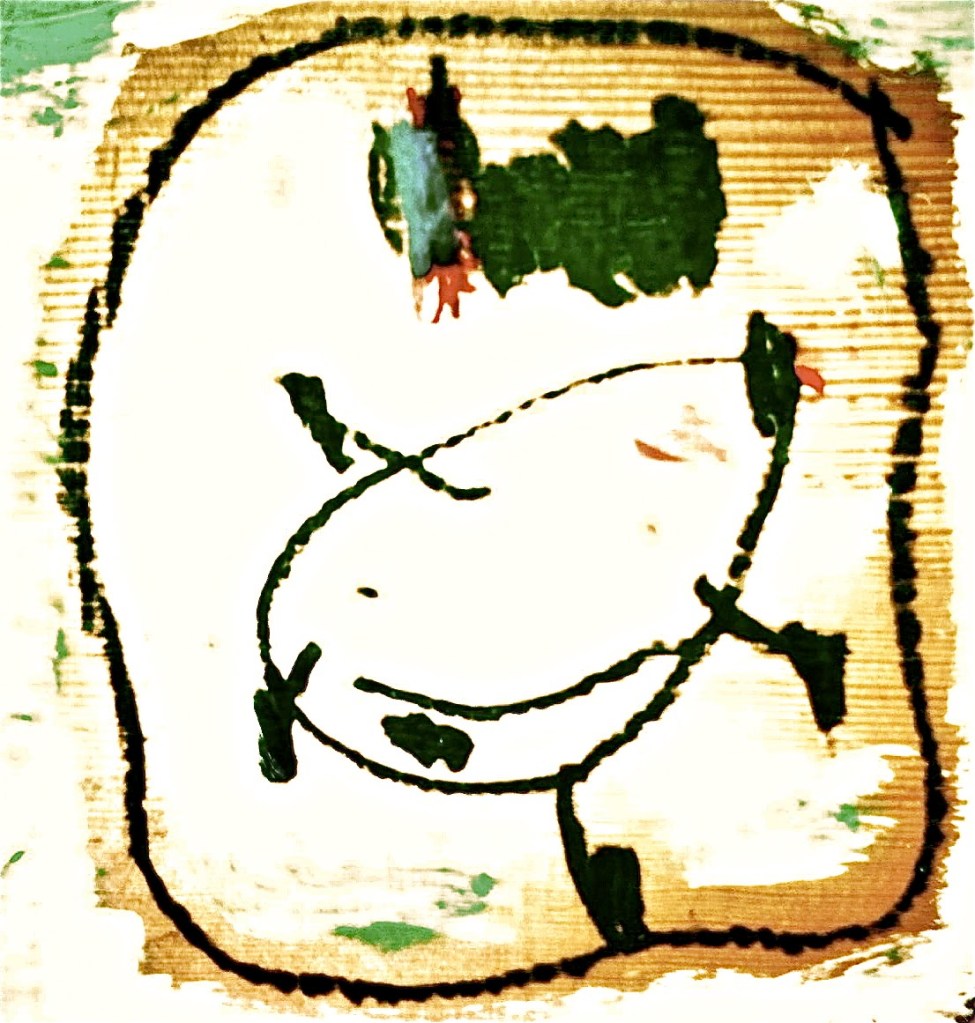
When my granddaughters were younger, we used to draw and paint using all kinds of materials. It wasn’t work for the sake of the piece, but work for the sake of work, which was play. As evidence of what doing work for its own sake might look like, here is a photo of the kids drawing on a whiteboard. Everyone knew that at some point it would all be erased. They might have saved it for a day or two, until the next exercise opportunity arose. I may have cheated the system by taking a few photos of some of the drawings, thus turning the play into work for its own sake. But that’s my problem, not theirs:
That original work has now disappeared, and I doubt we could bring it back without, as Adrian says, somehow putting ourselves “back into that earliest creative mindset.” If you can do that, then you might find a style.
Another example of style is found in Raymond Queneau’s book “Exercises in Style.” The same short description of the brief interaction of two characters on a morning bus is repeated 99 times, each time using a different “style.” In other words, the same story is told in different ways. But if a story is told in a different style, is it the same story? Cartoon drawings provide the first letter of each word of each chapter’s short title. Some examples of the one-word titles: “Precision”; “Anagrams”; “Blurb”; “Passive”; “Speaking personally”; “Comedy”; “Biased”; “Tactile.”
Can a style be created using rules? Yes, and that has created much confusion over what’s right and acceptable in given contexts or venues but that might not be right or acceptable in others. Style is often confused with etiquette. It might even be confused with intelligence.
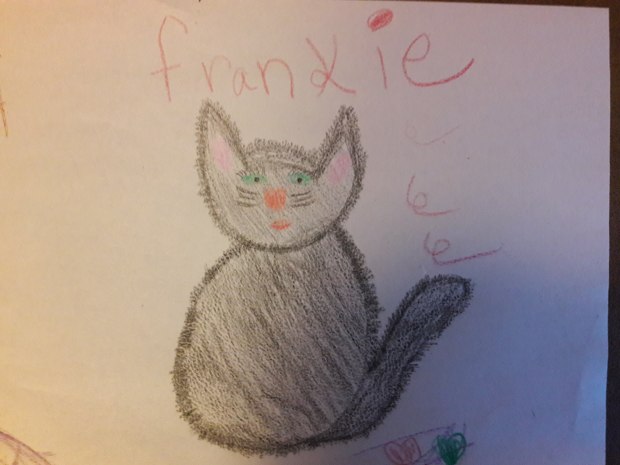
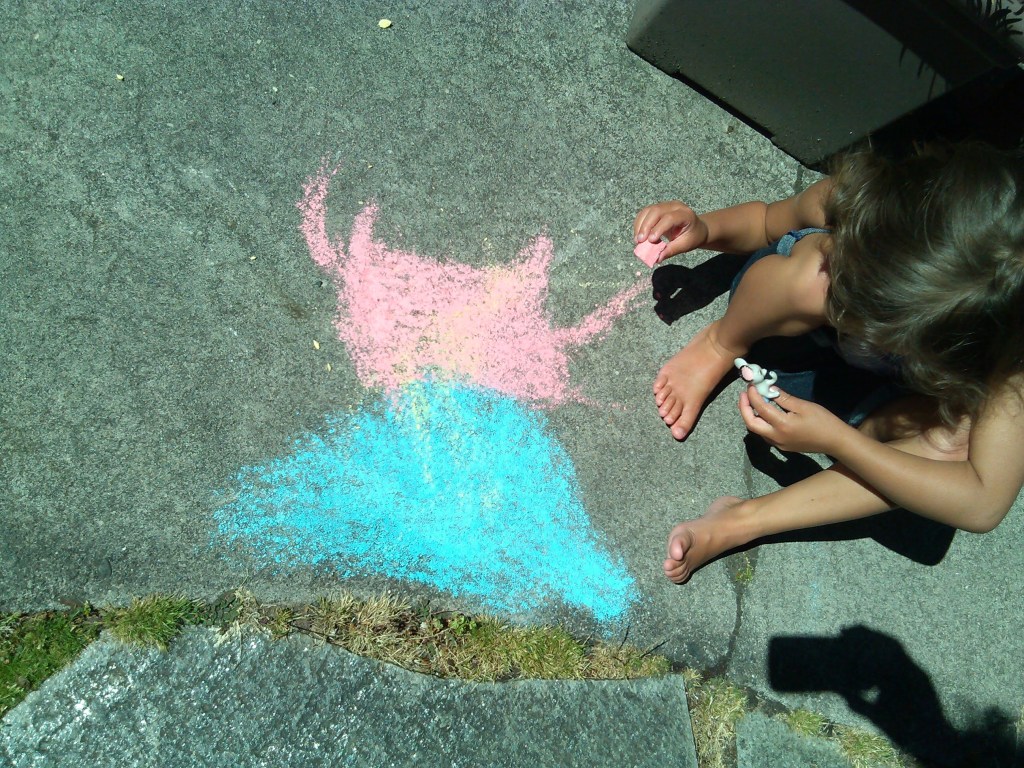
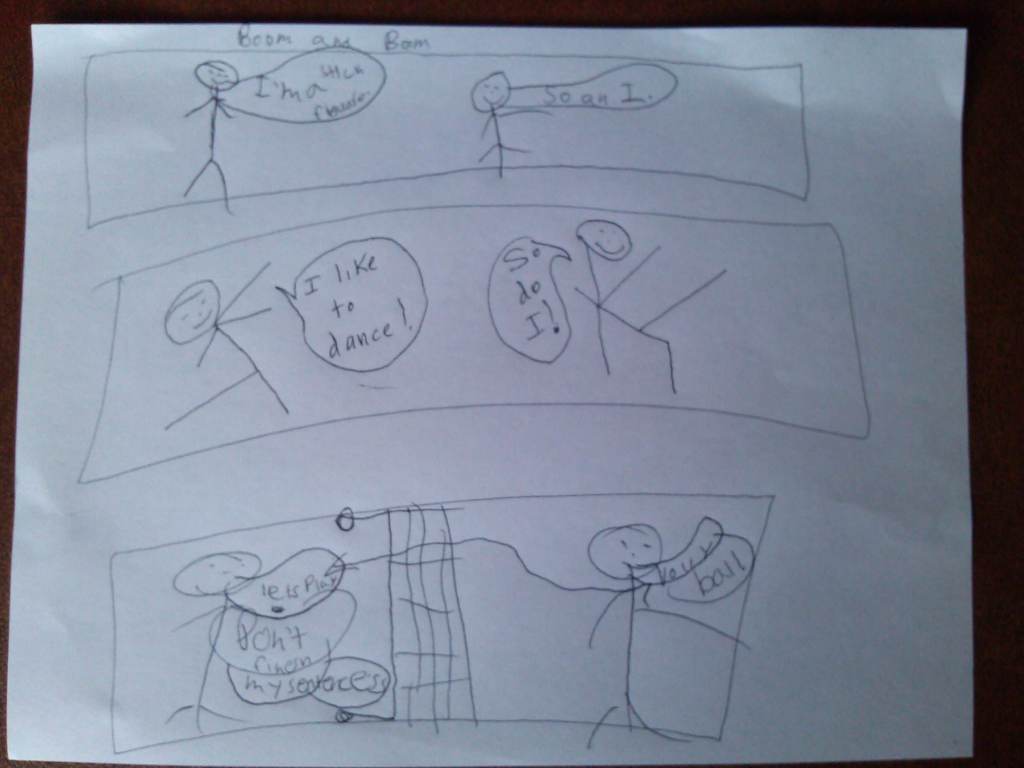
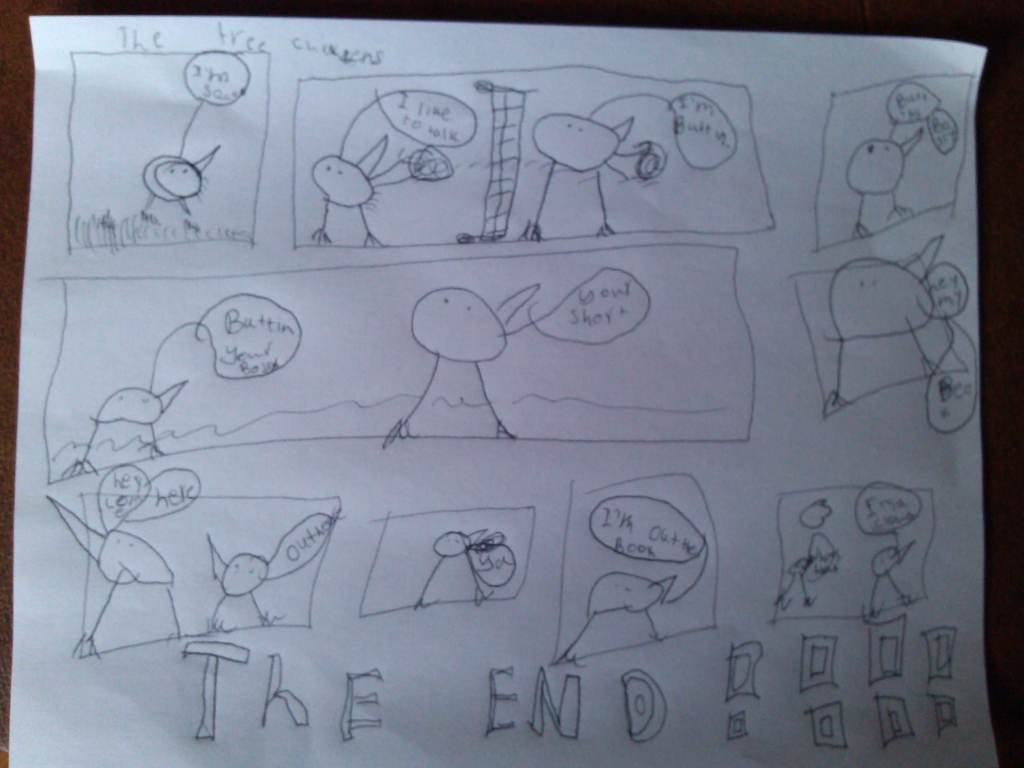
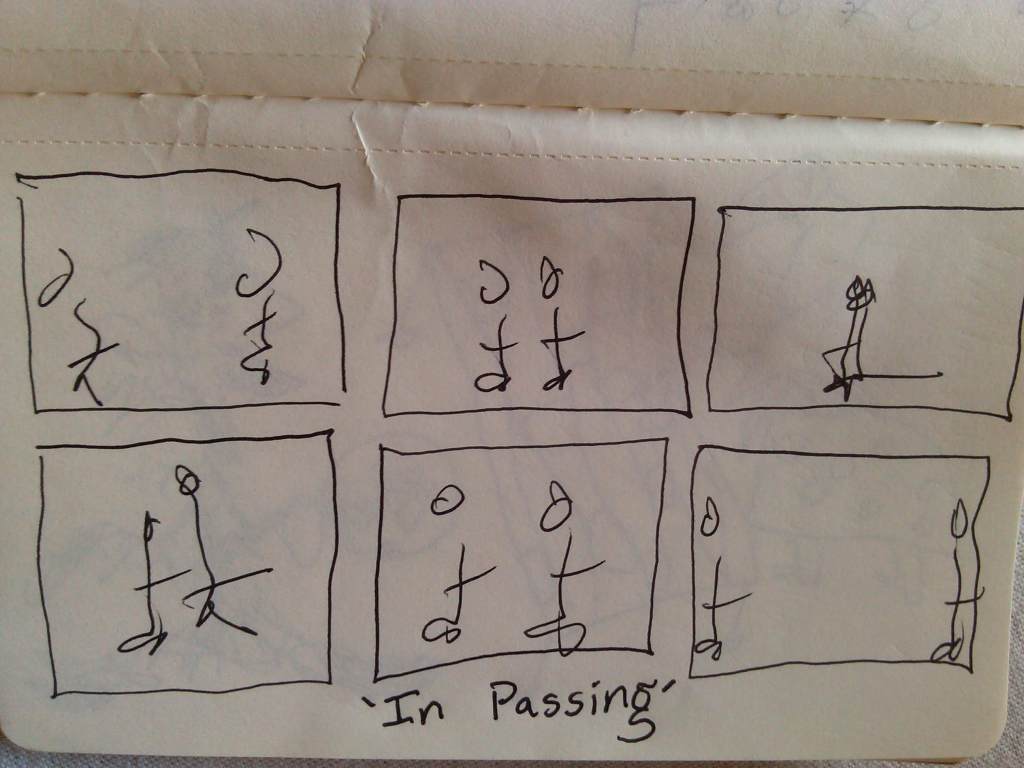
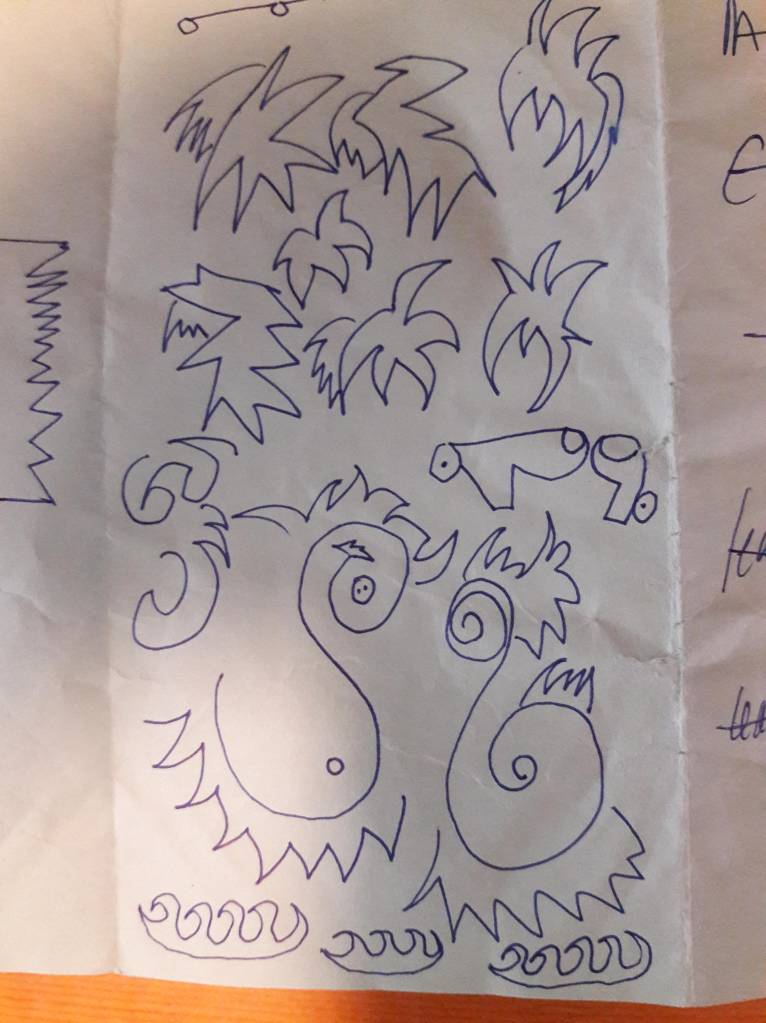
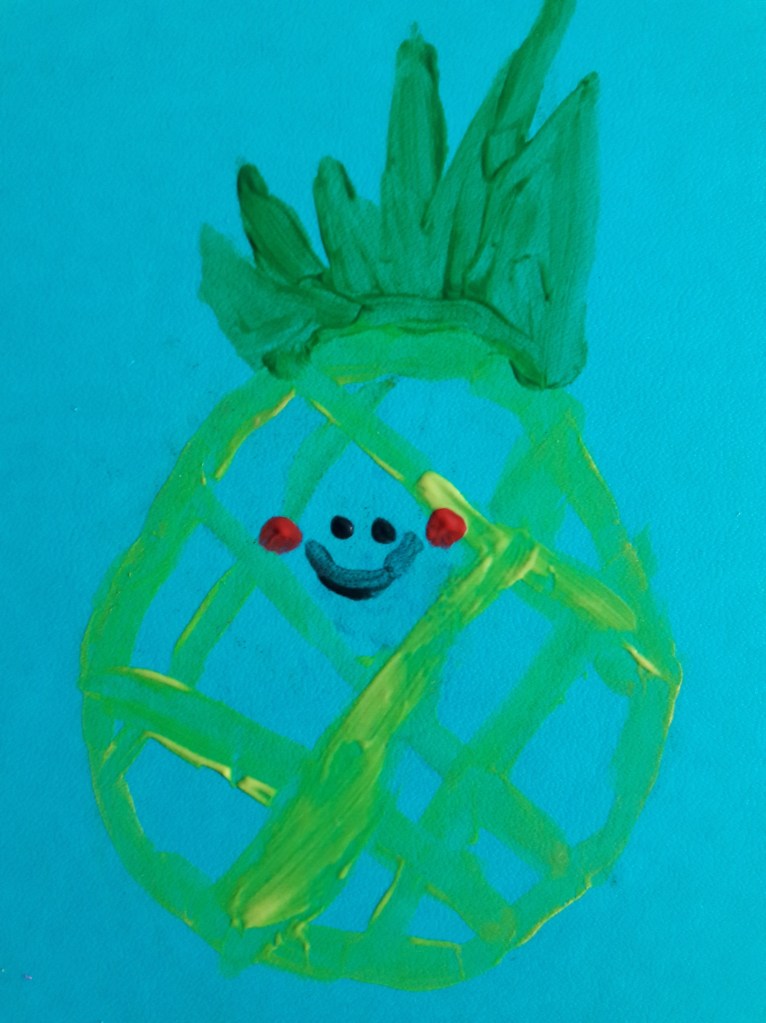
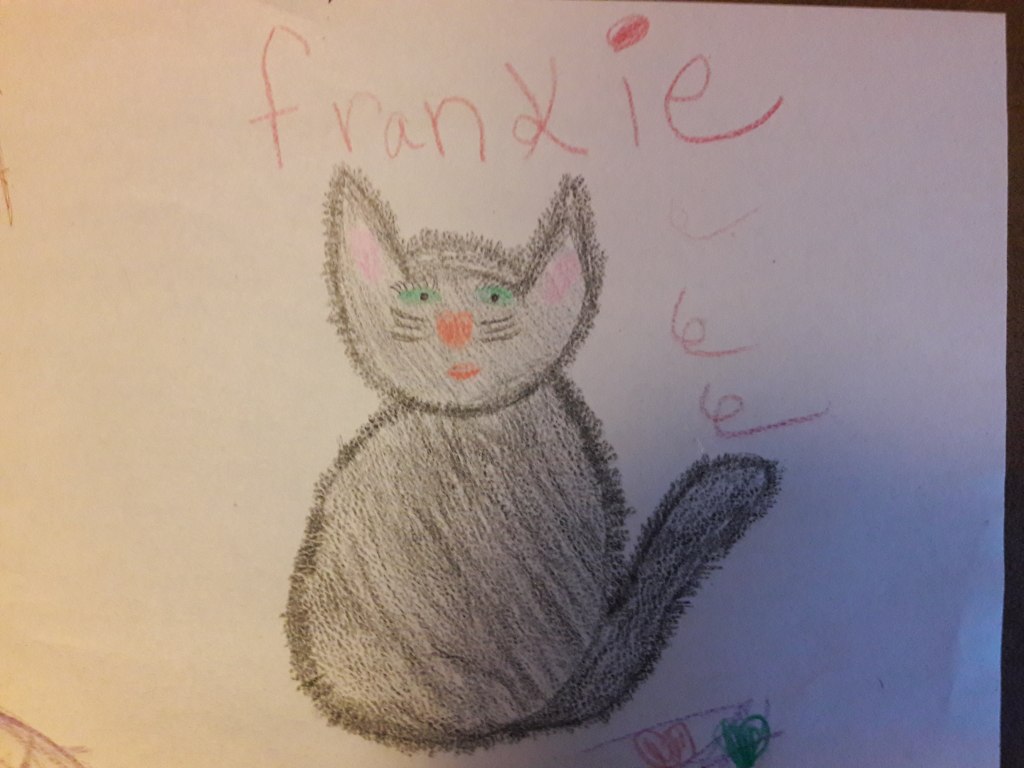
Here is a slideshow of photos, cartoons, and comics in styles we used to use:
~ ~ ~
“Q & A” was published by Drawn & Quarterly in October 2024. I wrote about it here.
“Exercises in Style” was first published in French in 1947. New Directions published a translation in 1981 (NDP513), and a new version in 2012 (NDP1240), which includes additional exercises.

 The Coming of the Toads