Tag: Literature

  • Writing Books

    It took writing and publishing eight books before I learned what Huck did after one:

    “… there ain’t nothing more to write about, and I am rotten glad of it, because if I’d a knowed what a trouble it was to make a book I wouldn’t a tackled it, and ain’t a-going to no more.”

    On that note, somewhat similarly, Anita Brookner’s “A Start in Life” begins:

    “Dr Weiss, at forty, knew that her life had been ruined by literature.”

    My life’s not in tatters due to books, but I would have a very different life had I, like my father, never read a book. But that’s the subject of another book, which I probably won’t write.

    The eight books are all different in scope and form (four are novels, two poetry, one a children’s book, and the last a collection of odds and ends). Below are brief summaries of all eight books with cover pics and links to Amazon. I really don’t think any will spell anyone’s ruin. And you might even enjoy them, though that’s not guaranteed.
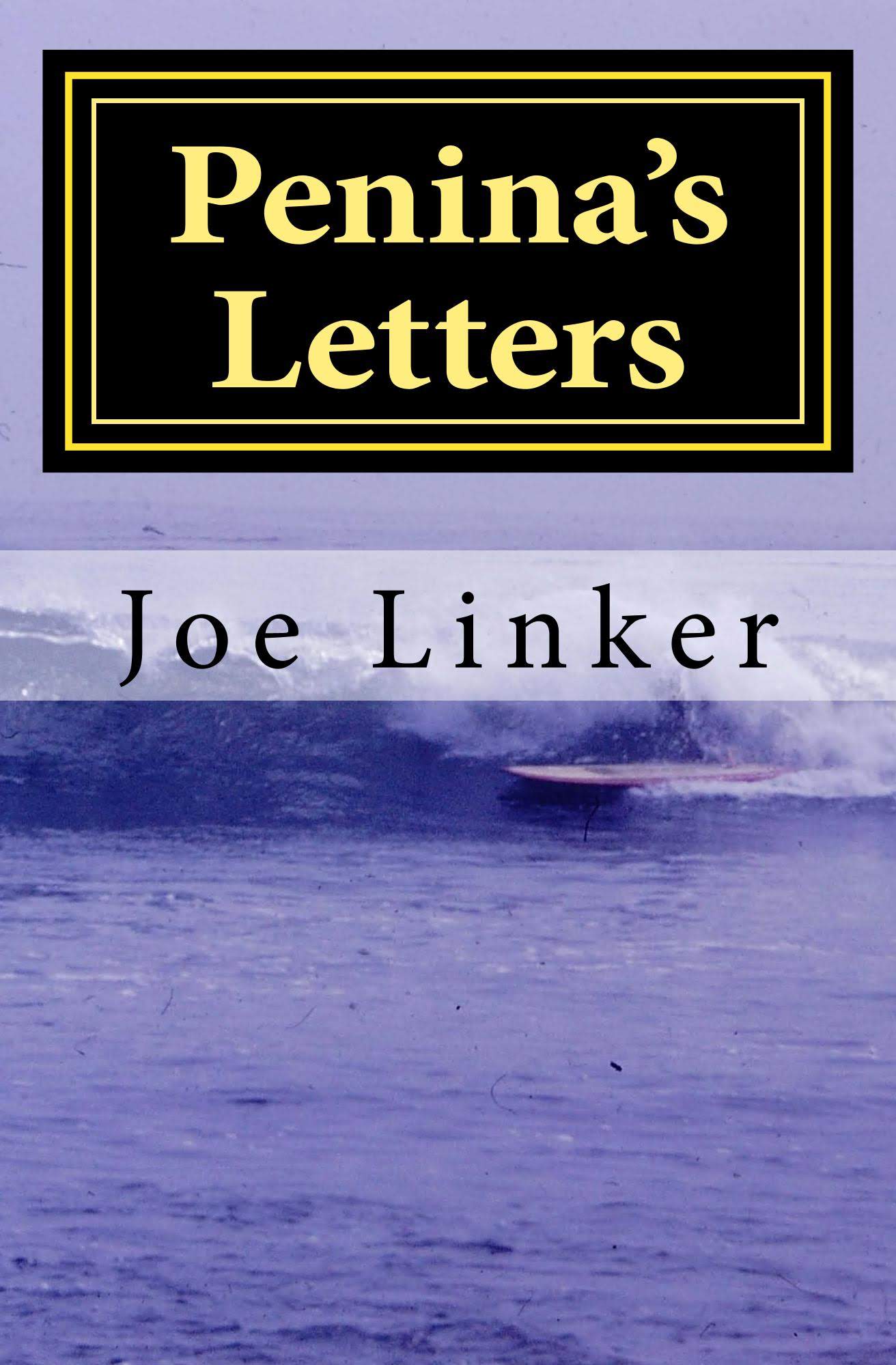

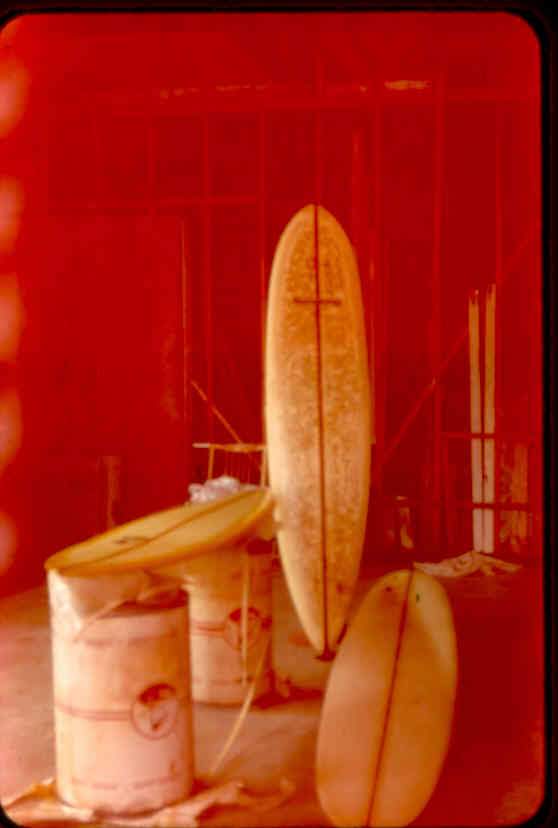
    Book cover for "Penina's Letters" by Joe Linker, shows a surfboard with surfer sliding off into the breaking wave, photo taken with an Exakta 500 in 1969.

    Penina’s Letters”

    Salty hopes for a quiet return to his old life. Instead, he is thrust into a chaotic homecoming party at Puck Malone’s surfboard shop, where the intense, romantic, and often surreal letters he wrote to Penina from the war zone are passed around and read aloud, introducing the rift between his romanticized longings and the discord of the present. What he does next surprises everyone:

    “All the fuss and hullabaloo, and a war just peters off. But none of that matters here. This isn’t going to be about the war. I don’t have any gory stories, nothing painting war as hell. Hell is an ocean with no waves. This is going to be about surfing and how I paddled out to live on the water after throwing Penina’s letters off the end of the Refugio jetty.”

    Set in the surf-soaked culture of late 1960s Santa Monica Bay, “Penina’s Letters” follows Salvador Persequi’s homecoming weeks as he trades the grease and grit of the motor pool for the familiar scents of sea salt and surfboard resin in Refugio, navigating a landscape of changed lives, fractured loyalties, and the “sound effects” of a mind still adjusting to the silence of peace and the noise of the ocean.

    Buy “Penina’s Letters” on Amazon


    Book cover for "Coconut Oil" by Joe Linker shows a photo by the author of a tree outlined with the shadow of a person, with  mushrooms like bird eggs in a chest-like opening.

    “Coconut Oil”

    Penina and Salty return to Refugio, a fictional beach town on Santa Monica Bay, forty years after the close of “Penina’s Letters.” Married for decades, they come back to a community altered by time, pressure, and quiet need, where questions of belonging and responsibility surface in daily life. As a nearby homeless encampment and a young girl named Waif enter Penina’s orbit, the boundaries between private marriage and public obligation blur. Lyrical but grounded, reflective, quietly and wryly comic, this character-driven but experimental novel explores marriage, community, and displacement.
    Buy “Coconut Oil” on Amazon


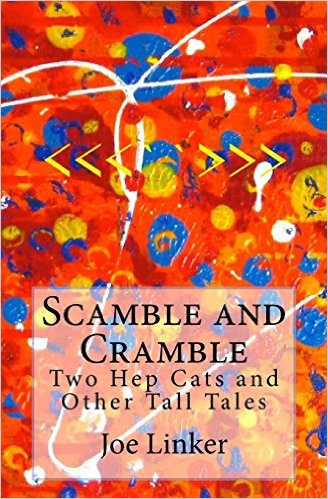
    Cover photo of "Scamble and Cramble: Two Hep Cats and Other Tall Tales" by Joe Linker. Photo is of a colorful painting by the author titled "Portrait of Zoe."

    “Scamble and Cramble”

    Scamble is a hep cat with stripes moving in every direction, while the wiry, frazzled Cramble often finds himself sitting in the shape of a literal ampersand. The cats are featured in this collection of “tall tales” that uses concrete poetry techniques (created with standard keyboard symbols and accessible fonts) to bring a cast of characters to life, including Emmet the Ant, who marches across pages of the book, Peepa and Moopa, two true friends building sandcastles by the surf, Frankie and Roxy, sisters discovering the difference between the “inside” and the “outside,” Ms. Dress and Mr. Shorts, who enjoy “garage sailing” and tea time, and Juicy Droolzy, the dog from across the street who is “all over the place.”

    From the high-flying adventures of ZZ swinging over the moon to the poignant memories of Oliver the orange tabby, the stories celebrate the curious, playful, and sometimes moody nature of our feline friends. Whether it’s a “Punctuation Parade” or a quiet moment in a “Portrait of Zoe,” this book is a children’s work for readers of all ages.

    “What a hep cat is and what a hep cat does is the same thing…”
    Buy “Scamble and Cramble” on Amazon


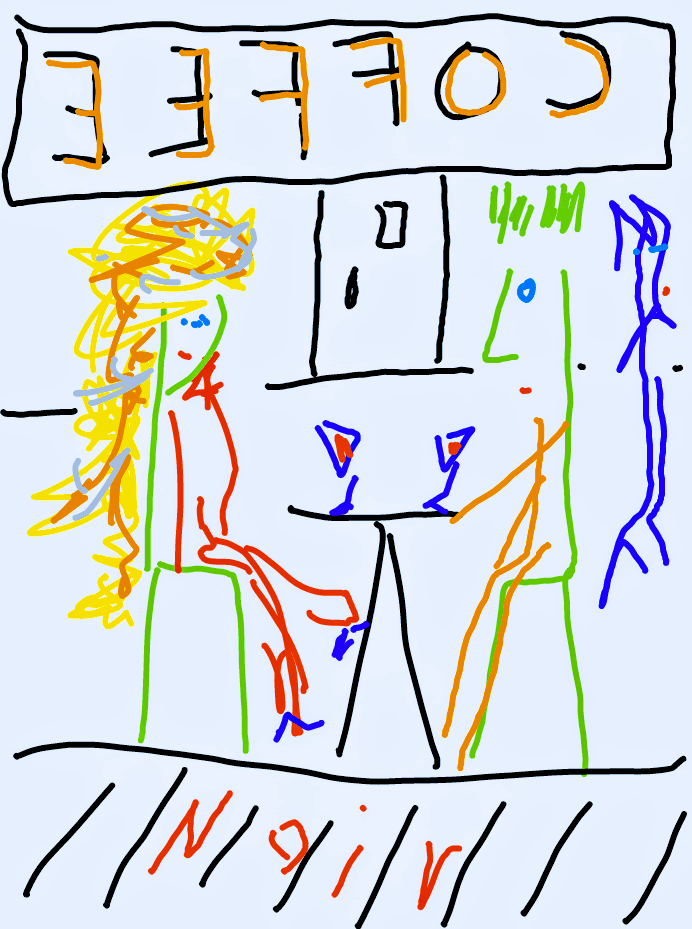
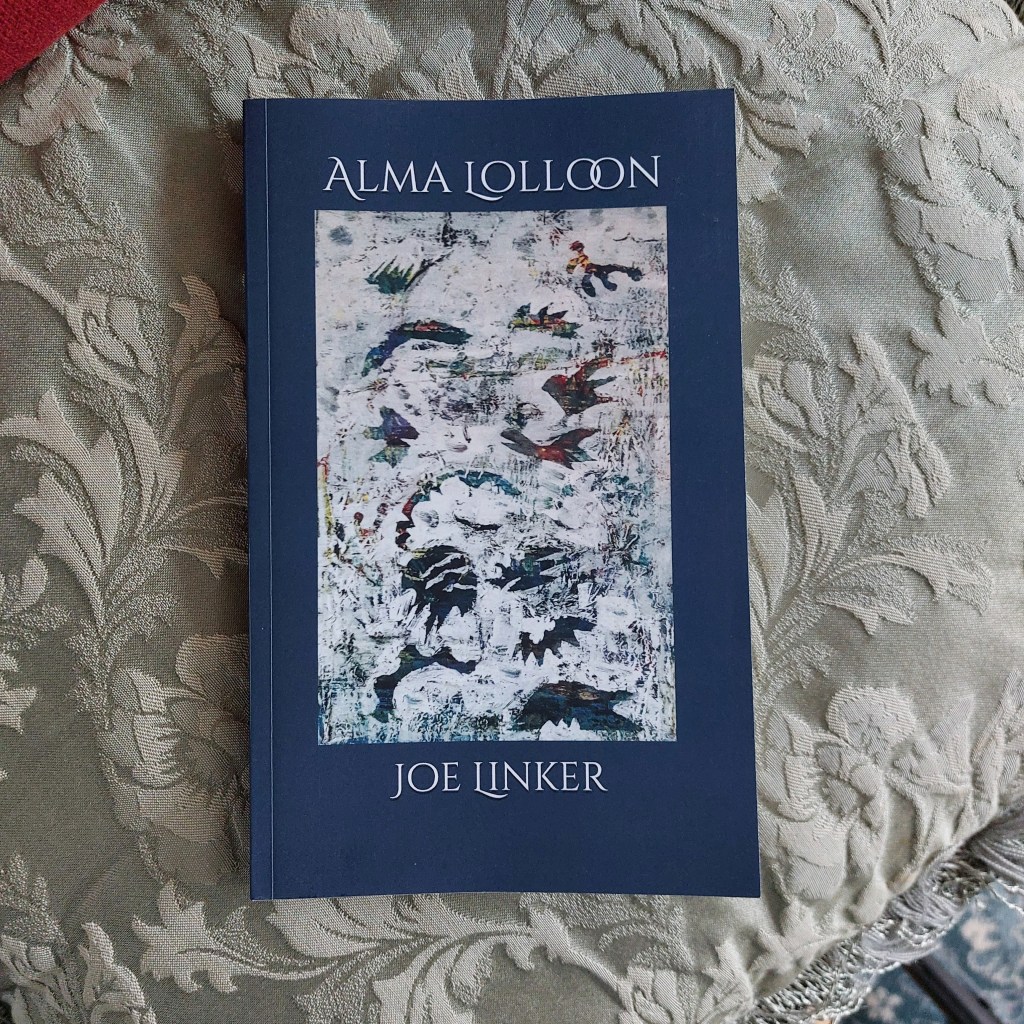
    Copy of "Alma Lolloon" by Joe Linker, book on pillow, its cover an untitled abstract painting by Joe of bird and fish shapes floating.

    “Alma Lolloon”

    Alma Lolloon is a career part-time waitress, a five-time widow, and an aspiring novelist with a “work-in-progress.” Saturday mornings, Alma meets with the “knitting ladies” at local coffee shops to read her latest chapters. What follows is a sharp-witted, metafictional journey through the red dust of memory, marriage, and the struggle to find one’s own voice.

    “Experience, though noon auctoritee / Were in this world, is right ynogh for me / To speke of wo that is in marriage…” (epigraph from Chaucer’s “The Wife of Bath’s Tale”)

    “Alma Lolloon” is a satirical deconstruction of the literary world, seen through the eyes of a woman who knows about people from behind a diner counter. As Alma recounts her experience with her five husbands, from a soldier drafted to Vietnam to a corporate executive, she must contend with the biting critiques of her own audience, including the pedantic Hattie, who demands a “traditional plot” where Alma only offers raw experience.
    Buy “Alma Lolloon” on Amazon


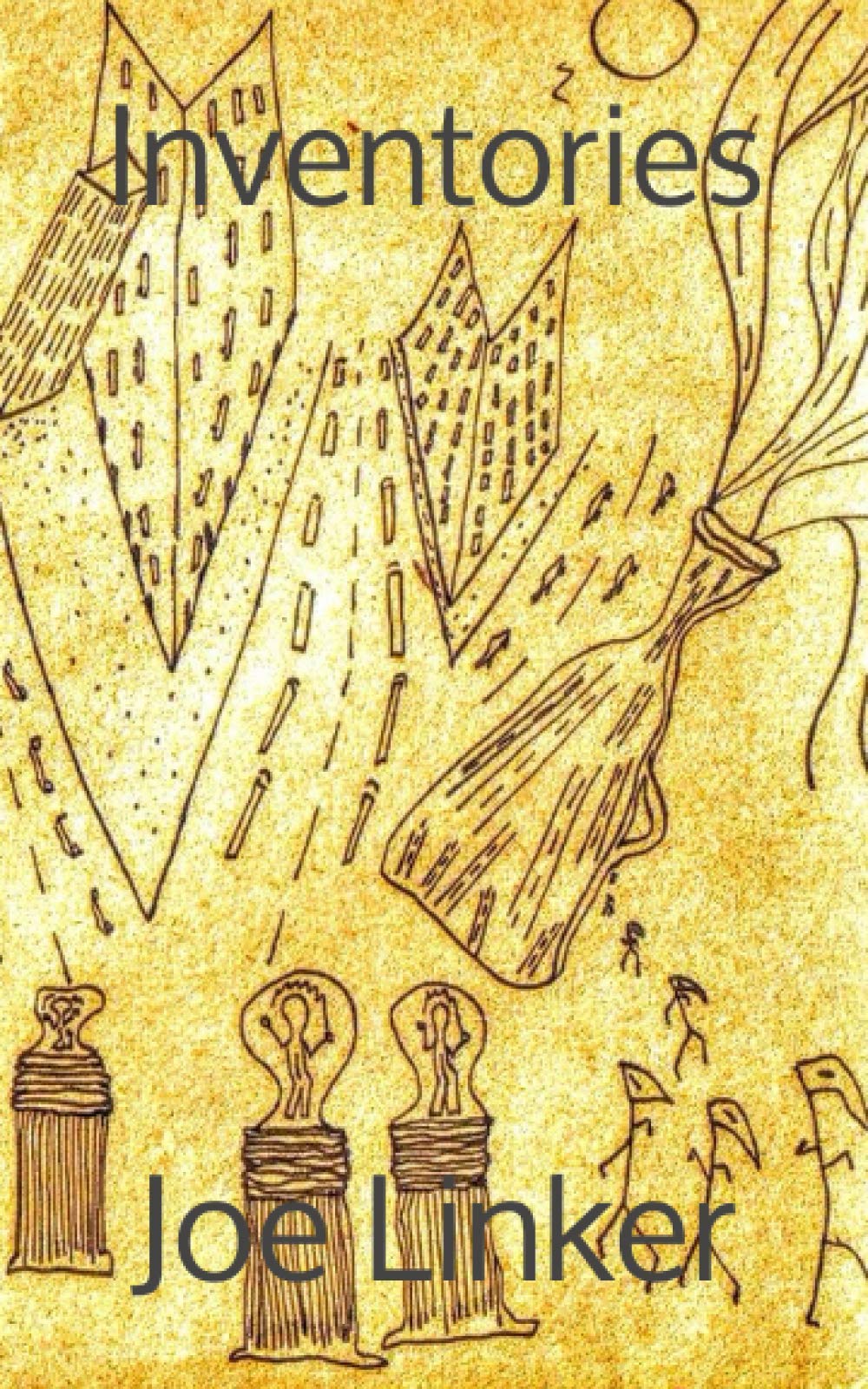
    Book cover for "Inventories" by Joe Linker is a wrap around cartoon drawing of a cityscape with animal like characters on the margins and a row of lightbulbs in the foreground with character shapes for filaments.

    “Inventories”

    “Inventories” is a surreal, genre-bending odyssey through the red dust of business, minor gods, and the ultimate search for simplicity. Glaucus is a mistake of the gods. Part human, part something else, he has the rare ability to change his size at will, though the cost of energy is high and the results are often random. Working as an in-house Risk Manager for an elite brokerage specializing in extreme and unusual risks, Glaucus finds himself gobsmacked when a massive $300 million transaction is hacked and vanishes into cyberspace.

    From the rain slicked streets of Seattle south to the sun drenched vine country of California, “Inventories” follows Glaucus on a picaresque trip to recover the missing file. Along the way, he encounters a cast of eccentric characters. Written in 81 “episodes,” “Inventories” is a philosophical exploration of agency versus accident, the absurdity of modern commerce, and the inventories we take of our own lives when we finally decide to walk away from it all.
    Buy “Inventories” on Amazon


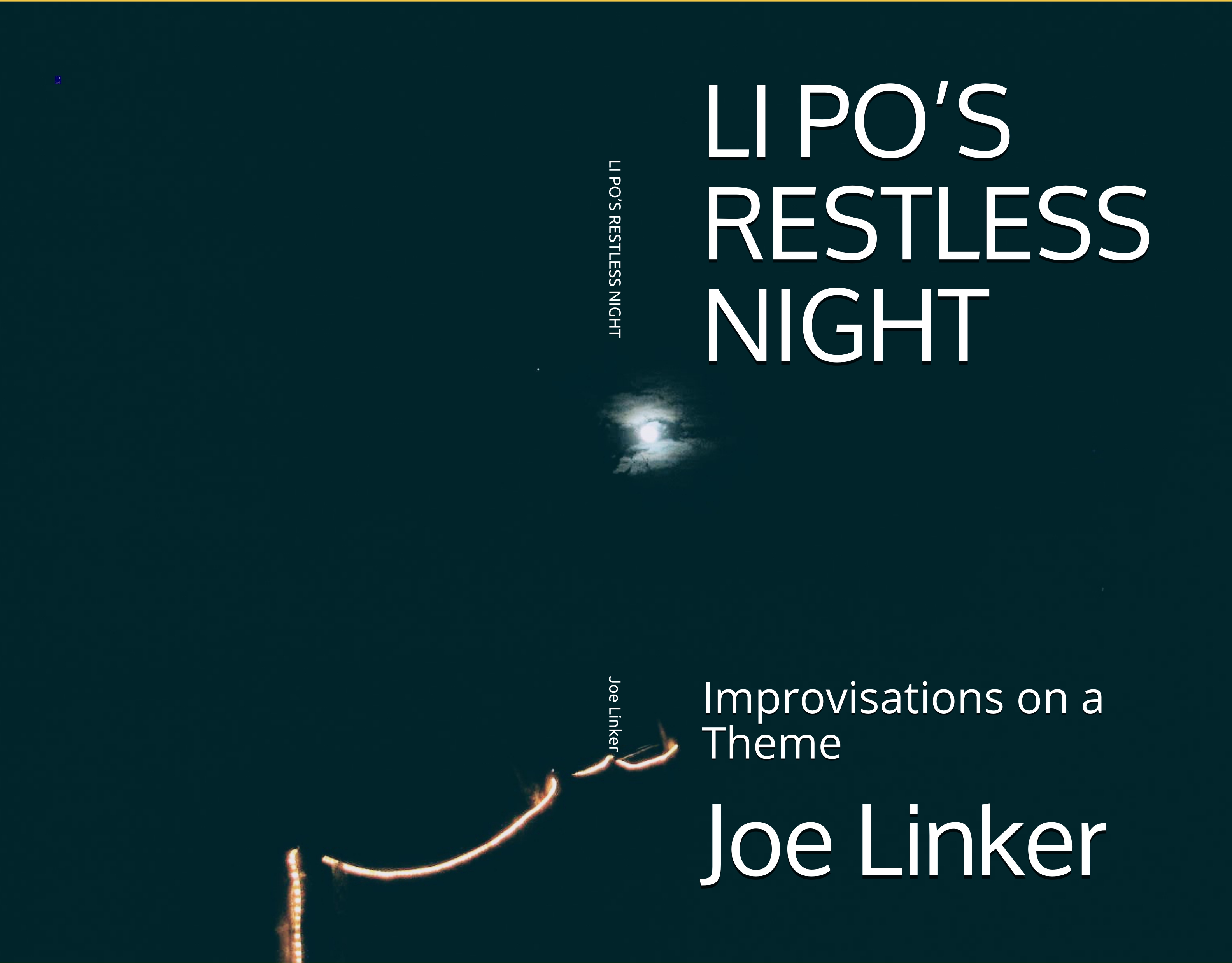
    Book cover for "Li Po's Restless Night" by Joe Linker shows a distant moon through clouds on a dark night, a string of outdoor lights at bottom, a photo used for the wrap-around cover.

    “Li Po’s Restless Night”

    What happens when an ancient Chinese poem becomes a lifelong obsession?

    “Li Po’s Restless Night” includes 101 variations on themes of exile, memory, and moonlight. Inspired by the classical Chinese poet Li Po’s famous work, the variations, or improvisations, explore a life spent between the rigid world of business and the fluid world of memory. From the barracks of Fort Huachuca to the lonely neon glow of modern motels, the poems navigate the space between who we are and where we call home. Includes an explanatory essay, a moving story of Florence, the student and teacher and friend who translates and introduces the Li Po poem, and a history of reading Li Po translations. “Li Po’s Restless Night” may interest students of classical Chinese literature or travelers looking for a companion on a sleepless night.
    Buy “Li Po’s Restless Night” on Amazon


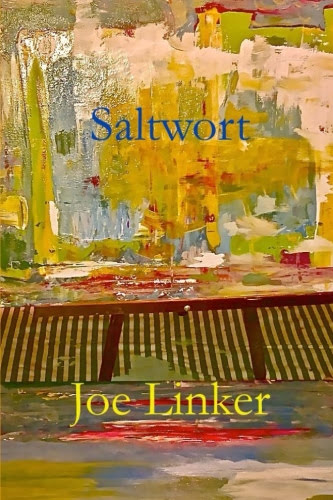
    Book cover for "Saltwort" by Joe Linker shows an abstract painting in the author's basement workshop.

    “Saltwort”

    SALT-SPRITZED AND WEATHERED, there is a seasoned quality to the writing in “Saltwort,” a fifty-year collection (1967–2017). From the surf-washed beaches of 1960s California to the “red dust” of the modern business world, these poems and prose pieces find the extraordinary in the mundane: a plumber’s van with a shelf for books among the tools, the ritual of Army coffee, the “frizzled” harvest of a pumpkin patch, and the quiet vertigo of an urgent care waiting room.

    FROM GRITTY REALISM TO SURREAL JAZZ RIFFS, the language of “Saltwort” is attuned to the music of the sentence. Whether riffing on Kafka or baseball, the voice remains unfiltered and honest. The collection features a delightful blend of humor, satire, and irony—including a sestina featuring Charles Bukowski, a form the “brewed bard” likely never used, which transforms into a lyrical, gutter-full beauty. Guided by a foreword from Salvador Persequi (of “Penina’s Letters”), the reader is invited to take shoes off and paddle out.
    Buy “Saltwort” on Amazon


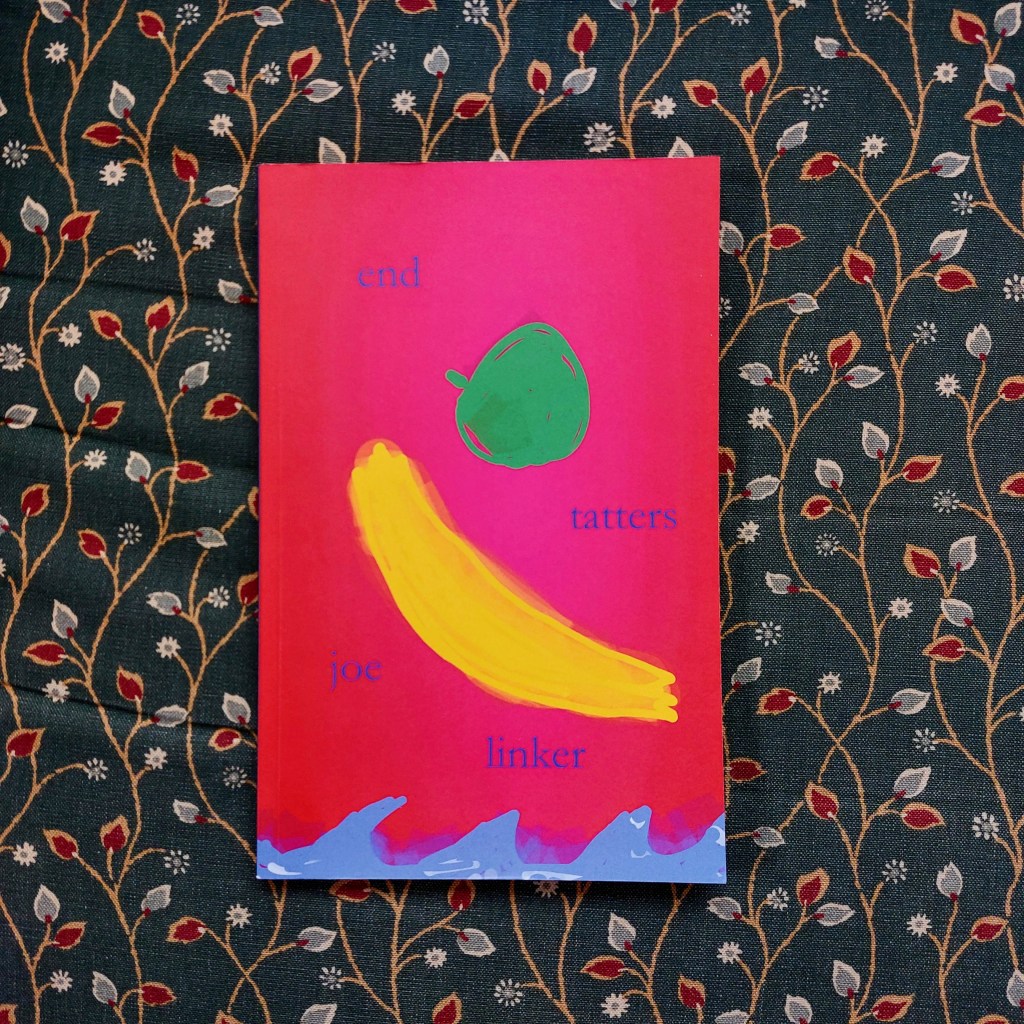
    Cover of "end tatters" by Joe Linker, copy of book on fabric of vines shows a green apple and a yellow banana suspended in a red sky over blue ocean waves.

    “end tatters”

    Short essays, fiction, and poems make up “end tatters.” New and Collected Writing.

    Buy “end tatters” on Amazon


  • Missing Links (and a Bots Update)

    At the end of the movie version of “The Wizard of Oz,” Dorothy learns from the good witch Glinda that she can get back home simply by clicking together the heels of her ruby slippers. What if the link is broken? She must also express the wish to get back home. The link from Dorothy’s line, “There’s no place like home,” to its source, may for some viewers be broken. It was for this writer. It’s an old sentiment, no doubt linked even further away than this:

    “Mid pleasures and palaces though we may roam
    Be it ever so humble, there’s no place like home
    A charm from the skies seems to hallow us there
    Which seek thro’ the world, is ne’er met elsewhere
    Home! Home!
    Sweet, sweet home!
    There’s no place like home
    There’s no place like home!

    John Howard Payne, 1823, “Home, Sweet Home”

    Blog links over time get broken, but you don’t know the link is broken until you click on it, resulting in reader frustration. Sources linked to get deleted, moved, paywalled – mysteriously disintegrate into the unfortunate 404 message, that what you’re looking for is not, down this passage, to be found. I don’t mind seeing links, and, in fact, often snap at them like a foraging fish, though links can be distracting, even if, maybe especially if, links go missing, and following links, one into another, one often wonders if one will ever get back home. I use fewer links than I once did. I’ve noticed readers don’t usually click my links anyway, assuming the stats catch such nibbles.

    Speaking of stats, I would be remiss, as the rhetorical phrase goes, were I not to mention that the bots recently flooding the blog stats have disappeared. For the past six days running, the tidal wave of views has dropped, the tide receding to beachcombing depths. The statistical tinnitus, the buzzing and hissing of the bots, the grunion runs in high tides, has gone silent. Many thanks to what WordPress Happiness Wrangler figured out a solution.

    There are also, of course, regarding missing links, connections that never actually existed, the friend, for example, that proves to be a missing link in one’s social chain-link fence. But who wants to be part of a chain-link fence? Or maybe that old friend simply drifted down river and out to sea. Those days you fell asleep in Grammar, and now you can’t recite, define, and give examples of the parts of speech, missing links in your learning. But in any case, the parts of speech have changed, the interjection now a missing link, while the comma can signal a missing link or itself be a missing link. A parenthesis unenclosed, dangling fore or aft; the shortstop who dropped the double play ball; the letters Salty wrote Penina – all missing links. Or the letter returned

    “to sender, address unknown, no such number, no such zone.”

    (from the Elvis song “Return to Sender,” Scott and Blackwell, 1962)

    At the beginning of Faulkner’s novel “The Sound and the Fury,” Benjy watches the golfers “through the curling flower spaces.” The golf course was built on Benjy’s pasture, sold to afford a year at Harvard for his brother Quentin, and when Benjy hears the golfers call “Caddie!” it reminds him of his sister Caddy. The curling flower spaces are the twists and loops of steel wire, the links, repeating zigzag shapes, of the chain-link fence now bordering the remaining, diminished land and the golf course. Benjy’s non-linear memory is full of sensory, associative links. When a link is lost, as Caddy has been lost, he’s confused and disoriented, as we all are when what links us together and makes us whole is lost or broken.

    Missing Links
  • Gentlemen Prefer Books

    Like real lives, a book’s life changes over time. And some are longer, others shorter, extreme change, usually passing out of fashion, or none at all. Or we might think of, as Henry Miller did, “The Books in My Life,” a book startling mainly for how bad it is, its list of books so obscure one wonders where to begin, but probably true to one’s own rambling random reading. Miller thought people read too much. Or, as for Ezra Pound, reading the wrong books is worse than reading none at all (as Henry Miller thought hypocrisy worse than bad manners). And of course Pound supplies us with a list of the right books.

    “For two gross of broken statues,
    For a few thousand battered books.”

    Hugh Selwyn Mauberley [Part I], Ezra Pound, 1920

    And having read a few of them, what to do with them, where to put them, bibliophile or purveyor, bookworm or hoarder. Bring the oldest to the front, begin again, but sitting there in that place on the shelf of history, still “botched,” or do you mean begin again with something new, with the old lies dressed in new fashion, under the clothes fresh off the catwalk the same bent cover boards framing a new fame.

    Such was the mental weather, under an atmospheric river, no less, as we made our way to visit one of the newly remodeled Multnomah County Library bibliothecas. Wandering among the few fiction book stacks, wondering how they decide among the thousands of books which ones to put out, a librarian, perhaps sensing we appeared lost in a woods, approached and asked if she could help. We asked her how they decided which books to shelve for physical browsing. Her answer, in short, involved automation and algorithm, referring to neither Henry Miller nor Ezra Pound. Yet we were surprised to find a 1955 first edition of Elizabeth Hardwick’s “The Simple Truth,” noteworthy but not necessarily read worthy. The librarian asked us what kind of book we were looking for. A book like a clean, well-lighted place, but we didn’t put it that way, and we left with, for us anyway, a terrible choice, which we’re now anxious to return.

    We had just finished reading aloud yet another book from the 1920’s, this one exactly 100 years old, and also part of our historical hotel reading project, “Gentlemen Prefer Blonds,” by Anita Loos. Of course we’d heard of it, maybe saw the movie, certainly heard the song famous from the Broadway play (1949), “Diamonds Are a Girl’s Best Friend.” Lorelei says in her entry of April 27th:

    “So I really think that American gentlemen are the best after all, because kissing your hand may make you feel very very good but a diamond and safire bracelet lasts forever.”

    The book, a diary novel, would today make for an interesting blog. Lorelei is an unreliable narrator, but at least she’s consistent. Part of the satire is that she’s a writer, by virtue of her actually writing, without ever having read a book.

    “A gentleman friend and I were dining at the Ritz last evening and he said that if I took a pencil and a paper and put down all of my thoughts it would make a book. This almost made me smile as what it would really make would be a whole row of encyclopediacs.” (Mar 16)

    There are only a couple of books Lorelei actually names; though quite a few are suggested indirectly. One that is mentioned directly follows, and her plan for reading it:

    “April 2nd:
    I seem to be quite depressed this morning as I always am when there is nothing to put my mind to. Because I decided not to read the book by Mr. Cellini. I mean it was quite amuseing in spots because it was really quite riskay but the spots were not so close together and I never seem to like to always be hunting clear through a book for the spots I am looking for, especially when there are really not so many spots that seem to be so amuseing after all. So I did not waste my time on it but this morning I told Lulu to let all of the house work go and spend the day reading a book entitled “Lord Jim” and then tell me all about it, so that I would improve my mind while Gerry is away.”

    The book was a gift from one of Lorelei’s gentlemen friends:

    “Well I forgot to mention that the English gentleman who writes novels seems to have taken quite an interest in me, as soon as he found out that I was literary. I mean he has called up every day and I went to tea twice with him. So he has sent me a whole complete set of books for my birthday by a gentleman called Mr. Conrad. They all seem to be about ocean travel although I have not had time to more than glance through them. I have always liked novels about ocean travel ever since I posed for Mr. Christie for the front cover of a novel about ocean travel by McGrath because I always say that a girl never looks as well as she does on board a steamship, or even a yacht.” (Mar 22)

    Lorelei’s interests in culture seem inexhaustible, and her number one gentleman very very much wants her to get educated.

    “And of course Mr. Eisman has sent me quite a lot of good books as he always does, because he always knows that good books are always welcome. So he has sent me quite a large book of Etiquette as he says there is quite a lot of Etiquette in England and London and it would be a good thing for a girl to learn.” (Apr 11)

    We quickly see that Lorelei talks about books more than she reads them. Her learning is experiential, anecdotal, though none the less purposeful and well learned.

    “I have decided not to read the book of Ettiquette as I glanced through it and it does not seem to have anything in it that I would care to know because it wastes quite a lot of time telling you what to call a Lord and all the Lords I have met have told me what to call them and it is generally some quite cute name like Coocoo whose real name is really Lord Cooksleigh. So I will not waste my time on such a book.” (Apr 12)

    There’s no question that diamonds are more valuable than books, or that reading and writing are both time consuming chores, so of course one should read only the best books.

    “So I told Major Falcon that I told Mr. Bartlett I would like to write the play but I really did not have time as it takes quite a lot of time to write my diary and read good books. So Mr. Bartlett did not know that I read books which is quite a co-instance because he reads them to. So he is going to bring me a book of philosophy this afternoon called “Smile, Smile, Smile” which all the brainy senators in Washington are reading which cheers you up quite a lot.” (Apr 14)

    The “Smile” book might be a reference to Wilfred Owen’s World War I poem of the same title, “Smile, Smile, Smile,” a contemplation in irony on those who died, published posthumously in 1920, Owen himself having died in the war, one week before the Armistice was signed.

    It might come as no surprise to the perspicacious reader that Lorelei is not her given name.

    “So it was Judge Hibbard who really gave me my name because he did not like the name I had because he said a girl ought to have a name that ought to express her personality. So he said my name ought to be Lorelei which is the name of a girl who became famous for sitting on a rock in Germany.” (Apr 13)

    Lorelei, like the rock sitter of German folklore, similarly ruins her gentlemen. But the reader feels no loss. Loos might have had in mind the Heine poem when she named her character after a famous siren:

    “I think the waves drink up
    off the rocks ironman and dory
    for with her song Lorelei
    has done them very wrong.”

    Heinrich Hein, “Die Lorelei,” 1824, Creative translation by yours truly, changing location from the Rhine to Redondo Beach.

    But it’s not on the River Rhine where Lorelei finds her men, but hotels:

    “So we came to the Ritz Hotel and the Ritz Hotel is devine. Because when a girl can sit in a delightful bar and have delicious champagne cocktails and look at all the important French people in Paris, I think it is devine. I mean when a girl can sit there and look at the Dolly sisters and Pearl White and Maybell Gilman Corey, and Mrs. Nash, it is beyond worlds. Because when a girl looks at Mrs. Nash and realizes what Mrs. Nash has got out of gentlemen, it really makes a girl hold her breath.” (Apr 27)

    Loos book in form is a cartoon, the characters exaggerated, satirical types, the writing a string of captions. Our edition (1998 Liveright paperback) contains actual cartoons, with captions taken from the text, the title page describes as “Intimately Illustrated” by Ralph Barton, the 1920’s productive but troubled cartoonist. There’s a 1998 introduction by Candace Bushnell, author of “Sex and the City,” who says, “Now that changing hair color is almost as easy as changing underpants, a more appropriate moniker might be Gentlemen Prefer Breasts” (XVI). And a second introduction, titled “The Biography of a Book,” by Anita Loos herself (for the 1963 reissue), in which she relates a television interview where she was asked what theme today might she write about, and she replied, “Gentlemen Prefer Gentlemen,” which, she adds parenthetically was “(a statement which brought the session abruptly to a close).” Loos had lost none of her sarcasm or satirical bent. Writing about the success of her book, she added, “But I feel that Lorelei’s accomplishments reached a peak when she became one of the few contemporary authors to be represented in the Oxford Book of Quotations” (XXIV).

    The waters deepen quickly – an important book, in terms of success or influence, doesn’t have to be a book of realism, naturalism, literal representation, doesn’t have to be a serious book. “Gentlemen Prefer Blondes” is satire, like Jonathan Swift’s “A Modest Proposal,” which comes to mind as Loos closes her reissue introduction: “But if that fact is true [that gentlemen prefer gentlemen], as it very well seems to be, it, too, is based soundly on economics, the criminally senseless population explosion which a beneficent Nature is trying to curb by more pleasant means than war” (XXIV).

    Maybe the most profound theme of “Gentlemen Prefer Blondes,” if one’s interest is in seriousness (tragedy) in the face of comedy (happy endings), is class, social distinctions, climbing ladders to successful benchmarks where one finds the benches are not as comfortable as one had thought they would be. In that regard, Loos book might indeed warrant the Edith Wharton opinion that it is the Great American Novel. If so, it might be refiled under the title, “Gentlemen Prefer Books,” for it did seem that most of Lorelei’s gentlemen pushed books upon her, wanting to smarten her up, oblivious to her intellect already superior to theirs, and to the fact that reading books rarely if ever smartens us up, or we’d certainly be smart by now, after those two thousand books in our lives, but hardly anyone seems to be, while being smart actually suggests being able to take advantage of another for one’s own advancement, regardless of class.

    Undecided
  • Hotelling

    No, I’ve not been living in a hotel; that would be Nabokov at Montreux Palace, Twain at the Chelsea, Simone de Beauvoir at the Hôtel La Louisiane. I’ve been reading books that take place in hotels. Some hot telling going on there, too.

    I just finished reading aloud to Susan “The Enchanted April,” by Elizabeth Von Arnim, first published in 1922, our copy a Penguin Classics, 2015. The Mesdames Wilkins and Arbuthnot answer an advertisement and arrange to spend a month in Italy:

    “To Those who Appreciate Wistaria and Sunshine. Small mediaeval Italian Castle on the shores of the Mediterranean to be let Furnished for the month of April. Necessary servants remain. Z, Box 1,000, The Times.” (3)

    Who could resist? Not the insistent frumpy Mrs. Wilkins, who talks the reserved Mrs. Arbuthnot into the adventure, and the two abandon their troubled husbands in fog everywhere London, recruit two additional to their party to help defray expenses, the young and extraordinarily lovely socialite Lady Caroline and the lonely aging Mrs. Fisher, and train down to the sunny gardeny clime.

    Not strictly speaking a hotel, the castle originally a Genoese fortress, built to protect Portofino’s harbor, but Castello San Salvatore functions like a hotel in the book’s closed setting and stage-play like structure, where no character is at first what they might seem to be, and class or social structures or strictures are dissolved to reveal the human frailties of psychological skeletons. But if that sounds like a horror, it’s not; the book is profoundly funny, each character misinterpreting another in a comedy of manners, such that we first see each character not for what they are, or might become, but what someone else thinks they are, or where they might have come from, ignorant of their true origins, problems, needs and wants.

    And before “The Enchanted April,” I had recently reread Elizabeth Bowen’s “The Hotel” (1927), her first novel, also set on the Riviera. Bowen’s writing style is different from Arnim’s, though both often feature long convoluted or circuitous sentences, subjects and objects meandering like mallards down steams through a woods, often placed somewhat distantly and not quite directly from predicates. Something like that; I haven’t actually diagrammed any in the old school way. But the common reader may find such writing distracting; it’s not Dashiell Hammett.

    And I also recently read Anita Brookner’s Booker Prize winning “Hotel Du Lac” (1984), though here the setting is Switzerland and it’s coming on fall and winter and cold out, reminding me of home:

    “The beautiful day had within it the seeds of its own fragility: it was the last day of summer. Sun burned out of a cloudless blue sky: asters and dahlias stood immobile in the clear light, a light without glare, without brilliance. Trees had already lost the dark heavy foliage of what had been an exceptional August and early September and were all the more poignant for the dryness of their yellowing leaves which floated noiselessly down from time to time.” (67)

    And time, and now, but it would be inaccurate to say suddenly, still, here we are just a little over a week from winter solstice when the days will begin to, in spite of the cold, last each a little longer and potentially at least warmer. But for now, back to the hotel of books, until the wistaria and sunshine return in bloom and heat and smell and we can open again our own hotel, now closed for the winter.

    Hotel
  • Sliding Into Saturday

    Since quitting a traditional 9 to 5 Monday thru Friday job some time ago, my sense of Saturday has changed. While working through the week, one looked forward to Saturday, sleeping in, hanging out, taking it easy – none of which happened, since one was forced to squeeze into that single day a week’s worth of chores and outside commitments. And it’s almost impossible to sleep very late when you’ve been getting up at 5 every morning all week. And I usually had work to take home. Have laptop, will travel, and work through the weekend.

    So I begin this blog post on a Saturday, thinking of those Monday through Friday working readers today sleeping in, sliding into their Saturday, or having walked down to the corner cafe, opening their laptop looking for a brief and casual post that gives Saturday its day off due.

    I finished reading Satoshi Yagisawa’s “Days at the Morisaki Bookshop.” By way of review, I remember this passage, from page 90:

    Wada picked up the book and showed it to me. I secretly breathed a sigh of relief that we’d moved on from the last topic.
    “Oh? I don’t know. Is it a good book?”
    “It’s hard to say, actually. It’s kind of one of those tragic love stories. The author is a guy who had this one book and ended up dying in obscurity. When you read it, the writing can be clumsy, and there are a lot of places where it feels like it’s missing something. But there’s something about it that fascinates me. I’ve read it around five times already.”
    As he talked, he was staring at the oil painting of a road in the hills on the book jacket. There was something tender in the loving way he looked at the book that ended up making me want to read it.
    “Really? Five times? Maybe I should check it out.”
    “I’m not sure I can really recommend it. What are you reading, Takako?”

    That’s sort of the way I felt about the book itself, that I was reading (I just finished it last night), “Days at the Morisaki Bookshop.” I mean, the writing did seem clumsy in parts, but the story and the lonely narrator and the neighborhood of bookshops in Tokyo were at the same time, if not fascinating, charming and diverting, inviting repeat visits, though I probably won’t read it again, let alone five times. And I do recommend it, for what that’s worth, to someone awake too early on a Saturday with nothing to do.

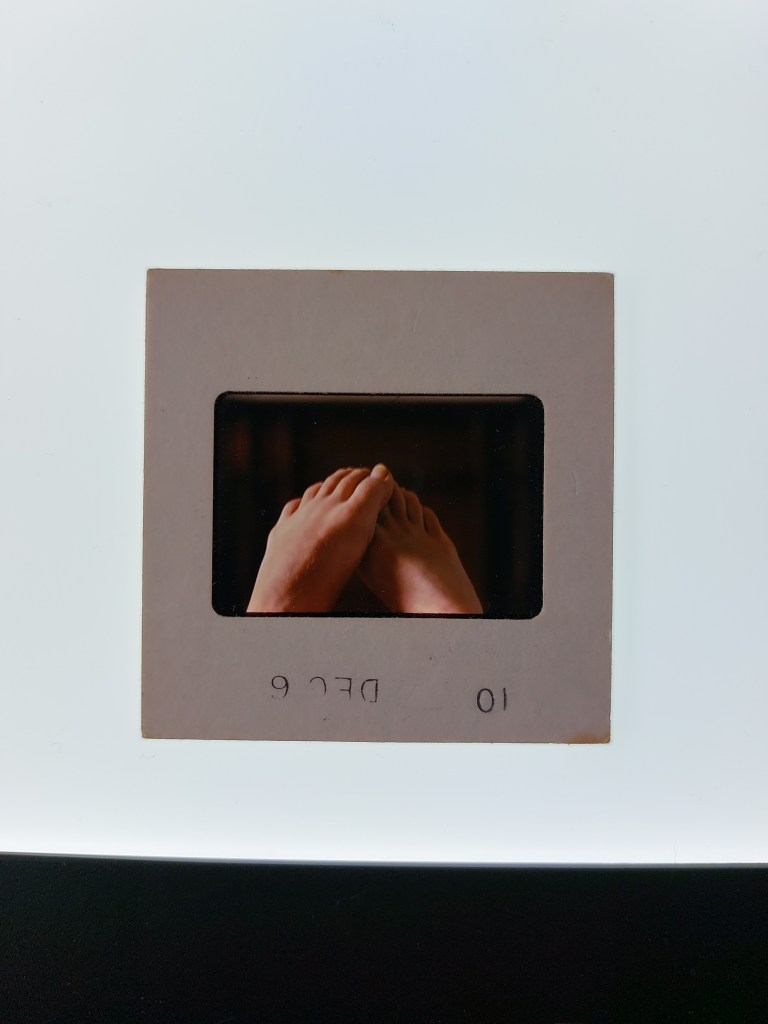
    I’ve noticed that naming blog posts after a day of the week seems to have found followings, like “Wordless Wednesday,” or doors on a Thursday, or flowers on Friday. So I thought I’d put up an old photo slide on a Saturday, and call it “Sliding into Saturday.” This one’s from December, 1969.

  • Convenience Store Woman and Other Books Briefly Noted

    Last night around midnight I finished my nightstand book “All the Lovers in the Night,” the second of three Japanese fiction books I recently picked up. I read it after “Convenience Store Woman.” Next I’ll read “Days at the Morisaki Bookshop.” Meantime coincidentally I heard about “The Second Chance Convenience Store,” by the Korean writer Kim Ho-Yeon, so I added it to the stack on the nightstand.

    I had been about to begin reading again Penelope Fitzgerald or Barbara Pym or Elizabeth Taylor, after “Seascraper” and “In the Cafe of Lost Youth,” both of which followed “The Dissenters.” The last Elizabeth Bowen I read was “Eva Trout.” My reading of course is a tale neither here nor there nor anywhere, but I try not to write book reviews, ever since Jessica commented, “It’s not a book review,” about something I’d written about one of her books, a simple reflection, drawing unexpected connections. But I was happy with that, with her comment. Too many book reviews seem template formatted and start to sound too similar. But blurbs, blurbs are the worst, exaggerated cartoons of reviews. Before “Eva Trout” I’d read “Spring Garden” and “Forbidden Notebook.” I also read, back in May, a book of short stories one of my brothers wrote, titled “Roxy, Reincarnated.”

    But the last book I read, just before deciding on the Japanese trio, was “The Invention of Morel,” by Adolfo Bioy Casares, influential Borges friend and collaborator. I found the Casares book interesting but not suitable for midnight reading, though some may find it precisely written for the middle of the night. Still, I find it’s still with me, its strangeness. And it too is a kind of cartoon, exaggerated, comic book matter. It deals with metaphysics and light and predicts television and movie popularity. Think of the characters as all movie stars, among which you walk, but they don’t see or hear you. Indeed, one should approach such books with a keen reliance on circumspection:

    “The case of the inventor who is duped by his own invention emphasizes our need for circumspection. But I may be generalizing about the peculiarities of one man, moralizing about a characteristic that applies only to Morel” (80).

    Yet here I am duped by my own book reviews, if you can call them that, and Jessica said you cannot call them that, and she is right. Earlier this year I read “All Our Yesterdays” by Natalia Ginzburg, thick blocks of prose, this one, as if she were trying to save paper. And I read Hemingway’s “Across the River and Into the Trees,” which is not as bad as everyone has ever said, but there seems to be fewer sympathetic readers of Hemingway these days, but which I enjoyed nevertheless. Adam Gopnik had revisited back in a February New Yorker the controversial 1950 takedown profile of Hemingway in The New Yorker by Lillian Ross. Gopnik’s article was a piling on. He claims to have uncovered in recently revealed letters the true nature of the Ross and Hemingway relationship and why Hemingway postured he was not offended by the offensive profile. Something like that. Anyway. Gopnik quotes from Ross the section where Hemingway is buying a belt. Really? I first read the Ross piece in the book format that followed the article. It’s a classic, on that I agree with Gopnik, but for different reasons, but I won’t continue to bore you with Gopnik on Hemingway via Ross any further.

    Nick Hornby used to write a short column for the monthly “Believer” magazine called “Stuff I’ve Been Reading.” I subscribed in its early days and saved all the issues, like deluxe paperbacks, the thick paper, the cartoon-like covers, until I’d had enough, after a few years, and carted them down to the corner book box where they went like Pokemon cards at a garage sale. Hornby’s articles contained two sets of books for the month: books he had bought, and books he had read, seldom exactly the same lists. Two books on my night shelf I’ve not read and they’ve shifted to the bottom: “The Colony” and “Ten Thousand Miles of Clouds and Moons.” “The Heart in Winter” was a gift, but I couldn’t get into it. I’m waiting for the heart in spring to come out. Eileen Chang’s “Written on Water” I’m still reading, slowly, slowly. And “The Uncollected Essays of Elizabeth Hardwick,” also slowly, on page 76, the next essay titled “Things,” following short, magazine like pieces on Faye Dunaway, Susan Sontag, and Katherine Anne Porter. Slowly, of necessity. I might have mentioned in some previous post I read Salinger’s “Nine Stories” aloud to Susan, except I skipped “A Perfect Day for Bananafish.”

    But I started off here wanting to say something about “Convenience Store Woman.” It’s one of the more original books I’ve read this year. But its form is a novella length cartoon, but without drawings. It’s anime without comics. It’s not anti-literary, though it might appear so to some. It’s a first person narrative of a protagonist who must have a manual to live by, and the manual she finds suitable to her needs is the manual of the convenience store where she works. “All the Lovers in the Night” is more literary formally, but it also involves a single woman at odds with family, social expectations, being different, and aging. And where and what and how to work and establish and nurture relations, and who and what to trust as one navigates the busy streets of a lonely life looking for light in the middle of night, a night light.

  • Scraping By

    One summer, I worked for one of my Dad’s friends in the body and fender shop at a Ford dealership in Culver City. He entertained the idea of getting a race car and I would be his driver. He foreshadowed the advent of the short surfboard. “Why are the boards so big?” he asked. “You could ride a two-by-four if you could get up the momentum.” Another summer my Confirmation sponsor hired me to work as a lab assistant at UCLA, where he was working on a graduate degree, the chalkboards in the lab covered with formulas and equations that looked like hieroglyphs left by sanderlings bicycling around the wavelets at El Porto.

    The first thing my Dad taught me about plumbing was to name the tools, so I could hand them to him when needed. And I learned to dig a trench with the correct slope, for “shit falls downhill.” I worked odd plumbing jobs with him and knew enough of plumbing to know a plumber by trade was not what I wanted to be. Today, though, I feel some affinity for the plumber’s craft, even if my Dad would not now recognize it as the same trade, the new plastic pipe, the special tools, the glues that have replaced the lead and oakum joint jobs. Boiling the molten pig of lead in a lead pot then working the cooling lead sealing the oakum with a cold chisel around the lip of the cast-iron pipe. Yarned and roped, poured and caulked.

    One day, my Dad, a plumber by trade, he would say if asked, asked me what I wanted to do, to be: a carpenter, an electrician, a plumber. I wanted to surf, which he knew, his garage a surfboard shop, but while I was a good surfer, I wasn’t an excellent swimmer, like my two best friends who were county lifeguards, but we all knew we weren’t going to surf our lives away. And I played guitar, but as an ambition as aimless as walking on a surfboard, for while I was a good guitarist, I wasn’t an exceptional musician, and had no taste for the business. And cars, beginning with the 1956 Chevy I bought for $75 from Gary, who was headed for Vietnam. I became a wheeled and track vehicle mechanic, MOS 63BC20, which helped see me through school, that talk with my Dad over and out.

    What’s all this got to do with Benjamin Wood and his novel “Seascraper,” recently longlisted for the 2025 Book Prize?

    “The horse needs feeding up and harnessing. He gets into his boots on the back doorstep, rolls a ciggie underneath the rusty canopy his grandpa built from corrugated iron – it’s hanging by loose screws, and one more heavy rain could bring it down. He’s not repaired it yet, as mending stuff like that requires an aptitude he doesn’t have. His talent is for something else – his grandpa would decry it as a waste of time if he were still alive to hear him sing a tune, and if his ma knew anything about the pocket watch he gave to Harry Wyeth in trade for his guitar, then she would make a bonfire of it in their own backyard” (5).1

    That talk with my Dad I replay like old vinyl, now full of scratches of course. I might pick an electrician to be, and maybe I’d specialize in electrical musical instruments. Or I might have moved from carpentry to lutherie. Those are indoor jobs. Do you want to work indoors or out was not a key question for a kid growing up in Southern California, where the weather was taken for granted. There were a dozen guys I knew having conversations with their Dads similar to the one I described above. Families just scraping by, recovering from one war and beginning another, and then another, or couples with a cache of war bonds that would see their two kids through USC or Stanford.

    “It never used to foul his mood this much, the cold, the loneliness, the graft, but that was long before he harboured any aspirations for himself besides what he was raised to want. He used to think it was enough to fill the whiskers up with shrimp each morning and accept the cash for them by afternoon. Providing is surviving – that’s what Pop would tell him, and what else should any man desire? Perhaps a wife, if he could find one that’d have him” (12).

    He has more than a job, an occupation, he’s a seascraper by trade. He both loves and hates it. For love, the culture and tradition, the brawn and brack, the freedom. For hate, the cold and wet and muddiness, the poverty, and not enough time to devote to his true calling:

    “He was thirteen when he first went out to sea with Pop and, in those days, few adaptations to the old equipment had been made – the cart still had two wagon wheels with metal rims, and he felt queasy after half an hour of riding in the seat with him. It was supposed to be a weekend job, that’s all, and it was something he would beg his ma to let him do, believing it to be a rite of passage. Every other Flett had been a shrimper, going back to his great-grandpa who had putted barefoot on the beach alone with just a push-net and a basket on his back” (34).

    Scraping for money, too. There’s the rub. And he learns and loves to read, fatal flaw. And comes under the spell, though he’s naturally wary, of an outsider who sees just some kind of romance in the beach and sea and fishing for a living, and who wants to make some kind of movie about it, with him the star, and the promise of some big bucks. He’s not sure.

    “The folk club at the Fisher’s Rest begins at eight, and if he wants to play tonight he’s got to put his name down on the list by quarter to. Perhaps it wouldn’t be so bad to wait a week, rehearse his songs a few more times before subjecting people’s ears to them. He’s not in a position to refuse that kind of money. ‘I dunno,’ he says” (32).

    What’s the catch? The empty promise of a false calling. And who is calling? You’ll meet all kinds of charlatans wanting to hear your story and help you to tell it. How could you tell? He’ll make a tourist scene of your livelihood. Tom Flett is the only seascraper around who still works with a horse and wagon. The others use motorized carts. He’s like a plumber who might still be using lead and oakum. Idealized and sentimental. The tourist view doesn’t see behind the facade. There’s no money in the songs. There’s no money in the seascraping. What’s he waiting for? To know his song well before he starts singing?2 What’s he going to sing about? Seascraping. Dangerous work, and just scraping by.

    “He’s committed now and has to see it through. ‘Bear with me, then. I’ve got to work the nerve up.’ The guitar of Harry’s is much bigger at the body than he’s used to and its neck seems thicker when he takes hold of it. At least it’s strung the right way up. The frets are old and blackened, but it sounds in tune. ‘I need to warn you, I’ve not sung this more than twice from start to finish. It’ll come out ragged, but you’ll get the gist’” (161).

    Mariposa Surfboards
    1. “Seascraper,” Benjamin Wood, recently longlisted for the 2025 Booker Prize. Penguin Random House UK. ↩︎
    2. “A Hard Rain’s a-Gonna Fall,” released in 1963 on the album The Freewheelin’ Bob Dylan. ↩︎
  • Middle-Aged Once

    Patrick Modiano’s novella “In the Cafe of Lost Youth” opens with an epigraph attributed to the French philosopher Guy Debord:

    “At the halfway point of the journey making up real life, we were surrounded by a gloomy melancholy, one expressed by so very many derisive and sorrowful words in the cafe of the lost youth.”

    I was unable to track down the source of the quote. It’s possible it comes from a memoir or some throwaway magazine article. But it reminded me of the opening to Dante’s “Inferno”:

    “Midway in our life’s journey, I went astray
    from the straight road and woke to find myself
    alone in a dark wood.” John Ciardi translation, 1954.

    Dante is comparing having lost his purpose or direction in life in middle age, 35 or so, to getting lost in a wilderness where one has wandered off a steadfast, well-worn path. He’s unable to locate himself on some reputable and credible map, either from an external or internal viewpoint. Why doesn’t he back up, retrace his steps? Instead, he forges on in the dark on a crooked path. At that point, a step forward could just as well be a step backward.

    Dante both forges purposefully ahead and rambles on, caught in the web of the woods, presses on like some point man cut off from his platoon, tracking deliberately with some goal of trying to map a new way out. Though he lacks an immediate target, he’s not aimless.

    “I placed the typewriter on the small pitch-pine table in my room. I already had the opening sentence in my mind: ‘Neutral zones have at least one advantage: They are only a starting point and we always leave them sooner or later.’ I was aware that once I sat down in front of the typewriter, everything would be much less straightforward.” (89-90, “In the Cafe of Lost Youth,” Patrick Modiano, 2007 Editions Gallimard, 2016 NYRB, 118 pages).

    Modiano was the recipient of the 2014 Nobel Prize in Literature. The only other book of his I’ve read is “Young Once” (1981 Editions Gallimard, 2016 NYRB, 156 pages):

    “Does life ever start over at thirty-five? A serious question, which made her smile. She would have to ask Louis. She had the feeling that the answer was no. You reach a zone of total calm and the paddle boat glides all by itself across a lake like the one stretching out before her. And the children grow up. They leave you.” (5).

    Both novels are sepia-tinged with the kind of suggestive noir one begins to associate with normal life, which is to say there is no normal, but everyone you meet is obsessed, or ought to be, with their past and future but are actually caught up in the web of their now, hopelessly trying to live in the moment but forced to move on, like Dante, or Beckett, in spite of having lost track of where they are in the moment. Even trying to move back is another futile move forward. Yet at some point, maybe that middle age point, one is given pause, a kind of grace – to reflect, to look back, to sense forward, lost in that very stillness:

    “They did not know that this was their last walk through Paris. They did not yet exist as individuals at all; they were blended together with the facades and the sidewalks. In macadam roads, the stones, patched together like an old cloth, have dates written on them to indicate when the successive layers of tar have been poured, but perhaps also recording births, encounters, deaths. Later, when they remembered this period in their life, they would see these intersections and building entryways again. They had registered every last ray of light coming off of them, every reflection. They themselves had been nothing but bubbles, iridescent with the city’s colors: gray and black.” (154)

  • Manual for Intuition

    Buckminster Fuller was the most optimistic of scientists. He believed synergy solves the problem of entropy. Synergy, simply put, is working together to achieve more. Synergy is sometimes defined as a whole unpredictable from the sum of its parts (1+1 = 3). And Fuller thought there is enough to go around:

    “Once man comprehended that any tree would serve as a lever his intellectual advantages accelerated. Man freed of special-case superstition by intellect has had his survival potentials multiplied millions fold. By virtue of the leverage principles in gears, pulleys, transistors, and so forth, it is literally possible to do more with less in a multitude of physio-chemical ways. Possibly it was this intellectual augmentation of humanity’s survival and success through the metaphysical perception of generalized principles which may be objectively employed that Christ was trying to teach in the obscurely told story of the loaves and the fishes.1

    Dostoevsky said the same thing in his “Notes from Underground” (1864):

    “I admit that two times two makes four is an excellent thing, but if we are to give everything its due, two times two makes five is sometimes a very charming thing too.”

    Though Orwell in “1984” (1949) suggested we be careful with arithmetic and keep an eye on who’s controlling the data. William Blake also reasoned reason could be a tyranny (“The Book of Urizen,” 1794).

    For my own alone little part of the network, I’ve been wondering about the popularity of Doors, Wordless Wednesdays, and other prompts, and have opted to contribute a little poem on the subject of synergy and entropy:

    Loves and Fishes

    Planets like cauliflower
    heads can’t go it alone;
    entropy a flat bald universe,
    produces no combs.

    Love like the neutrino
    difficult to detect,
    plentiful and invisible,
    with no electrical net.

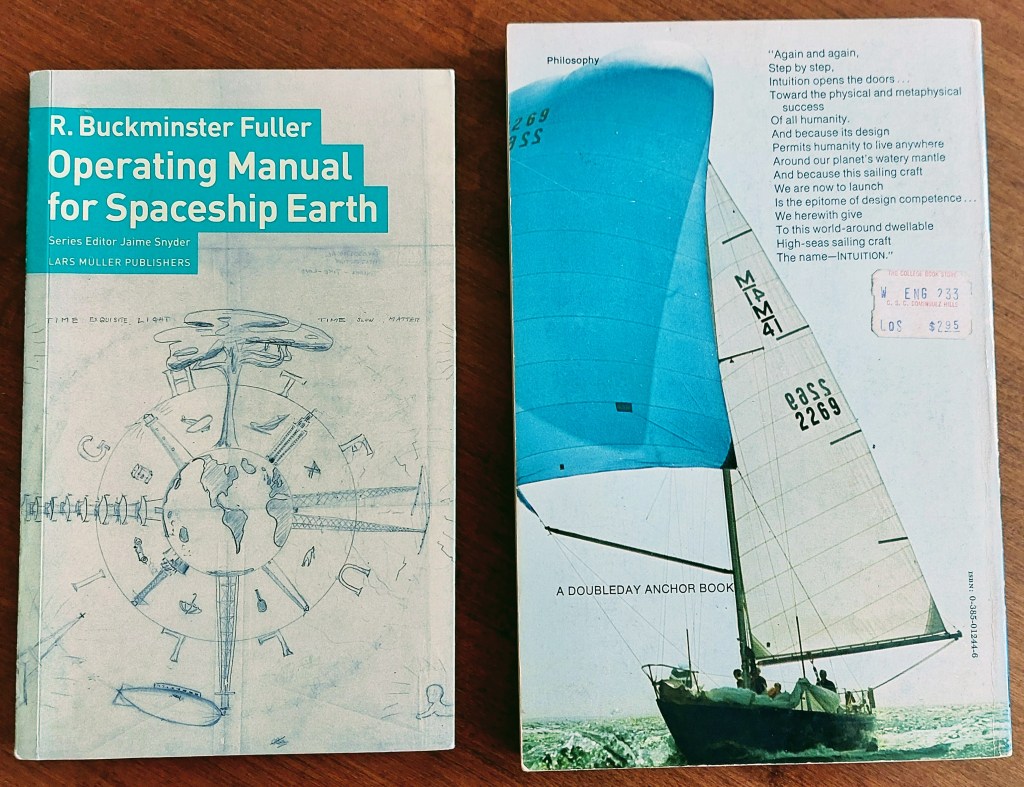
    1. “Operating Manual for Spaceship Earth,” R. Buckminster Fuller. First published 1969, new edition 2008/2011, edited by Jaime Snyder. Lars Muller Publishers. ↩︎
    Operating Manual for Spaceship Earth (1969) and Intuition (1972) – books by Buckminster Fuller
  • To Have and Have Not

    Somewhere along the way we are taught that writing is hard, and we come to believe that writing is hard. Hua Hsu thinks writing is hard, and he’s a professional writer, and teaches writing to boot, so he should know:

    “Writing is hard, regardless of whether it’s a five-paragraph essay or a haiku, and it’s natural, especially when you’re a college student, to want to avoid hard work—this is why classes like Melzer’s are compulsory. ‘You can imagine that students really want to be there,’ he joked” (p. 24, “The End of the Essay,” The New Yorker, July 7 & 14, 2025).

    Most activities seem hard if you’d rather be doing something else. “It is not irritating to be where one is. It is only irritating to think one would like to be somewhere else” John Cage said, in his “Lecture on Nothing.” But what about Hua Hsu’s claim that college students “avoid hard work”? Is that true?

    Definitions are hard: what is writing; what is work? Is avoidance not hard work? While it might be easier not to write, does it necessarily follow that writing is hard?

    Writing is easy. Most kids by the second or third grade can write. But keeping inside the lines as they are later taught, and writing becomes harder, until finally they quit trying to write and now apparently go to some Artificial Intelligence application where their writing is done via surrogate.

    “A.I. has returned us to the question of what the point of higher education is,” Hsu says (22). It might be too late, as the question seems in the process of being answered in the dismantling of institutions, and the answer for some currently sounds like, there is no point. In any case, the question is not new, being asked, and answered, over time, from John Henry Newman’s “The Idea of a University,” to Ivan Illich’s “Deschooling Society.” Illich’s ideas seem ripe for our time:

    “Many students, especially those who are poor, intuitively know what the schools do for them. They school them to confuse process and substance. Once these become blurred, a new logic is assumed: the more treatment there is, the better are the results; or, escalation leads to success. The pupil is thereby ‘schooled’ to confuse teaching with learning, grade advancement with education, a diploma with competence, and fluency with the ability to say something new. His imagination is ‘schooled’ to accept service in place of value. Medical treatment is mistaken for health care, social work for the improvement of community life, police protection for safety, military poise for national security, the rat race for productive work. Health, learning, dignity, independence, and creative endeavor are defined as little more than the performance of the institutions which claim to serve these ends, and their improvement is made to depend on allocating more resources to the management of hospitals, schools, and other agencies in question” (Ivan Illich, “Deschooling Society,” 1973).

    Writing is learned, like learning a musical instrument, developmentally and incrementally; writing is a process of addition, as Francis Christensen taught. His solutions described in his “Notes Toward A New Rhetoric: 9 Essays for Teachers (3rd Ed., 2007) to the teaching and learning of writing are among the best. Verlyn Klinkenborg’s  Several short sentences about writing (Vintage, April 2013) is also excellent and should be used in today’s English 101 classes (if there still are any) – though neither of these solutions do I put forth as absolute. I’ve met veteran classical musicians who cannot improvise, cannot play their instrument without a piece of sheet music to read from.

    Could Hemingway write? And if he could write, or maybe more importantly if you think he could not write, where did Hemingway learn how to write? In the beginning was the essay, English 101. Everyone had to take it, even the math majors. But Hemingway never made it to English 101. He wrote in high school, but it seems he learned to write while writing.

    “My name’s Laughton,” the tall one said. “I’m a writer.”
    “I’m glad to meet you,” Professor MacWalsey said. “Do you write often?”
    The tall man looked around him. “Let’s get out of here, dear,” he said. “Everybody is either insulting or nuts” (135).1

    1. Ernest Hemingway, “To Have and Have Not,” 1934, Hearst Magazines Inc. Scribner Classics, 1970. 0-684-17952-0. ↩︎
  • Notes on Youssef Rakha’s “The Dissenters”

    I’m not long into Youssef Rakha’s “The Dissenters” before being reminded of Joyce’s cracked looking glass:

    – It is a symbol of Irish art. The cracked looking-glass of a servant.

    But Stephen is able to think and express so as a result of his Jesuit training, a “wellfed” education, even while his family fortunes have ebbed:

    Across the threadbare cuffedge he saw the sea hailed as a great sweet mother by the wellfed voice beside him.

    And the question, as Humpty Dumpty put it, is which is to be master: the fed or the unfed.

    – After all, I should think you are able to free yourself. You are your own master, it seems to me.

    Stephen is in conversation with one of his roommates, Haines, an Englishman.

    – I am a servant of two masters, Stephen said, an English and an Italian.

    Still, surely we can think for ourselves, even with our poor or uneven educations? And where, after all, do we learn to think? And having mastered it, or enfolded it in fine arts, what do we think, and what do we think about what we think?

    – You behold in me, Stephen said with grim displeasure, a horrible example of free thought.

    – I can quite understand that, he [Haines] said calmly. An Irishman must think like that, I dare say. We feel in England that we have treated you rather unfairly. It seems history is to blame.

    History. I recently read the “Fortunes of War” trilogies, “The Balkan Trilogy” and “The Levant Trilogy,” Olivia Manning’s collected novels set in World War II from the perspective of a British couple living in Bucharest then forced to move farther south in advance of the Nazi approach until they finally barely escape from Greece into Egypt and life in Cairo for the duration, and “Roman Year,” the Andre Aciman memoir of his family’s exile from Egypt to Italy, as a result of Nasser’s unfolding policies, where they attempt to settle in and live before relocating again to the US, and those readings now proved useful introductions to Rakha’s “The Dissenters.” But the first I read of Manning was her “School for Love,” which takes place in Jerusalem during the war, also an introduction now to the book at hand, “The Dissenters,” which in turn serves to see the Manning and Aciman books in different light.

    In the Aciman book, for example, we find Aunt Flora, who had moved to Rome two years earlier, “expelled from Alexandria” (27), correcting the writing style of the young Andre:

    “I didn’t tell her that I was typing letters to various American colleges. Aunt Flora had read my earlier drafts that week and said I was too poetic, too ethereal. I needed to have both feet on the ground. “There’s no room for your complicated, byzantine mannerisms in such letters – ‘I miss my homeland, what is my homeland, home is a metaphor,’” she mimicked, “none of that – I know your type” (215).

    I’m not sure if Flora is punning on type there. A typed letter hides all the clues a handwritten one might contain about the writer, and we rely on the typed letter’s style to reveal the sources of the writer’s mannerisms. And an epistolary novel allows for a freedom from both handwriting and typewriting, from thought bound by circumstantial rules of usage; the letter frees the author from expectations and whatever presupposed rules the reader might bring to impose on style.

    That letter to the world that never wrote to her, Emily Dickinson said – the letter is her world. A writer’s world of letters, a lighthouse.

    “May the house be mercy and light” (275, “The Dissenters”).

    What else can a mother hope for? At the end of a long day, decade…spouse, children…life. In which the mother is the country, the daughter those who left, emigrated and estranged, the son who turns to tell the tale in order to escape its meaning, “…past the time when I can build my personhood from scratch,” yet now free of “history and desire” (276).

    I’m not sure if it’s part of the novel or not, I think probably not, but “The Dissenters” book includes a “Timeline” (279) that begins with 1948 and ends with 2014. A good reading exercise might be to take that timeline and amend it with a like-brief description of what Mouna – well, to match Mouna’s situation, circumstances, at each stage of the timeline, for that’s essentially how the plot of “The Dissenters” works. For example, on page 82, Mubarak is stepping down, so we are in 2011, January 25-February 11, according to the Timeline. What’s Mouna doing? At first, I thought she was caught on television, but it’s one of Nour’s so-called “visions,” not something he sees on TV.

    “I whistle as I look up, ecstatic at her lack of headscarf. My mother is a movie star” (82).

    Then again, maybe the Timeline and the non-linear dates that serve as section titles are not all that necessary for the reader reading the book without a craving for – to know the real from the imagined. The “Jumpers,” for example. It took me awhile to realize this was the “Myth” referred to in the subtitle to the book, “Three Letters & a Myth.” At first I thought the jumpers were real, but I couldn’t remember anything from the news about them.

    “The Dissenters” blends political, family, religious, friendship, marriage circumstances for individuals with whatever everyday life they are bound up in or might for a host of reasons become unbound with something new always appearing just around the corner, and then the walk back, where one can neither don nor shed a hat without being accused of meaning something:

    “In the seventies the headscarf wasn’t as ubiquitous as it was to become, nor were we as attuned to immodesty” (28).

    The book might be somewhat confusing if one tries to read it solely as a history, particularly if looking for a linear timeline. And the book can make for somewhat daunting reading, like an overdose of nightly bad news. I was reminded in parts of Burroughs and “Naked Lunch,” of Poe’s stories, anecdotal dreamlike visions that reek of fantasy inspired by stress. You see or hear people laughing, but you either don’t get the humor or really it’s threadbare.

    At the same time, the writing is clear and concise, casual, the individual chapters often short, propelling, lots of white space, until you get to “A Vision of Lena” (107), two and a half pages of solid prose – and is it a letter too? No. And what of the chapters titled “White,” “Green,” “Red,” and their subtitles of individual names? More on the Jumpers, the “Myth,” where a few of the chapters are brief paragraphs. The reading is both easy and difficult.

    Nour is a journalist. Words are his trade:

    “None of this would be happening if words didn’t take up with her again. I can tell. Her life’s nomenclature changing anew” (86).

    Nour’s letters are to his sister, Shimo, expatted to California (but we never hear back from her), and are about their mother, Mouna, as Nour describes a history of her body and its changes, her attempts at control over herself, which parallel or compliment a history of the country. Mouna has tried antidepressants, or that was Amin, or both? (220). They have undone so many. No help.

    “Mouna had had plenty of opportunity to think about sanity and happiness, especially the connection between the two” (219).

    She loses weight, gains strength, and joins the marches. Nour is objective, a reporter, an observer:

    “Mubarak was bad and the revolution brought down Mubarak, but does it follow that the revolution is good?…

    Mass protest has restored Mouna to a fuller, feistier self and that’s a major achievement right there. But if things end up being the same or worse, soon or later Mouna too will feel bamboozled – her preeminent project predoomed – then who knows where she’ll go” (99).

    I was a bit confused by the Nour/Nimo partnership, relationship. (Shem and Shaun?) They are both journalists. But Mouna is also called Nimo. Maybe some of the letters might be read as reporter filed dispatches, field reports. We even get a sample of a story (101): “On July 28, 1963….” That chapter, by the way, contains a particularly satiric, ironic sex scene (105), if it can even be called that, in which we find another example of the picture one character has of another character is never the same picture that character has of themselves.

    Standing as one does, say waiting for a bus or sitting in a cafe, does the memory work sequentially? No, never. It jumps around, one thought to another, with no regard for links, yet something causes one thought to lead to another. Or no, just random. But it’s a novel, so one assumes some cause or reason for the back and forth. To be literary? To distinguish itself, the novel, from the history book? Then you get something like this:

    “It is midnight in Mohandessin by the time I settle into a kind of berth fashioned of the curvature at one end of the space. Frank Sinatra is warbling in the background…” (32).

    Alas, that’s it for Frank. And I wonder, yes, Sinatra, but what was he “warbling?” Were this a movie, we would know. Live at the Pyramids, 1979? “Someone to Watch Over Me.” And that curved booth – red naugahyde? The waitress in uniform? Shimo in California? This sounds like California:

    “Amin has invested the few hundred guineas’ inheritance his elder brother forked over in a house off Road 9 in Maadi – a whitewashed cube with a crescent-shaped veranda that looks like a beach chalet except taller. Like a signpost on the road to Helwan, it is the only residence within several kilometers’ radius. Who would’ve thought, looking at the spottily paved desert all around, that within ten years it will be first among equals and, within twenty, one of a handful remaining David’s resisting the goliath of apartment blocks replacing the villas and bungalows of Maadi’s original treed avenues?” (55).

    What we think about something when it happens changes over time, and in that sense, our current situation helps explain what we were like before we got here. That’s a bit tricky. If we reread a book today it’s likely not the same book we read yesterday.

    But it’s not a movie, and this is not a book review, just a few notes. “If anyone can understand this, honestly” (59). And of the house: “The truth is I’ve already put the house up for sale” (275). So it goes. “For a few weeks she was famous on the web” (213). “Mouna feels more and more dismayed and uncertain” (217). The reader may share the feeling. And of the writer?

    “As I draw close to the end of her story – the point at which you know as much as I do anyway – I’m convinced of my own irrelevance. A man smuggling one woman’s life into another’s, in words. Without really being part of either. Once the procedure is over, I am no more” (230).

    What could be worse, that of the book reviewer on a blog? Yet there is none more relevant than the reader.

    ~~~

    Youssef Rakha, “The Dissenters,” 2025, Graywolf Press.

    Andre Aciman, “Roman Year,” 2024, Farrar, Straus and Giroux.

    James Joyce on Writing: “write dangerously”

    Notes on Youssef Rakha’s “The Crocodiles

    Friendship in Olivia Manning’s Balkan and Levant Trilogies

    Notes on Olivia Manning’s “School for Love”