Having learned a method of limbering up the fingers, and of finding notes on the guitar, we’ll now take a look at how to make chords.
We saw that the C Major Scale of notes is useful because it has no sharps or flats. We’ll find that it’s particularly useful in other ways for the guitarist.
Let’s review the C Major Scale of Notes. C to C gives us an octave. We can number the notes. We’ll use the numbers to build chords:
| Numeric Note | 1 | 2 | 3 | 4 | 5 | 6 | 7 | 8 |
| Letter Note | C | D | E | F | G | A | B | C |
A major chord is built stacking the 1st, 3rd, and 5th of a scale. We can build a chord that begins with each letter of the C Major Scale. When finished, we’ll have the C Major Harmonized Scale of chords:
| Chord # | I | ii | iii | IV | V | vi | vii |
| Name | CM | dm | em | FM | GM | am | b-dim |
| Notes | |||||||
| 5 | G | A | B | C | D | E | F |
| 3 | E | F | G | A | B | C | D |
| 1 | C | D | E | F | G | A | B |
The C Major chord (I, or CM in the table above) contains the notes C, E, and G, the 1st, 3rd, and 5th steps of the C Major scale of notes. The D minor chord (ii, or dm in the table above) contains the notes D, F, and A. Why is it a minor chord? A minor chord is built also using the 1st, 3rd, and 5th steps of a scale, but the 3rd is flatted, moved a half step down, which, on the guitar, is one fret down. I thought you said there were no flats or sharps. Here’s where things get a bit tricky.
Let’s take a look at the C Chromatic scale of notes. This is a scale that shows all the notes, including the flats and sharps. A sharp is indicated with a # sign, and flats are indicated with a b. Note that a C# and a Db is the same note, called a flat when moving down and a sharp when moving up):
| 1 | 1#2b | 2 | 2#3b | 3 | 4 | 4#5b | 5 | 5#6b | 6 | 6#7b | 7 | 8 |
| C | C#Db | D | D#Eb | E | F | F#Gb | G | G#Ab | A | A#Bb | B | C |
The C Major scale of notes uses just 7 of the notes of the Chromatic scale above. As we have seen, those notes include: C D E F G A and B. What happened to the sharps and flats? We skipped over them. How do we know where to skip? That’s a given. To build a major scale, we skip over the 1#2b and the 2#3b, but notice there is no 3# or 4b, and there is no 7# or 8b. So we have notes that skip like this:
1 (skip) 2 (skip) 3 4 (skip) 5 (skip) 6 (skip) 7 8
C (skip) D (skip) E F (skip) G (skip) A (skip) B C
In other words, there is no 3# or 4b and there is no 7# or 8b. There is no E sharp or F flat and there is no B# or Cb in the C Major scale. If we want to flat the F, we get E. If we want to flat the C, we get B.
It might be useful now to take a look at the whole guitar fretboard (depending on your device, you should be able to slide right to see all the columns):
| Open Strings | 1st Fret | 2nd Fret | 3rd Fret | 4th Fret | 5th Fret | 6th Fret | 7th Fret | 8th Fret | 9th Fret | 10th Fret | 11th Fret | 12th Fret | 13th Fret |
|---|---|---|---|---|---|---|---|---|---|---|---|---|---|
| e | f | g | a | b | c | d | e | f | |||||
| b | c | d | e | f | g | a | b | c | |||||
| g | a | b | c | d | e | f | g | ||||||
| d | e | f | g | a | b | c | d | ||||||
| a | b | c | d | e | f | g | a | ||||||
| e | f | g | a | b | c | d | e | f |
And here are the same notes using corresponding numbers:
| Open Strings | 1st Fret | 2nd Fret | 3rd Fret | 4th Fret | 5th Fret | 6th Fret | 7th Fret | 8th Fret | 9th Fret | 10th Fret | 11th Fret | 12th Fret | 13th Fret |
|---|---|---|---|---|---|---|---|---|---|---|---|---|---|
| 3 | 4 | 5 | 6 | 7 | 1 | 2 | 3 | 4 | |||||
| 7 | 1 | 2 | 3 | 4 | 5 | 6 | 7 | 1 | |||||
| 5 | 6 | 7 | 1 | 2 | 3 | 4 | 5 | ||||||
| 2 | 3 | 4 | 5 | 6 | 7 | 1 | 2 | ||||||
| 6 | 7 | 1 | 2 | 3 | 4 | 5 | 6 | ||||||
| 3 | 4 | 5 | 6 | 7 | 1 | 2 | 3 | 4 |
Notice the 1 skips a fret to 2, but the 3 does not skip a fret to 4. Same for 7 to 1. The 1 corresponds to C, the 2 to D, etc.
If we start a major scale on D and use the skipping method of counting through the Chromatic scale, we get:
| 1 | 2 | 3 | 4 | 5 | 6 | 7 | 8 | 9 |
| 1 | 2#3b | 3 | 4 | 4#5b | 5 | 5#6b | 6 | 6#7b |
| D | D#Eb | E | F | F#Gb | G | G#Ab | A | A#Bb |
If we build the D Major chord using the 1, 3, and 5 of the scale in the table above, we get a chord with the notes D (1), E (3), and F# (5). The D Major chord is built using the notes D, E, and F#. Taking the D Major chord of D, E, and F# but flatting the F#, we get D, E, F. The chord is now a 1, flat 3, 5 chord, or, a minor chord.
Now, back to the C Major Harmonized scale, which is built with the chords C Major, D Minor, E Minor, F Major, G Major, A Minor, and B Diminished. The chords are shown in the table as
| I | ii | iii | IV | V | vi | vii |
| CM | dm | em | F | G | am | b-dim |
It’s a bit tricky to say all of the chords contain no sharps or flats, since we saw that the D minor chord has a flatted third. But the flatted third of a D chord, as we’ve seen, gives us an F note, not an F#. You can work it out for the E minor and A minor, as well as the B diminished (which flats both the 3rd and the 5th notes of a scale). What you’ll find is that the chords as expressed in the C Major Harmonized scale appear to have no sharps or flats. They are built with “natural” notes, meaning not sharped or flatted notes.
| Chord # | I | ii | iii | IV | V | vi | vii |
| Name | CM | dm | em | FM | GM | am | b-dim |
| Notes | | | | | | | |
| 5 | G | A | B | C | D | E | F |
| 3 | E | F | G | A | B | C | D |
| 1 | C | D | E | F | G | A | B |
Here are some suggestions for practical application:
- Play chord progressions using chords from the C Major Harmonized scale. For example, play ii (dm), V (GM), I (CM), or play I (CM), vi (am), ii (dm), V (GM). Play I, IV, V.
- Memorize all of the C notes on the guitar fretboard. Be able to jump from one to the other, in any order.
- Play the C Major scale of notes on the fretboard beginning (ascending and descending) with each of the C notes you found in 2 above.
- Play all of the chords in the C Major Harmonized scale in the first position of the fretboard (frets 1 thru 3). Play them in order, ascending and descending.
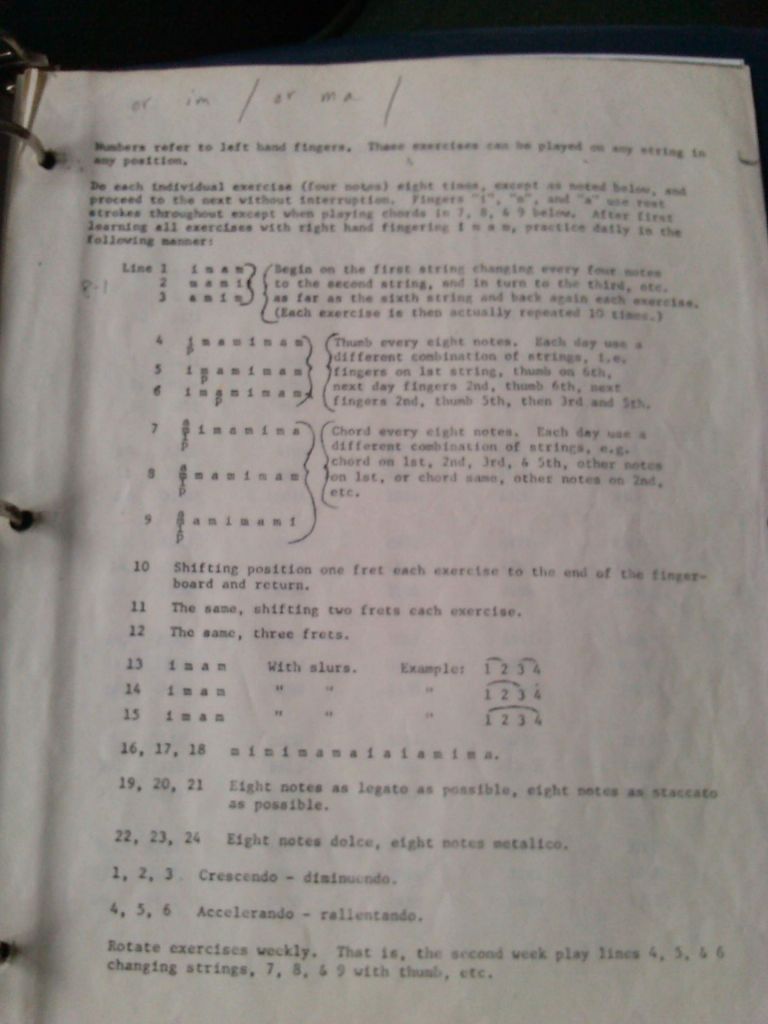
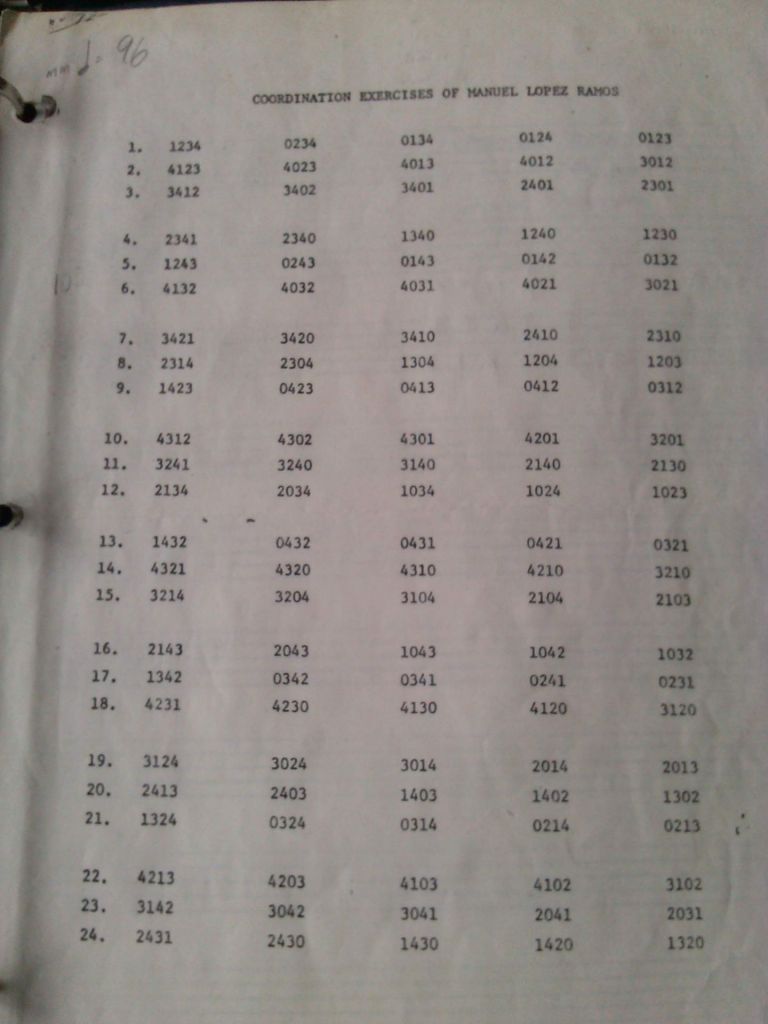
- Don’t forget to warm up and cool down using the Guitar finger coordination exercises of Manuel Lopez Ramos.
 The Coming of the Toads