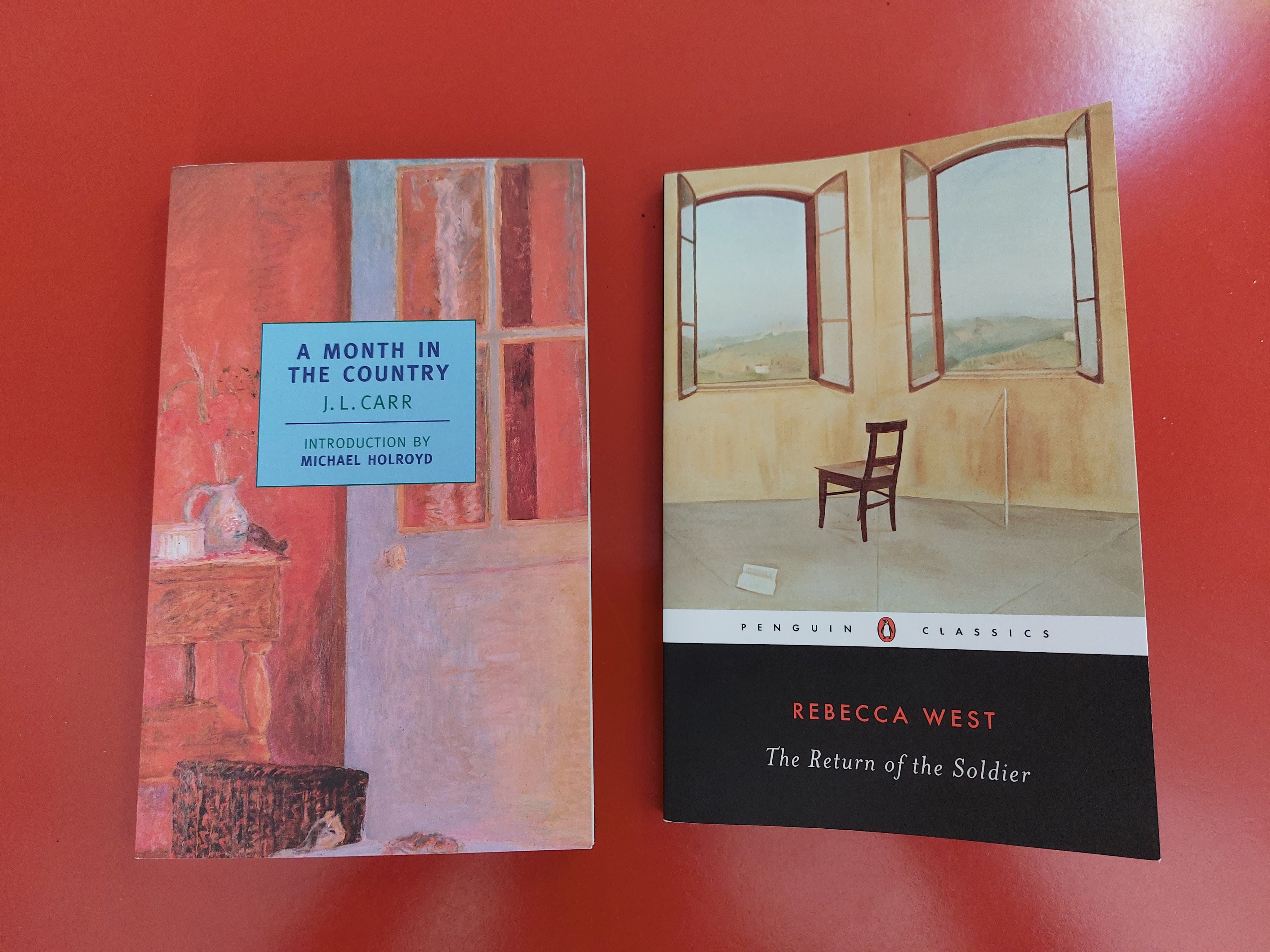
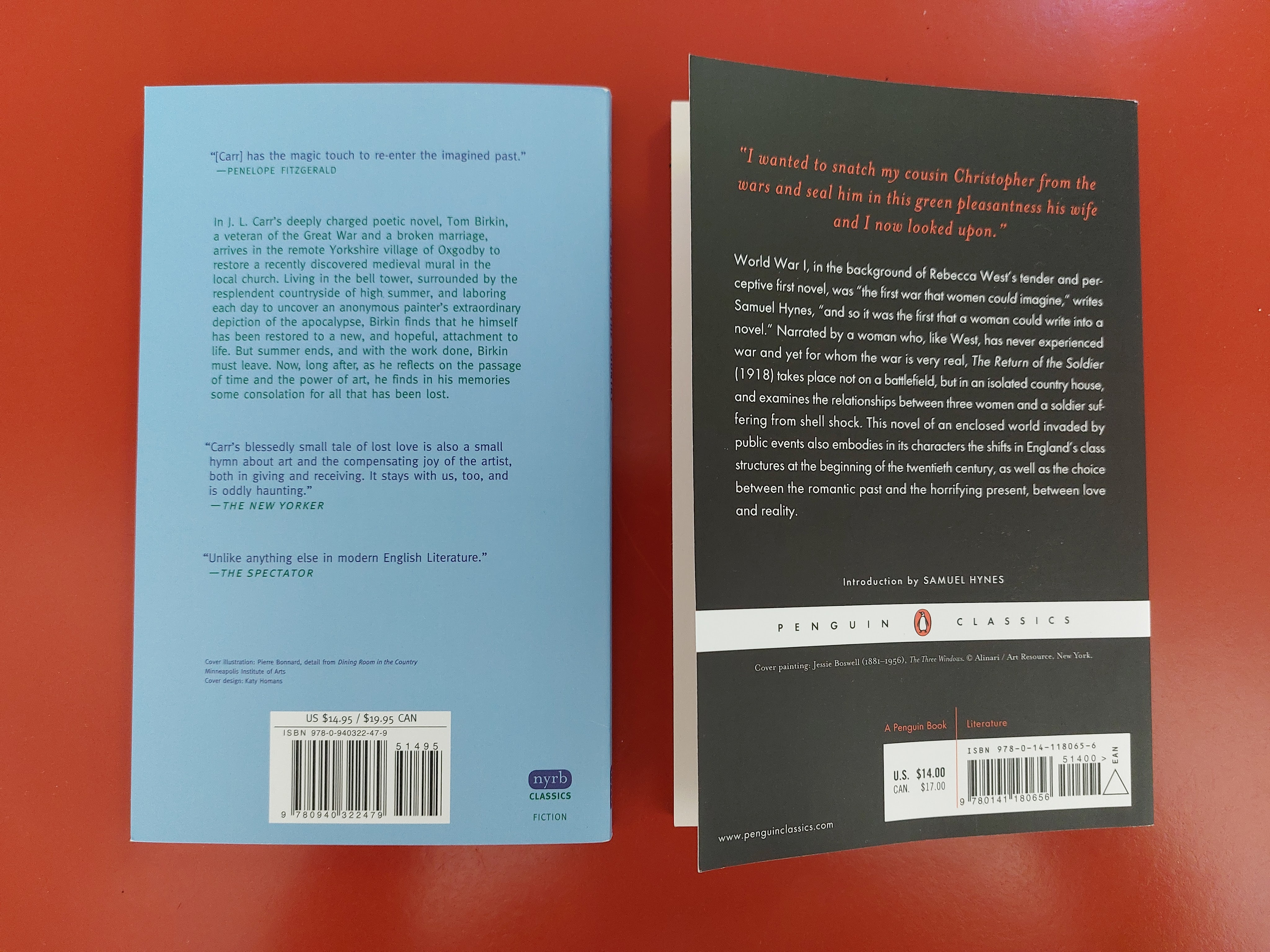
These are two very different books, but so close in flavors and effects. Both concern a soldier recently returned home from World War One duty. Rebecca West wrote “The Return of the Soldier” when she was only 24, living with her three year old, in 1916, the war still on and in some of its deadliest and darkest hours. J. L. Carr’s “A Month in the Country” was published in 1980, when he was in his late 60’s, WW1 at that time superseded by a number of other high and mighty events.
This is not a book review, that lockstep genre one learns in literary basic training. War narratives often exaggerate plot and action. The truth is action, if it comes at all, stops time, stops waiting, lifts the soldier off the ground or water, suspends. There is no plot to that moment. If he remembers anything of the action the memory stirs smells, sounds, touch, taste. World War 1 is memorable for its suspension of progress, the soldiers on both sides stalemated in their trenches for days, weeks, months, years, the most significant action perhaps a slow moving cloud or fog hugging the ground and when it gets to you takes the skin off your face. And of course in any war for every soldier that experiences what I am here calling action there are several others who experience only the waiting. Both experiences take their toll and can leave soldiers, whatever their experience, broken machinery.
In any case, for the most part, these books avoid that portrayal of action, and take place in beautiful natural settings, far from any action of the war. Both returned soldiers suffer from emotional trauma, but are able to enjoy life returned away from the front. They don’t suffer from anhedonia, usually the result of not enough action. Both books are necessarily novellas, because so much has been left out. Both concern a small cast of characters in a little window of time and action out of view of the mainstream. Rebecca West has her character Jenny narrate, so it’s a first person but not the soldier returned who talks, while Carr’s book is told first person by the returned soldier, Tom Birkin. Both books are love stories surrounded by nature in lovely landscaped settings mostly unspoiled. The writing is clear and concise, natural and unaffected but poetic, impressionistic, descriptive. Both books touch on class as a theme, work, and all the trappings and dressings of diversions and social nakedness.
“Penina’s Letters” too touches on those themes and uses some similar techniques to get its soldier returned story going and told, but I suppose its author may not have seen enough action, and so had to substitute satire for reality, or maybe should have relied on someone else to tell his story, Penina perhaps.

 The Coming of the Toads