For some, grammar might be understood as an attempt to control language, or to control a speaker. But the only way to establish complete control over a language is to kill it, which is probably or nearly impossible, because language possesses, like the planarian, the ability to reform or regenerate from a tiny piece of itself. I point to an object, and that is how grammar works. The object could be the sugar bowl on the kitchen table, the moon, or a running man. I link to it for the purpose of linking you to it also. But first, I have to get your attention. Of course, I can always point to myself, or point to an object by myself, like talking to myself, which might be one origin of poetry. When the objects we point to disappear, or others claim to be unable to see them, we come to the first existential crisis of language, where we find ourselves in grammar school, the subjects of rote repetition in an effort to create memory. In grammar school, we learn to wear a uniform.
We learn to number our clothes. The hat, number 1. Or maybe we start with the shoes, the socks being a subset. First we put on the right sock, then the left, then the right shoe, then the left shoe. Never mind it’s a sunny day and we were thinking what fun it would be to go barefoot. To go barefoot, in grammar school, is one of the first examples of being ungrammatical. We are assigned a seat, a number in a numbered row, alphabetized and numbered in the numbers book. Having a number is essential when everyone looks alike.
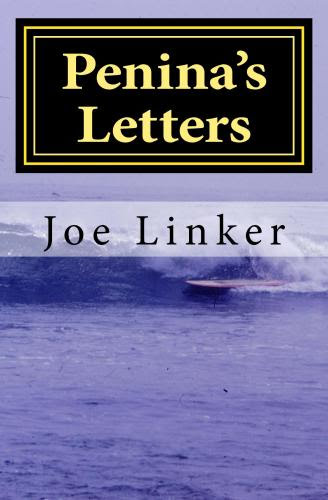
So it was with a tremulous motion I finally approached my MS Word file containing my first published novel, “Penina’s Letters,” to correct a few unintended consequences. The first printing had contained an unacceptable number of typos, and the front matter setup has always felt a bit clumsy to me. The chapter listing page, for example, showed the chapter titles but no page numbers. And the ISBN didn’t show on the copyright page. But why the tremolo? Why not just go in and make the changes? I did manage one corrected copy upload, after the first printing back in 2016, ridding the book of most of the obvious errors, mistakes which, it pains me to admit, I had failed to spy with my little proofreading eye. But a few issues remained, as additional readings revealed, but the thought of entering the MS Word file again and resubmitting for revision to CreateSpace for approval with the hope of not making matters worse was all more than I felt up to. Besides, I now had other projects underway that required my attention.
Then, a week or so ago, I was notified that CreateSpace was closing its doors and all texts migrating to Kindle Direct Publishing (KDP). So I took the opportunity to become acquainted with KDP by reworking the front matter of “Penina’s Letters” and fixing a trio of what I recognized as outstanding mistakes.
My first submission of a redo file for KDP’s approval was rejected – something to do with pagination errors. Mercifully, the rejection came within the 24 hours promised, and I went back to work on the Word.doc before motivation waned, resubmitted again, got approval, ordered a proof copy, and voila! No page numbers at all.
Suffice to say, after all that preamble and bramble, that for the past several days I’ve been immersed in a kind of MS Word pagination purgatory. Changes to a text often cancel out other changes, or sit on top of them, burying them below – but that suggests there is a top and a bottom to the thing, and of course there is not.
I got page one to say 1 but could not get the other pages to follow suit. I got every page to say 1. And so on, nothing acceptable. I began to think, rationalizing and trying to come up with some creative solution, why bother paginating at all anyway? Does the common reader really need page numbers? And isn’t a page number a kind of mar on an otherwise illuminated manuscript page? I got page numbers to show, but not in the footer where they belong. I toyed with “different front page,” “link to previous,” “create section break,” erase all and begin again. Deeper and deeper into an MS Word morass I sank. I entered “document,” “paragraph,” the journeyman’s “tools.” Suddenly blank pages and huge gaps in the text began to appear throughout the manuscript. I fixed and corrected and proofed. At one point, I had a file with pagination complete that seemed correctly formatted. I resubmitted yet again to KDP, and the proof file came back still with no page numbers.
I took a break from the project. I remember McLuhan saying something about pagination beginning with the printing press. The fall is into the printing press. Is there a page 1 to the Internet? In a mosaic, one may enter and exit anywhere. Page numbers are useless. There are no pages. There is the infinite scroll – over, under, sideways, down.
“Backwards forwards square and round.
When will it end, when will it end,
When will it end, when will it end,”
the Yardbirds sang.
“We don’t need no stinking page numbers,” I can hear Puck Malone of “Penina’s Letters” saying. But in the end I managed somehow to successfully place page numbers on the outside edge in the footer of even numbered pages, in sequence, every other page. I seemed to recall seeing books numbered only on every other page. I looked through some books. Saul Bellow’s “The Actual” places page numbers only on the odd numbered pages, right edge of page, in the margin, spelled out, in italics: page one. Enough.
Interested readers may utilize the “look inside” feature at Amazon to get an idea of how the new printing of “Penina’s Letters” came out.
 The Coming of the Toads